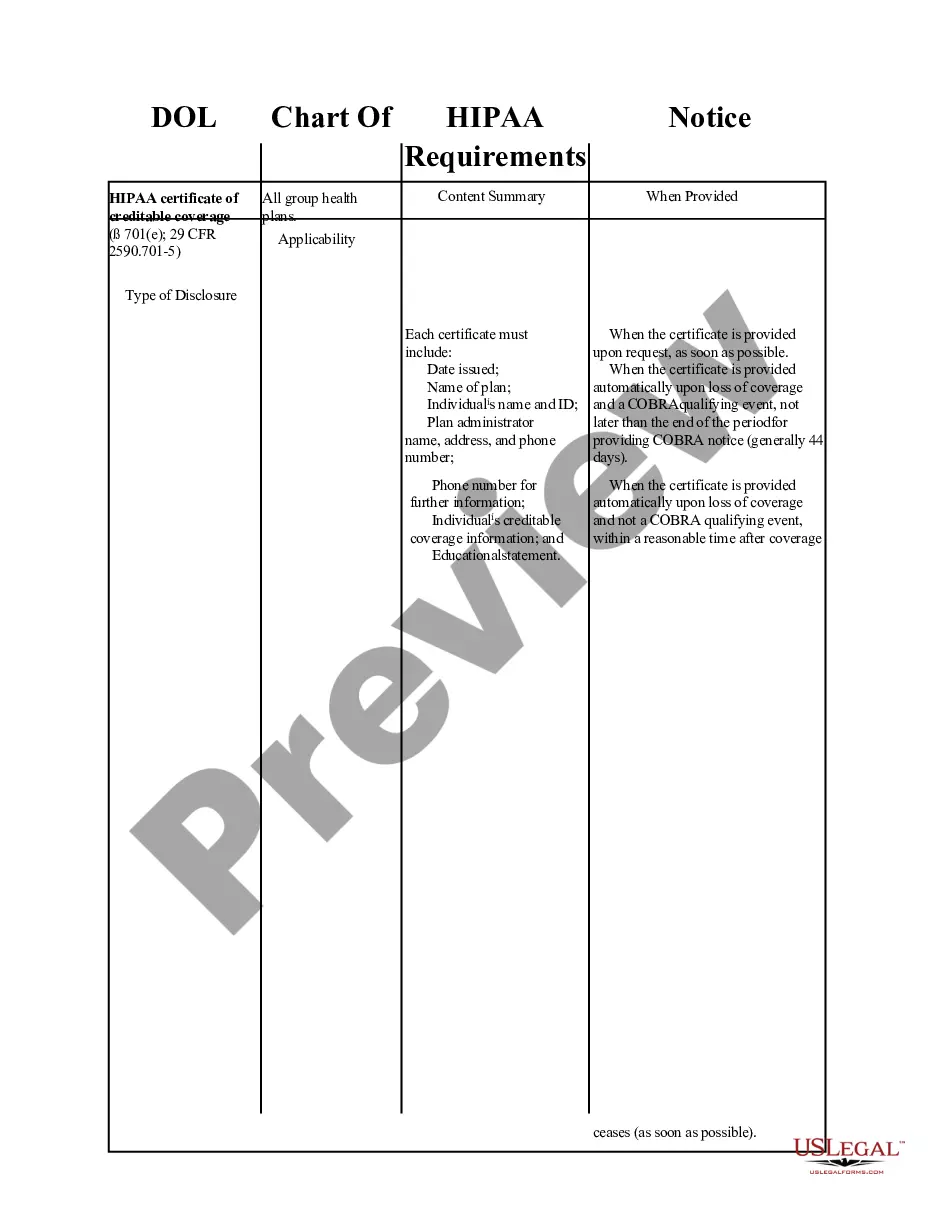
DOL Chart of HIPAA Notice Requirements
Understanding this form
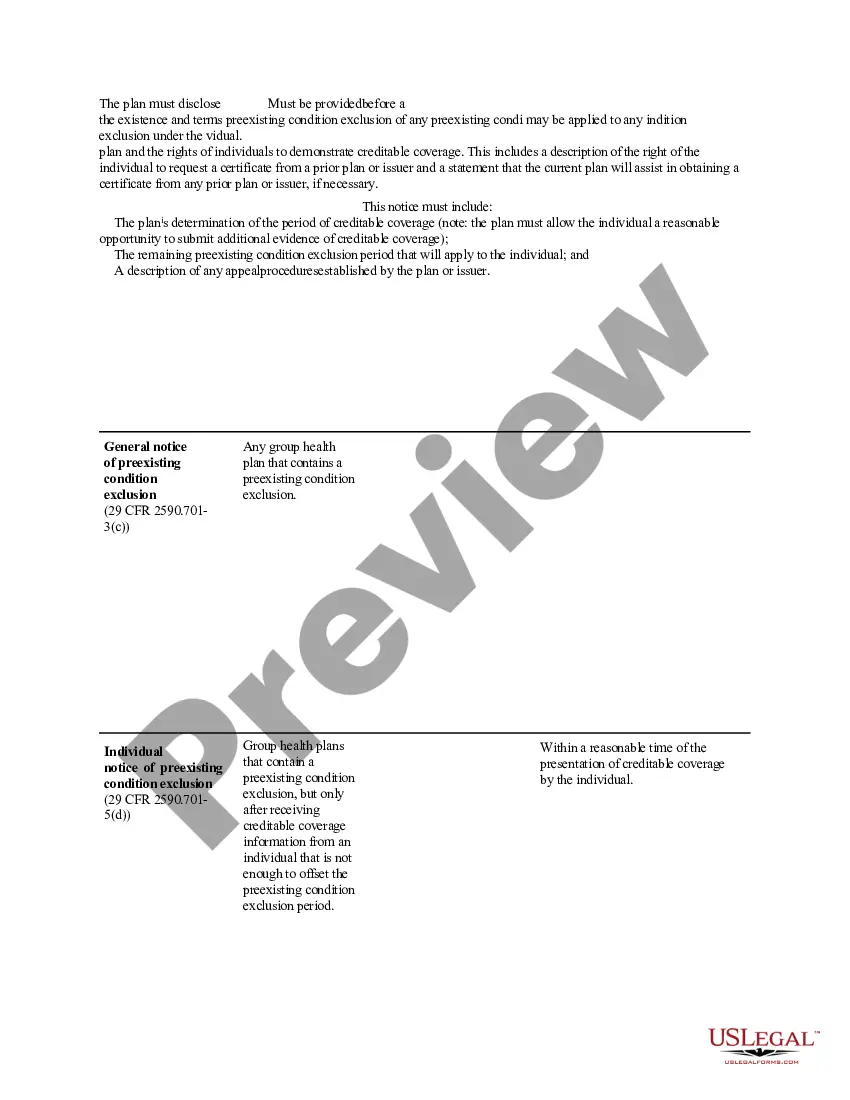
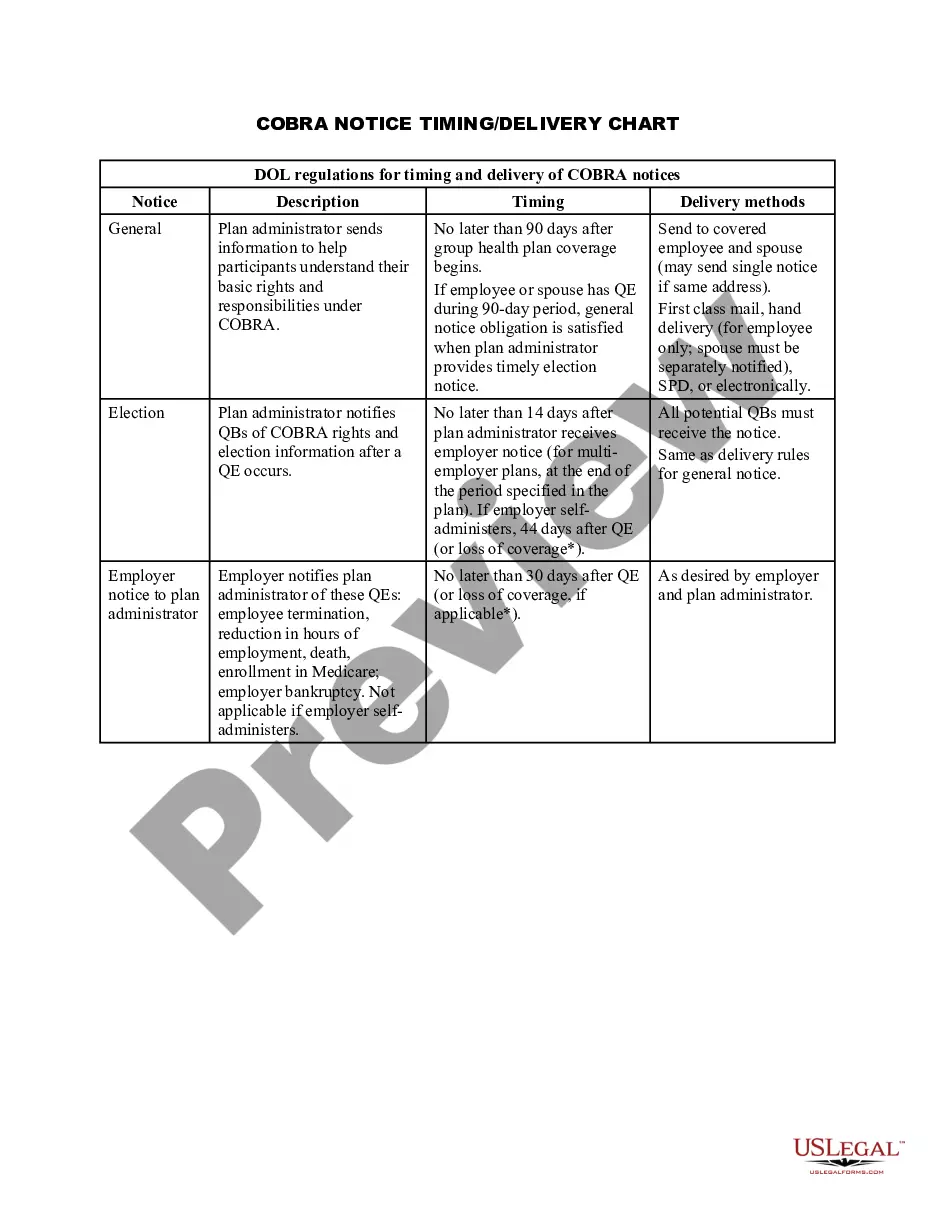
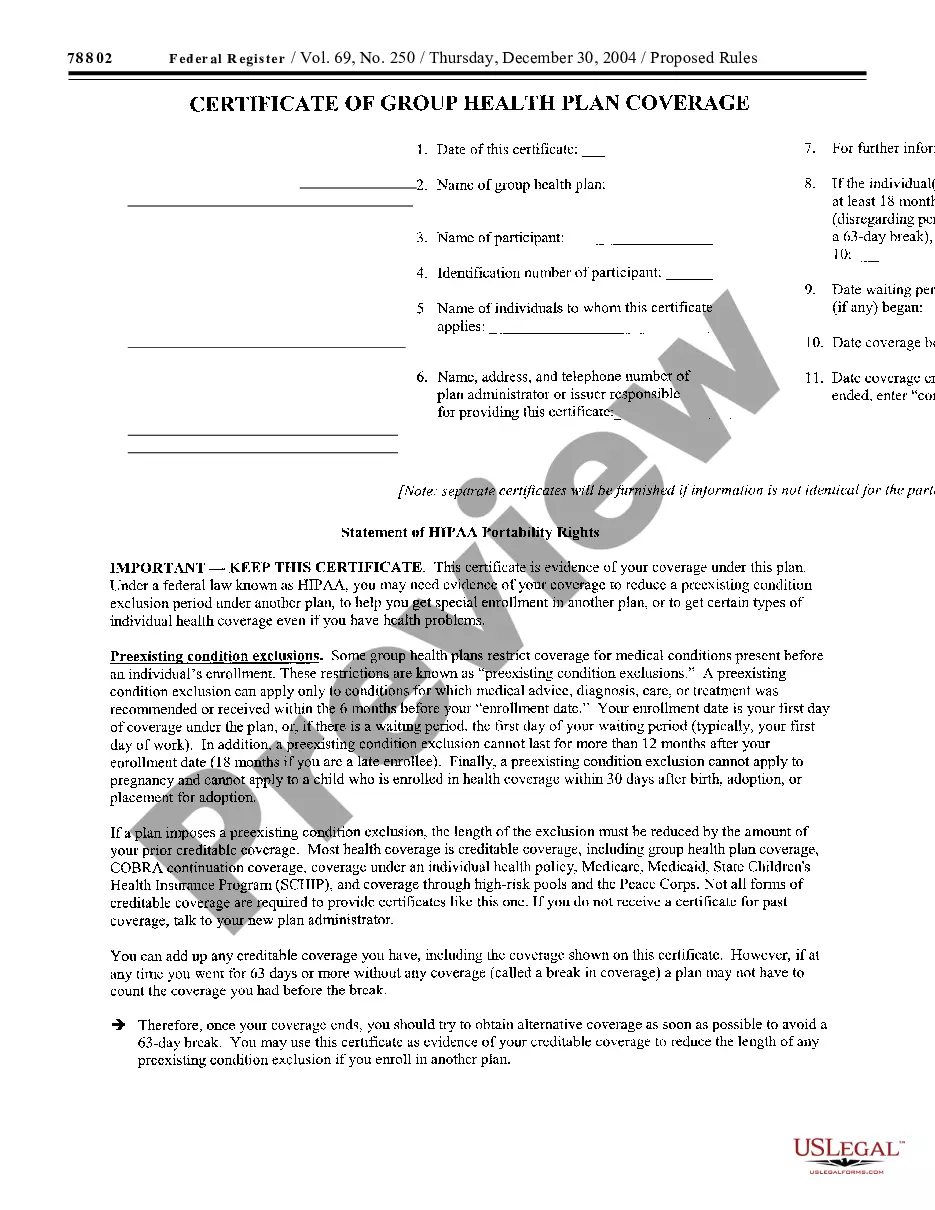
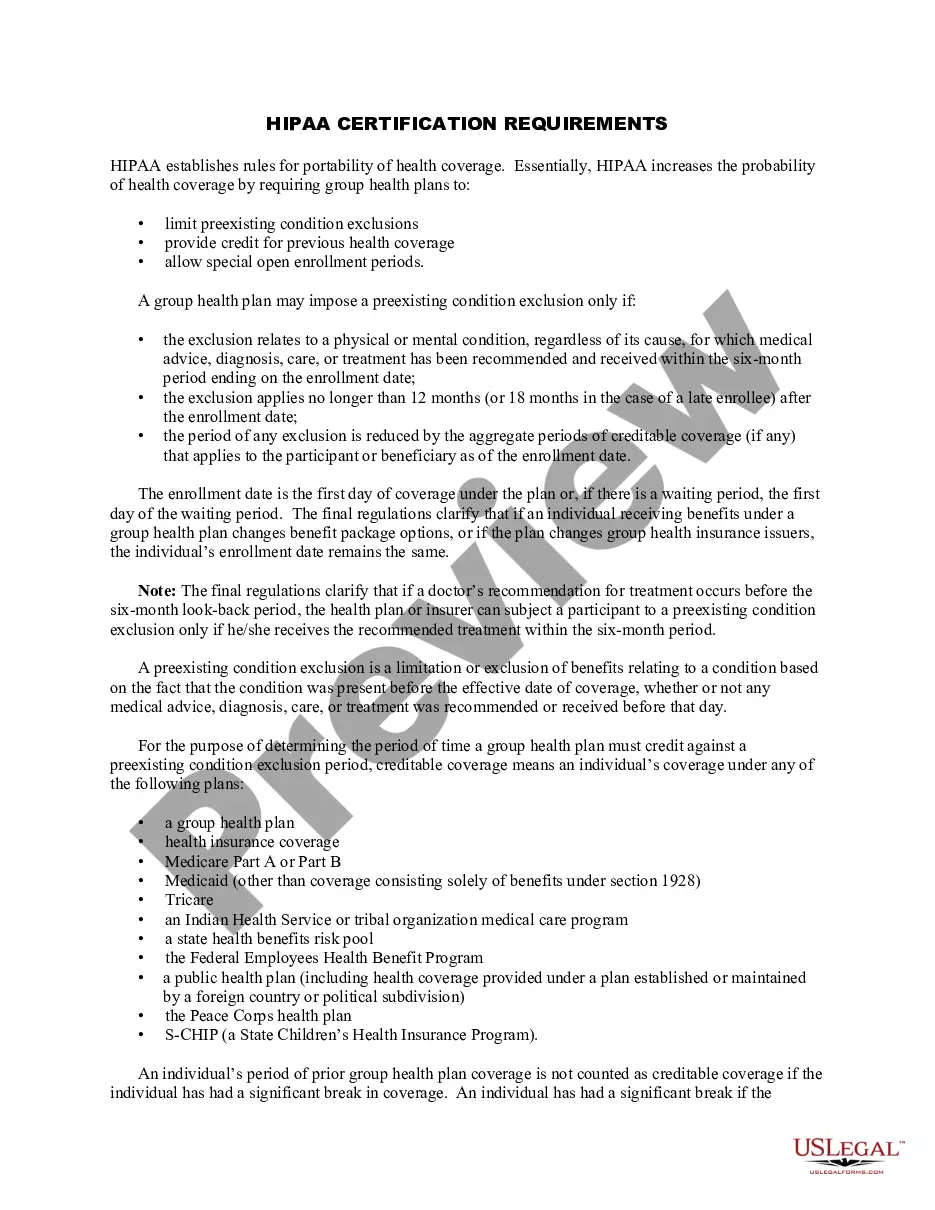
The DOL Chart of HIPAA Notice Requirements is a legal document that outlines the specific notice requirements for group health plan coverage under the Health Insurance Portability and Accountability Act (HIPAA). This chart serves as a valuable reference for employers and plan administrators to ensure compliance with federal regulations concerning the privacy and security of health information. It differs from other forms by providing a comprehensive overview of HIPAA requirements, enabling users to implement proper communication practices regarding health coverage notices effectively.
What’s included in this form
- Type of Disclosure: Details the various disclosures required under HIPAA.
- Applicability: Specifies which types of group health plans must comply with the notice requirements.
- Content Summary: Outlines what information must be included in each notice.
- When Provided: Indicates the timing for when each type of notice should be delivered to participants.
Common use cases
The DOL Chart of HIPAA Notice Requirements is used when managing group health plans to ensure compliance with HIPAA. It is crucial in scenarios such as introducing new health plans, informing beneficiaries about changes to existing coverage, or providing annual notifications regarding privacy practices. Employers should refer to this chart whenever they need to draft or review notices to verify they meet regulatory standards.
Intended users of this form
- Employers offering group health plans.
- Human resource professionals responsible for employee benefits.
- Plan administrators overseeing health plan compliance.
- Legal professionals advising on health coverage regulations.
Instructions for completing this form
- Identify the type of health plan being offered and the applicable disclosures.
- Review the specific notice requirements outlined in the chart based on the plan type.
- Determine the necessary content for each notice and ensure it meets HIPAA standards.
- Establish a timeline for when each notice must be provided to plan participants.
- Document the compliance process and retain records of the notices sent.
Notarization guidance
This form does not typically require notarization unless specified by local law. It serves as a reference chart rather than a declaration that necessitates a notary's verification.
Get your form ready online
Our built-in tools help you complete, sign, share, and store your documents in one place.
Make edits, fill in missing information, and update formatting in US Legal Forms—just like you would in MS Word.
Download a copy, print it, send it by email, or mail it via USPS—whatever works best for your next step.
Sign and collect signatures with our SignNow integration. Send to multiple recipients, set reminders, and more. Go Premium to unlock E-Sign.
If this form requires notarization, complete it online through a secure video call—no need to meet a notary in person or wait for an appointment.
We protect your documents and personal data by following strict security and privacy standards.

Make edits, fill in missing information, and update formatting in US Legal Forms—just like you would in MS Word.

Download a copy, print it, send it by email, or mail it via USPS—whatever works best for your next step.

Sign and collect signatures with our SignNow integration. Send to multiple recipients, set reminders, and more. Go Premium to unlock E-Sign.

If this form requires notarization, complete it online through a secure video call—no need to meet a notary in person or wait for an appointment.

We protect your documents and personal data by following strict security and privacy standards.
Typical mistakes to avoid
- Failing to provide notices within the required timeframes.
- Omitting required content in HIPAA notices.
- Not updating notices after changes to health plans.
- Assuming that all employees understand their rights without clear communication.
Benefits of using this form online
- Convenience of immediate access to the chart for quick reference.
- Editability to customize notices based on specific health plans.
- Reliable guidance directly from legal professionals ensuring compliance.
Legal use & context
- This chart is essential for compliance with HIPAA regulations regarding health information privacy.
- Using this chart can help avoid potential legal repercussions related to improper health coverage disclosures.
- Compliance is crucial for maintaining trust and assuring participants of their privacy rights.
What to keep in mind
- The DOL Chart of HIPAA Notice Requirements is crucial for group health plan compliance.
- It provides clear guidelines on required disclosures and their timing.
- Employers should regularly review and utilize this chart to maintain compliance.
Looking for another form?

Form popularity
FAQ
HIPAA is a US regulation it stands for Health Insurance Portability and Accountability Act (HIPAA). In the UK and the NHS we call it the Data protection act. In data access regulation we often talk about operating on a 'need to know' basis.
The Health Insurance Portability and Accountability Act of 1996 (HIPAA) is a federal law that required the creation of national standards to protect sensitive patient health information from being disclosed without the patient's consent or knowledge.
The Health Insurance Portability and Accountability Act of 1996 (HIPAA) is a federal law that required the creation of national standards to protect sensitive patient health information from being disclosed without the patient's consent or knowledge.
HIPAA is the acronym for the Health Insurance Portability and Accountability Act that was passed by Congress in 1996.
Ensure the confidentiality, integrity, and availability of all e-PHI they create, receive, maintain or transmit; Identify and protect against reasonably anticipated threats to the security or integrity of the information; Protect against reasonably anticipated, impermissible uses or disclosures; and.
Examples of common HIPAA violations include the following: Failure to perform a risk analysis. Failure to promptly release information to patients. Unauthorized access to medical records (insider snooping) Missing patient signatures.
The three components of HIPAA security rule compliance. Keeping patient data safe requires healthcare organizations to exercise best practices in three areas: administrative, physical security, and technical security.