Power of Attorney by Trustee of Trust
What this document covers
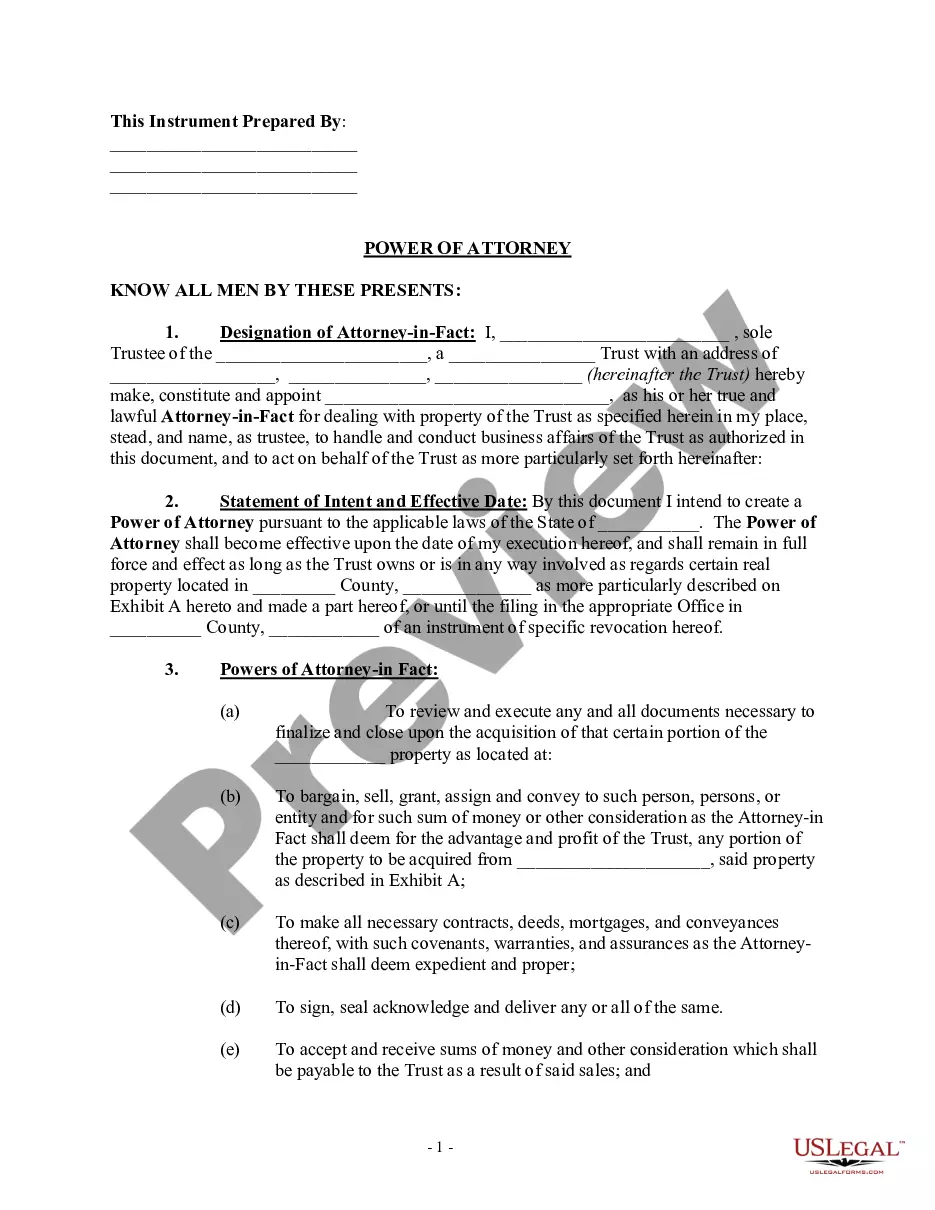
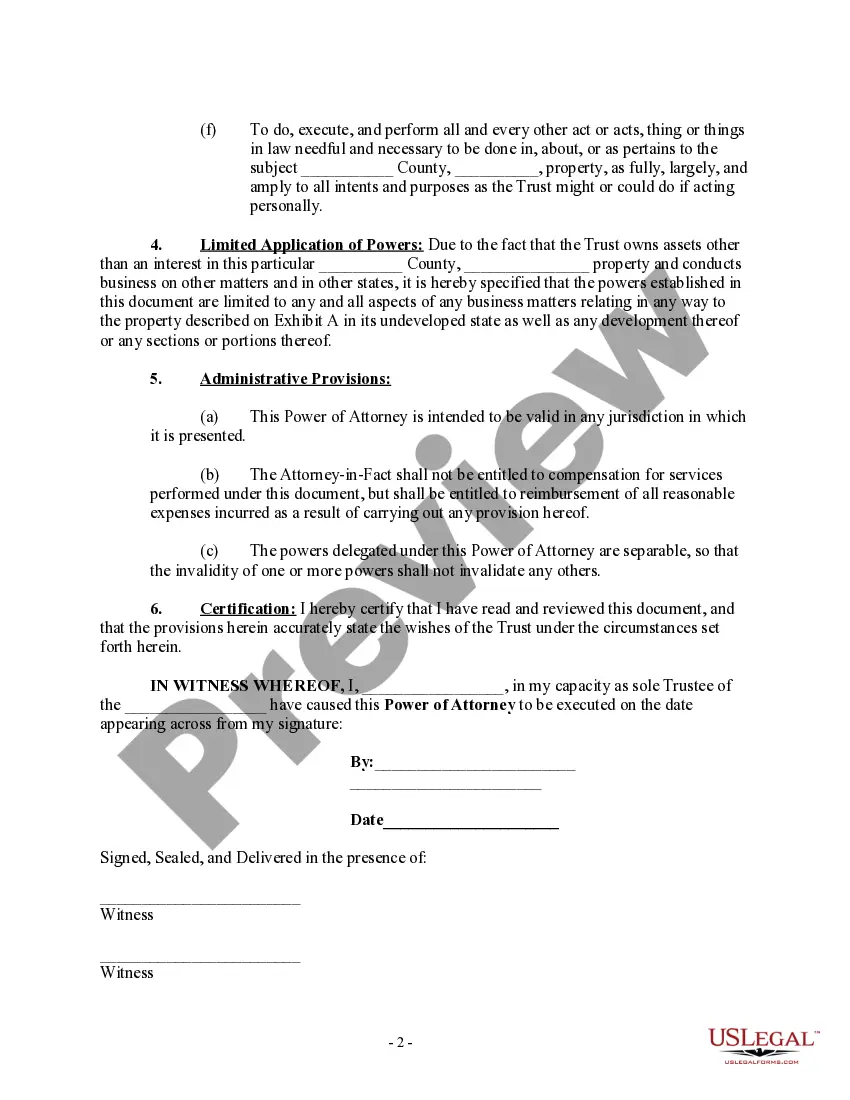
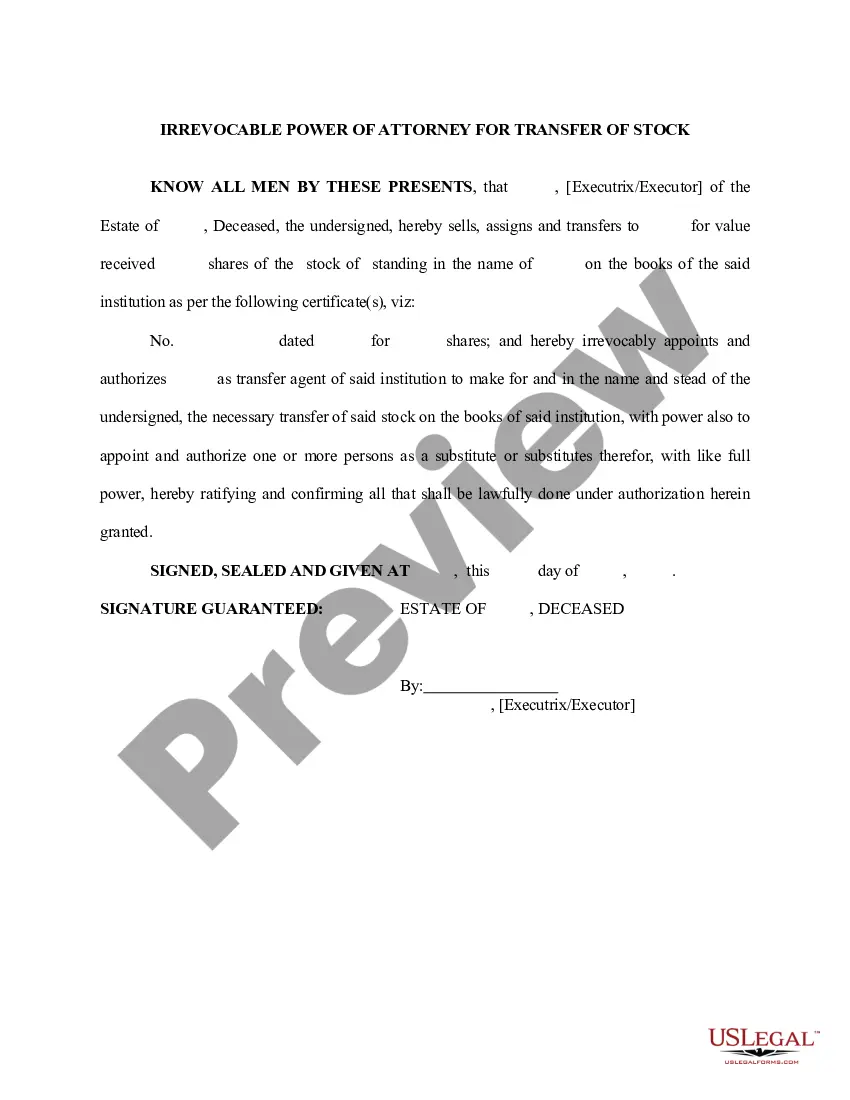
The Power of Attorney by Trustee of Trust is a legal document that allows a trustee to delegate authority to an appointed Attorney-in-Fact to manage and conduct business affairs related to a trust's property. This form is distinct from standard power of attorney documents as it specifically pertains to trusts and the duties of a trustee, ensuring that the management of trust assets is handled effectively by a designated representative.
Form components explained
- Designation of Attorney-in-Fact: Identifies the person authorized to act on behalf of the trust.
- Statement of Intent: Establishes the purpose of the power of attorney and its effective date.
- Powers Granted: Outlines the specific powers assigned to the Attorney-in-Fact regarding trust property.
- Limited Application of Powers: Specifies the scope of authority limited to particular property or transactions.
- Administrative Provisions: Includes conditions regarding the validity of the power of attorney and compensation for the Attorney-in-Fact.
- Certification: Confirms that the document's provisions reflect the wishes of the trust.


Common use cases
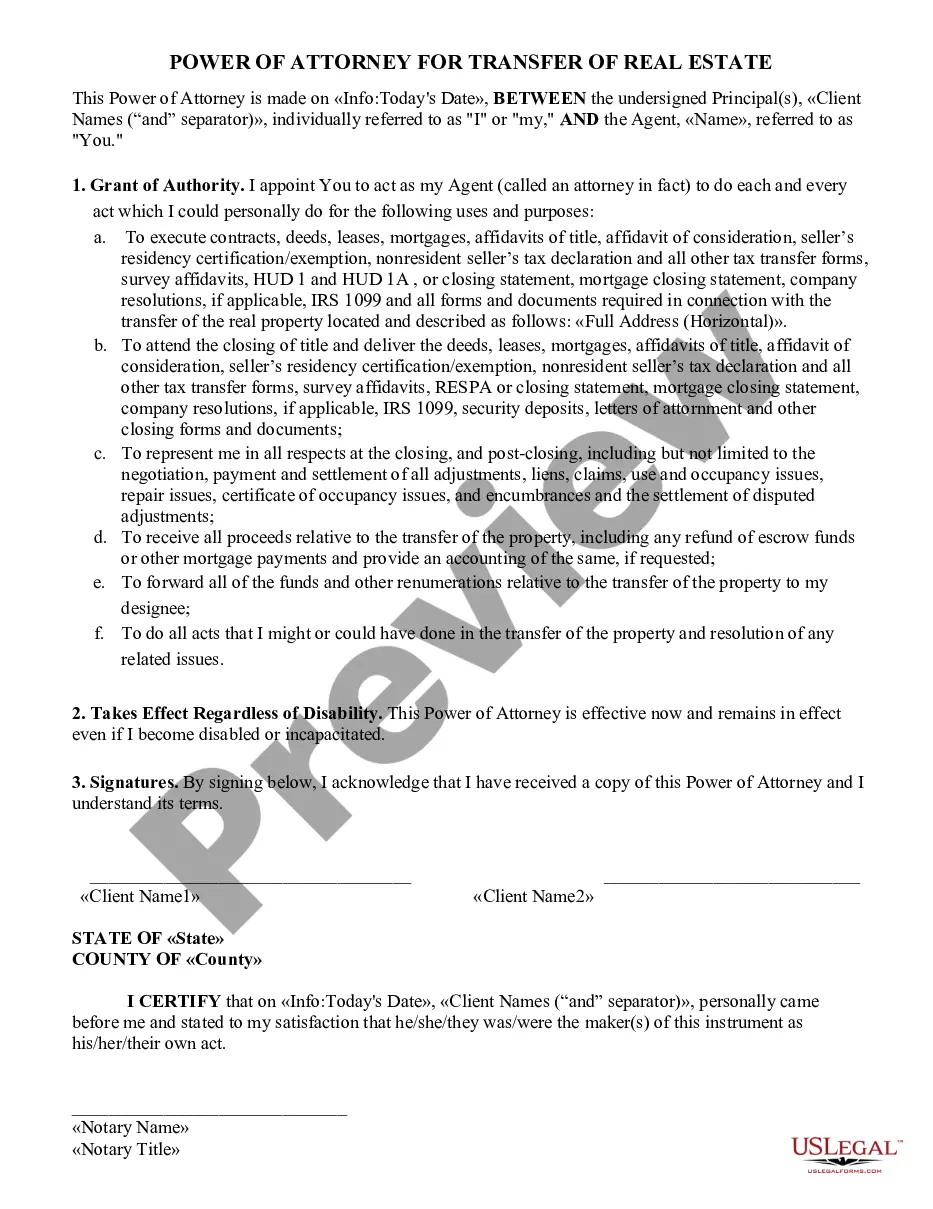
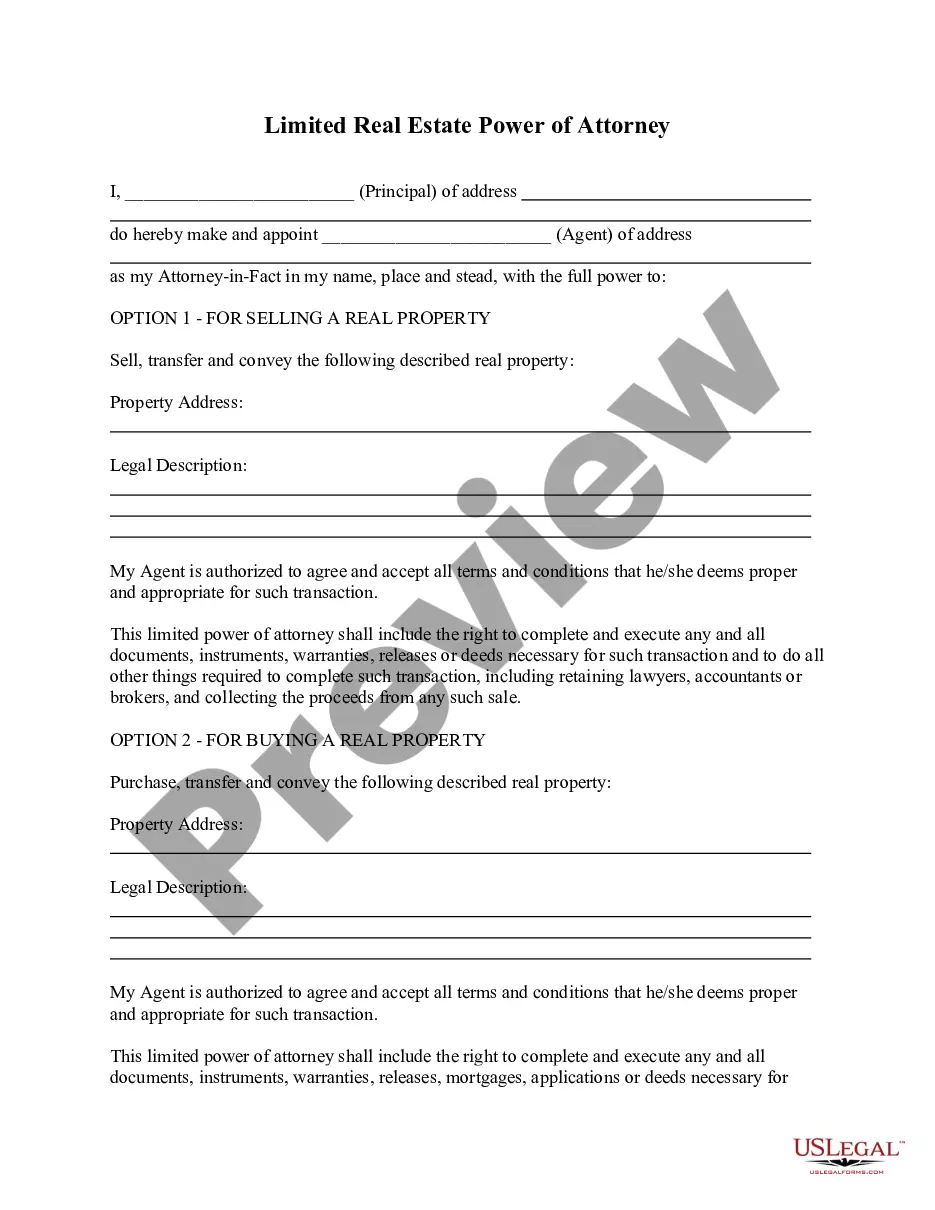
This form should be used when a trustee needs to grant authority to another individual to manage specific assets of the trust, particularly in real estate transactions. It is essential in situations where the trustee cannot be present to handle matters that require immediate attention or when the trustee wishes to delegate responsibilities for efficiency in managing trust property.
Intended users of this form
This form is intended for:
- Trustees of a trust who may need assistance in managing trust property.
- Individuals looking to designate someone they trust to handle certain responsibilities on their behalf.
- Persons engaged in real estate transactions involving trust property.
How to prepare this document
- Identify the trustee and trust: Provide the name of the trustee and the title of the trust.
- Designate the Attorney-in-Fact: Specify the name of the person being appointed as Attorney-in-Fact.
- Detail the property involved: Include information about the specific property related to the trust, as described in Exhibit A.
- Sign and date the document: The trustee must sign the form to validate it, noting the date of execution.
- Include witness signatures if required: Ensure that any necessary witnesses sign the document where indicated.
Notarization guidance
This document requires notarization to meet legal standards. US Legal Forms provides secure online notarization powered by Notarize, allowing you to complete the process through a verified video call, available 24/7.
Get your form ready online
Our built-in tools help you complete, sign, share, and store your documents in one place.
Make edits, fill in missing information, and update formatting in US Legal Forms—just like you would in MS Word.
Download a copy, print it, send it by email, or mail it via USPS—whatever works best for your next step.
Sign and collect signatures with our SignNow integration. Send to multiple recipients, set reminders, and more. Go Premium to unlock E-Sign.
If this form requires notarization, complete it online through a secure video call—no need to meet a notary in person or wait for an appointment.
We protect your documents and personal data by following strict security and privacy standards.

Make edits, fill in missing information, and update formatting in US Legal Forms—just like you would in MS Word.

Download a copy, print it, send it by email, or mail it via USPS—whatever works best for your next step.

Sign and collect signatures with our SignNow integration. Send to multiple recipients, set reminders, and more. Go Premium to unlock E-Sign.

If this form requires notarization, complete it online through a secure video call—no need to meet a notary in person or wait for an appointment.

We protect your documents and personal data by following strict security and privacy standards.
Avoid these common issues
- Failing to specify the property or assets involved, which can lead to confusion about the scope of authority.
- Not signing and dating the document, which may render it invalid.
- Neglecting to have the appropriate witnesses as required by local law.
Benefits of completing this form online
- Convenience: Easily download and complete the form from any location.
- Editability: Customize the fields to match your specific needs before printing.
- Reliability: Access templates drafted by licensed attorneys, ensuring legal accuracy.
Quick recap
- The Power of Attorney by Trustee of Trust is essential for allowing trustees to delegate authority responsibly.
- Proper completion of this form ensures legal empowerment of the Attorney-in-Fact.
- Understanding the specific powers granted and the property's details is crucial for effective management.
Looking for another form?
Form popularity
FAQ
Your power of attorney can only make changes to your living trust if you specifically grant them that authority.However, if the POA document fails to include the power to change your living trust, your agent doesn't have the right to do so.
A trustee only has power over an asset that is owned by the trust. A trustee may delegate their power to a third party by use of a power of attorney.A document which merely gives the attorney-in-fact power over the principal's personal affairs is not sufficient to permit them to exercise authority over the trust.
A trustee only has power over an asset that is owned by the trust. A trustee may delegate their power to a third party by use of a power of attorney.A document which merely gives the attorney-in-fact power over the principal's personal affairs is not sufficient to permit them to exercise authority over the trust.
The Trustee only manages the assets that are owned by the trust, not assets outside the trust.The Power of Attorney controls assets that are not inside your trust such as retirement accounts, life insurance, sometimes annuities, or even bank accounts that are not in trust title.
Who can be a trustee? A trustee, the person who manages the money and assets in a trust, can be almost anyone. A grantor appoints a trustee when they create the trust. In many cases, the person who creates a revocable living trust, also known as the grantor, settlor, or trustor serves as trustee.
It is possible for an attorney to serve as a trustee and as the legal advisor of a California trust. However, it depends on the circumstances. The attorney must be careful and enter into both roles with a great deal of caution.
The only legal requirement in California for a person to be a trustee is that she or he is at least 18 years old and of sound mind. The Trustee must also be a U.S. citizen to avoid adverse tax consequences.
Absent special circumstances,attorneys may be unable to serve as a trustee or executor of a client's Will because of the inherent ethical conflict. Our firm will not serve as trustees of trusts or executors of a client's Will if you retained us to draft your estate planning documents.
2.5 Trustee Act powers Section 25 of the Trustee Act 1925 allows a trustee to grant a power of attorney delegating their functions as a trustee to the attorney.It is possible to grant such a power to an attorney who is also the only other trustee under the trust.