Landlord's Waiver of Right to Retain Equipment
What is this form?
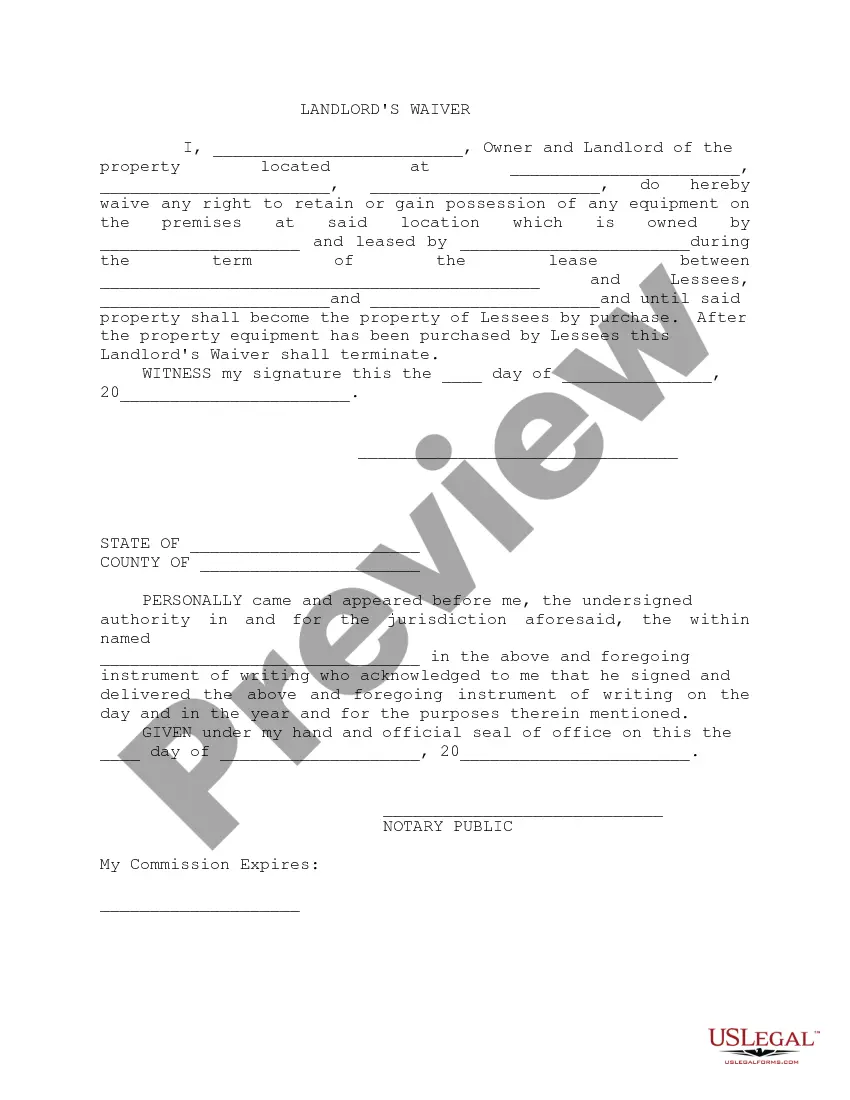
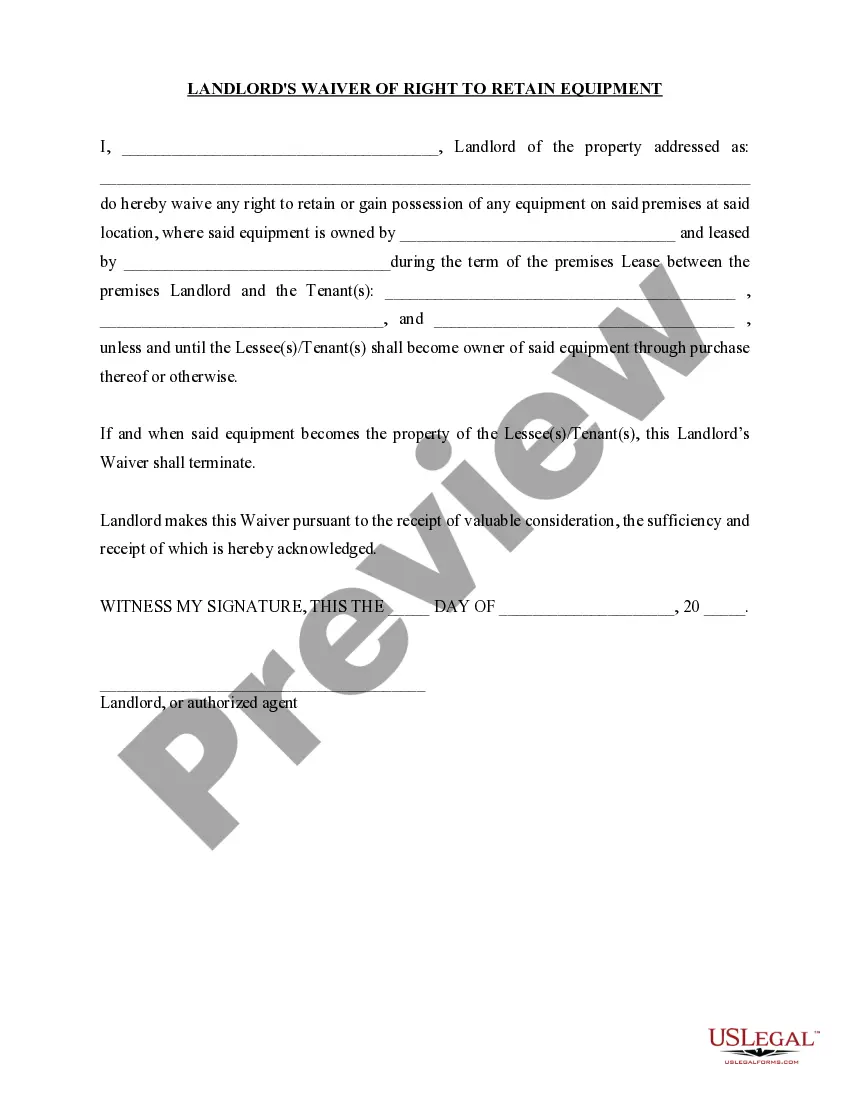
The Landlord's Waiver of Right to Retain Equipment is a legal document that allows a landlord to relinquish their right to retain possession of equipment located on the rented property during the lease term. This waiver protects tenants by ensuring that their equipment remains in their possession, differentiating it from other landlord-tenant agreements that may not address equipment ownership directly.
Main sections of this form
- Landlord's name and acknowledgement of ownership.
- Property address where the equipment is located.
- Name of the equipment owner (tenant).
- Details of the lease agreement between the landlord and tenants.
- Conditions under which the waiver will terminate.
- Signature line for the landlord and notary acknowledgment.
When to use this document
This form is useful in situations where a landlord and tenant have entered into a lease agreement involving equipment use. If a landlord wants to explicitly state that they waive their right to retain equipment owned by the tenant during the lease, this document will serve to protect the tenant's interests, ensuring they retain control over their property.
Who should use this form
- Landlords who lease property that includes tenant-owned equipment.
- Tenants who want assurance that their equipment will not be claimed by the landlord during the lease term.
- Real estate attorneys or property managers handling rental agreements.
How to prepare this document
- Identify the landlord, including their name and property address.
- Specify the name of the tenant who owns the equipment.
- Detail the equipment affected by the waiver.
- Enter the date of the lease agreement and the names of all lessees.
- The landlord must sign and date the form in front of a notary public.
Does this document require notarization?
This form must be notarized to be legally valid. US Legal Forms provides secure online notarization powered by Notarize, allowing you to complete the process through a verified video call.
Get your form ready online
Our built-in tools help you complete, sign, share, and store your documents in one place.
Make edits, fill in missing information, and update formatting in US Legal Forms—just like you would in MS Word.
Download a copy, print it, send it by email, or mail it via USPS—whatever works best for your next step.
Sign and collect signatures with our SignNow integration. Send to multiple recipients, set reminders, and more. Go Premium to unlock E-Sign.
If this form requires notarization, complete it online through a secure video call—no need to meet a notary in person or wait for an appointment.
We protect your documents and personal data by following strict security and privacy standards.

Make edits, fill in missing information, and update formatting in US Legal Forms—just like you would in MS Word.

Download a copy, print it, send it by email, or mail it via USPS—whatever works best for your next step.

Sign and collect signatures with our SignNow integration. Send to multiple recipients, set reminders, and more. Go Premium to unlock E-Sign.

If this form requires notarization, complete it online through a secure video call—no need to meet a notary in person or wait for an appointment.

We protect your documents and personal data by following strict security and privacy standards.
Common mistakes to avoid
- Failing to include the correct addresses for the property and parties involved.
- Not specifying the equipment clearly, leading to potential disputes.
- Omitting the notary acknowledgment, which is crucial for legal validity.
Benefits of using this form online
- Convenient access: Download and complete the form from anywhere.
- Editability: Easily update information before finalizing the document.
- Reliability: Forms are drafted by licensed attorneys, ensuring legal compliance.
Looking for another form?



Form popularity
FAQ
Put cameras everywhere (Nest Cam is a good brand), make sure you put signs "Premises secured by video surveillance" and you will be good to go. While it won't prevent the landlord from entering, it will prevent the landlord from doing anything funky, and who knows, with time even stop.
While tenants cannot unreasonably deny access to a landlord, landlords must also follow all of the state and local rules regarding access to tenants' apartments. Roughly half of states have rules governing landlord entry into tenants' apartments.
The big take-away is that in most circumstances a landlord cannot enter a property without agreement from the tenant. And If the landlord ignores the law and enters the property without permission, the tenant may be able to claim damages or gain an injunction to prevent the landlord doing it again.
The landlord can enter without consent, however they must provide you with a proper notice to enter that: Gives the required minimum notice for the state you live in;No notice is required for an emergency to do urgent repairs or if the landlord is concerned about your welfare.