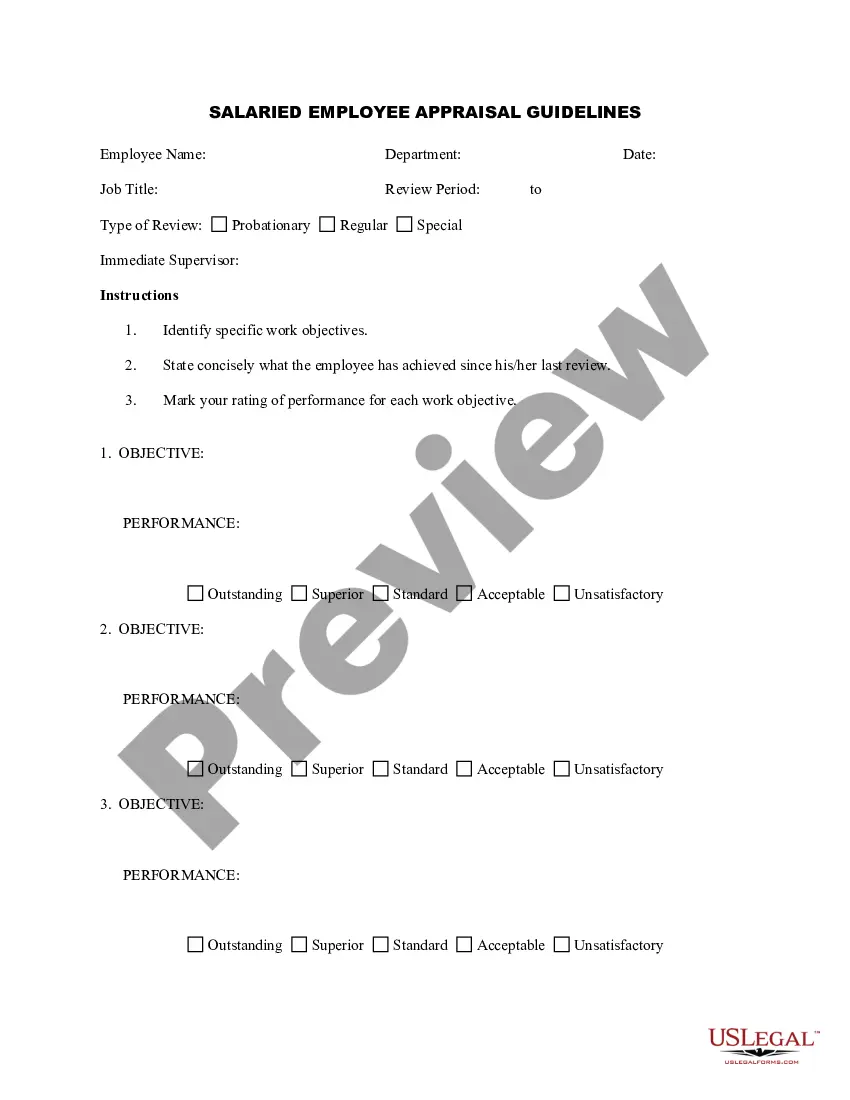
Salaried Employee Appraisal Guidelines - General
Overview of this form
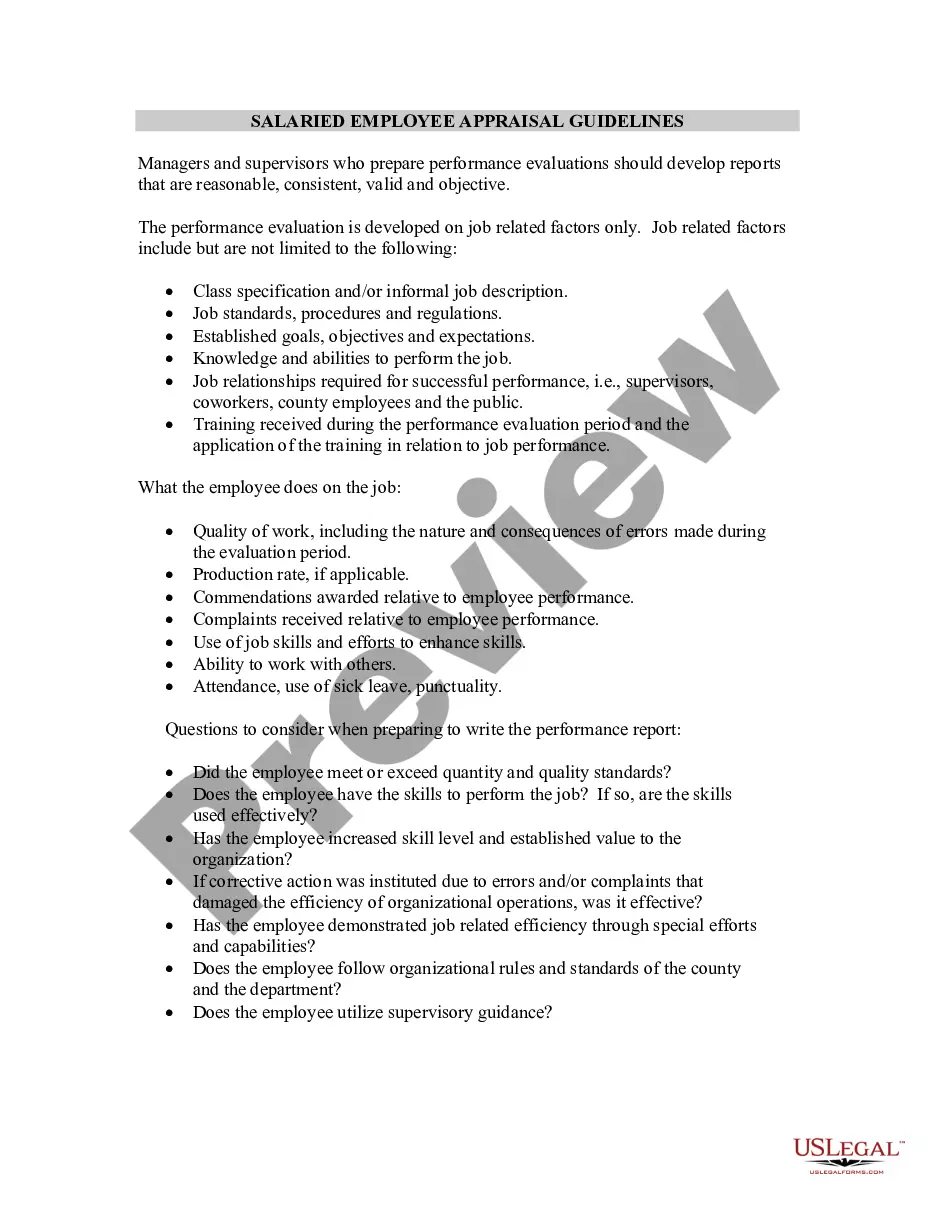
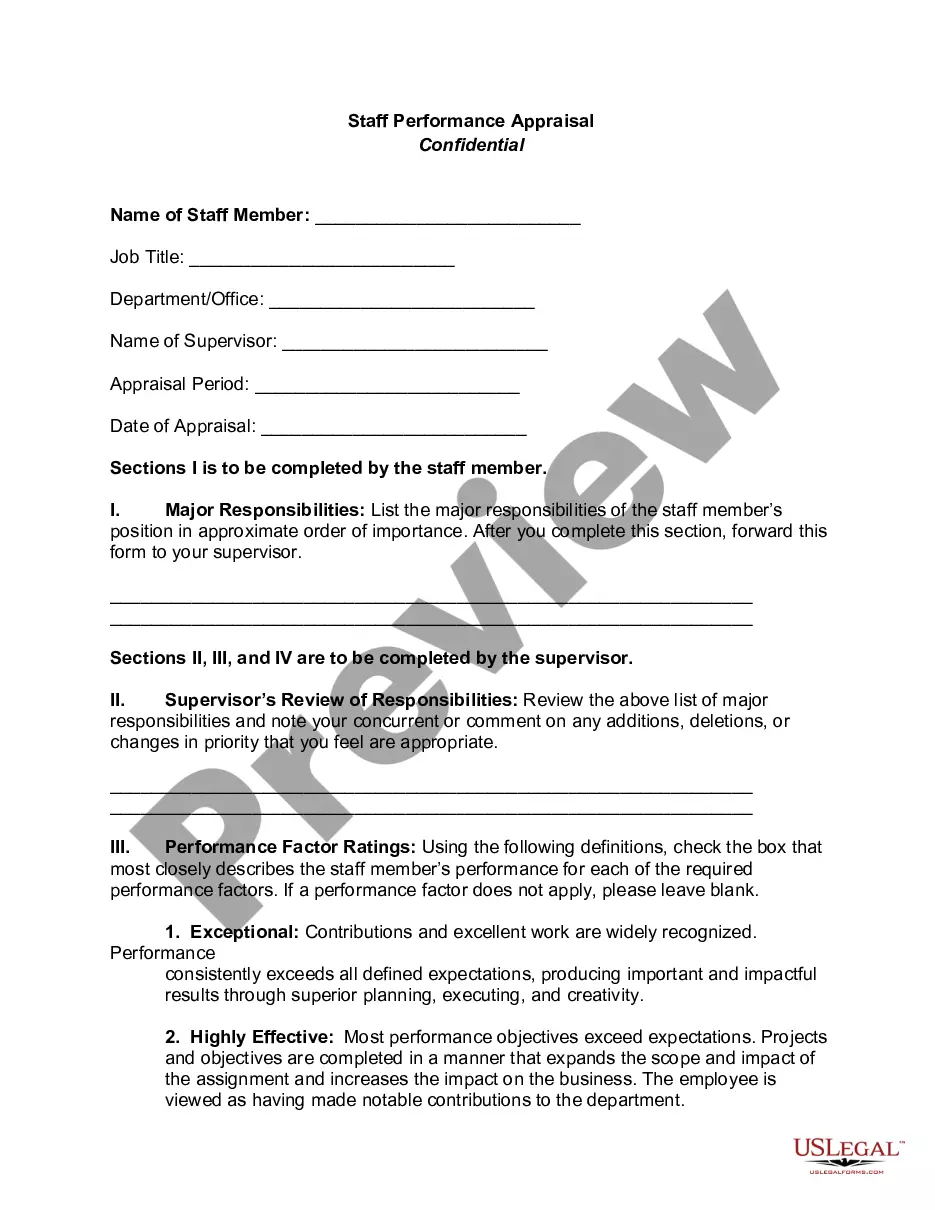
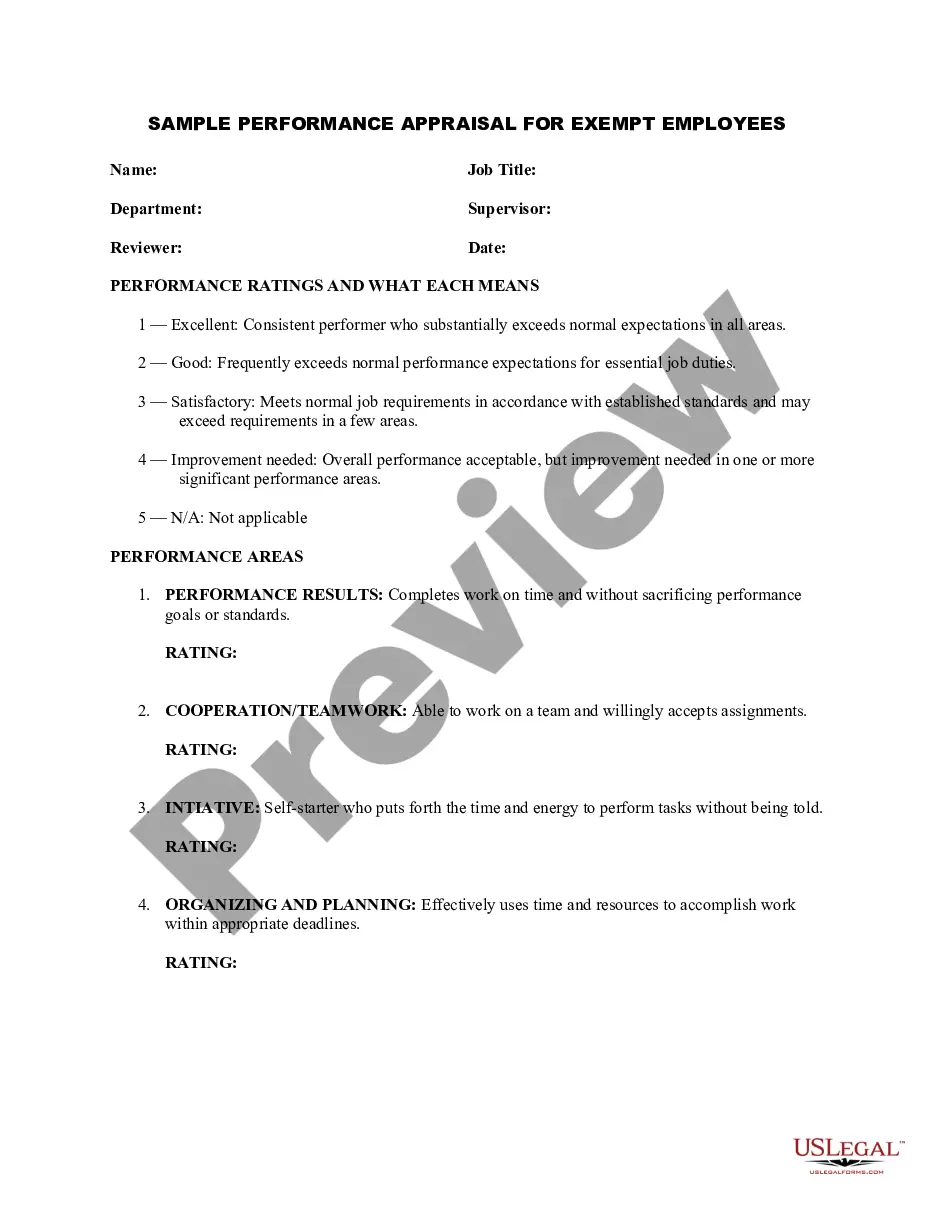
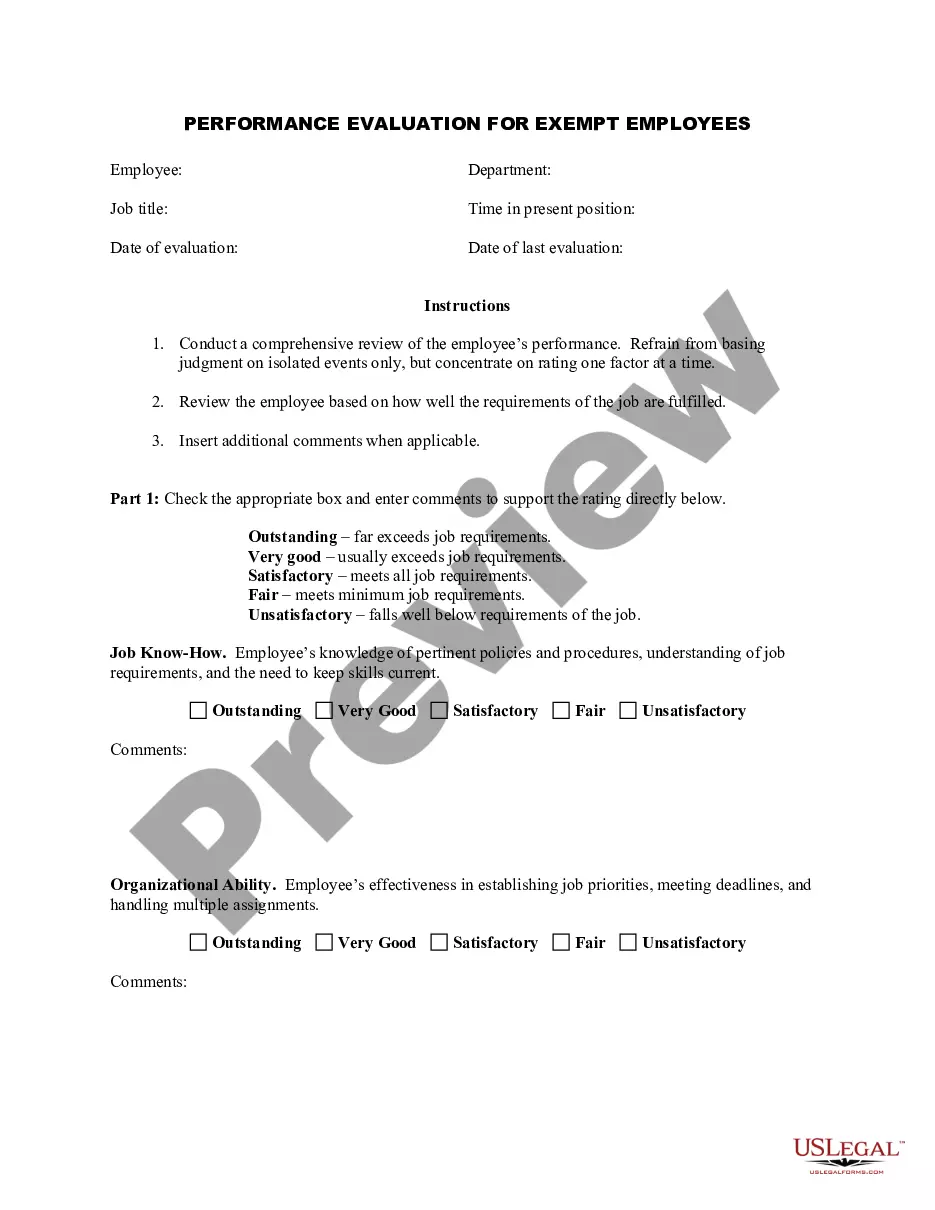
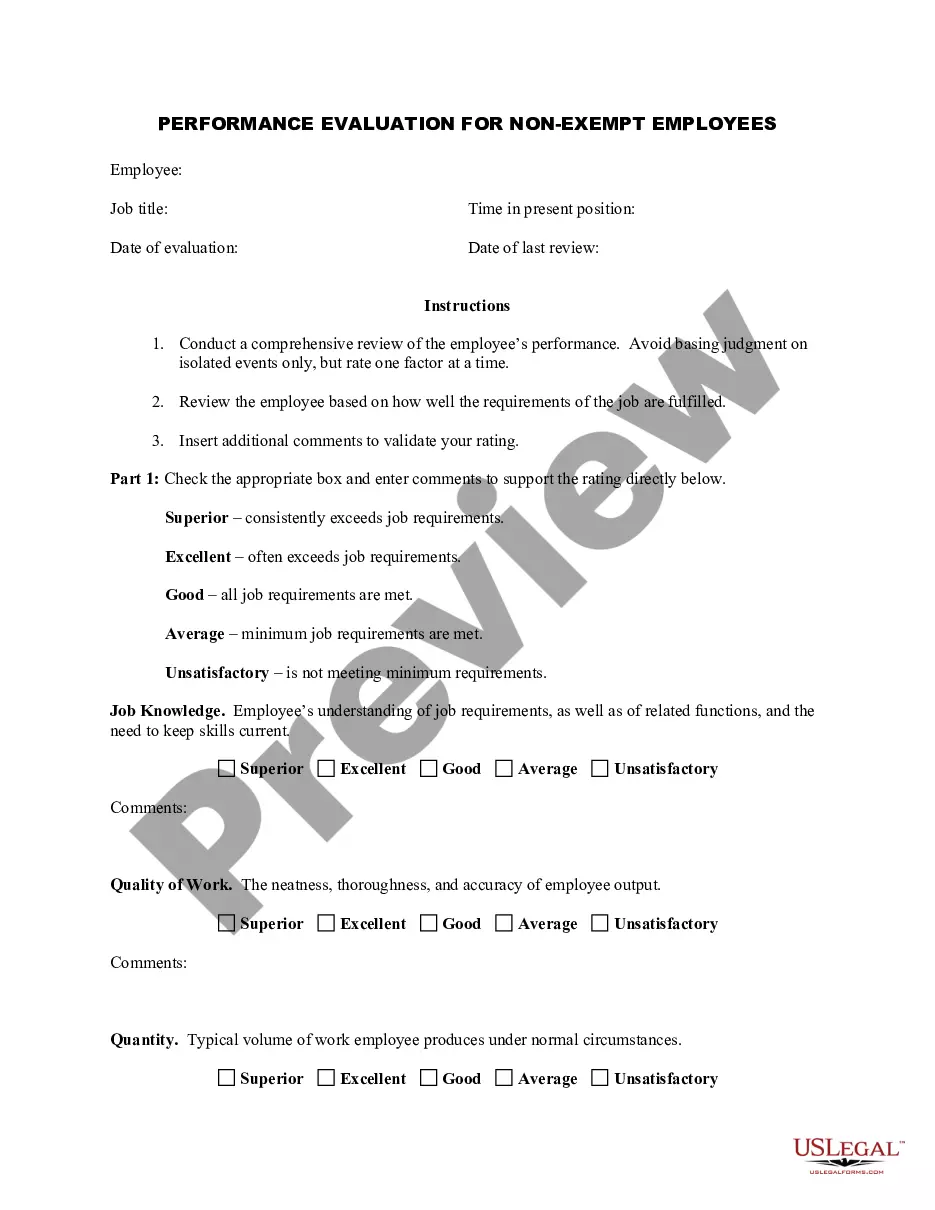
The Salaried Employee Appraisal Guidelines are designed to assist managers and supervisors in conducting fair and effective performance evaluations for salaried employees. This form provides structured criteria for evaluating employees based on job-related factors, distinct from general employee review templates. It emphasizes objective reporting, helping to maintain consistency in evaluations and support organizational effectiveness.
Form components explained
- Job-related factors for evaluation, such as job specifications and established goals.
- Criteria for assessing employee performance, including quality of work and attendance.
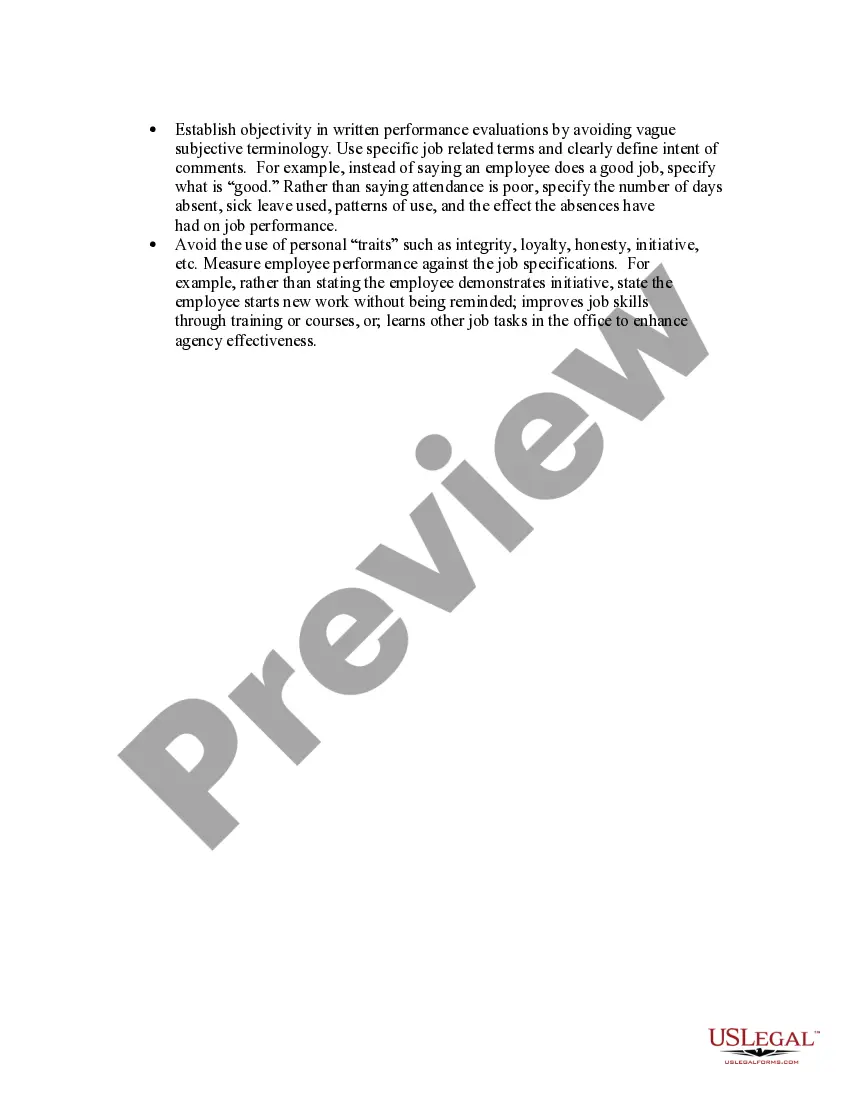
- Guidelines for developing objective performance reports with clear definitions.
- Questions to consider that help in the evaluation process.
- Final comments to reinforce objectivity in written evaluations.
When to use this document
This form is useful when an organization needs to evaluate the performance of its salaried employees. It should be utilized during formal review periods, for annual performance assessments, or when determining promotions and raises. It can also be beneficial in identifying training needs or corrective actions related to employee performance issues.
Who this form is for
- Managers responsible for supervising salaried employees.
- Human resources professionals involved in performance management.
- Business owners looking to establish a consistent evaluation process.
- Team leaders conducting periodic performance reviews.
Instructions for completing this form
- Identify job-related factors applicable to the employee's role.
- Evaluate the employeeâs performance against established goals and standards.
- Provide specific examples and metrics to support the evaluation.
- Consider feedback from supervisors, coworkers, and other relevant sources.
- Draft final comments to summarize the evaluation, ensuring objectivity.
Is notarization required?
Notarization is not commonly needed for this form. However, certain documents or local rules may make it necessary. Our notarization service, powered by Notarize, allows you to finalize it securely online anytime, day or night.
Get your form ready online
Our built-in tools help you complete, sign, share, and store your documents in one place.
Make edits, fill in missing information, and update formatting in US Legal Forms—just like you would in MS Word.
Download a copy, print it, send it by email, or mail it via USPS—whatever works best for your next step.
Sign and collect signatures with our SignNow integration. Send to multiple recipients, set reminders, and more. Go Premium to unlock E-Sign.
If this form requires notarization, complete it online through a secure video call—no need to meet a notary in person or wait for an appointment.
We protect your documents and personal data by following strict security and privacy standards.

Make edits, fill in missing information, and update formatting in US Legal Forms—just like you would in MS Word.

Download a copy, print it, send it by email, or mail it via USPS—whatever works best for your next step.

Sign and collect signatures with our SignNow integration. Send to multiple recipients, set reminders, and more. Go Premium to unlock E-Sign.

If this form requires notarization, complete it online through a secure video call—no need to meet a notary in person or wait for an appointment.

We protect your documents and personal data by following strict security and privacy standards.
Typical mistakes to avoid
- Using vague language that lacks specific examples of performance.
- Failing to consider all relevant job-related factors.
- Relying on personal traits rather than job specifications for evaluation.
- Not including feedback from others involved with the employee.
- Neglecting to document attendance and absenteeism accurately.
Advantages of online completion
- Convenient access to professionally drafted appraisal guidelines.
- Editability allows for customization to meet specific organizational needs.
- Reliability of legal forms drafted by licensed attorneys ensures compliance.
- Easy download format facilitates quick and efficient use.
Legal use & context
- The form is intended to support legally compliant performance evaluations.
- Proper documentation can help protect against potential disputes or claims.
- Performance evaluations affect promotion, termination, and overall employee relations.
Key takeaways
- The form aids in producing objective and fair employee performance evaluations.
- Clearly defined job-related factors enhance the clarity of evaluations.
- Use this form to ensure compliance with standard appraisal practices across the organization.
Looking for another form?


Form popularity
FAQ
Share your brilliant successes. Share what you've learned. Share your challenges. Be honest. Take time to do it well. Don't attempt to complete it in one go.
Step 1: Establish performance standards. Step 2: Communicate performance standards. Step 3: Measure performance. Step 4: Compare actual performance to performance standards. Step 5: Discuss the appraisal with the employee. Step 6: Implement personnel action.
A performance appraisal is a regular review of an employee's job performance and overall contribution to a company. Also known as an annual review, performance review or evaluation, or employee appraisal, a performance appraisal evaluates an employee's skills, achievements, and growth--or lack thereof.
The four elements of Purpose, Outcomes, Accountability and Teamwork need to be used as the foundation of a performance culture.
Keep the Audience in Mind. Appraisal reports are written for senior management in your organization. Stay Relevant. Keep Track of All Achievements. Use Specific, Measurable, Confident Language. Document Goals. Performance Review Examples for Writing Skills. Do the Identified Writing Skills Support Document Goals?
Defined Goals and Objectives. Continuous Feedback. Configurations Flexibility. Self Evaluation. Compensation and Rewards. People Analytics. Performance improvement plan. Overall Assessment.
Design a legally valid performance review process. Design a standard form for performance appraisals. Schedule the first performance review for six months after the employee starts employment. Initiate the performance review process and upcoming meeting.
If your company ties employee compensation to performance reviews, you may want to reconsider your approach. You can either tie pay increases to market conditions, giving your employees raises when the company is doing well and withholding them during slumps, or you can give raises based on length of service.
Performance appraisal has three basic functions: (1) to provide adequate feedback to each person on his or her performance; (2) to serve as a basis for modifying or changing behavior toward more effective working habits; and (3) to provide data to managers with which they may judge future job assignments and