Checklist - FAQ About Patents
What this document covers
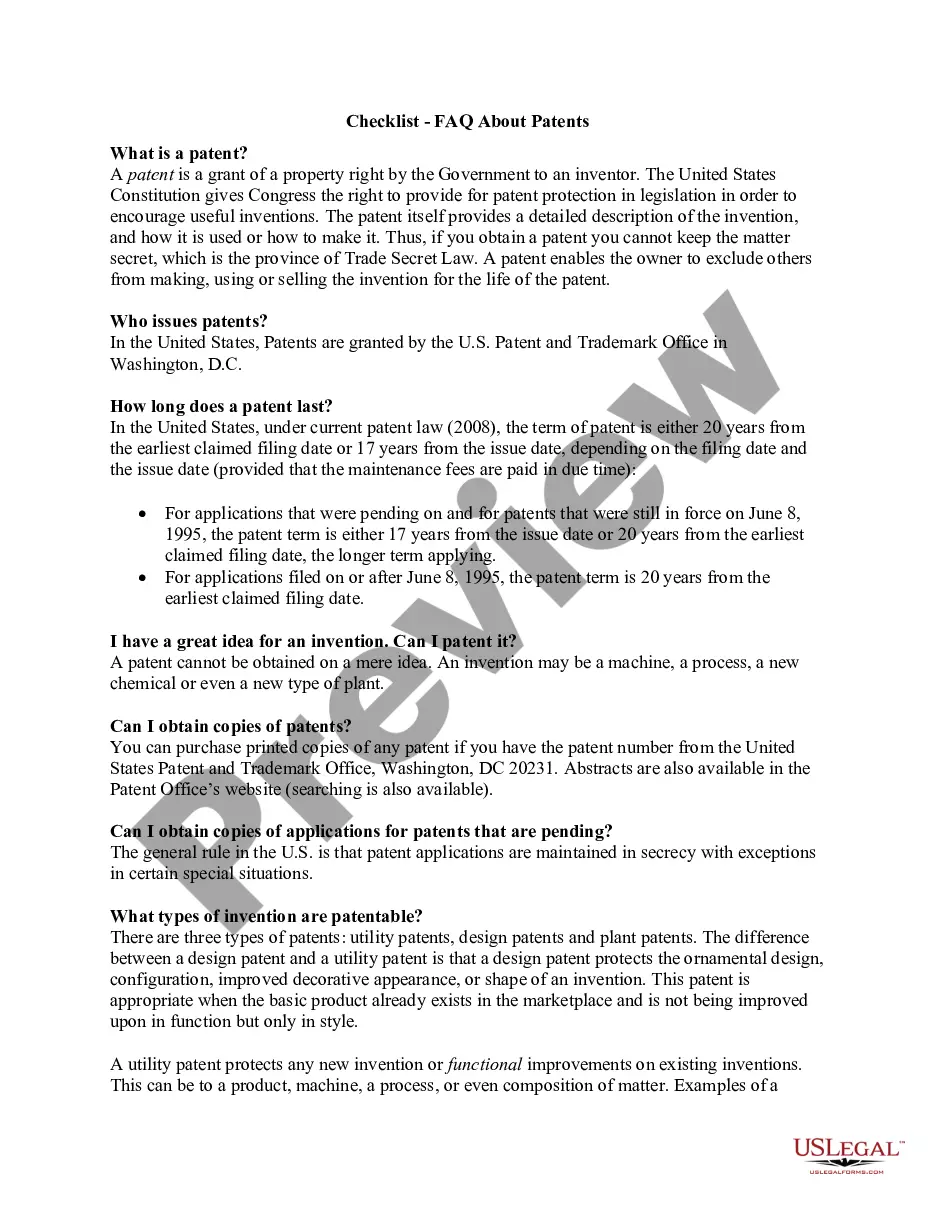
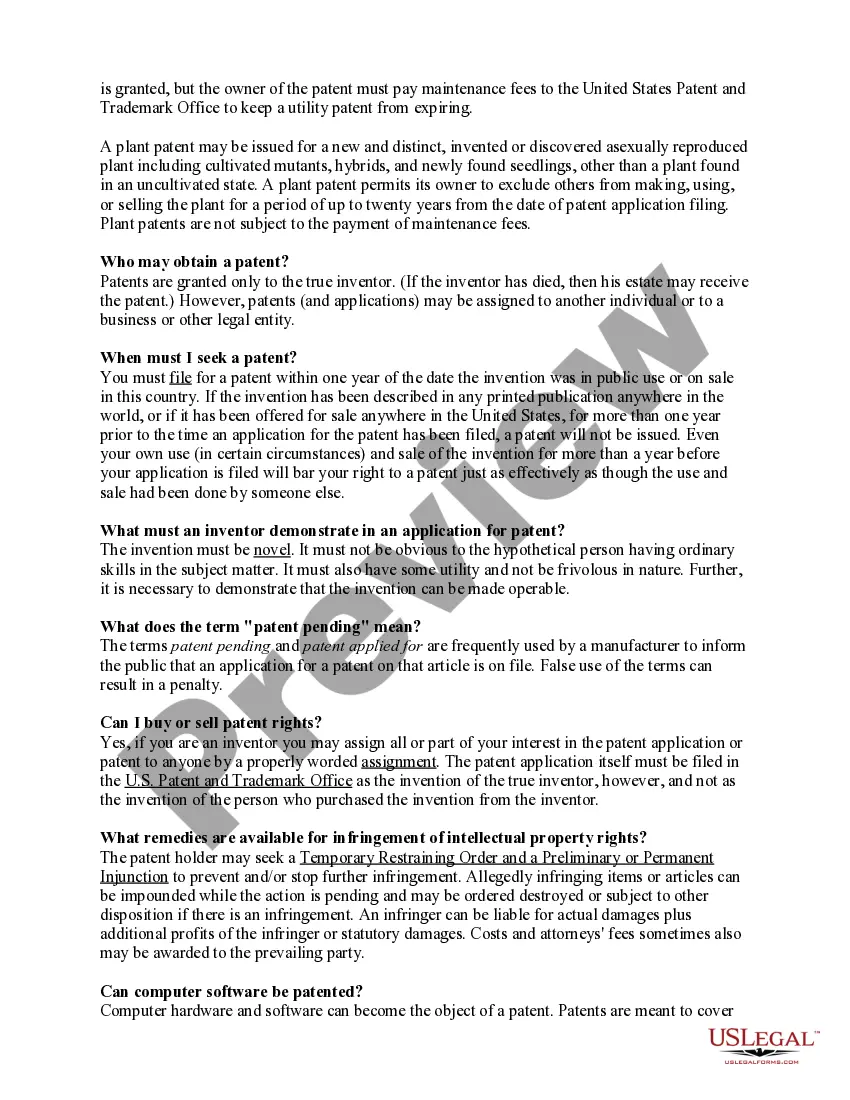
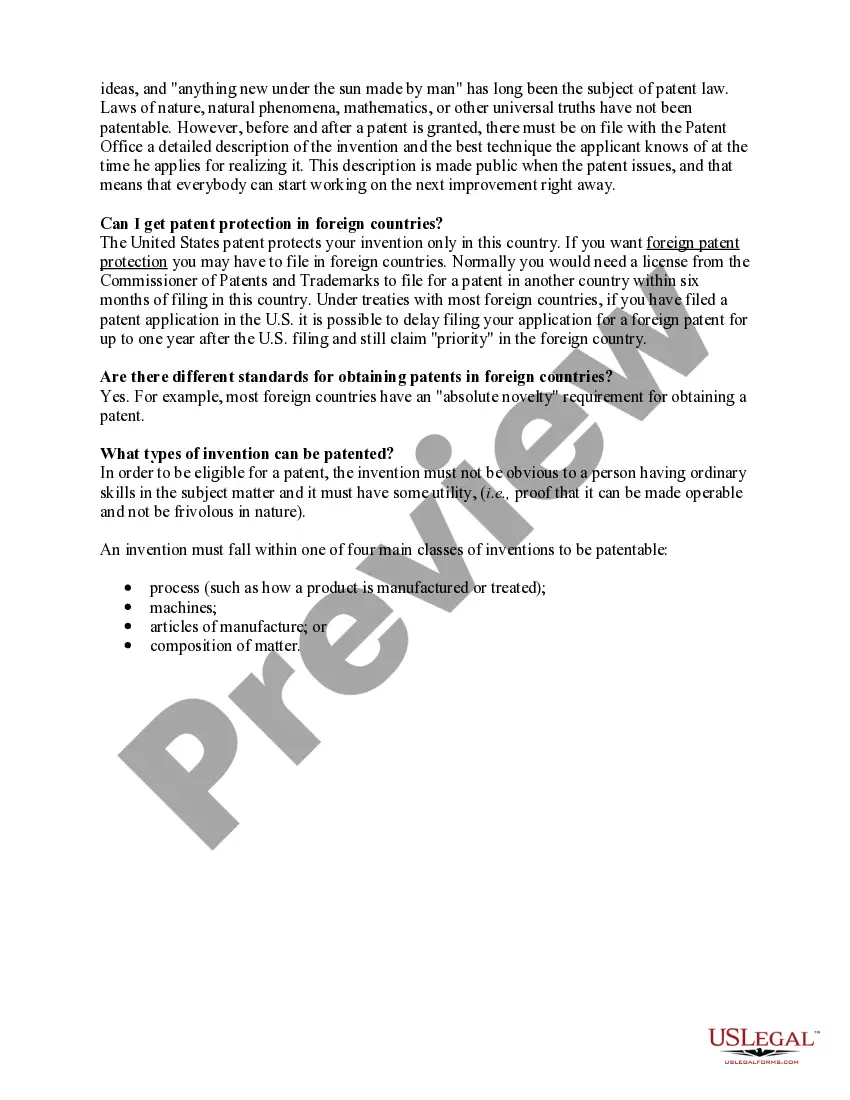
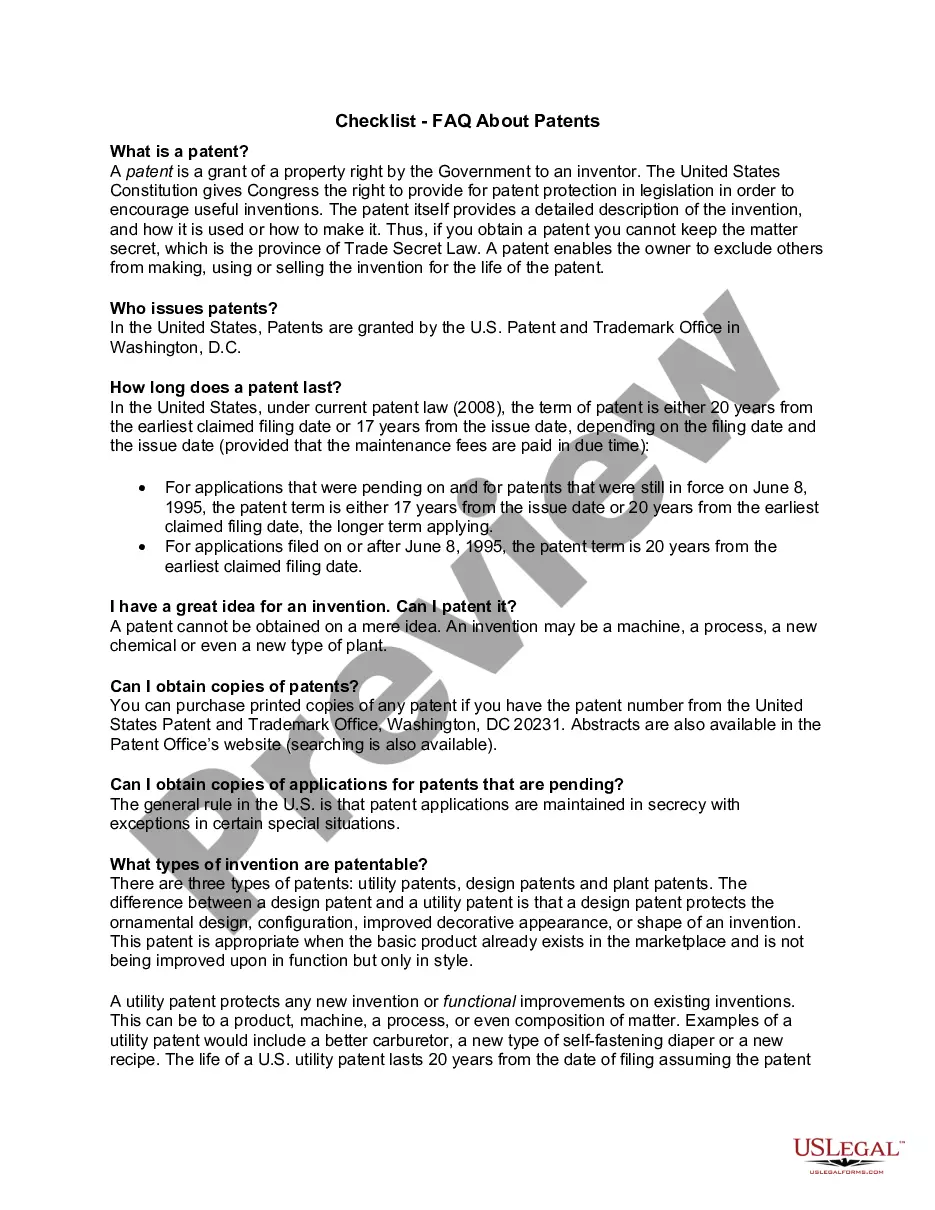
The Checklist - FAQ About Patents is a comprehensive resource that helps inventors understand the patent process. It provides key information regarding the nature of patents, how they are issued, the duration of protection, and essential steps for obtaining a patent. This form is designed for those who may have little to no legal experience but need clear guidance on patent-related inquiries.
What’s included in this form
- An overview of what a patent is and its purpose in protecting inventions.
- Details on the types of patents: utility, design, and plant patents.
- The process to apply for a patent and requirements for eligibility.
- Information on patent ownership and rights, including selling or assigning patents.
- Guidance on the potential for infringement and remedies available.
When this form is needed
This form is essential when you want to gain a clearer understanding of the patent application process. Use this checklist if you have an invention idea and need to determine if it's patentable, or if you are ready to file a patent application and need to know the requirements and procedures involved.
Intended users of this form
- Inventors looking to patent their inventions.
- Businesses wanting to protect their intellectual property.
- Individuals interested in learning about the patent process.
- Law students or professionals in need of a basic understanding of patent law.
Completing this form step by step
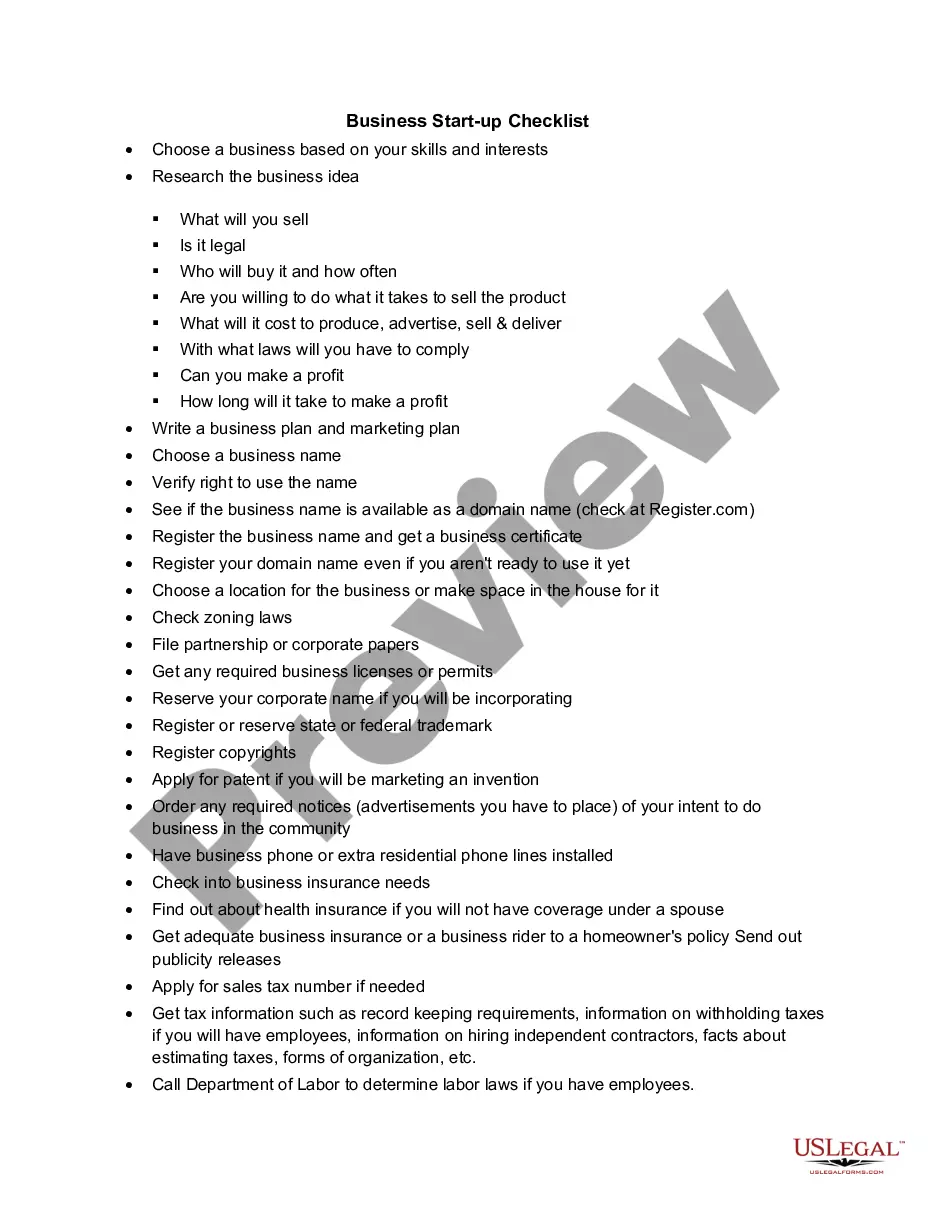
- Review the definition of a patent to understand its relevance.
- Identify the type of patent you may need based on your invention.
- Research the requirements for filing a patent application and ensure your invention is novel.
- Determine the appropriate timeline for filing, especially concerning public disclosures.
- Compile necessary documentation including descriptions and drawings of the invention.
Notarization requirements for this form
This form usually doesn’t need to be notarized. However, local laws or specific transactions may require it. Our online notarization service, powered by Notarize, lets you complete it remotely through a secure video session, available 24/7.
Get your form ready online
Our built-in tools help you complete, sign, share, and store your documents in one place.
Make edits, fill in missing information, and update formatting in US Legal Forms—just like you would in MS Word.
Download a copy, print it, send it by email, or mail it via USPS—whatever works best for your next step.
Sign and collect signatures with our SignNow integration. Send to multiple recipients, set reminders, and more. Go Premium to unlock E-Sign.
If this form requires notarization, complete it online through a secure video call—no need to meet a notary in person or wait for an appointment.
We protect your documents and personal data by following strict security and privacy standards.

Make edits, fill in missing information, and update formatting in US Legal Forms—just like you would in MS Word.

Download a copy, print it, send it by email, or mail it via USPS—whatever works best for your next step.

Sign and collect signatures with our SignNow integration. Send to multiple recipients, set reminders, and more. Go Premium to unlock E-Sign.

If this form requires notarization, complete it online through a secure video call—no need to meet a notary in person or wait for an appointment.

We protect your documents and personal data by following strict security and privacy standards.
Mistakes to watch out for
- Failing to conduct a prior art search to determine if the invention is truly novel.
- Delaying the application process after public disclosure of the invention.
- Assuming that all ideas can be patented without understanding the criteria.
Why complete this form online
- Easy access to comprehensive information on patents.
- Downloadable format allows for easy editing and personal use.
- Reliable guidance drafted by licensed attorneys.
Legal use & context
- Understanding patent law is crucial for protecting an inventor's rights.
- Enforcement of patent rights is governed by federal law and can vary in different jurisdictions.
- With a valid patent, the holder can take legal action against infringers for damages.
Looking for another form?
Form popularity
FAQ
Patents and Utility Models. Trademarks. Industrial Designs. Search services. Publications.
There are five requirements that must be met to obtain a patent: patentable subject matter, utility, novelty, nonobviousness and enablement.
Requirements for Patentability. The five primary requirements for patentability are: (1) patentable subject matter, (2) utility, (3) novelty, (4) nonobviousness, and (5) enablement.
Patent applications: the three criteria Novelty. This means that your invention must not have been made public ? not even by yourself ? before the date of the application. Inventive step. This means that your product or process must be an inventive solution.Industrial applicability.
A patent is an exclusive right granted for an invention, which is a product or a process that provides, in general, a new way of doing something, or offers a new technical solution to a problem. To get a patent, technical information about the invention must be disclosed to the public in a patent application.