Jury Instruction - Good Faith Defense To Charge Of Intent To Defraud
Understanding this form
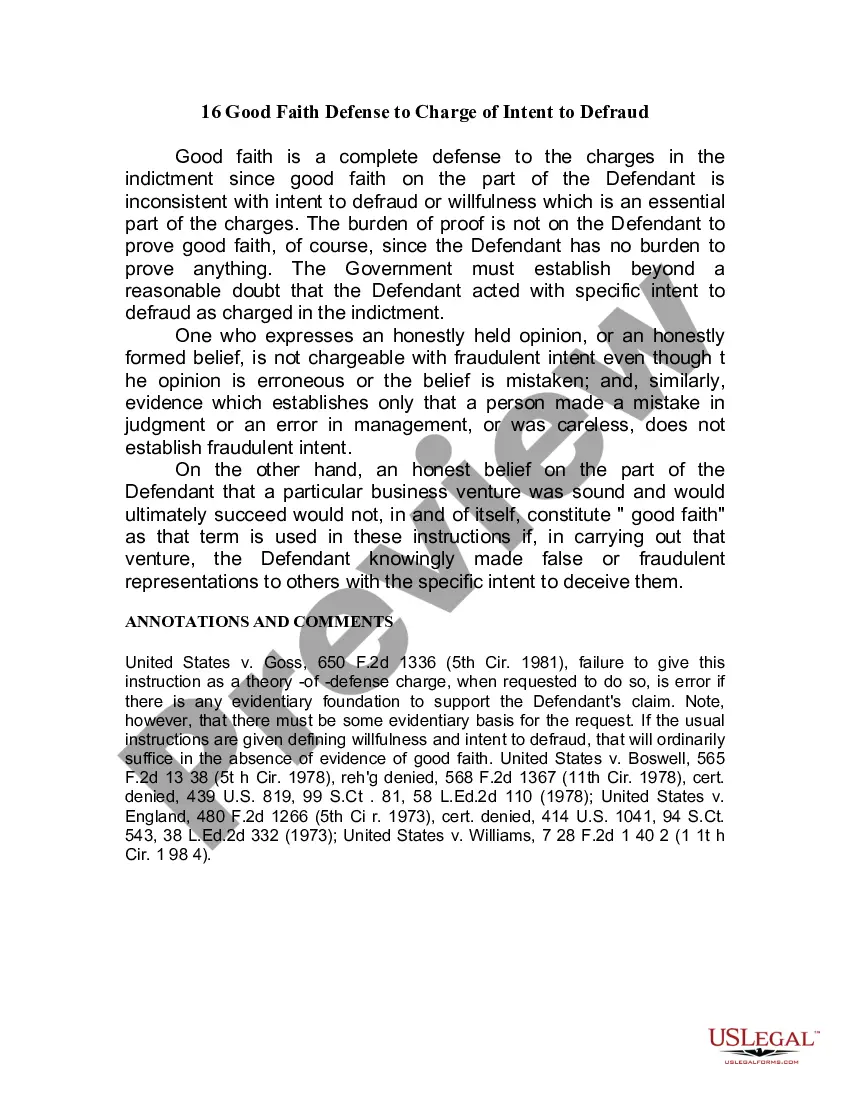
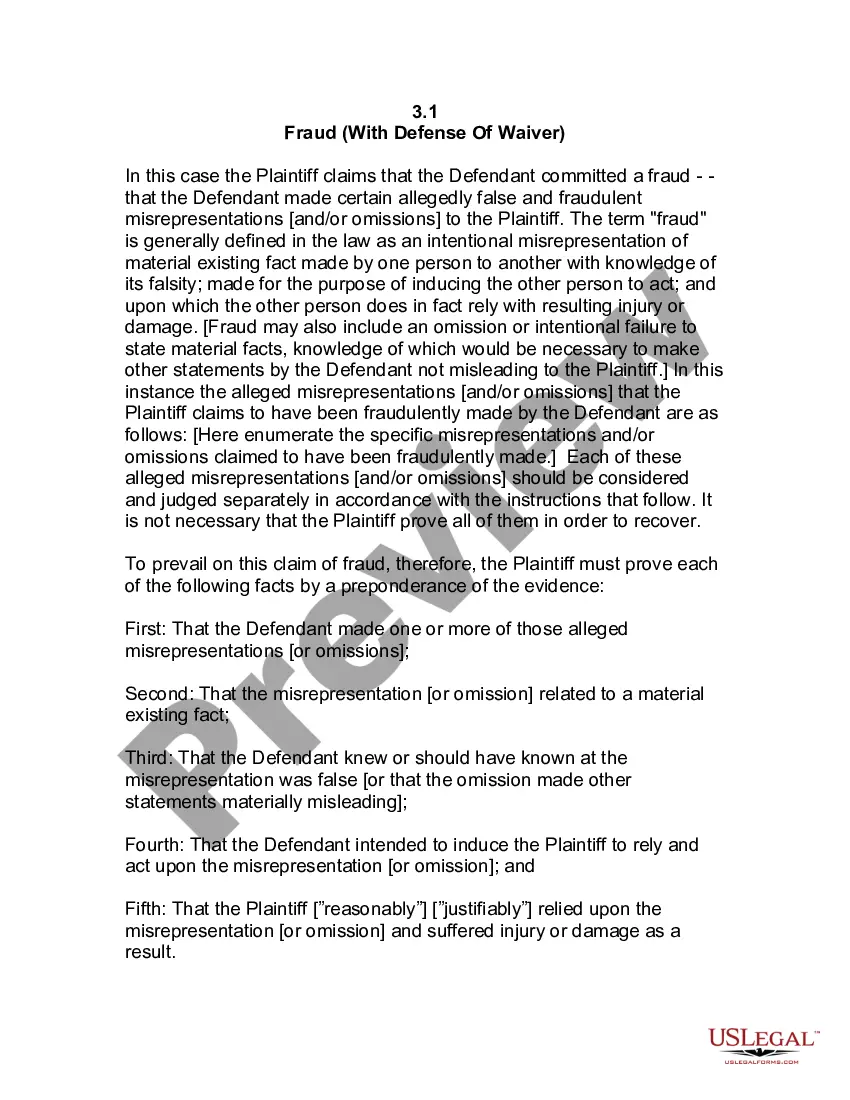
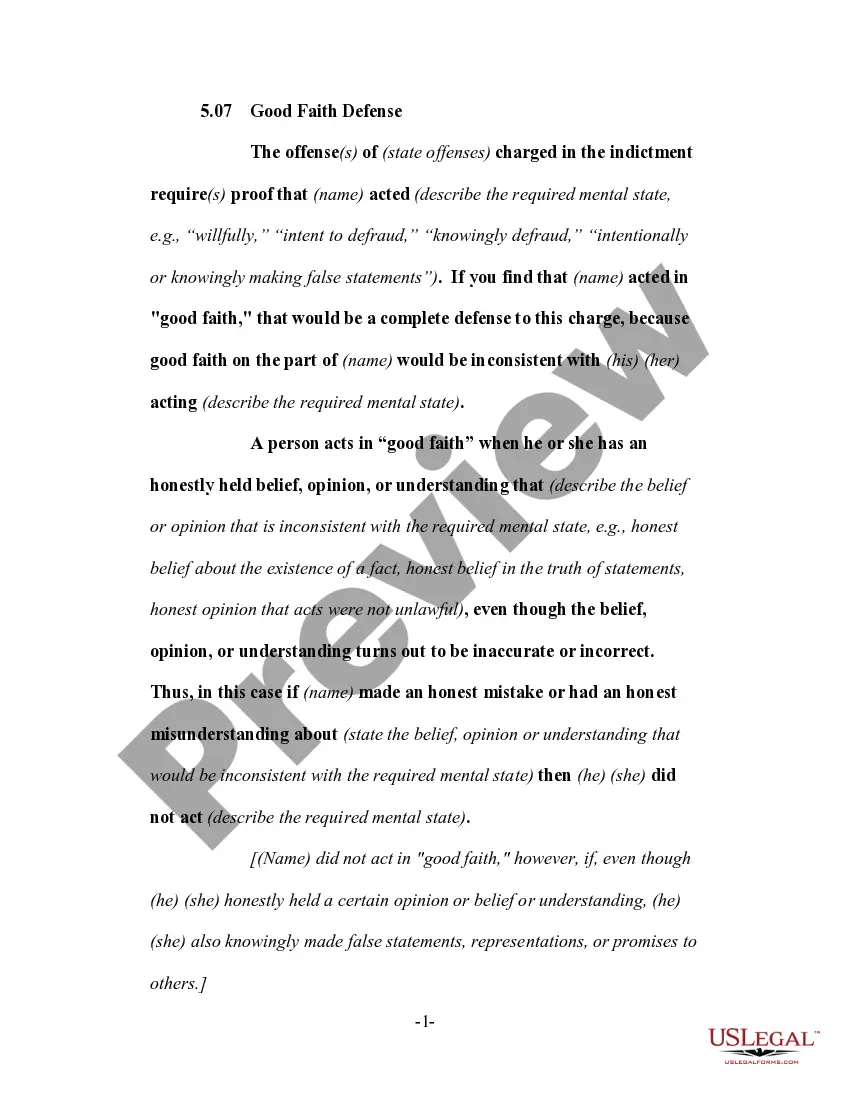
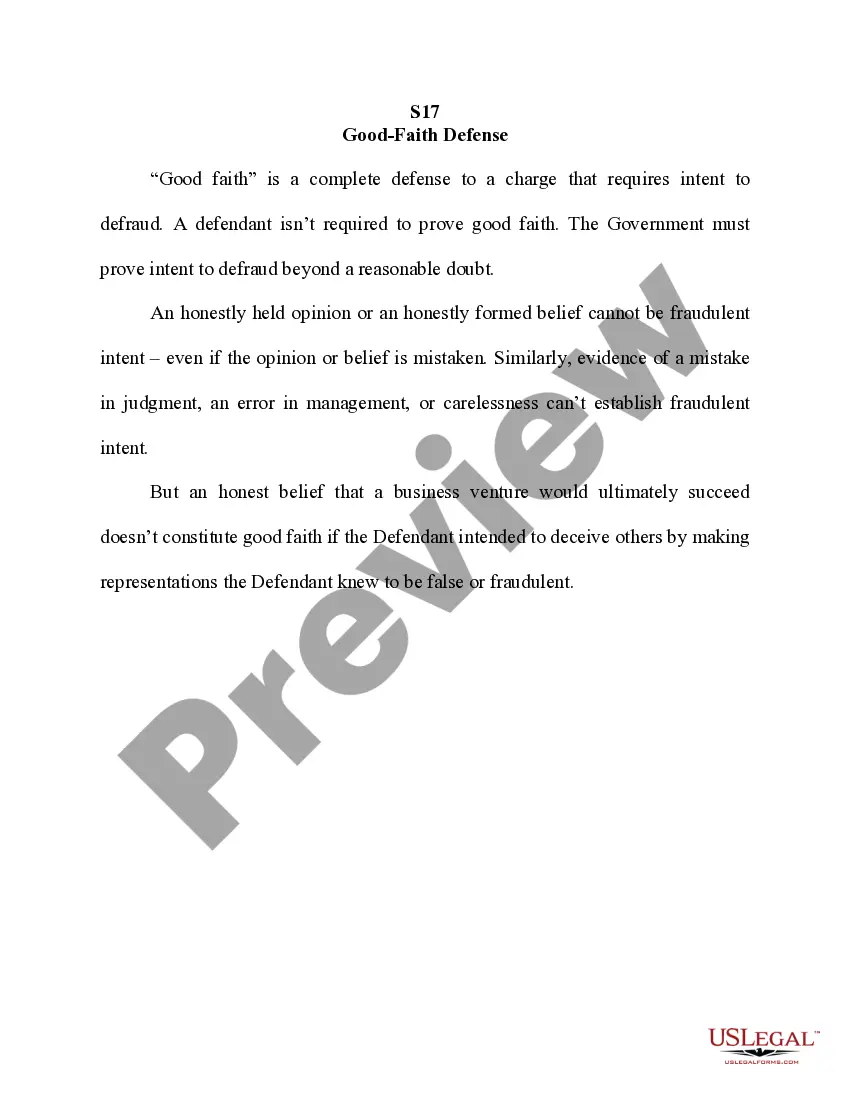
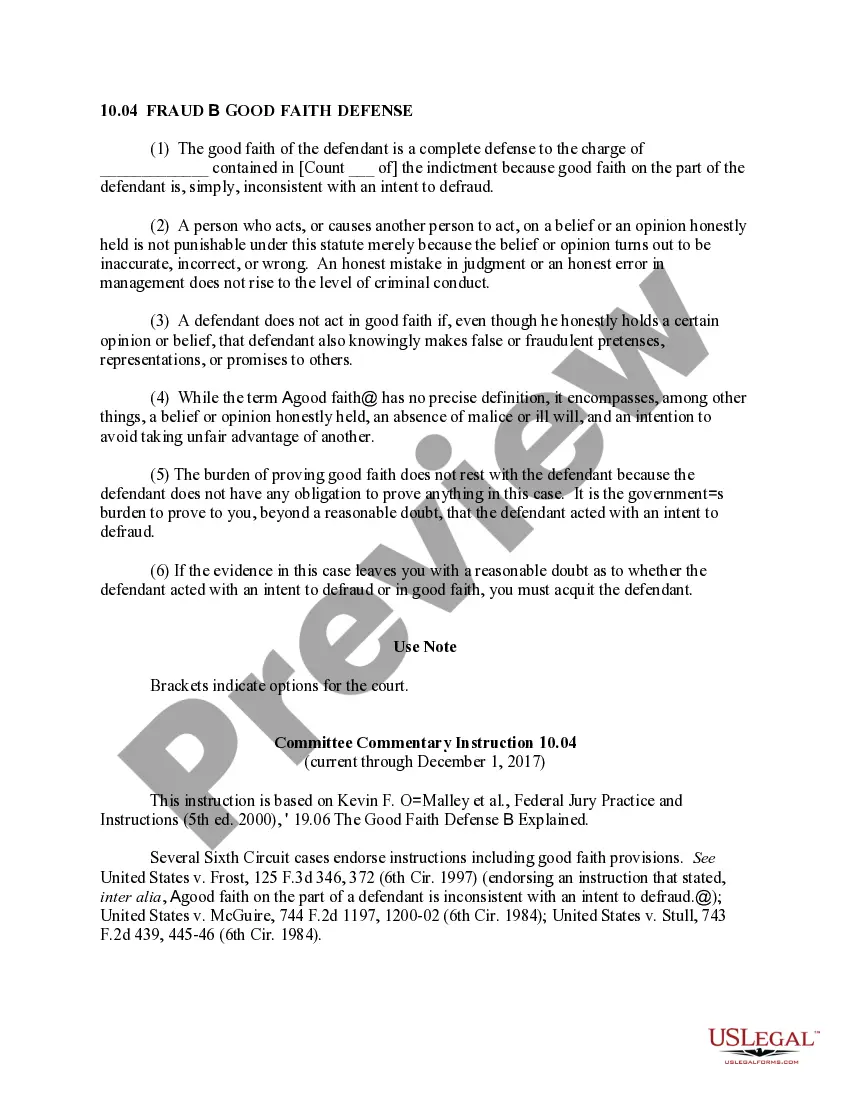
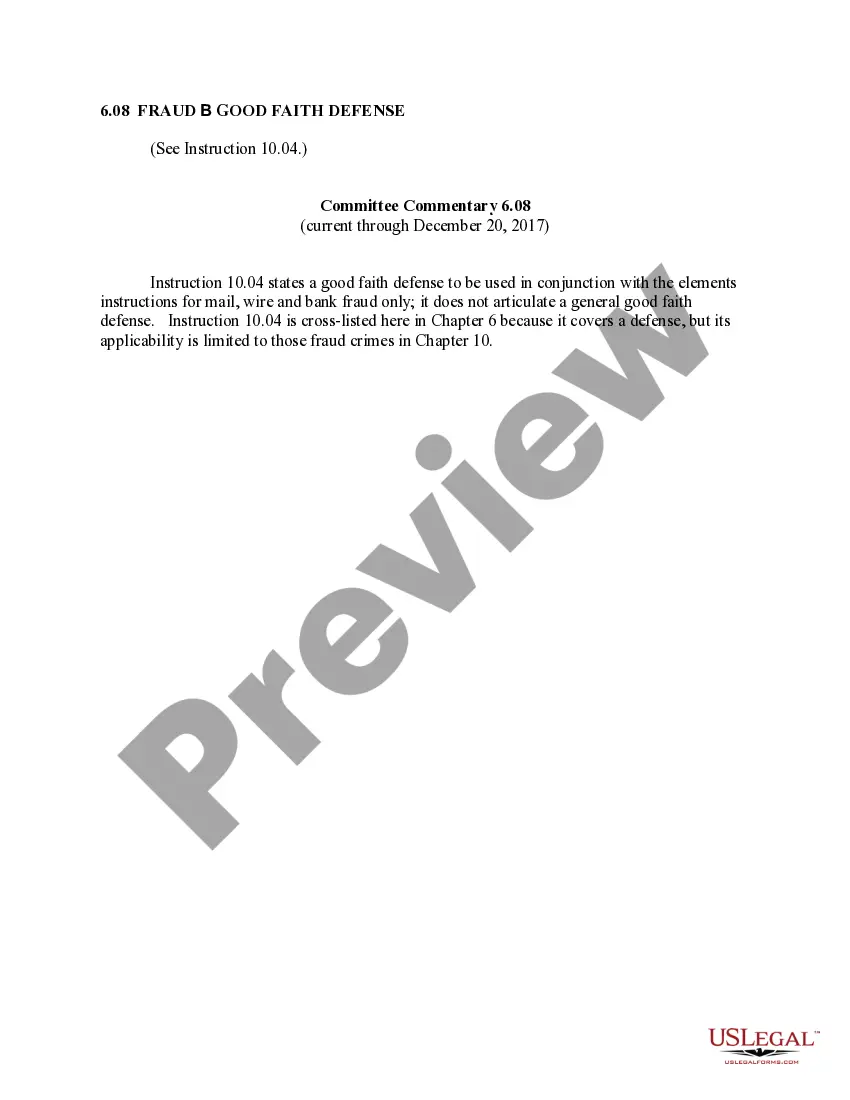
The Jury Instruction - Good Faith Defense To Charge Of Intent To Defraud form provides sample jury instructions that clarify how good faith can serve as a defense against charges related to fraud. This form is essential in guiding jurors on the crucial distinction between good faith belief and fraudulent intent, which is pivotal in legal proceedings involving allegations of intent to defraud.
Key components of this form
- Definition of good faith as a defense against intent to defraud.
- Clarification of the burden of proof on the government to establish intent to defraud.
- Examples illustrating good faith versus fraudulent intent.
- Citations of relevant case law for reference.
When this form is needed
This form should be utilized in criminal cases where a defendant is charged with intent to defraud. It is particularly important when the defendant wants to assert that their actions stemmed from a genuine belief in their honesty or the legitimacy of their business practices, thereby negating fraudulent intent.
Who needs this form
- Defendants facing charges related to intent to defraud.
- Criminal defense attorneys preparing jury instructions for their cases.
- Legal professionals seeking guidance on jury-related defenses in fraud cases.
Completing this form step by step
- Review the charges in the indictment against the defendant.
- Identify the key elements of the good faith defense relevant to the case.
- Incorporate case law citations that support the good faith argument.
- Adapt the jury instructions to fit the specifics of the case.
- Ensure the final instructions are clear and comprehensible for jurors.
Is notarization required?
In most cases, this form does not require notarization. However, some jurisdictions or signing circumstances might. US Legal Forms offers online notarization powered by Notarize, accessible 24/7 for a quick, remote process.
Get your form ready online
Our built-in tools help you complete, sign, share, and store your documents in one place.
Make edits, fill in missing information, and update formatting in US Legal Forms—just like you would in MS Word.
Download a copy, print it, send it by email, or mail it via USPS—whatever works best for your next step.
Sign and collect signatures with our SignNow integration. Send to multiple recipients, set reminders, and more. Go Premium to unlock E-Sign.
If this form requires notarization, complete it online through a secure video call—no need to meet a notary in person or wait for an appointment.
We protect your documents and personal data by following strict security and privacy standards.

Make edits, fill in missing information, and update formatting in US Legal Forms—just like you would in MS Word.

Download a copy, print it, send it by email, or mail it via USPS—whatever works best for your next step.

Sign and collect signatures with our SignNow integration. Send to multiple recipients, set reminders, and more. Go Premium to unlock E-Sign.

If this form requires notarization, complete it online through a secure video call—no need to meet a notary in person or wait for an appointment.

We protect your documents and personal data by following strict security and privacy standards.
Avoid these common issues
- Failing to provide sufficient evidentiary basis for the good faith defense.
- Not clearly distinguishing between honest beliefs and fraudulent intent.
- Omitting relevant case law to support the instructions provided.
Benefits of completing this form online
- Convenient access to templates drafted by licensed attorneys.
- Editable documents allow for quick customization to fit specific cases.
- Reliable content that adheres to current legal standards and practices.
Legal use & context
- This form provides a legal framework for defending against fraud charges based on the good faith belief.
- Compliance with relevant laws enhances its enforceability in court.
- Understanding the implications of the good faith defense is critical to its successful application.
Main things to remember
- The good faith defense can effectively counter allegations of intent to defraud.
- It's essential to provide a strong evidentiary basis for the good faith claim.
- This form serves as a comprehensive guide for jury instructions related to fraud defenses.
Looking for another form?





Form popularity
FAQ
Dishonesty is the fundamental component of a majority of offences relating to the acquisition, conversion and disposal of property (tangible or intangible) defined in criminal law such as fraud.
California Penal Code 537 PC defines the crime of defrauding an innkeeper as using fraud to obtain a good or service from a business without paying for it. The offense can be charged as a misdemeanor petty theft or a felony grand theft and carries a maximum sentence of up to 3 years in jail.
Some common synonyms of defraud are cheat, cozen, and swindle.
To take something illegally from a person, company, etc., or to prevent someone from having something that is legally theirs by deceiving them: He was found guilty of defrauding the Internal Revenue Service. They are both charged with conspiracy to defraud an insurance company of $20,000.
: to deprive of something by deception or fraud trying to defraud the public Investors in the scheme were defrauded of their life savings.