Good Faith Defense
What this document covers
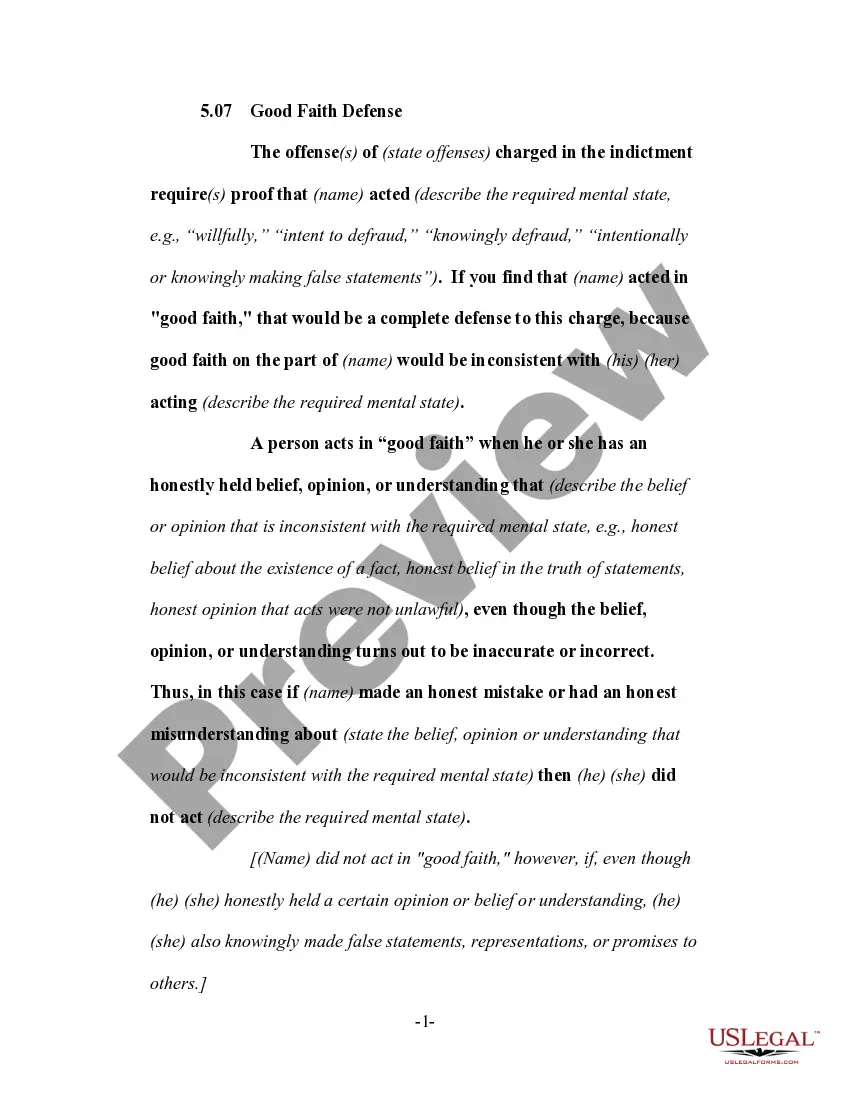
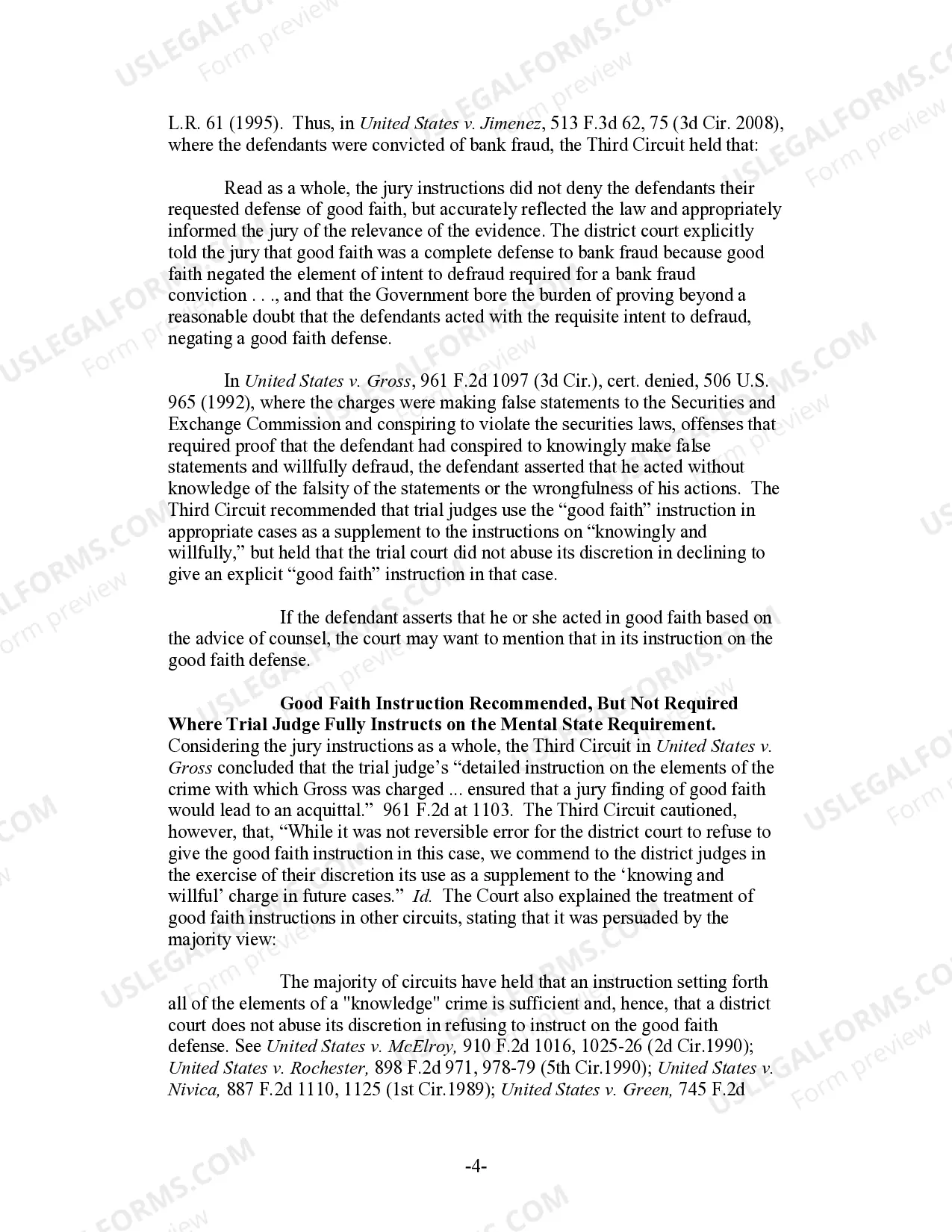
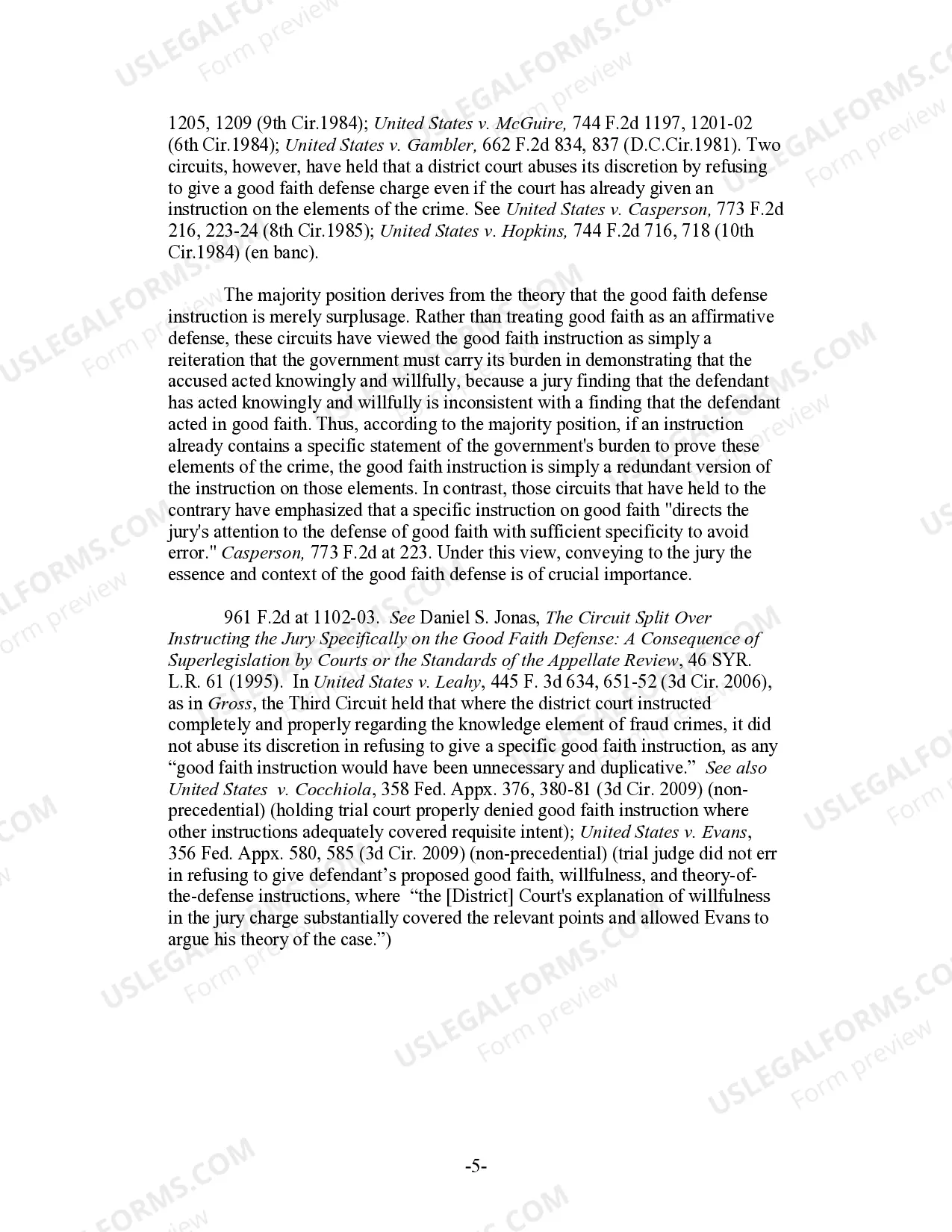
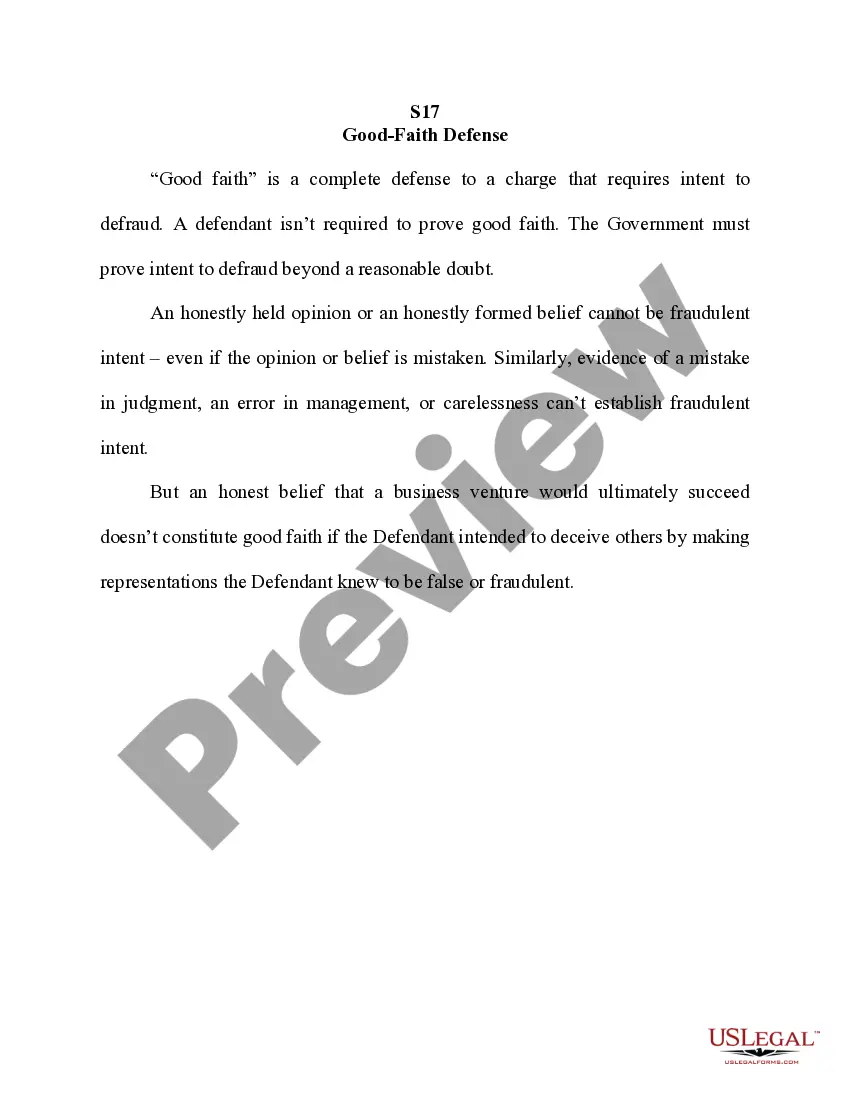
The Good Faith Defense form is a legal template used in criminal cases to assert that the defendant acted with an honest belief or understanding. This form provides guidelines for how a defendant can demonstrate that their actions are inconsistent with the mental state required for the charges against them, which can be crucial in cases involving fraud or similar offenses. Unlike other defenses, the good faith defense focuses on the defendant's perception and intent rather than their actions alone.
What’s included in this form
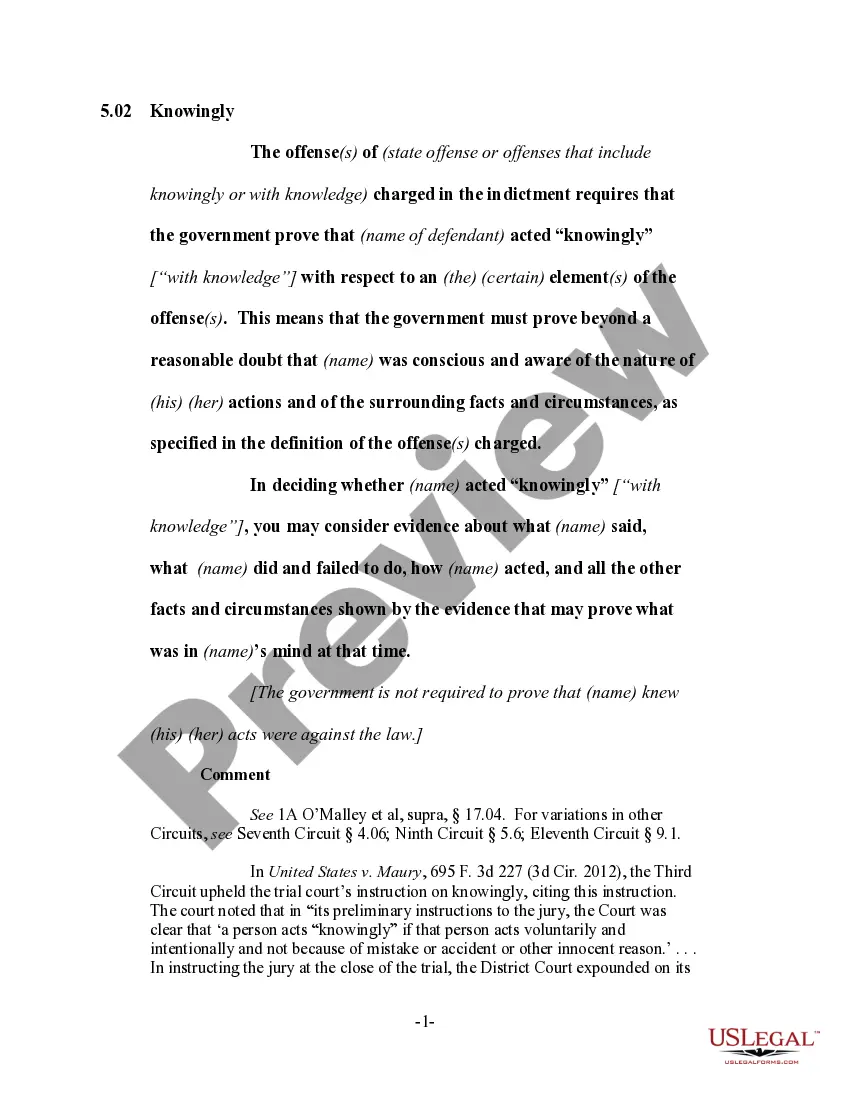
- Description of required mental state for the charged offense.
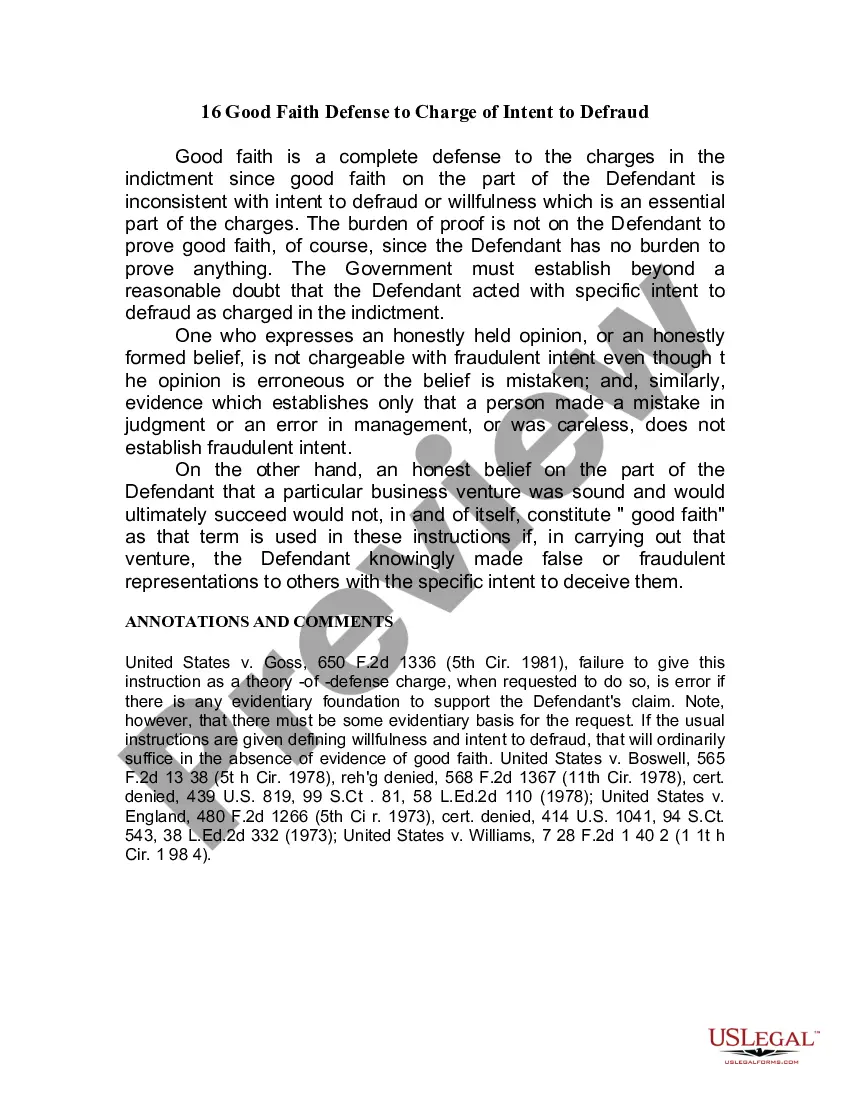
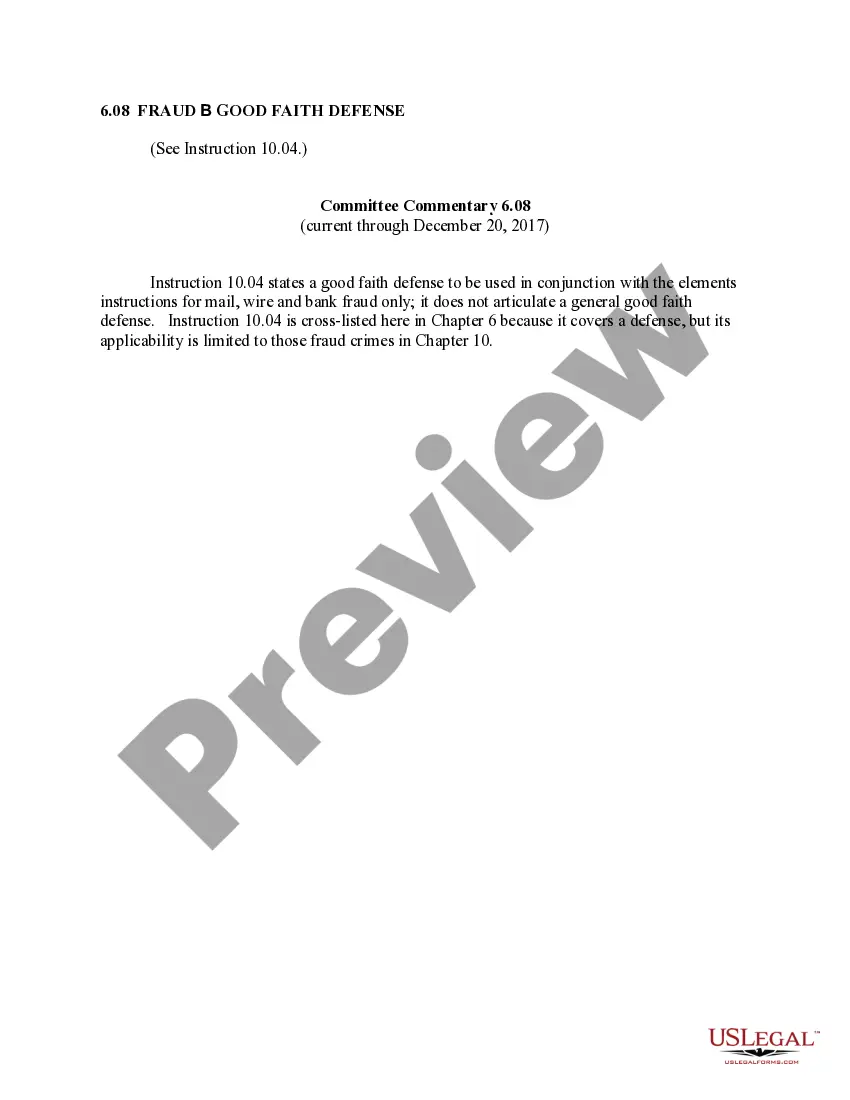
- Definition of âgood faithâ and how it serves as a defense.
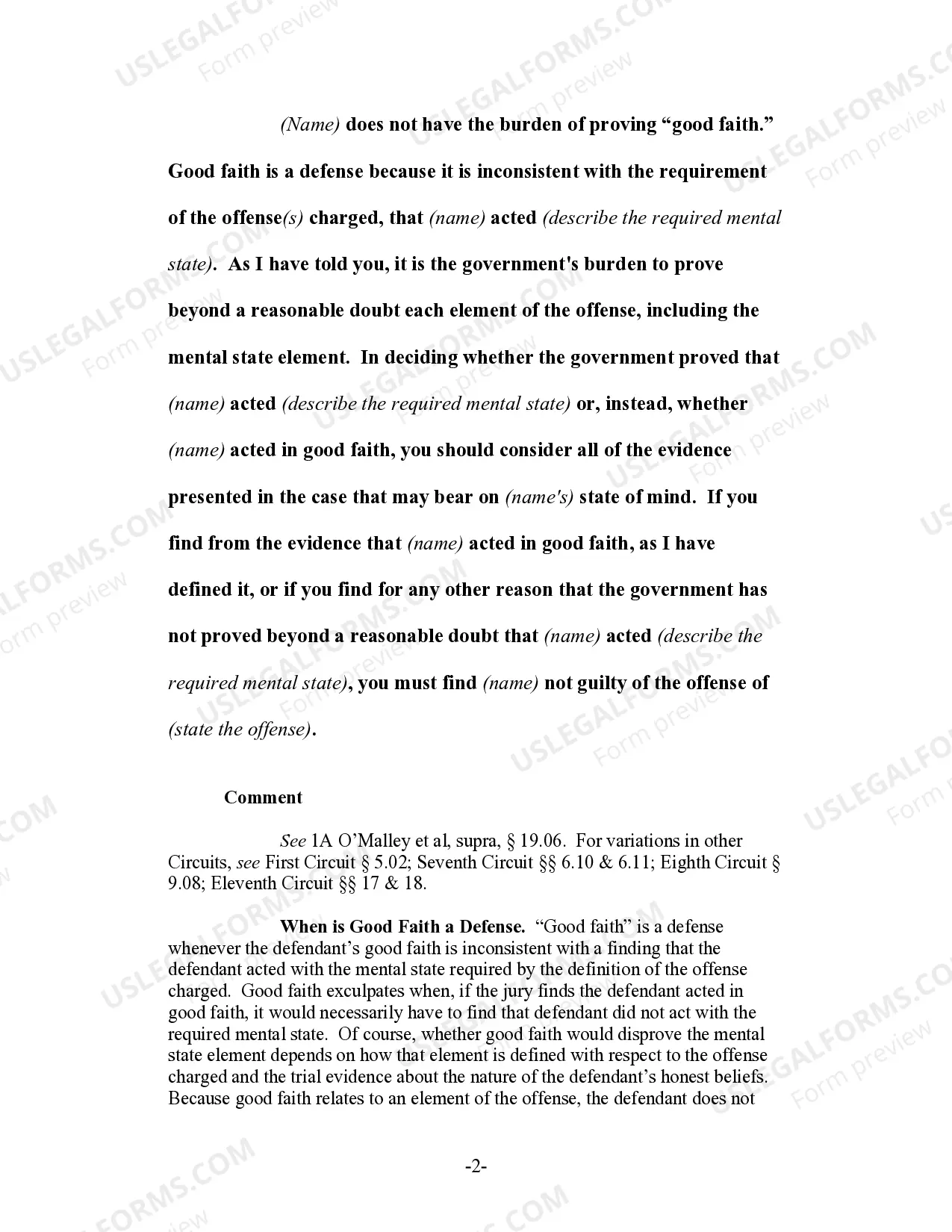
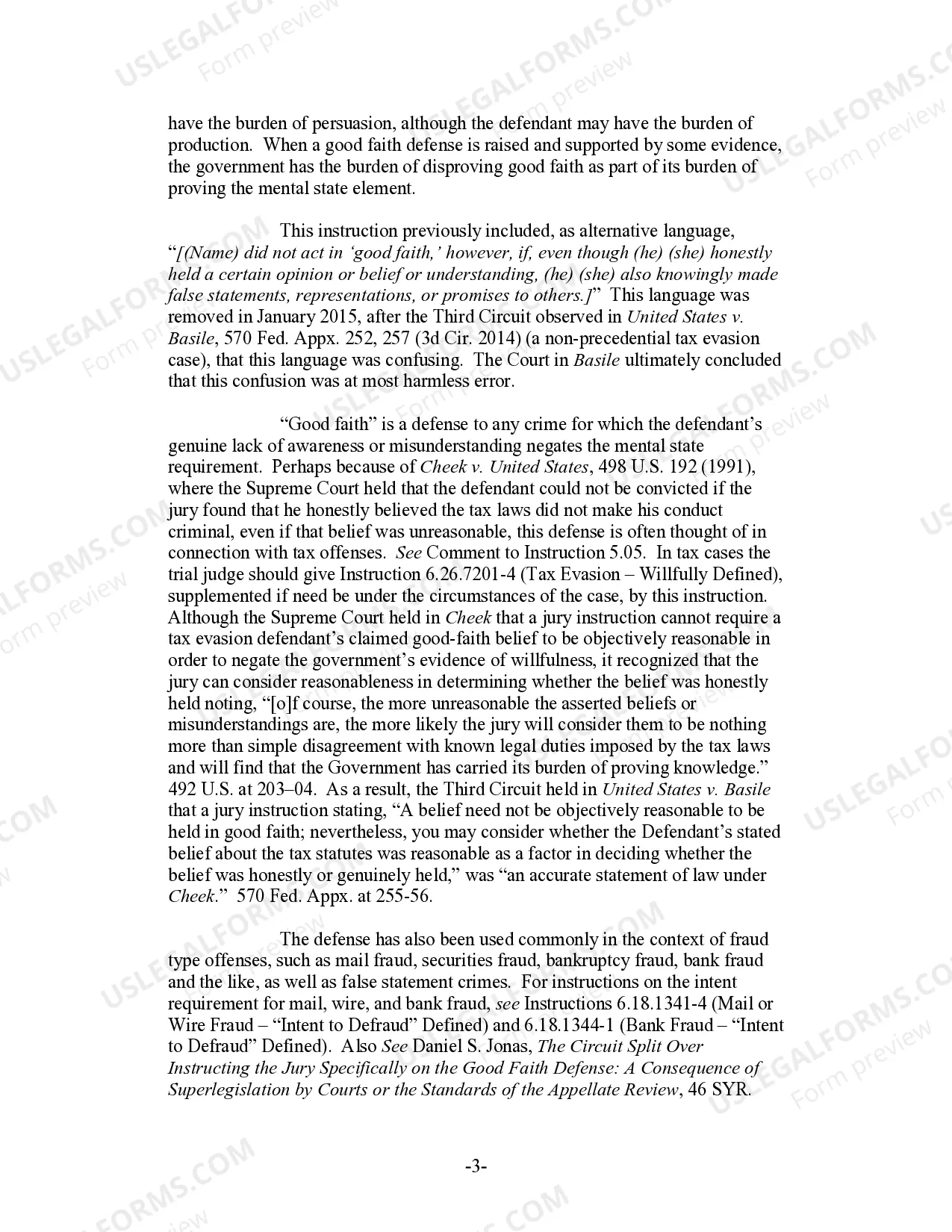
- Clarification that the burden is on the government to prove the defendant's mental state.
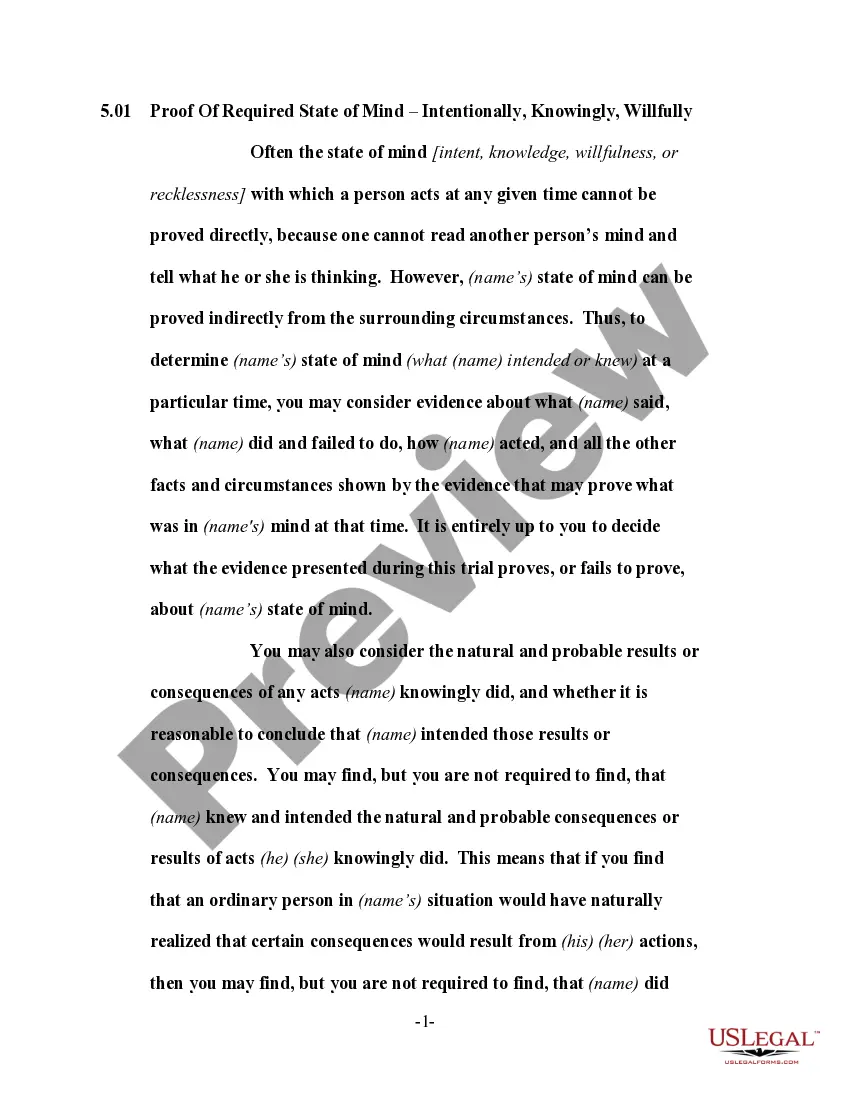
- Instructions on evaluating evidence related to the defendant's state of mind.
- Provisions regarding the defendant's understanding and belief at the time of the offense.
When to use this form
This form can be used in situations where an individual faces criminal charges that require proof of a particular mental state, such as intent to defraud or willfulness. It is applicable in cases involving fraud, tax evasion, or false statements where the defendant believes they acted correctly based on their understanding of the law. This form helps articulate the defense that any erroneous actions were made in good faith.
Who should use this form
- Defendants in criminal cases involving fraud or related offenses.
- Individuals seeking to assert a good faith belief as a defense during a trial.
- Legal professionals who represent clients in criminal matters.
- Anyone involved in cases where mental state is a crucial element of the offense.
Steps to complete this form
- Identify the specific crime charged in the indictment.
- Clearly define the required mental state for the offense.
- Articulate any honest beliefs or misunderstandings that support the good faith defense.
- Gather evidence that reflects the defendantâs perspective and intentions at the time of the incident.
- Review the form with legal counsel to ensure compliance with local laws and regulations.
Notarization guidance
Notarization is not commonly needed for this form. However, certain documents or local rules may make it necessary. Our notarization service, powered by Notarize, allows you to finalize it securely online anytime, day or night.
Get your form ready online
Our built-in tools help you complete, sign, share, and store your documents in one place.
Make edits, fill in missing information, and update formatting in US Legal Forms—just like you would in MS Word.
Download a copy, print it, send it by email, or mail it via USPS—whatever works best for your next step.
Sign and collect signatures with our SignNow integration. Send to multiple recipients, set reminders, and more. Go Premium to unlock E-Sign.
If this form requires notarization, complete it online through a secure video call—no need to meet a notary in person or wait for an appointment.
We protect your documents and personal data by following strict security and privacy standards.

Make edits, fill in missing information, and update formatting in US Legal Forms—just like you would in MS Word.

Download a copy, print it, send it by email, or mail it via USPS—whatever works best for your next step.

Sign and collect signatures with our SignNow integration. Send to multiple recipients, set reminders, and more. Go Premium to unlock E-Sign.

If this form requires notarization, complete it online through a secure video call—no need to meet a notary in person or wait for an appointment.

We protect your documents and personal data by following strict security and privacy standards.
Typical mistakes to avoid
- Failing to provide sufficient evidence supporting the claim of good faith.
- Misunderstanding the mental state requirements for the charged offense.
- Not consulting legal advice before submitting the form.
- Neglecting to articulate contradictions between the defendant's beliefs and their actions.
Advantages of online completion
- Easy access to a legally vetted template drafted by attorneys.
- Time-saving: download and complete at your convenience.
- Editable format to customize according to specific case needs.
- Reliable guidance on complex legal standards and definitions.
Legal use & context
- A good faith defense can be applicable in diverse criminal cases, specifically those involving intent to defraud.
- It may significantly influence jury perceptions regarding a defendantâs intent.
- Demonstrating good faith can negate the mental state required for conviction in certain offenses.
Key takeaways
- The Good Faith Defense form is essential for asserting an honest belief in criminal cases.
- Understanding the mental state required for the offense is critical in utilizing this defense.
- Defendants do not carry the burden of proof for their good faith; the government must prove otherwise.
Looking for another form?
Form popularity
FAQ
What are the three defenses to negligence? There are three main types of defenses to negligence. Contributory negligence, comparative negligence, and assumption of risk.
Good faith is no longer a defense for recipients of subsequently disallowed public benefits or allowances. Thus reiterated the Supreme Court En Banc in a Decision penned by Justice Rodil V.
A good faith defense is used against legal charges that involve intentional fraud. This type of defense won't include an intention or willingness to defraud since those are essential to the filed charges.
Good faith is recognized as a defense to a charge of mail or wire fraud.
Defences to negligence Contributory negligence. One of the most common defences of negligence is contributory negligence.Comparative Negligence. Only a few states still use the traditional form of contributory negligence.Assumption of risk.Act of God (Vis Major)Inevitable Accidents.Volenti Non Fit Injuria.
Good faith is a broad term that's used to encompass honest dealing. Depending on the exact setting, good faith may require an honest belief or purpose, faithful performance of duties, observance of fair dealing standards, or an absence of fraudulent intent.
Good faith dispute means a dispute in which the trier of fact finds that the party refusing to return the deposited funds had a reasonable belief of his or her legal entitlement to withhold the deposited funds. The existence of a "good faith dispute" shall be determined by the trier of fact.
Good Faith Is Ordinarily Not a Defense Wrongful intention is not essential, however; nor is it material, except as to the question of damages, that the defendant acted in good faith or under a mistaken belief as to his rights.? A mistake as to ownership is not a defense to a claim of conversion.