Jury Instruction - Character Evidence
What is this form?
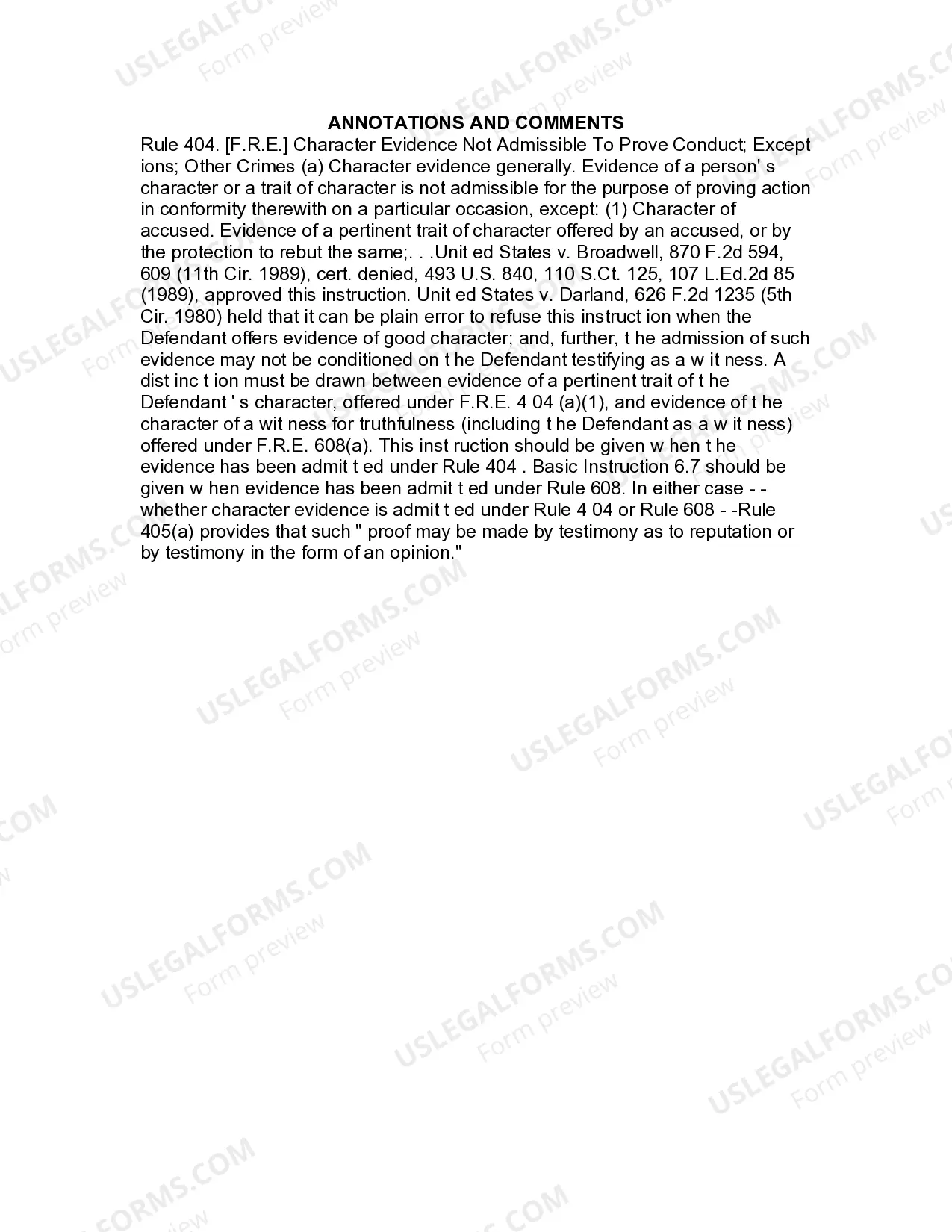
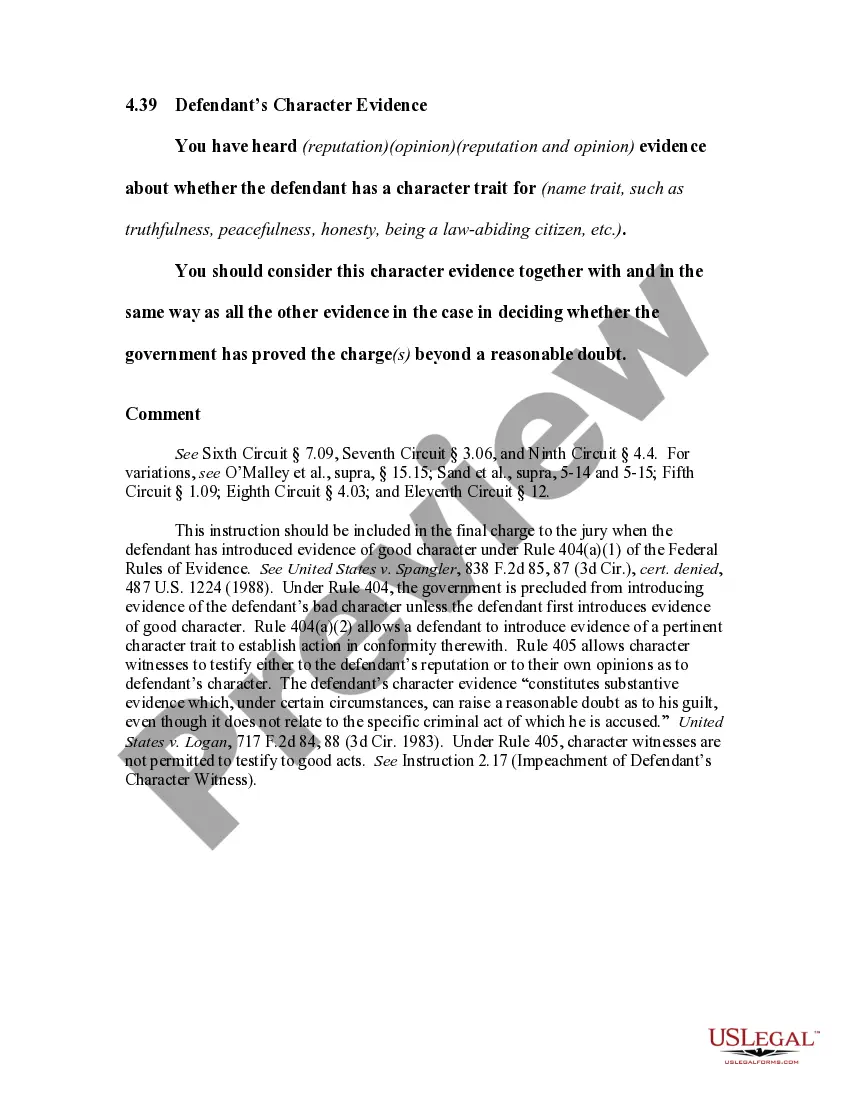
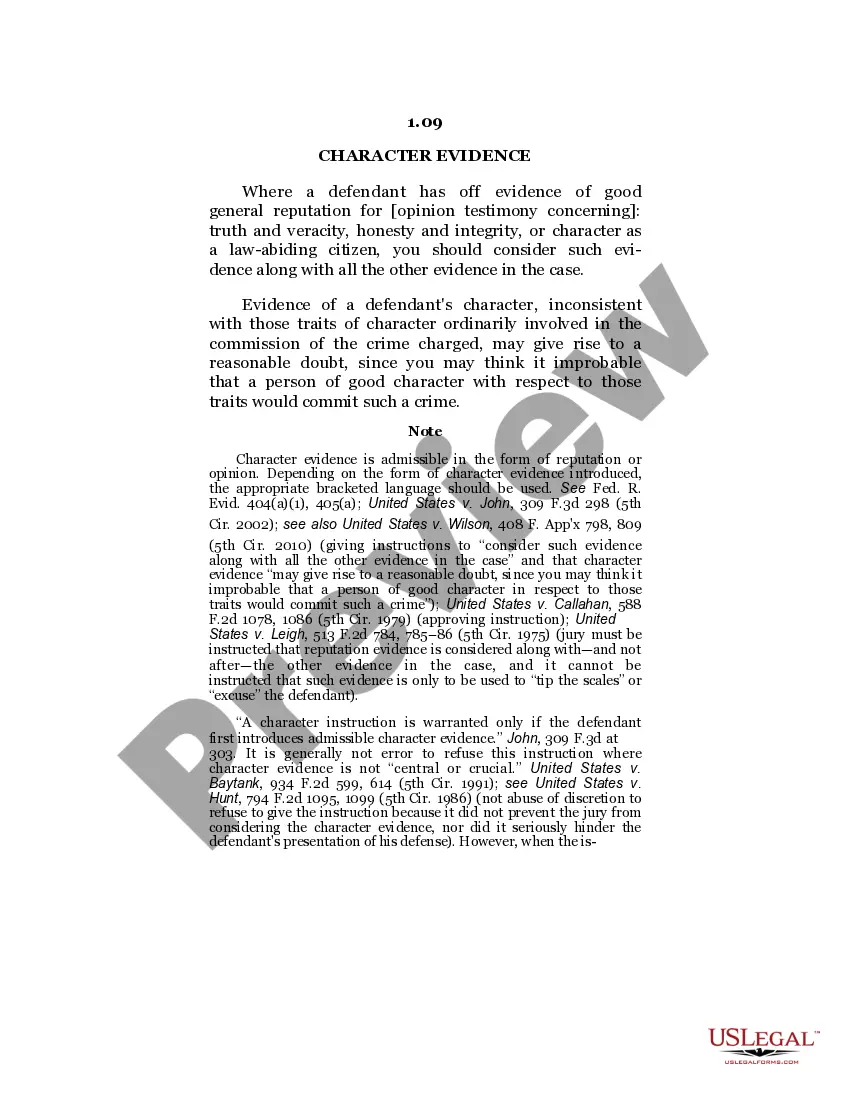
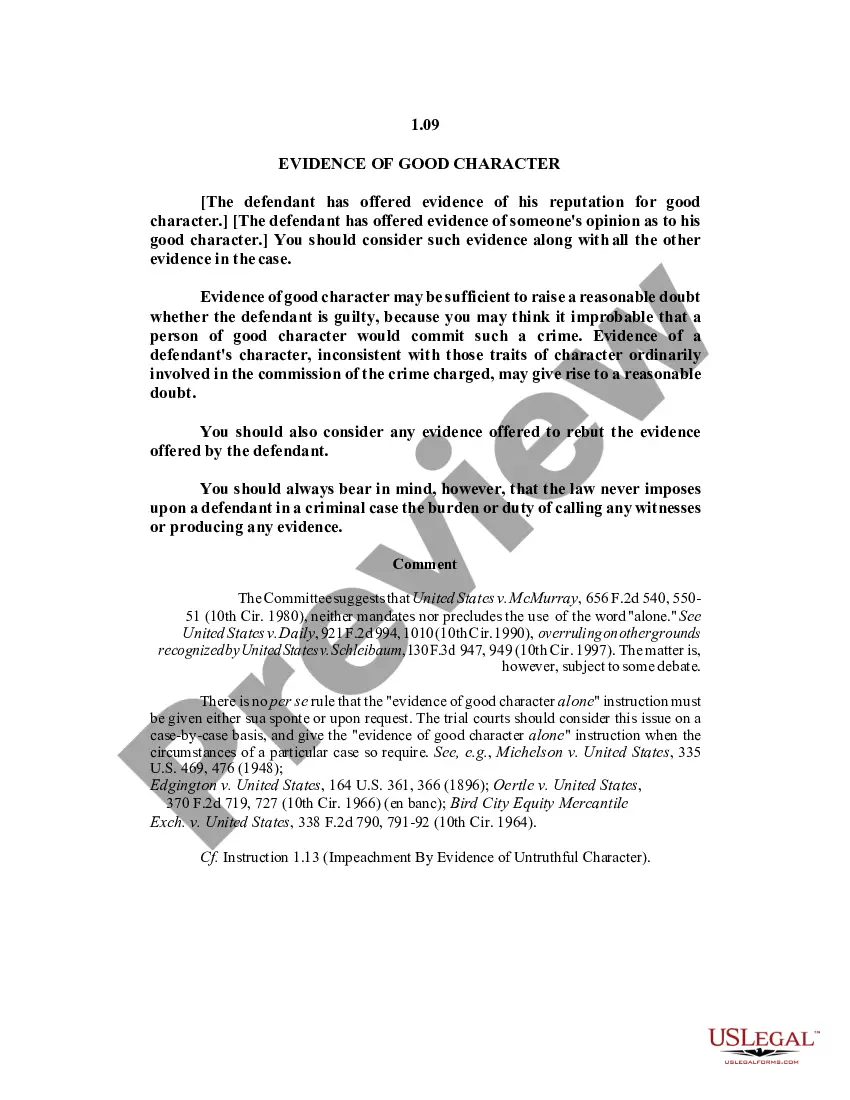
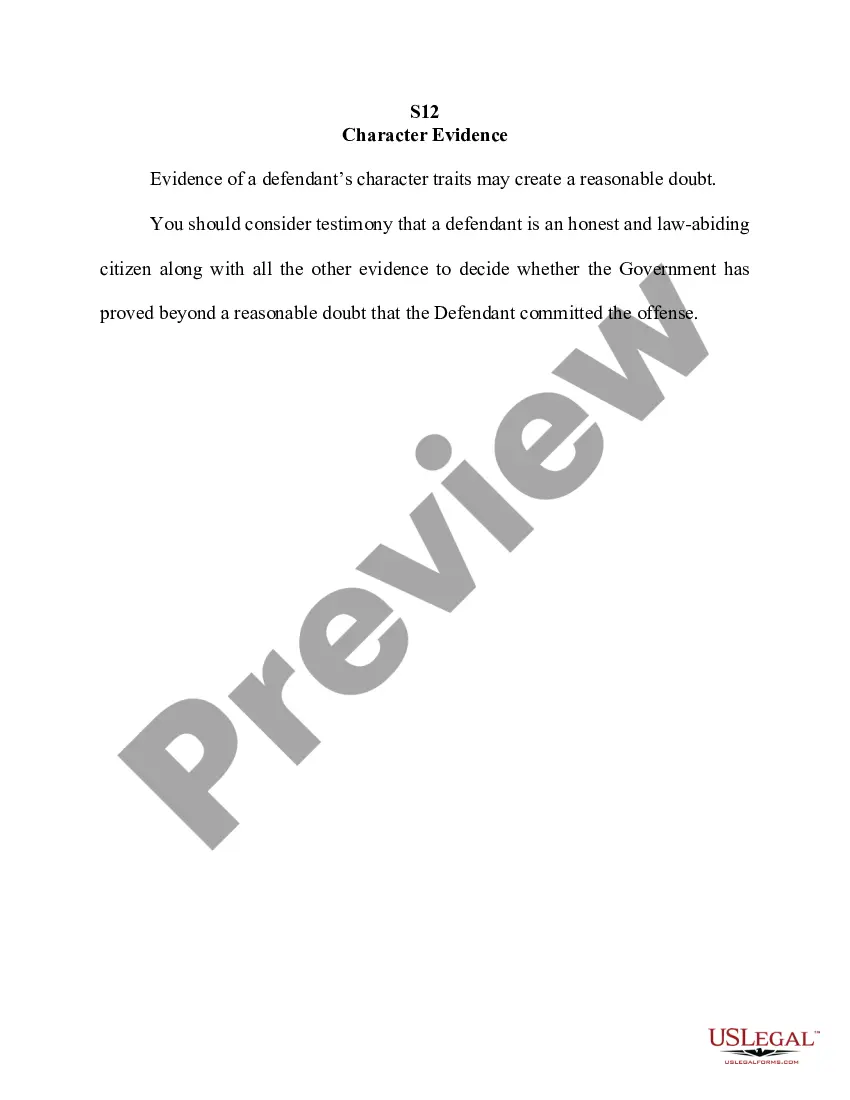
The Jury Instruction - Character Evidence form provides essential jury instructions regarding the admissibility of character evidence in legal proceedings. This form is designed for use across the United States and serves as a model to ensure that juries understand how to evaluate evidence of a defendant's character. Unlike generic jury instruction templates, this form specifically addresses situations where the defendant's character may be applicable in establishing reasonable doubt regarding their guilt.
Key components of this form
- Definition of character evidence and its use in court
- Instructions on how to weigh evidence of character traits
- Clarification on the relevant Federal Rules of Evidence
- Guidelines for when character evidence may create reasonable doubt
- Recommendations for jurors on considering the full scope of evidence
Situations where this form applies
This form should be used in criminal trials where the defendant presents evidence of their character traits in their defense. It is particularly relevant in cases where the defendant seeks to establish themselves as a law-abiding citizen to raise reasonable doubt about the criminal charges against them. Use this form whenever there is a need to instruct a jury on how to assess character evidence correctly.
Who needs this form
- Judges presiding over criminal trials
- Defense attorneys working to introduce character evidence
- Prosecutors needing to understand character evidence parameters
- Legal professionals crafting jury instructions for specific cases
How to prepare this document
- Review the provided character evidence and determine its relevance to the case.
- Choose language that clearly conveys the desired jury instruction based on the evidence presented.
- Adapt the sample language in the form to fit the specific legal context and jurisdiction.
- Ensure that all necessary components of character evidence are explained to the jury.
- Prepare to address any potential objections regarding the admissibility of character evidence.
Does this form need to be notarized?
In most cases, this form does not require notarization. However, some jurisdictions or signing circumstances might. US Legal Forms offers online notarization powered by Notarize, accessible 24/7 for a quick, remote process.
Get your form ready online
Our built-in tools help you complete, sign, share, and store your documents in one place.
Make edits, fill in missing information, and update formatting in US Legal Forms—just like you would in MS Word.
Download a copy, print it, send it by email, or mail it via USPS—whatever works best for your next step.
Sign and collect signatures with our SignNow integration. Send to multiple recipients, set reminders, and more. Go Premium to unlock E-Sign.
If this form requires notarization, complete it online through a secure video call—no need to meet a notary in person or wait for an appointment.
We protect your documents and personal data by following strict security and privacy standards.

Make edits, fill in missing information, and update formatting in US Legal Forms—just like you would in MS Word.

Download a copy, print it, send it by email, or mail it via USPS—whatever works best for your next step.

Sign and collect signatures with our SignNow integration. Send to multiple recipients, set reminders, and more. Go Premium to unlock E-Sign.

If this form requires notarization, complete it online through a secure video call—no need to meet a notary in person or wait for an appointment.

We protect your documents and personal data by following strict security and privacy standards.
Avoid these common issues
- Failing to correctly define the type of character evidence being offered.
- Overlooking the Federal Rules of Evidence when drafting instructions.
- Neglecting to consider how jurors may interpret character evidence.
- Using jargon or complex language that confuses jurors.
- Not tailoring the instruction to the specifics of the case at hand.
Why complete this form online
- Convenient access to legally vetted jury instruction templates.
- Editable format allows for customization to meet case specifics.
- Ensures compliance with the latest legal standards and practices.
- Saves time by providing a structured approach to drafting necessary jury instructions.
Looking for another form?

Form popularity
FAQ
Basically, if evidence is to be admitted at court, it must be relevant, material, and competent. To be considered relevant, it must have some reasonable tendency to help prove or disprove some fact.
Character evidence is a term used in the law of evidence to describe any testimony or document submitted for the purpose of proving that a person acted in a particular way on a particular occasion based on the character or disposition of that person.the purpose the character evidence is being used for.
Character evidence is admissible in a criminal trial if offered by a defendant as circumstantial evidencethrough reputation or opinion evidenceto show their own character, as long as the character evidence the defendant seeks to introduce is relevant to the crime with which the defendant is charged.
Defendants can offer evidence of their good character, but not without risk.Rather, it's admissible to show that the defendant is unlikely to have committed the alleged crime(s). For example, if the defendant is charged with embezzlement, she can offer evidence that she is honest and law-abiding.
Character evidence is admissible in a criminal trial if offered by a defendant as circumstantial evidencethrough reputation or opinion evidenceto show their own character, as long as the character evidence the defendant seeks to introduce is relevant to the crime with which the defendant is charged.
Character means the collective qualities or characteristics especially mental and moral that distinguishes a person or thing. Character is the estimation of a person by his community. The general rule is that character evidence is inadmissible.
Habit evidence is admissible for the purpose of proving how someone would act or react in a particular situation at issue.Character evidence is the evidence which is proved by the defendant's previous bad habits. It may also be based on the opinion of a witness and the reputation in the community.
Evidence that can not be presented to the jury or decision maker for any of a variety of reasons: it was improperly obtained, it is prejudicial (the prejudicial value outweighs the probative value), it is hearsay, it is not relevant to the case, etc.