Jury Instruction - Fraudulent Receipt Of VA Benefits
Understanding this form
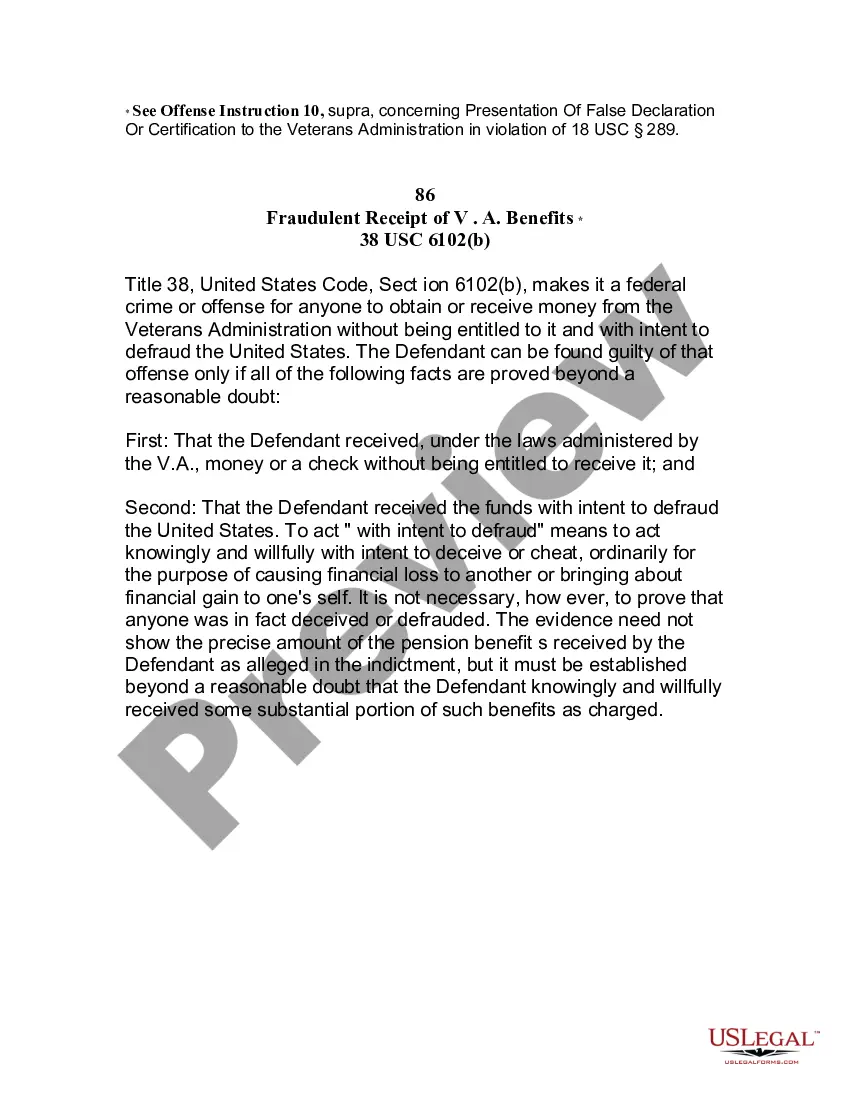
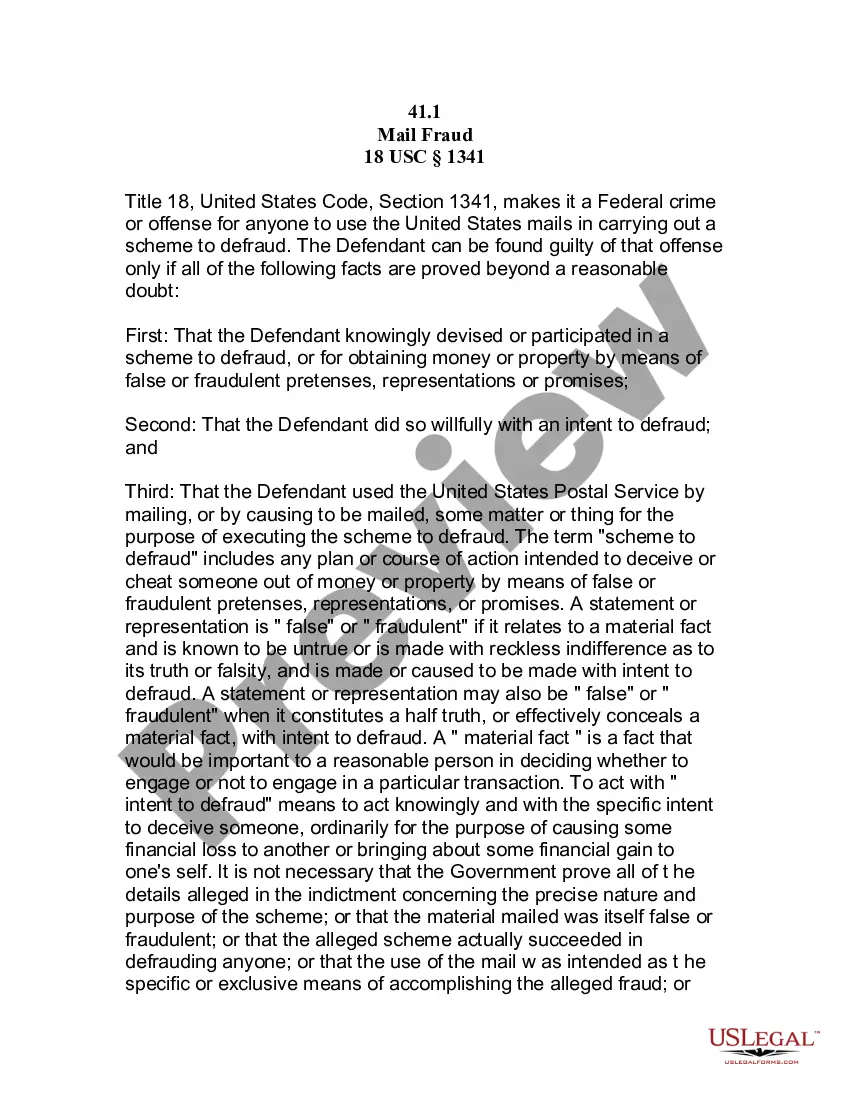
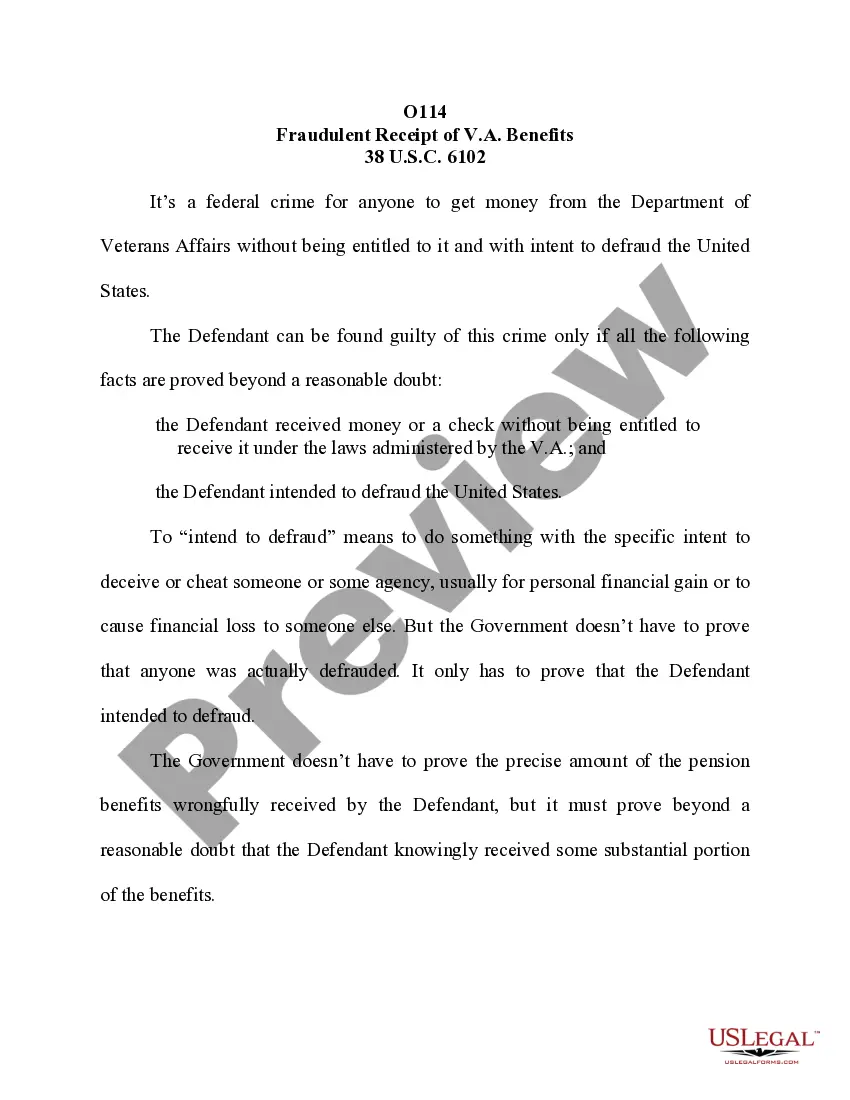
The Jury Instruction for Fraudulent Receipt of VA Benefits is a legal template used in court cases to guide jurors on the legal standards for determining whether a defendant unlawfully received benefits from the Veterans Administration. This form outlines the necessary elements that must be proven for a conviction of fraud related to VA benefits, emphasizing intent and entitlement. Unlike other jury instructions, this form specifically addresses issues surrounding the fraudulent acquisition of government benefits.
Form components explained
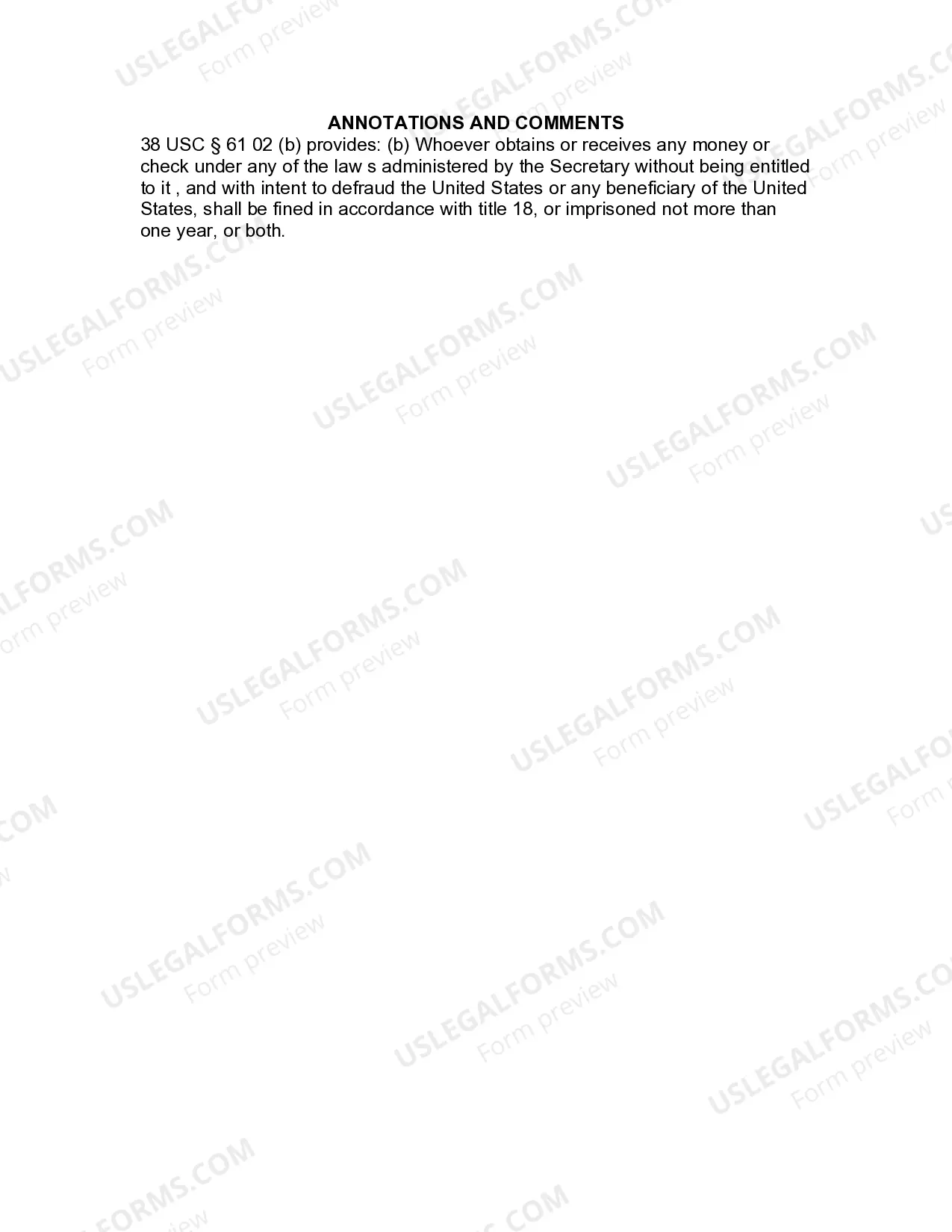
- Definition of fraudulent receipt of VA benefits under federal law.
- Criteria required to establish guilt beyond a reasonable doubt.
- Explanation of intent to defraud and its implications.
- Clarification that no actual deception needs to be proven.
- Understanding the significance of substantial benefit amounts.
When this form is needed
This form should be utilized in federal court proceedings where a defendant is accused of fraudulently obtaining benefits from the Veterans Administration. It is particularly relevant during jury trials where jurors need clear guidance regarding the legal standards applicable to the charges of fraud related to VA benefits.
Who can use this document
- Attorneys representing clients in cases involving fraudulent receipt of VA benefits.
- Judges providing instructions to juries in such cases.
- Legal professionals preparing for trial on related charges.
How to prepare this document
- Review the legal definitions and elements associated with fraudulent receipt of VA benefits.
- Adjust the sample instructions to fit the particulars of the case at hand.
- Ensure clarity on each point concerning intent and entitlement.
- Provide additional context or examples relevant to the case for juror understanding.
- Finalize the instructions for the juryâs consideration during deliberation.
Does this document require notarization?
This form usually doesn’t need to be notarized. However, local laws or specific transactions may require it. Our online notarization service, powered by Notarize, lets you complete it remotely through a secure video session, available 24/7.
Get your form ready online
Our built-in tools help you complete, sign, share, and store your documents in one place.
Make edits, fill in missing information, and update formatting in US Legal Forms—just like you would in MS Word.
Download a copy, print it, send it by email, or mail it via USPS—whatever works best for your next step.
Sign and collect signatures with our SignNow integration. Send to multiple recipients, set reminders, and more. Go Premium to unlock E-Sign.
If this form requires notarization, complete it online through a secure video call—no need to meet a notary in person or wait for an appointment.
We protect your documents and personal data by following strict security and privacy standards.

Make edits, fill in missing information, and update formatting in US Legal Forms—just like you would in MS Word.

Download a copy, print it, send it by email, or mail it via USPS—whatever works best for your next step.

Sign and collect signatures with our SignNow integration. Send to multiple recipients, set reminders, and more. Go Premium to unlock E-Sign.

If this form requires notarization, complete it online through a secure video call—no need to meet a notary in person or wait for an appointment.

We protect your documents and personal data by following strict security and privacy standards.
Common mistakes
- Failing to adequately define terms like "intent to defraud."
- Overlooking the necessity of stating that actual fraud or deception does not have to be proven.
- Not tailoring the instructions to the specific facts of the case.
Advantages of online completion
- Convenience of accessing and downloading the form from anywhere.
- Ability to edit the form to fit specific case details easily.
- Reliability of using templates drafted by licensed attorneys.
Legal use & context
- This form is used to provide jurors with the legal framework necessary to reach a verdict.
- It ensures that jury instructions comply with federal standards for cases of fraud involving VA benefits.
Key takeaways
- The form is essential for guiding juries on the criteria for fraudulent receipt of VA benefits.
- Each element must be proven beyond a reasonable doubt for a conviction.
- It is adaptable and can be tailored to the specifics of individual cases.
Looking for another form?
Form popularity
FAQ
The VA conducts a Field Examination in order to appoint a fiduciary. During the Field Examination, the veteran is asked to provide information about monthly bills, assets, and medications, as well as an emergency contact information and contact information for the veteran's primary care physician.
After you are awarded disability compensation benefits, the VA will evaluate whether your disability is such that you ought to be scheduled for a future reexamination to determine if your benefits need to be adjusted. Types of disabilities subject to reexamination are those that can be expected to improve over time.
Investigations and SurveillanceVA will often work in conjunction with the Social Security Administration to investigate reports of false disability claims.However, an investigation might be set off when a doctor or other official finds that a veteran may be falsely claiming they are disabled.
If VA issues a final decision that a veteran is incompetent, there are several important consequences for the veteran. First, VA will require that the veteran either choose a fiduciary, or be appointed one by VA.This prohibits veterans from purchasing, possessing, receiving or transporting a firearm or ammunition.
The appointed Fiduciary is allowed to charge a fee of up to 4% of the VA benefits paid to the beneficiary. If the beneficiary is married, the spouse may receive payments on the beneficiary's behalf.
In any case, the VA cannot terminate your benefits unless you first receive a notice from the VA telling you about your right to have a hearing. You also have the right to appeal any decision to terminate your benefits.
To begin your appeal, write us a letter telling us you disagree with our decision and wish to appeal. This letter is called your "Notice of Disagreement." Send your Notice of Disagreement to the address to the fiduciary hub of jurisdiction. You may also submit any additional evidence in support of your appeal.
Removal of Trustees. The court can remove a fiduciary, such as a Trustee, when the court believes that the Trustee has taken action counter to the beneficiary's best interest breaching their fiduciary duty.