Jury Instruction - RICO - Conspiracy Offense
Understanding this form
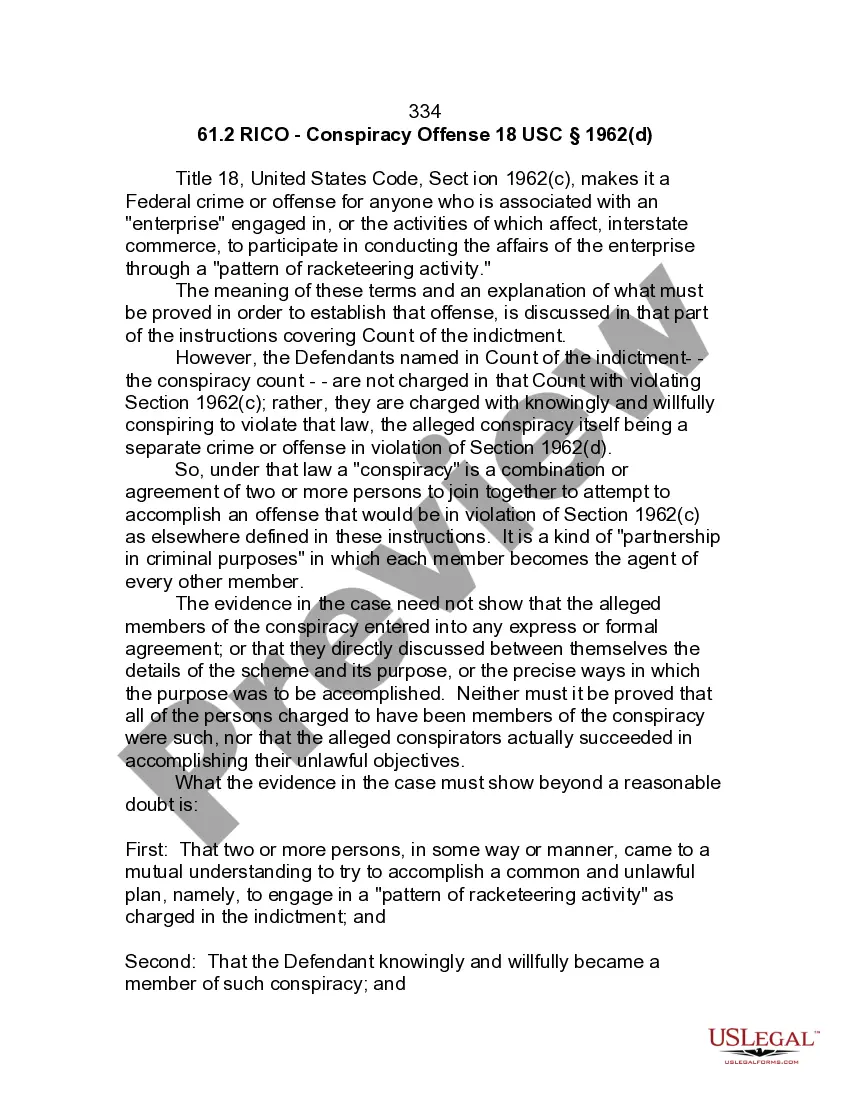
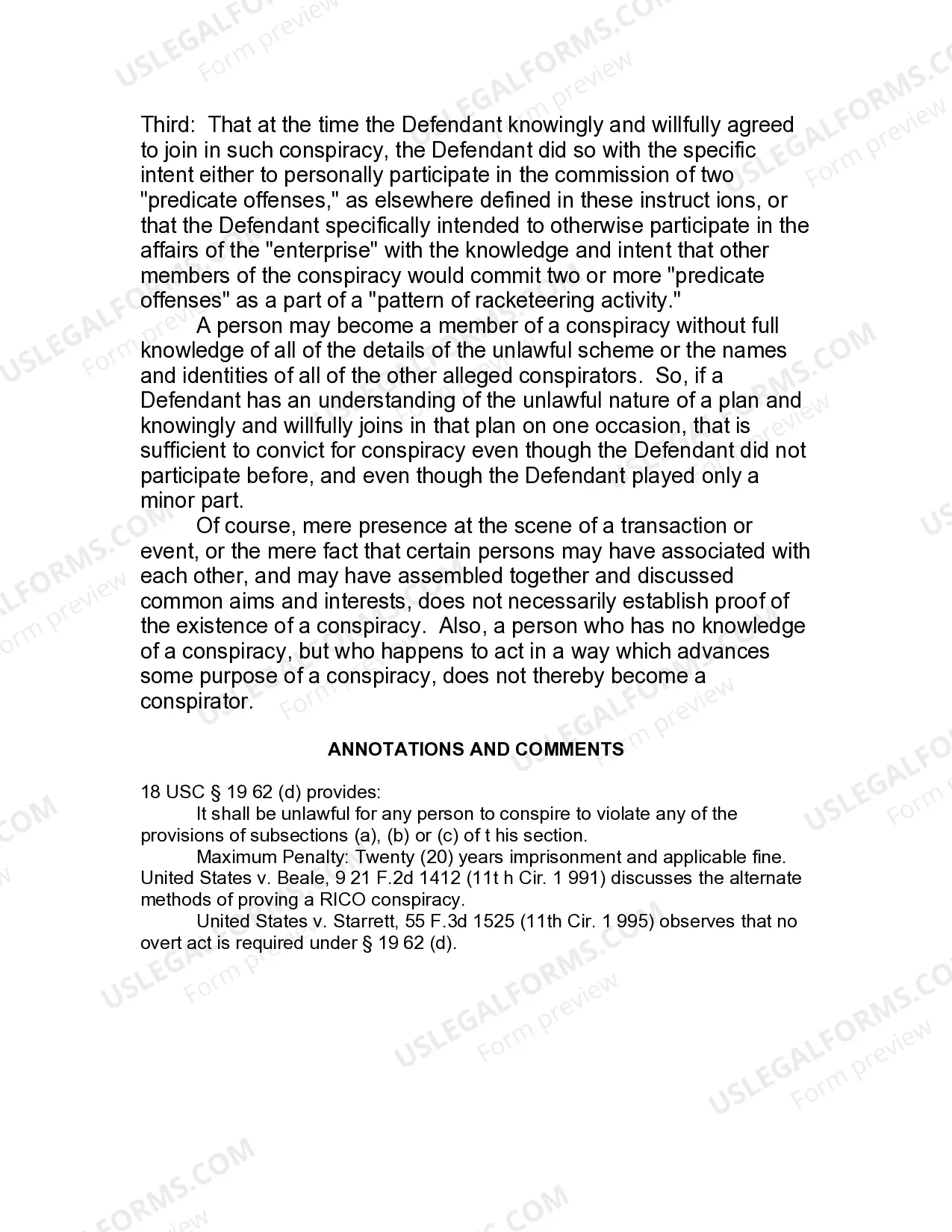
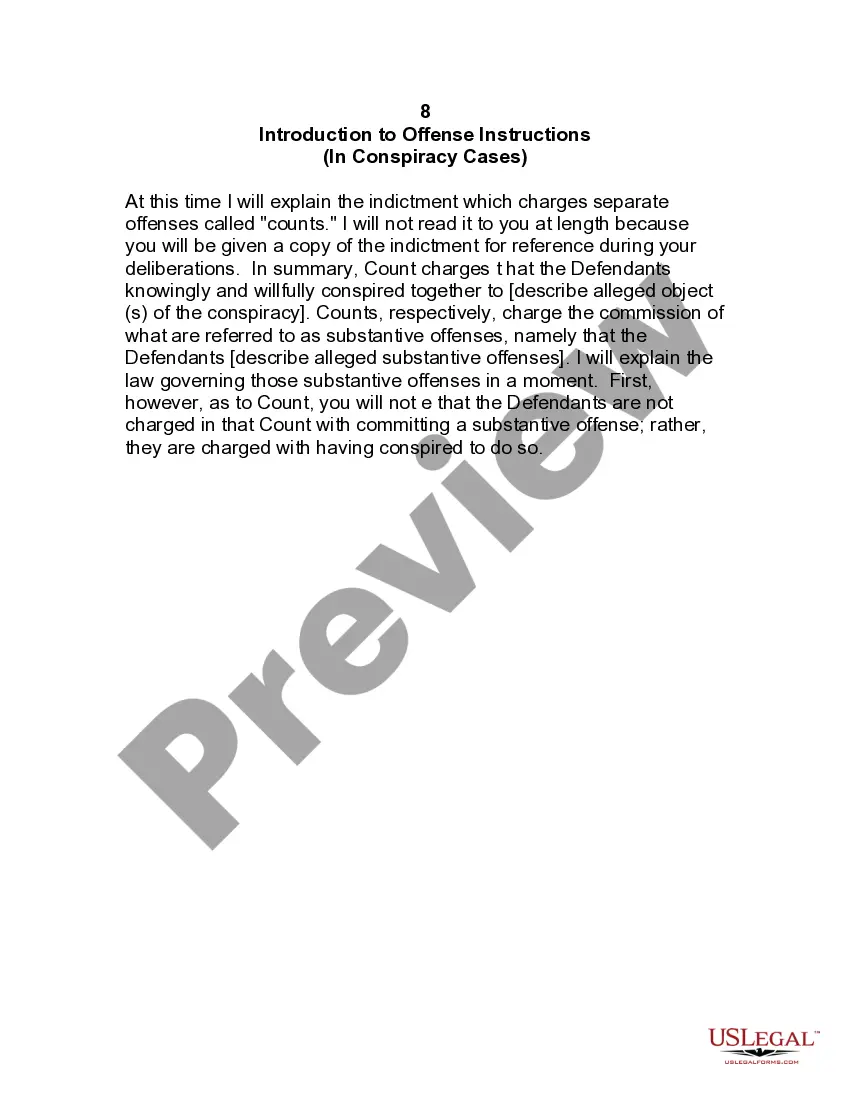
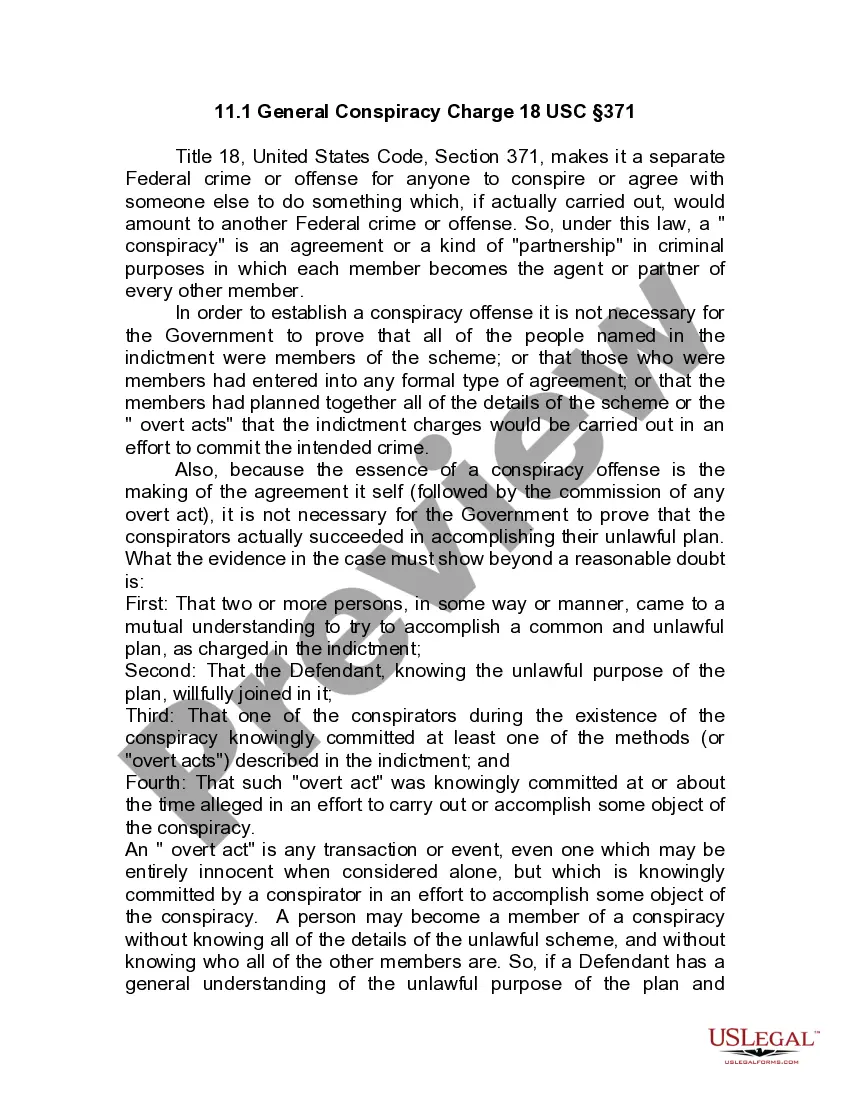
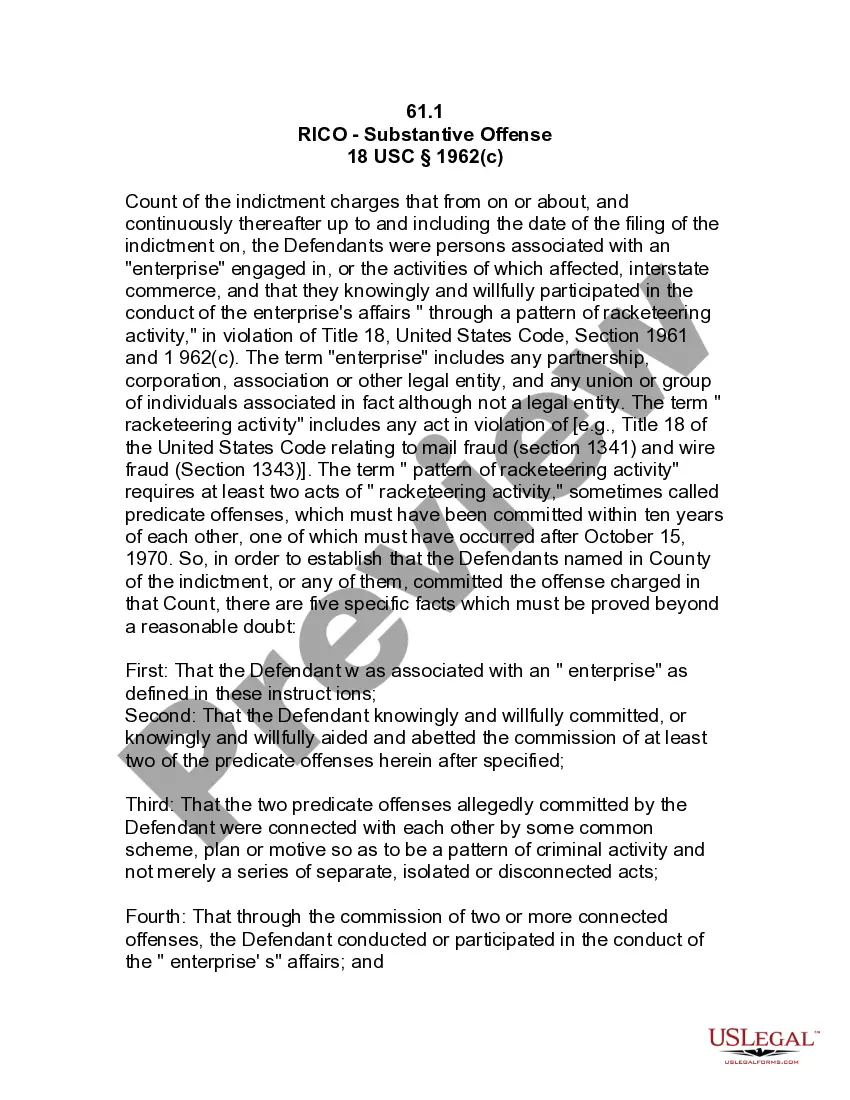
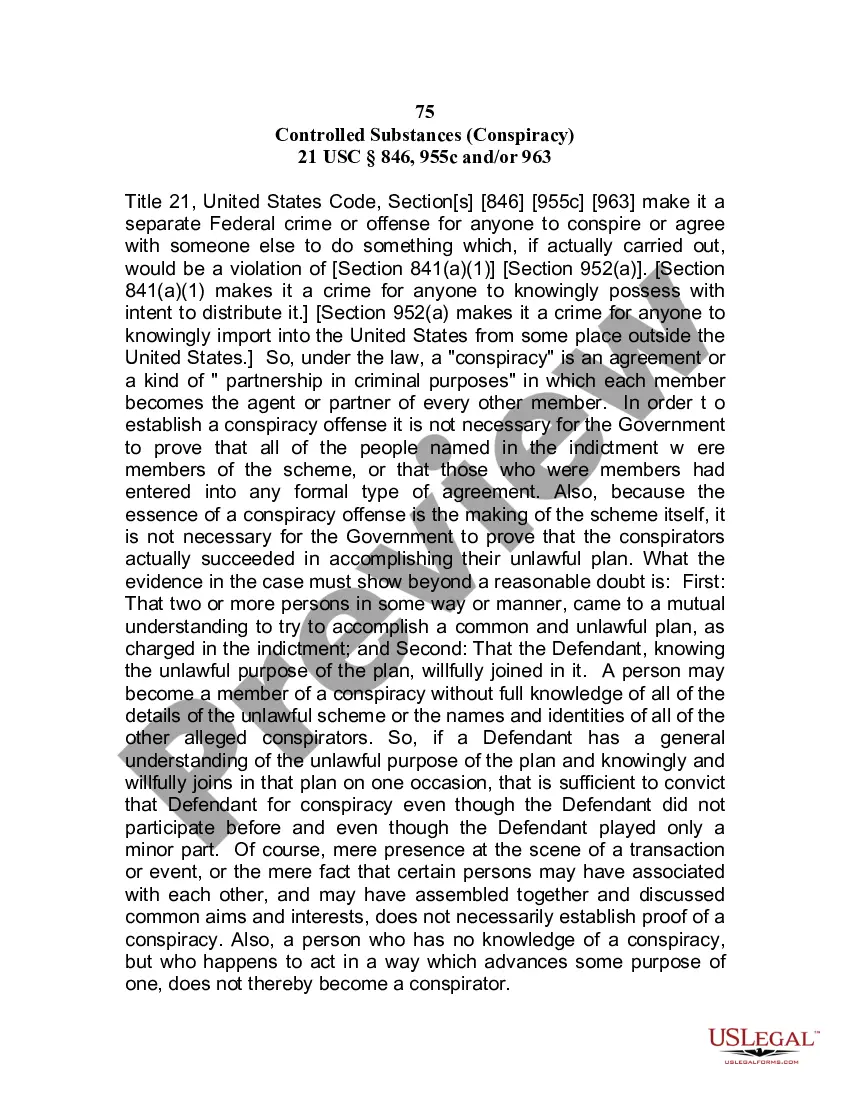
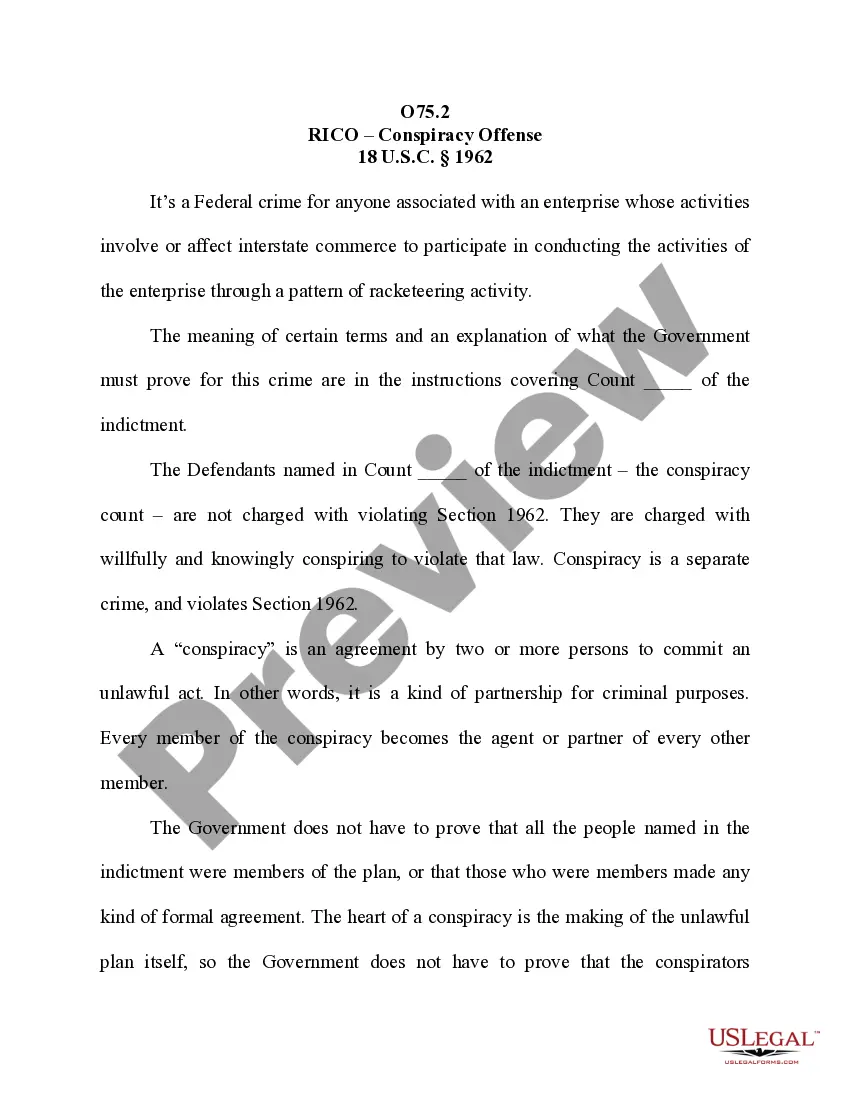
The Jury Instruction - RICO - Conspiracy Offense form provides model jury instructions used in RICO (Racketeer Influenced and Corrupt Organizations) conspiracy cases in federal court. This form outlines the essential elements that must be proven for a conspiracy offense under Title 18, United States Code, Section 1962(d), differentiating it from charges involving direct violations of Subsection (c). It serves as a valuable template for legal professionals in crafting instructions that are tailored to specific cases while ensuring compliance with federal guidelines.
Key parts of this document
- Definition of conspiracy under RICO laws
- Explanation of the elements required to prove conspiracy
- Instructions on intent and participation in unlawful plans
- Clarification of evidence needed for conviction
- Discussion on the roles of co-conspirators
When to use this form
This form should be used in federal criminal cases involving allegations of conspiracy to violate RICO laws. It is applicable when there is a need to instruct a jury about the legal standards and definitions related to conspiracy offenses, particularly in cases where multiple individuals are alleged to have conspired to commit racketeering activities.
Who this form is for
- Attorneys representing defendants charged with RICO conspiracy
- Prosecutors handling cases involving organized crime
- Judges presiding over federal RICO cases
- Legal educators teaching about RICO laws and jury instructions
Steps to complete this form
- Review the specific charge of conspiracy related to RICO laws in the indictment.
- Clarify the roles of the defendants as alleged members of the conspiracy.
- Outline the necessary elements for conviction, including intent and unlawful objectives.
- Customize the instructions to fit the specific case details based on the evidence presented.
- Present the final instructions to the jury, ensuring comprehension of the charges and legal definitions.
Notarization requirements for this form
Notarization is generally not required for this form. However, certain states or situations might demand it. You can complete notarization online through US Legal Forms, powered by Notarize, using a verified video call available anytime.
Get your form ready online
Our built-in tools help you complete, sign, share, and store your documents in one place.
Make edits, fill in missing information, and update formatting in US Legal Forms—just like you would in MS Word.
Download a copy, print it, send it by email, or mail it via USPS—whatever works best for your next step.
Sign and collect signatures with our SignNow integration. Send to multiple recipients, set reminders, and more. Go Premium to unlock E-Sign.
If this form requires notarization, complete it online through a secure video call—no need to meet a notary in person or wait for an appointment.
We protect your documents and personal data by following strict security and privacy standards.

Make edits, fill in missing information, and update formatting in US Legal Forms—just like you would in MS Word.

Download a copy, print it, send it by email, or mail it via USPS—whatever works best for your next step.

Sign and collect signatures with our SignNow integration. Send to multiple recipients, set reminders, and more. Go Premium to unlock E-Sign.

If this form requires notarization, complete it online through a secure video call—no need to meet a notary in person or wait for an appointment.

We protect your documents and personal data by following strict security and privacy standards.
Common mistakes to avoid
- Failing to clearly define the difference between conspiracy and direct violations of RICO.
- Omitting crucial elements that must be proven for a conspiracy charge.
- Assuming the jury understands complex legal terms without proper instruction.
- Including irrelevant details that cloud the important aspects of the case.
Why use this form online
- Convenience of instant access to a legally vetted template.
- Ability to easily edit and customize the instructions to meet case-specific needs.
- Reliability of content drafted by experienced legal professionals.
- Quick downloading process allowing for immediate use in legal proceedings.
Legal use & context
- The form provides standardized instructions that can aid in ensuring fairness in jury trials related to conspiracy charges.
- Legal professionals can adapt the instructions to suit specific cases while ensuring they meet federal legal standards.
- This template is useful for educating jurors on their duties and the legal implications of conspiracy under RICO.
Looking for another form?




Form popularity
FAQ
Overt Acts This is because a RICO conspiracy is not a conspiracy to commit the alleged predicate acts; rather, a RICO conspiracy offense is a conspiracy to participate in the affairs of an enterprise through a pattern of racketeering activity.
The Racketeer Influenced and Corrupt Organizations (RICO) Act is a United States federal law that provides for extended criminal penalties and a civil cause of action for acts performed as part of an ongoing criminal organization.
In order to beat a RICO charge, you will need an attorney who can challenge the prosecution's evidence enough to bring any of the elements above into question. At The Wiseman Law Firm, we will work diligently to either get your charges reduced or your case dismissed entirely.
A judgment notwithstanding the verdict (or JNOV) is an order by a judge after a jury has returned its verdict. The judge can overturn the jury's verdict if he or she feels it cannot reasonably be supported by the evidence or if it contradicts itself.
The RICO civil provisions contain five basic elements: injury, person, enterprise, pattern of racketeering activity, and interstate or foreign commerce.
A jury instruction is given by the judge to the jury to explain what is happening in the court, to explain the points of law relevant to the case, to explain certain aspects of the evidence presented and to assist the jurors in understanding their duties in reaching a verdict.
Jury instructions, directions to the jury, or judge's charge are legal rules that jurors should follow when deciding a case.
The judge instructs the jury about the relevant laws that should guide its deliberations. (In some jurisdictions, the court may instruct the jury at any time after the close of evidence.The judge reads the instructions to the jury. This is commonly referred to as the judge's charge to the jury.
These are civil or criminal jury instructions approved by a state court, bench committee, or bar association. They are commonly used by courts in the relevant jurisdiction, as they ease the process of drafting fair jury instructions and theoretically do not have errors.