Jury Instruction - Illegal Gambling Business - Bookmaking
About this form
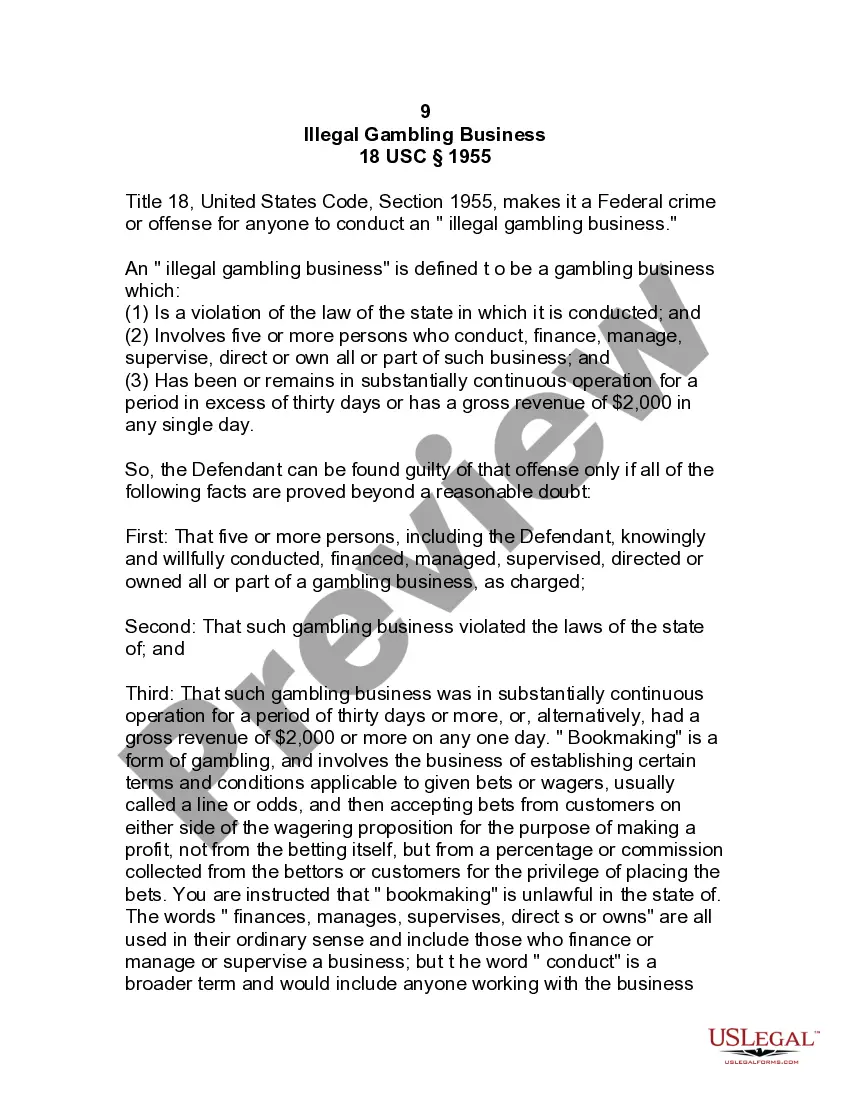
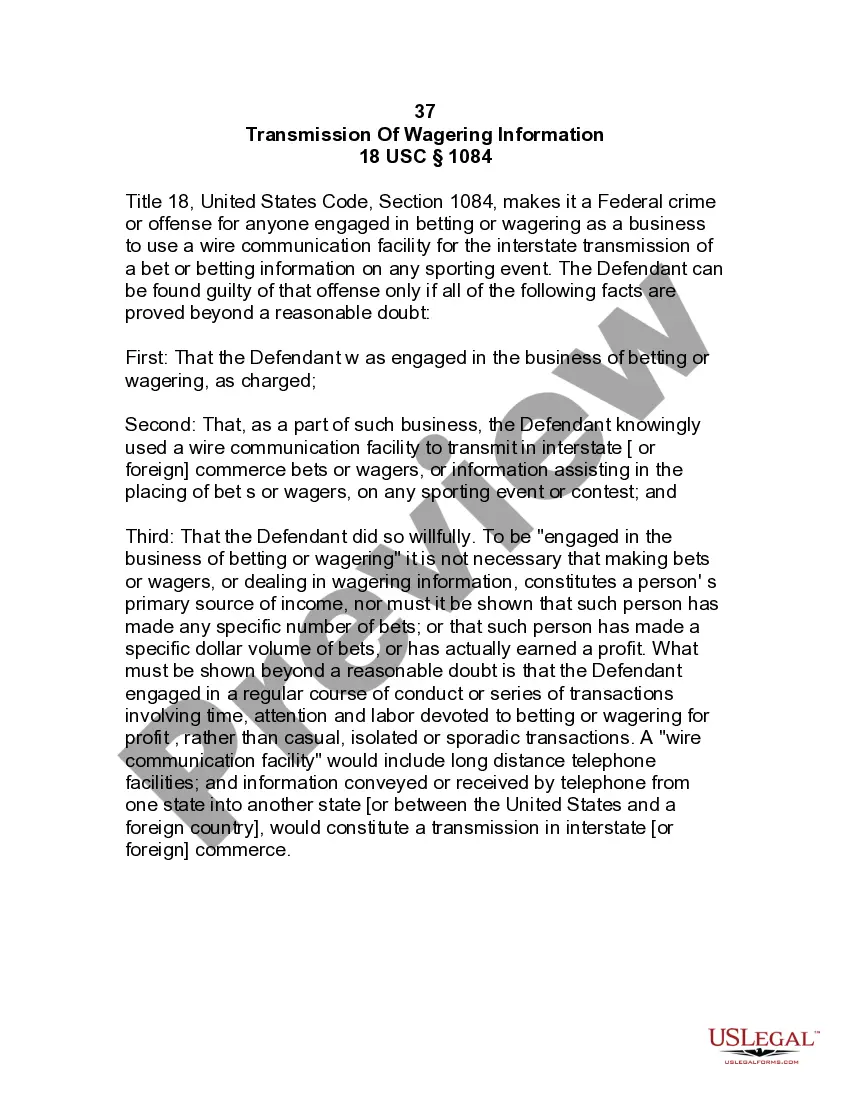
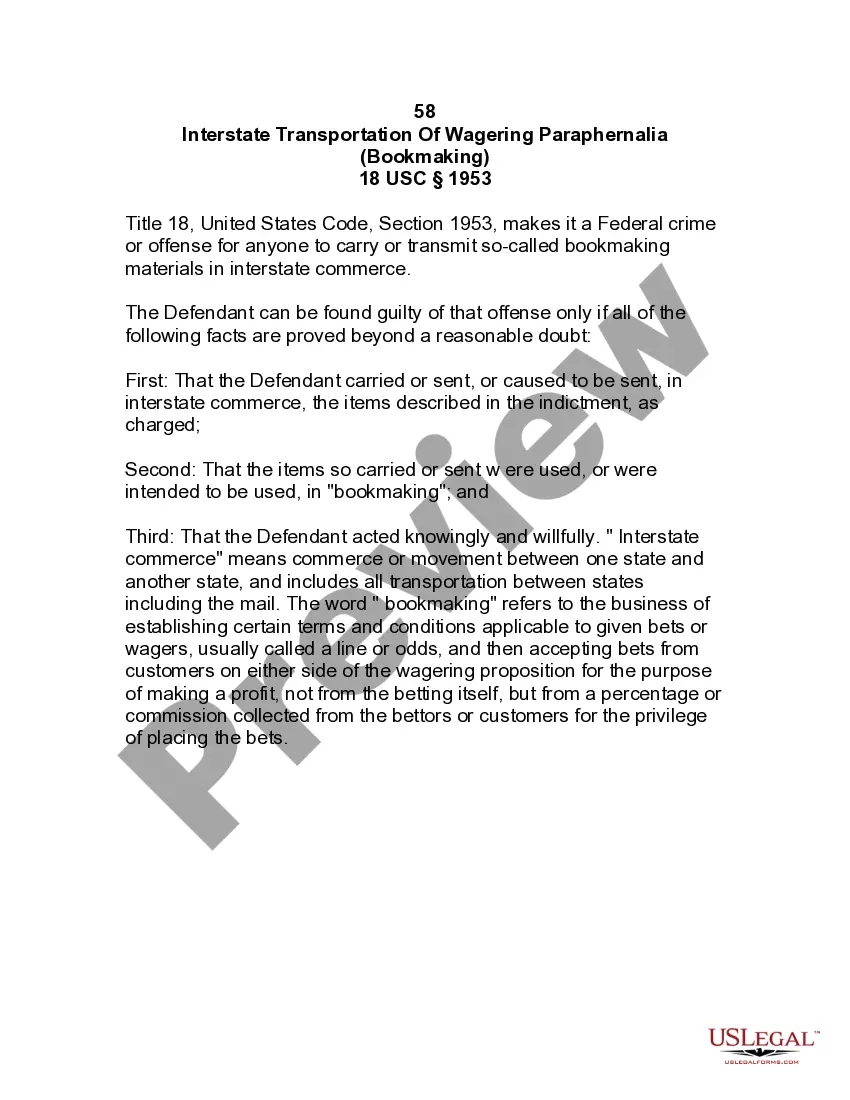
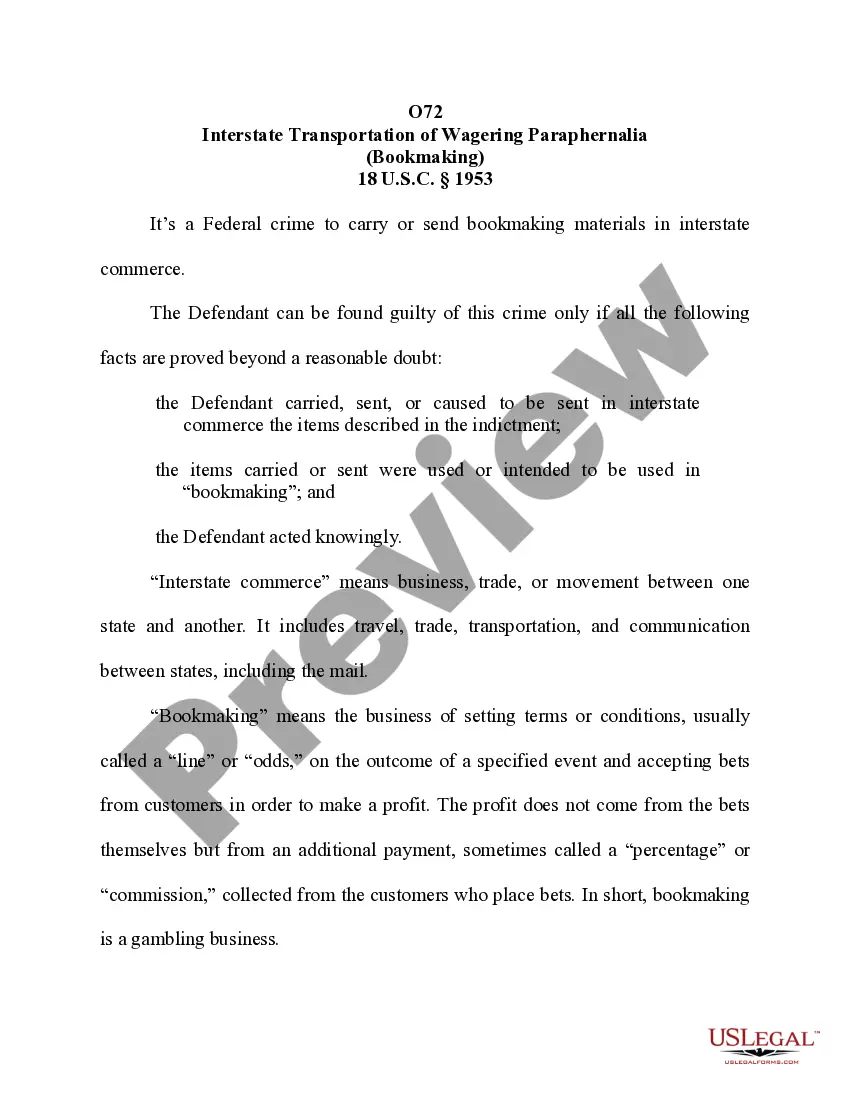
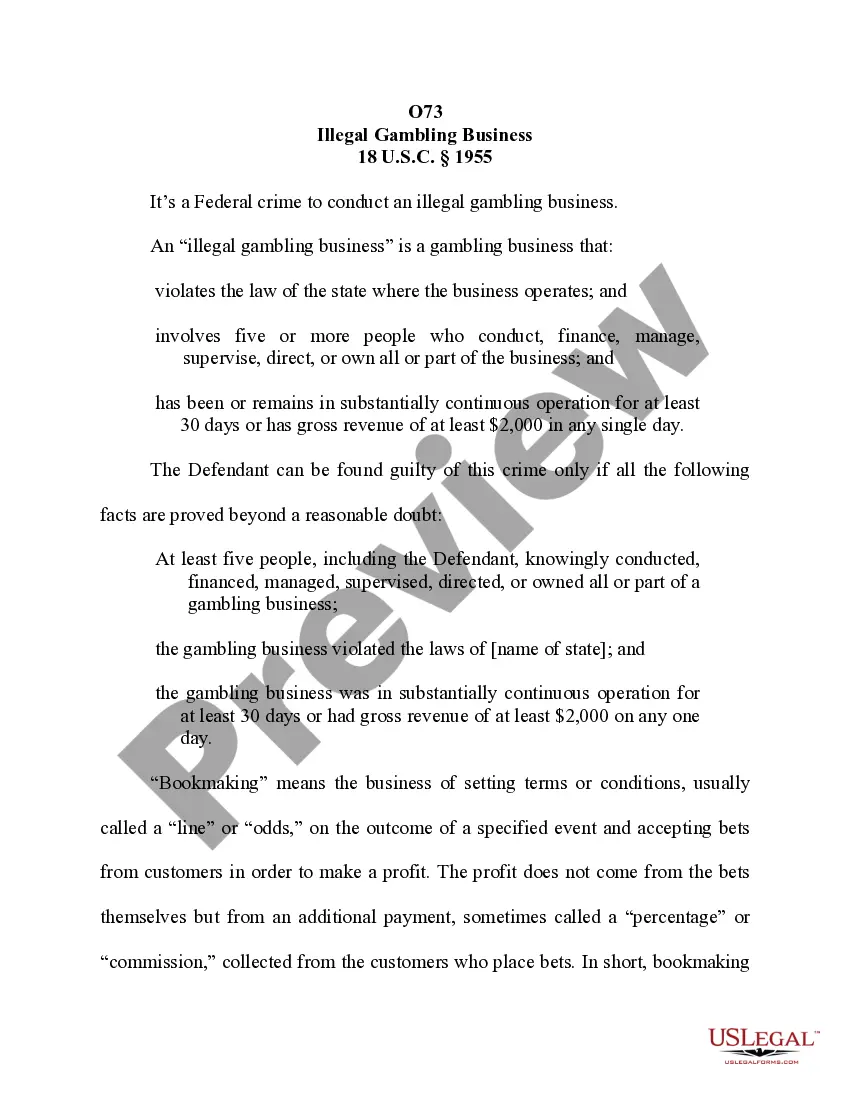
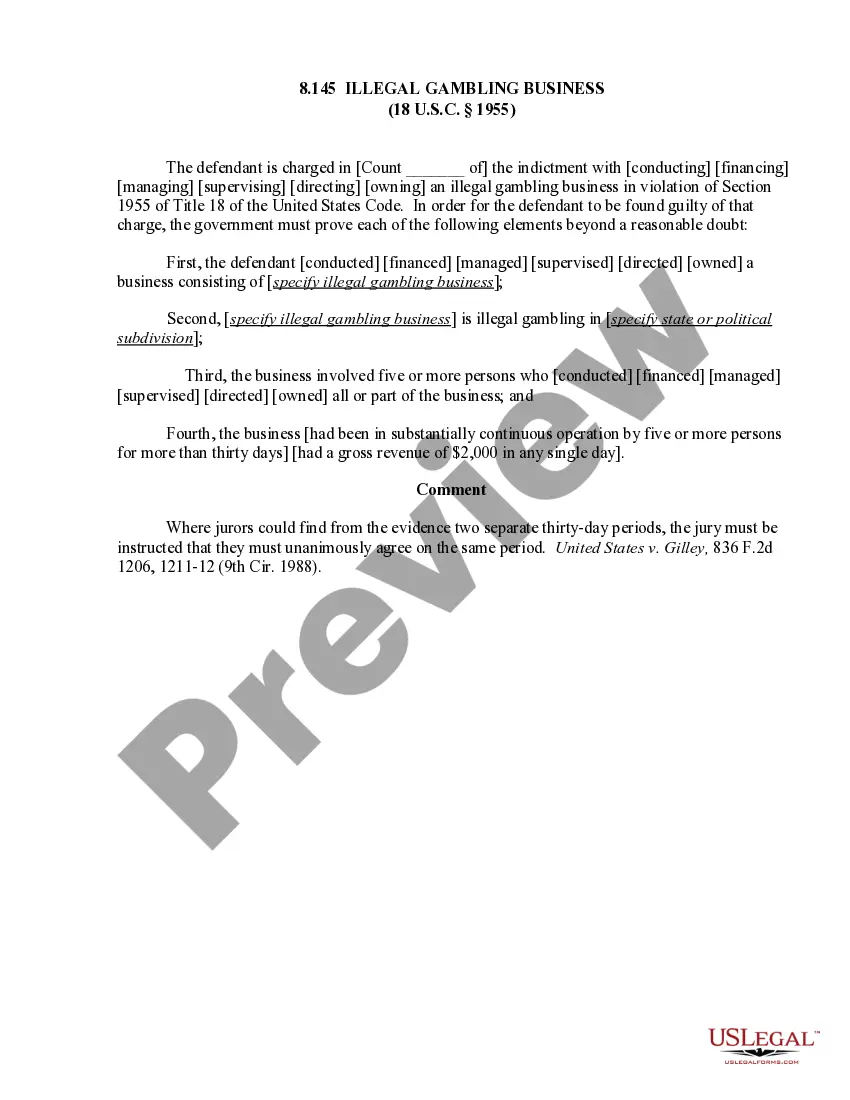
This Jury Instruction - Illegal Gambling Business - Bookmaking form provides sample jury instructions applicable in cases related to illegal gambling under U.S. law. It serves as a reliable guide for the jury to understand the criteria for determining guilt in cases involving illegal gambling activities. This form differs from other legal instructions by focusing specifically on the elements that constitute an illegal gambling business as defined in Title 18, United States Code, Section 1955. By following these instructions, jurors can assess the evidence presented based on established legal standards.
What’s included in this form
- Definition of an illegal gambling business, including the requirements for jurisdiction and operation.
- Criteria for criminal liability based on participation in the gambling business.
- Explanation of what constitutes unlawful bookmaking in the context of gambling laws.
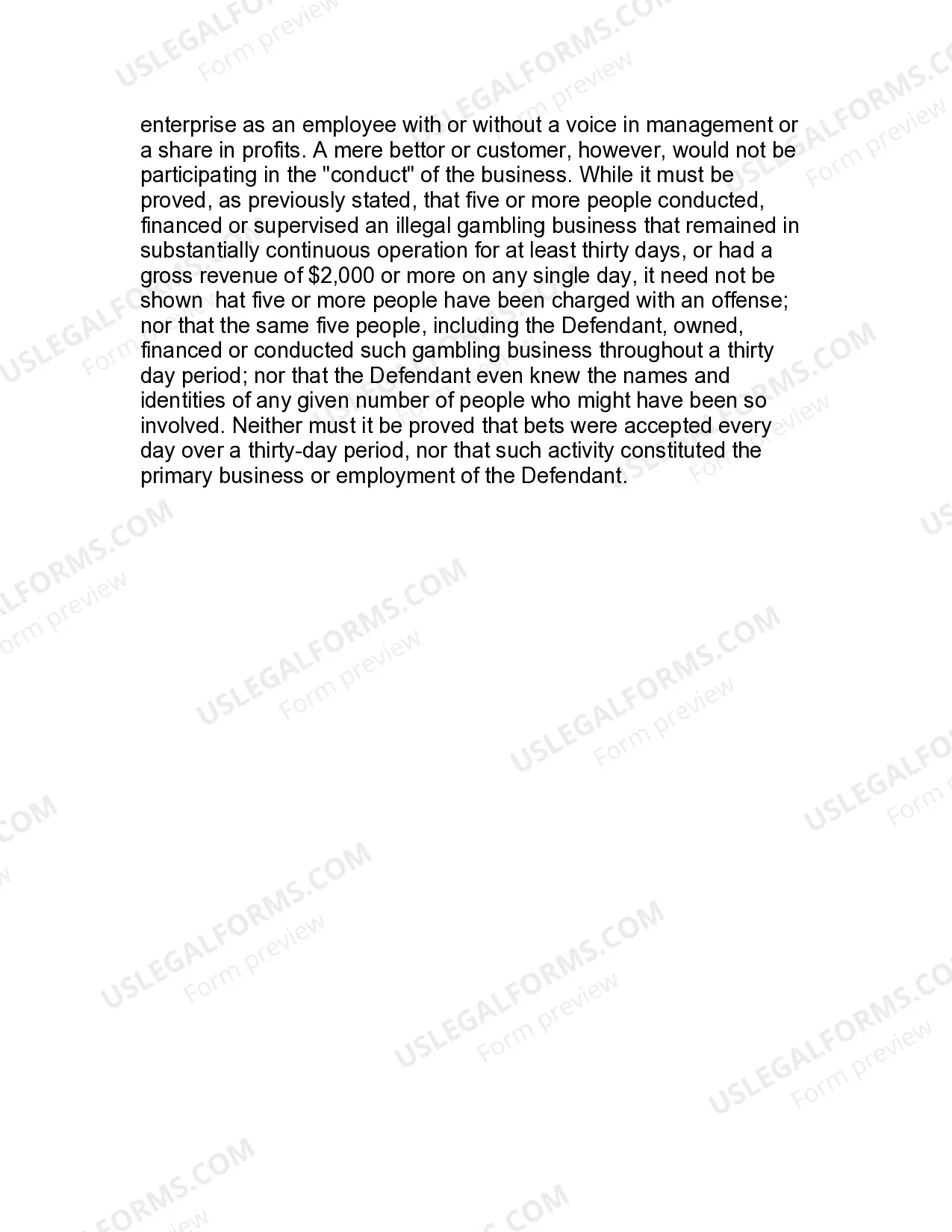
- Clarifications on the roles of individuals involved in the business and the required number of participants.
- Details about the evidence required to prove the offense beyond a reasonable doubt.
When this form is needed
This form is essential in cases where a defendant is accused of operating or participating in an illegal gambling business. It should be used during jury trials to provide clear legal frameworks on the elements that need to be established for a conviction for illegal gambling according to federal laws. Legal practitioners and jurors can rely on this form to ensure that proper standards are applied when evaluating the evidence and arguments presented in court.
Intended users of this form
- Judges overseeing trials involving illegal gambling allegations.
- Legal professionals representing defendants or the prosecution in gambling cases.
- Jurors selected to deliberate cases related to illegal gambling activities.
Instructions for completing this form
- Review the descriptions of each element of the illegal gambling business provided in the form.
- Modify the sample language to reflect the specific facts of the case being tried.
- Ensure that all necessary legal definitions included are relevant to the jurisdiction.
- Confirm that all instructions clearly outline the burden of proof required for conviction.
- Present the completed jury instructions for judicial approval before trial commences.
Does this document require notarization?
Notarization is generally not required for this form. However, certain states or situations might demand it. You can complete notarization online through US Legal Forms, powered by Notarize, using a verified video call available anytime.
Get your form ready online
Our built-in tools help you complete, sign, share, and store your documents in one place.
Make edits, fill in missing information, and update formatting in US Legal Forms—just like you would in MS Word.
Download a copy, print it, send it by email, or mail it via USPS—whatever works best for your next step.
Sign and collect signatures with our SignNow integration. Send to multiple recipients, set reminders, and more. Go Premium to unlock E-Sign.
If this form requires notarization, complete it online through a secure video call—no need to meet a notary in person or wait for an appointment.
We protect your documents and personal data by following strict security and privacy standards.

Make edits, fill in missing information, and update formatting in US Legal Forms—just like you would in MS Word.

Download a copy, print it, send it by email, or mail it via USPS—whatever works best for your next step.

Sign and collect signatures with our SignNow integration. Send to multiple recipients, set reminders, and more. Go Premium to unlock E-Sign.

If this form requires notarization, complete it online through a secure video call—no need to meet a notary in person or wait for an appointment.

We protect your documents and personal data by following strict security and privacy standards.
Common mistakes to avoid
- Failing to align the instructions with local state laws where applicable.
- Omitting clear definitions of key terms related to illegal gambling.
- Not clarifying the number of participants required to establish an illegal gambling business.
Why complete this form online
- Immediate access to customizable jury instructions tailored for legal proceedings.
- Easy download options allow for quick edits and modifications as needed.
- Reliability based on templates drafted by licensed attorneys familiar with federal and state laws.
Legal use & context
- These jury instructions portray the legal standards required for establishing guilt in illegal gambling cases.
- They help ensure jurors understand their role and the laws that govern gambling businesses in the U.S.
- Using this form in court enhances the clarity and consistency of jury guidance based on federal law.
Looking for another form?


Form popularity
FAQ
Jury instructions are instructions for jury deliberation that are written by the judge and given to the jury.
Jury Instructions For your research purposes, using either one is fine. Remember that jury instructions are designed to accurately reflect the law but are not the law itself.
Westlaw: Jury instructions can be found by going to Secondary Sources link, then selecting jury selections from the options listed on the left side of the page.
A jury instruction is given by the judge to the jury to explain what is happening in the court, to explain the points of law relevant to the case, to explain certain aspects of the evidence presented and to assist the jurors in understanding their duties in reaching a verdict.
Jury instructions are given to the jury by the judge, who usually reads them aloud to the jury. The judge issues a judge's charge to inform the jury how to act in deciding a case. The jury instructions provide something of a flow chart on what verdict jurors should deliver based on what they determine to be true.
Jury Instructions. instructions that are given by the trial judge that specifically state what the defendant can be found guilty of and what the prosecution or plaintiff has to prove in order for a guilty verdict.
These are civil or criminal jury instructions approved by a state court, bench committee, or bar association. They are commonly used by courts in the relevant jurisdiction, as they ease the process of drafting fair jury instructions and theoretically do not have errors.
A curative instruction is given to a jury by the judge in a case to negate the prejudicial effect of an erroneous instruction or tainted evidence.
In federal court, the jury decides the verdict. It's the judge's job to act as referee, ruling on issues of law before and during the trial. Federal judges keep up to date on many laws and rules such as: Federal Laws.