Jury Instruction - Theft Or Receipt Of Stolen Mail Matter
What is this form?
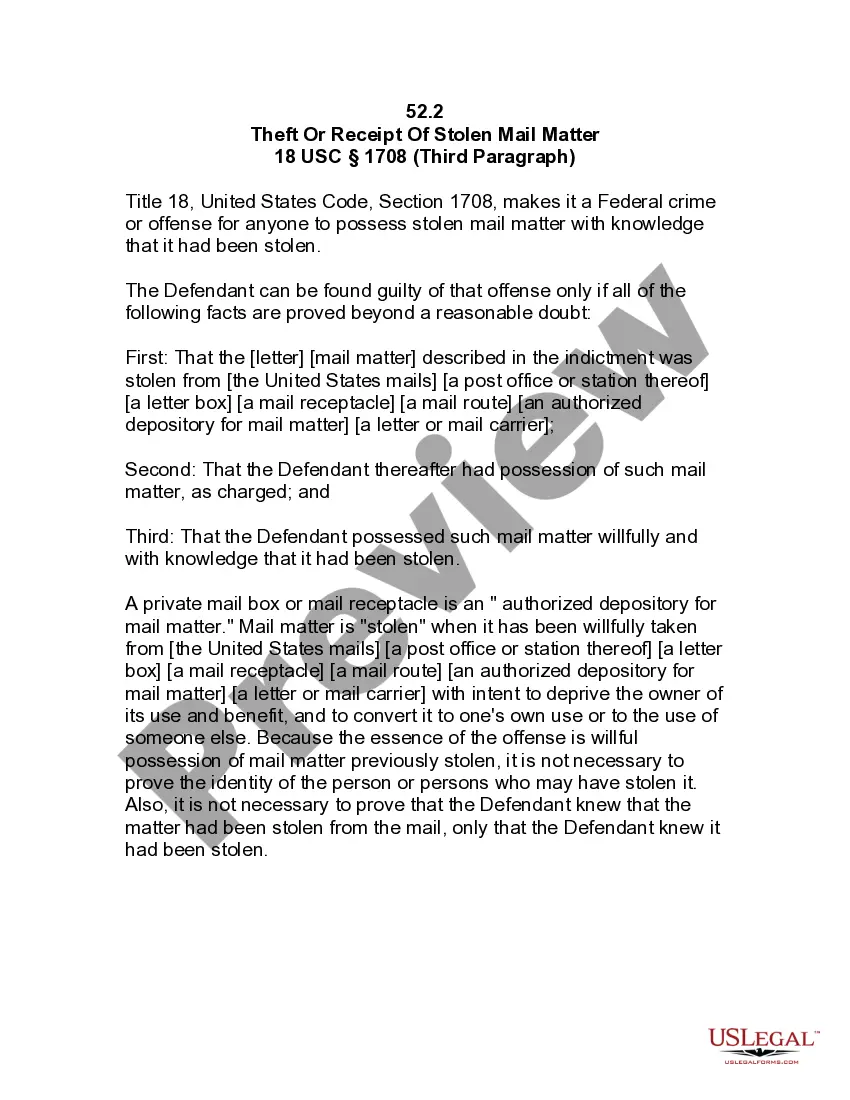
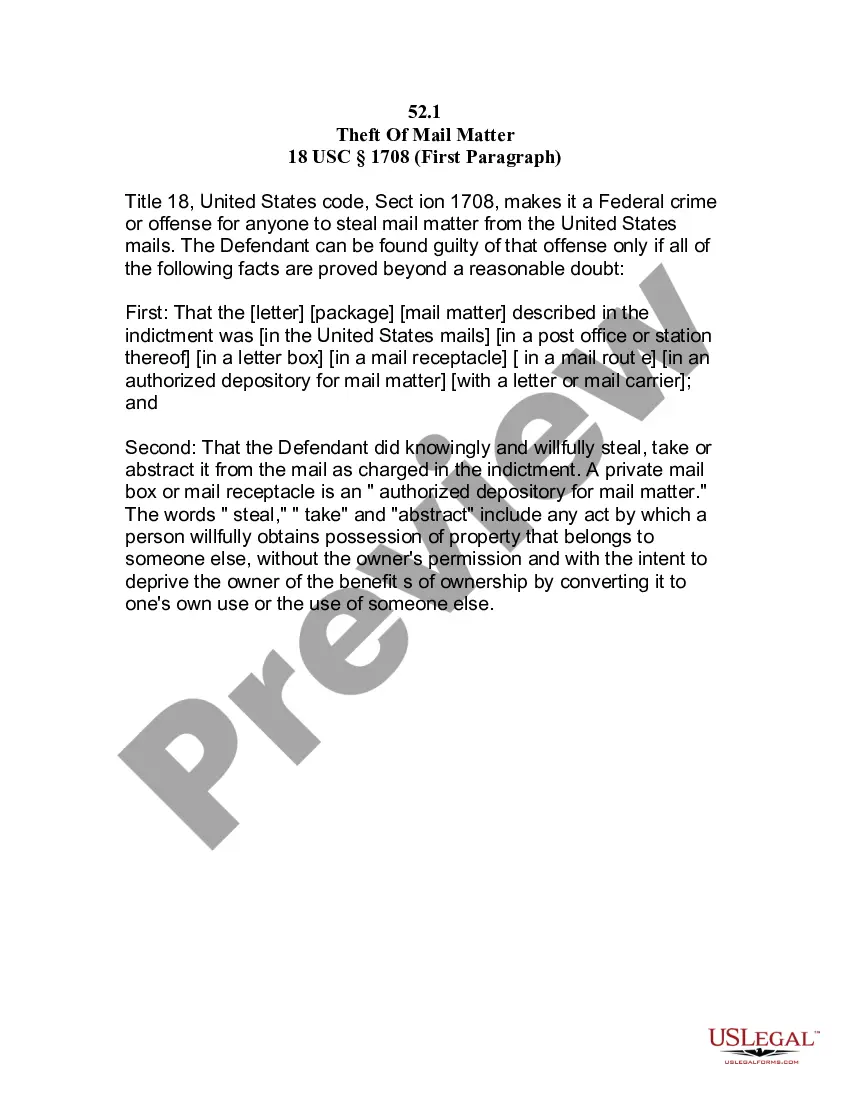
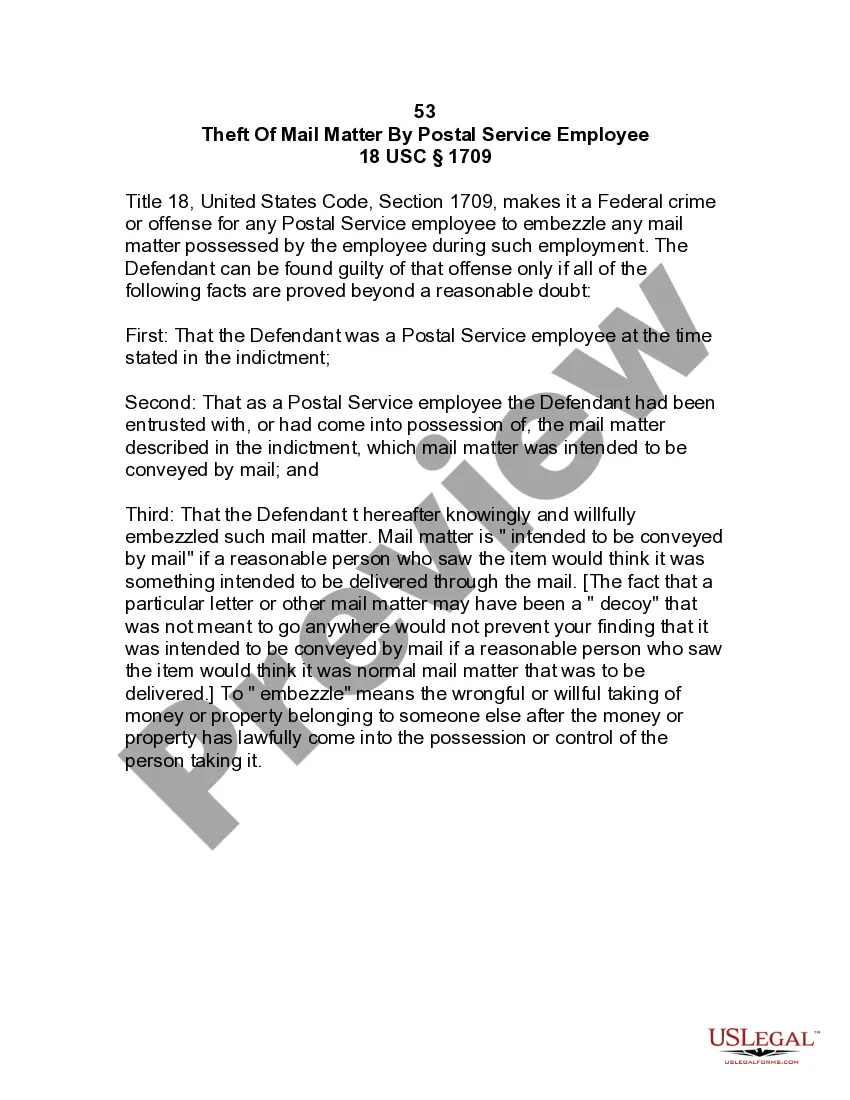
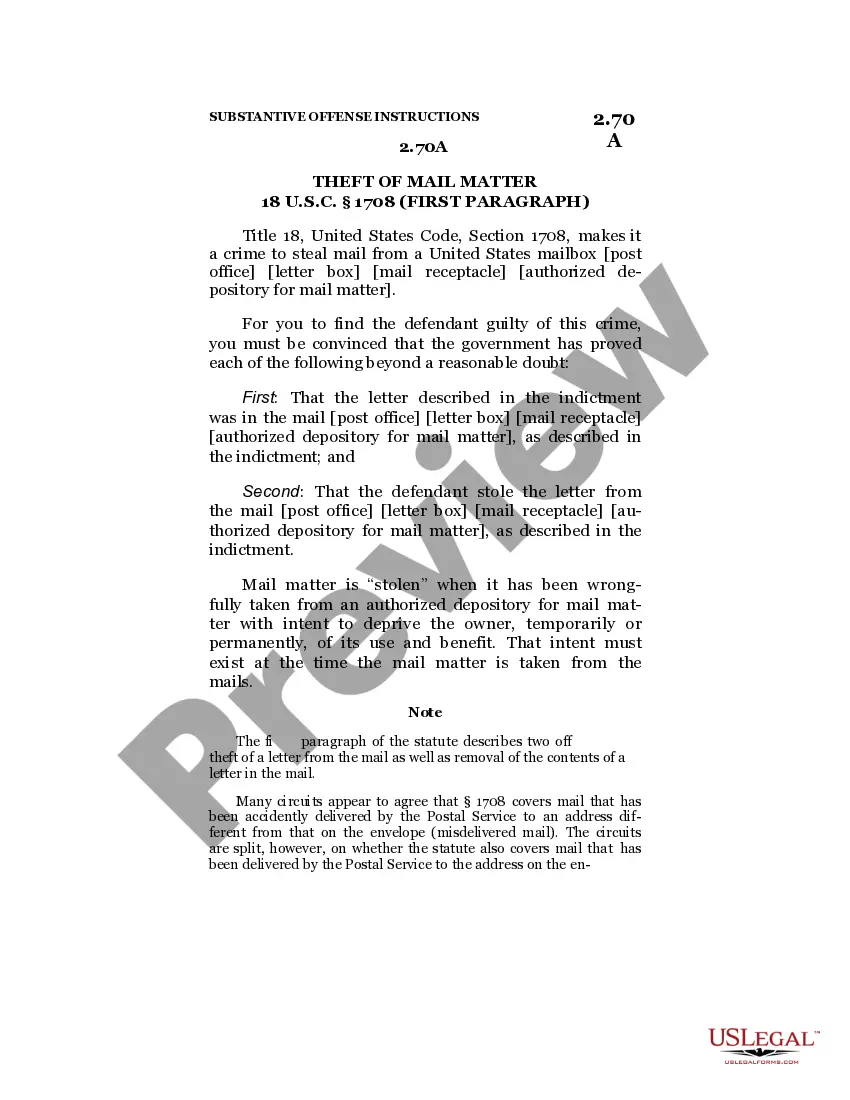
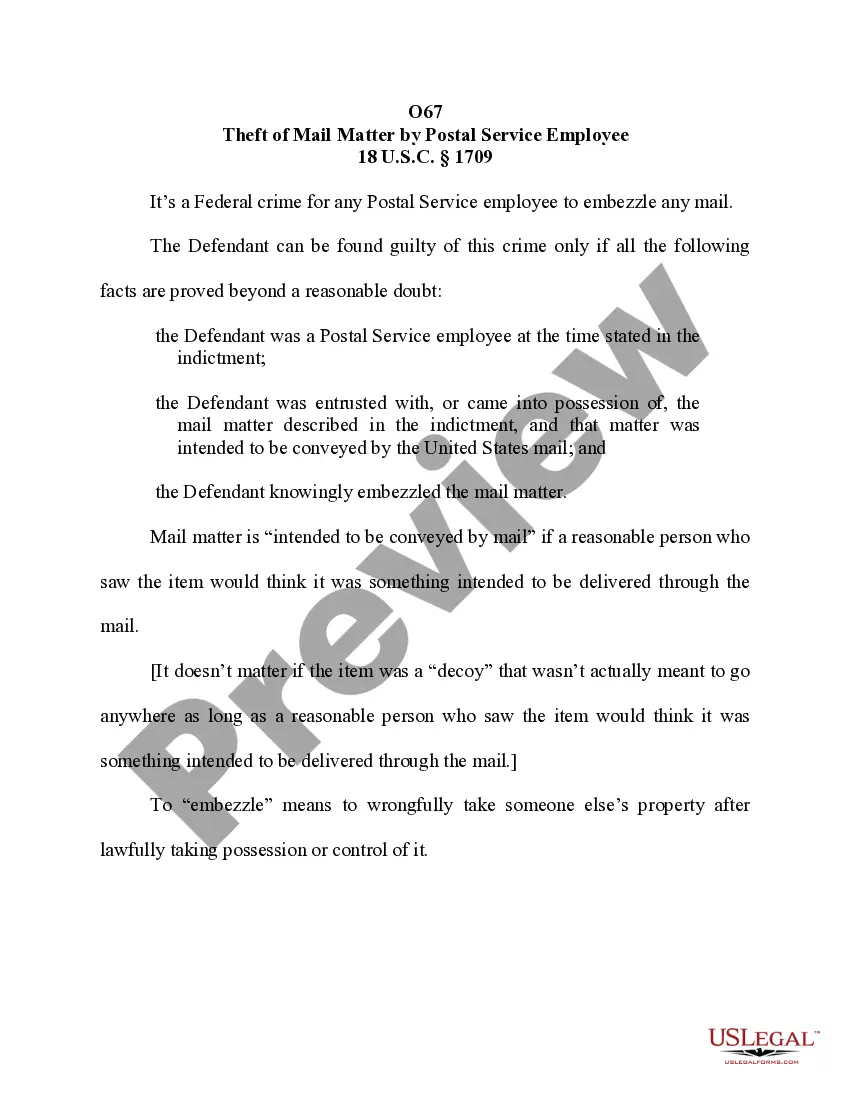
The Jury Instruction - Theft or Receipt of Stolen Mail Matter is a legal document providing sample jury instructions for cases involving the federal crime of possessing stolen mail. Drafted by licensed attorneys, this form ensures that jurors understand the specific legal parameters surrounding theft or unauthorized receipt of mail matter, distinguishing it from other legal instructions. It is essential for guiding jurors in making informed decisions based on the nuances of this particular type of offense under Title 18, United States Code, Section 1708.
Form components explained
- Description of the charges related to theft of mail matter.
- Explanation of the legal standards needed to prove possession of stolen mail.
- Criteria defining "willfulness" and "knowledge" regarding stolen mail.
- Pertinent examples of what constitutes possessing stolen mail matter.
- Clarification on the necessity of the identity of the original thief.
Situations where this form applies
This form is used during criminal trials where the defendant is charged under federal law with theft or receipt of stolen mail. It is applicable in situations where the prosecution must prove that the accused knowingly possessed mail identified as stolen. Legal representatives can adapt these instructions to fit specific cases by tailoring the content to align with their particular arguments or evidence being presented in court.
Who needs this form
- Attorneys representing defendants or plaintiffs in federal theft cases.
- Judges overseeing trials related to mail theft.
- Legal interns or law clerks preparing jury instructions for court proceedings.
- Litigants interested in understanding the jury instructions that will be used in their cases.
How to complete this form
- Review the charges and confirm that they pertain to theft or receipt of stolen mail.
- Modify the sample questions and instructions to match the specifics of your case.
- Ensure clarity on the definitions of "knowledge" and "willfulness" in your instructions.
- Consult relevant case law and precedents to support your adaptation.
- Submit the completed jury instructions to the court following local procedural requirements.
Does this form need to be notarized?
This form does not typically require notarization to be legally valid. However, some jurisdictions or document types may still require it. US Legal Forms provides secure online notarization powered by Notarize, available 24/7 for added convenience.
Get your form ready online
Our built-in tools help you complete, sign, share, and store your documents in one place.
Make edits, fill in missing information, and update formatting in US Legal Forms—just like you would in MS Word.
Download a copy, print it, send it by email, or mail it via USPS—whatever works best for your next step.
Sign and collect signatures with our SignNow integration. Send to multiple recipients, set reminders, and more. Go Premium to unlock E-Sign.
If this form requires notarization, complete it online through a secure video call—no need to meet a notary in person or wait for an appointment.
We protect your documents and personal data by following strict security and privacy standards.

Make edits, fill in missing information, and update formatting in US Legal Forms—just like you would in MS Word.

Download a copy, print it, send it by email, or mail it via USPS—whatever works best for your next step.

Sign and collect signatures with our SignNow integration. Send to multiple recipients, set reminders, and more. Go Premium to unlock E-Sign.

If this form requires notarization, complete it online through a secure video call—no need to meet a notary in person or wait for an appointment.

We protect your documents and personal data by following strict security and privacy standards.
Mistakes to watch out for
- Failing to tailor the sample instructions to fit the specifics of the case.
- Using ambiguous language that may confuse jurors about the legal standards.
- Omitting key elements that must be proven for conviction under federal law.
- Neglecting to update any legal references based on recent rulings or changes in law.
Benefits of completing this form online
- Immediate access to professionally drafted jury instructions tailored for federal cases.
- Easy to customize the form to suit specific legal arguments and circumstances.
- Downloadable for convenience and flexibility in usage during court proceedings.
- Ensured accuracy and reliability due to the involvement of licensed attorneys in drafting.
Legal use & context
- This form serves as an important guide for jurors, ensuring they understand the legal aspects of the charges against a defendant.
- It is grounded in federal law, making it a reliable resource in cases of mail theft across jurisdictions.
- The instructions provided can help mitigate confusion that jurors might face when deliberating such cases.
Looking for another form?








Form popularity
FAQ
Yes, you could be charged with a felony. The United States Postal Service (USPS) moves billions of pieces of mail every year.If you steal mail, you could be facing serious punishment under US Code Section 1708. Because the USPS is a federal agency, mail theft is charged as a federal offense.
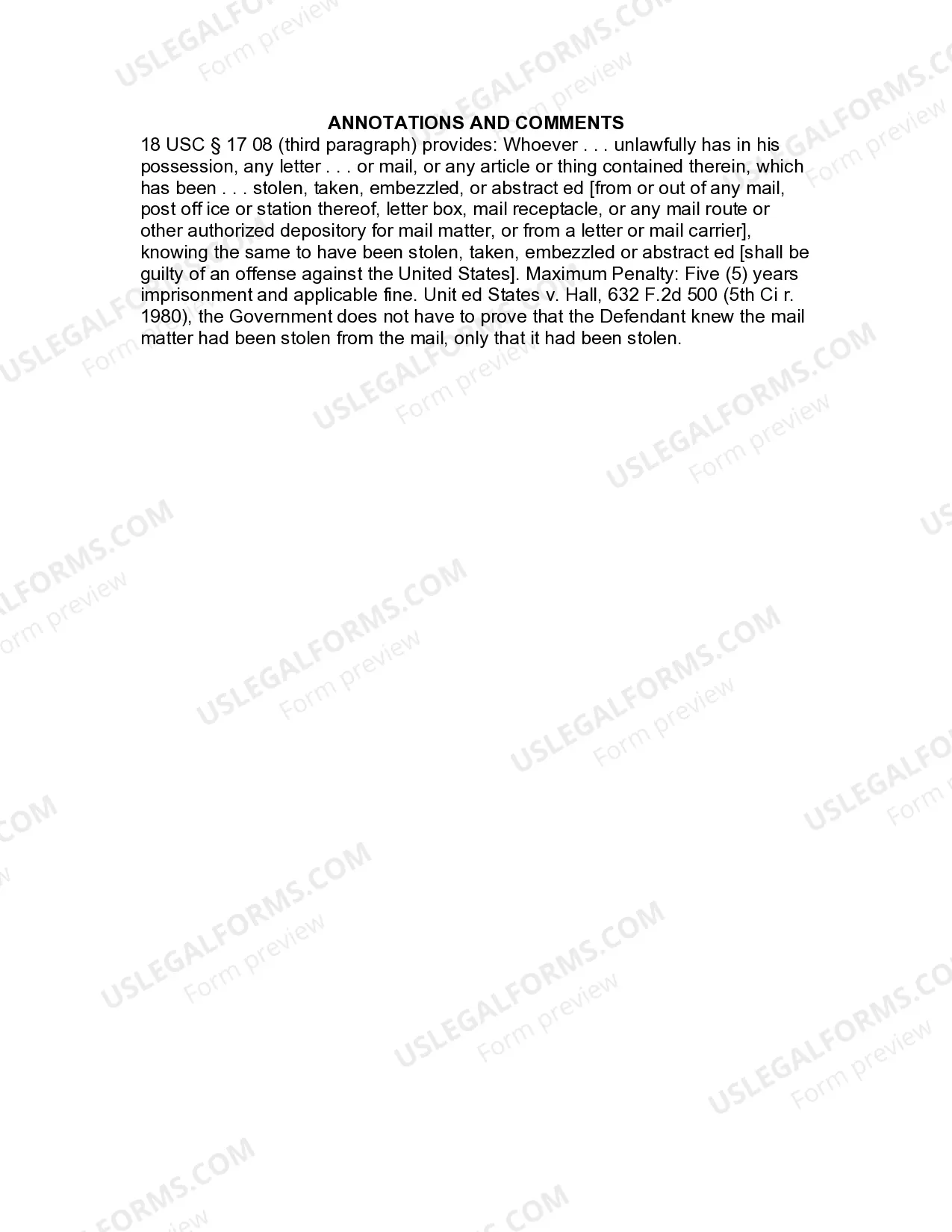
Under United States Code 18 Section 1708, federal mail theft is a felony. If you are charged with mail theft, you could face up to five years in federal prison and fines of up to $250,000.
If you think your mail has been stolen, notify the Postal Inspector at 877-876-2455 or at the USPS Office of the Inspector General website at uspsoig.gov/investigations. It's also best to file a claim as quickly as possible. In some cases, the USPS can trace a stolen gift card.
Report suspected mail losses to Postal Inspectors by calling 877-876-2455 or at www.uspis.gov.
Watch your neighborhood mailboxes for suspicious characters. Report anyone loitering or behaving strangely around your mailbox. If you see mail theft in progress or believe your mail was stolen, call the police, then call Postal Inspectors at 877-876-2455 (press 3).
Report suspected mail losses to Postal Inspectors by calling 877-876-2455 or at www.uspis.gov. Keep Registered Mail separate from other mail. Require employees to sign for Registered Mail2122 to establish accountability.
Theft of mail is a federal crime, a felony that could result in prison time, the loss of the right to vote or hold public office, and significant fines.
What is mail theft? Mail theft is a felony that occurs when someone steals, takes, or abstracts your mail. Mail thieves can mine your mail for cash and checks, and also to obtain personal information that can be used to commit identity theft.Types of personal information thieves can collect.
Federal Laws on Mail Tampering If you are charged with mail theft, you could face up to five years in federal prison and fines of up to $250,000. It is also a crime to injure, deface or destroy any mail deposited in a mailbox.