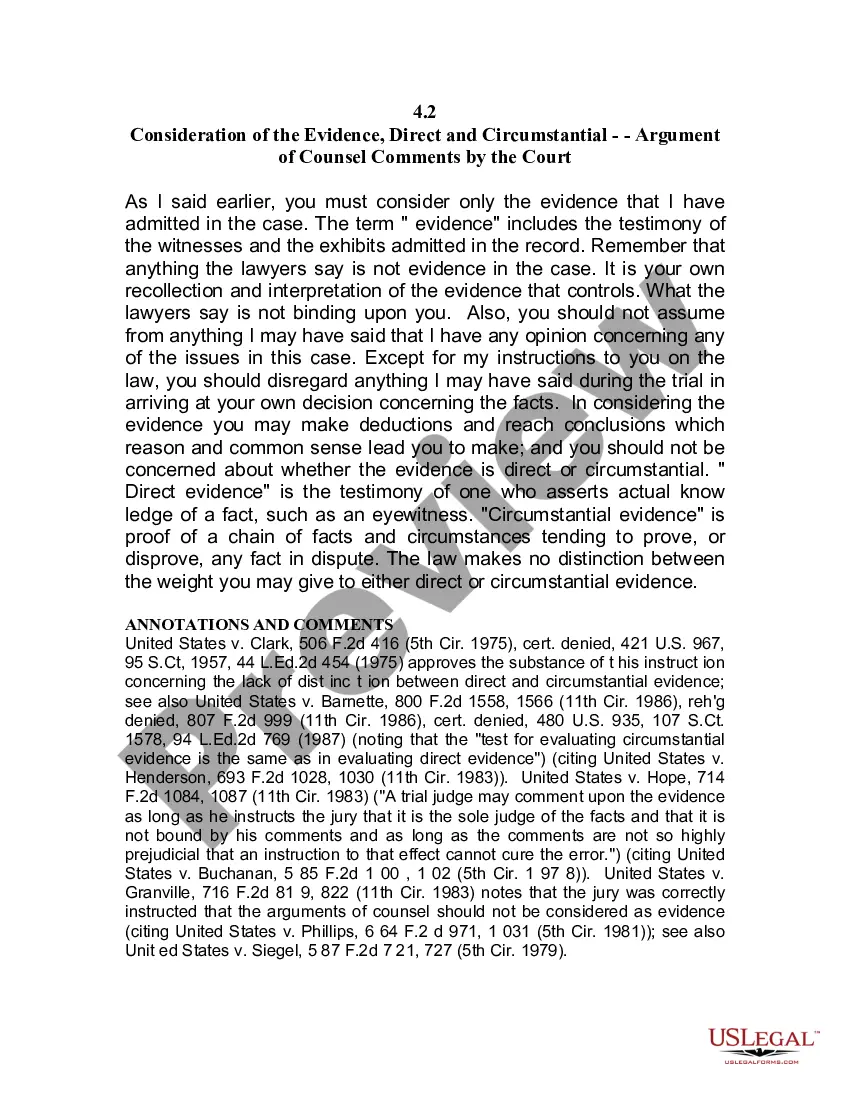
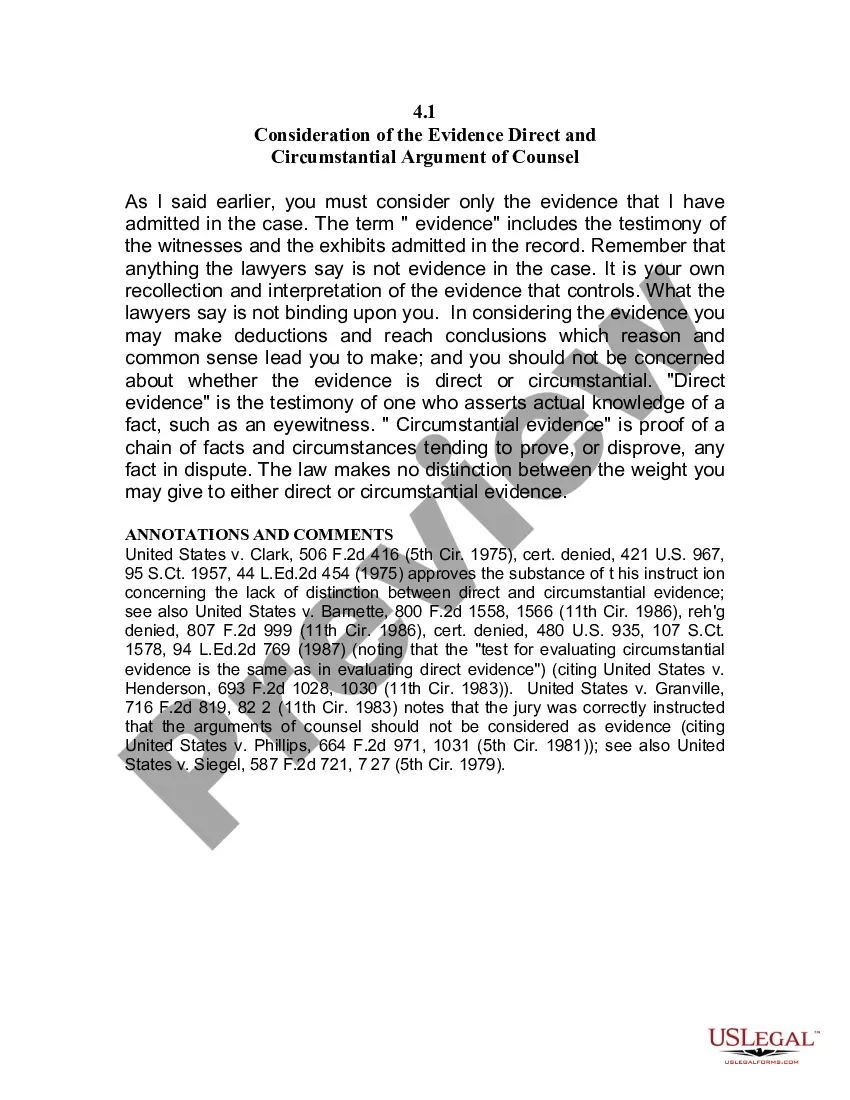
Jury Instruction - Evidence - Direct and Circumstantial Argument of Counsel and Comment of Court
Overview of this form
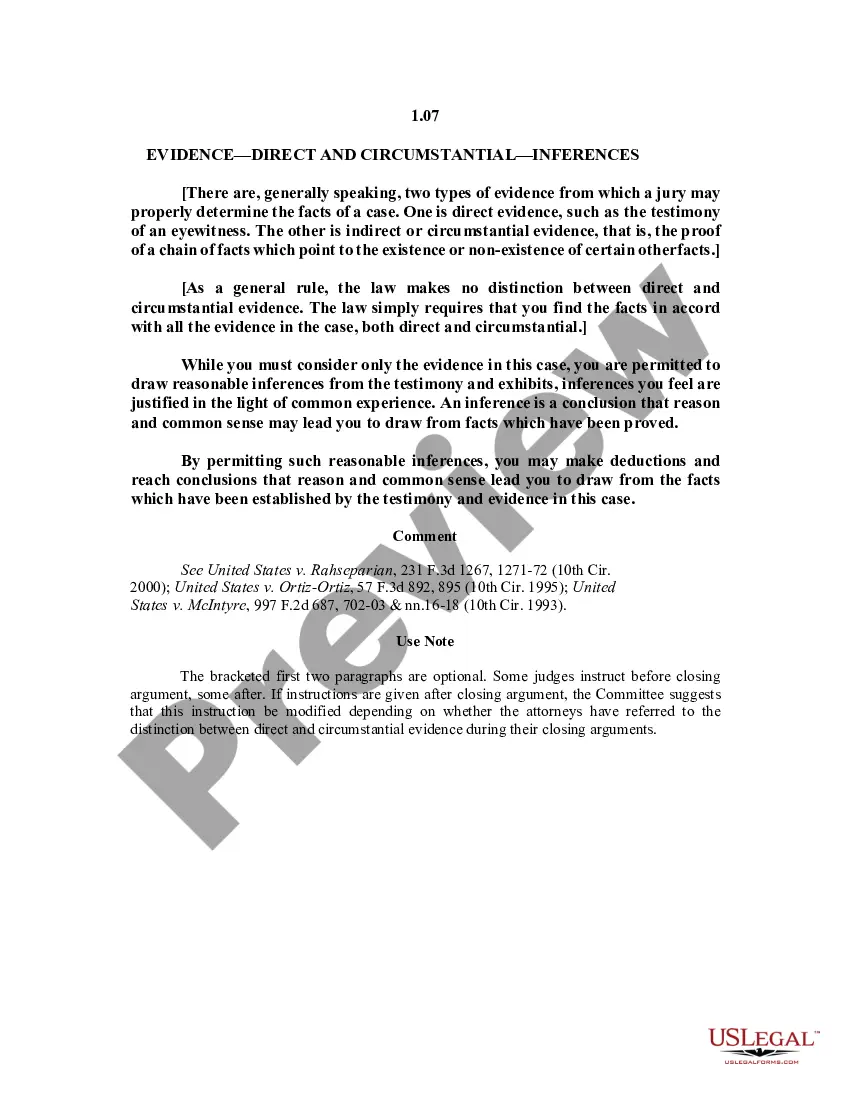
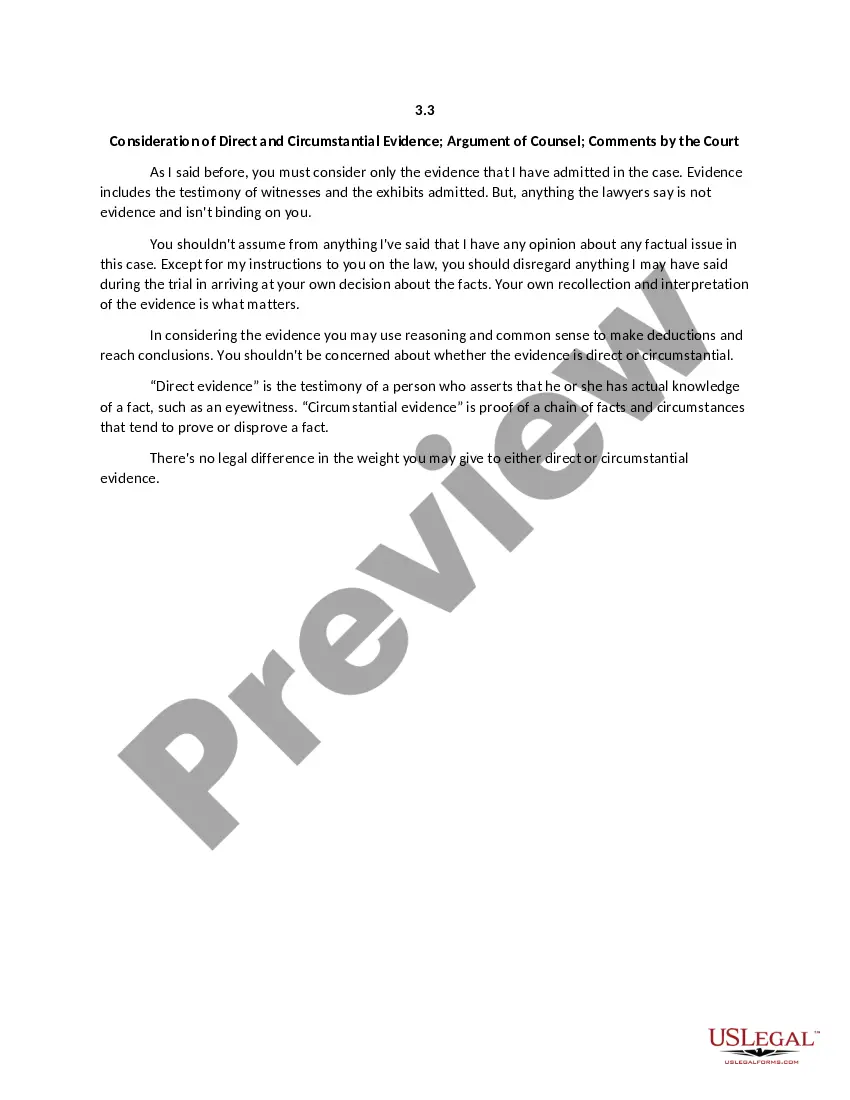
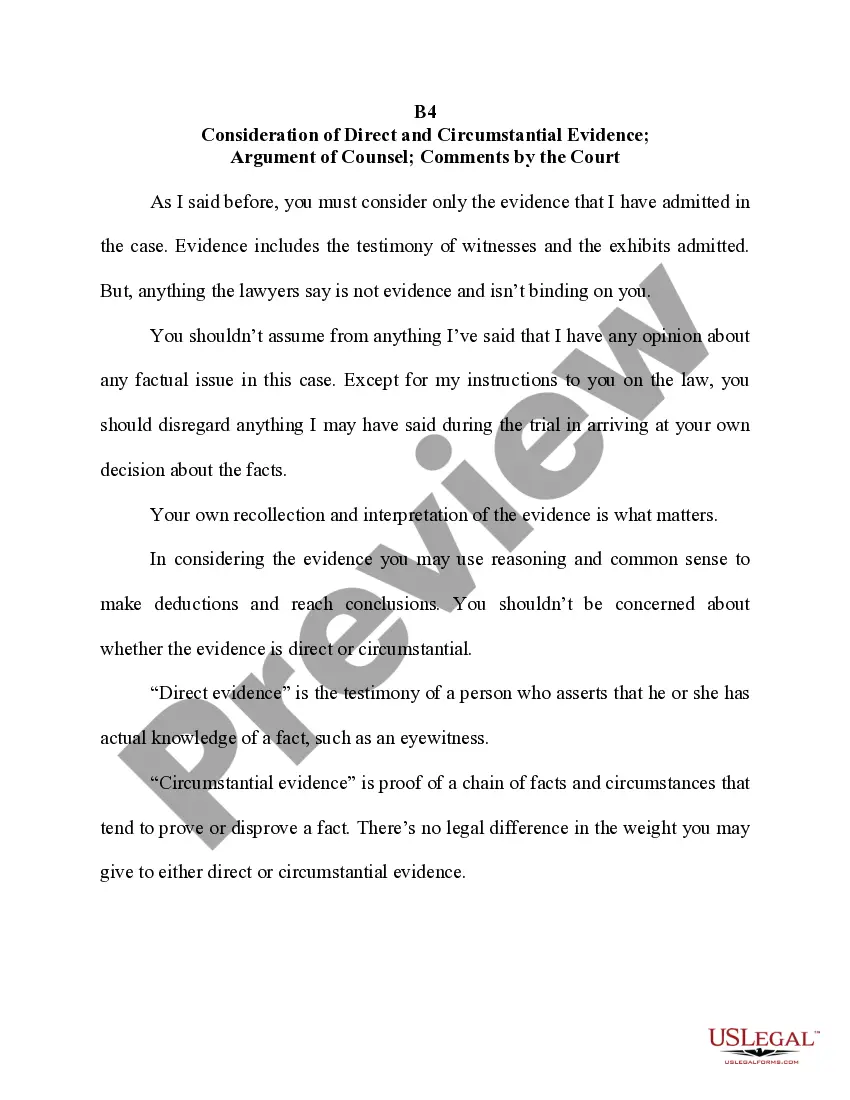
The Jury Instruction - Evidence - Direct and Circumstantial Argument of Counsel and Comment of Court form provides sample jury instructions applicable in court cases throughout the United States. This form details how jurors should consider evidence, emphasizing the distinction between direct and circumstantial evidence. It offers guidance on what constitutes evidence and how jurors should interpret the arguments presented by counsel, distinguishing them from actual evidence. This ensures clarity in legal decision-making during trials.
Key parts of this document
- Definition and consideration of evidence presented during the trial.
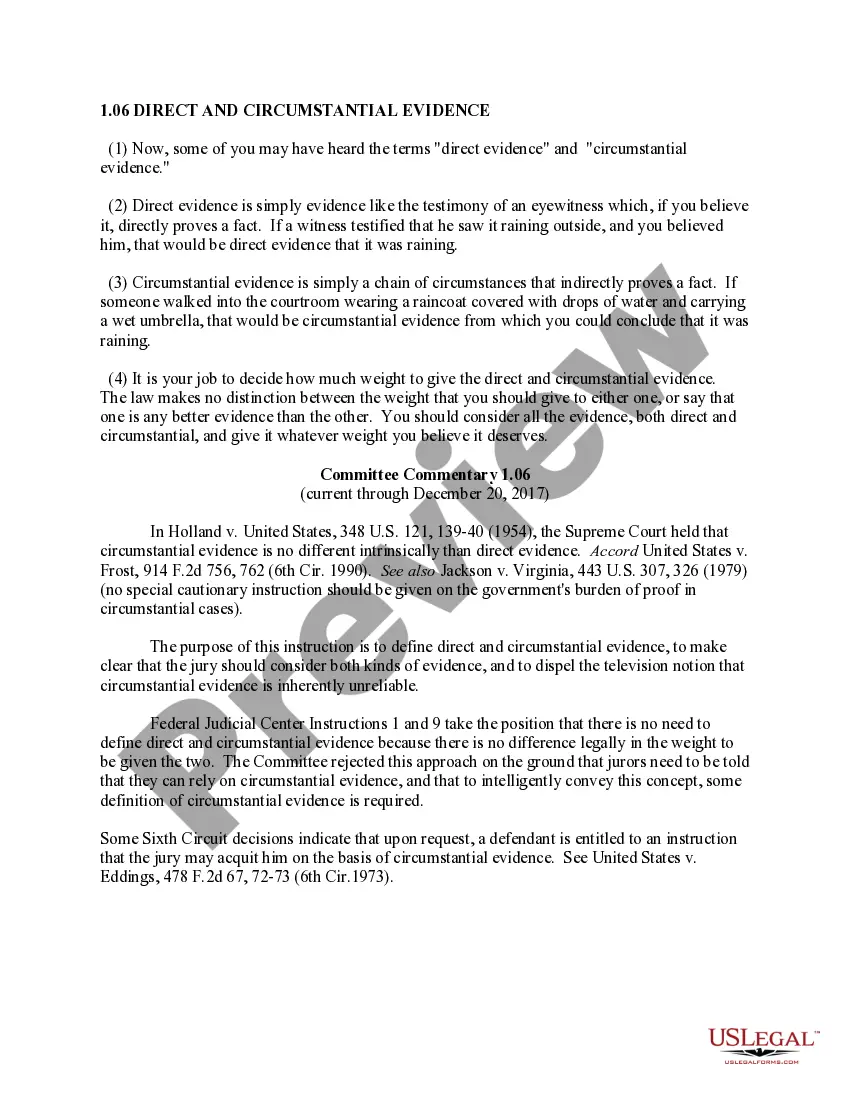
- Explanation of direct evidence, such as eyewitness testimony.
- Explanation of circumstantial evidence and how it relates to known facts.
- Clarification that lawyer arguments are not considered evidence.
- Instructions for the jury on how to interpret comments made by the court.
When this form is needed
This form is essential during a trial where jury instructions are needed. It guides jurors on the proper evaluation of evidence, particularly when distinguishing between direct and circumstantial evidence. It can be used in various legal contexts, such as civil lawsuits or criminal trials, and is especially relevant when the credibility of witness testimony or the interpretation of circumstantial evidence is in question.
Who needs this form
- Judges needing to instruct juries on how to evaluate evidence.
- Attorneys preparing for trial who wish to understand jury instruction requirements.
- Legal practitioners involved in cases where evidence presentation is critical.
- Court personnel responsible for drafting or revising jury instructions.
How to complete this form
- Review the legal context of your case to determine necessary adjustments.
- Insert specific facts about the case relevant to the evidence being presented.
- Specify the definitions of direct and circumstantial evidence as applicable.
- Include any relevant legal citations to support your instructions.
- Ensure clarity in the language used to avoid misunderstandings by jurors.
Notarization requirements for this form
In most cases, this form does not require notarization. However, some jurisdictions or signing circumstances might. US Legal Forms offers online notarization powered by Notarize, accessible 24/7 for a quick, remote process.
Get your form ready online
Our built-in tools help you complete, sign, share, and store your documents in one place.
Make edits, fill in missing information, and update formatting in US Legal Forms—just like you would in MS Word.
Download a copy, print it, send it by email, or mail it via USPS—whatever works best for your next step.
Sign and collect signatures with our SignNow integration. Send to multiple recipients, set reminders, and more. Go Premium to unlock E-Sign.
If this form requires notarization, complete it online through a secure video call—no need to meet a notary in person or wait for an appointment.
We protect your documents and personal data by following strict security and privacy standards.

Make edits, fill in missing information, and update formatting in US Legal Forms—just like you would in MS Word.

Download a copy, print it, send it by email, or mail it via USPS—whatever works best for your next step.

Sign and collect signatures with our SignNow integration. Send to multiple recipients, set reminders, and more. Go Premium to unlock E-Sign.

If this form requires notarization, complete it online through a secure video call—no need to meet a notary in person or wait for an appointment.

We protect your documents and personal data by following strict security and privacy standards.
Common mistakes
- Failing to clarify the difference between direct and circumstantial evidence.
- Assuming jurors will automatically understand legal jargon without explanation.
- Neglecting to emphasize that arguments by lawyers do not constitute evidence.
- Omitting relevant legal citations that can strengthen the instructions.
Why complete this form online
- Access to a professionally drafted template by licensed attorneys.
- Convenient downloadable format for easy access and use during trials.
- Ability to customize the instructions to your specific case needs.
- Availability of legal references to support the content of the instructions.
Legal use & context
- This form provides essential guidance on how jurors should interpret evidence in a trial.
- It is backed by legal precedent, ensuring its relevance and enforceability in court.
- The instructions help prevent misunderstandings that could affect trial outcomes.
Looking for another form?

Form popularity
FAQ
Evidence that directly links a person to a crime, without the need of any inference (for example, they were seen committing the crime). Compare to circumstantial evidence.
The instructions that the judge gives the jurors are to convict the boy but also make sure that there isn't any reasonable doubt. If there is any kind of reasonable doubt, then he is not guilty. All twelve jurors must vote guilty for him to be convicted.
A jury instruction is given by the judge to the jury to explain what is happening in the court, to explain the points of law relevant to the case, to explain certain aspects of the evidence presented and to assist the jurors in understanding their duties in reaching a verdict.
Terms in this set (31) In your own words, state what instructions the judge gives to the jurors. How many jurors must vote guilty for the accused to be convicted? The judge says if they find him guilty they must have a beyond reasonable doubt.
Judge makes sure the verdict is unanimous by saying, So say you all? to which the entire Jury should respond, Yes, Your Honor. Judge talks about sentencing. In a criminal case bailiff can pretend to take guilty party away.
California's civil and criminal laws say that both direct and indirect evidence are admissible in state and federal courts.
Direct evidence can be a witness testifying about their direct recollection of events. This can include what they saw, what they heard or anything they observed with their senses.Circumstantial evidence is when a witness cannot tell you directly about the fact that is intended to be proved.
California's civil and criminal laws say that both direct and indirect evidence are admissible in state and federal courts.
If there is a reasonable doubt in your mind as to the guilt of the accused.... then you must declare him not guilty. If however, there is no reasonable doubt, then he must be found guilty. Whichever way you decide, the verdict must be unanimous. I urge you to deliberate honestly and thoughtfully.