Jury Instruction - 6.6.2 Maintenance And Cure
About this form
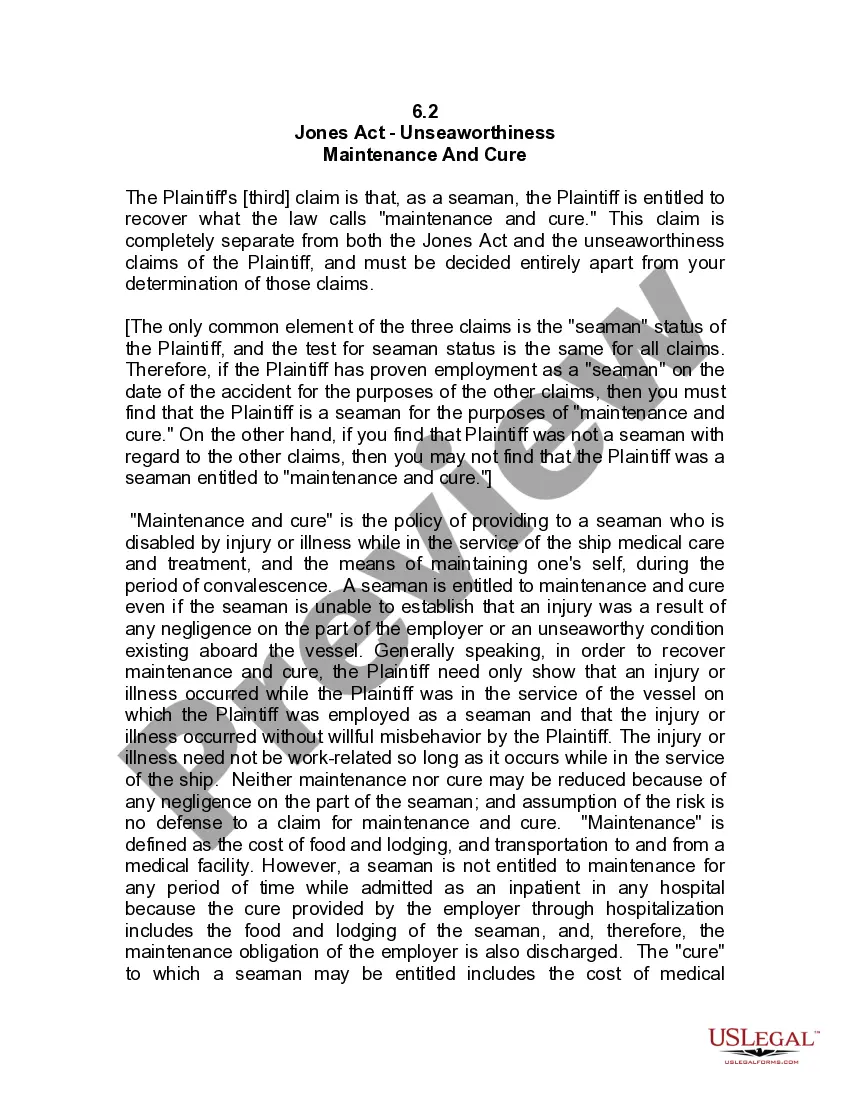
The Jury Instruction - 6.6.2 Maintenance and Cure form provides legal guidelines to juries in cases involving a seaman's claim for maintenance and cure. This form includes sample jury instructions that illustrate the legal obligations of an employer towards a seaman who experiences an illness or injury while in service. Unlike other jury instructions, this form specifically addresses the unique considerations related to maintenance and cure claims under the Jones Act, ensuring that the jury can clearly assess the entitlement based on the facts presented.
Main sections of this form
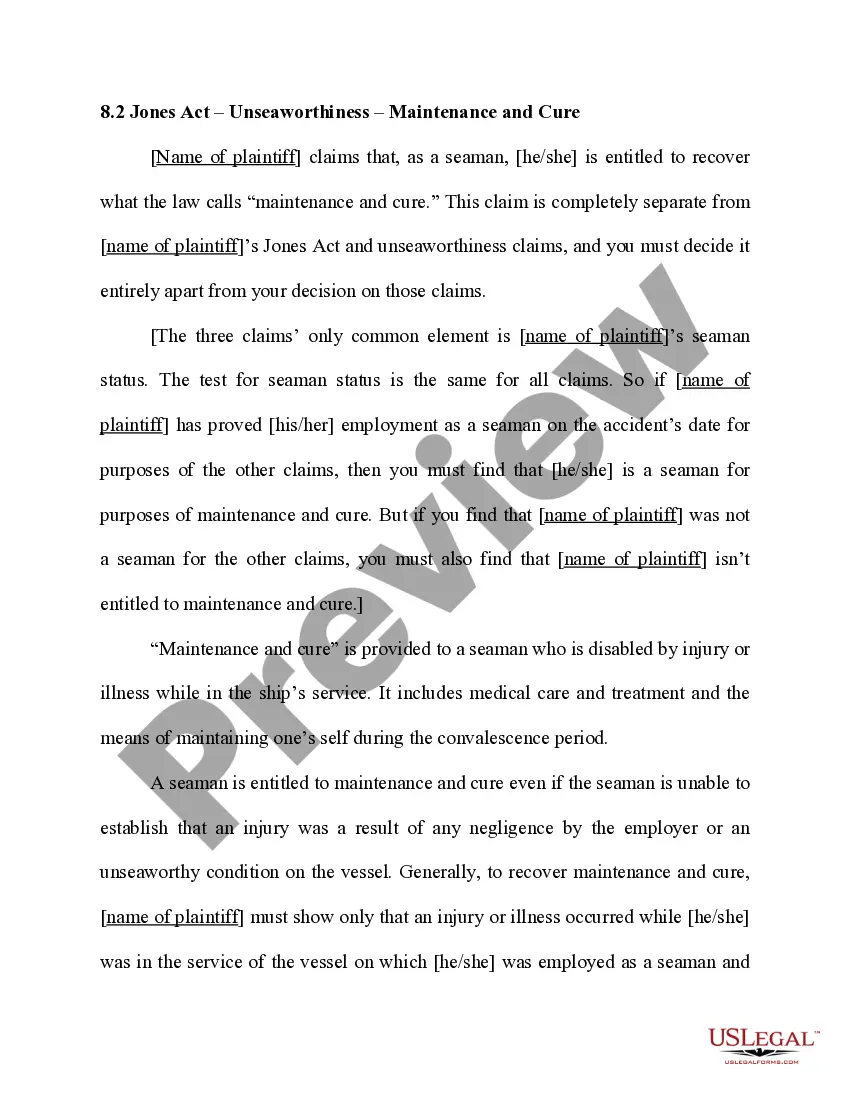
- Clarification of seaman status: Establishes criteria for determining if the plaintiff qualifies as a seaman.
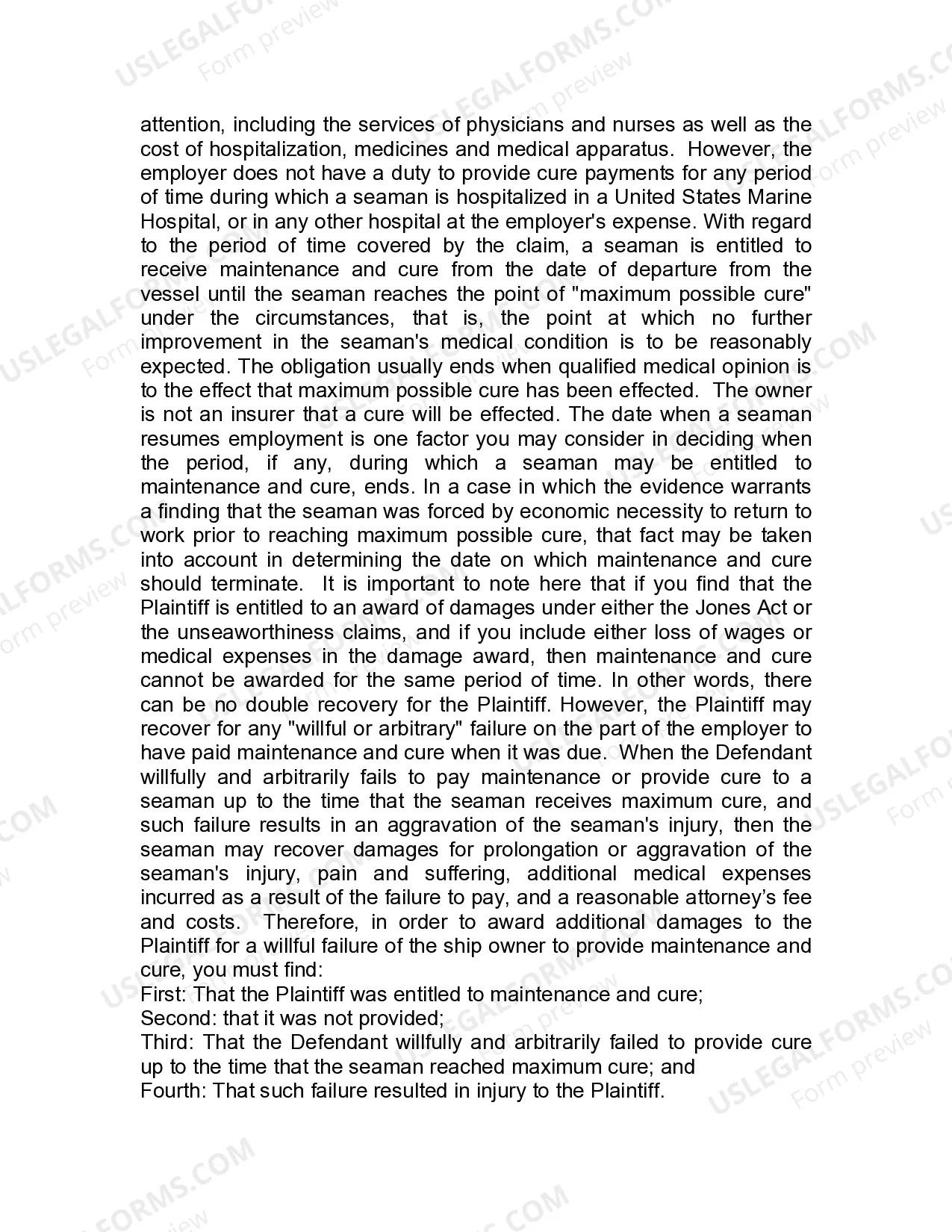
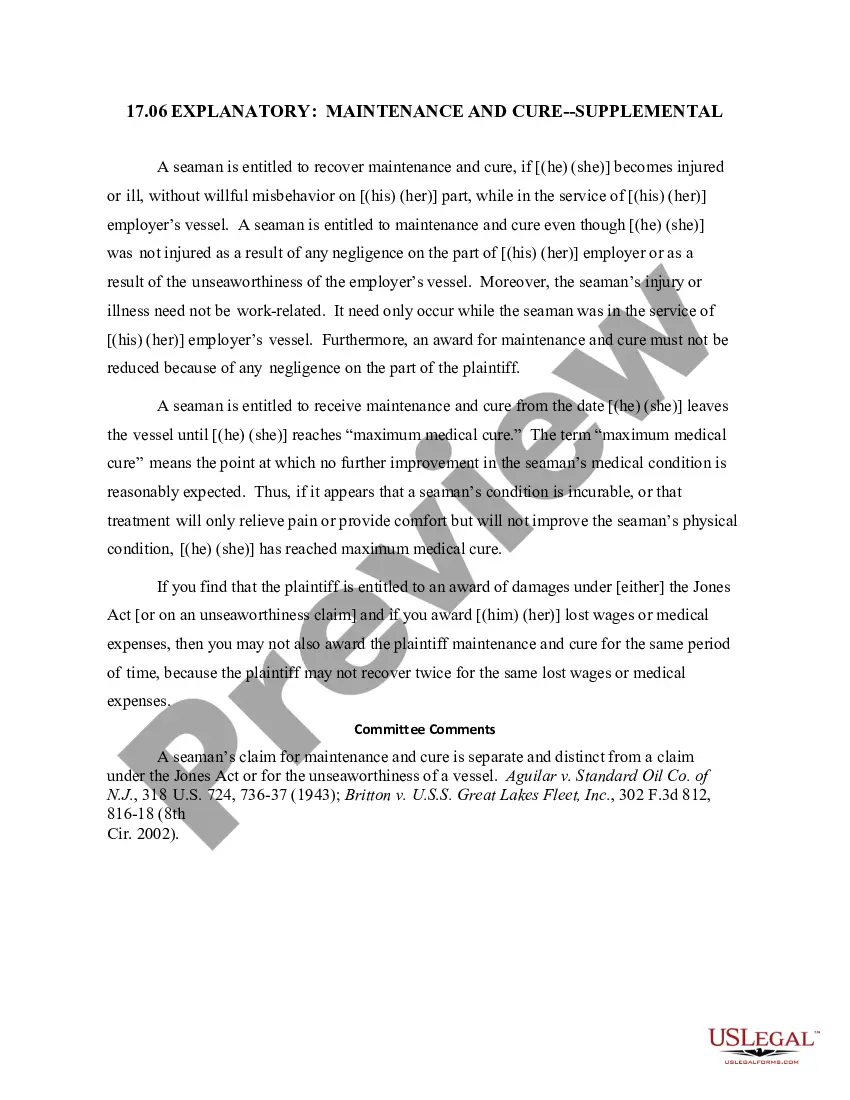
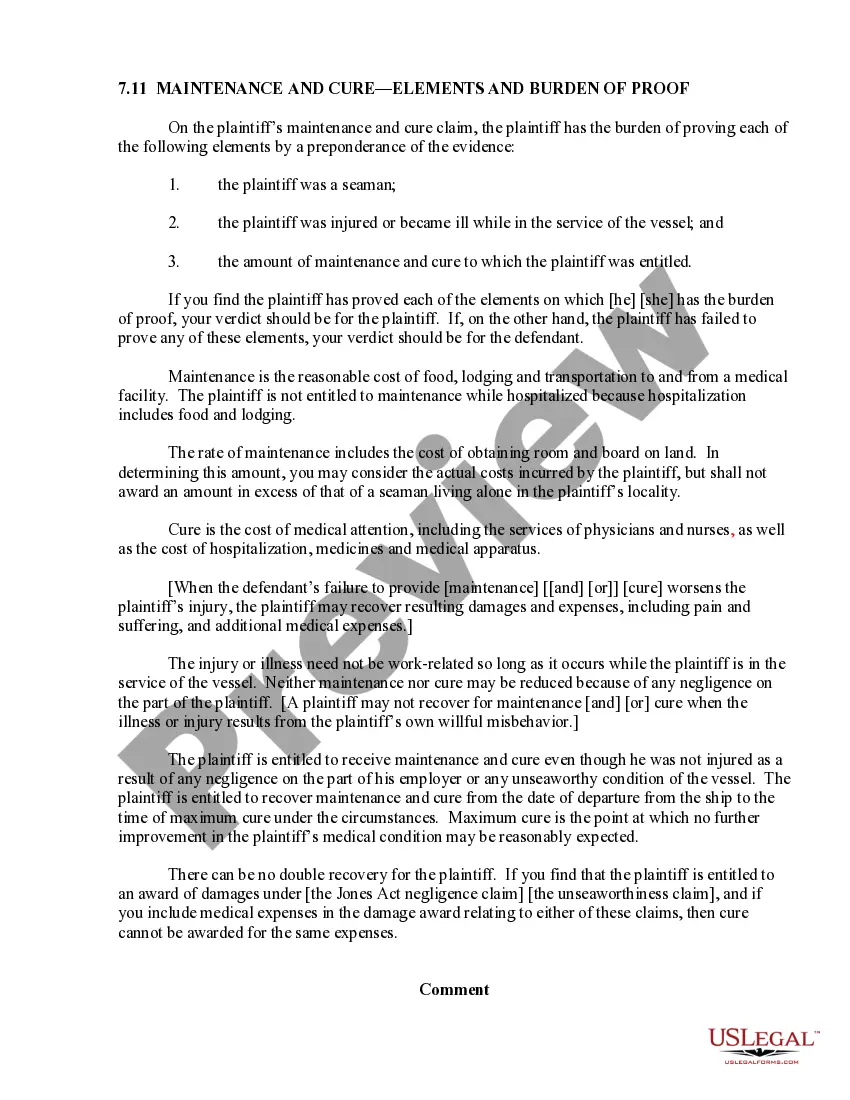
- Explanation of maintenance and cure: Defines what maintenance includes (food, lodging) and the responsibilities of the employer for medical care.
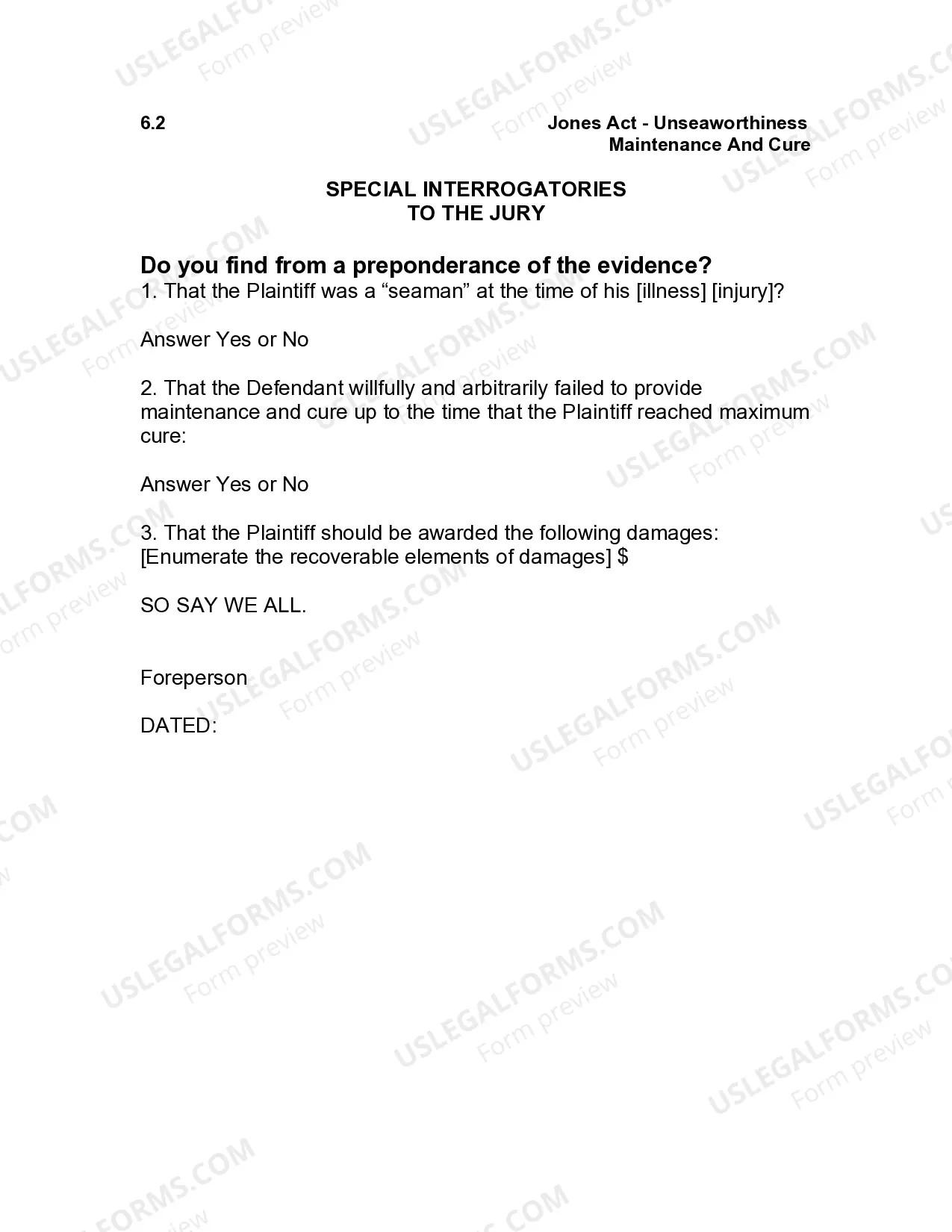
- Special interrogatories: Provides a series of questions for the jury to consider related to the claim.
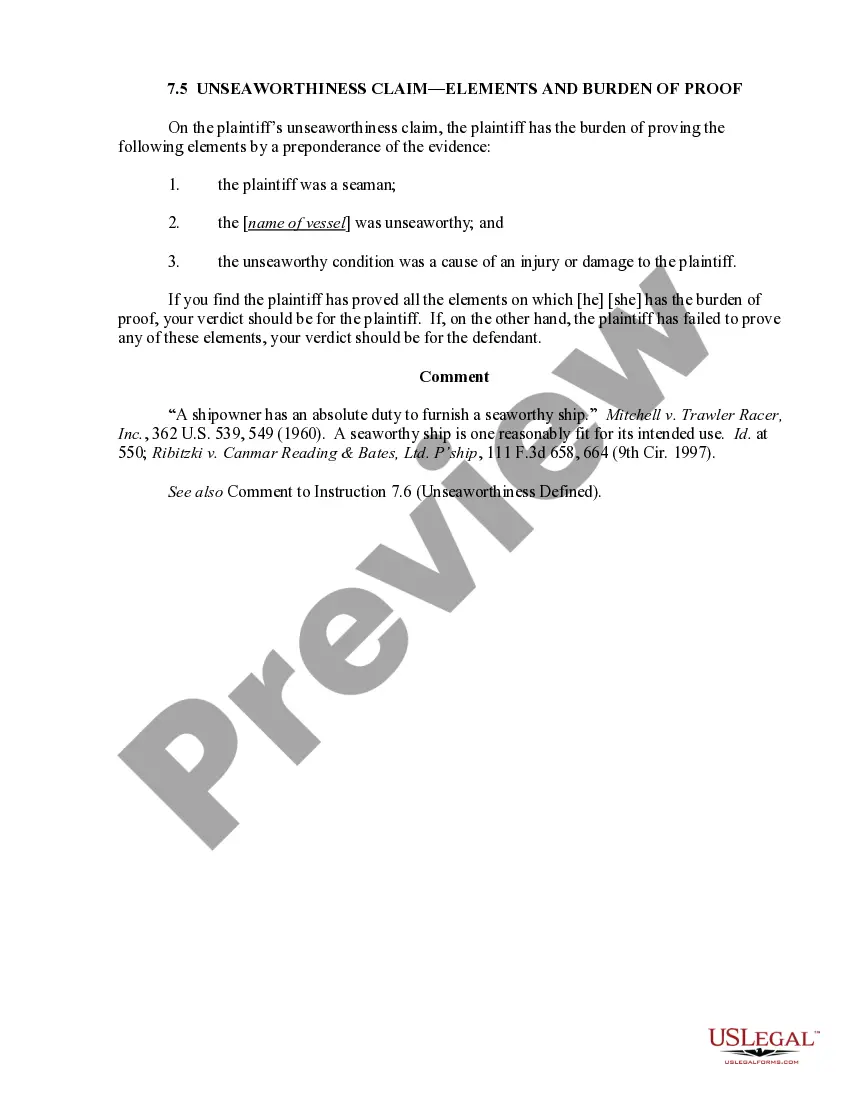
- Guidelines on double recovery: Clarifies that damages under the Jones Act or unseaworthiness claims cannot overlap with maintenance and cure claims.
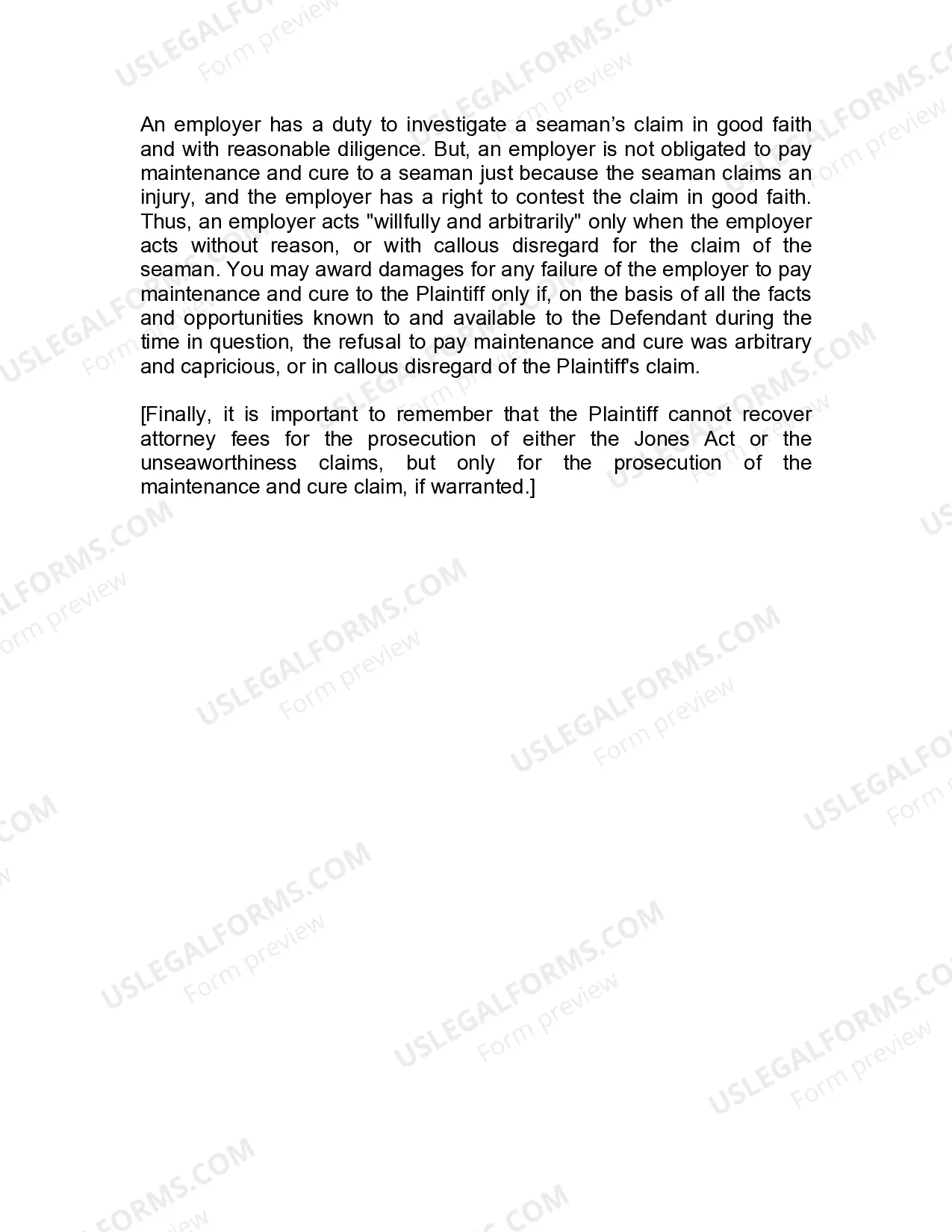
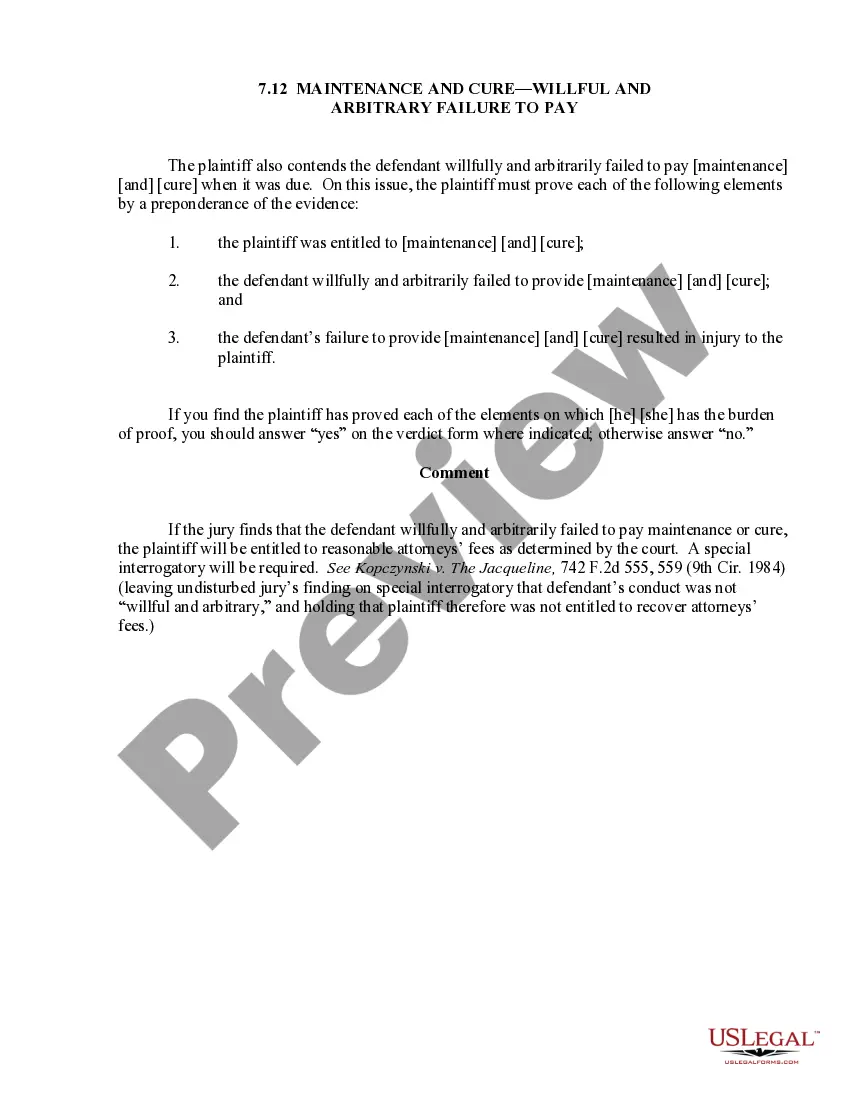
- Criteria for additional damages: Outlines the conditions under which a seaman may be awarded further compensation for willful failure to provide maintenance and cure.
When to use this document
This form should be used in legal proceedings when a seaman has filed a claim for maintenance and cure due to injury or illness incurred while in service of a vessel. It is particularly applicable when determining whether the employer fulfilled their obligation to provide care and sustenance during the period of recovery. This form ensures the jury understands the legal framework required to make an informed decision about maintenance and cure claims.
Who can use this document
- Juries involved in maritime injury cases related to maintenance and cure claims.
- Attorneys representing seamen in claims against vessel owners or employers.
- Legal educators and practitioners seeking a reference for jury instructions specific to maritime law.
Instructions for completing this form
- Determine the seaman's status: Assess the evidence presented to establish if the plaintiff qualifies as a seaman.
- Evaluate the claim for maintenance: Consider if the plaintiff was provided food and lodging during recovery.
- Assess the provision of medical care: Review the employer's actions regarding medical expenses and care.
- Answer special interrogatories: Direct the jury to address the specific questions related to the claims.
- Make a decision on damages: Evaluate if there was willful failure to provide maintenance and cure and calculate any additional compensation accordingly.
Notarization requirements for this form
Notarization is not commonly needed for this form. However, certain documents or local rules may make it necessary. Our notarization service, powered by Notarize, allows you to finalize it securely online anytime, day or night.
Get your form ready online
Our built-in tools help you complete, sign, share, and store your documents in one place.
Make edits, fill in missing information, and update formatting in US Legal Forms—just like you would in MS Word.
Download a copy, print it, send it by email, or mail it via USPS—whatever works best for your next step.
Sign and collect signatures with our SignNow integration. Send to multiple recipients, set reminders, and more. Go Premium to unlock E-Sign.
If this form requires notarization, complete it online through a secure video call—no need to meet a notary in person or wait for an appointment.
We protect your documents and personal data by following strict security and privacy standards.

Make edits, fill in missing information, and update formatting in US Legal Forms—just like you would in MS Word.

Download a copy, print it, send it by email, or mail it via USPS—whatever works best for your next step.

Sign and collect signatures with our SignNow integration. Send to multiple recipients, set reminders, and more. Go Premium to unlock E-Sign.

If this form requires notarization, complete it online through a secure video call—no need to meet a notary in person or wait for an appointment.

We protect your documents and personal data by following strict security and privacy standards.
Mistakes to watch out for
- Failing to accurately determine seaman status before evaluating the claim.
- Confusing maintenance and cure claims with Jones Act or unseaworthiness claims, leading to overlap in damages.
- Neglecting to consider the time period for which maintenance is owed.
- Overlooking the need for clear evidence of willful failure by the employer to provide maintenance or cure.
Benefits of using this form online
- Convenient access: Downloadable and easily accessible 24/7 from any device.
- Edit and customize: Tailor the form to fit the specific needs of your case.
- Reliable guidance: Developed by licensed attorneys to ensure accuracy and legal compliance.
Looking for another form?
Form popularity
FAQ
Is a 14 a good ACT score? A score of 14 is definitely low. It places you in the bottom 13th percentile nationally out of the 2 million test takers of the ACT entrance exam. The score indicates you've done a very poor job answering the questions on the English, Math, Reading and Science sections of the test.
A score of 24 means you've scored better than about 74% of students. A 28 means you've scored better than 88% of students, and a 30 means you've scored better than 93% of them! Anything 35 or above is in the 99th percentilea truly phenomenal score.
Students who earned an ACT Composite score of 12 in 7th grade scored at the national mean (an ACT Composite score of 211), on average, in grade 11 or 12. For 7th grade scores of 20 or higher, median scores for grades 11/12 are 30 or higher.
Is a 17 a good ACT score? A score of 17 is pretty low. It places you in the bottom 31st percentile nationally out of the 2 million test takers of the ACT entrance exam. The score indicates you've done a well below average job answering the questions on the English, Math, Reading and Science sections of the test.
Nationally, What's a Bad ACT Score? If you look at the ACT percentiles, any composite score below 20 (the 50th percentile) is below average. (For more on how the ACT is scored and how the composite is calculated, see our guide.) In other words, to be above average nationally, you need at least a 21 ACT composite score.
Both ACT and SAT scores are used for college admissions decisions and awarding merit-based scholarships. Most colleges do not prefer one test over the other. Neither the SAT or ACT is harder than the other. Different students tend to do better on one test over the other.
With a 12 ACT score, you're already strongly competitive for these schools. You're very likely to get admitted if you apply. If you improve your ACT score, your Safety Schools will get better and better.
Students who earned an ACT Composite score of 12 in 7th grade scored at the national mean (an ACT Composite score of 211), on average, in grade 11 or 12. For 7th grade scores of 20 or higher, median scores for grades 11/12 are 30 or higher.
Composite ACT score which is 20 or below 20 is known to be below average in terms of National average.So, nationally stating, 17 ACT scores may be considered as bad ACT scores. This indicates that you got to score more than 17 as an ACT score if you don't want it to be considered below average.
Even if you don't think you're eligible for scholarships, it doesn't hurt to check2026and double-check. With a GPA of 3.0 and a 24 ACT score (remember, the average is 21), you could still get up to $7,000 a year at Oklahoma State University. Get that score even higherabove 30and you can get up to $12,500 a year.