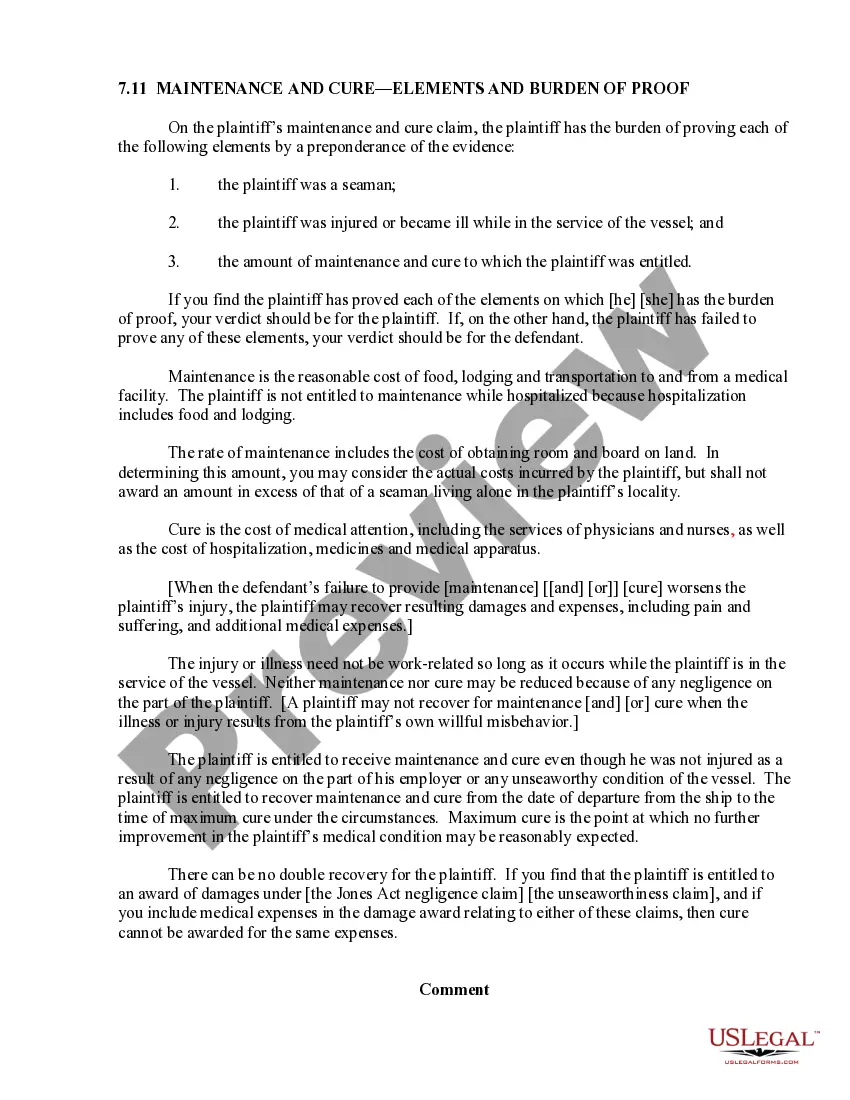
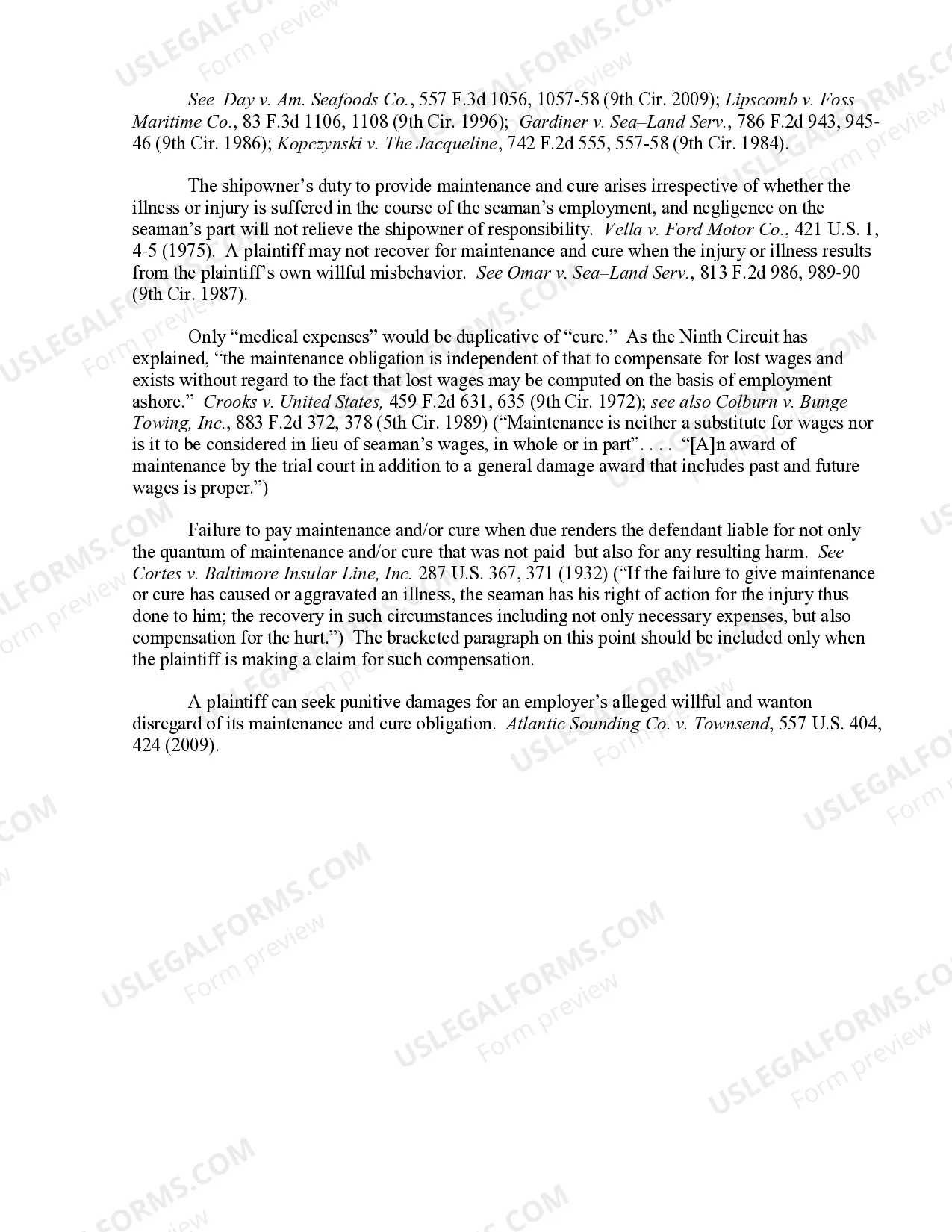
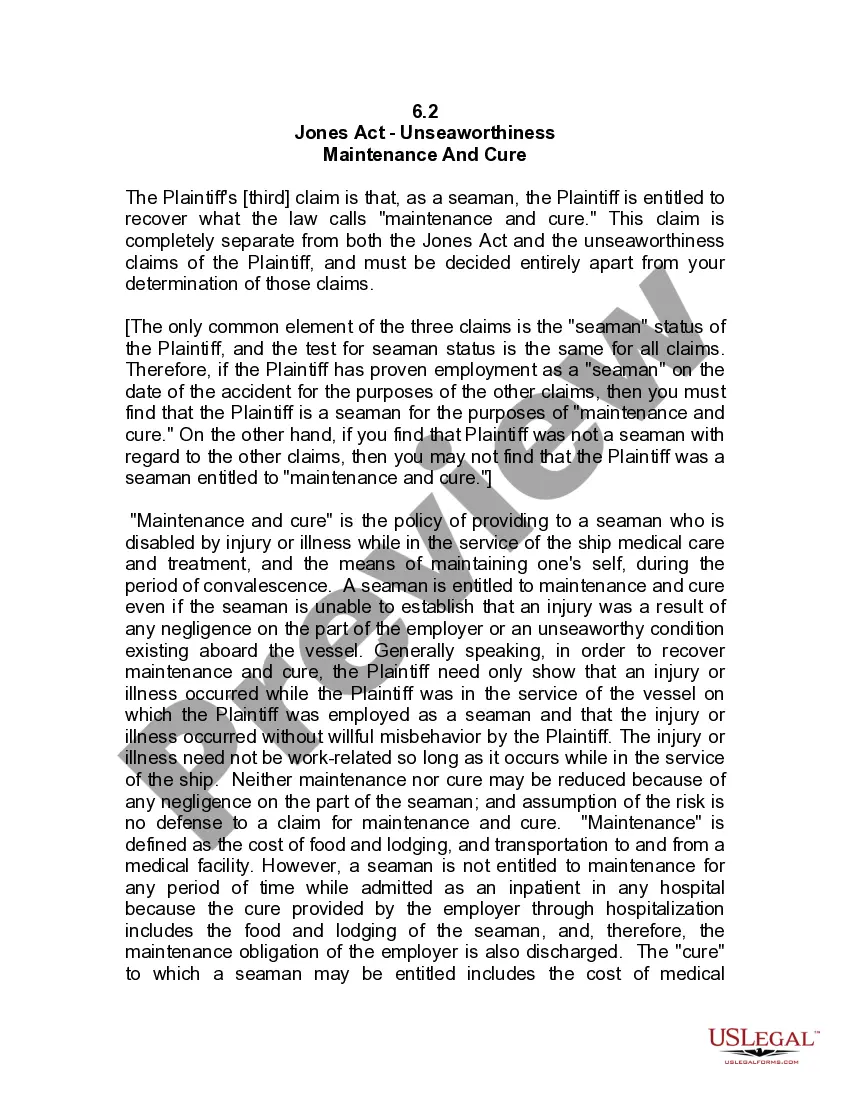
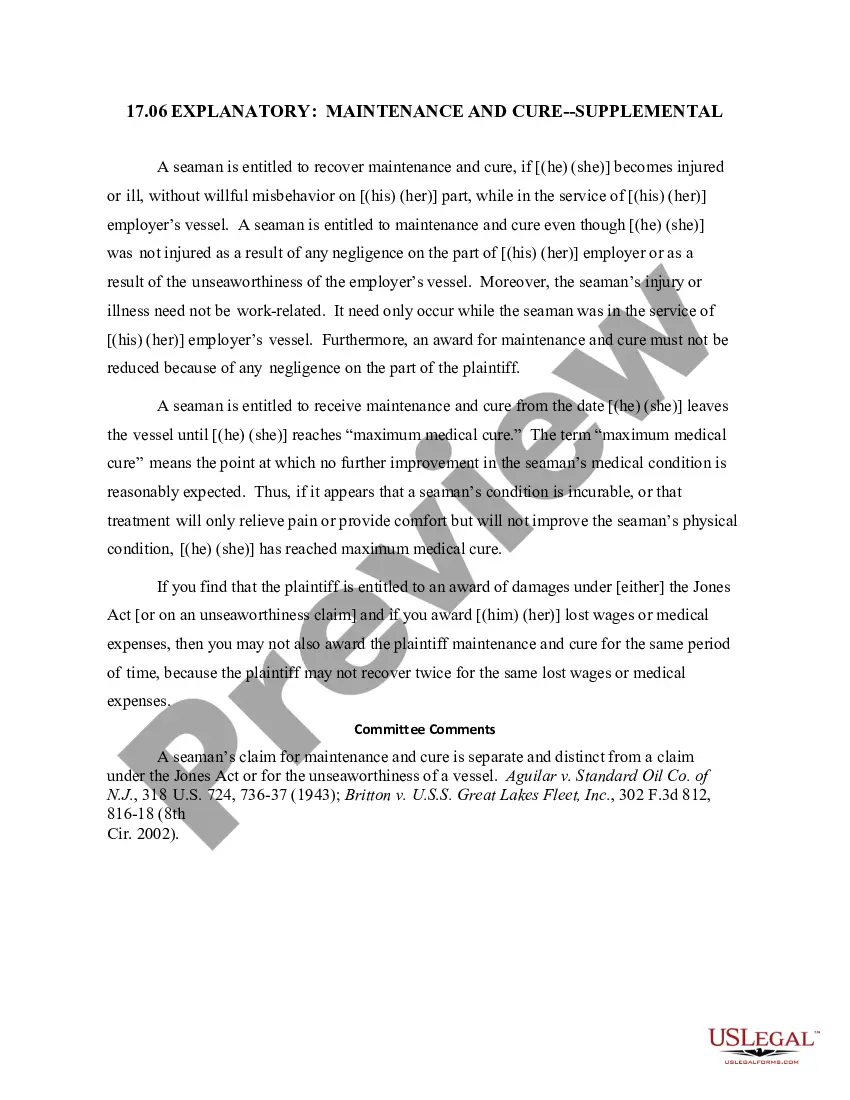
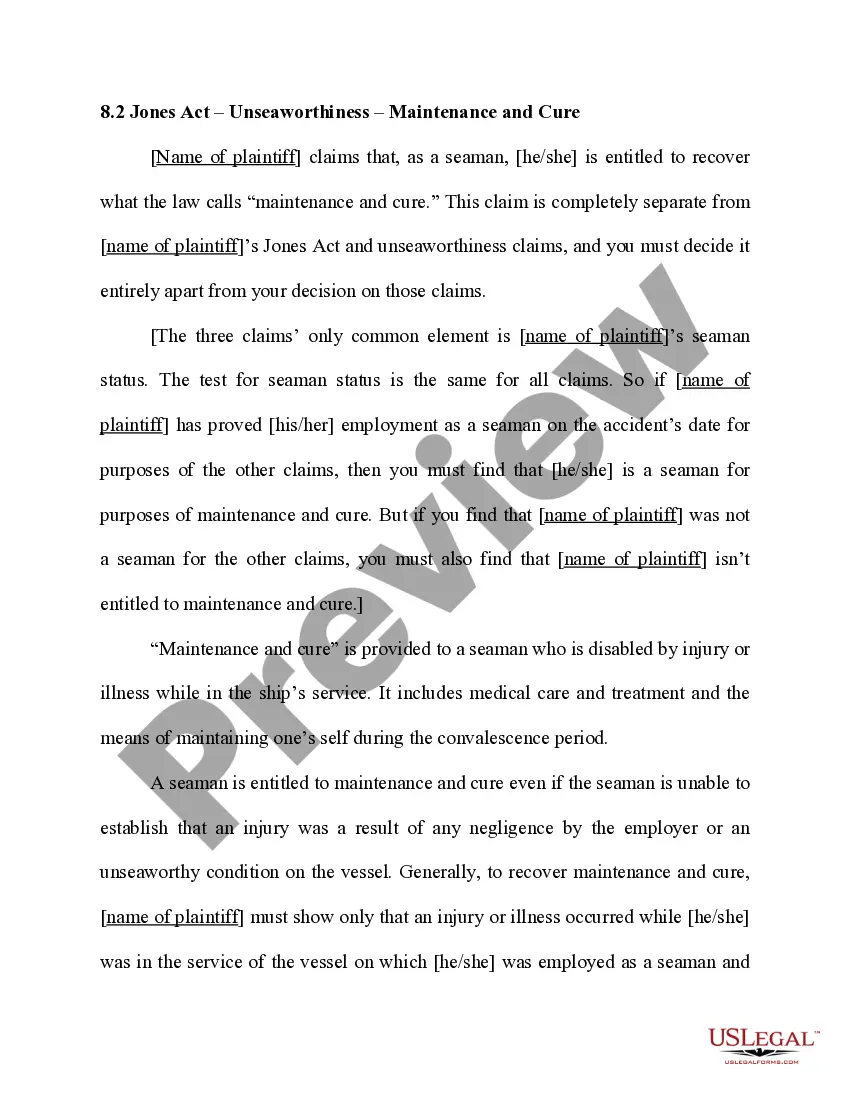
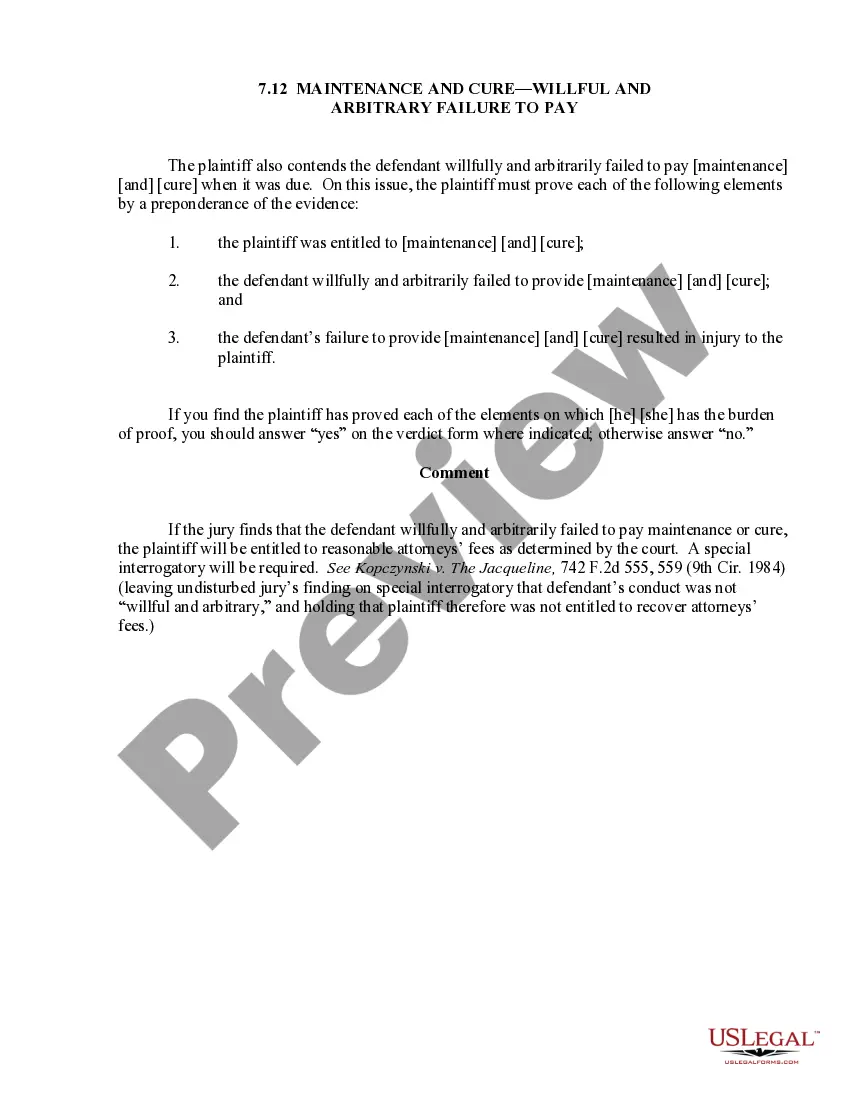
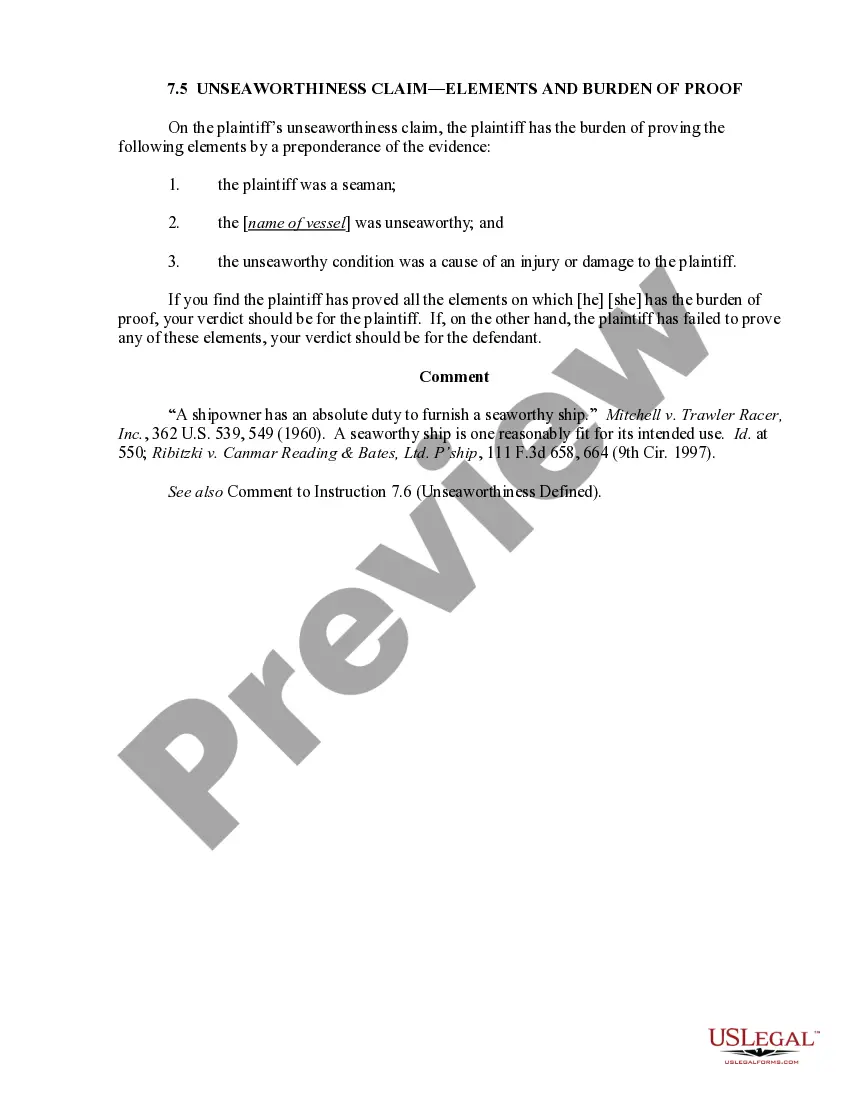
7.11 Maintenance and Cure-Elements and Burden of Proof
Notarization requirements for this form
This form does not typically require notarization to be legally valid. However, some jurisdictions or document types may still require it. US Legal Forms provides secure online notarization powered by Notarize, available 24/7 for added convenience.
Get your form ready online
Our built-in tools help you complete, sign, share, and store your documents in one place.
Make edits, fill in missing information, and update formatting in US Legal Forms—just like you would in MS Word.
Download a copy, print it, send it by email, or mail it via USPS—whatever works best for your next step.
Sign and collect signatures with our SignNow integration. Send to multiple recipients, set reminders, and more. Go Premium to unlock E-Sign.
If this form requires notarization, complete it online through a secure video call—no need to meet a notary in person or wait for an appointment.
We protect your documents and personal data by following strict security and privacy standards.

Make edits, fill in missing information, and update formatting in US Legal Forms—just like you would in MS Word.

Download a copy, print it, send it by email, or mail it via USPS—whatever works best for your next step.

Sign and collect signatures with our SignNow integration. Send to multiple recipients, set reminders, and more. Go Premium to unlock E-Sign.

If this form requires notarization, complete it online through a secure video call—no need to meet a notary in person or wait for an appointment.

We protect your documents and personal data by following strict security and privacy standards.
Looking for another form?
Form popularity
FAQ
Your maintenance payments will be based on your household expenses, while cure payments will be based on your actual medical expenses. This is why it is important to keep diligent records of your costs so that you can establish them efficiently during the claims process.
Under the Jones Act, an injured seaman is entitled to receive daily compensation (maintenance) and medical (cure) payments from his or her employer. Your employer is legally required to make these payments to you regardless of who is at fault for your injuries.
Maintenance is a seaman's day-to-day living expenses. Cure is the seaman's medical costs. Employers are only obligated to pay maintenance and cure until the seaman is fit for duty, or until he has reached a point where additional medical treatment will not help him.
In general, maintenance and cure are benefits that an injured seaman receives from an employer during the course of recovery. An injured seaman is entitled to receive maintenance and cure benefits regardless of whose fault the injury was.
The maintenance work refers to all activities related to caring for your vessel. This could include fixing problems with the engine, pump systems, electrical system; cleaning; updating navigational technology, and performing day-to-day tasks like removing debris or clearing out lockers as maintenance tasks.
Maintenance is a seaman's day-to-day living expenses. Cure is the seaman's medical costs. Employers are only obligated to pay maintenance and cure until the seaman is fit for duty, or until he has reached a point where additional medical treatment will not help him.
Maintenance and cure is similar to a worker's compensation scheme in that the obligation to pay is not based on anyone's fault or negligence in causing the injury or illness and is considered ?quasi-contractual? as part of the terms of a seaman's employment on the vessel.
The Jones Act is a federal statute that gives injured seamen important legal rights, including the right to receive maintenance and cure benefits from their employers. A Jones Act maintenance and cure lawyer understands what's at stake and protects your rights.