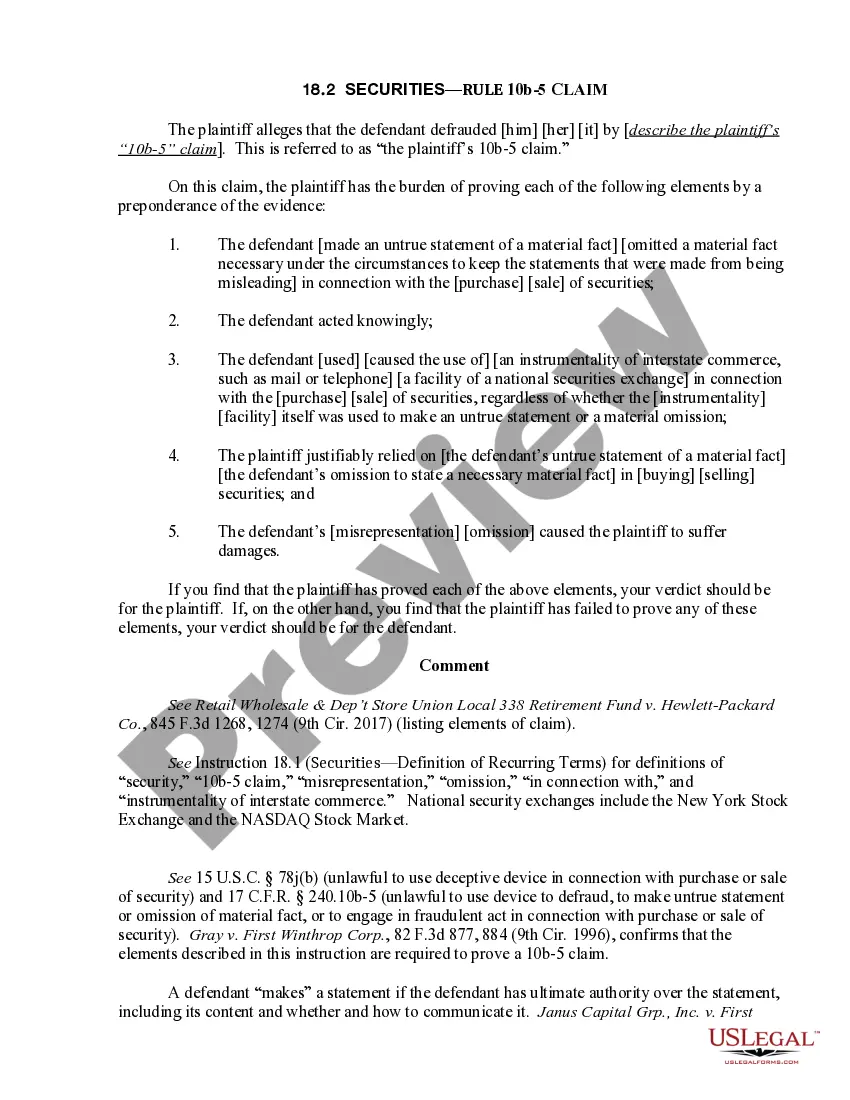
Jury Instruction - 4.4.3 Rule 10(b) - 5(c) Fraudulent Practice or Course of Dealing Stockbroker Churning - Violation of Blue Sky Law and Breach of Fiduciary Duty
About this form
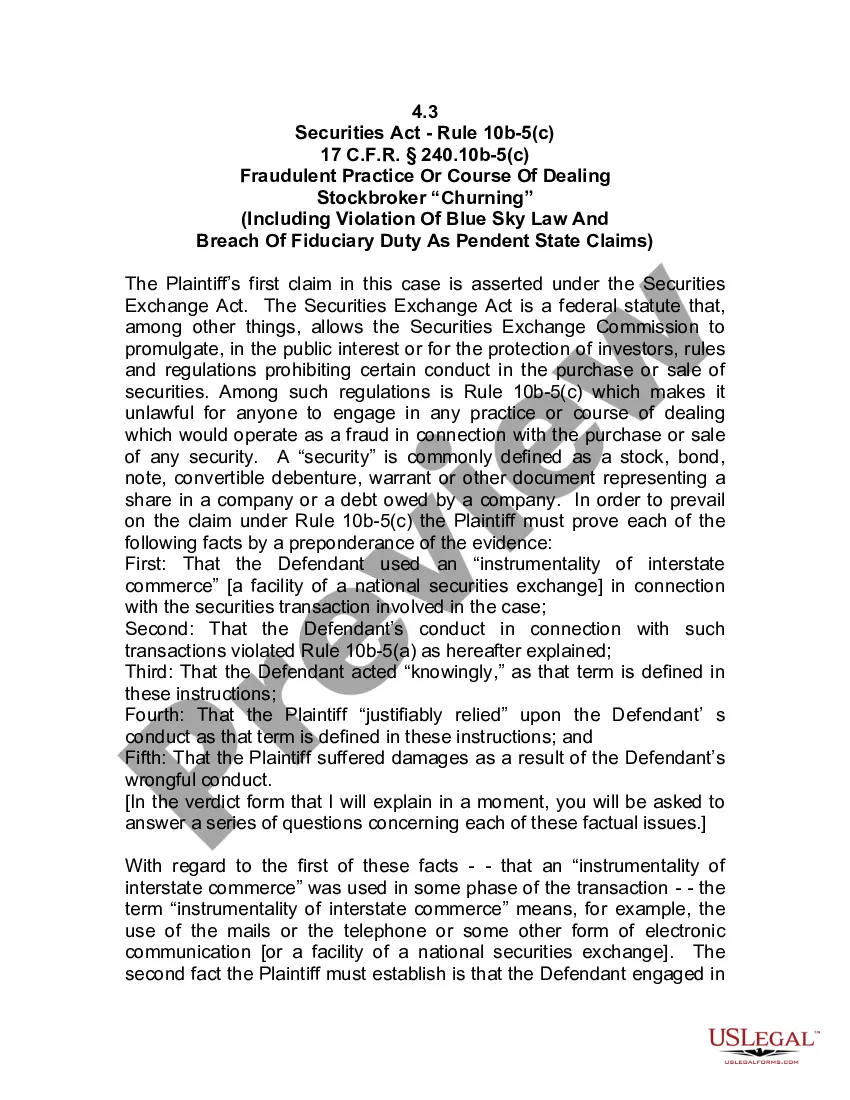
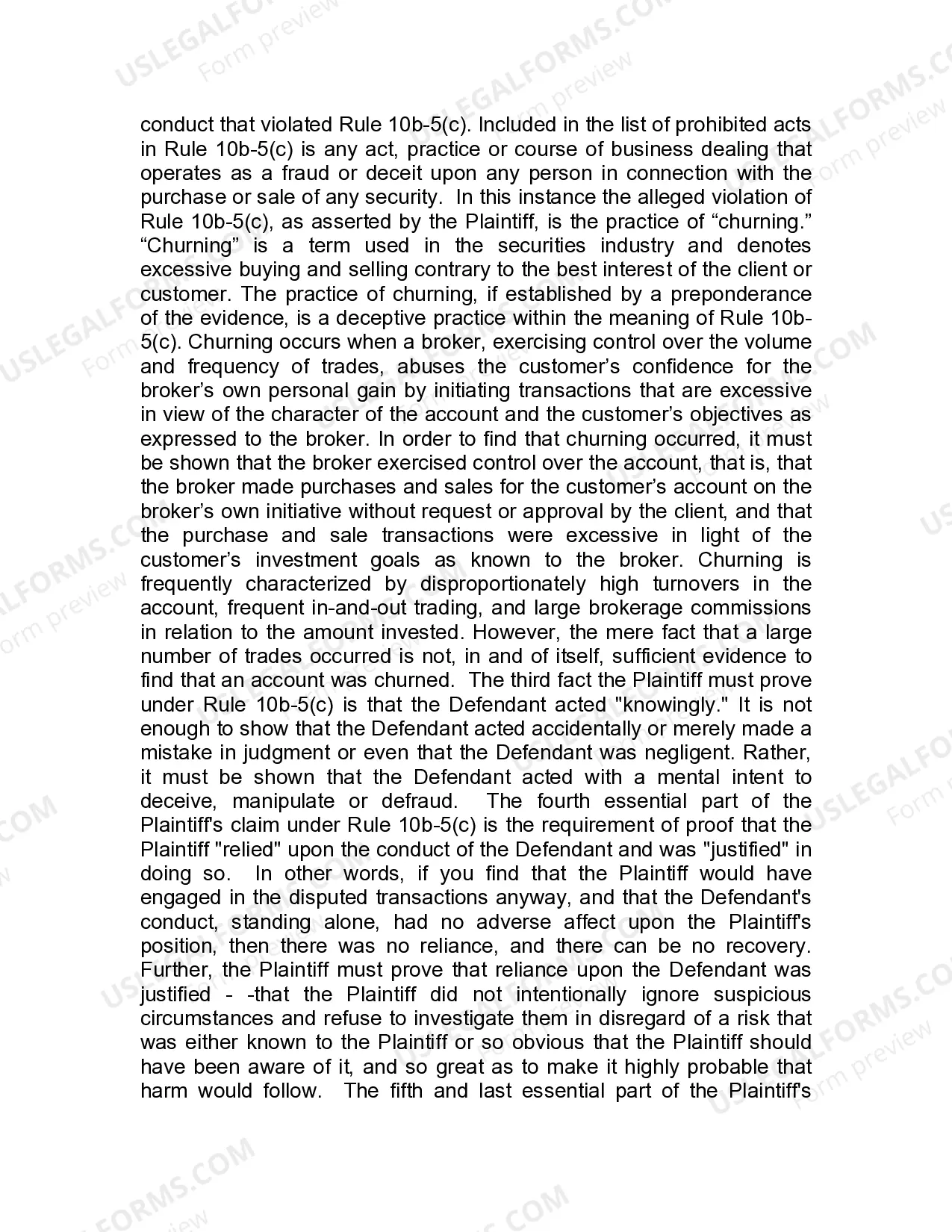
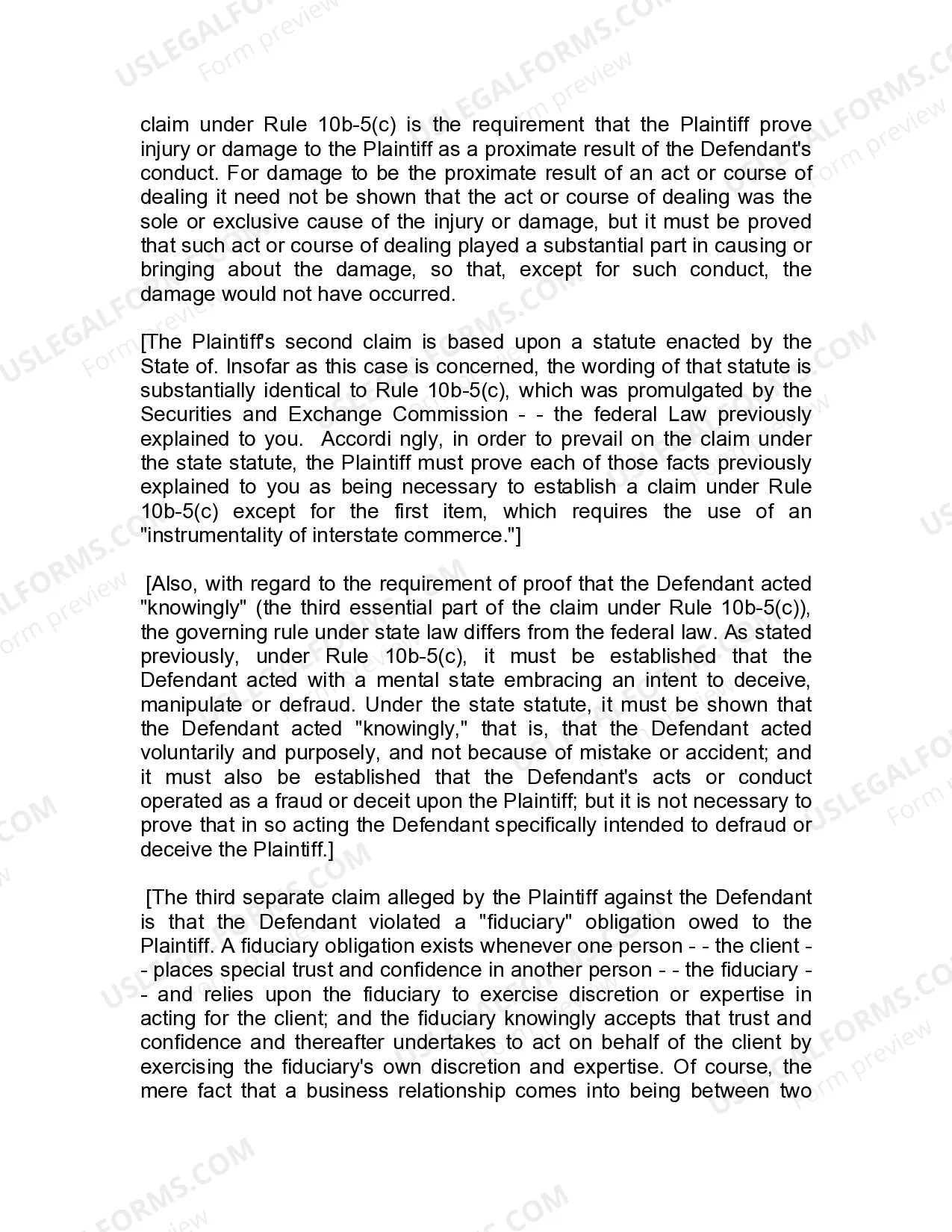
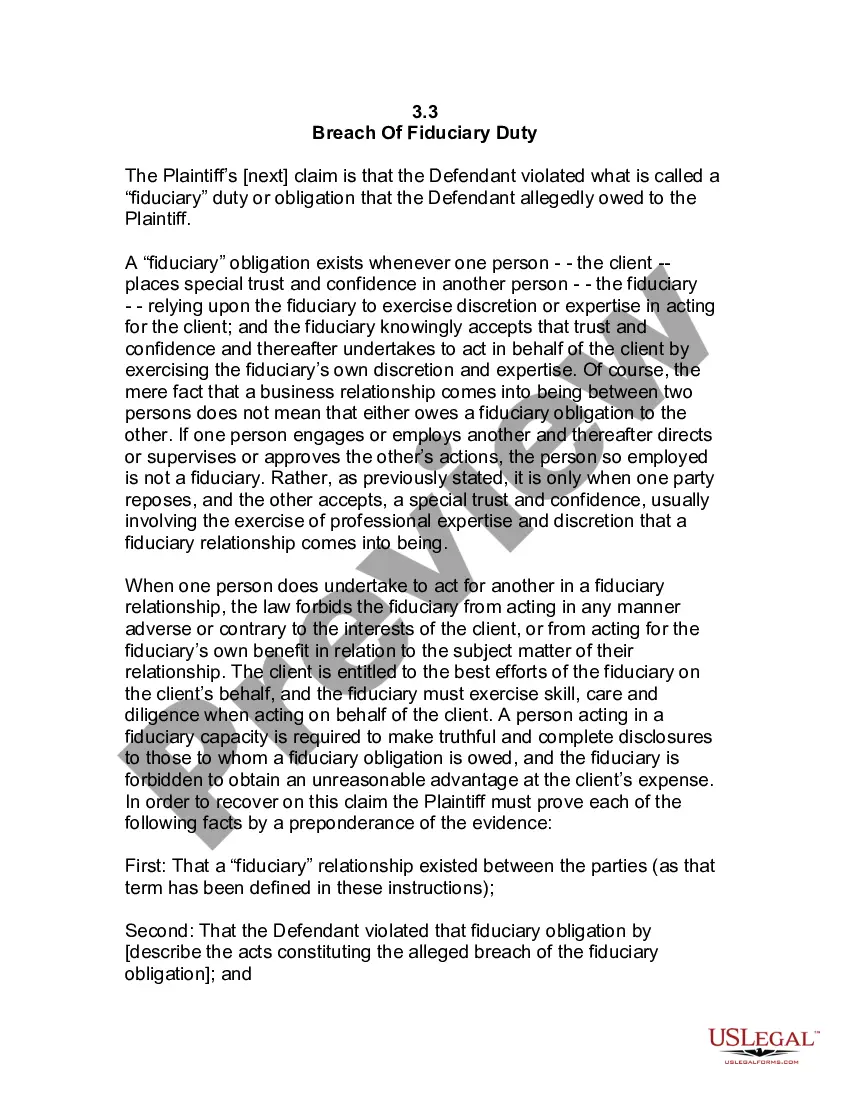
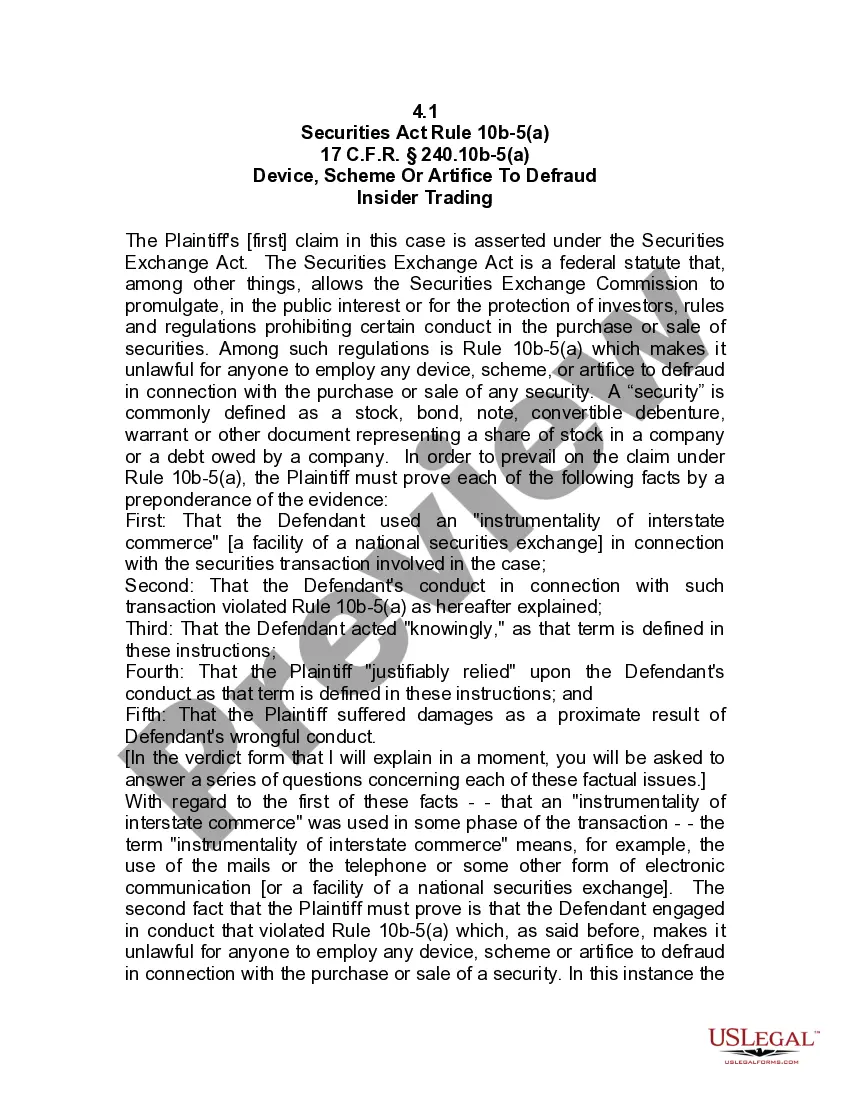
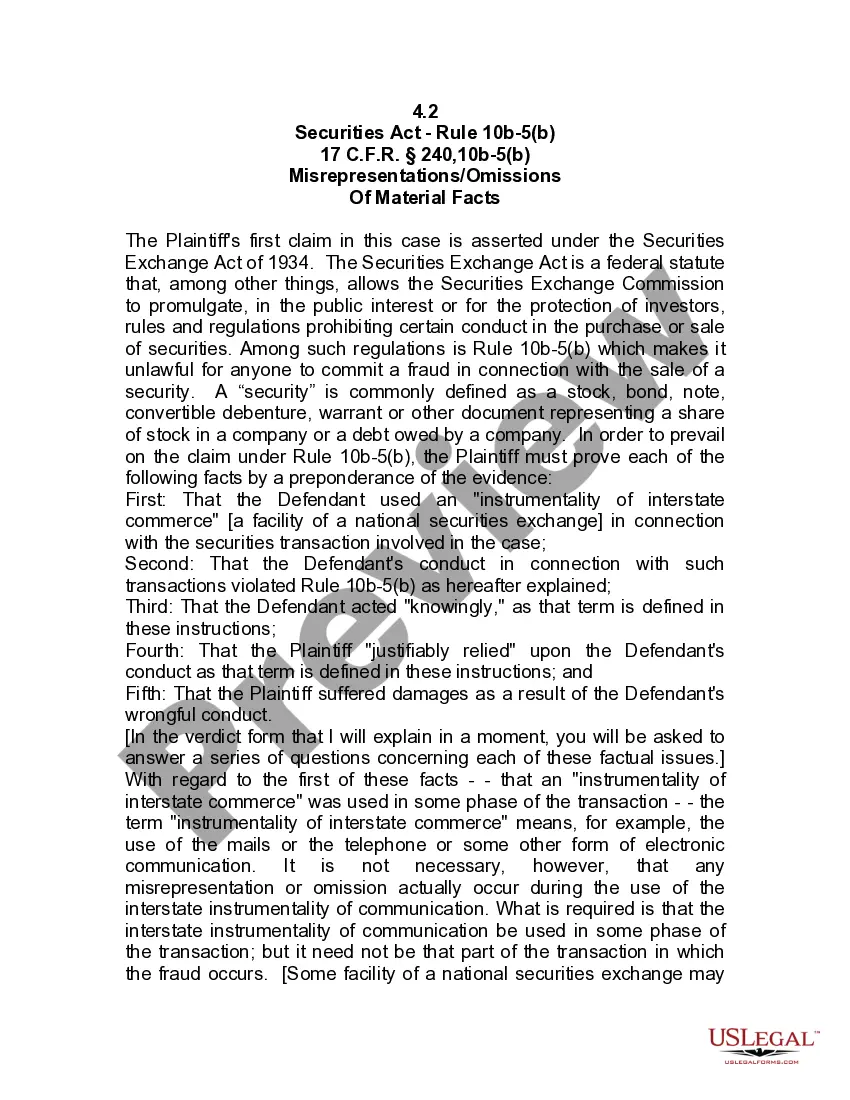
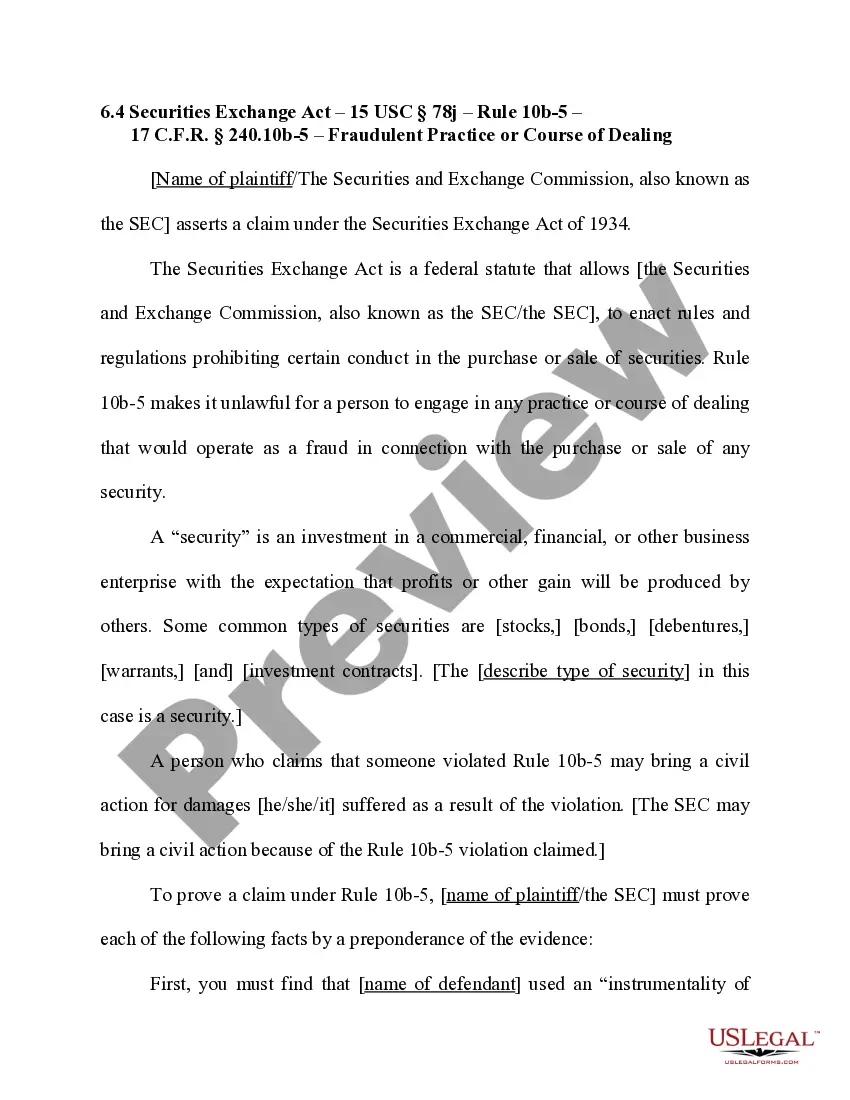
This Jury Instruction form is a template that provides model instructions for jurors in cases involving fraudulent practices by stockbrokers, specifically addressing the issues of churning and violations of Blue Sky Law and fiduciary duty. This form helps clarify the legal standards jurors must consider when determining liability under Rule 10b-5 of the Securities Exchange Act, making it essential for legal professionals working on such cases.
What’s included in this form
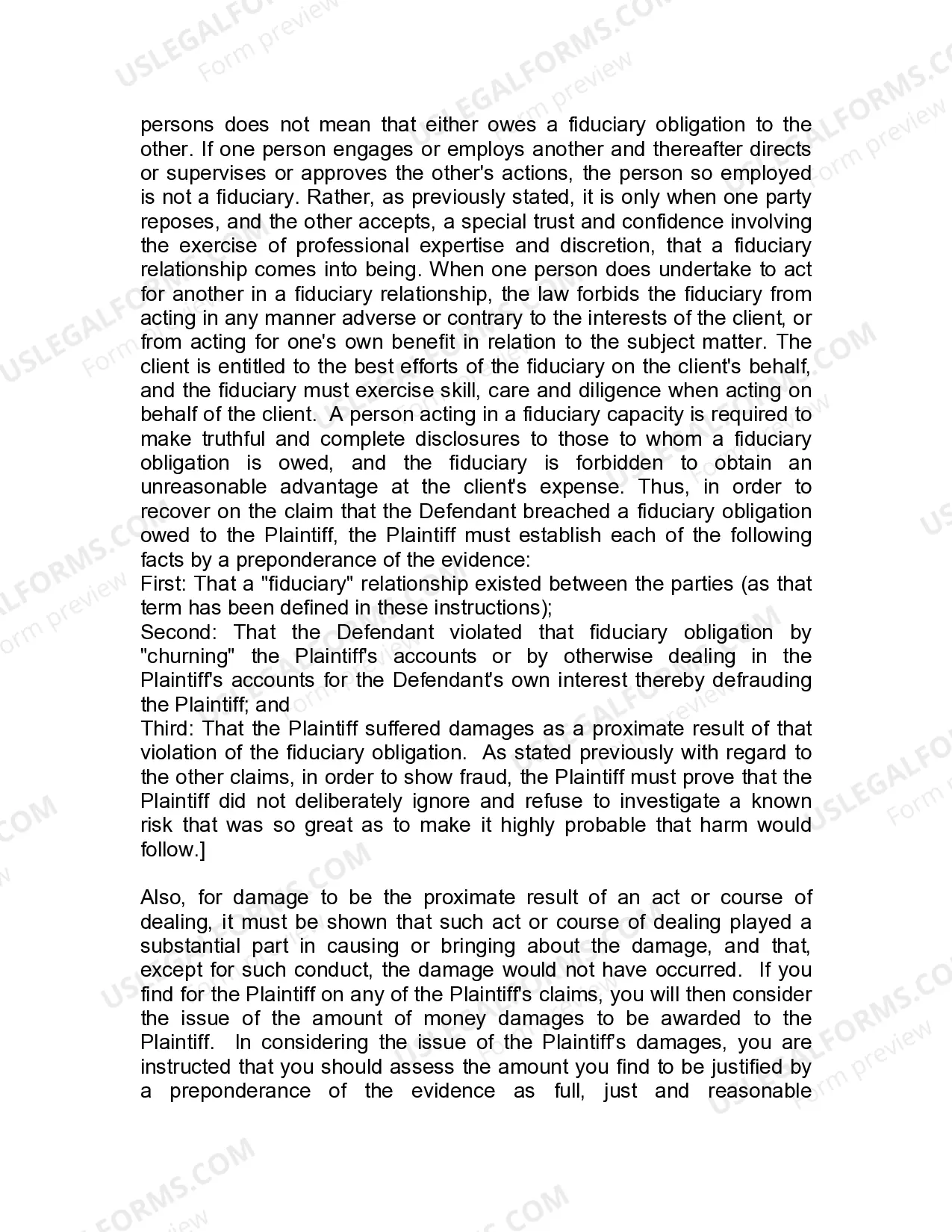
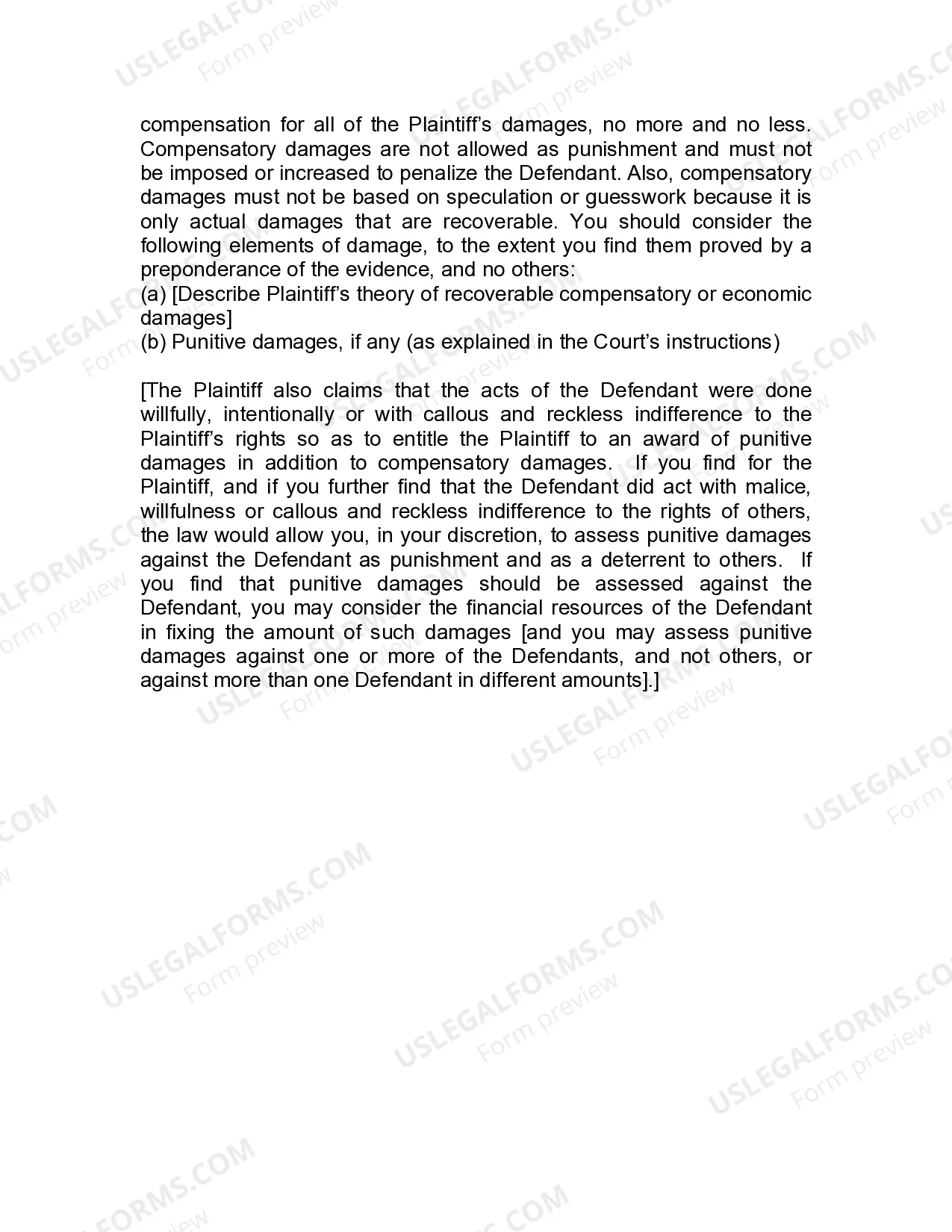
- Definition and explanation of fraudulent practices and stockbroker churning.
- Elements required to establish liability under Rule 10b-5(c).
- Clarification of what constitutes a fiduciary relationship.
- Procedural guidance on how jurors should assess the evidence presented.
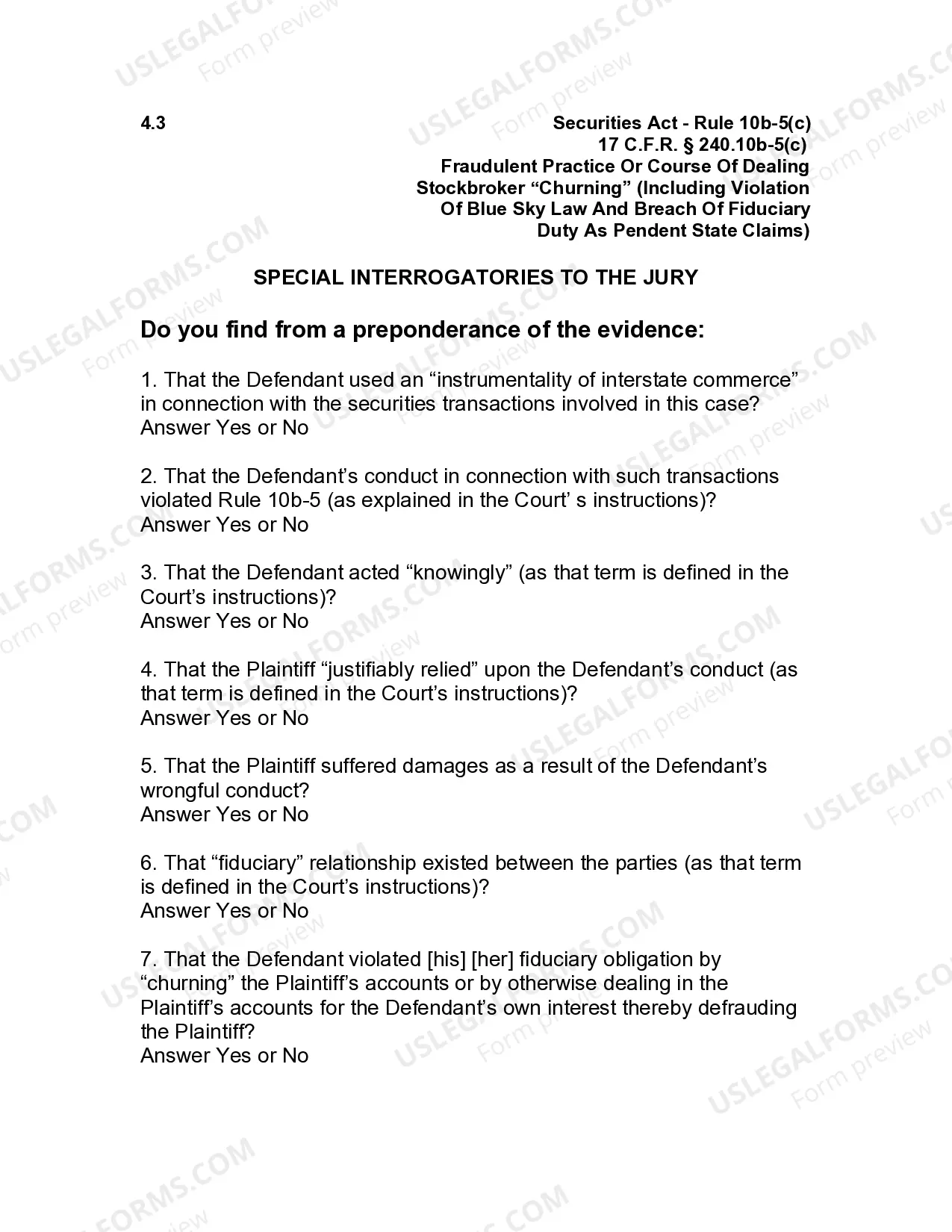
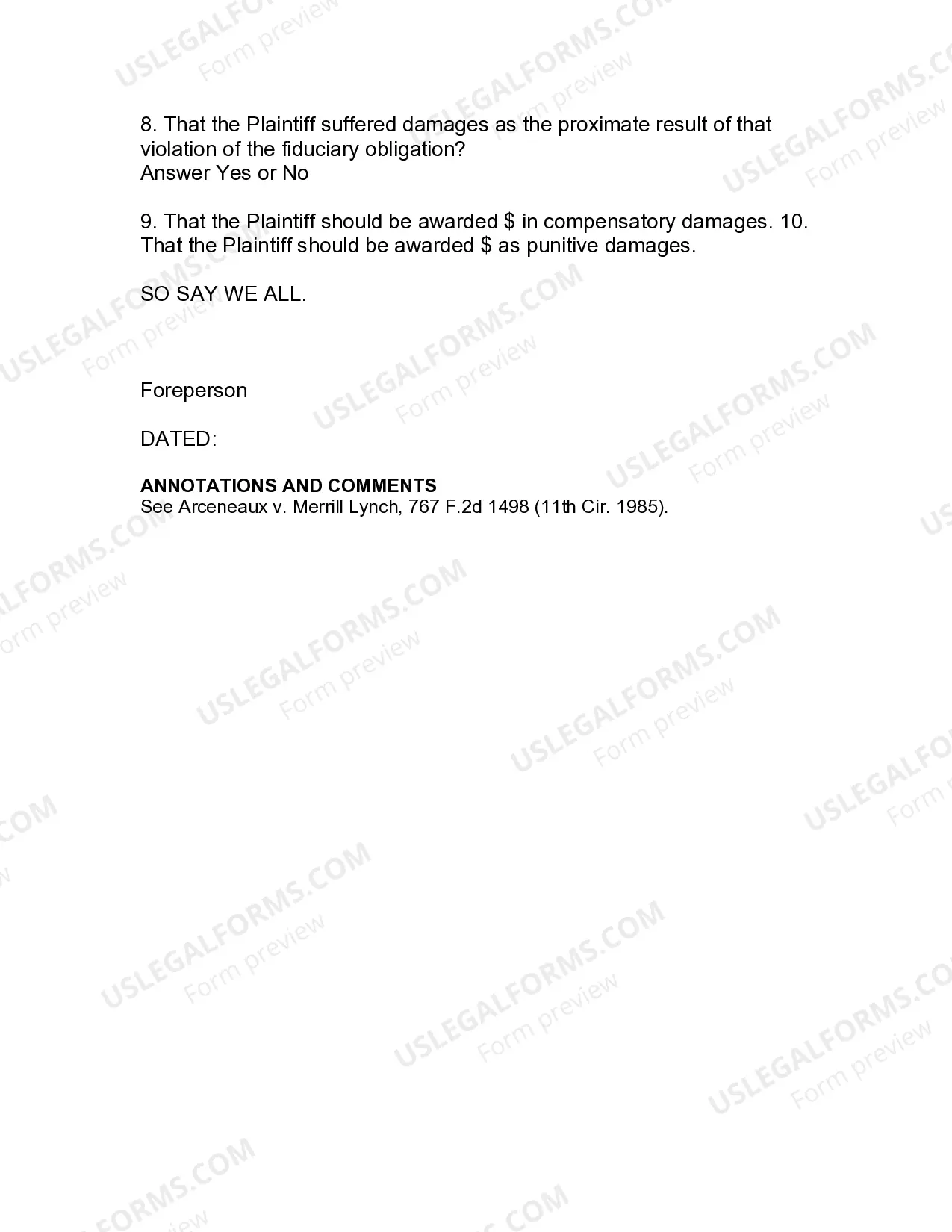
- Special interrogatories for the jury to answer based on the facts of the case.
When this form is needed
This form should be used during trials that involve allegations of securities fraud, particularly when a stockbroker is accused of churning a client's account or violating their fiduciary duty. Legal representatives can utilize this form to ensure jurors receive clear and precise instructions on how to evaluate claims of fraudulent practices related to the sale of securities.
Who can use this document
- Attorneys representing clients in securities fraud litigation.
- Judges presiding over cases involving stockbroker fraud.
- Legal researchers studying the standards for jury instructions in such cases.
Completing this form step by step
- Determine the appropriate elements of fraud or churning based on the specifics of the case.
- Customize the jury instructions to fit the particular legal standards of your jurisdiction.
- Provide clear definitions of key terms such as "fraudulent practices" and "fiduciary duty".
- Draft special interrogatories for the jury to assess each of the established facts.
- Review and finalize the instructions for clarity and legal compliance before presenting them in court.
Does this form need to be notarized?
Notarization is not commonly needed for this form. However, certain documents or local rules may make it necessary. Our notarization service, powered by Notarize, allows you to finalize it securely online anytime, day or night.
Get your form ready online
Our built-in tools help you complete, sign, share, and store your documents in one place.
Make edits, fill in missing information, and update formatting in US Legal Forms—just like you would in MS Word.
Download a copy, print it, send it by email, or mail it via USPS—whatever works best for your next step.
Sign and collect signatures with our SignNow integration. Send to multiple recipients, set reminders, and more. Go Premium to unlock E-Sign.
If this form requires notarization, complete it online through a secure video call—no need to meet a notary in person or wait for an appointment.
We protect your documents and personal data by following strict security and privacy standards.

Make edits, fill in missing information, and update formatting in US Legal Forms—just like you would in MS Word.

Download a copy, print it, send it by email, or mail it via USPS—whatever works best for your next step.

Sign and collect signatures with our SignNow integration. Send to multiple recipients, set reminders, and more. Go Premium to unlock E-Sign.

If this form requires notarization, complete it online through a secure video call—no need to meet a notary in person or wait for an appointment.

We protect your documents and personal data by following strict security and privacy standards.
Common mistakes
- Failing to tailor the jury instructions to the specific facts of the case.
- Using overly complex legal jargon that confuses jurors.
- Neglecting to explain the consequences of stockbroker churning adequately.
- Overlooking the requirement for jurors to assess each element of the claim independently.
Why complete this form online
- Convenient access to legally vetted templates designed by licensed attorneys.
- Editable format allows for easy customization to meet case-specific needs.
- Downloadable and ready for use in various court proceedings, saving time and effort.
Legal use & context
- This form provides jurors with necessary guidance to accurately interpret complex financial regulations.
- Follows federal standards outlined in the Securities Exchange Act, ensuring compliance with national laws.
- Helps prevent legal errors that could affect the outcome of securities fraud cases.
Looking for another form?

Form popularity
FAQ
The term custom and usage is commonly used in COMMERCIAL LAW, but "custom" and "usage" can be distinguished. A usage is a repetition of acts whereas custom is the law or general rule that arises from such repetition.In modern law, however, the two principles are often merged into one by the courts.
A usage of trade is a practice or method of dealing having such regularity of observance in a place, vocation, or trade as to justify an expectation that it will be observed with respect to the transaction.
If such a construction is unreasonable: (1) express terms prevail over course of performance, course of dealing, and usage of trade; (2) course of performance prevails over course of dealing and usage of trade; and (3) course of dealing prevails over usage of trade.
Course of performance. the conduct that occurs under the terms of a particular agreement, which indicates what the parties to that agreement intended it to mean.
1. Any sequence of activities that an individual or unit may follow. 2. A possible plan open to an individual or commander that would accomplish, or is related to the accomplishment of the mission.
The course of dealing between parties to an action is examined by a court in ascertaining what the parties intended when they entered into a contract.Course of performance refers to a pattern of conduct that occurs subsequent to approval of the contract terms.
Course of action in British English (k025402d0s 0259v 02c8æk02830259n ) a way of proceeding. This would be the best course of action. We have decided on this course of action for one reason alone.
"Pattern of conduct" means a series of acts over a period of time, however short, evidencing an intent to inflict a continuity of emotional distress upon the person2026. La.
Course of conduct means a pattern of conduct composed of a series of acts over a period of time, however short, which evidences a continuity of purpose.