Jury Instruction - 3.3.1 Section 1, Per Se Violation Conspiracy To Fix Prices - Includes Alternative Rule of Reason Instruction
Overview of this form
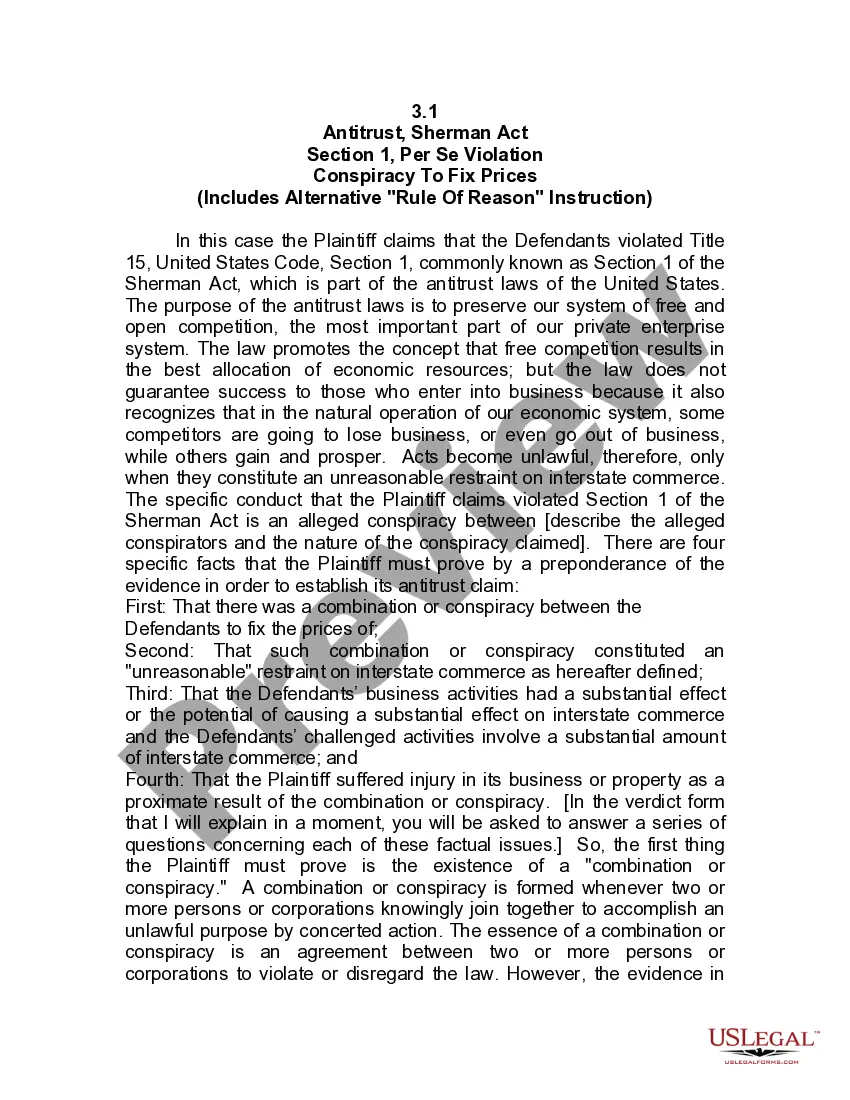
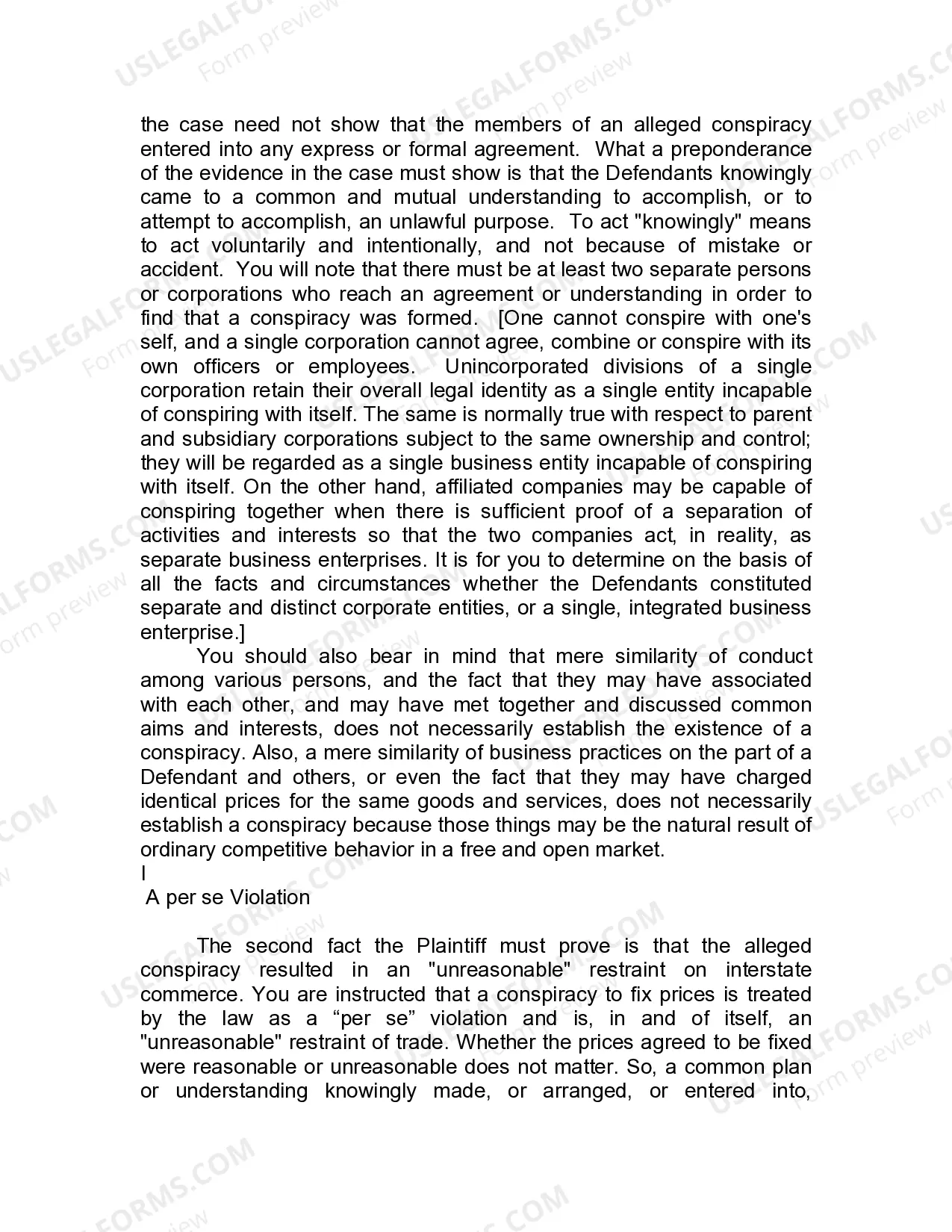
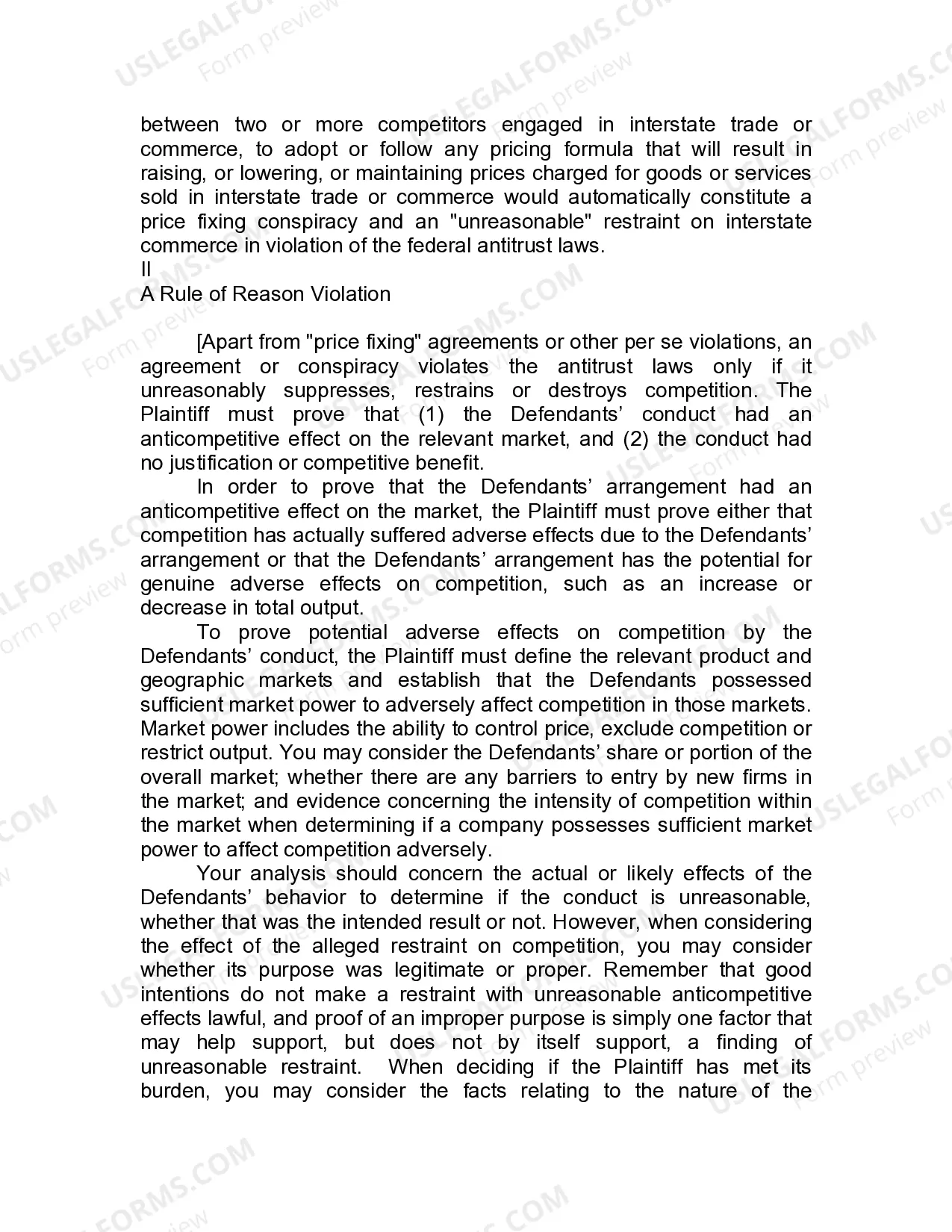
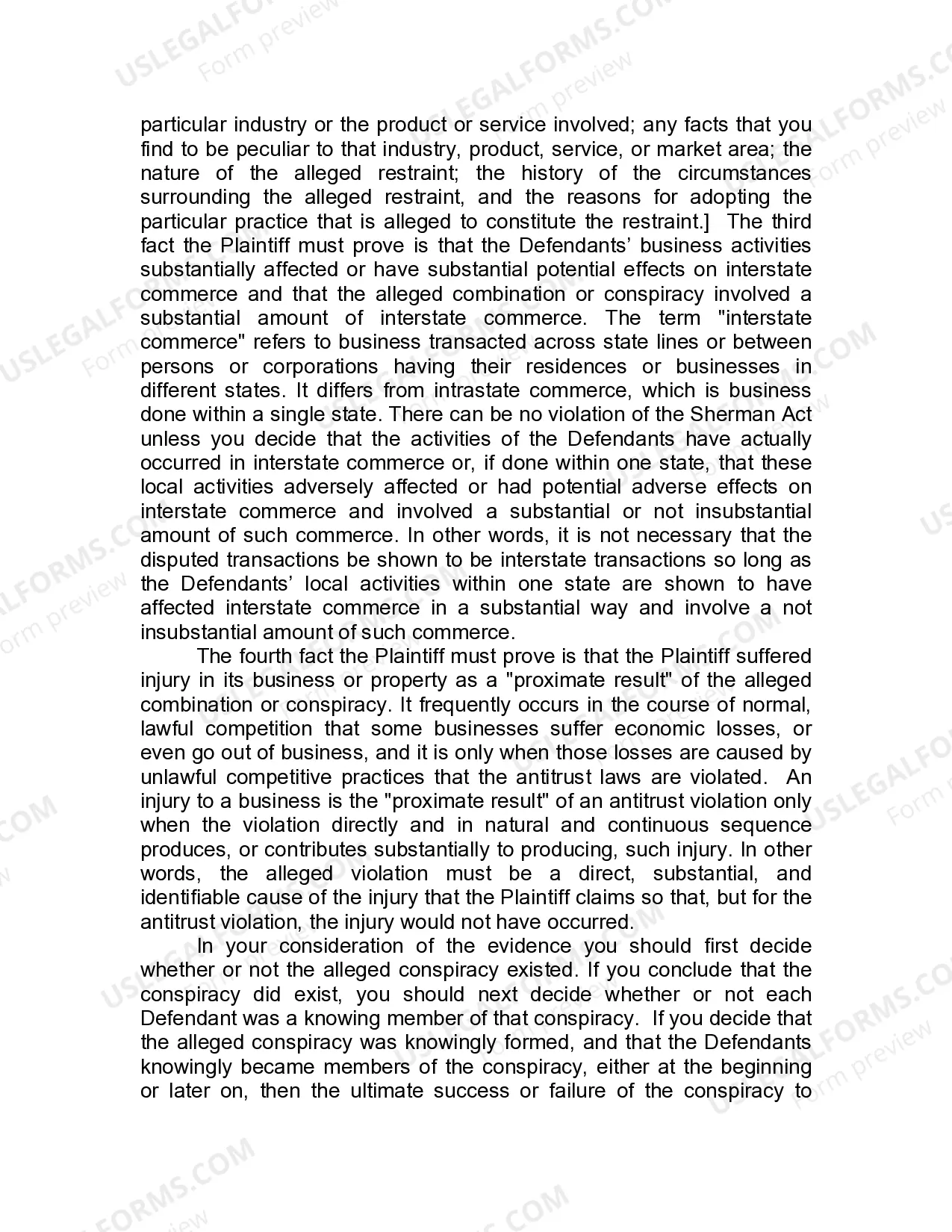
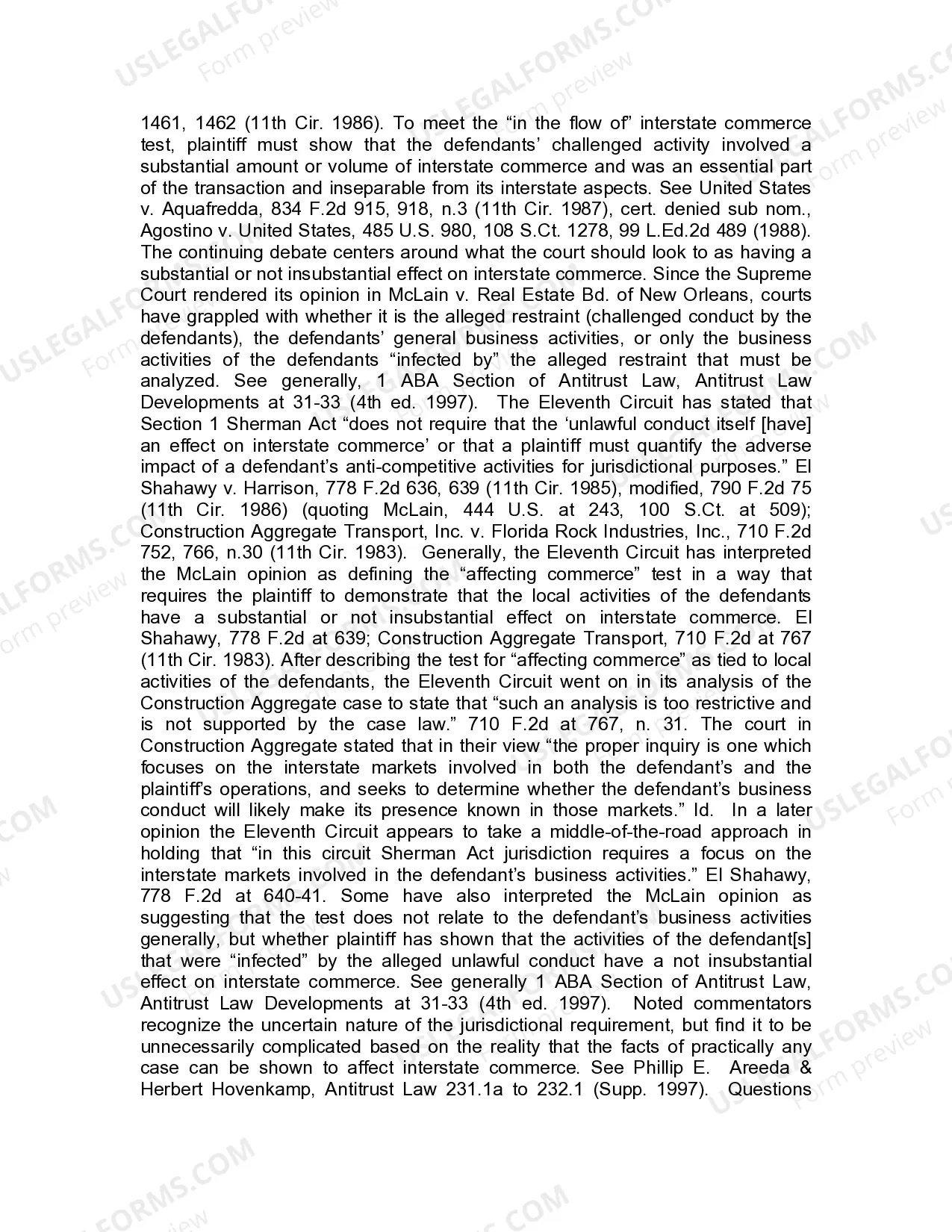
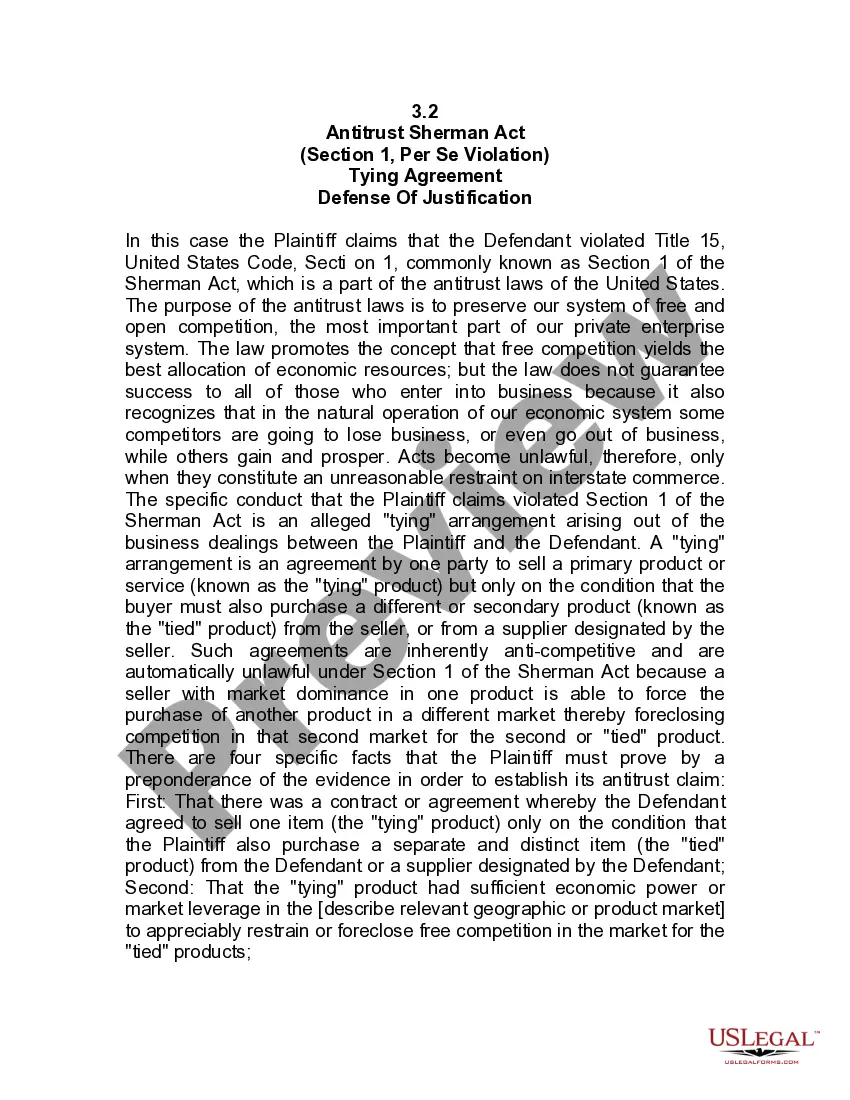
This Jury Instruction - 3.3.1 Section 1 provides a framework for jurors tasked with deciding cases involving per se violations of the Sherman Act, specifically conspiracies to fix prices. This instruction outlines the legal standards that jurors must apply when determining whether the defendants in a case have unlawfully conspired to fix prices in violation of antitrust laws. Unlike general jury instructions, this form specifically addresses per se violations and includes an alternative rule of reason instruction, making it applicable in various antitrust litigation contexts.
Key parts of this document
- Introduction to the Sherman Act and its purpose regarding competition.
- Criteria for proving the existence of a conspiracy among defendants.
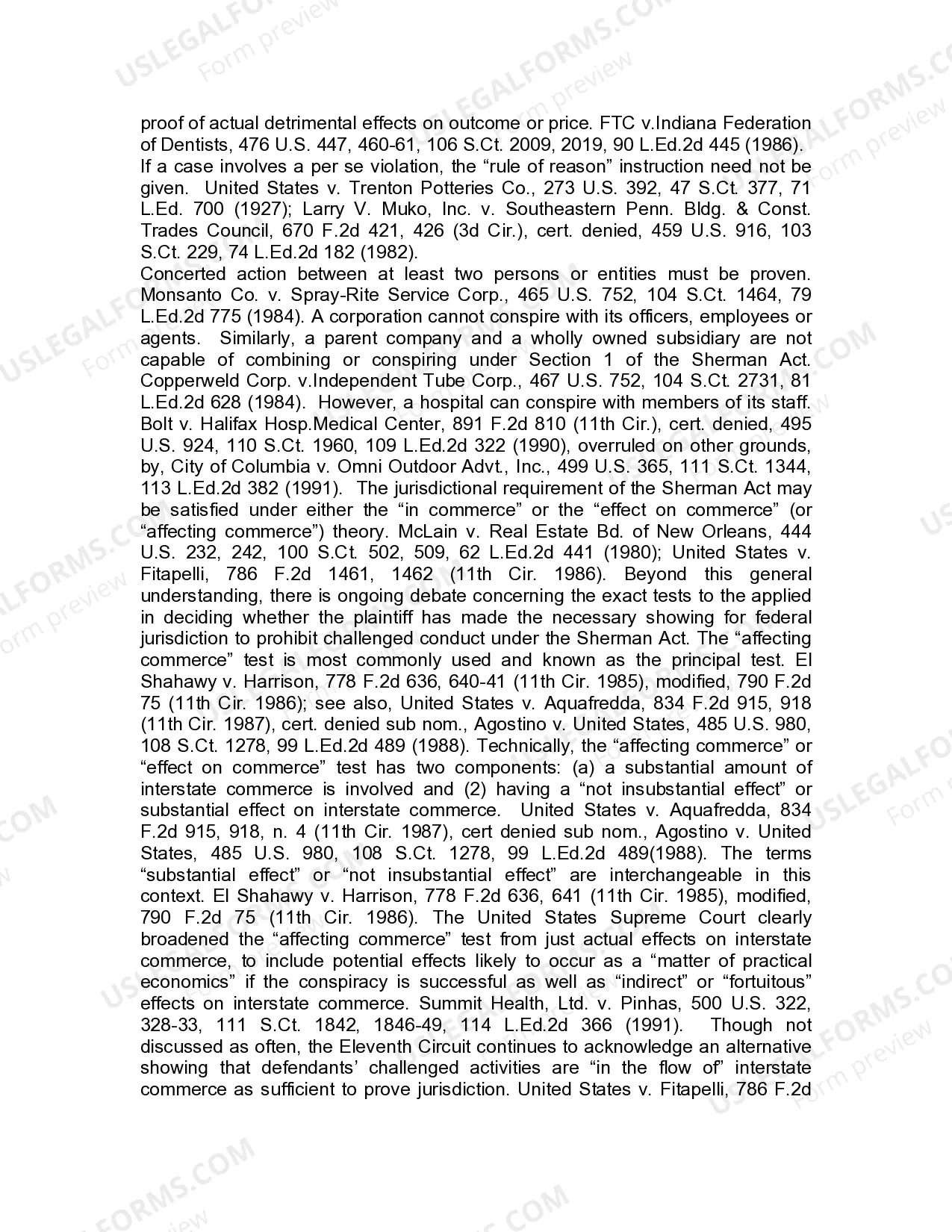
- Definitions of a âper se violationâ and ârule of reasonâ in antitrust law.
- Four key facts the plaintiff must prove regarding the defendants' conspiracy.
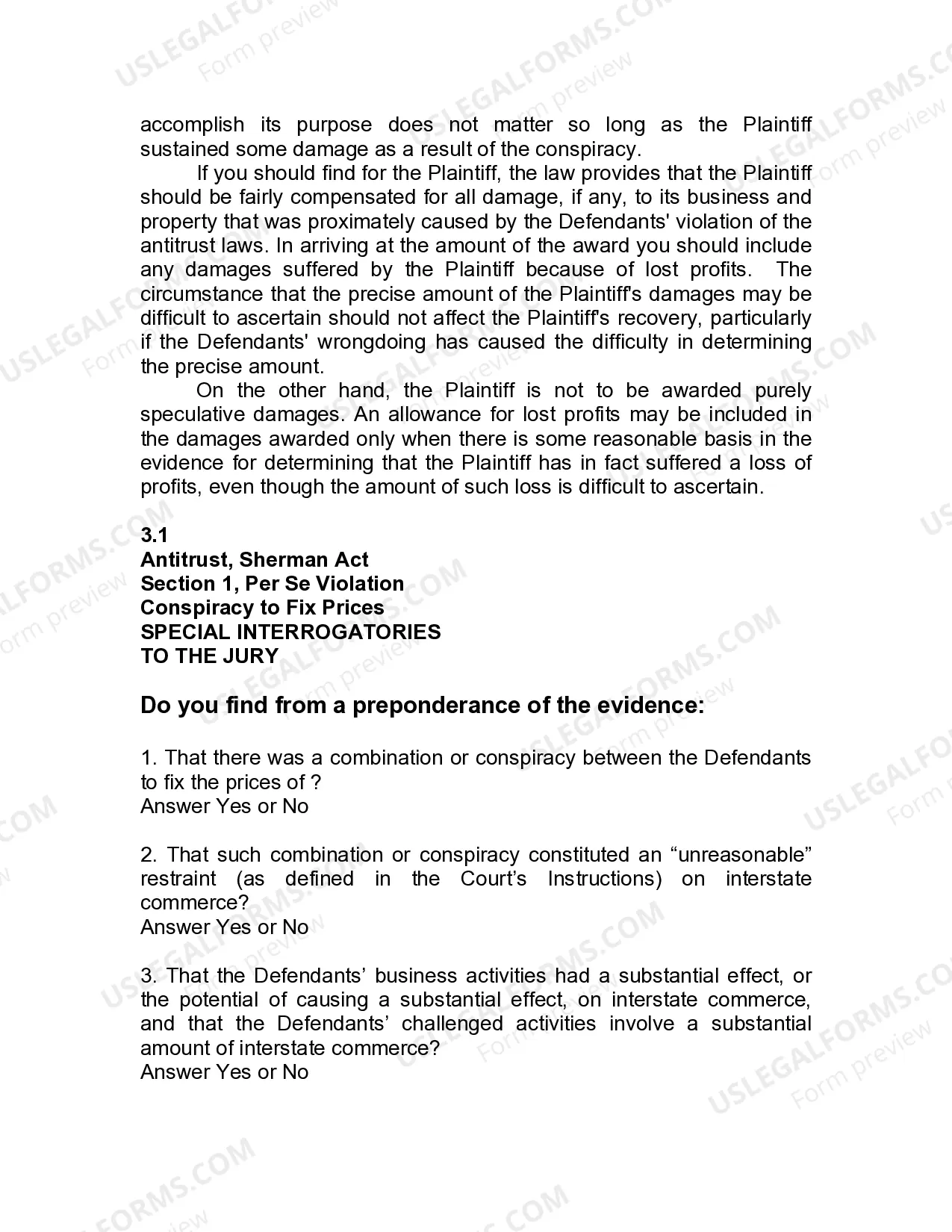
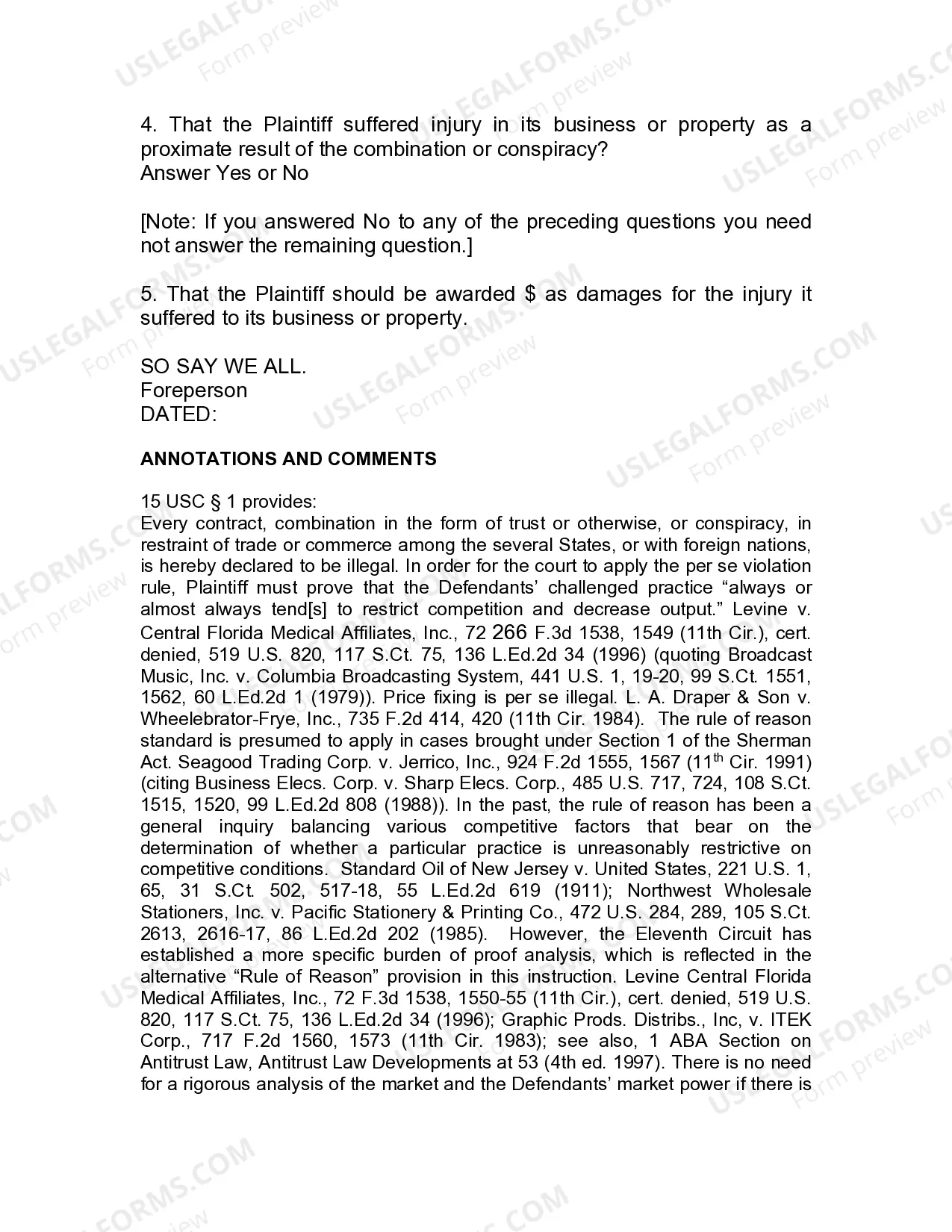
- Special interrogatories for jurors to determine the outcome of the case.

When to use this document
This form is essential when jurors need to evaluate claims of antitrust violations related to price fixing among competitors. It is particularly useful in litigation involving allegations that companies have engaged in unlawful agreements that harm market competition or consumers. This instruction helps jurors understand the legal criteria for evaluating evidence in such cases.
Who should use this form
This form is intended for:
- Judges presiding over antitrust cases.
- Jurors tasked with deciding cases involving price fixing conspiracies.
- Attorneys involved in antitrust litigation who need a structured instruction for jury deliberation.
How to prepare this document
To properly utilize this jury instruction, follow these steps:
- Review the legal standards set forth in the instruction for price fixing conspiracies.
- Identify the defendants involved and the nature of their alleged conspiracy.
- Consider the evidence presented regarding the combination or conspiracy.
- Determine whether the alleged actions constitute an unreasonable restraint on trade.
- Complete the special interrogatories to guide your deliberation and verdict.
Notarization requirements for this form
This form usually doesn’t need to be notarized. However, local laws or specific transactions may require it. Our online notarization service, powered by Notarize, lets you complete it remotely through a secure video session, available 24/7.
Get your form ready online
Our built-in tools help you complete, sign, share, and store your documents in one place.
Make edits, fill in missing information, and update formatting in US Legal Forms—just like you would in MS Word.
Download a copy, print it, send it by email, or mail it via USPS—whatever works best for your next step.
Sign and collect signatures with our SignNow integration. Send to multiple recipients, set reminders, and more. Go Premium to unlock E-Sign.
If this form requires notarization, complete it online through a secure video call—no need to meet a notary in person or wait for an appointment.
We protect your documents and personal data by following strict security and privacy standards.

Make edits, fill in missing information, and update formatting in US Legal Forms—just like you would in MS Word.

Download a copy, print it, send it by email, or mail it via USPS—whatever works best for your next step.

Sign and collect signatures with our SignNow integration. Send to multiple recipients, set reminders, and more. Go Premium to unlock E-Sign.

If this form requires notarization, complete it online through a secure video call—no need to meet a notary in person or wait for an appointment.

We protect your documents and personal data by following strict security and privacy standards.
Typical mistakes to avoid
- Failing to accurately assess whether sufficient evidence exists to prove each element of the conspiracy.
- Confusing per se violations with other types of antitrust violations that require a rule of reason analysis.
- Overlooking the necessity of demonstrating the impact of the conspiracy on interstate commerce.
Advantages of online completion
- Convenient access to a standardized jury instruction template simplifies the process for jurors.
- Improves clarity and understanding of legal language surrounding antitrust issues.
- Ensures that all essential legal elements are addressed during jury deliberations.
Legal use & context
- This form provides guidance for jury deliberations in antitrust cases regarding price-fixing conspiracies.
- It incorporates federal guidelines and is valid under pertinent antitrust laws applicable in the United States.
- Potential legal limitations may arise depending on jurisdiction-specific antitrust interpretations.
Key takeaways
- The form is crucial for guiding jurors in antitrust litigation related to price fixing.
- Understanding both per se violations and rule of reason analyses is key to applying the law correctly.
- Jurors must carefully consider whether the alleged conspiracy affects competition and commerce.
Looking for another form?




Form popularity
FAQ
PF Advance Form 31 is a declaration that an employee needs to withdraw funds from an EPF account before retirement. Employees can submit EPF claim Form 31 for specified purposes which includes purchase/construction of home, wedding or education of self/sibling/child, repayment of home loan and medical emergencies.
Da 31 Form It is also known as a Request and Authority for Leave. Generally, a fillable DA 31 is used when someone wishes to use some of their vacation leave or must attend to a family emergency. This form collects certain personal information for the soldier, including how they may be reached if necessary.
In case of offline settlement the employee needs to submit the Composite Claims Form /9 CCF). This composite claim form has subsumed other settlement forms like Form 19, 31 and 10C for EPF and EPS settlement , as per a 2017 circular released by EPFO.
Form 19: This form is used for withdrawal of the PF amount. It can be used at the time of retirement or when an employee quits his job.Form 31: This is used for Partial withdrawal of the amount in the PF account.
A member can withdraw at least of 36 months' pay or a total of employee's and employer's share plus interest or total outstanding principal with interest, whichever is lesser.
PF Advance Form 31 is a declaration that an employee needs to withdraw funds from an EPF account before retirement. Employees can submit EPF claim Form 31 for specified purposes which includes purchase/construction of home, wedding or education of self/sibling/child, repayment of home loan and medical emergencies.