Jury Instruction - 2.2.3.2 Convicted Prisoner Alleging Deliberate Indifference To Serious Medical Need
About this form
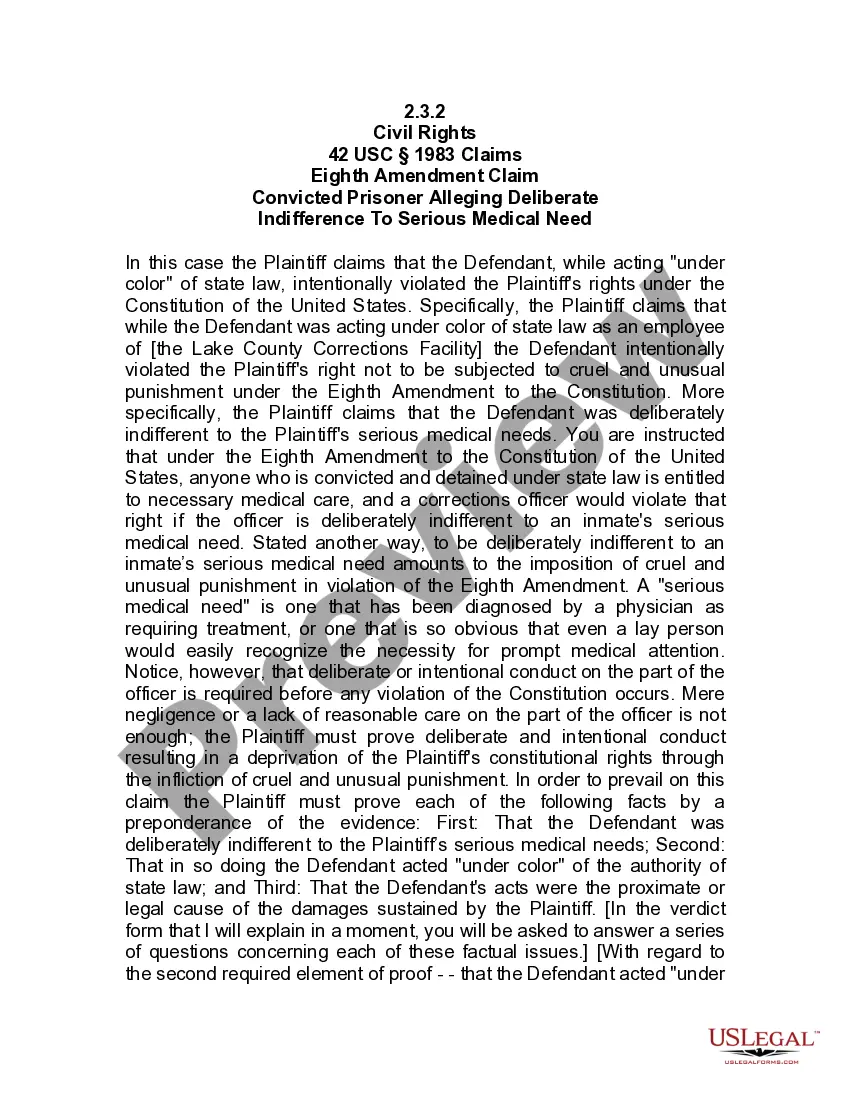
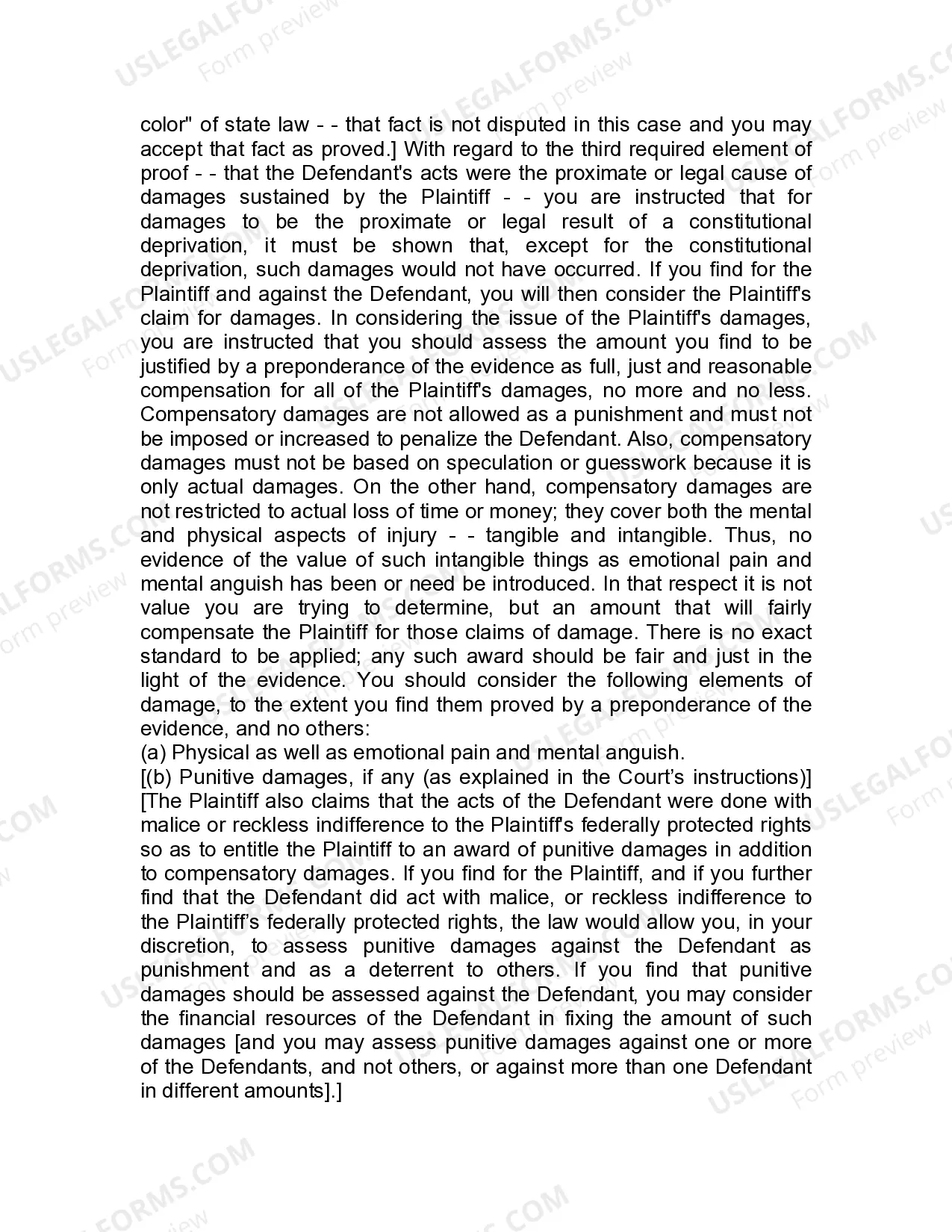
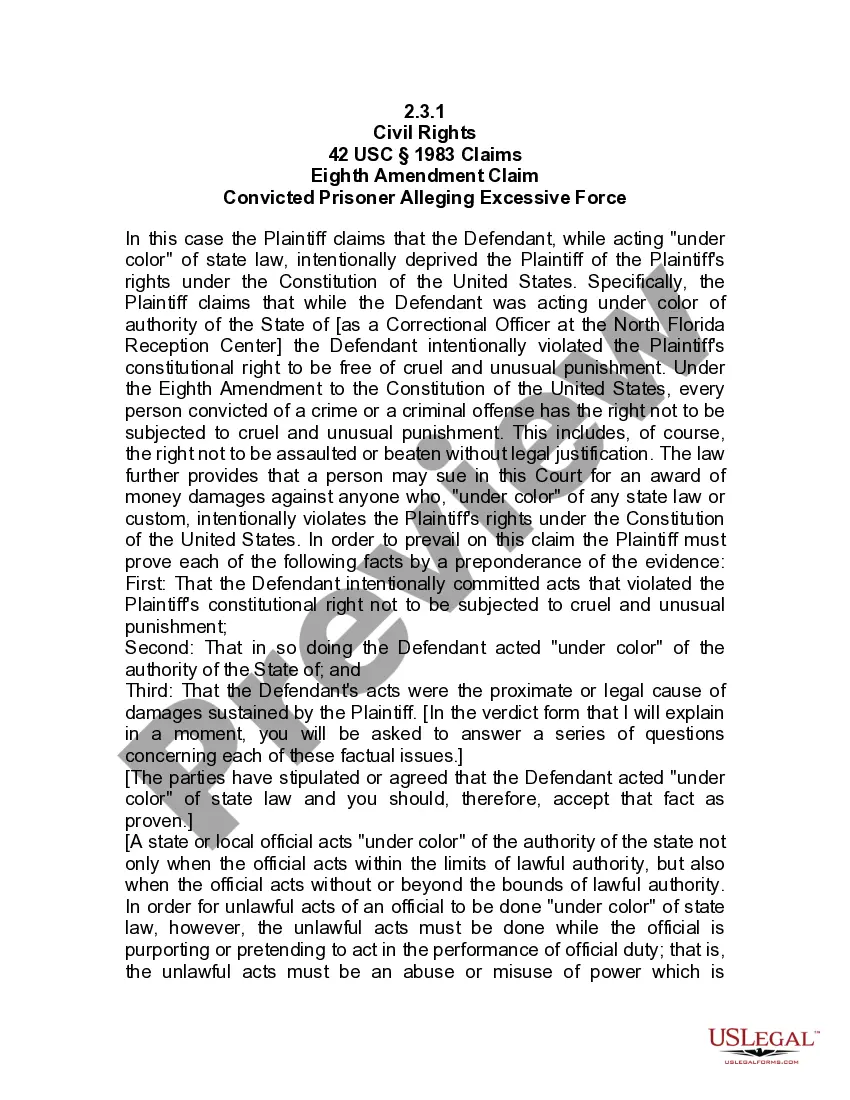
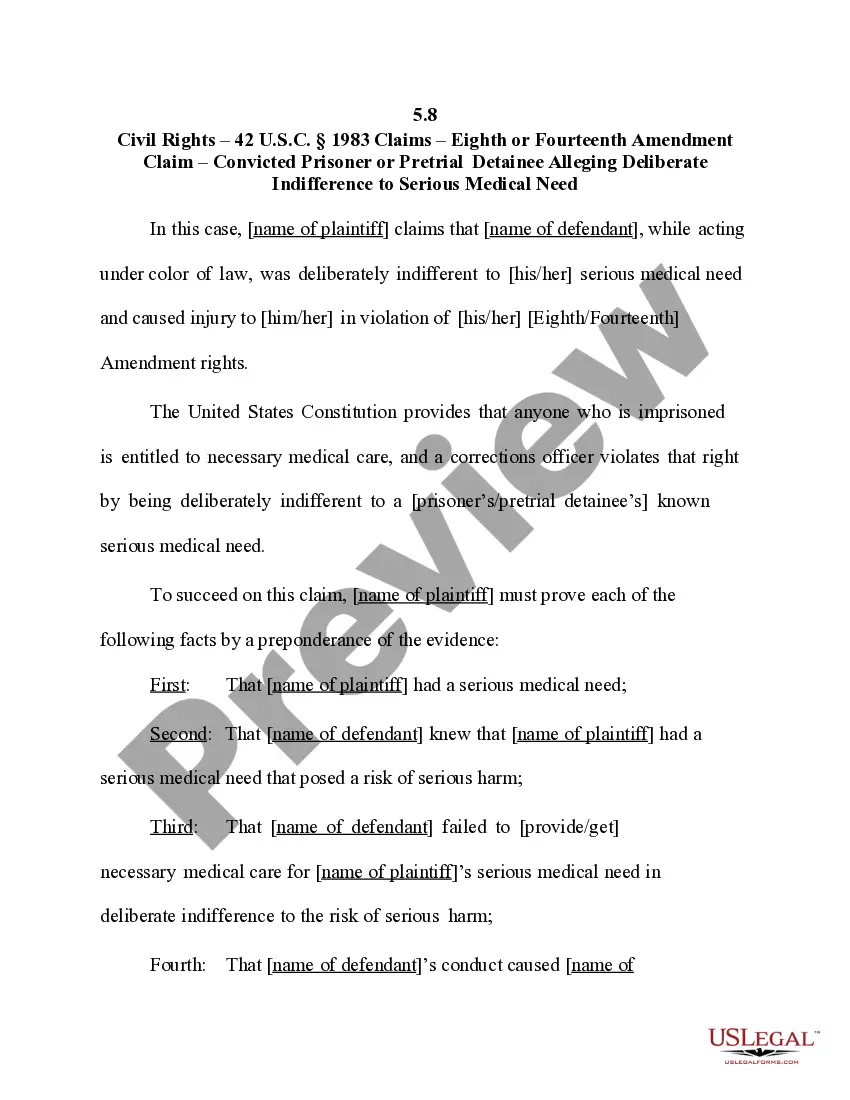
This jury instruction form, specifically titled "Jury Instruction - 2.2.3.2 Convicted Prisoner Alleging Deliberate Indifference To Serious Medical Need," offers guidelines for jurors to follow when deciding cases involving claims of deliberate indifference by correctional staff to inmates' serious medical needs. This form is crucial for ensuring that jury members understand the legal standards under the Eighth Amendment and how they should evaluate the evidence presented in such cases. Unlike generic jury instructions, this form focuses on civil rights violations related to inmate medical care, helping to ensure that justice is upheld for convicted prisoners.
What’s included in this form
- Clarification of the criteria for deliberate indifference under the Eighth Amendment.
- Guidelines for assessing if a serious medical need exists.
- Steps for jurors to determine the liability of corrections officers.
- Instructions on how to evaluate damages, including compensatory and punitive damages.
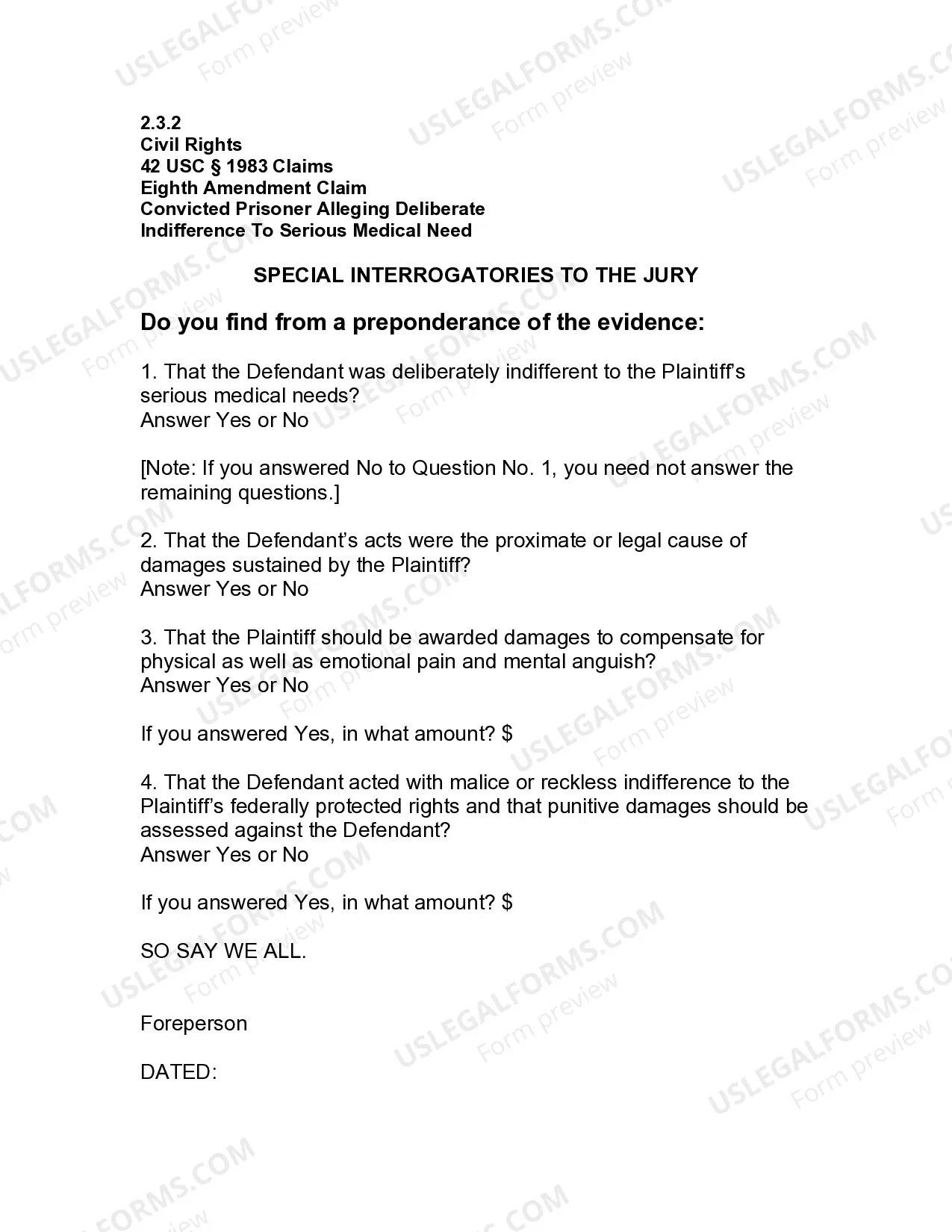
- Special interrogatories to guide jurors in their deliberations.




When to use this document
This form should be used during jury trials involving claims that correctional officers failed to provide necessary medical care to inmates, thereby violating their constitutional rights. It serves as a valuable tool for jurors tasked with deciding cases where the plaintiff alleges that their serious medical needs were ignored or treated with deliberate indifference. Situations may include instances of life-threatening conditions that went untreated or neglect found in medical responses to both physical and mental health issues.
Who can use this document
- Jurors involved in civil rights cases against correctional facilities.
- Attorneys representing plaintiffs or defendants in Eighth Amendment claims.
- Legal professionals seeking to understand jury instructions related to inmate rights.
Completing this form step by step
- Identify the parties involved in the case, including the plaintiff and defendant.
- Review the detailed allegations made by the plaintiff regarding deliberate indifference.
- Consider the definitions of serious medical need provided and assess the evidence presented.
- Follow the special interrogatories to determine the facts that satisfy the required elements of proof.
- Make sure to consider all relevant damages, both tangible and intangible, awarded to the plaintiff.
Is notarization required?
This form usually doesn’t need to be notarized. However, local laws or specific transactions may require it. Our online notarization service, powered by Notarize, lets you complete it remotely through a secure video session, available 24/7.
Get your form ready online
Our built-in tools help you complete, sign, share, and store your documents in one place.
Make edits, fill in missing information, and update formatting in US Legal Forms—just like you would in MS Word.
Download a copy, print it, send it by email, or mail it via USPS—whatever works best for your next step.
Sign and collect signatures with our SignNow integration. Send to multiple recipients, set reminders, and more. Go Premium to unlock E-Sign.
If this form requires notarization, complete it online through a secure video call—no need to meet a notary in person or wait for an appointment.
We protect your documents and personal data by following strict security and privacy standards.

Make edits, fill in missing information, and update formatting in US Legal Forms—just like you would in MS Word.

Download a copy, print it, send it by email, or mail it via USPS—whatever works best for your next step.

Sign and collect signatures with our SignNow integration. Send to multiple recipients, set reminders, and more. Go Premium to unlock E-Sign.

If this form requires notarization, complete it online through a secure video call—no need to meet a notary in person or wait for an appointment.

We protect your documents and personal data by following strict security and privacy standards.
Typical mistakes to avoid
- Failing to clearly define what constitutes a serious medical need.
- Neglecting to focus on the requirement of intentional conduct rather than negligence.
- Misunderstanding the distinction between compensatory and punitive damages.
Why use this form online
- Accessibility: Downloadable at any time for immediate use in legal proceedings.
- Editability: Allows users to tailor the instructions to fit the specifics of their case.
- Reliability: Drafted by licensed attorneys, ensuring professional legal standards are met.
Legal use & context
- The form serves as a guideline for jurors, ensuring they understand their responsibilities in civil rights cases involving prisoners.
- It upholds constitutional protections for inmates under the Eighth Amendment.
- The instructions should be used in conjunction with courtroom proceedings and prevailing state laws.
Summary of main points
- This form provides essential jury instructions related to Eighth Amendment claims.
- Jurors must understand both legal definitions and the elements of proof required to establish claims.
- Clear guidance on assessing damages is crucial for fair compensation.
Looking for another form?

Form popularity
FAQ
To prevail in a claim under section 1983, the plaintiff must prove two critical points: a person subjected the plaintiff to conduct that occurred under color of state law, and this conduct deprived the plaintiff of rights, privileges, or immunities guaranteed under federal law or the U.S. Constitution.
Section 1983 only allows you to sue for actions taken under color of state law. This means that your rights must have been violated by a state or local official. This includes people who work for the state, city, county or other local governments.
To succeed on a Section 1983 claim, a plaintiff must prove that his constitutional rights were violated, and that the violation was caused by a person acting under color of law.
Typically, plaintiffs receive compensatory damages when they prevail on their claim. Basically, the purpose of a compensatory damage award is to make the plaintiff whole for the damage or loss they experienced. Pursuant to 42 U.S.C. § 1983, a successful plaintiff may also seek his or her attorney's fees.
"Section 1983 Litigation" refers to lawsuits brought under Section 1983 (Civil action for deprivation of rights) of Title 42 of the United States Code (42 U.S.C.Section 1983 provides an individual the right to sue state government employees and others acting "under color of state law" for civil rights violations.
To prevail in a claim under section 1983, the plaintiff must prove two critical points: a person subjected the plaintiff to conduct that occurred under color of state law, and this conduct deprived the plaintiff of rights, privileges, or immunities guaranteed under federal law or the U.S. Constitution.
A Section 1983 lawsuit is a civil rights lawsuit. It can be filed by someone whose civil rights have been violated. The victim can file the lawsuit if the wrongdoer was acting under color of law. Civil rights are those guaranteed by the U.S. Constitution or certain federal laws.
To establish deliberate indifference, a Santa Fe civil rights lawyer must prove that the prison guard or other prison official was subjectively aware of the prisoners serious medical condition and chose to do nothing or to delay taking action.
What is deliberate indifference? A prison official demonstrates "deliberate indifference" if he or she recklessly disregards. a substantial risk of harm to the prisoner.4. This is a higher standard than negligence, and requires that the official knows of and disregards an excessive risk of harm to the.