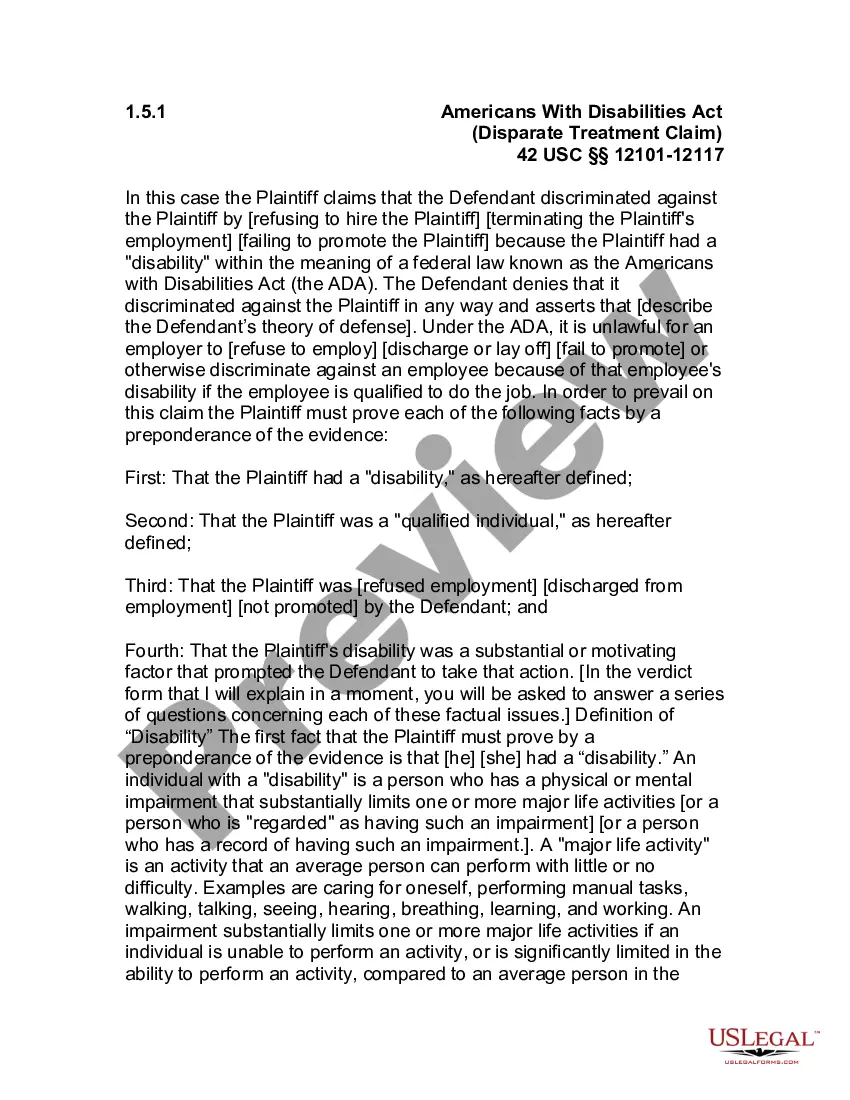
Jury Instruction - 1.5.1 Americans With Disabilities Act 42 USC Sect. 12101 - 12117 Disparate Treatment Claim
About this form
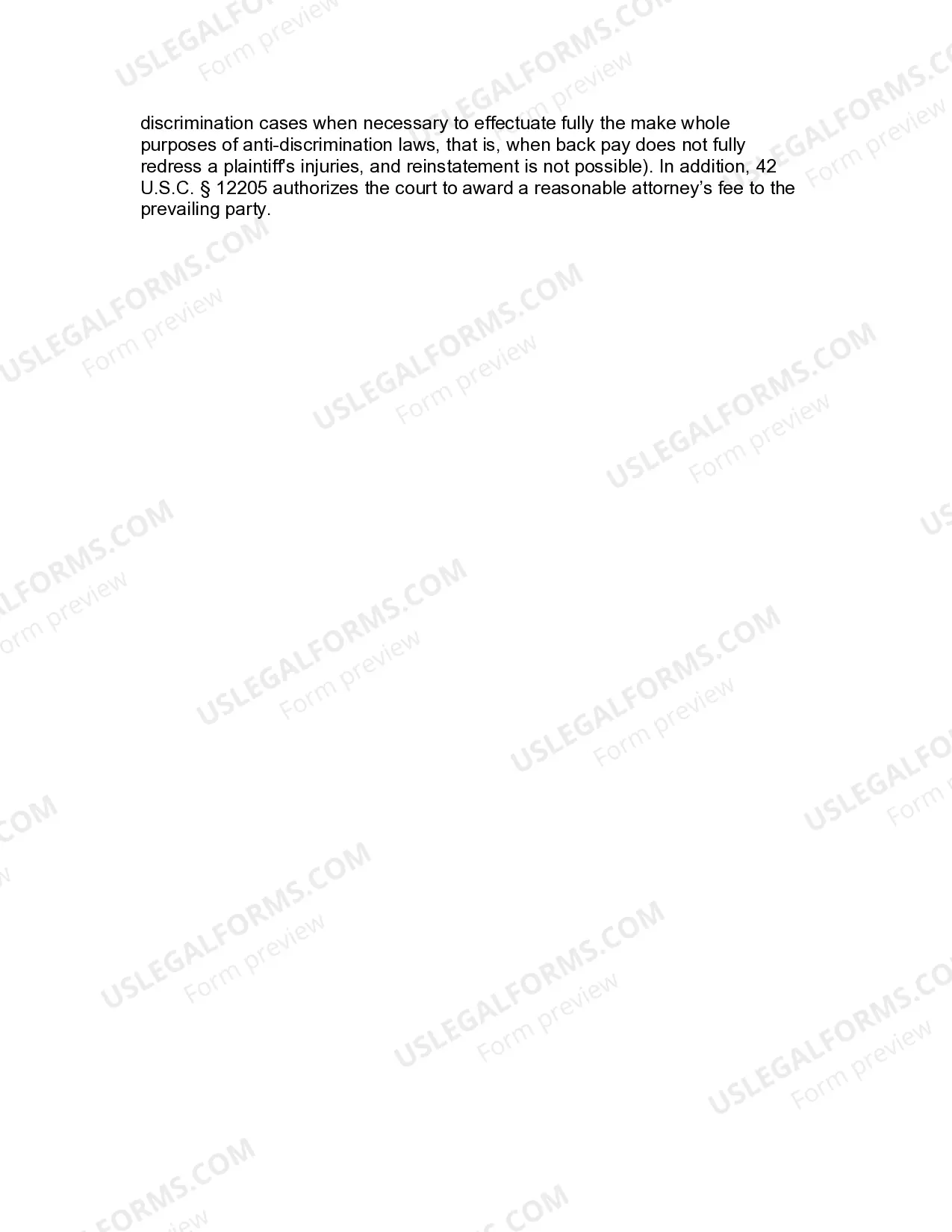
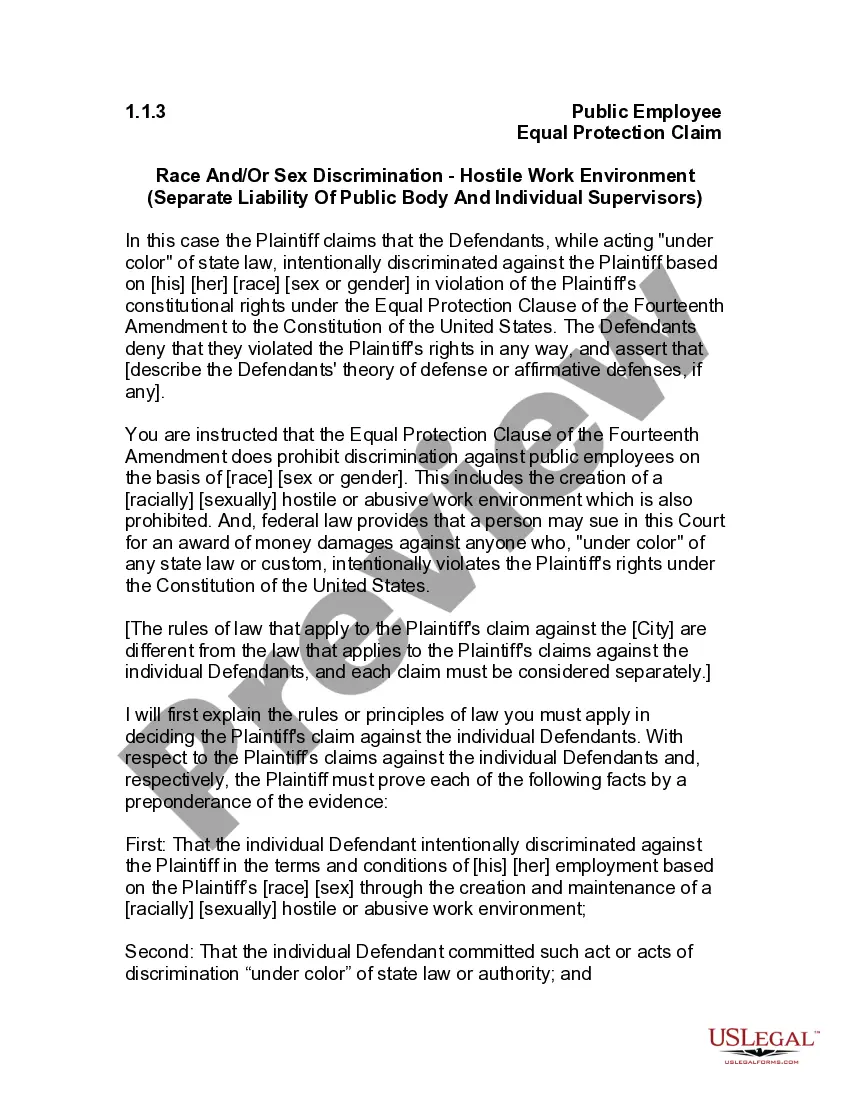
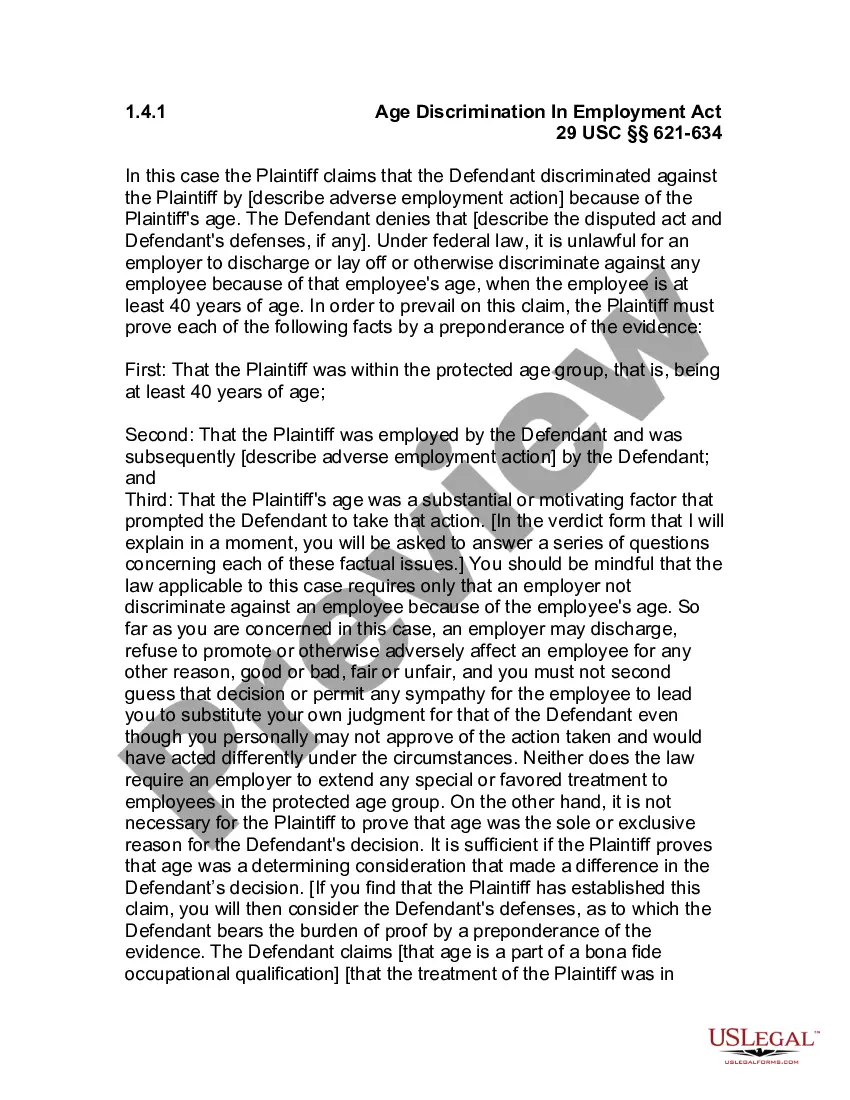
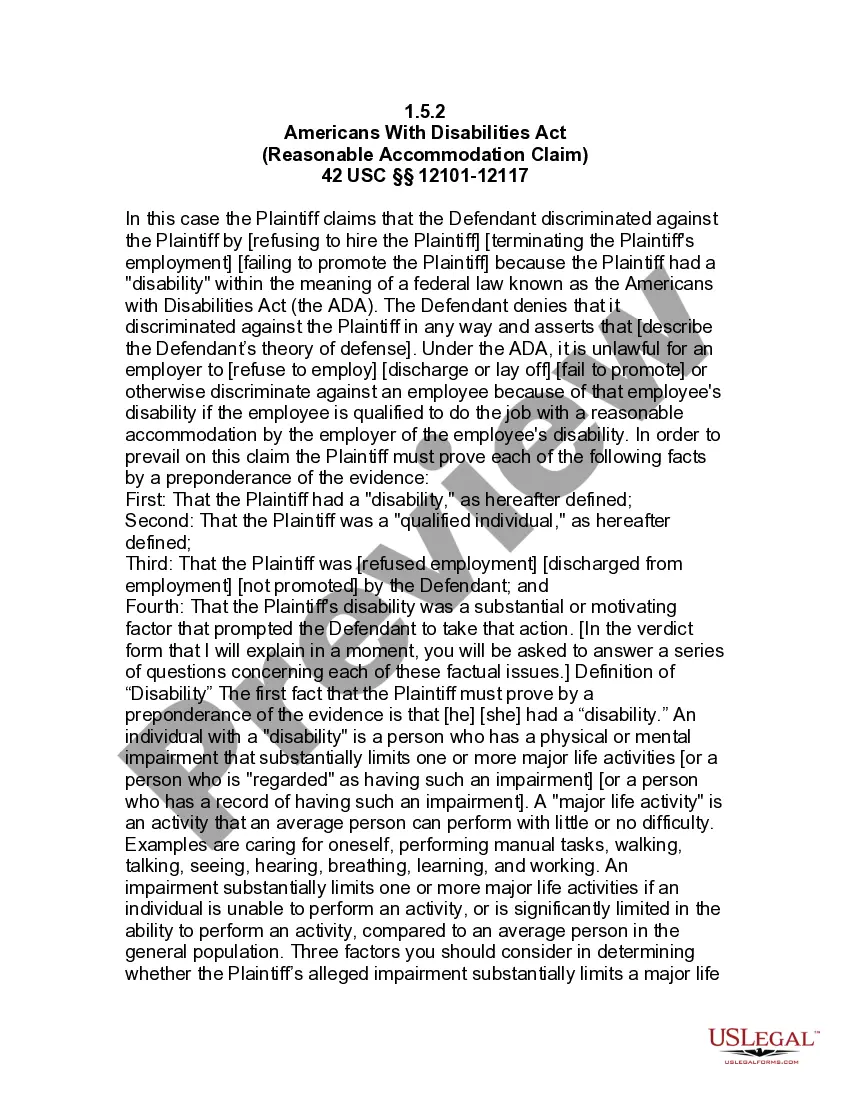
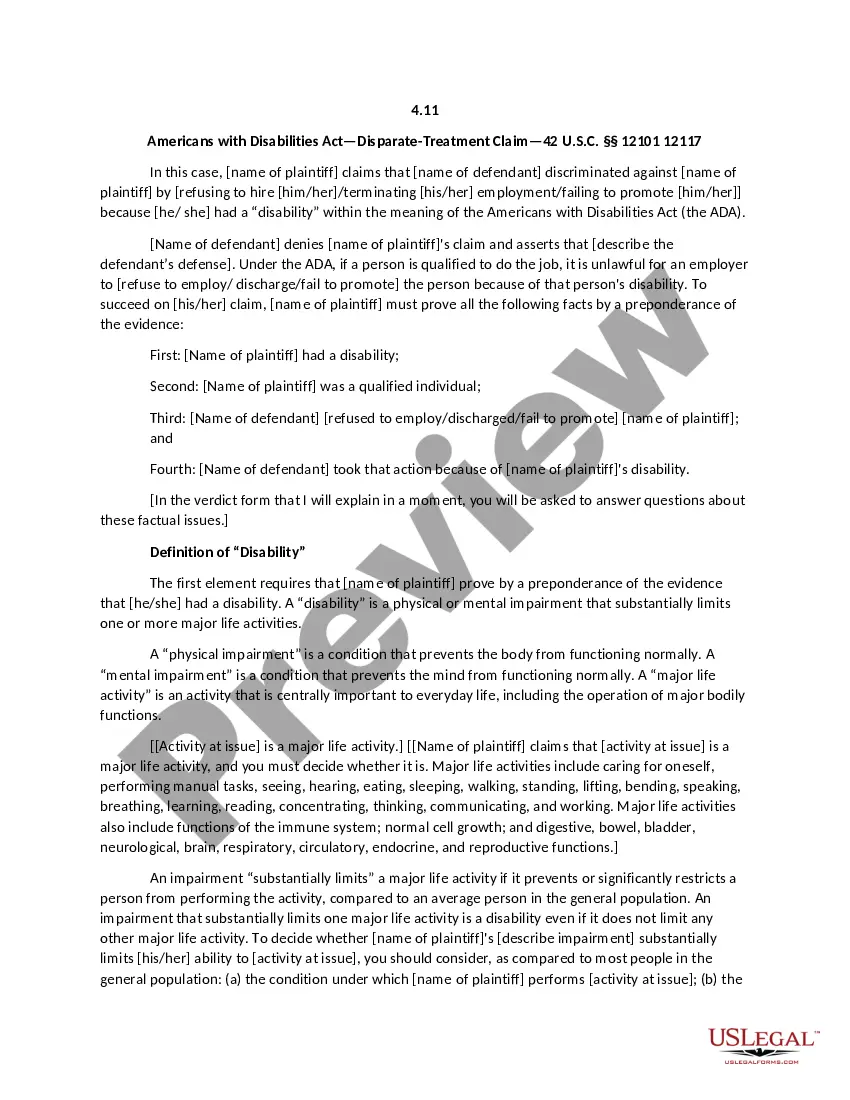
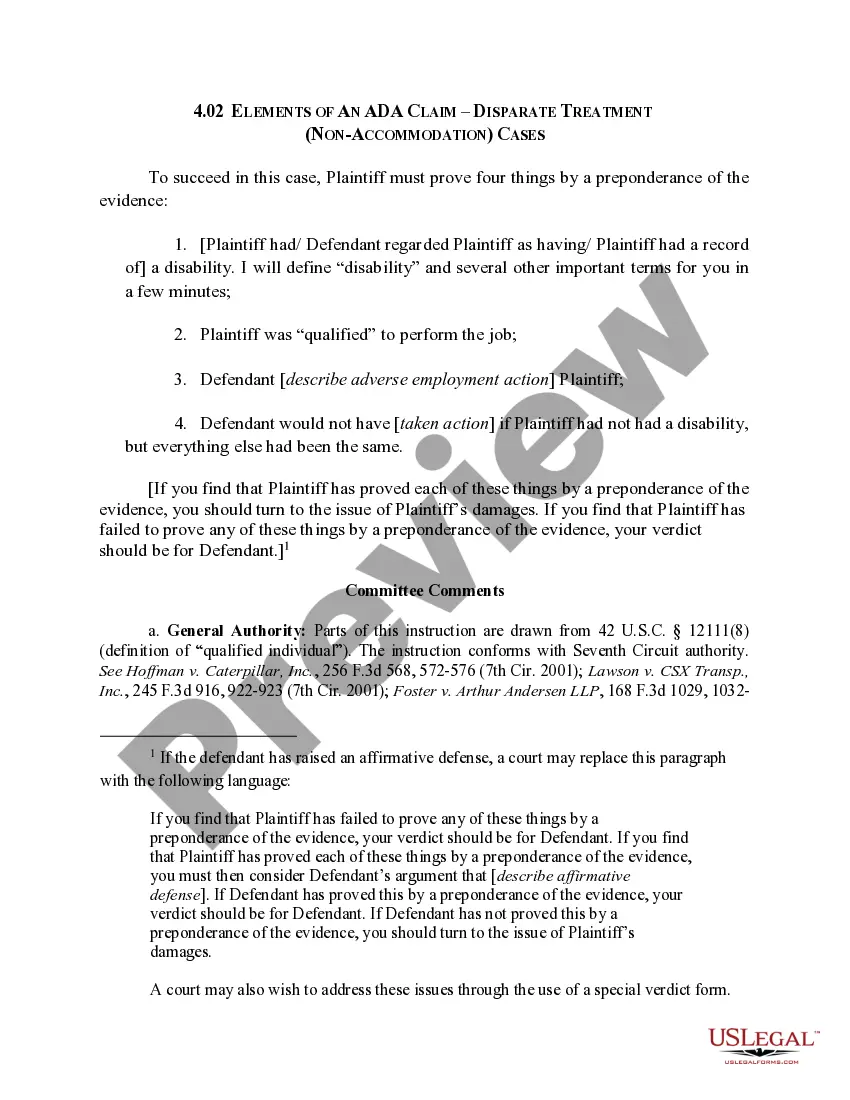
This Jury Instruction form is specifically designed for Disparate Treatment Claims under the Americans with Disabilities Act (ADA), as outlined in 42 USC Sections 127. It serves as a guiding template for juries in cases where a plaintiff alleges discrimination based on disability. Unlike standard jury instruction forms, this document focuses on establishing the framework through which assertions of disability discrimination are evaluated, ensuring a fair consideration of the evidence presented during trial.
Main sections of this form
- Definition of disability and its implications in employment contexts.
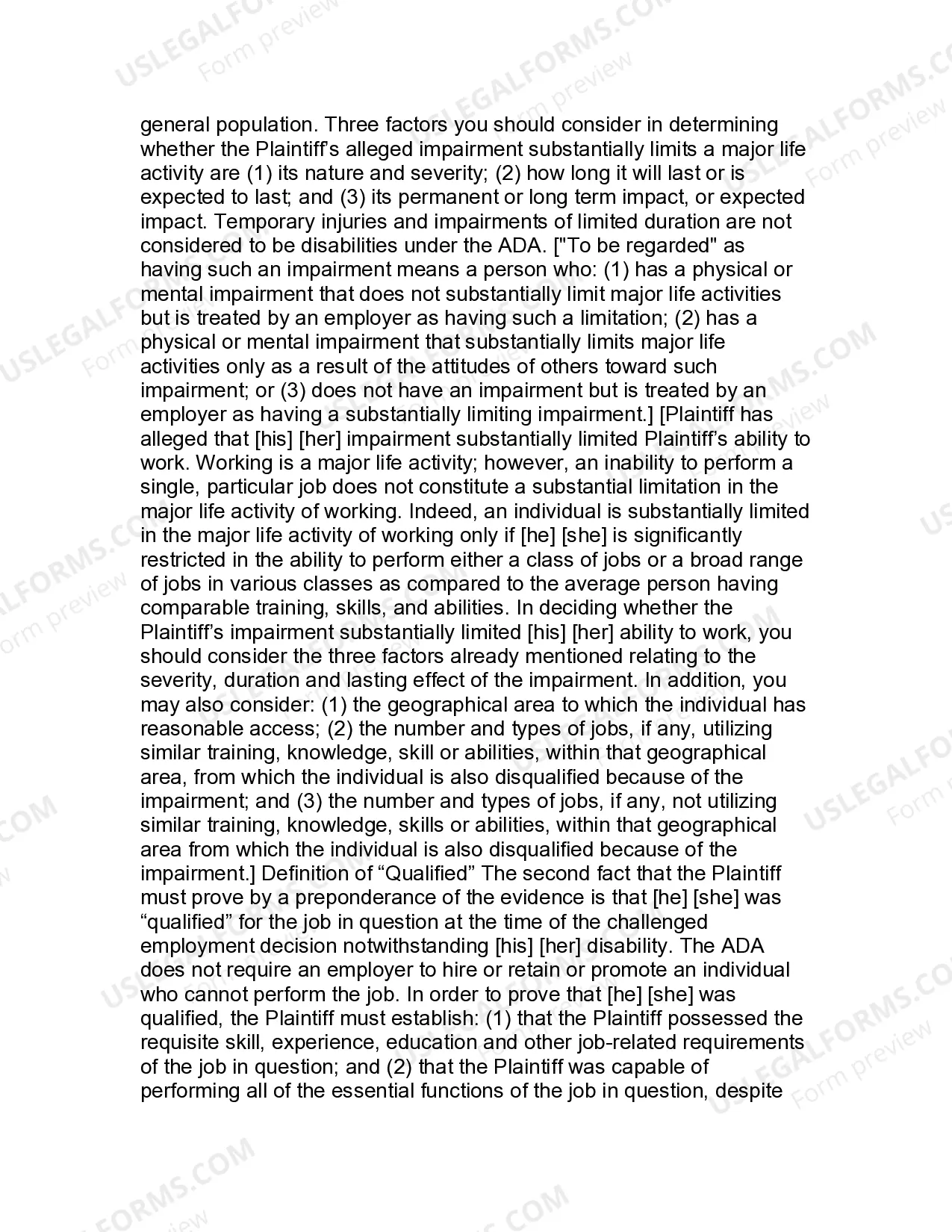
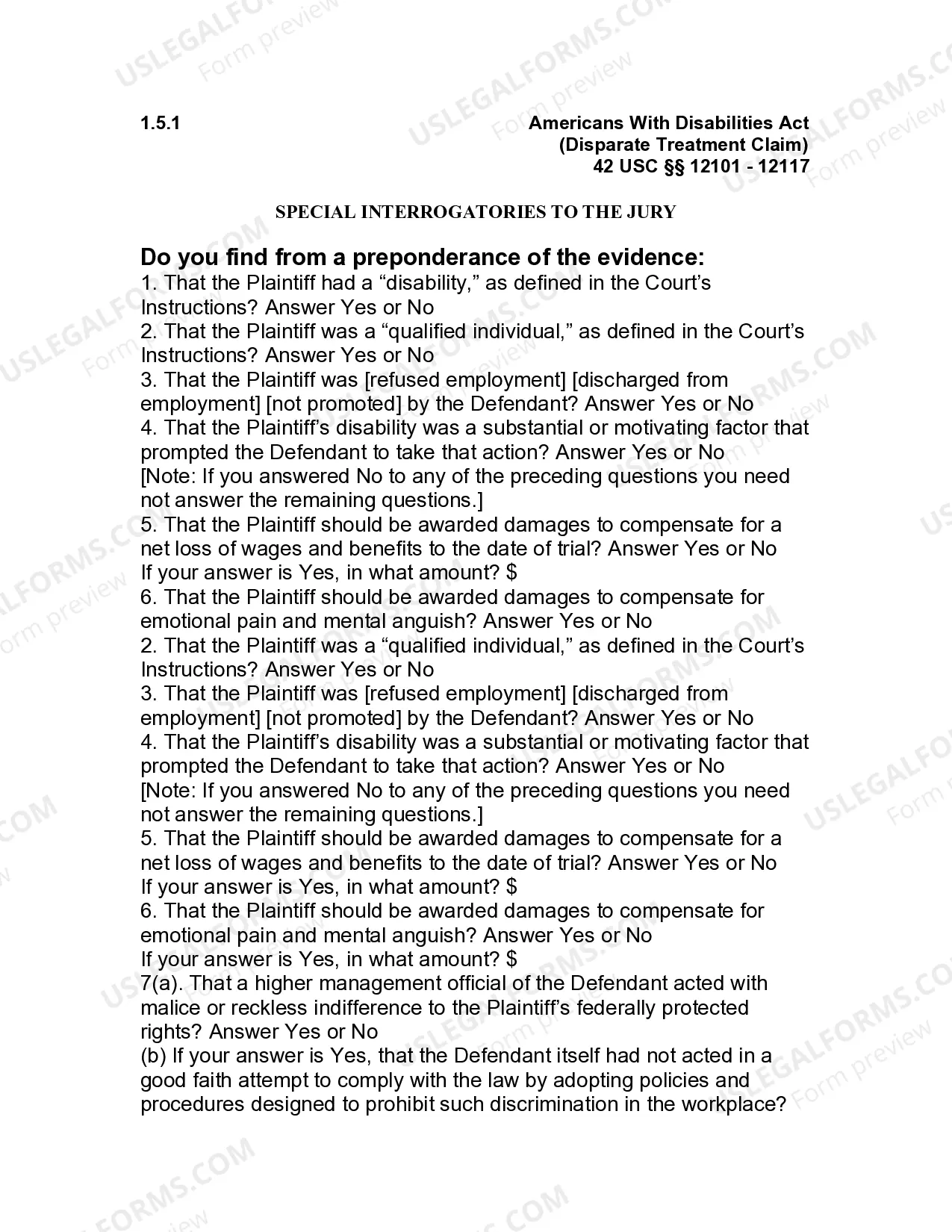
- Criteria for determining whether the plaintiff is a qualified individual.
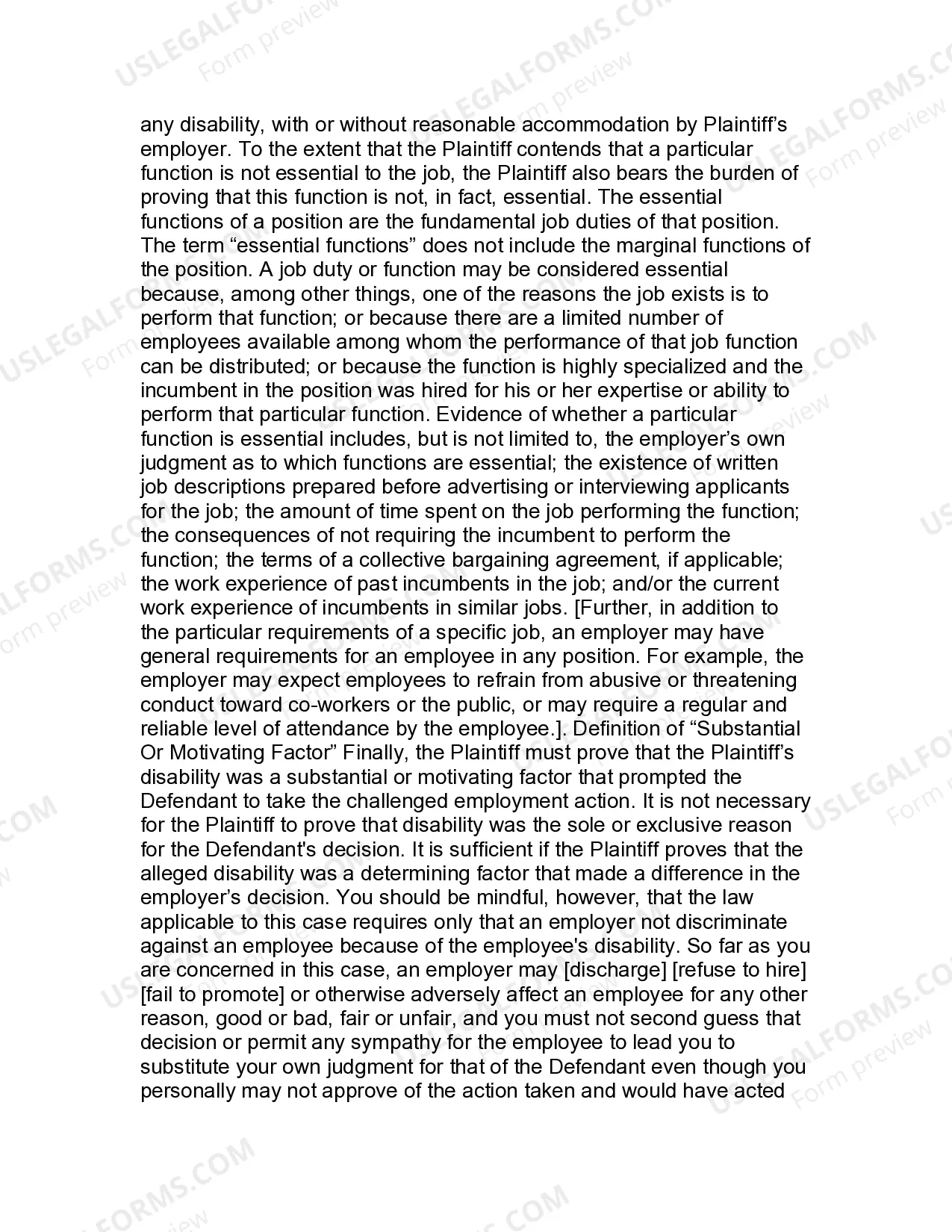
- Evaluation of the employer's actions regarding employment decisions.
- Assessment of whether the plaintiff's disability was a substantial or motivating factor in the defendant's actions.
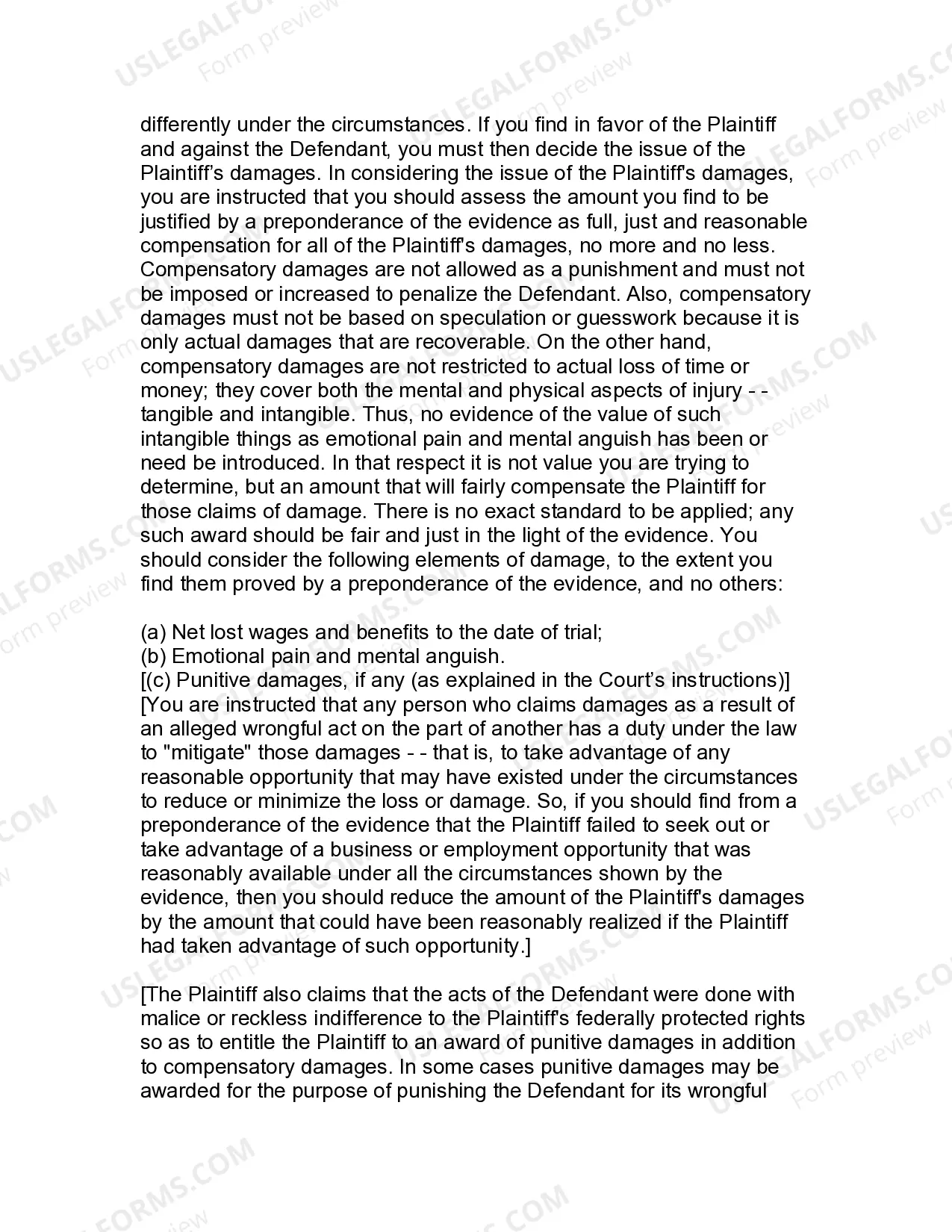
- Considerations for awarding damages, including compensatory and punitive damages.
When to use this document
This form is essential in legal proceedings where an individual claims discrimination due to a disability, particularly when filing a lawsuit under the ADA. Use this jury instruction when preparing for trial and presenting the case to a jury, outlining the legal standards that must be met to substantiate a claim of disparate treatment in employment scenarios.
Intended users of this form
- Legal practitioners representing plaintiffs in ADA-related employment discrimination cases.
- Attorneys preparing jury instructions for trials involving disability claims.
- Judges and court officials overseeing cases that require standard jury instructions regarding discrimination.
- Individuals seeking to understand the legal framework surrounding ADA claims in the workplace.
How to prepare this document
- Review the key definitions provided in the instructions to ensure understanding of disability and qualified individuals.
- Establish necessary evidence showing the plaintiff's disability status and qualifications for the job in question.
- Draft jury questions based on the components of the plaintiff's claim and the defenses presented by the defendant.
- Ensure that jury members understand the criteria for determining if discrimination occurred due to the plaintiff's disability.
- Prepare to discuss potential damages relevant to the claim, ensuring clarity on compensatory damages versus punitive measures.
Is notarization required?
This form usually doesn’t need to be notarized. However, local laws or specific transactions may require it. Our online notarization service, powered by Notarize, lets you complete it remotely through a secure video session, available 24/7.
Get your form ready online
Our built-in tools help you complete, sign, share, and store your documents in one place.
Make edits, fill in missing information, and update formatting in US Legal Forms—just like you would in MS Word.
Download a copy, print it, send it by email, or mail it via USPS—whatever works best for your next step.
Sign and collect signatures with our SignNow integration. Send to multiple recipients, set reminders, and more. Go Premium to unlock E-Sign.
If this form requires notarization, complete it online through a secure video call—no need to meet a notary in person or wait for an appointment.
We protect your documents and personal data by following strict security and privacy standards.

Make edits, fill in missing information, and update formatting in US Legal Forms—just like you would in MS Word.

Download a copy, print it, send it by email, or mail it via USPS—whatever works best for your next step.

Sign and collect signatures with our SignNow integration. Send to multiple recipients, set reminders, and more. Go Premium to unlock E-Sign.

If this form requires notarization, complete it online through a secure video call—no need to meet a notary in person or wait for an appointment.

We protect your documents and personal data by following strict security and privacy standards.
Avoid these common issues
- Failing to clearly define the plaintiff's disability in relation to job qualifications.
- Neglecting to provide sufficient evidence to support claims of discrimination.
- Not outlining essential job functions adequately, leading to confusion about the plaintiff's qualifications.
- Misunderstanding the legal standards required to determine whether the disability was a motivating factor in the employer's decision.
Why use this form online
- Immediate access to a legally compliant jury instruction template tailored for ADA cases.
- Easy downloads and edits allow for customization to fit specific case needs.
- Reliability and accuracy assured by legal professionals experienced in discrimination law.
- Convenience of accessing forms anytime without the need for in-person consultations.
Legal use & context
- This form provides juries with the necessary framework to evaluate ADA discrimination claims accurately.
- It highlights important legal definitions and standards necessary for adjudicating these claims.
- Using this form ensures compliance with federal ADA regulations, promoting equitable treatment in the judicial process.
Looking for another form?

Form popularity
FAQ
220e A "tangible employment action" means a significant change in employment status. Examples include hiring, firing, promotion, demotion, undesirable reassignment, a decision causing a significant change in benefits, compensation decisions, and work assignment.
Background. The United States Supreme Court has previously indicated that if harassment by a supervisor results in an "adverse employment action," it is irrelevant whether the employer had preventive measures in place (such as a harassment policy) or whether the plaintiff unreasonably failed to utilize those measures.
Non-selection. Firing. Failure to promote. Demotion. Suspension. Undesirable reassignment. Denial of a leave request.
An actual change that has an actual adverse effect on the job or working conditions, such as a firing, demotion, or suspension. When an employee claims to have been discriminated against or harassed by a supervisor, a tangible employment action supports the employee's case (and may be required to be proved).