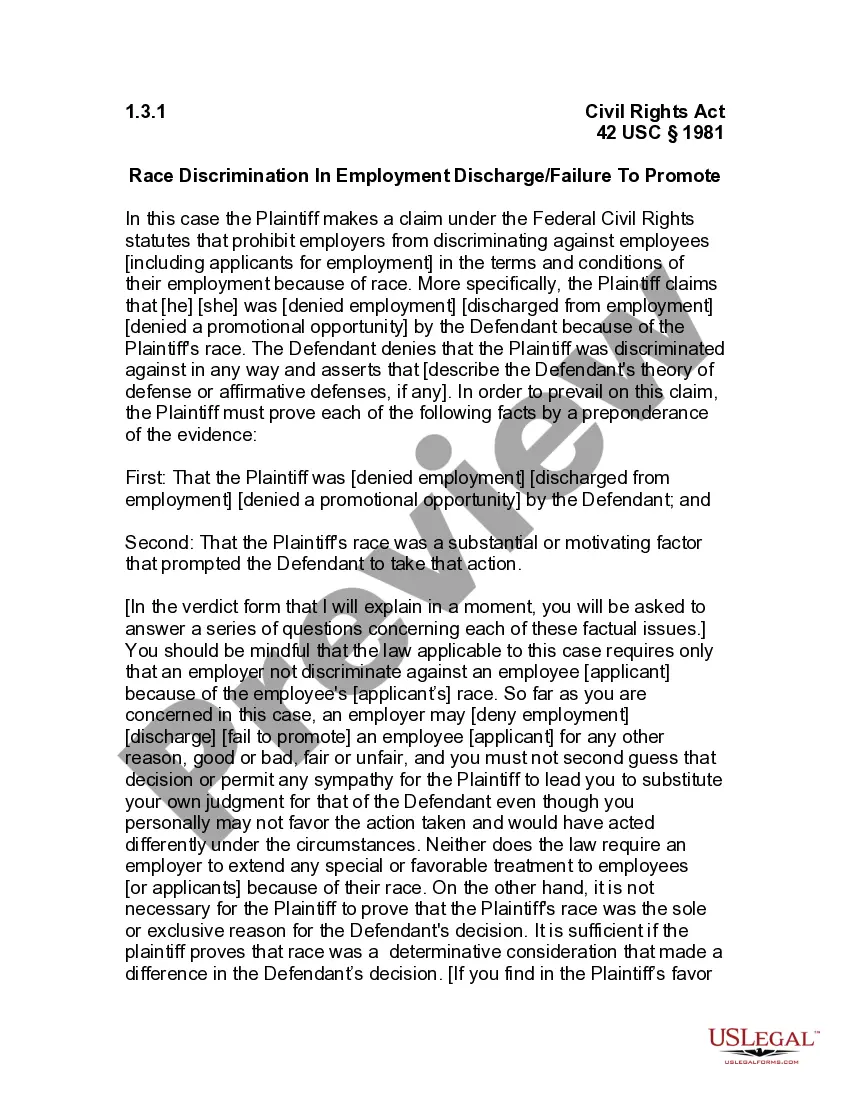
Jury Instruction - 1.3.1 Civil Rights Act 42 USC Sect.1981 Race Discrimination In Employment Discharge - Failure To Promote General Instruction
What is this form?
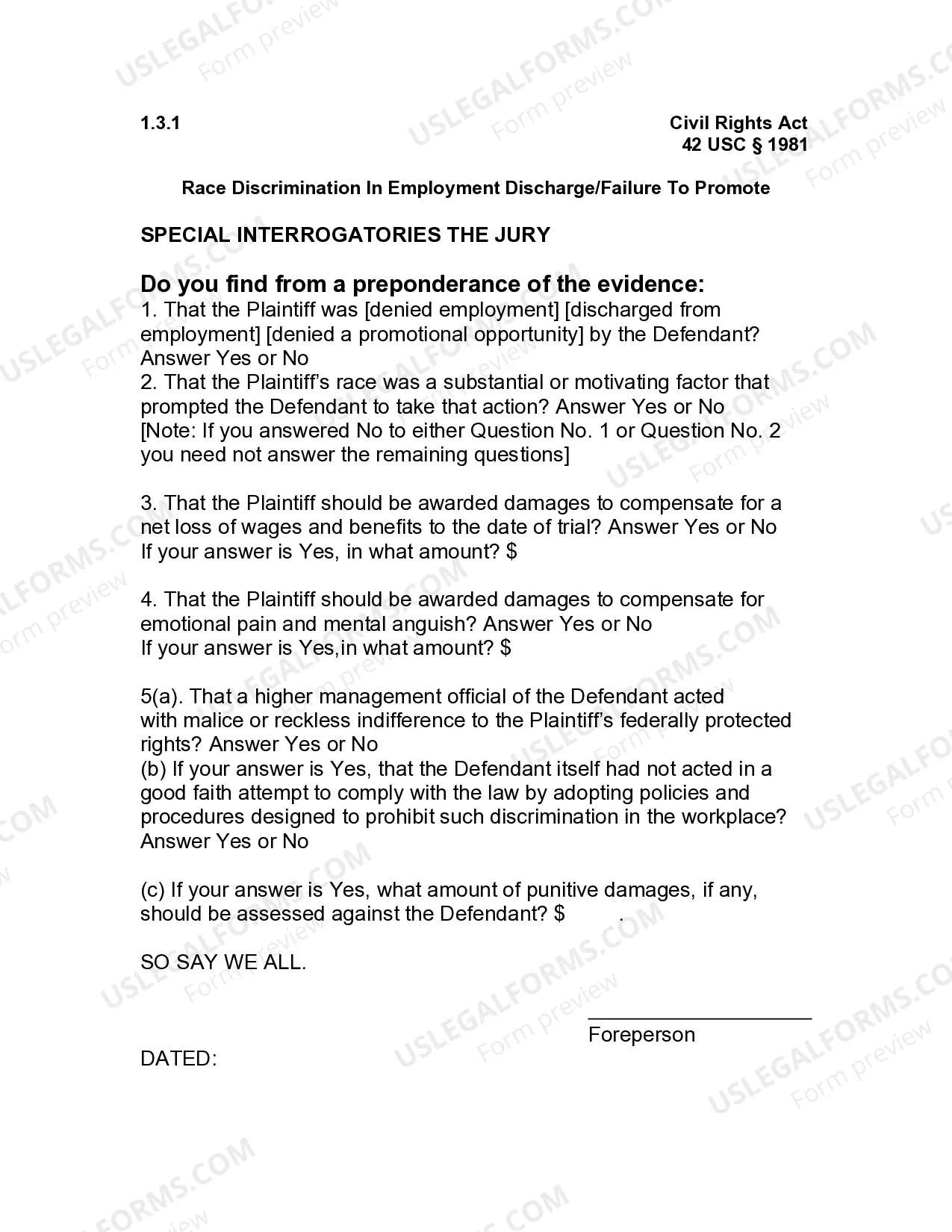
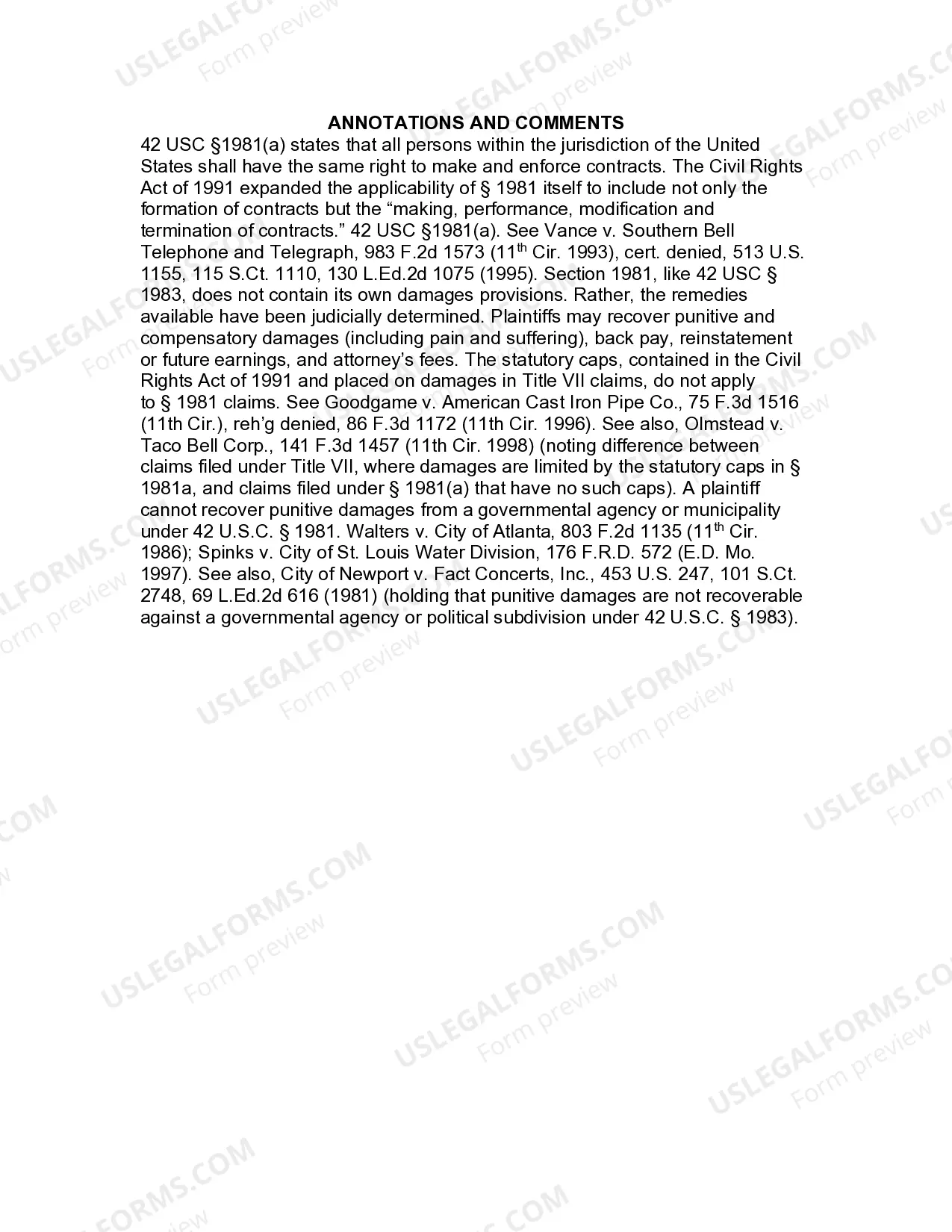
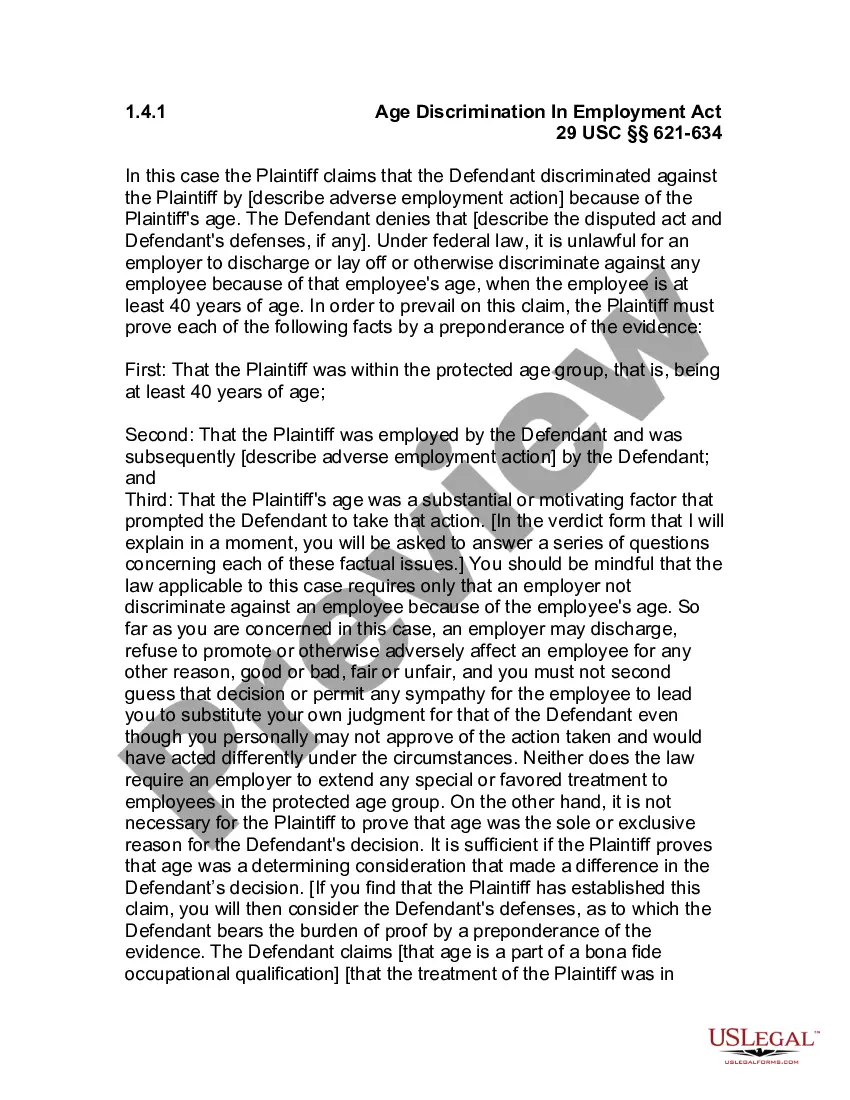
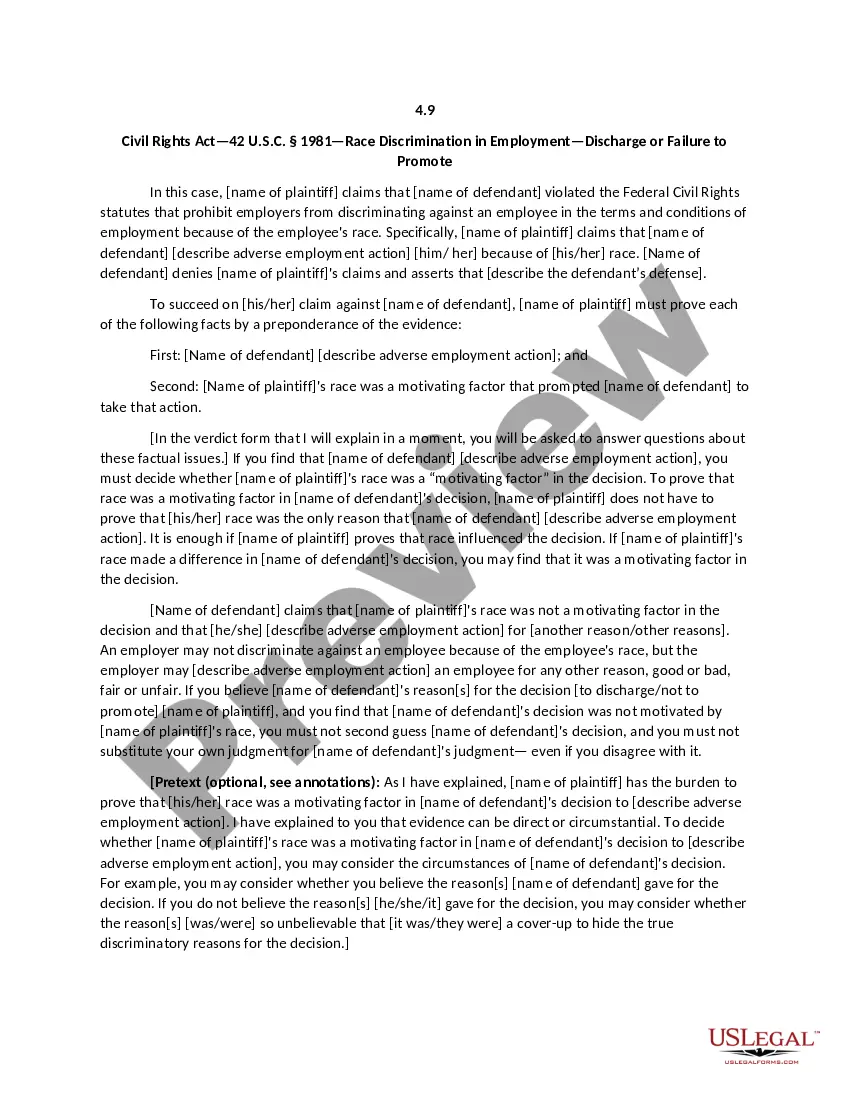
This Jury Instruction - 1.3.1 Civil Rights Act 42 USC Sect. 1981 form provides a standardized set of jury instructions specifically related to race discrimination in employment cases. It assists jurors in understanding the legal provisions that prohibit employment discrimination based on race and guides them through the decision-making process in such cases. This form differs from others as it focuses exclusively on interpreting claims under the Civil Rights Act, specifically addressing issues of employment discharge and failure to promote.
Form components explained
- Overview of the plaintiff's claim regarding race discrimination in employment.
- Criteria that must be proven for the plaintiff to establish a case.
- Questions for the jury to determine the validity of the discrimination claim.
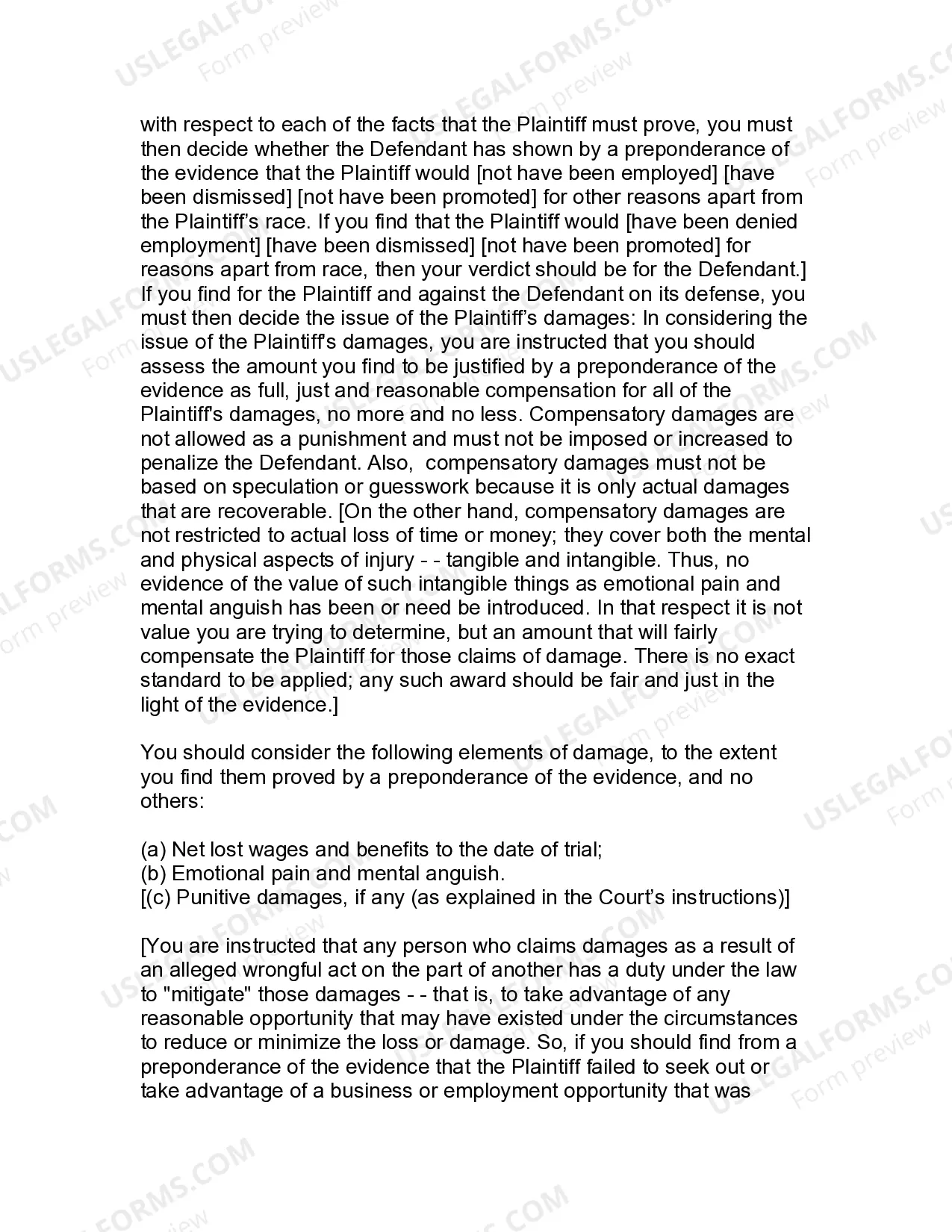
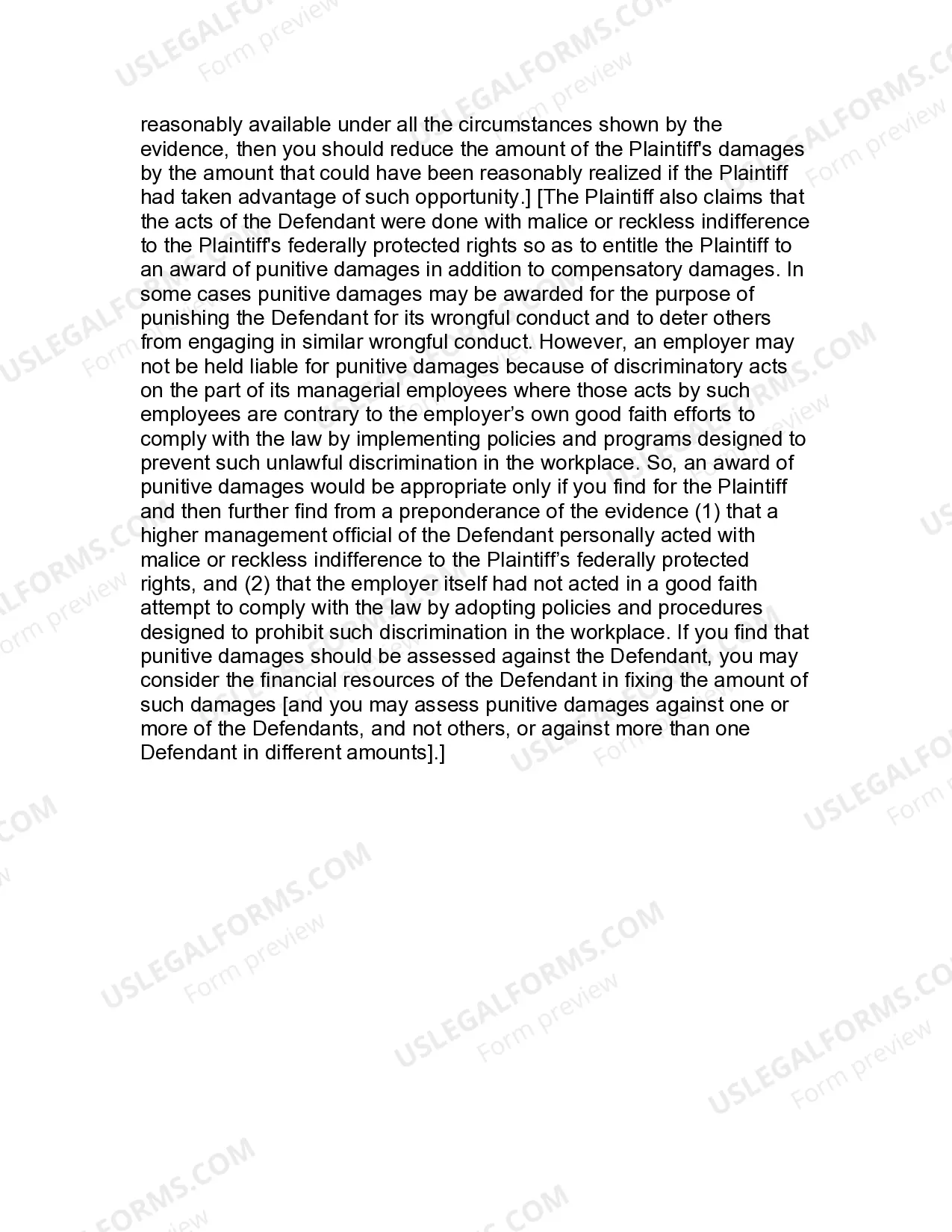
- Guidance on assessing damages, including compensatory and punitive damages.
- Instructions on employer defenses against the claim and the concept of good faith efforts.
When to use this document
This form should be used in cases involving allegations of race discrimination in the workplace, specifically when an employee claims they were denied employment, discharged, or not promoted due to their race. It is particularly relevant during jury trials where such discrimination claims have been raised, guiding jurors in their deliberations.
Who needs this form
This form is intended for:
- Jurors involved in civil rights discrimination cases.
- Legal professionals seeking a framework for jury instructions in race discrimination cases.
- Individuals involved in trials concerning employment and civil rights issues.
Completing this form step by step
To properly use this form, follow these steps:
- Review the plaintiffâs claim and the basis for the alleged discrimination.
- Evaluate the jury questions provided to determine the facts of the case.
- Assess the evidence presented regarding the plaintiffâs race as a motivating factor for employment decisions.
- Consider any defenses put forth by the defendant regarding good faith compliance with anti-discrimination laws.
- Determine potential damages based on the juryâs findings, ensuring calculations reflect fair compensation for proven damages.
Notarization guidance
Notarization is generally not required for this form. However, certain states or situations might demand it. You can complete notarization online through US Legal Forms, powered by Notarize, using a verified video call available anytime.
Get your form ready online
Our built-in tools help you complete, sign, share, and store your documents in one place.
Make edits, fill in missing information, and update formatting in US Legal Forms—just like you would in MS Word.
Download a copy, print it, send it by email, or mail it via USPS—whatever works best for your next step.
Sign and collect signatures with our SignNow integration. Send to multiple recipients, set reminders, and more. Go Premium to unlock E-Sign.
If this form requires notarization, complete it online through a secure video call—no need to meet a notary in person or wait for an appointment.
We protect your documents and personal data by following strict security and privacy standards.

Make edits, fill in missing information, and update formatting in US Legal Forms—just like you would in MS Word.

Download a copy, print it, send it by email, or mail it via USPS—whatever works best for your next step.

Sign and collect signatures with our SignNow integration. Send to multiple recipients, set reminders, and more. Go Premium to unlock E-Sign.

If this form requires notarization, complete it online through a secure video call—no need to meet a notary in person or wait for an appointment.

We protect your documents and personal data by following strict security and privacy standards.
Typical mistakes to avoid
Common mistakes to avoid include:
- Failing to properly define the role of race as a motivating factor in the decision-making process.
- Overlooking the necessity to demonstrate that discrimination was a substantial factor, not the sole reason for the actions taken.
- Misunderstanding the burden of proof required for both the plaintiff and the defendant.
Why complete this form online
- Convenient access to a template drafted by licensed attorneys.
- Editability to tailor instructions specific to each case before trial.
- Easy download and print options for quick use during proceedings.
Understanding the legal context is crucial for this form:
- The form is designed to ensure that jurors accurately apply the law regarding race discrimination in employment.
- It outlines the legal requirements to establish a claim under the Civil Rights Act.
- Jurors must be aware that not all negative employment actions constitute discrimination; other legitimate reasons may exist.
Summary of main points
Key takeaways for using this form include:
- The form facilitates accurate jury instruction for cases involving race discrimination.
- It emphasizes the legal standards and burden of proof necessary for plaintiffs in discrimination cases.
- Jury members must focus on factual determinations related to the plaintiffâs race and the actions of the defendant.
Looking for another form?










Form popularity
FAQ
§1981 (Section 1981) creates a federal cause of action for individuals claiming intentional racial discrimination. To support such a claim, a plaintiff must allege that he is a member of a racial minority, and that he was discriminated against within a particular group of activities set forth in the statute.
2011), held that Section 1981 does not cover discrimination based solely on national origin.
§ 2000e-2, referred to by the Court as status discrimination. Title VII also prohibits employers from retaliating against employees based on an employee's opposition to employment discrimination or complaint of discrimination.
§1981 (Section 1981) creates a federal cause of action for individuals claiming intentional racial discrimination. To support such a claim, a plaintiff must allege that he is a member of a racial minority, and that he was discriminated against within a particular group of activities set forth in the statute.
Section 1981 of the Civil Rights Act of 1866 (Section 1981) A federal law prohibiting discrimination on the basis of race, color, and ethnicity when making and enforcing contracts.
Section 1981 Prohibits Retaliationsection 1981 protects against both direct racial discrimination and retaliation based on complaints of discrimination.