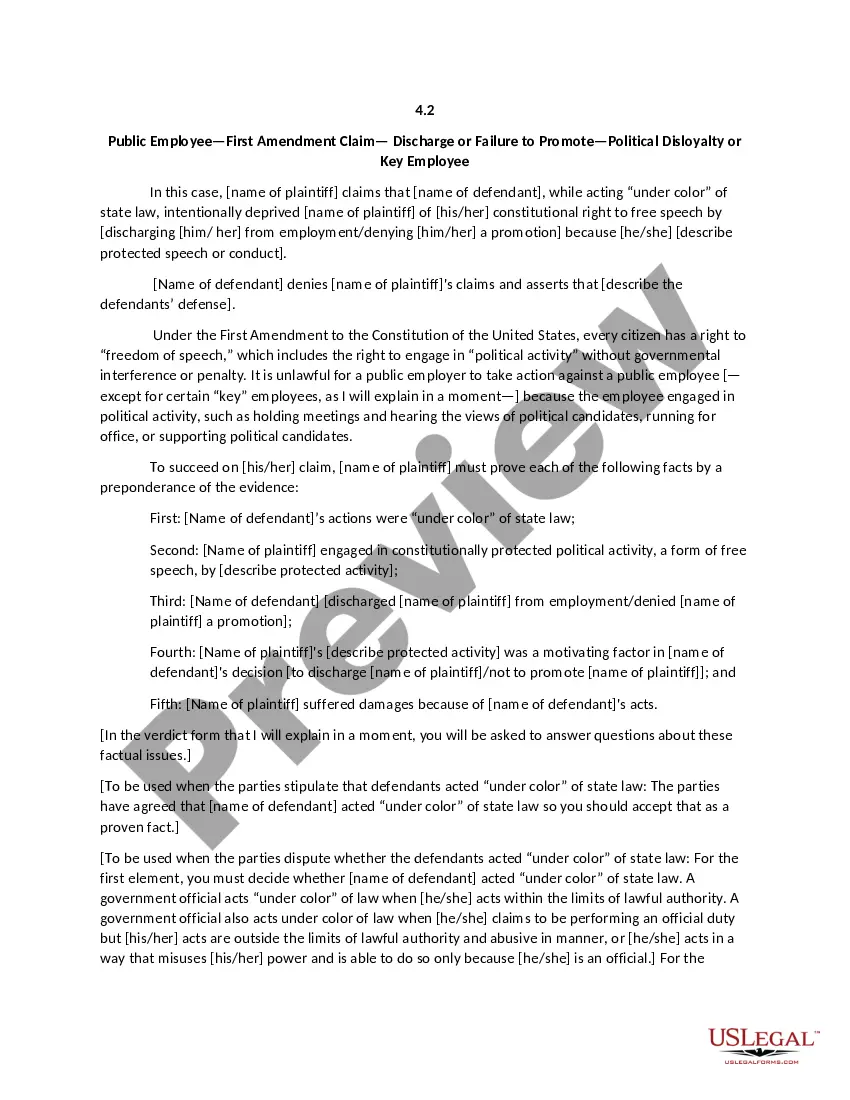
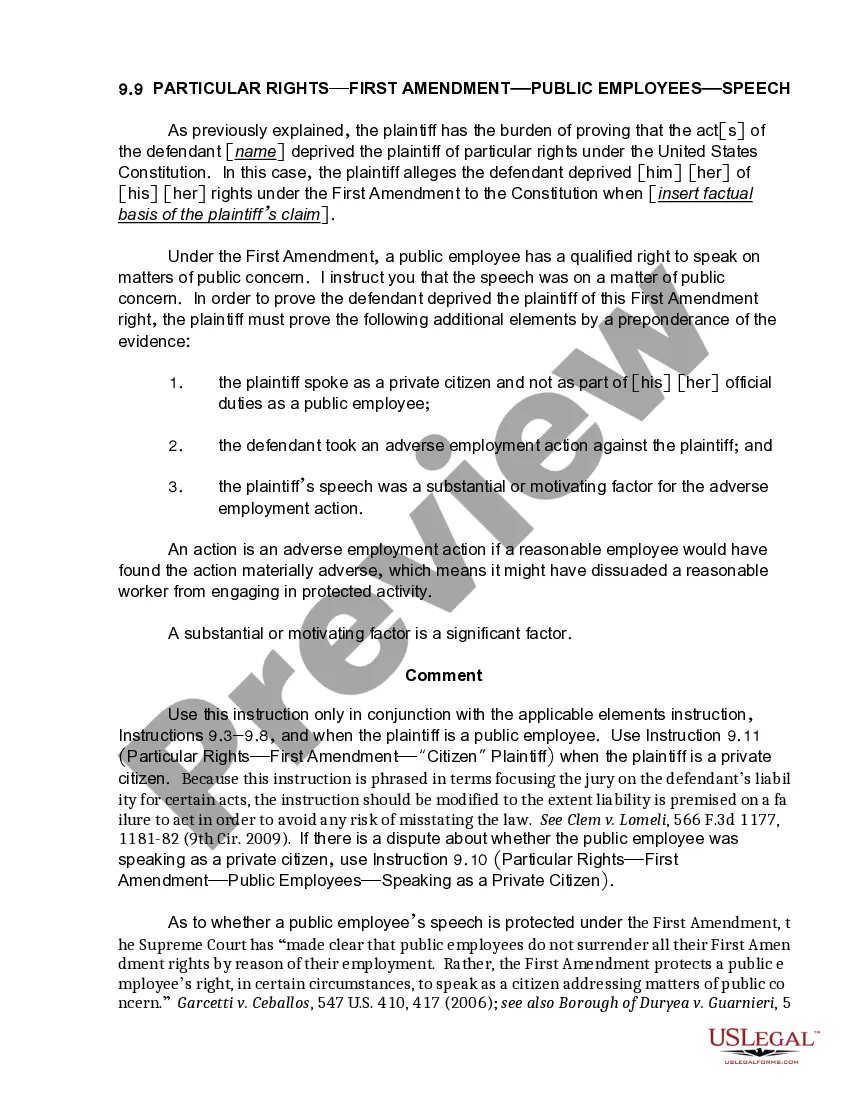
Jury Instruction - 1.1.1 Public Employee First Amendment Claim Discharge - Failure To Promote Free Speech On Matter Of Public Concern
Understanding this form
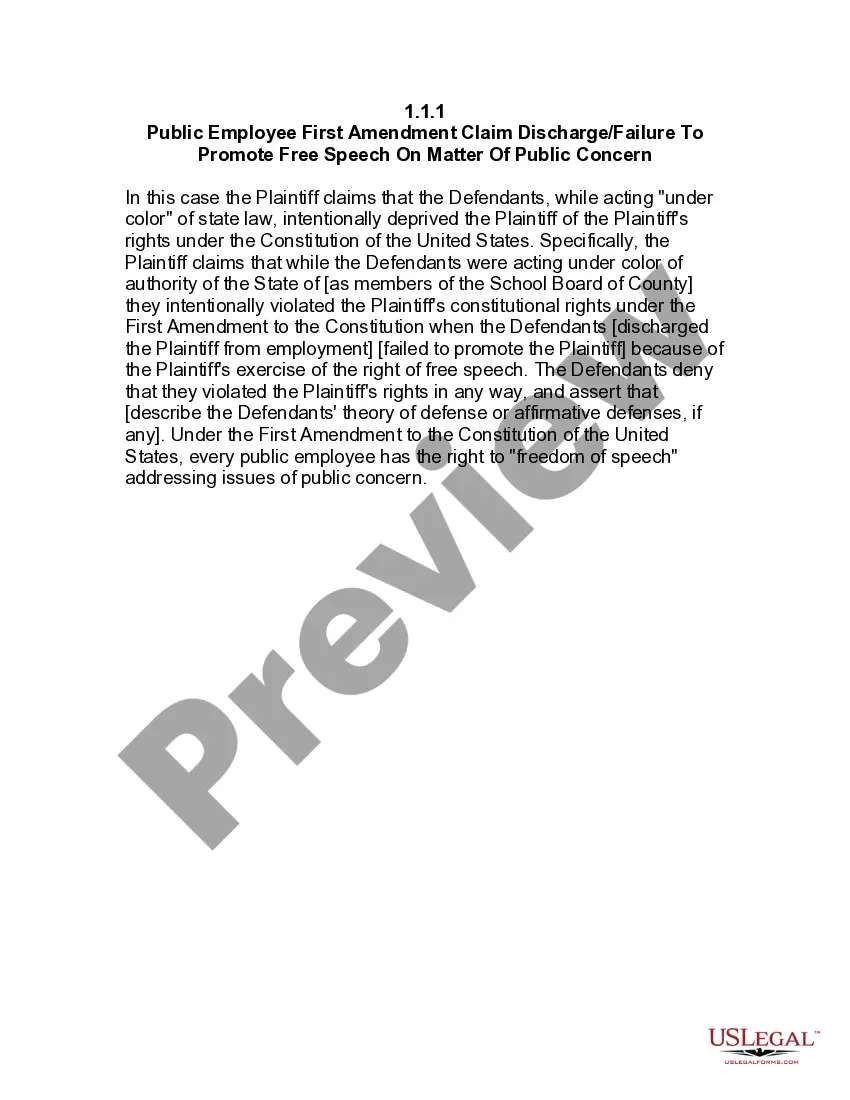
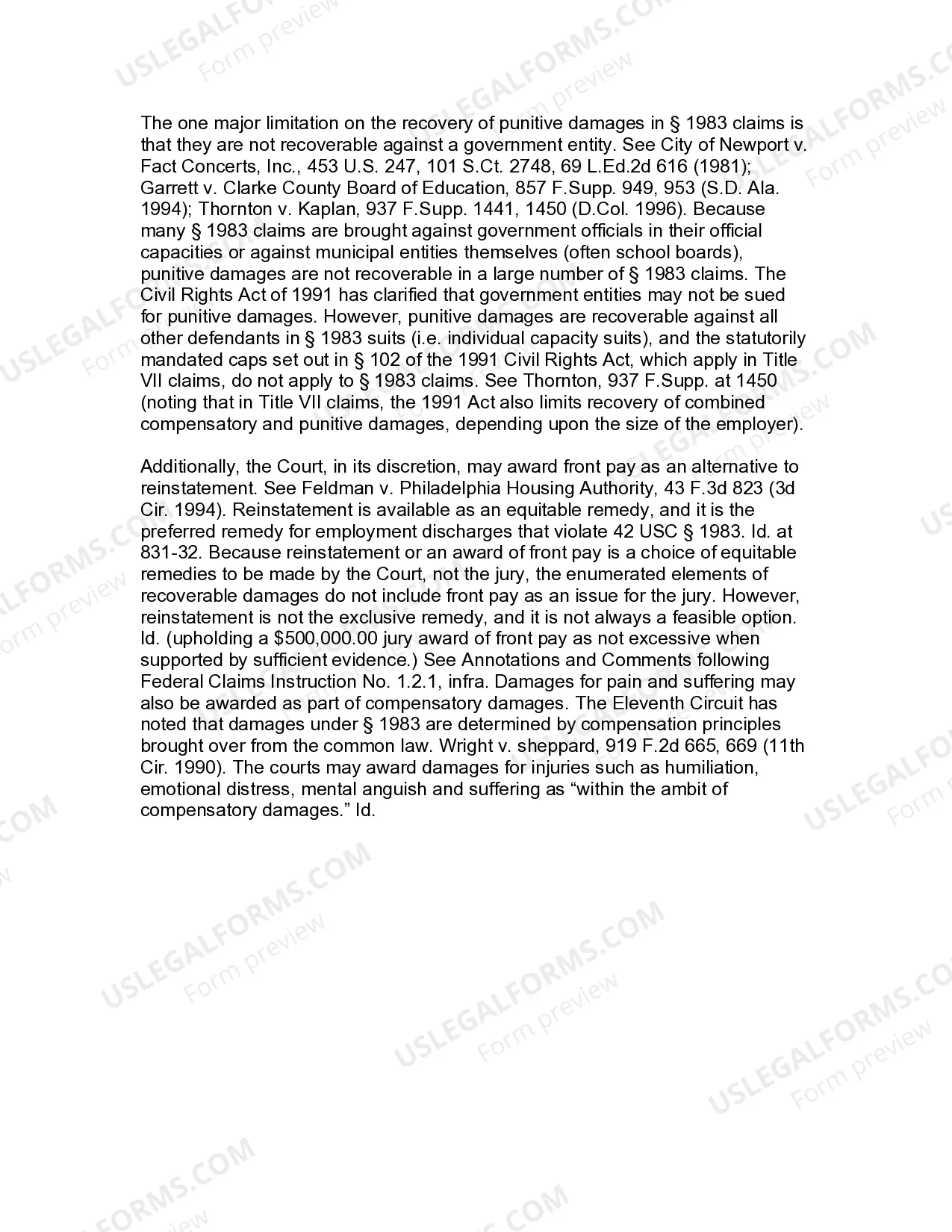
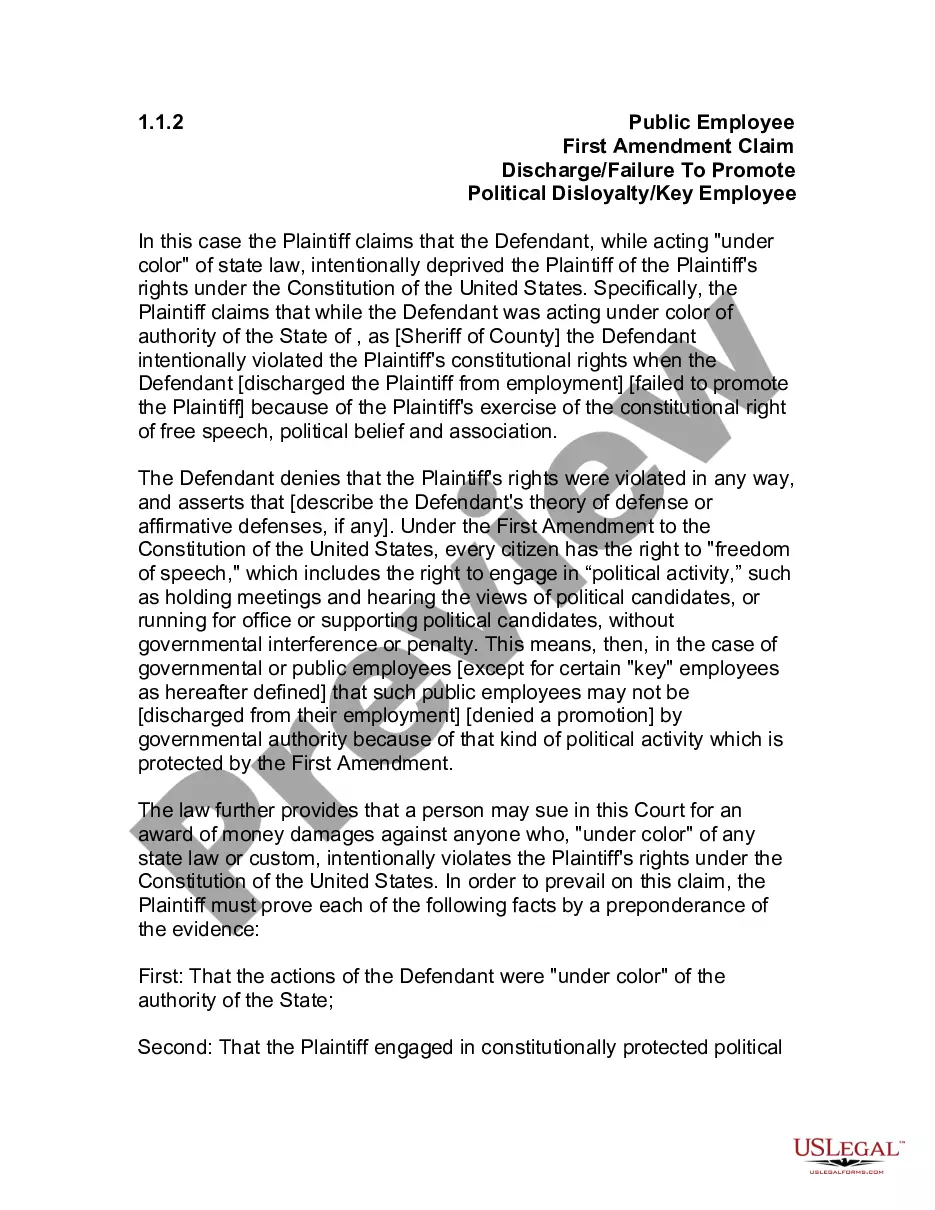
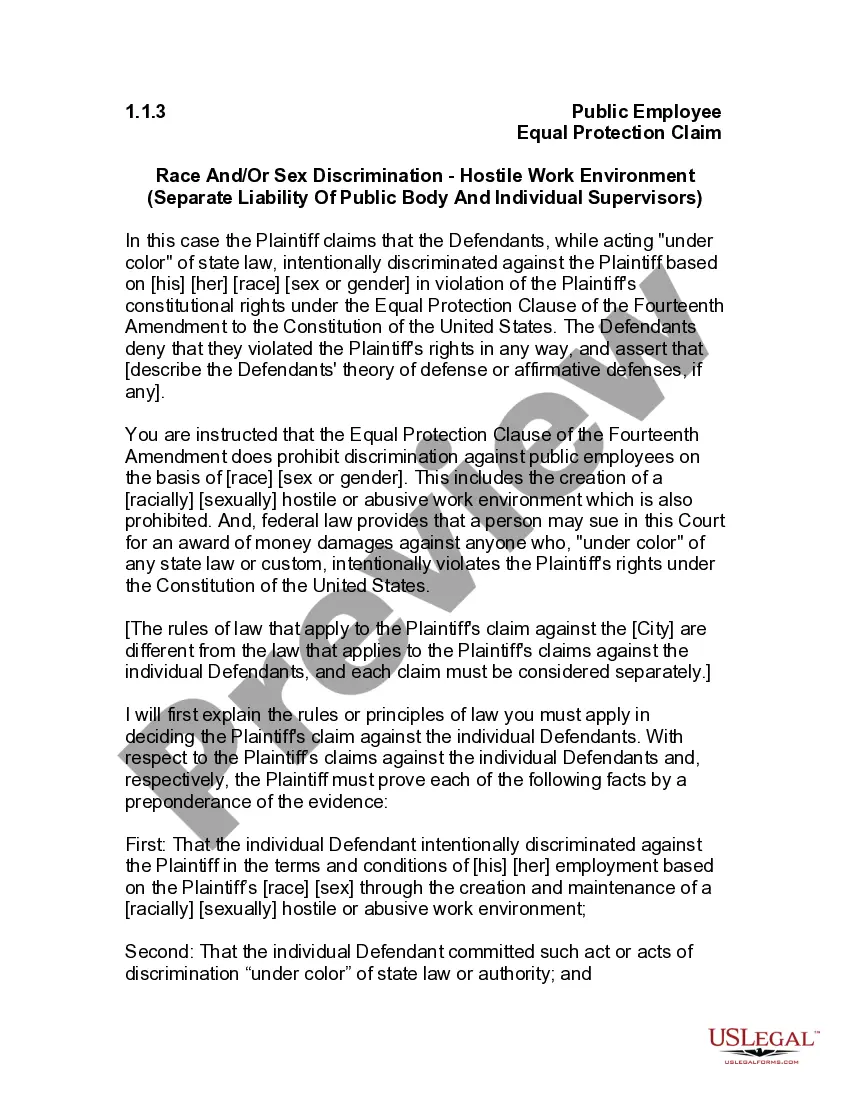
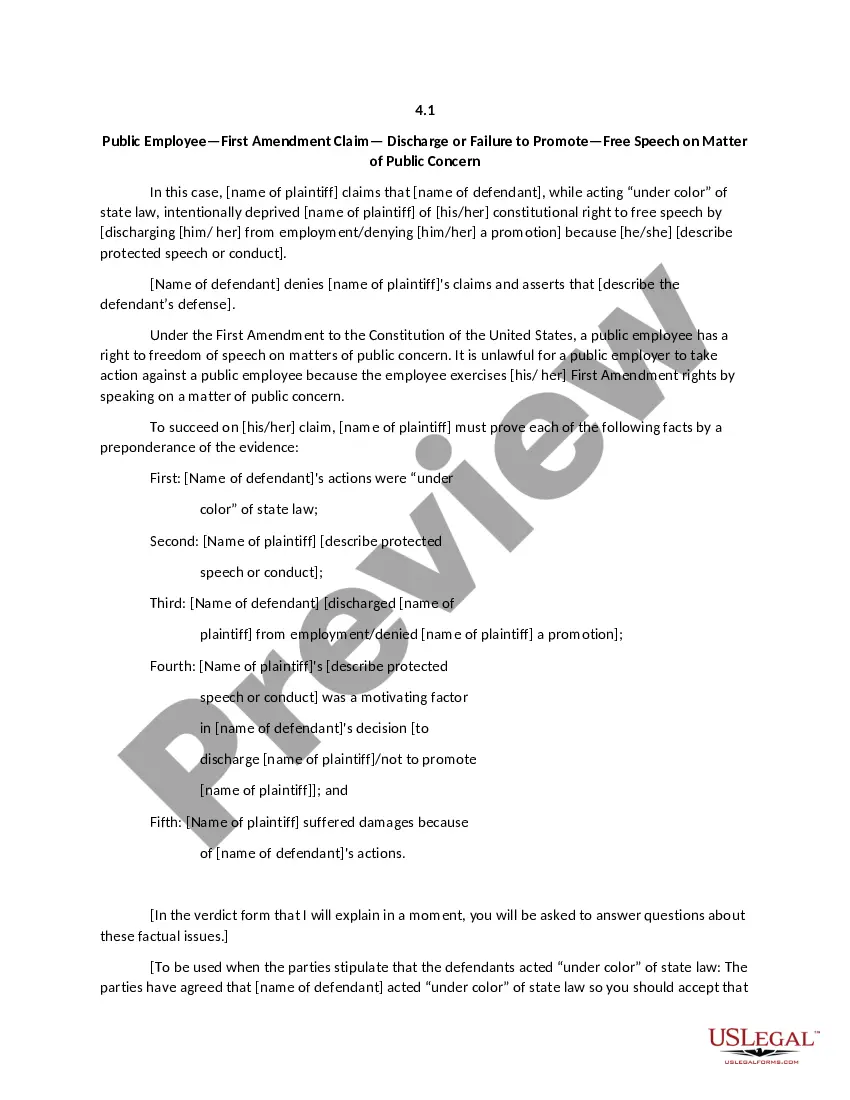
The Jury Instruction - Public Employee First Amendment Claim Discharge form provides sample jury instructions specifically for cases involving public employees who allege their rights to free speech have been violated under the First Amendment. This form differs from standard jury instructions by focusing specifically on employment situations and the implications of First Amendment rights related to public concerns. It serves as guidance for jurors in understanding their responsibilities in evaluating such claims against public employers.
Key components of this form
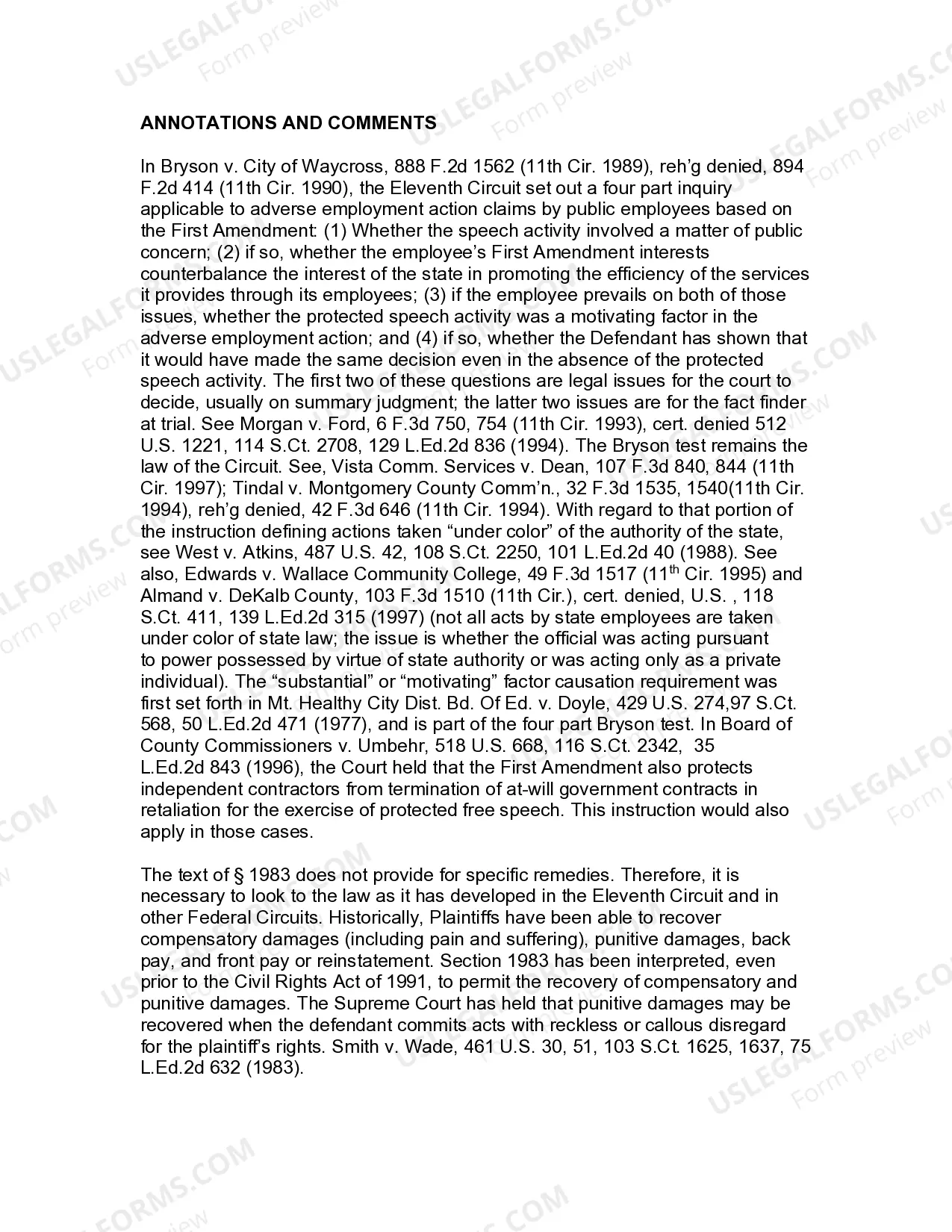
- Instructions outlining the definition of actions taken under color of state law.
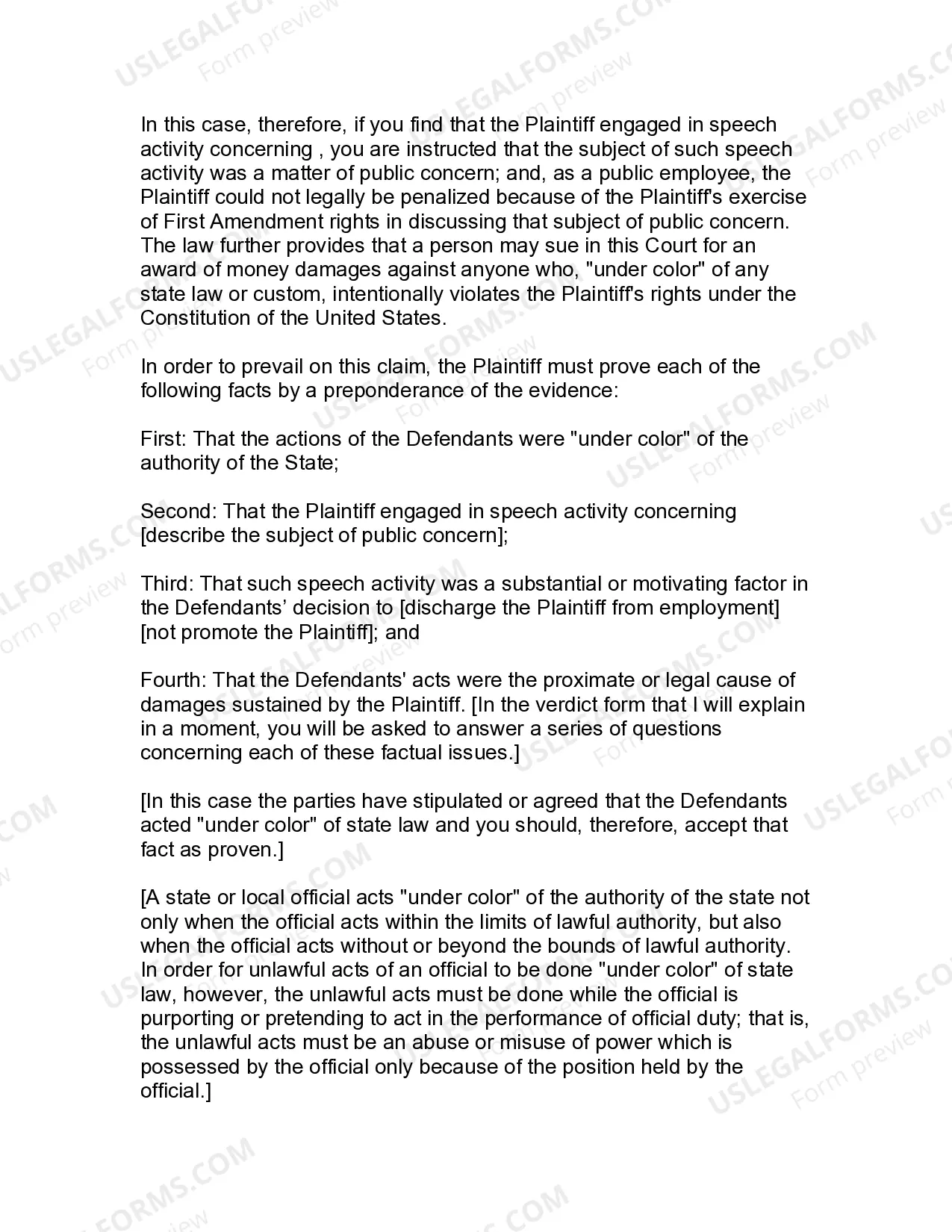
- Criteria that must be proven to establish a violation of First Amendment rights.
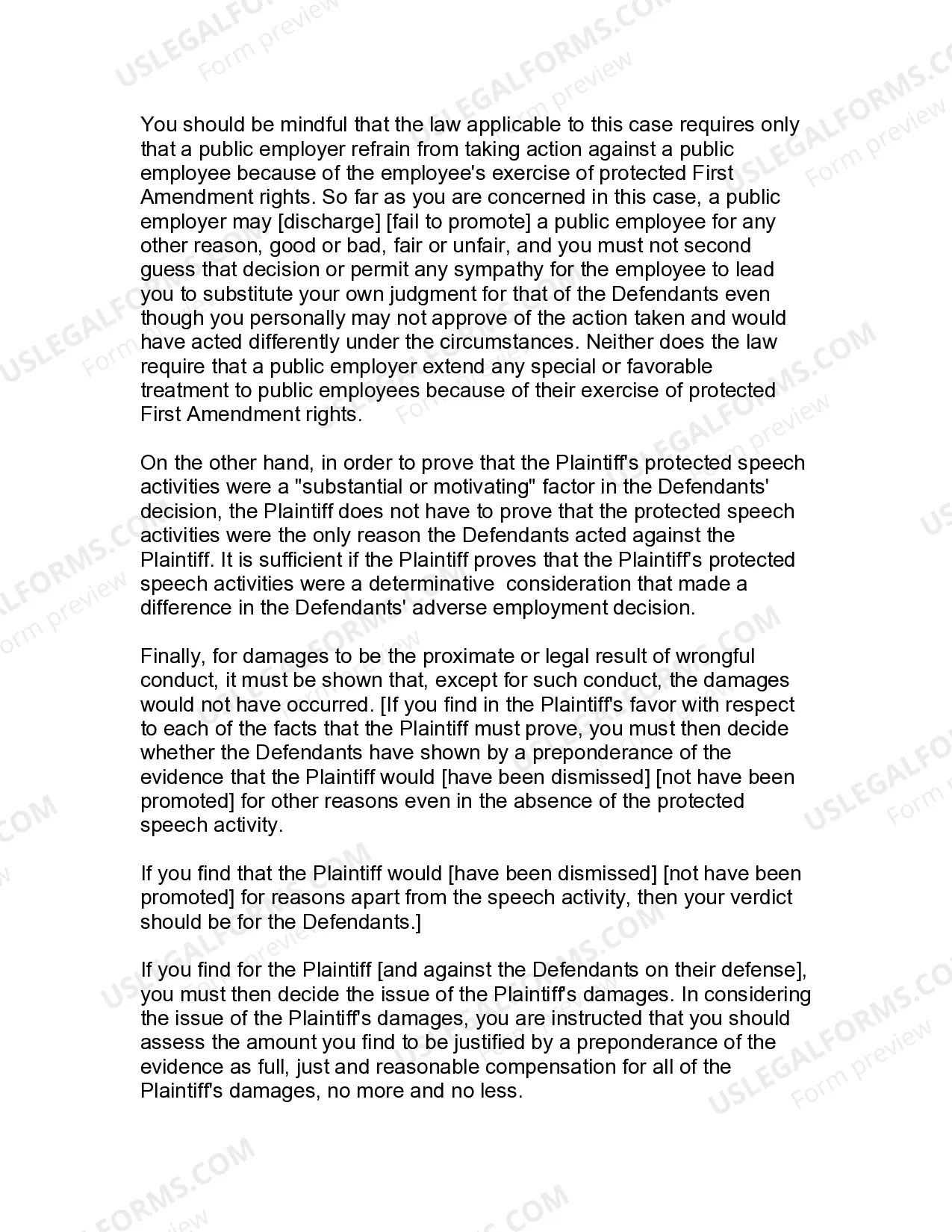
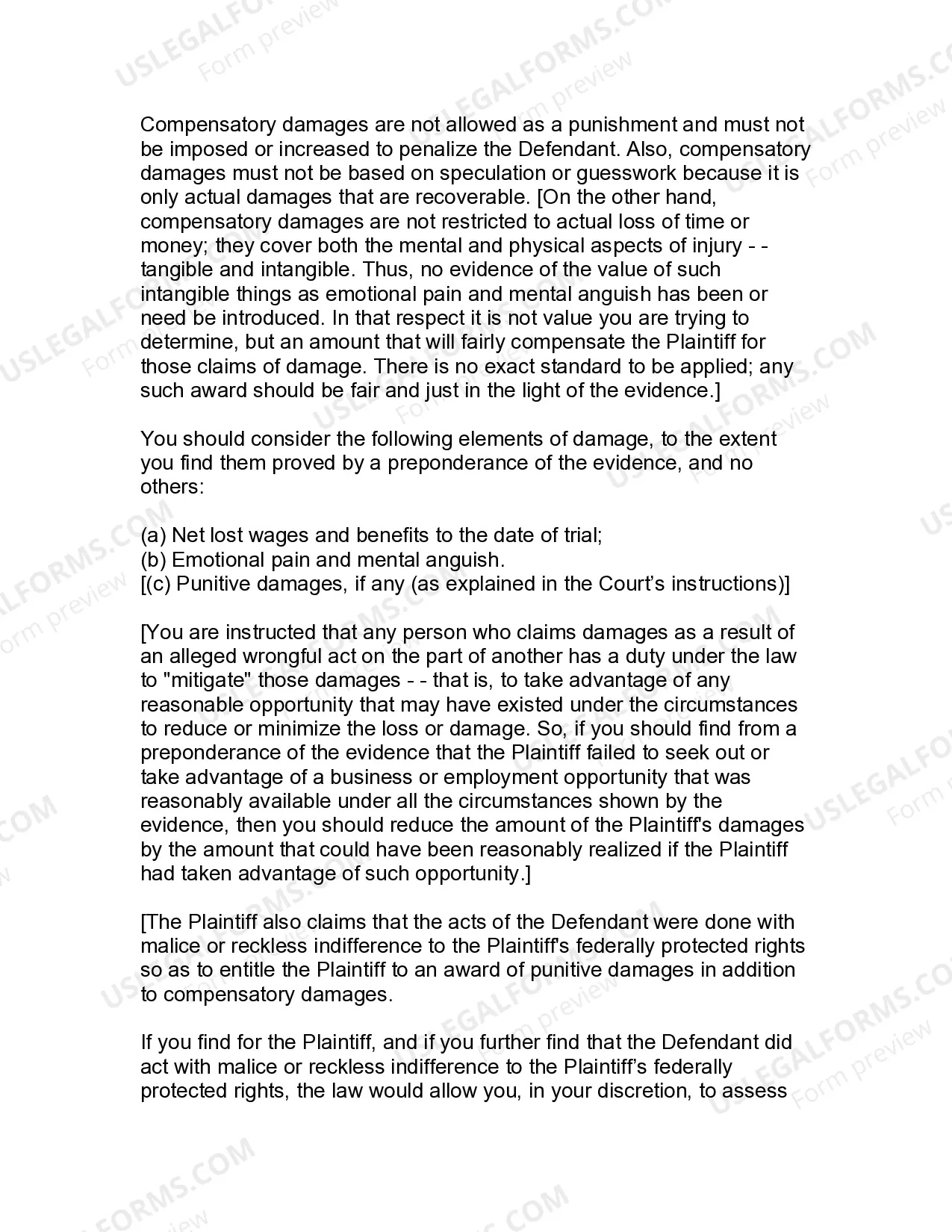
- Guidelines for assessing damages, including compensatory and punitive damages.
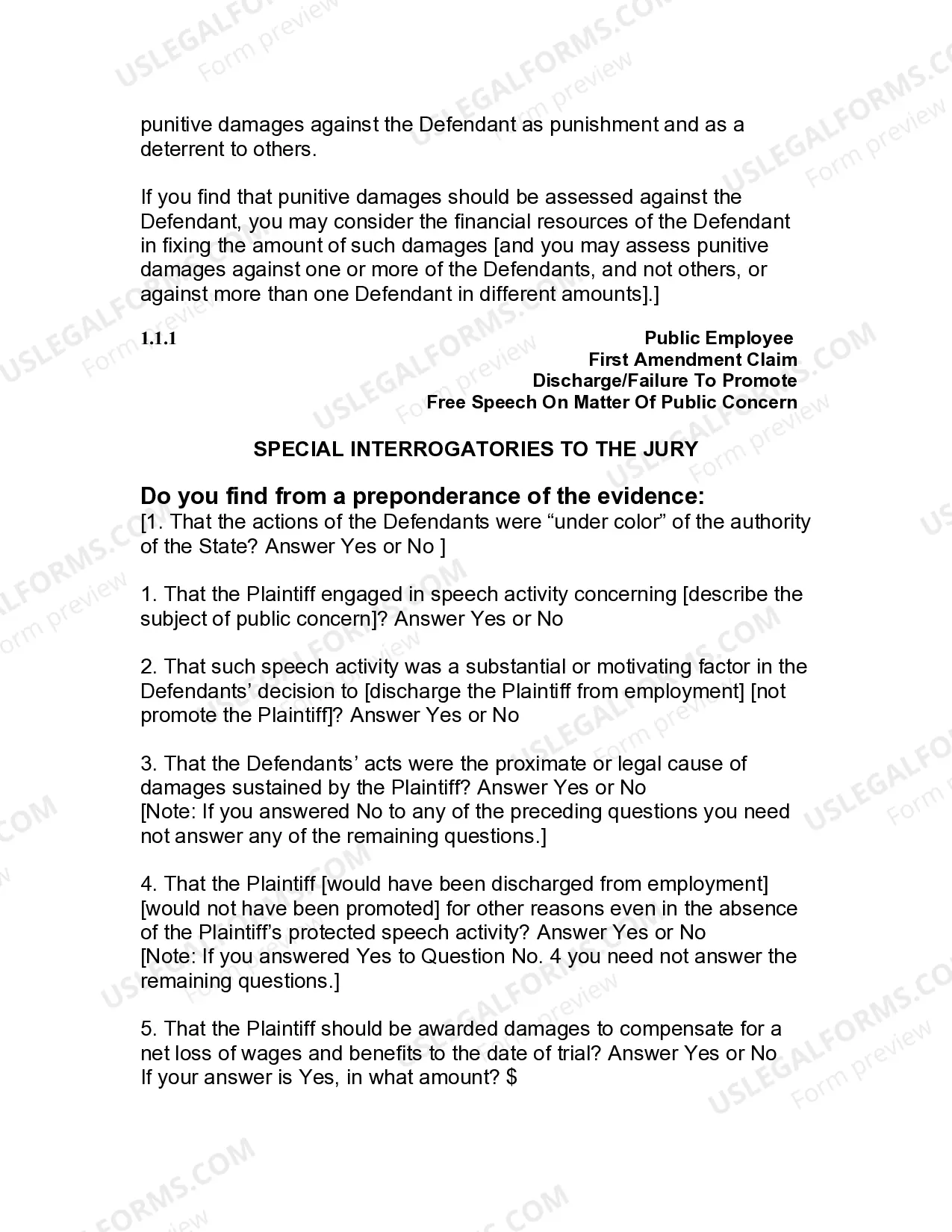
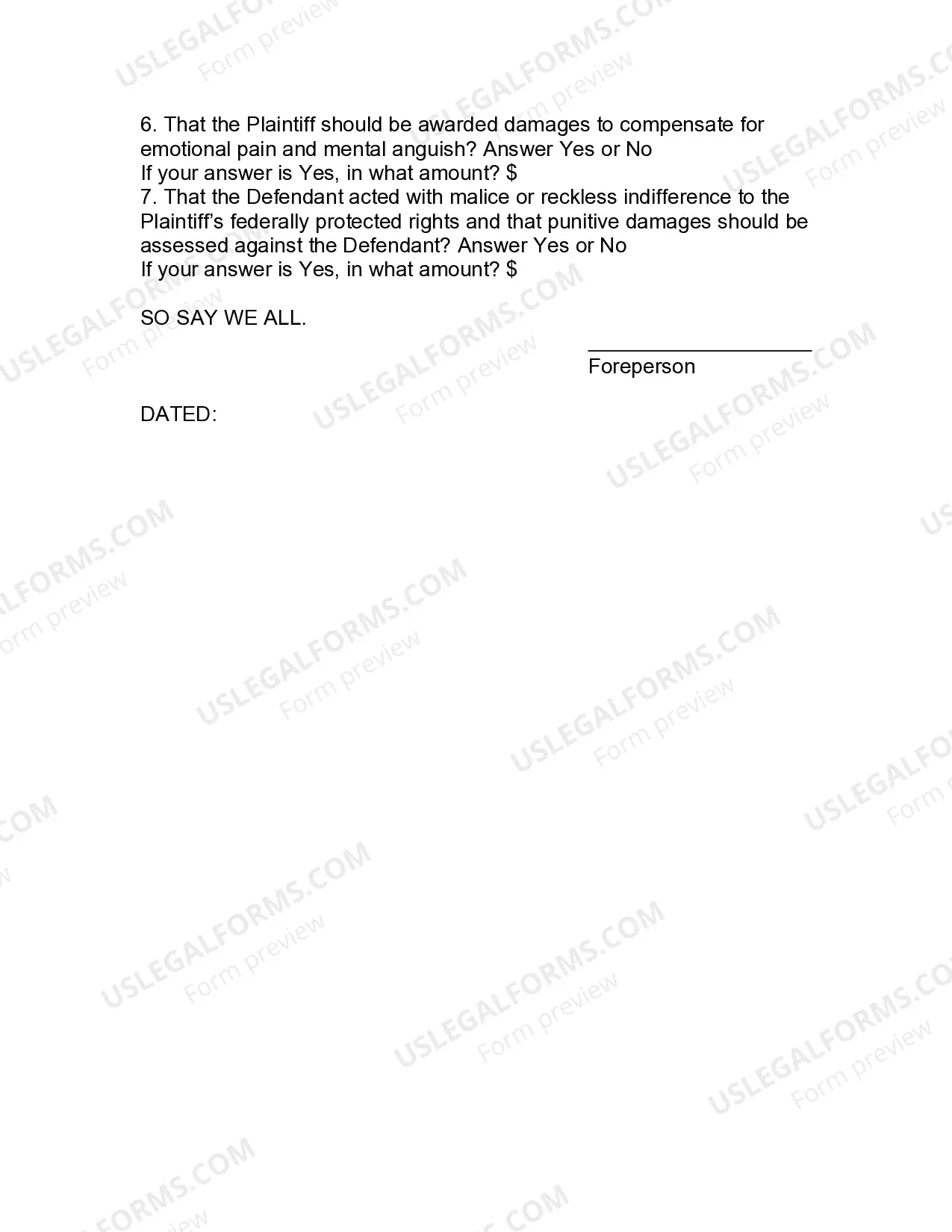
- Special interrogatories posing critical questions to the jury regarding the facts of the case.
- Clarifications on the burden of proof required for both parties.
Situations where this form applies
This jury instruction form is needed in legal proceedings where a public employee claims they were discharged or not promoted due to exercising their right to free speech on a matter of public concern. It is particularly relevant in cases where the legality of the employer's actions is contested under First Amendment protections.
Who this form is for
This form is intended for use by:
- Judges overseeing cases involving claims of wrongful termination or failure to promote based on free speech.
- Jury members who need guidance on evaluating the evidence and determining the outcome of such cases.
- Attorneys representing either plaintiffs or defendants in litigation involving First Amendment claims related to public employment.
How to complete this form
- Identify the parties involved in the case, including the public employee (plaintiff) and the government employer (defendant).
- Provide a clear description of the speech activity that allegedly constitutes a matter of public concern.
- Establish the context of the employee's discharge or failure to promote and link it to the exercise of free speech.
- Draft specific questions for the jury based on the evidence presented and the legal criteria that must be met.
- Ensure clarity in delineating the burdens of proof and the necessary findings for the jury to reach a verdict.
Is notarization required?
This form does not typically require notarization to be legally valid. However, some jurisdictions or document types may still require it. US Legal Forms provides secure online notarization powered by Notarize, available 24/7 for added convenience.
Get your form ready online
Our built-in tools help you complete, sign, share, and store your documents in one place.
Make edits, fill in missing information, and update formatting in US Legal Forms—just like you would in MS Word.
Download a copy, print it, send it by email, or mail it via USPS—whatever works best for your next step.
Sign and collect signatures with our SignNow integration. Send to multiple recipients, set reminders, and more. Go Premium to unlock E-Sign.
If this form requires notarization, complete it online through a secure video call—no need to meet a notary in person or wait for an appointment.
We protect your documents and personal data by following strict security and privacy standards.

Make edits, fill in missing information, and update formatting in US Legal Forms—just like you would in MS Word.

Download a copy, print it, send it by email, or mail it via USPS—whatever works best for your next step.

Sign and collect signatures with our SignNow integration. Send to multiple recipients, set reminders, and more. Go Premium to unlock E-Sign.

If this form requires notarization, complete it online through a secure video call—no need to meet a notary in person or wait for an appointment.

We protect your documents and personal data by following strict security and privacy standards.
Common mistakes
- Failing to establish a clear connection between the employee's speech and the adverse employment action taken.
- Inadequate evidence to support claims of damages or emotional distress.
- Misunderstanding the definition of "under color of state law" in relation to the employee's discharge.
- Neglecting to address potential defenses raised by the employer regarding the reasons for the employee's termination.
Benefits of completing this form online
- Convenience of downloading and completing the form at any time.
- Editability allows users to tailor the form to specific case details.
- Access to reliable legal templates drafted by licensed attorneys ensures accuracy.
- Time-efficient process for preparing jury instructions, optimizing court readiness.
Legal use & context
- This form serves as a guideline for jury instructions in cases of alleged First Amendment violations, making it essential for ensuring fair legal proceedings.
- It adheres to established legal principles that impact the evaluation of public employment disputes, particularly in the context of free speech.
- Understanding the elements of the claim can significantly affect the outcome of the jury's decision.
Looking for another form?

Form popularity
FAQ
It guarantees freedom of expression by prohibiting Congress from restricting the press or the rights of individuals to speak freely. It also guarantees the right of citizens to assemble peaceably and to petition their government.
1) First of all, government employees are only protected by the First Amendment when they are speaking as private citizens. If their speech is part of their official job duties, then they can be fired or disciplined for it. This rule comes from a 2006 Supreme Court case, Garcetti v.
While the First Amendment protects free speech rights for public employees in public sectors, it doesn't do so in all instances. For example, government employees are only protected by this amendment when speaking as private citizens.
Employees of private employers are subject to the private employer's rules, and the First Amendment offers no protection. However, private employers are not free to discipline employees for speech if that speech is affirmatively protected by another statute.
Private employers are generally free to regulate the speech of their employees, both within and outside of the workplace. In fact, most employers can even terminate a worker's employment simply based on social media posts.
If you are a state or federal employee, then you are protected from retaliation for exercising free speech by the First Amendment and the Fourteenth Amendment. This means that when you exercise your right to free speech, your government employer cannot retaliate against you with negative employment action.
In the United States, freedom of speech and expression is strongly protected from government restrictions by the First Amendment to the United States Constitution, many state constitutions, and state and federal laws.
Employees in the public sector do have a protected right to free speech; however, this right is limited. The First Amendment only protects government employees when they are speaking as a private citizen.
If you are a state or federal employee, then you are protected from retaliation for exercising free speech by the First Amendment and the Fourteenth Amendment. This means that when you exercise your right to free speech, your government employer cannot retaliate against you with negative employment action.