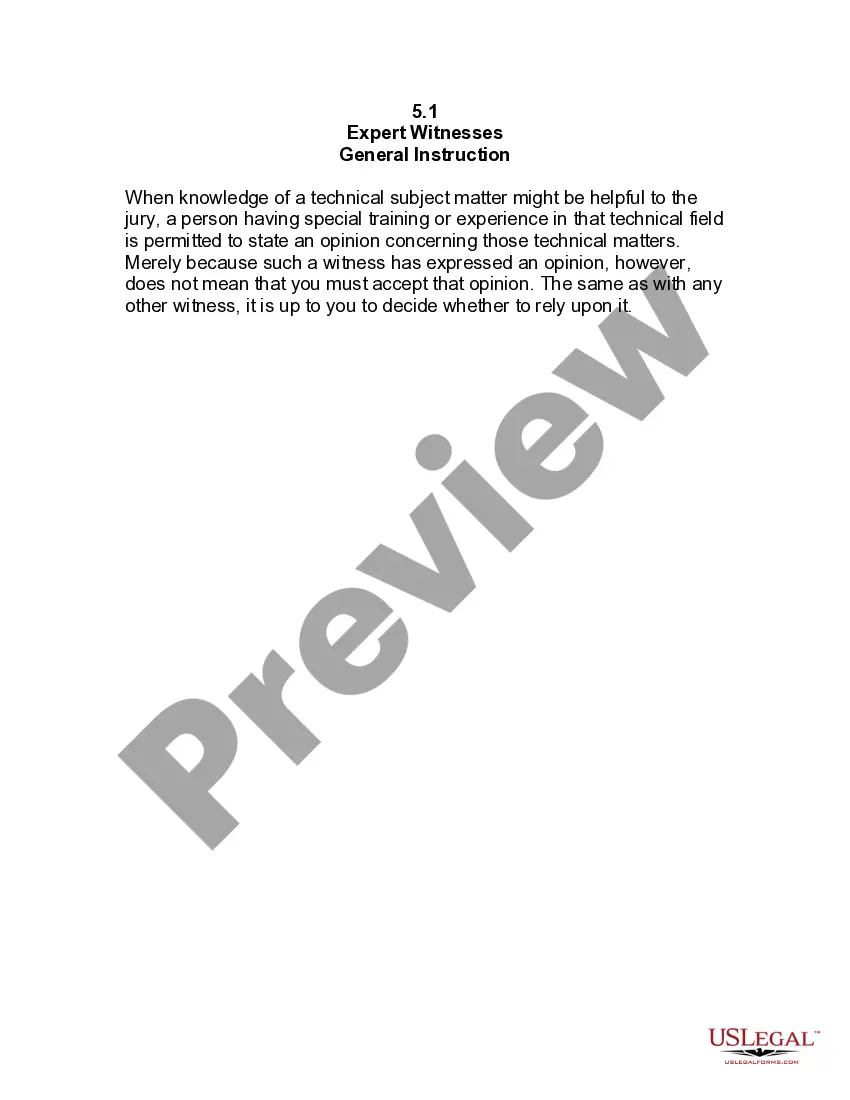
Jury Instruction - 5.1 Expert Witnesses General Instruction
Overview of this form
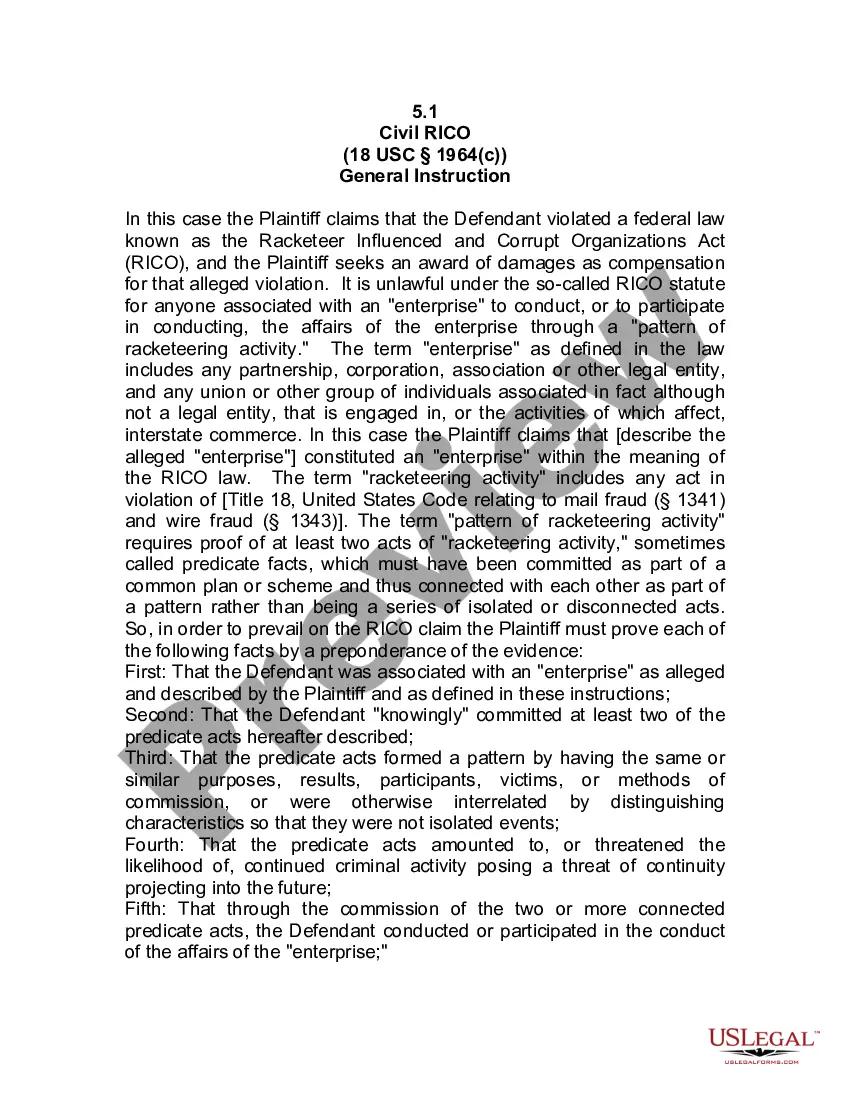
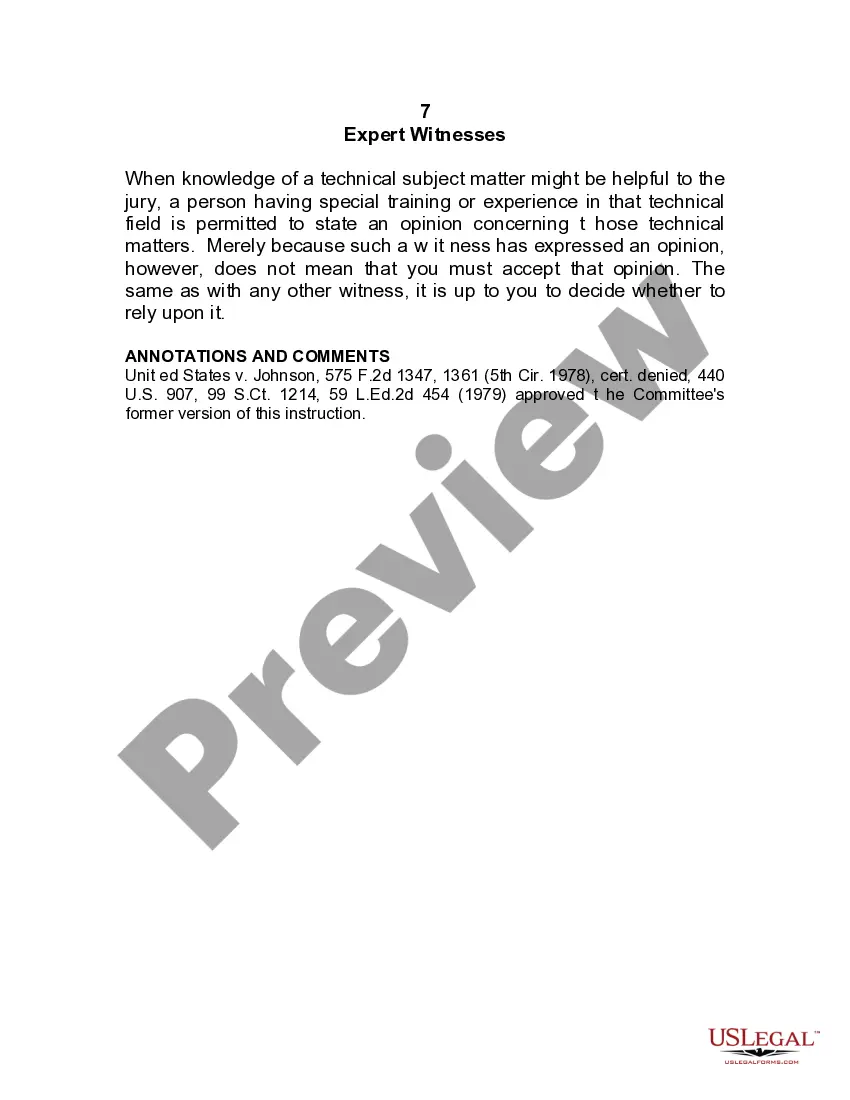
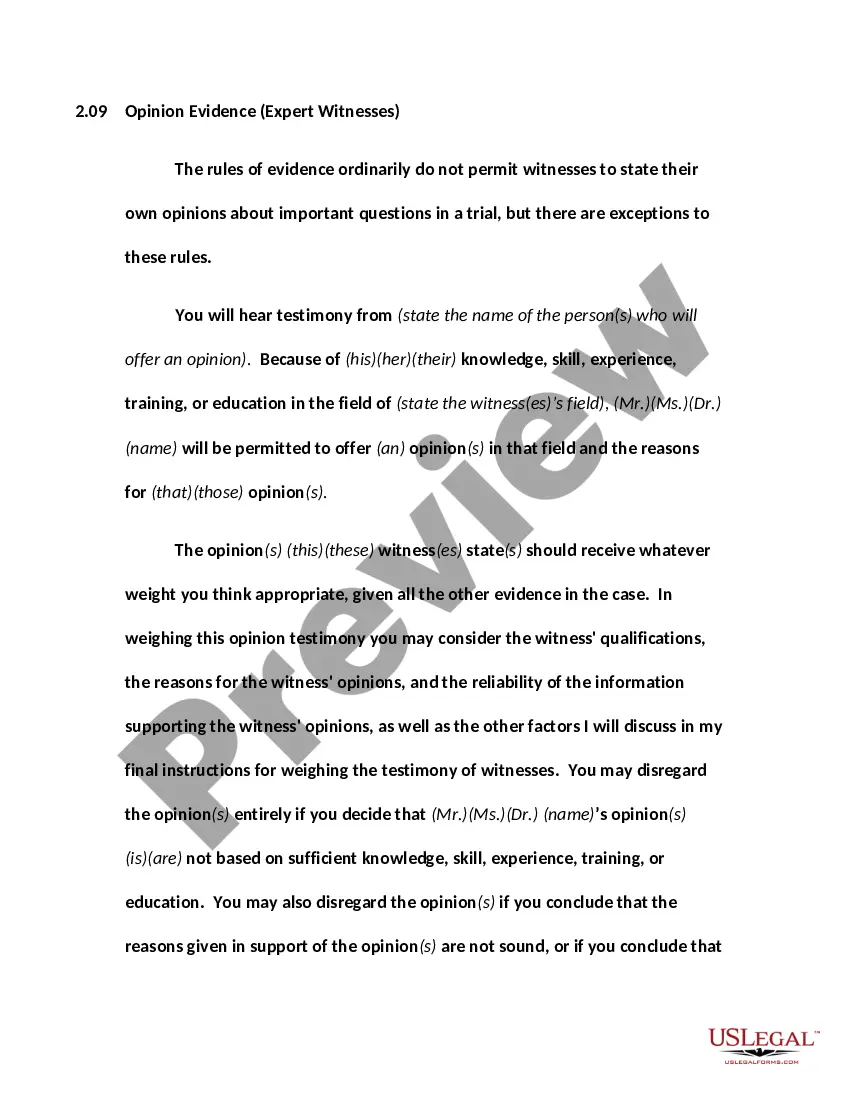
The Jury Instruction - 5.1 Expert Witnesses General Instruction provides guidelines for juries when considering the opinions of expert witnesses. This form serves to clarify the role of expert testimony in court, distinguishing it from the testimony of lay witnesses. It ensures that jurors understand they are not obligated to accept an expert's opinion as fact, promoting informed decision-making during deliberations.
What’s included in this form
- Definition of expert witnesses and their qualifications.
- Instructions on how jurors should weigh the opinions of expert witnesses.
- Clarification that jurors are not required to accept expert opinions.


When to use this document
This jury instruction form is used in trials where expert testimony is presented. It is particularly relevant in cases involving technical subjects, such as medical malpractice, engineering disputes, or financial matters, where jurors may benefit from the insights of individuals with specialized knowledge.
Who should use this form
- Attorneys representing clients in cases involving expert witnesses.
- Judges overseeing trials that utilize expert testimony.
- Legal practitioners looking to ensure proper jury instructions are provided regarding expert evidence.
How to prepare this document
- Identify the case and the parties involved.
- Specify the expert witness and their qualifications.
- Describe the technical subject matter relevant to the case.
- Include instructions for jurors on evaluating expert opinions.
- Revise any sections to align with local legal standards.
Is notarization required?
This form does not typically require notarization unless specified by local law. It is crucial to check the local jurisdiction's rules regarding jury instructions to ensure compliance.
Get your form ready online
Our built-in tools help you complete, sign, share, and store your documents in one place.
Make edits, fill in missing information, and update formatting in US Legal Forms—just like you would in MS Word.
Download a copy, print it, send it by email, or mail it via USPS—whatever works best for your next step.
Sign and collect signatures with our SignNow integration. Send to multiple recipients, set reminders, and more. Go Premium to unlock E-Sign.
If this form requires notarization, complete it online through a secure video call—no need to meet a notary in person or wait for an appointment.
We protect your documents and personal data by following strict security and privacy standards.

Make edits, fill in missing information, and update formatting in US Legal Forms—just like you would in MS Word.

Download a copy, print it, send it by email, or mail it via USPS—whatever works best for your next step.

Sign and collect signatures with our SignNow integration. Send to multiple recipients, set reminders, and more. Go Premium to unlock E-Sign.

If this form requires notarization, complete it online through a secure video call—no need to meet a notary in person or wait for an appointment.

We protect your documents and personal data by following strict security and privacy standards.
Mistakes to watch out for
- Failing to clearly define the expert witness's qualifications.
- Overlooking the necessity to instruct jurors that they are not required to accept the expert's opinion.
- Using boilerplate language without tailoring it to the specific case context.
Why complete this form online
- Convenience of immediate access and downloading.
- Editability to customize the instructions for specific cases.
- Reliability of templates drafted by licensed attorneys, ensuring legal soundness.
Legal use & context
- This form is a standard jury instruction widely accepted in legal proceedings.
- It enhances the jury's understanding of expert testimony, which can significantly affect trial outcomes.
- Using this form properly can help prevent misunderstandings among jurors regarding the weight of expert evidence.
Main things to remember
Here are the main points to remember:
- The Jury Instruction - 5.1 Expert Witnesses provides essential guidance for juries evaluating expert opinions.
- This form should be customized to fit the unique needs of the case and jurisdiction.
- It is important for attorneys and judges alike to ensure that juries understand their discretion regarding expert testimony.
Looking for another form?
Form popularity
FAQ
What's the difference between expert and novice learners? Novice learners are well-intentioned folks who are typically brimming with enthusiasm while lacking actual knowledge about the subject being taught.Expert learners are able to apply what they learn to create a far more intuitive way of working.
So main difference between novices and experts may be immediate access to relevant knowledge. Building that knowledge base -- and procedures to use it -- takes practice and time. Estimated to take ten years in most domains.
Simply put, instructional expertise is the specialized knowledge, rich experience, and valuable capacity that educa- tors bring to and gain from teaching. Your leadership team can identify instructional expertise within your school. and determine how it can help address the current needs of the instructional program.
Teaching expertise means having a repertoire of ways at one's disposal for handling the task of teaching, and then knowing how to choose and apply what is appropriate from one's repertoire.Management expertise means arranging the environment to maximize attention and engagement with the learning experiences.
When the quality of a teacher's practice reaches a certain level, we might begin to describe it as expert teaching.It has been produced to share our thinking, guide our programme design, and stimulate conversation around the nature of expertise in teaching.
An Instructional Specialist is responsible for: a) providing specialized instructional support to a department head, faculty member or other supervisor and/or b) providing direct instruction and tutoring to students.Work requires knowledge of related equipment, tools, curriculum and instructional methods.
Instructional Skills. Instructional skills are the most specific category of teaching behaviors. These are used constantly as part of the total process of instruction. They are necessary for procedural purposes and for structuring appropriate learning experiences for students.
Expert teachers are aware of what they are doing; they monitor and adjust their teaching behaviours to bring out the best in their students. One of the reasons that teaching is a complex business is because it revolves around decision making.
Examples of instructional supports for teachers include differentiated instruction, the use of technology and the selection of learning and teaching resources.