Jury Instruction - 5.1 Claim By Contractor Counterclaim By Owner
Understanding this form
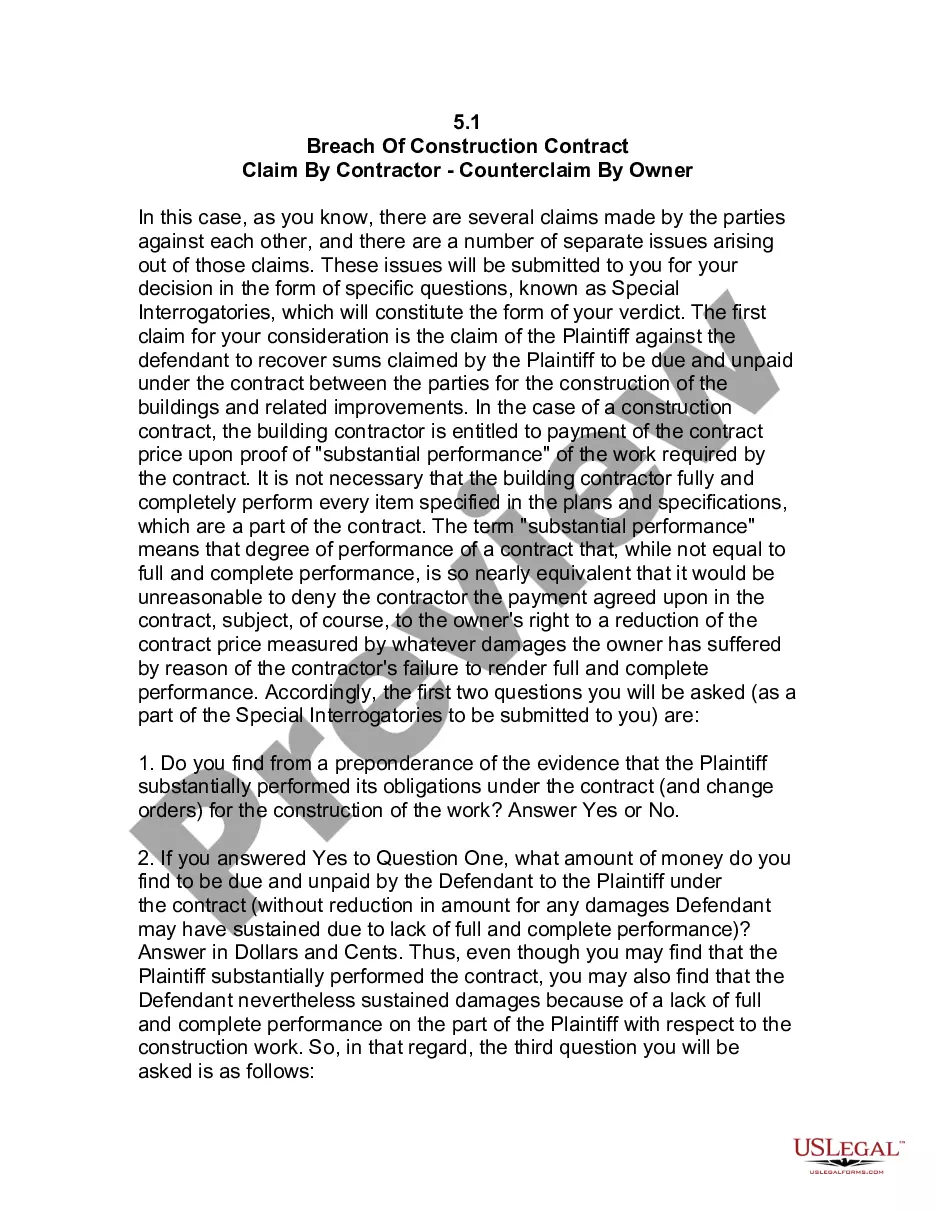
The Jury Instruction - 5.1 Claim By Contractor Counterclaim By Owner is a legal document that provides sample jury instructions related to disputes arising from construction contracts. It is designed to assist in guiding a jury through the considerations they need to evaluate claims made by contractors against property owners, as well as counterclaims made by owners against contractors. This form differs from other jury instructions as it explicitly addresses issues regarding substantial performance and the responsibilities of both parties in a construction contract context.
Form components explained
- Definitions of substantial performance and its legal implications.
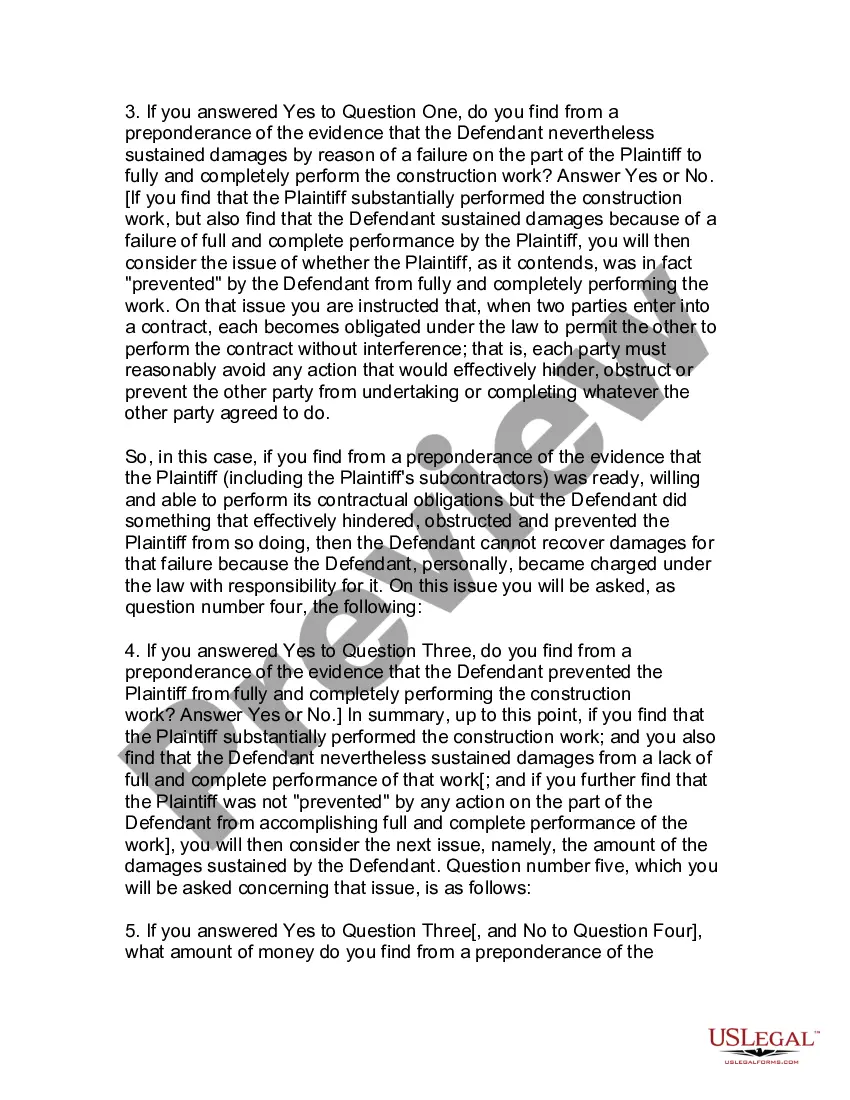
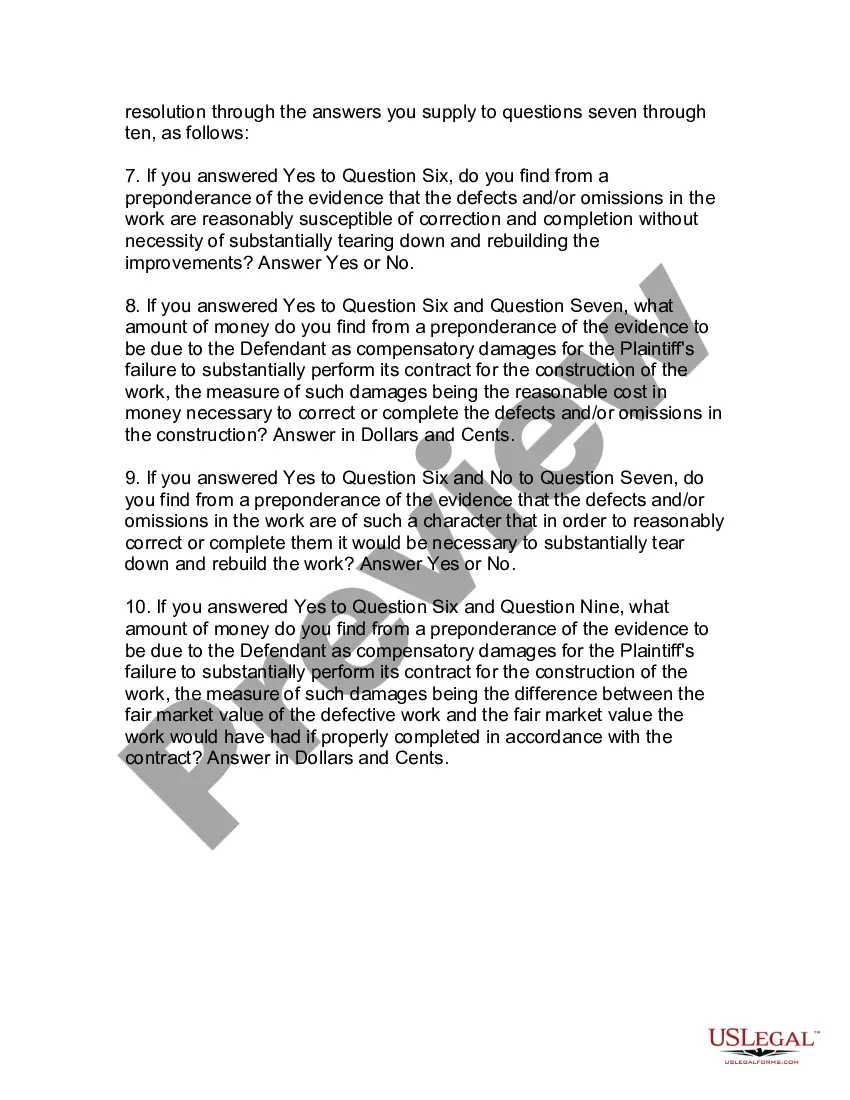
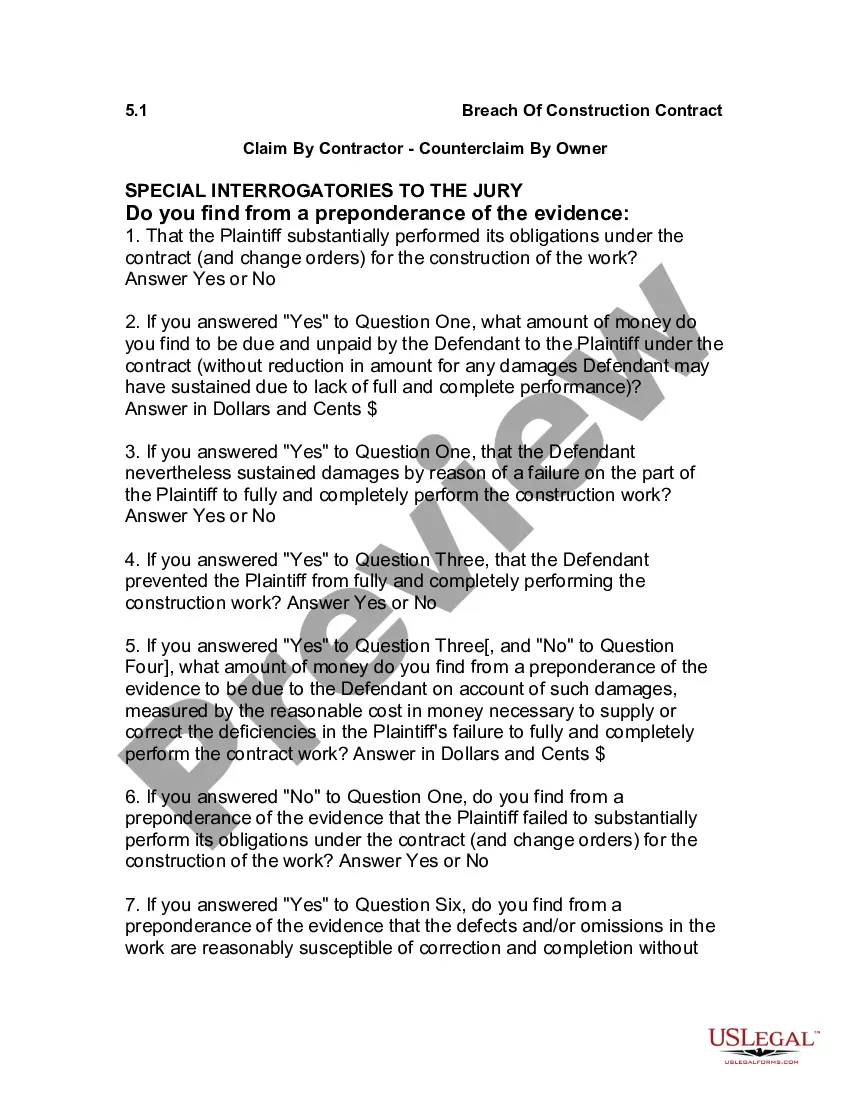
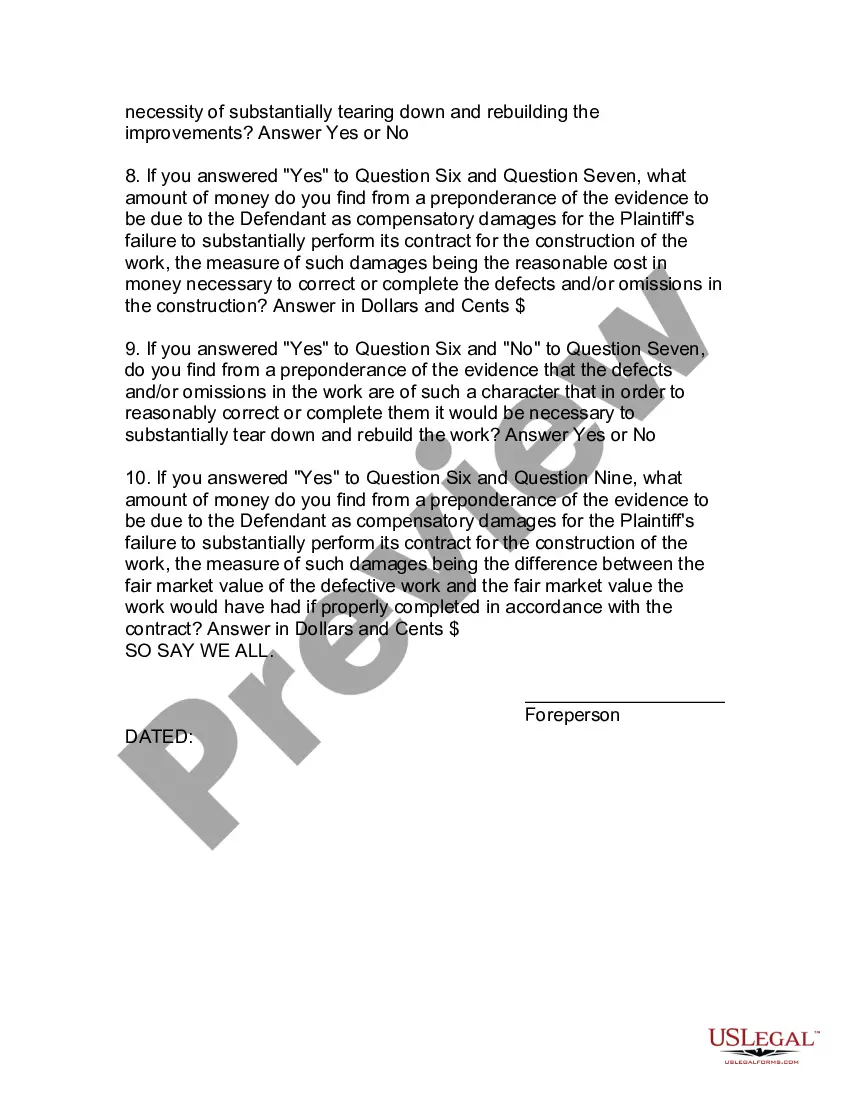
- Special interrogatories related to the claims and counterclaims between contractor and property owner.
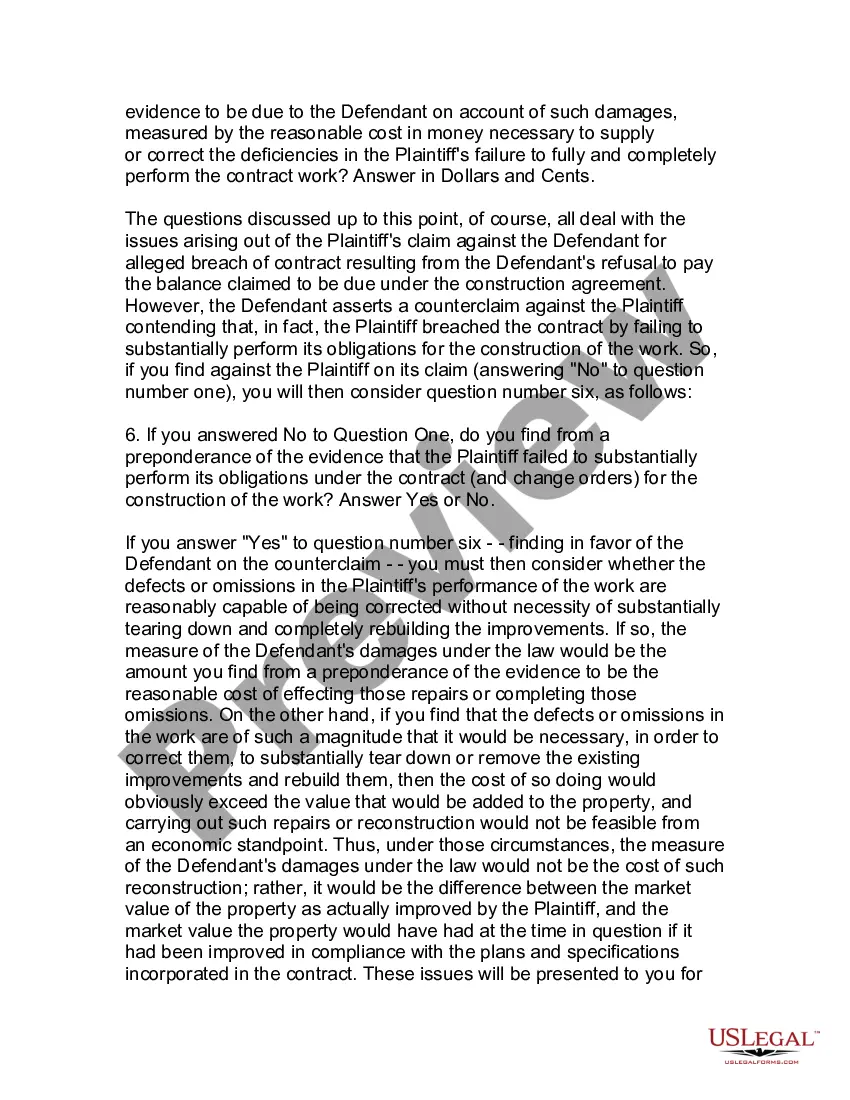
- Instructions regarding the owner's right to a reduction in contract price due to damages.
- Considerations of damages if the contractor has not fully performed the contracted work.
- Legal obligations of both parties to avoid interference during the contract performance.
When to use this document
This form should be used in legal proceedings involving disputes between a contractor and a property owner regarding the performance of a construction contract. Specifically, it is applicable when a contractor claims payment for work done, asserting substantial performance, while the owner counters that the contractor failed to meet contract obligations, leading to damages. Use this form to ensure that the jury understands the key questions to consider when determining outcomes in these disputes.
Who should use this form
- Attorneys representing contractors in breach of contract cases.
- Legal professionals involved in property disputes related to construction.
- Judges overseeing trial proceedings involving contractor and property owner disputes.
- Contractors seeking a formal mechanism to present their claims in court.
- Property owners counterclaiming against contractors over perceived failures to perform.
How to prepare this document
- Identify the parties involved in the construction contract (contractor and owner).
- Outline the details of the contract, including the obligations of both parties.
- Define key terms such as "substantial performance" as it applies to the case.
- List specific questions that the jury will need to answer regarding the claims and counterclaims.
- Provide clear instructions for the jury on the legal standards they must apply in their deliberations.
Does this document require notarization?
This form usually doesn’t need to be notarized. However, local laws or specific transactions may require it. Our online notarization service, powered by Notarize, lets you complete it remotely through a secure video session, available 24/7.
Get your form ready online
Our built-in tools help you complete, sign, share, and store your documents in one place.
Make edits, fill in missing information, and update formatting in US Legal Forms—just like you would in MS Word.
Download a copy, print it, send it by email, or mail it via USPS—whatever works best for your next step.
Sign and collect signatures with our SignNow integration. Send to multiple recipients, set reminders, and more. Go Premium to unlock E-Sign.
If this form requires notarization, complete it online through a secure video call—no need to meet a notary in person or wait for an appointment.
We protect your documents and personal data by following strict security and privacy standards.

Make edits, fill in missing information, and update formatting in US Legal Forms—just like you would in MS Word.

Download a copy, print it, send it by email, or mail it via USPS—whatever works best for your next step.

Sign and collect signatures with our SignNow integration. Send to multiple recipients, set reminders, and more. Go Premium to unlock E-Sign.

If this form requires notarization, complete it online through a secure video call—no need to meet a notary in person or wait for an appointment.

We protect your documents and personal data by following strict security and privacy standards.
Avoid these common issues
- Failing to clearly define "substantial performance" as it varies by jurisdiction.
- Neglecting to include all relevant claims and counterclaims in the jury instructions.
- Using ambiguous language that may confuse jury members about their responsibilities.
- Not tailoring the sample questions to reflect the specifics of the case being tried.
- Overlooking the impact of state-specific laws on jury instructions.
Benefits of using this form online
- Easy access to professional legal templates designed by licensed attorneys.
- Convenient download options allowing for immediate use in legal proceedings.
- Editability to customize the form to fit specific case circumstances.
- Documentation created with up-to-date legal standards ensuring reliability.
- Guidance provided to avoid common errors and enhance accuracy.
Legal use & context
- This form facilitates the understanding of complex legal concepts for a jury.
- It ensures that both parties' rights and obligations under the construction contract are clearly presented.
- Used correctly, this form can help streamline jury deliberations and enhance the fair administration of justice.
Main things to remember
- The form provides essential jury instructions aimed at resolving construction contract disputes.
- It clarifies the legal principles associated with substantial performance and the responsibilities of parties involved.
- Using this form ensures comprehensive coverage of all claims and counterclaims pertinent to the case.
Looking for another form?






Form popularity
FAQ
A breach of contract is when one party breaks the terms of an agreement between two or more parties. This includes when an obligation that is stated in the contract is not completed on timeyou are late with a rent payment, or when it is not fulfilled at alla tenant vacates their apartment owing six-months' back rent.
A material breach occurs when one party receives significantly less benefit or a significantly different result than what was specified in a contract.When a material breach occurs, the other party may pursue damages related to the breach and both its direct and indirect consequences.
The owner/principal refuses to pay a progress claim under the contract; the owner/principal takes possession of the works; the owner fails to provide evidence of capacity to pay the contract sum; or. the owner interferes with the builders trades.
A breach of contract can be considered as either 'material' or 'non-material'. A non-material breach is the less serious of the two. A non-material breach is one which pertains to a minor or ancillary detail of the contract.A material breach would be considered as a more serious form of breaking a contract.
2006) (The elements of a breach of contract claim are: (1) the existence of a valid contract; (2) the plaintiff's performance or tendered performance; (3) the defendant's breach of the contract; and (4) damages as a result of the breach.)
Financial Loss. Reputational Damage. Operational Downtime. Legal Action. Loss of Sensitive Data.
Material Violation means a substantial disruption that adversely affects the health or safety of any person in the premises. The conduct must create a high probability of or actually cause harm.
The existence of a contract; Breach of the contract; You suffered damages; and. The breach caused you the damages you claim you suffered.
A breach can be of a verbal, written (express) or an 'implied' term of a contract. A breach can occur: If a party refuses to perform their duties set out in the contract. If the work carried out is defective. Due to not paying for a service or not paying within the limits specified.