Jury Instruction - 4.1 General Instruction With Defenses Based Upon False Application, Arson, And False Claim Form
What this document covers
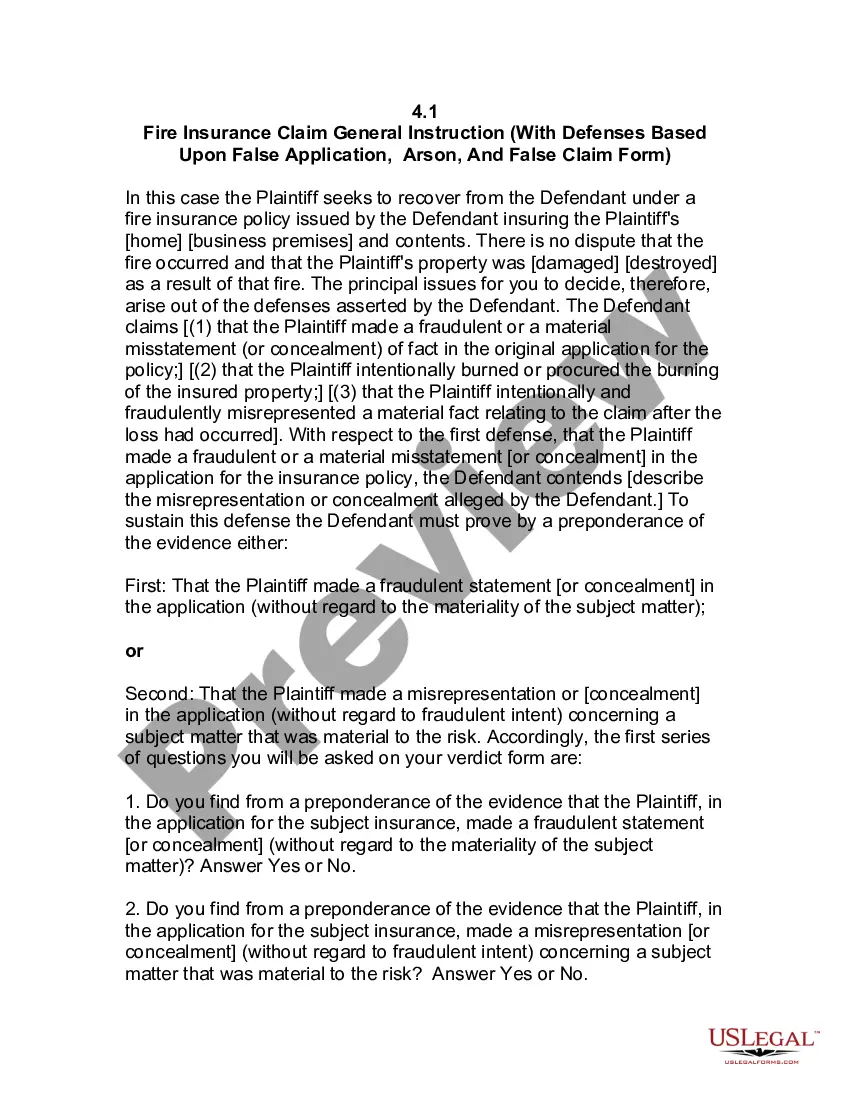
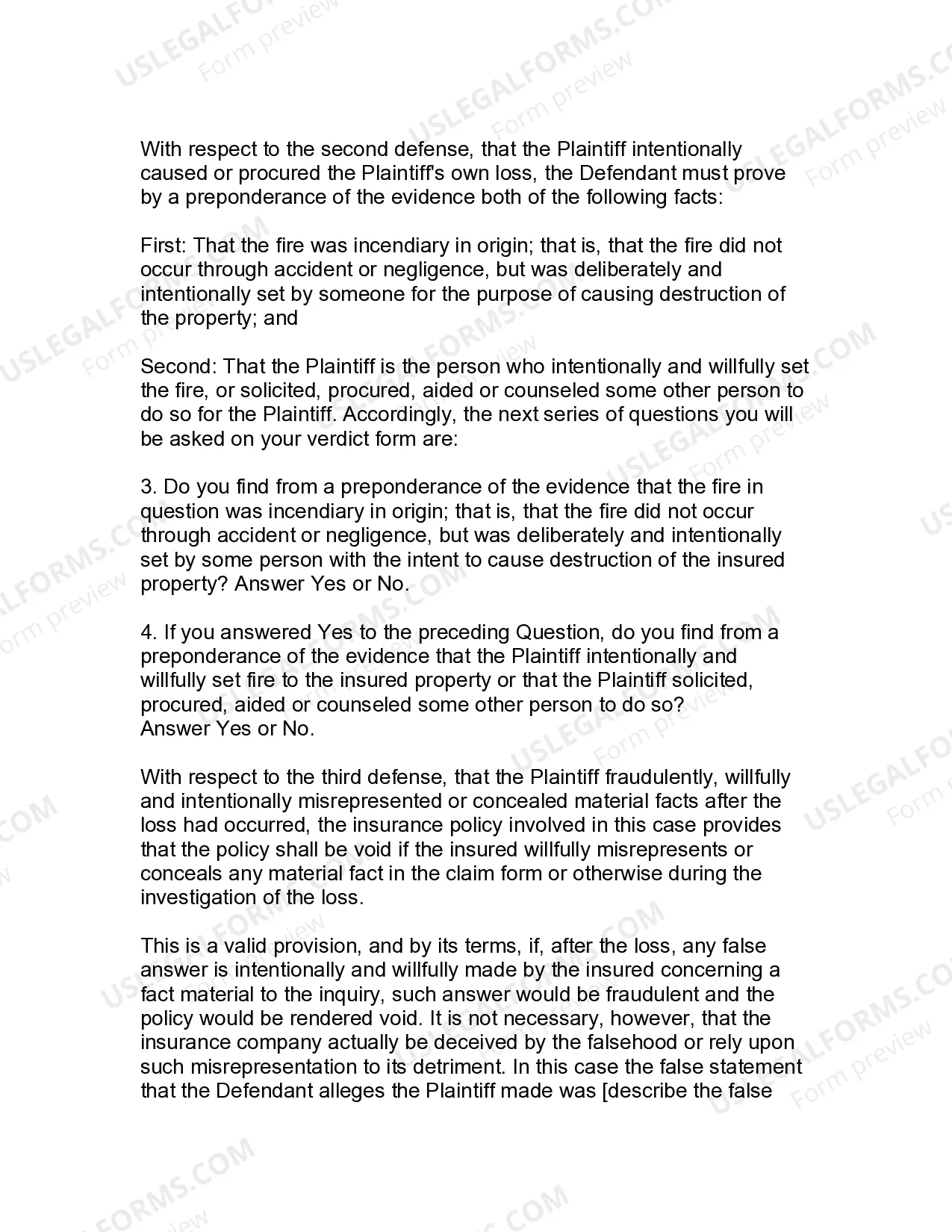
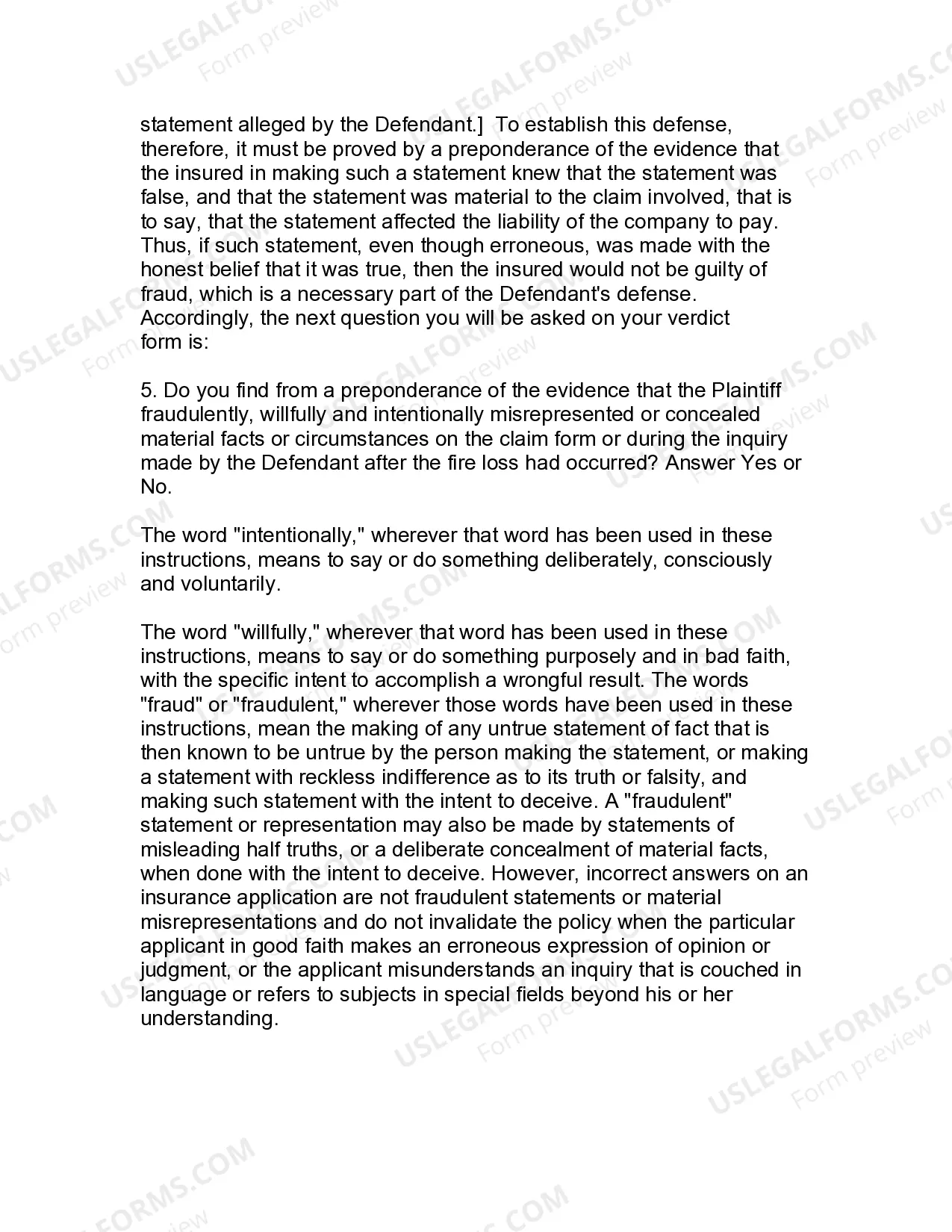
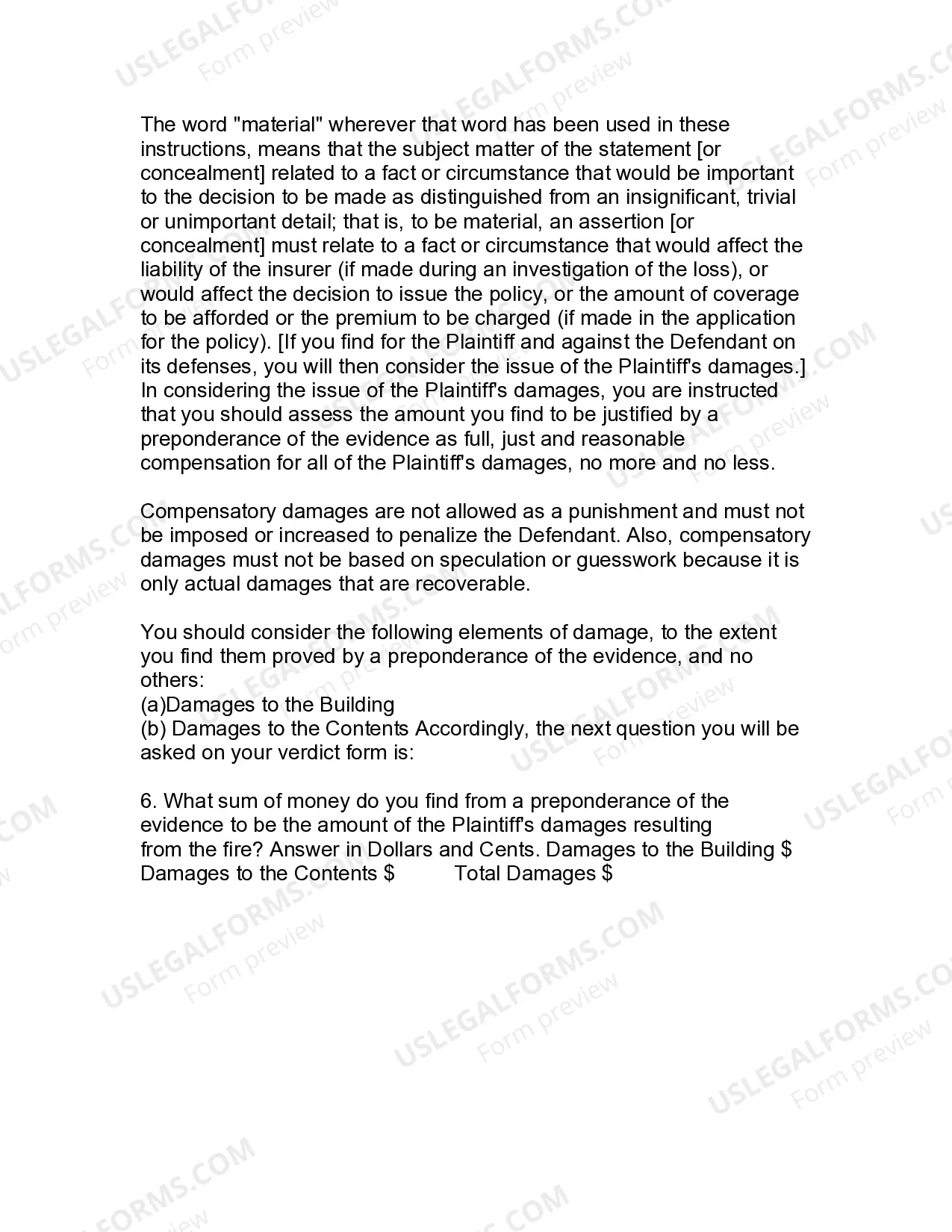
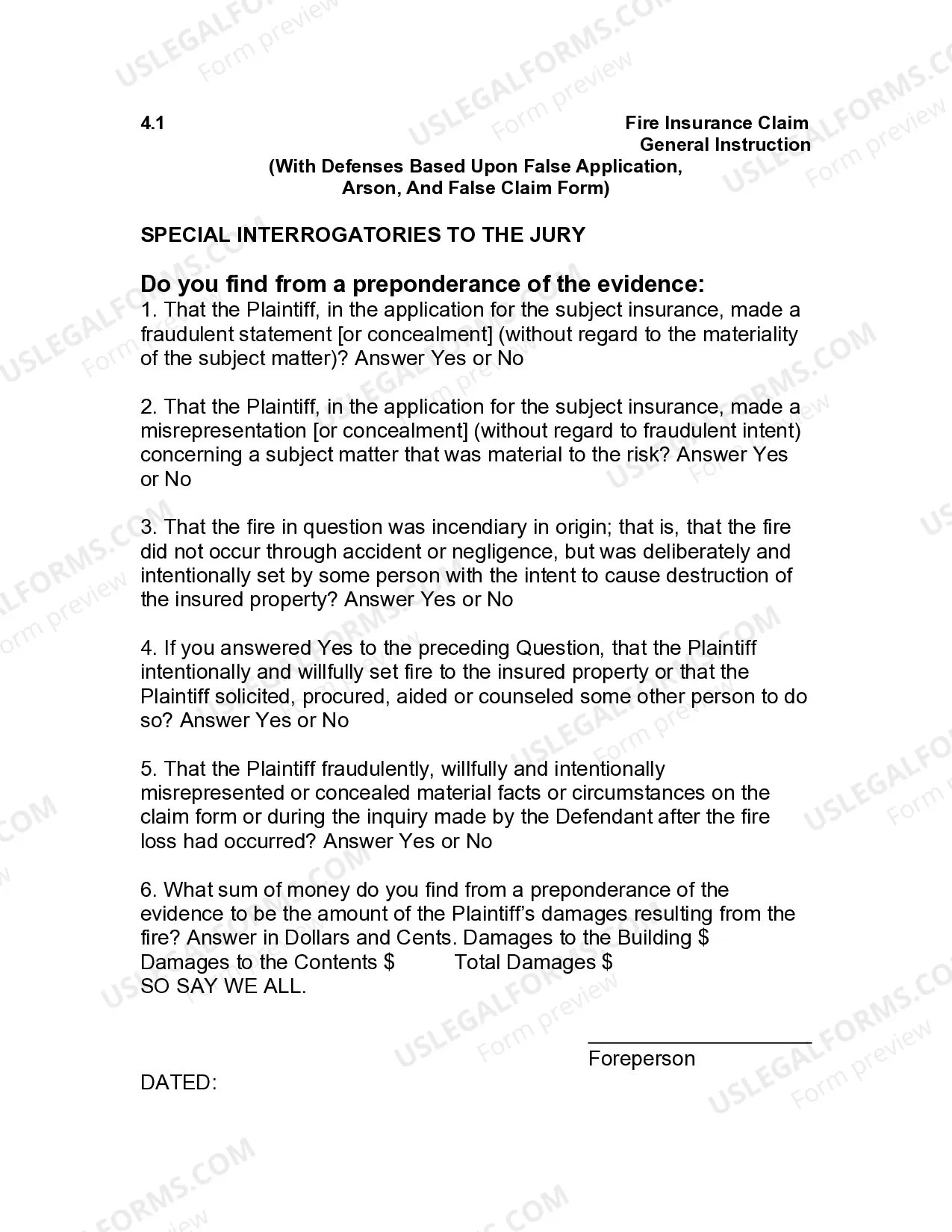
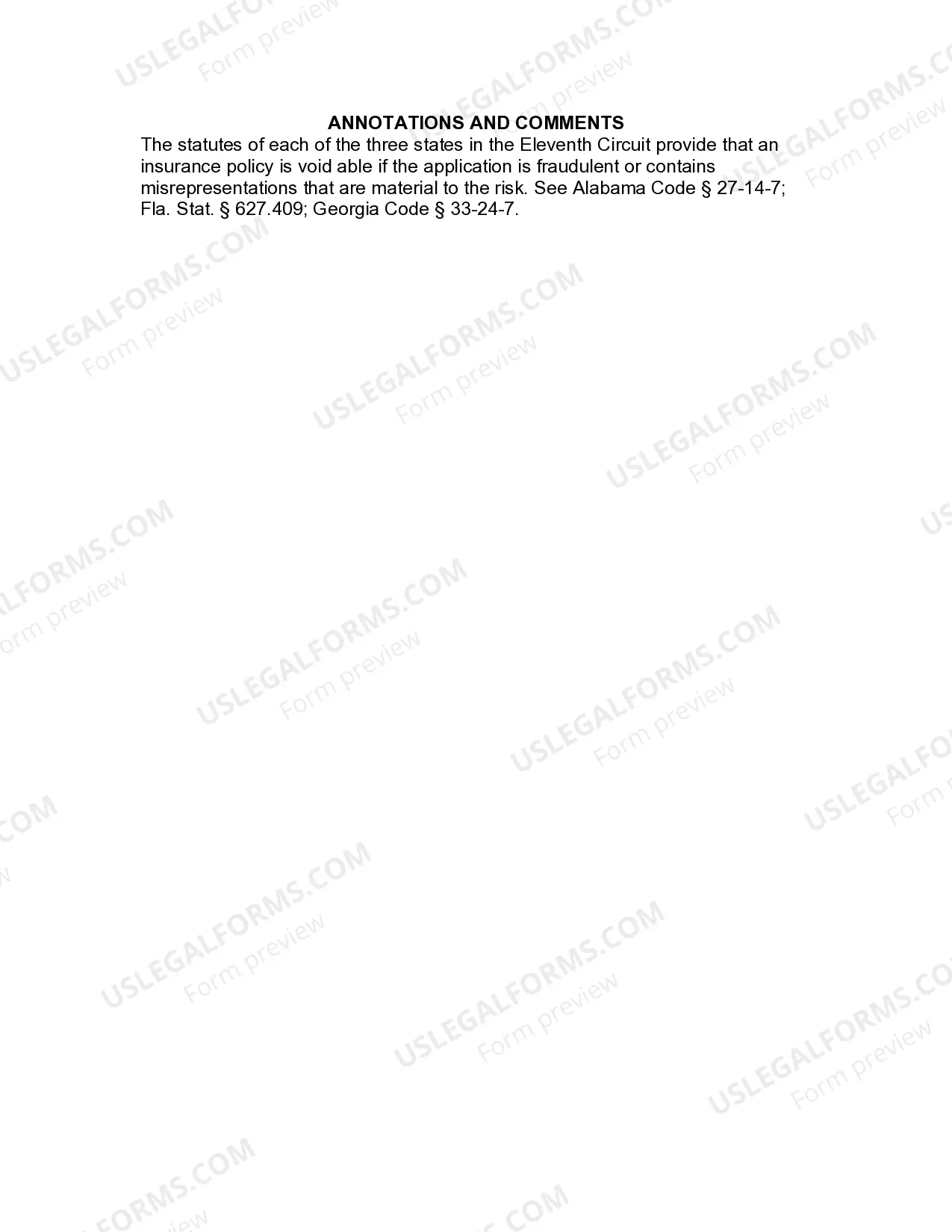
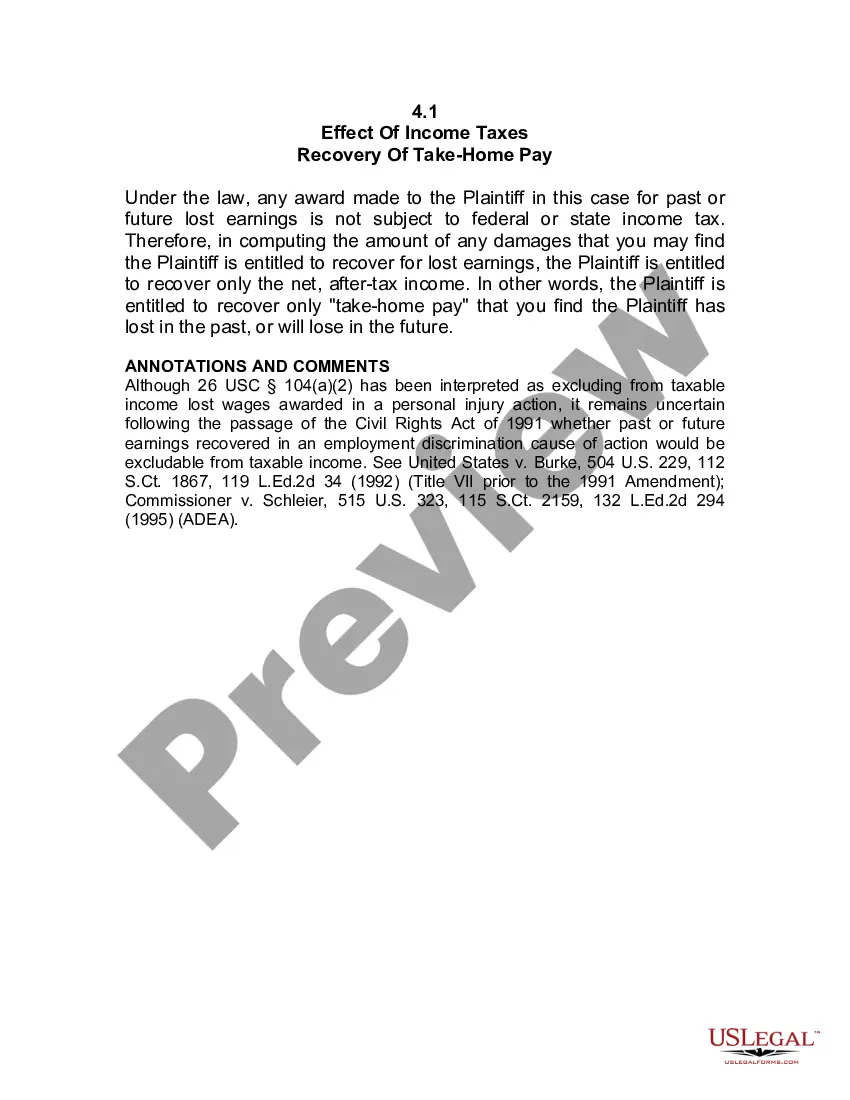
The Jury Instruction - 4.1 General Instruction with Defenses Based Upon False Application, Arson, and False Claim Form provides crucial guidelines for juries in fire insurance claims. This form offers a standardized set of jury instructions addressing potential defenses, such as false statements in the insurance application and allegations of arson. It is designed to help courts navigate complex legal matters surrounding fire insurance litigation with a focus on safeguarding rights and ensuring just outcomes.
Form components explained
- Introduction outlining the context for the jury's consideration.
- Detailed instructions regarding fraudulent misrepresentations in the insurance application.
- Clarification of the defenses related to intentional property damage.
- Special interrogatories to guide the jury's decision-making process.
- Definitions of key terms such as "intentionally," "willfully," and "material."
When to use this document
This form is utilized in legal proceedings where a jury is tasked with determining the validity of fire insurance claims. It is particularly relevant in cases involving disputes over alleged misrepresentations in the insurance application or claims of arson. Use this form when a plaintiff seeks to recover damages following a fire that destroyed insured property, and the defendant raises defenses related to fraudulent conduct.
Intended users of this form
- Judges presiding over fire insurance claim cases.
- Attorneys representing both plaintiffs and defendants in insurance litigation.
- Juries tasked with deliberating on the case according to the provided instructions.
Steps to complete this form
- Review the specific issues presented in the case.
- Modify the sample instructions to fit the unique circumstances of the case.
- Ensure the jury is instructed on the definitions and elements of fraudulent conduct.
- Include special interrogatories relevant to the defenses asserted by the defendant.
- Conform to state-specific legal terminology and formatting as needed.
Does this document require notarization?
In most cases, this form does not require notarization. However, some jurisdictions or signing circumstances might. US Legal Forms offers online notarization powered by Notarize, accessible 24/7 for a quick, remote process.
Get your form ready online
Our built-in tools help you complete, sign, share, and store your documents in one place.
Make edits, fill in missing information, and update formatting in US Legal Forms—just like you would in MS Word.
Download a copy, print it, send it by email, or mail it via USPS—whatever works best for your next step.
Sign and collect signatures with our SignNow integration. Send to multiple recipients, set reminders, and more. Go Premium to unlock E-Sign.
If this form requires notarization, complete it online through a secure video call—no need to meet a notary in person or wait for an appointment.
We protect your documents and personal data by following strict security and privacy standards.

Make edits, fill in missing information, and update formatting in US Legal Forms—just like you would in MS Word.

Download a copy, print it, send it by email, or mail it via USPS—whatever works best for your next step.

Sign and collect signatures with our SignNow integration. Send to multiple recipients, set reminders, and more. Go Premium to unlock E-Sign.

If this form requires notarization, complete it online through a secure video call—no need to meet a notary in person or wait for an appointment.

We protect your documents and personal data by following strict security and privacy standards.
Typical mistakes to avoid
- Failing to adapt the instructions to the specific details of the case.
- Overlooking the need for clear definitions of legal terms.
- Not addressing all relevant defenses that the defendant may assert.
Advantages of online completion
- Convenient access to standardized instructions for jury use.
- Editability allows customization for specific case needs.
- Reliable templates drafted by licensed attorneys ensure legal compliance.
Legal use & context
- This form provides a legal framework for jury instructions in fire insurance disputes.
- Jurors must understand the implications of allegations made against the plaintiff.
- Clear instructions help mitigate ambiguity during jury deliberations.
Main things to remember
- The form serves as a crucial guide for juries in fire insurance claim disputes.
- It outlines essential defenses that may arise in these cases.
- Utilizing this form can result in fair and informed jury decisions.
Looking for another form?


Form popularity
FAQ
Ordinarily, where a . claim is made against an individual insured by a liability insurance policy, defence counsel is hired by the insurance company to protect the common interest ofthe insurance company andthe insured : namely, to reduce or avoid any liability finding against the insured.
Statutory liability insurance can indemnify organizations and individuals against the costs associated with an investigation or prosecution for unintentional breaches of the statute. Depending on the policy, coverage might include:3. Judgments (fines) Defense costs. Reparations.
To become a defense attorney requires on average 7 years of full-time study after high school. All law school applicants must have a bachelor's degree to qualify for admission to law school. This is then followed by 3 years of law school.
MGC Insurance Defense is a multi-location law firm with approximately 150 attorneys spread across 13 offices throughout the Southeast. We pride ourselves on being a forward-thinking, metrics-driven enterprise, so SIB's mantra of reducing costs and increasing efficiency is very appealing to us.
The primary qualifications to become an insurance defense attorney are graduation from law school and admission to the state bar. Experience requirements vary, but independent firms typically expect at least three years of experience in insurance defense or a similar field.
Statutory penalty is a penalty imposed for a statutory violation. It is the penalty that the statute prescribes for its violation. It can be a fine, prison sentence, or both, imposed against a wrongdoer for violation of statutory provisions.
If something is statutory, it is related to or set by laws or statutes.Both are adjectives and both are concerned with the law. If something is legal, it is allowed by the law, whereas if it is statutory, it is regulated by law.
Statutory Insurance insurance that the insured is required to buy under a country, state, or federal law.
What Does an Insurance Coverage Attorney Do? This practice area focuses on insurance contracts and evaluating what and how much is covered under specific insurance policies. Lawyers who practice in this area provide advice on matters involving general insurance, gap coverage, surety bonds, and access insurance.