Jury Instruction - 3.3 Breach of Fiduciary Duty
About this form
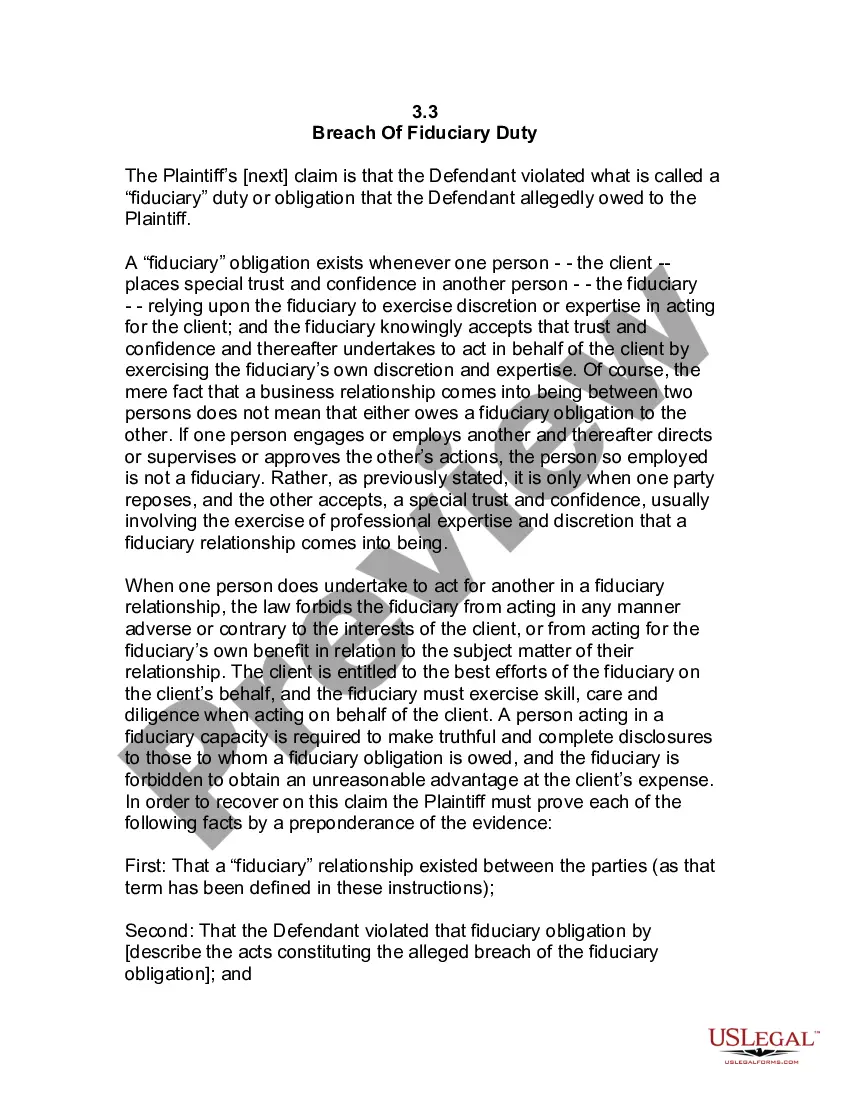
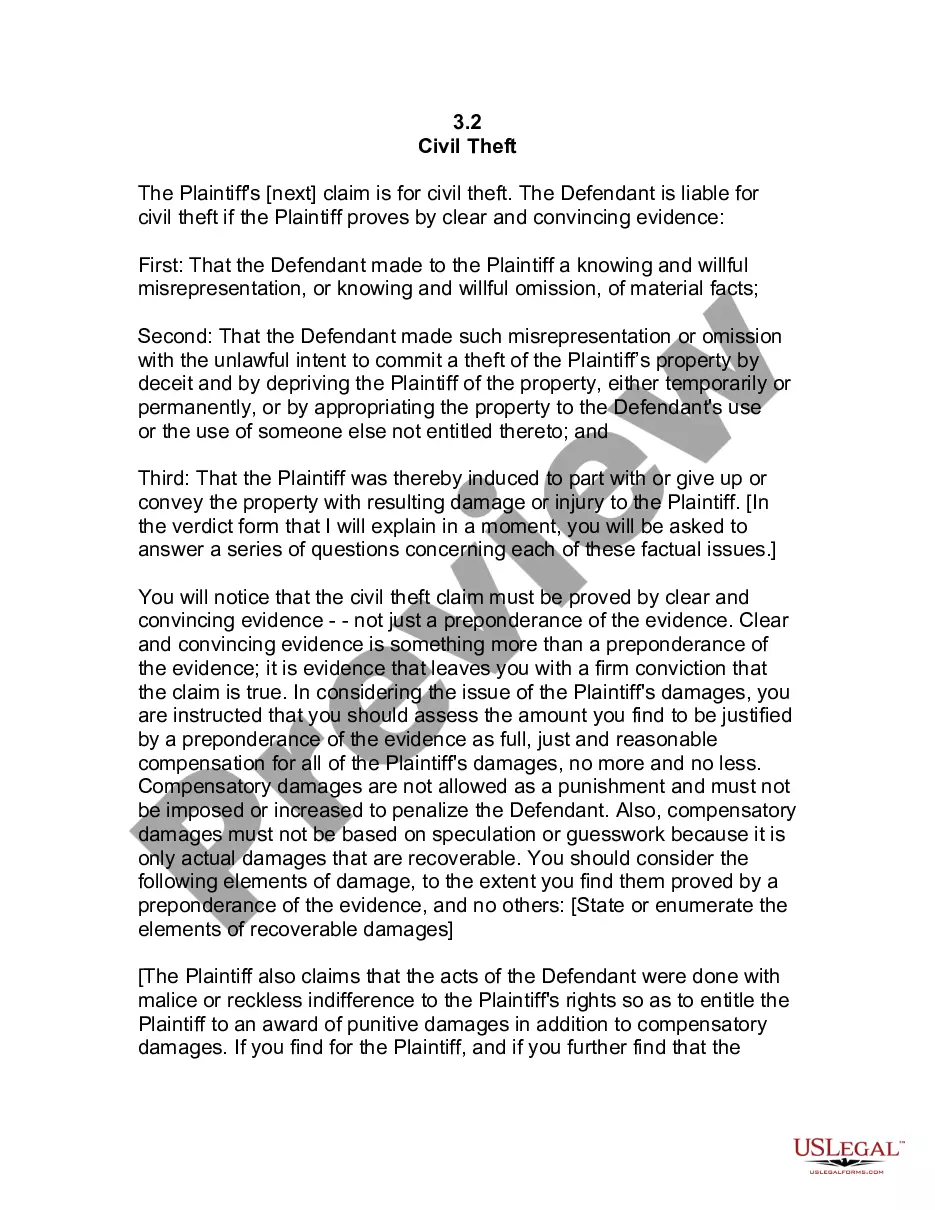
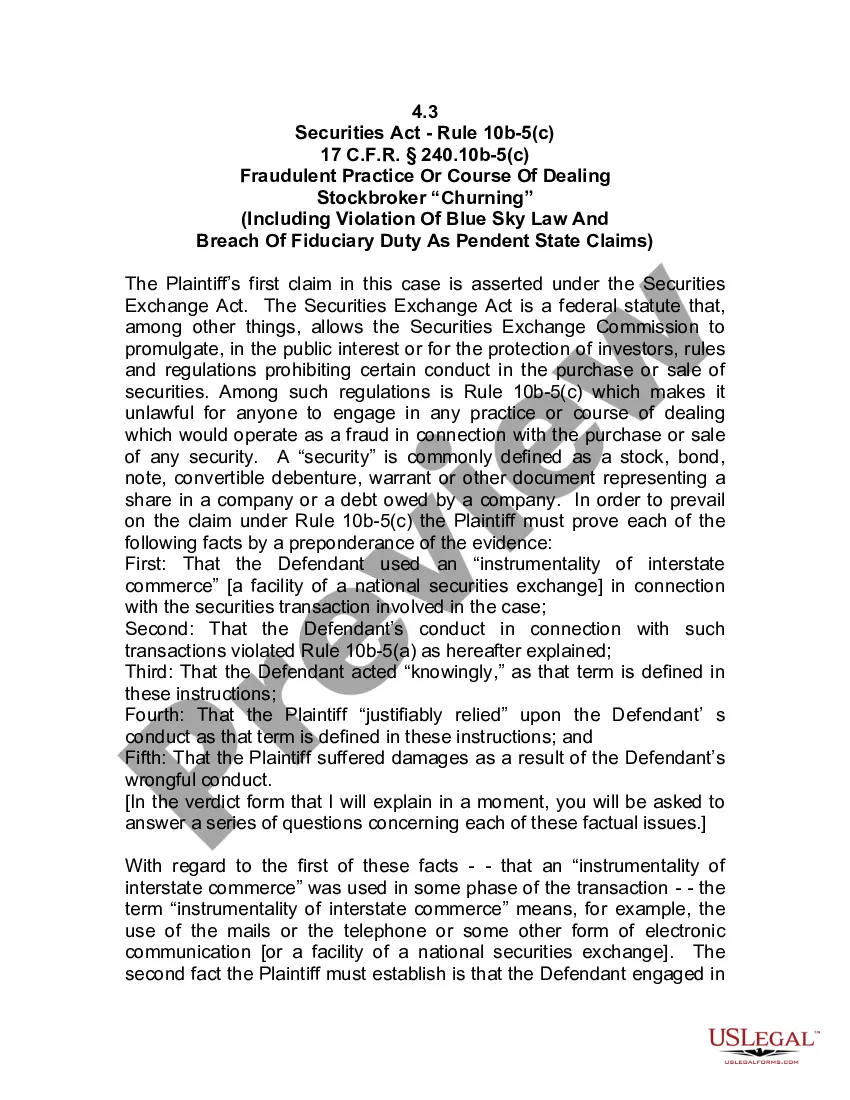
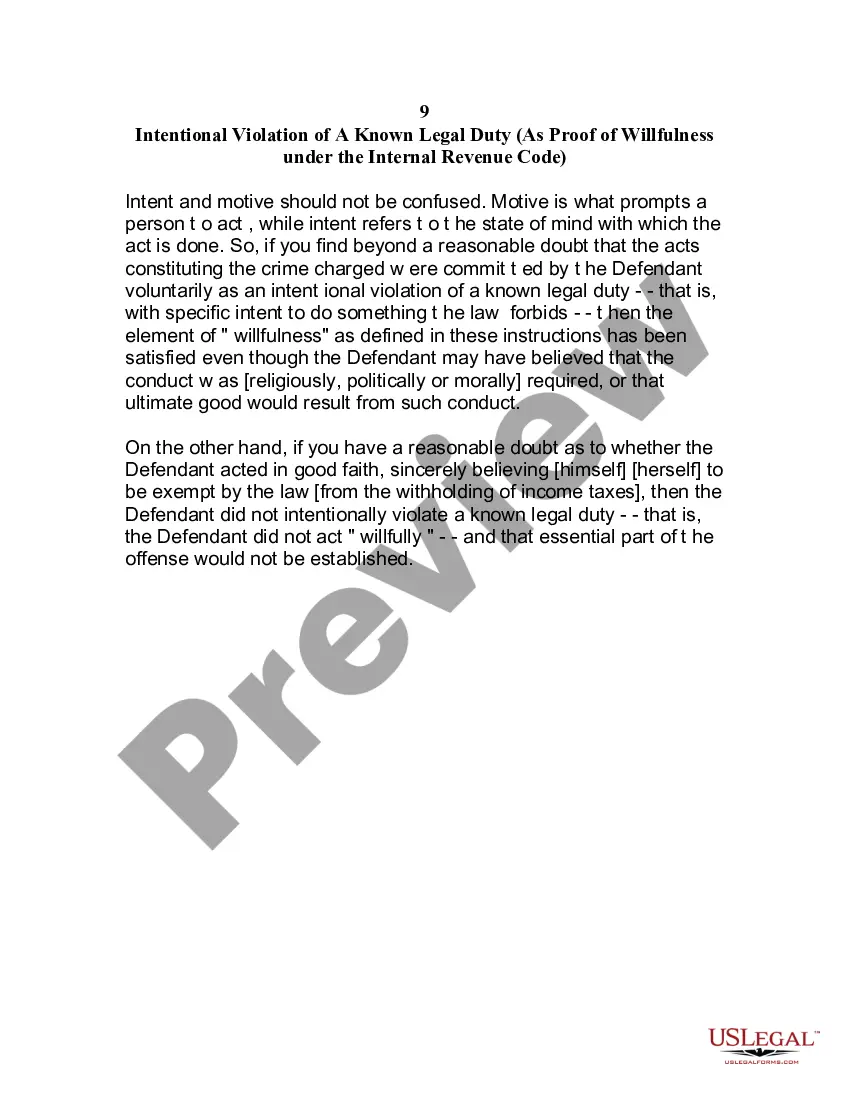
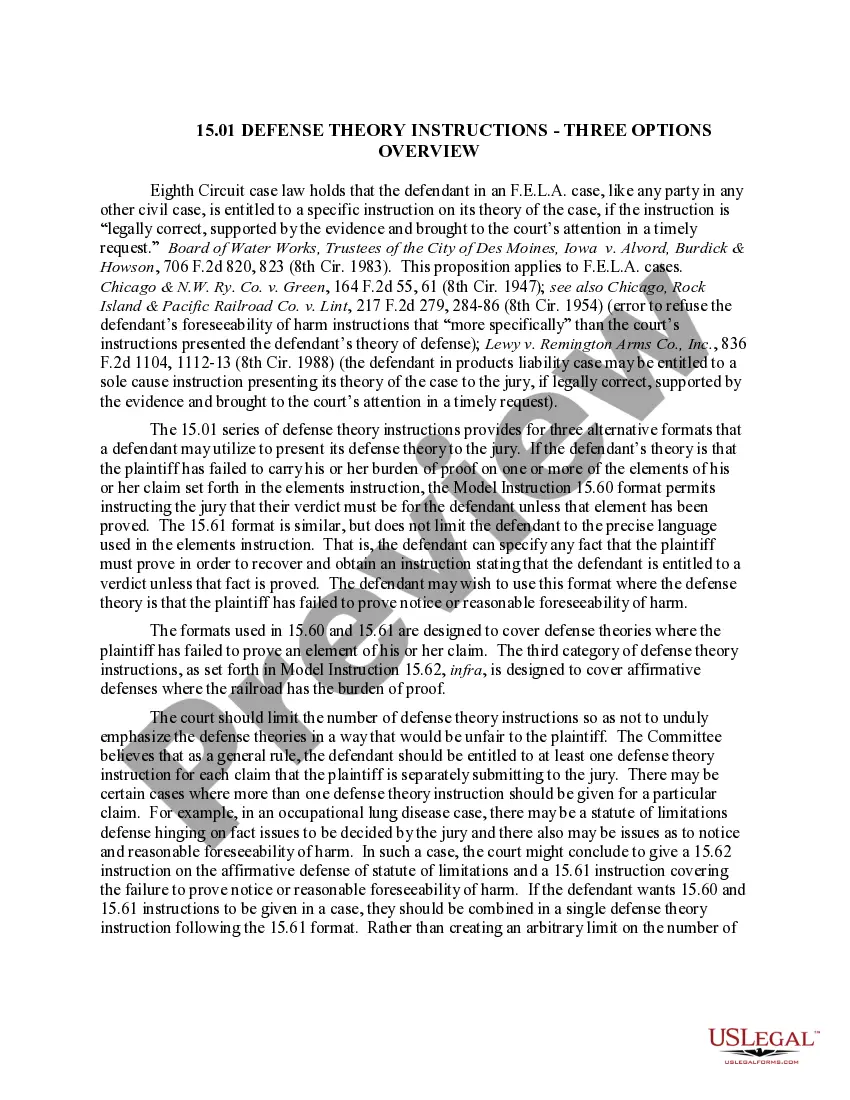
The Jury Instruction - Breach of Fiduciary Duty form provides a set of sample jury instructions used in legal cases involving claims of fiduciary duty violations. This form is designed to ensure that jurors understand the elements of breach of fiduciary duty as defined by law. It serves as a guideline for jurors on how to evaluate the evidence and make determinations relevant to the case, distinguishing it from other legal forms that may address related but different issues, such as contracts or negligence.
Key components of this form
- Definition of fiduciary duty: Explains the obligations that exist when one party places trust in another.
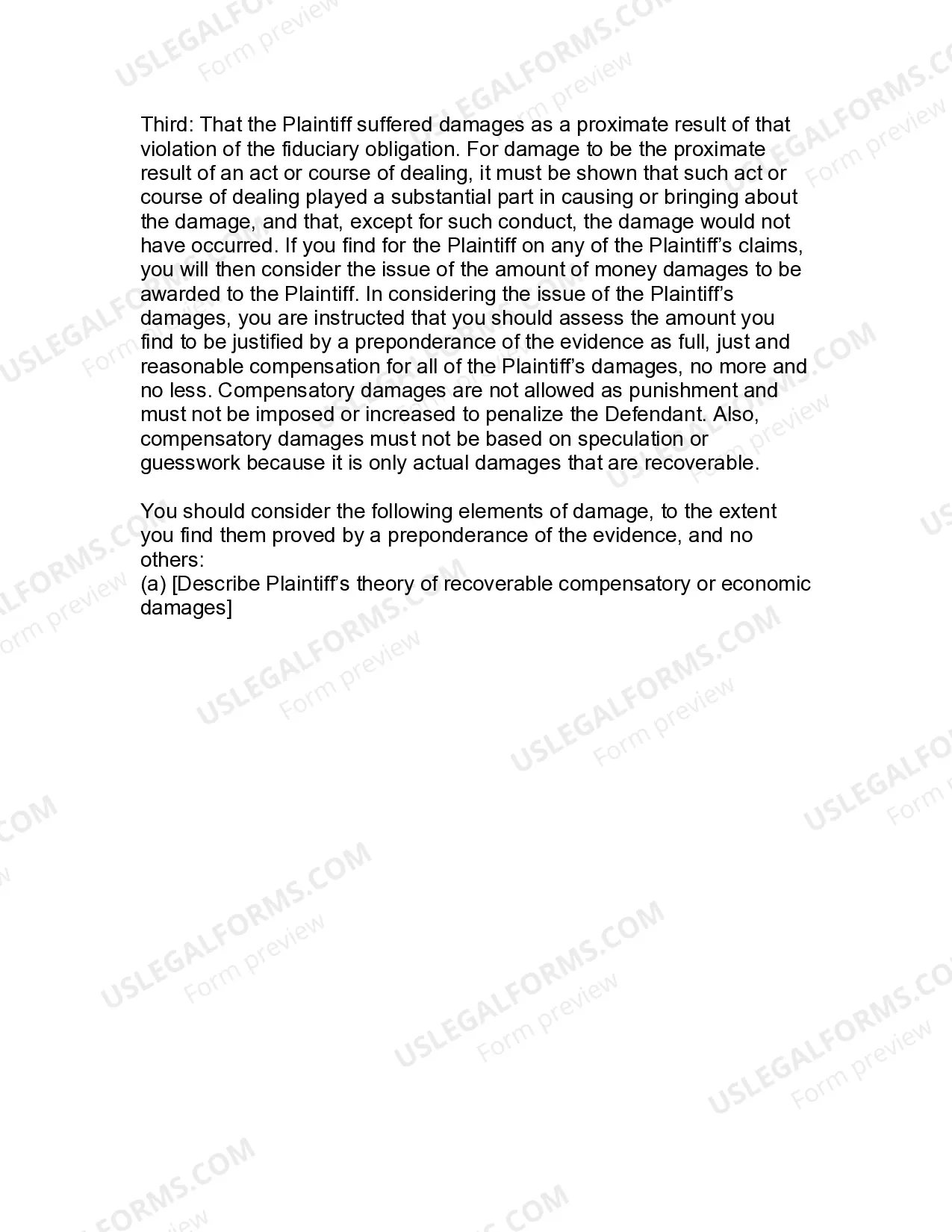
- Elements for breach: Outlines the necessary elements that plaintiffs must prove for a successful claim.
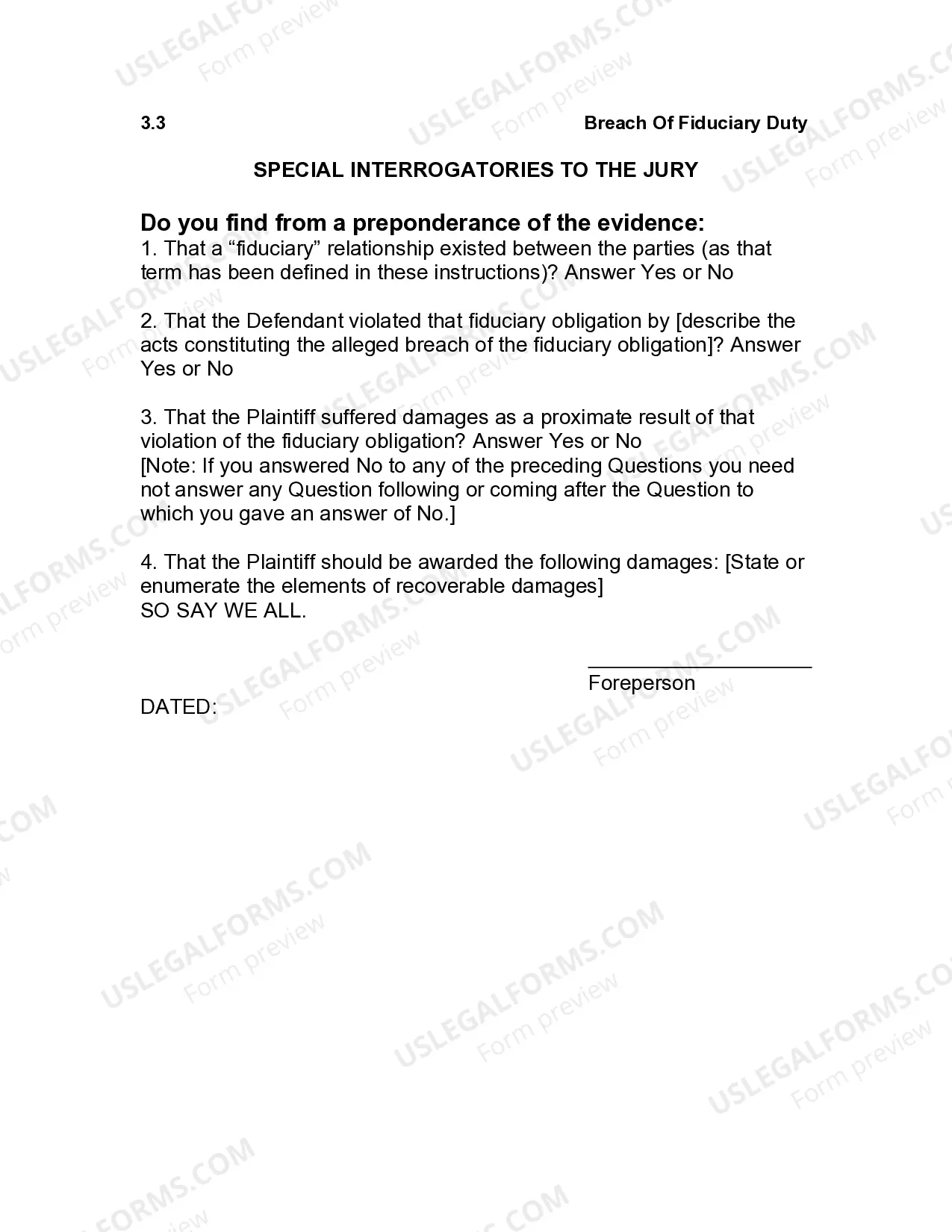
- Special interrogatories: Provides specific questions for the jury to consider in their verdict.
- Guidance on assessing damages: Instructs jurors on what constitutes reasonable compensation for the plaintiff's claims.
When this form is needed
This form is needed when a plaintiff is claiming a breach of fiduciary duty in a legal case. It can be utilized in various contexts, such as disputes between business partners, trustee misconduct, or any scenario where one party has a legal obligation to act in the best interest of another party. This instruction helps jurors frame their evaluation of the evidence surrounding the fiduciary relationship and the alleged breach.
Who can use this document
- Attorneys representing plaintiffs in fiduciary duty breach cases.
- Legal professionals preparing jury instructions for trial.
- Parties involved in litigation that require jury guidance on fiduciary relationships.
Steps to complete this form
- Identify the parties involved in the fiduciary relationship.
- Define the nature of the fiduciary duty that was allegedly breached.
- Describe the acts that constitute the breach of the fiduciary obligation.
- Assess and document any damages suffered as a result of the breach.
- Submit the form for use during jury deliberations once completed.
Does this document require notarization?
Notarization is generally not required for this form. However, certain states or situations might demand it. You can complete notarization online through US Legal Forms, powered by Notarize, using a verified video call available anytime.
Get your form ready online
Our built-in tools help you complete, sign, share, and store your documents in one place.
Make edits, fill in missing information, and update formatting in US Legal Forms—just like you would in MS Word.
Download a copy, print it, send it by email, or mail it via USPS—whatever works best for your next step.
Sign and collect signatures with our SignNow integration. Send to multiple recipients, set reminders, and more. Go Premium to unlock E-Sign.
If this form requires notarization, complete it online through a secure video call—no need to meet a notary in person or wait for an appointment.
We protect your documents and personal data by following strict security and privacy standards.

Make edits, fill in missing information, and update formatting in US Legal Forms—just like you would in MS Word.

Download a copy, print it, send it by email, or mail it via USPS—whatever works best for your next step.

Sign and collect signatures with our SignNow integration. Send to multiple recipients, set reminders, and more. Go Premium to unlock E-Sign.

If this form requires notarization, complete it online through a secure video call—no need to meet a notary in person or wait for an appointment.

We protect your documents and personal data by following strict security and privacy standards.
Mistakes to watch out for
- Failing to clearly establish the fiduciary relationship.
- Not providing sufficient detail about the acts constituting the breach.
- Overlooking the need for evidence to support claimed damages.
Main things to remember
- The form serves as a legal guideline for jurors concerning breach of fiduciary duty.
- It outlines key elements that must be proven for a successful claim.
- Proper completion is crucial for conveying the necessary legal understanding to jurors.
Looking for another form?



Form popularity
FAQ
Consequences of a Breach of Fiduciary Duty A breach of fiduciary duty is not a criminal act but can be tied to one.This means that on top of damages, the fiduciary would also have to deal with the consequences of a criminal act, and potentially jail time.
A breach of fiduciary duty occurs when a principal fails to act responsibly in the best interests of a client. The consequences of a breach of fiduciary duty are multiple. They can range from reputation damage to loss of a license and monetary penalties.
A breach of fiduciary duty is not a criminal act but can be tied to one.This means that on top of damages, the fiduciary would also have to deal with the consequences of a criminal act, and potentially jail time. In California, the plaintiff can demand compensatory damages, and also punitive damages.
If you can prove a fiduciary relationship existed, you must prove that a breach occurred and that the defendant acted on his or her own behalf instead of acting in the best interests of the principal. Finally, you must prove that the breach caused harm for which compensation is available.
It is legally permitted for the wronged individual to sue for and receive damages as well as any profits made by the fiduciary in breach of their fiduciary duty. Breaches of fiduciary duty can have significant consequences not only for the fiduciary's finances, but also on their reputation.
Examples of breaches can include stealing clients away from an employer, misappropriating funds, or working with or for the competition.
The defendant was acting as a fiduciary of the plaintiff; The defendant breached a fiduciary duty to the plaintiff; The plaintiff suffered damages as a result of the breach; and. The defendant's breach of fiduciary duty caused the plaintiff's damages.