Jury Instruction - 2.2 With Comparative Negligence Defense
Overview of this form
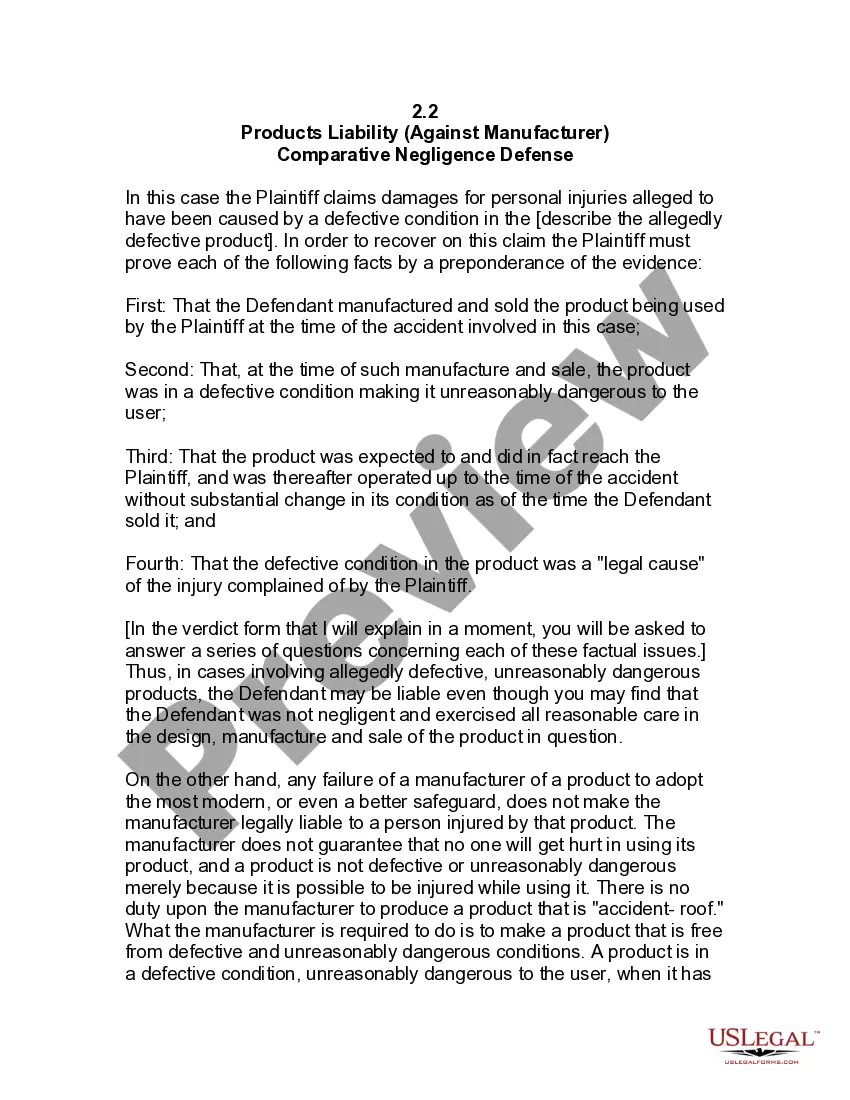
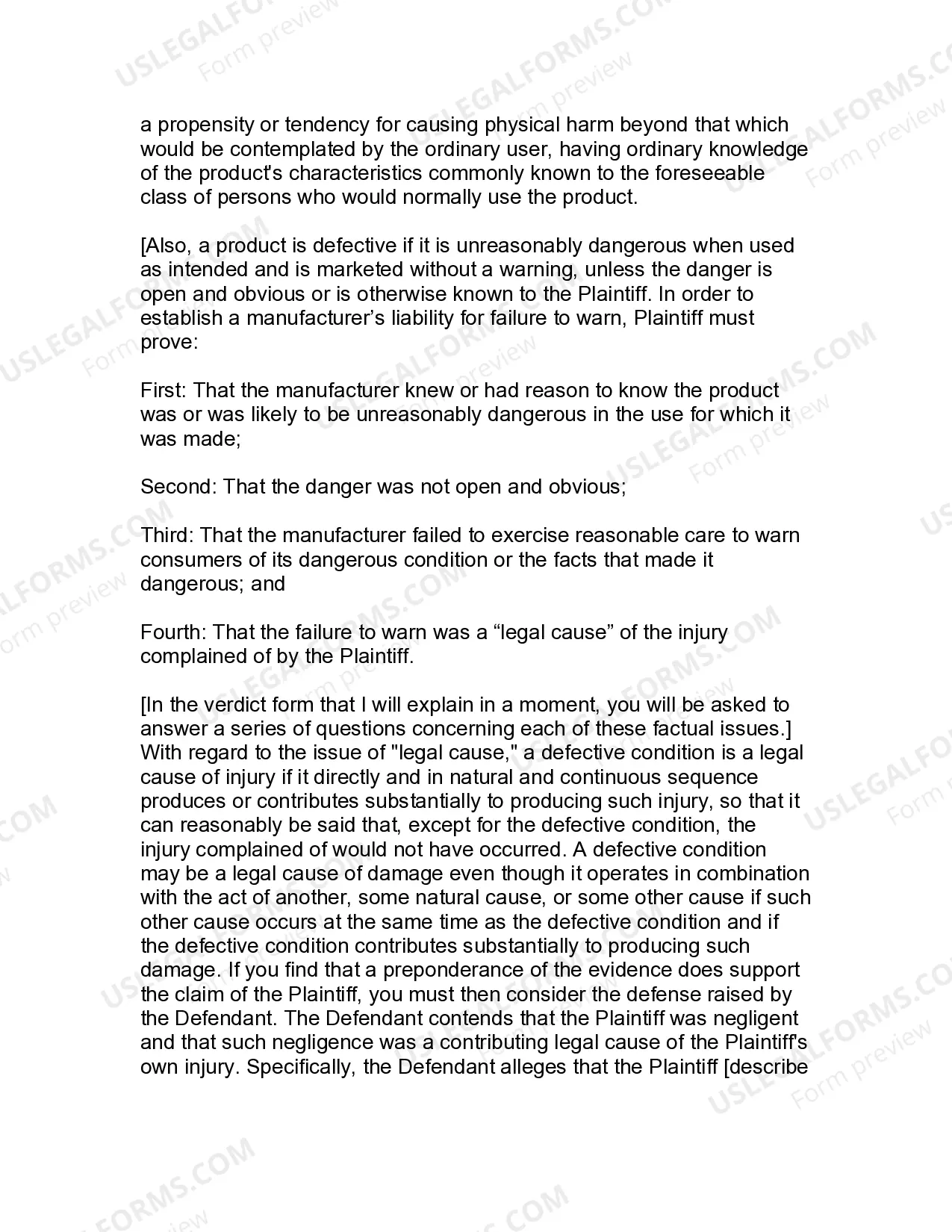
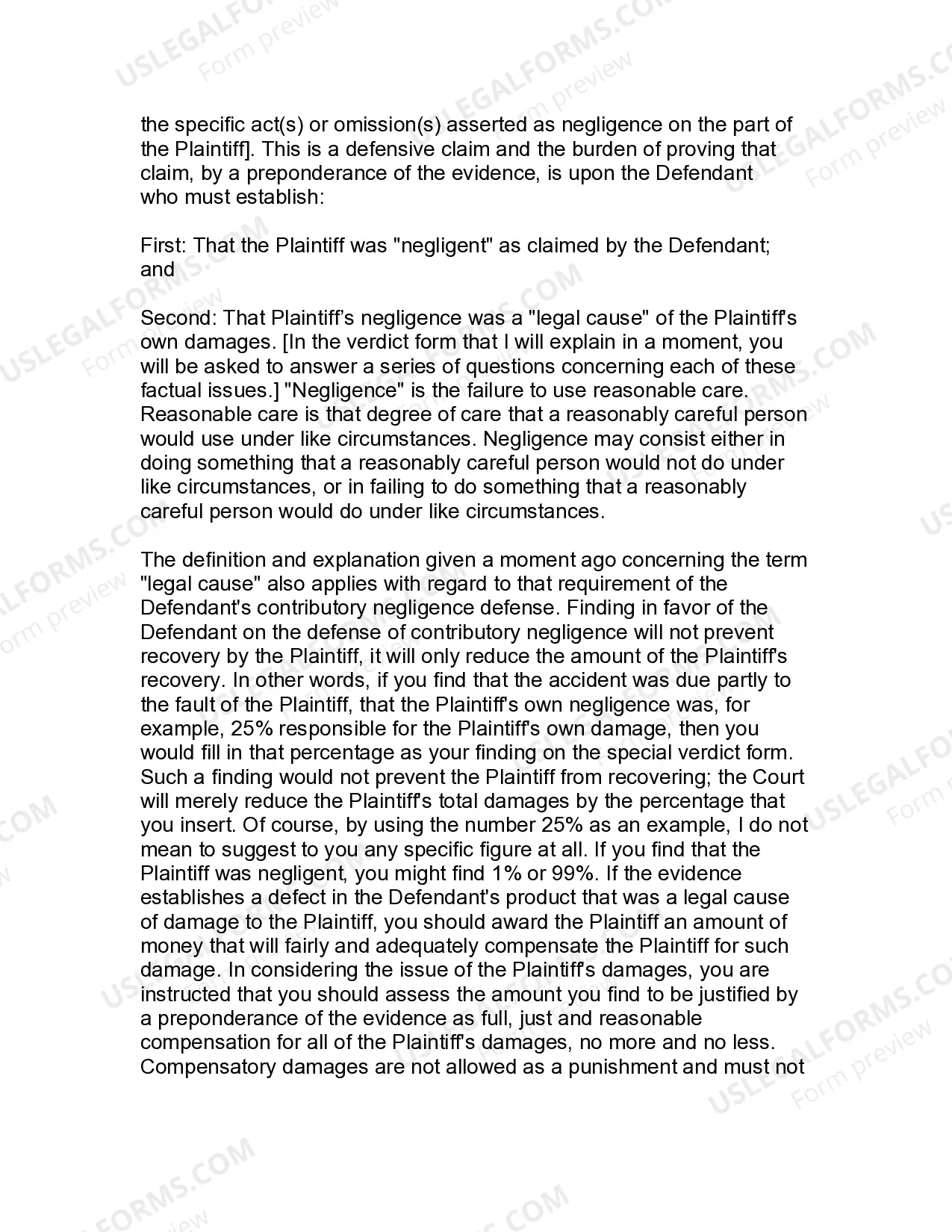
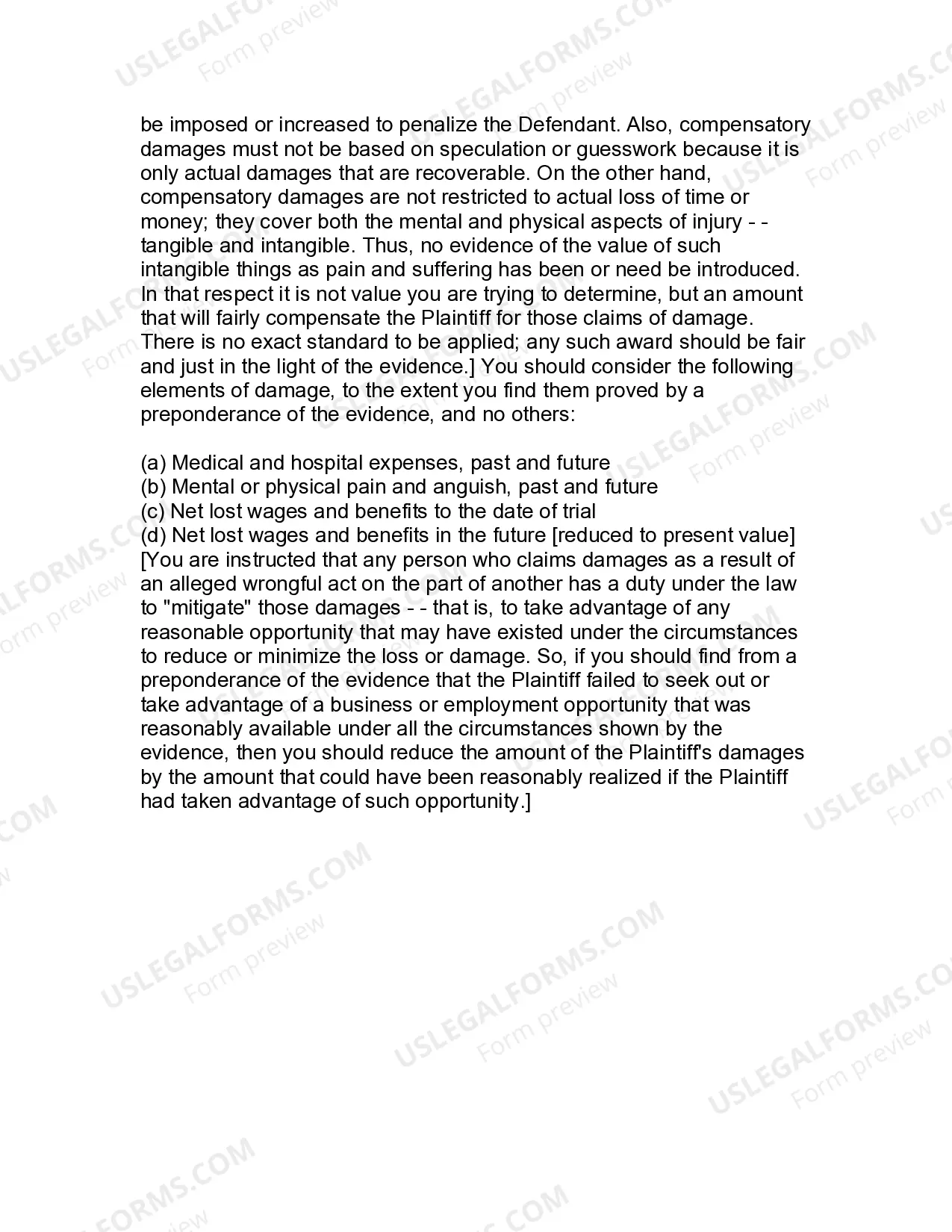
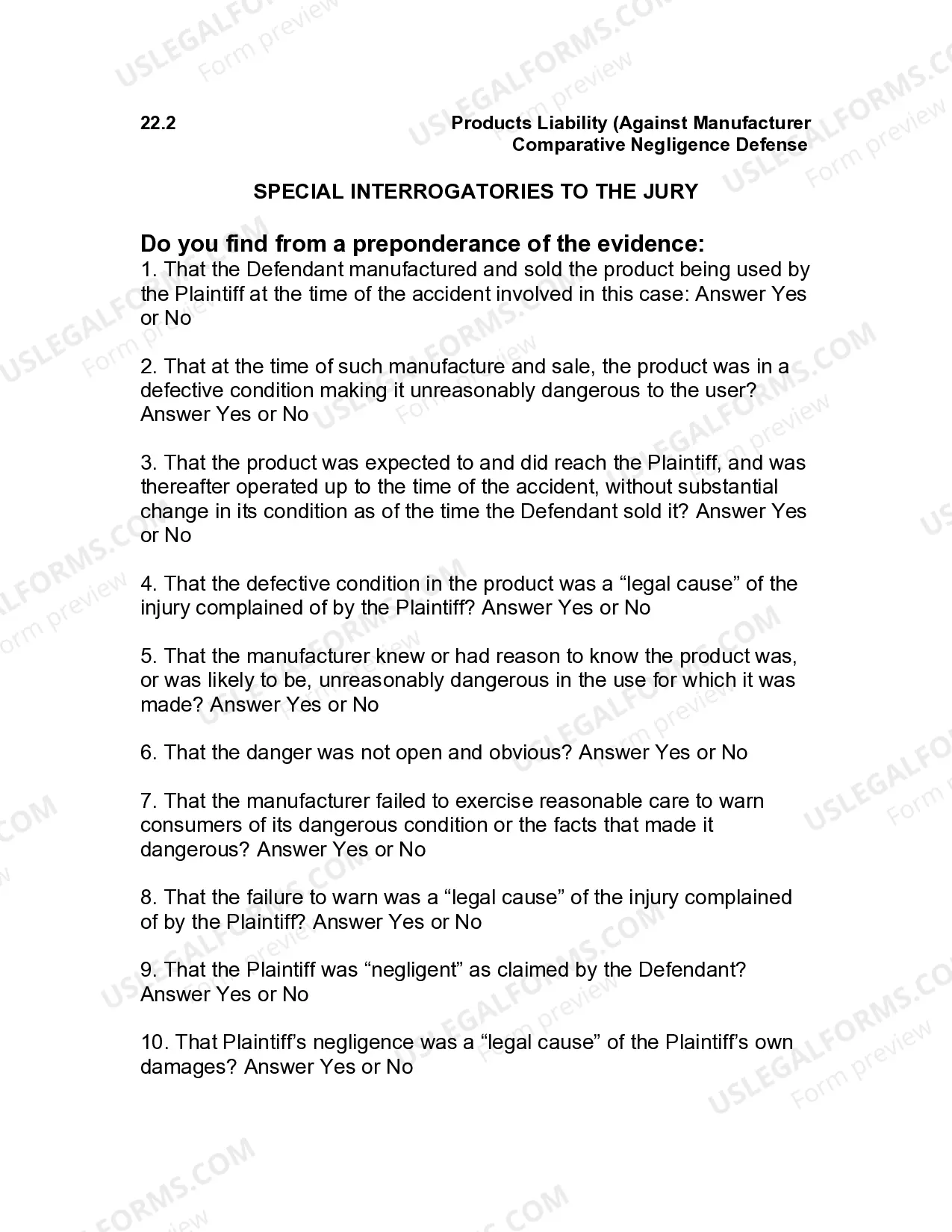
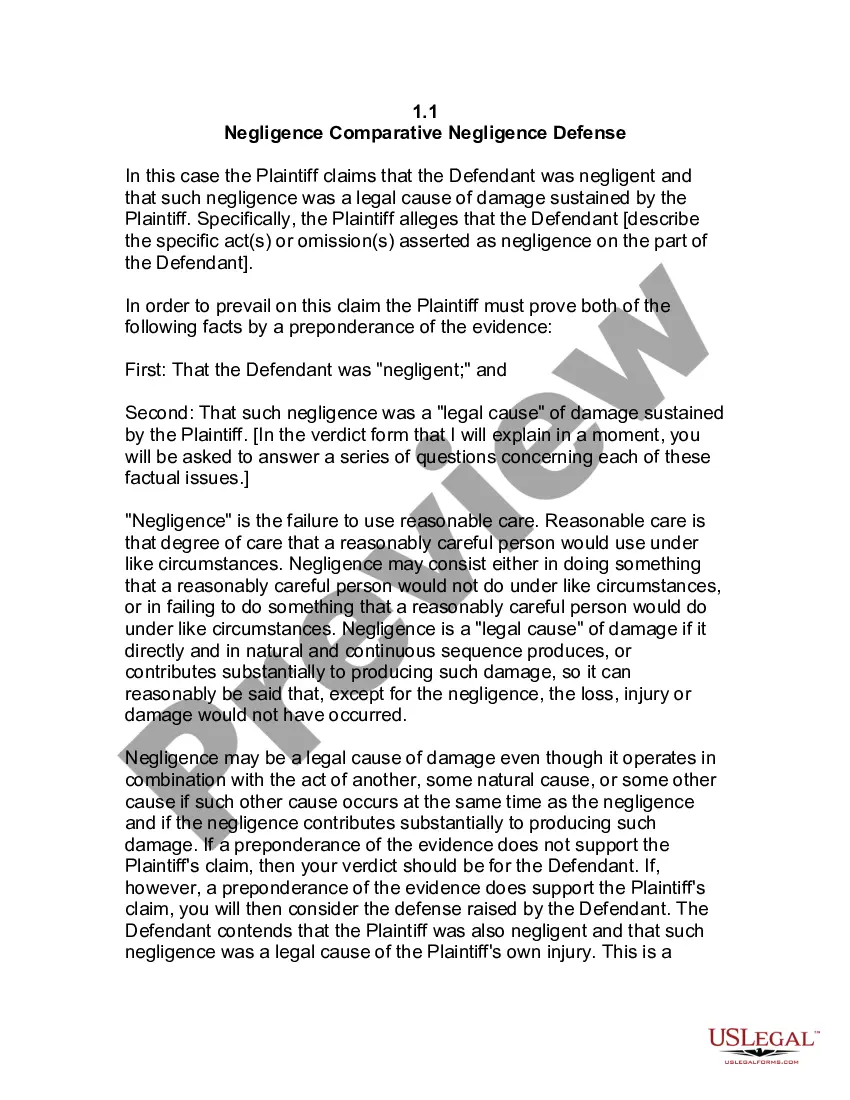
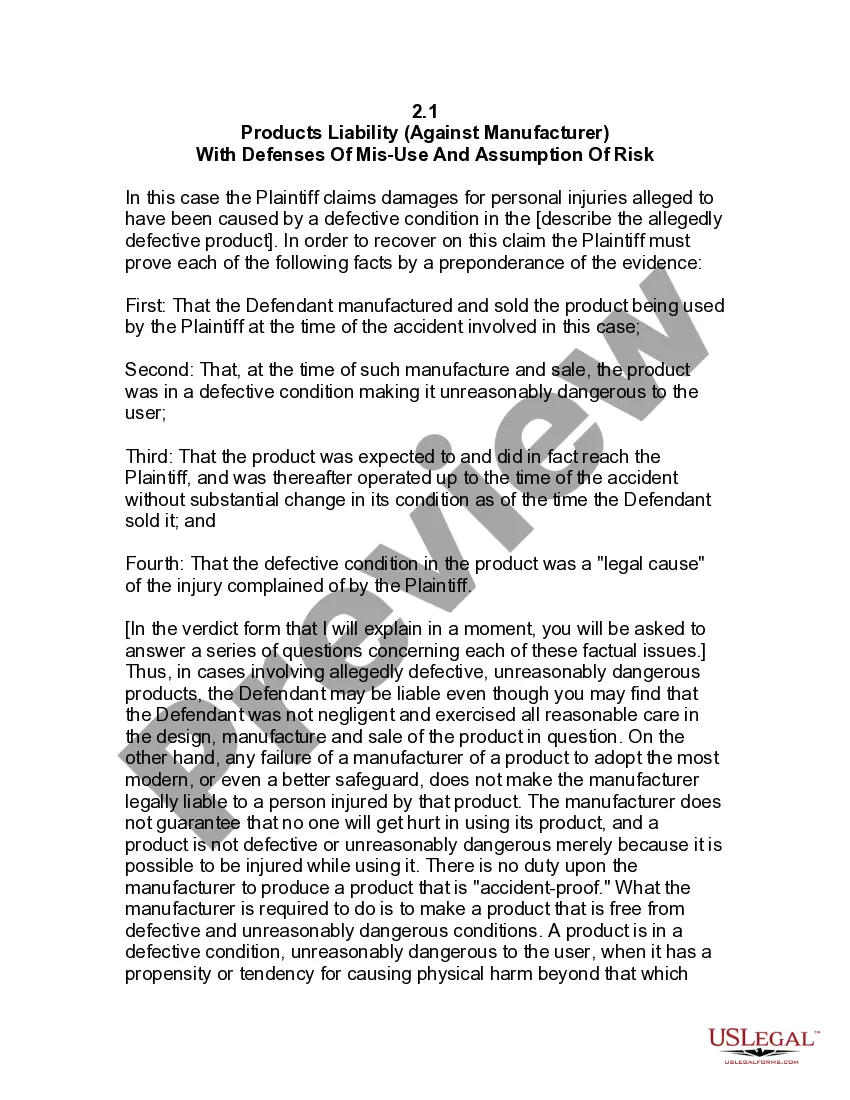
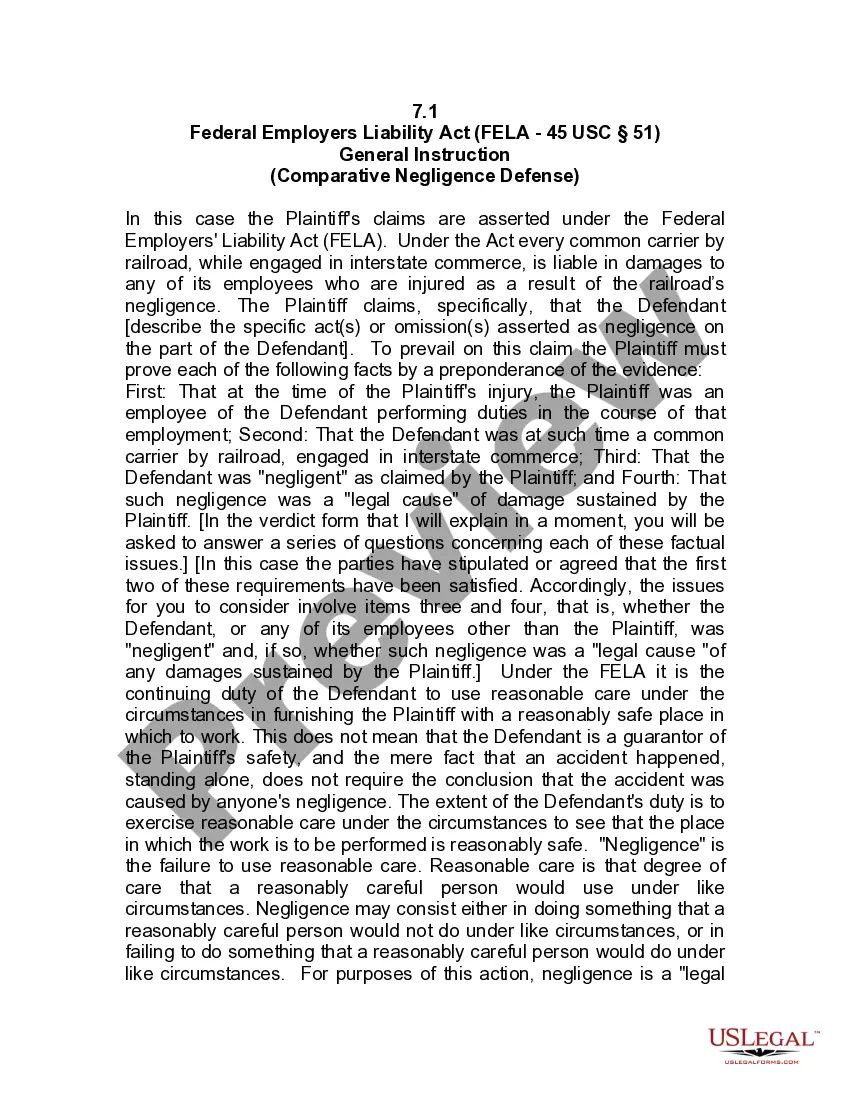
The Jury Instruction - 2.2 With Comparative Negligence Defense is a legal document that provides sample jury instructions used in products liability cases across the United States. This form is designed to guide jurors in understanding the key elements of liability and negligence when evaluating cases involving allegedly defective products. Unlike other legal forms, this specific set of instructions emphasizes the considerations of comparative negligence, allowing jurors to assess the liability of both the manufacturer and the injured party.
Key components of this form
- Instructions for jurors on evaluating product liability claims.
- Definitions of product defects and reasonable care standards for manufacturers.
- Framework for determining comparative negligence between the plaintiff and defendant.
- Guidelines for assessing damages and types of compensation available.
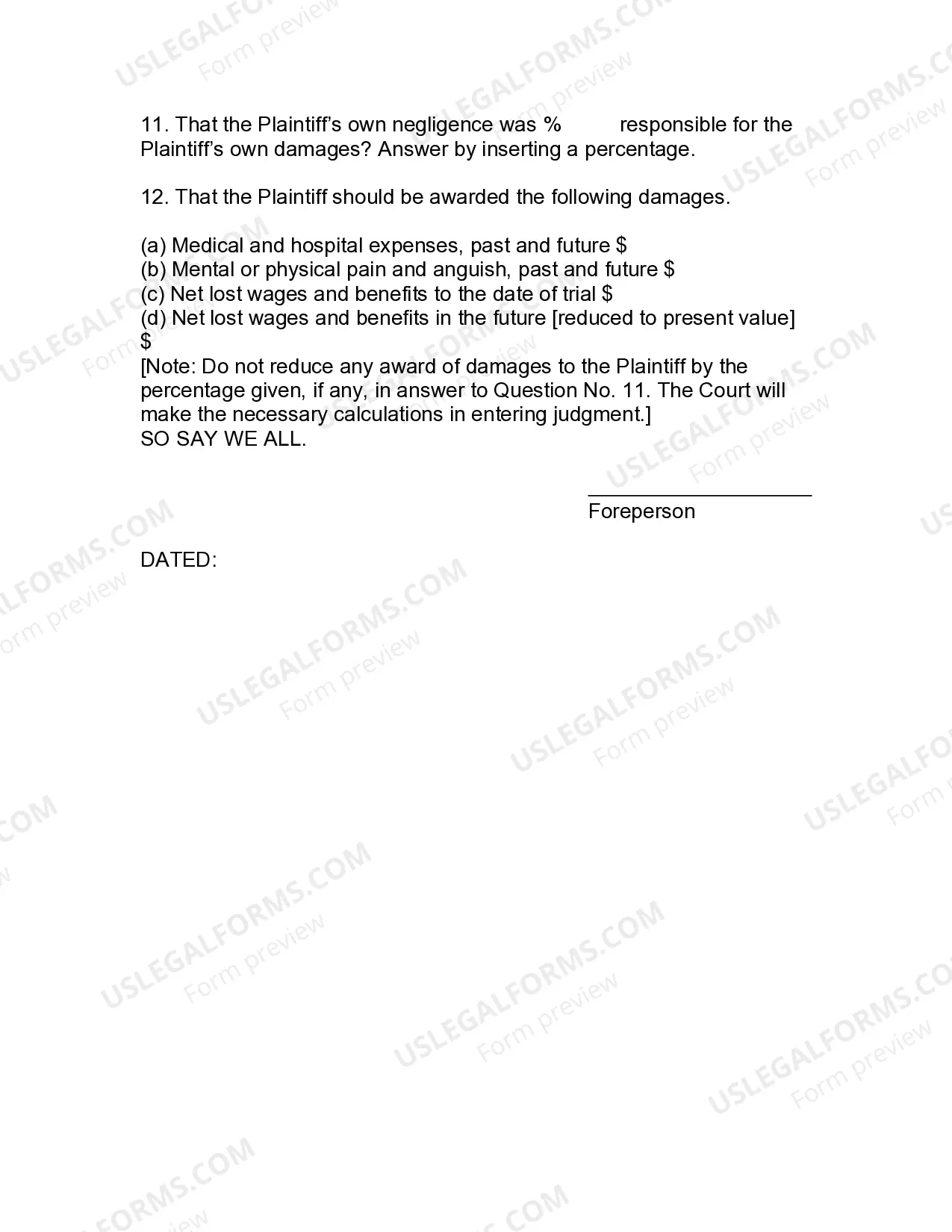
- Special interrogatories for the jury to answer regarding the evidence presented.
Common use cases
This form is utilized in cases where a plaintiff claims damages due to personal injuries linked to a defective product. It is particularly relevant when the defense argues that the plaintiff's own negligence contributed to their injuries. Use this form to provide clear instructions and establish parameters for jurors when deliberating on cases of product liability and comparative negligence.
Intended users of this form
- Attorneys representing parties in product liability cases.
- Judges overseeing trials that require jury instructions on negligence and liability.
- Legal practitioners aiming to understand jury guidelines on complex liability issues.
- Individuals involved in lawsuits surrounding defective products.
Instructions for completing this form
- Review the entire jury instruction template to ensure it aligns with the specifics of your case.
- Modify sections as necessary to accurately reflect the facts and circumstances surrounding the product and accident.
- Prepare special interrogatories by detailing the specific questions for jurors concerning liability and negligence.
- Consult with legal counsel to ensure that the final instructions are comprehensive and applicable to the law in your jurisdiction.
- Submit the completed instructions to the court for approval and distribution to the jury.
Notarization guidance
Notarization is generally not required for this form. However, certain states or situations might demand it. You can complete notarization online through US Legal Forms, powered by Notarize, using a verified video call available anytime.
Get your form ready online
Our built-in tools help you complete, sign, share, and store your documents in one place.
Make edits, fill in missing information, and update formatting in US Legal Forms—just like you would in MS Word.
Download a copy, print it, send it by email, or mail it via USPS—whatever works best for your next step.
Sign and collect signatures with our SignNow integration. Send to multiple recipients, set reminders, and more. Go Premium to unlock E-Sign.
If this form requires notarization, complete it online through a secure video call—no need to meet a notary in person or wait for an appointment.
We protect your documents and personal data by following strict security and privacy standards.

Make edits, fill in missing information, and update formatting in US Legal Forms—just like you would in MS Word.

Download a copy, print it, send it by email, or mail it via USPS—whatever works best for your next step.

Sign and collect signatures with our SignNow integration. Send to multiple recipients, set reminders, and more. Go Premium to unlock E-Sign.

If this form requires notarization, complete it online through a secure video call—no need to meet a notary in person or wait for an appointment.

We protect your documents and personal data by following strict security and privacy standards.
Typical mistakes to avoid
- Failing to adapt the jury instructions to the specifics of the case.
- Not providing clear definitions of key legal terms, leading to juror confusion.
- Overlooking the impact of comparative negligence on potential damages awarded.
- Neglecting to ensure all questions asked in the special interrogatories are relevant to the evidence presented.
Why use this form online
- Convenient access to a comprehensive jury instruction template tailored for product liability cases.
- Easy customization to fit the unique circumstances of each case.
- Reliable guidance informed by current legal standards and practices.
- Fast download and printing options to ensure timely use in court proceedings.
Legal use & context
- This form provides a legal framework for adjudicating cases involving product liability and negligence.
- It is designed to guide jurors in their deliberations, ensuring they understand both the law and their roles.
- Using this form can help prevent errors in jury instructions that might lead to appeals or mistrials.
Looking for another form?
Form popularity
FAQ
The most common negligence defenses are contributory negligence, comparative negligence, and assumption of risk. This article will discuss all three defenses, when they're used, and how they're established.
Comparative negligence states use the assigned blame to limit the amount of damages a plaintiff can recover. For example, if the judge assigns 70% fault to the defendant and 30% to the plaintiff, the plaintiff may only be able to recover 70% of the damages, rather than the full 100%.
A defence available where it is proved that the claimant's own negligence contributed to its loss or damage. The Law Reform (Contributory Negligence) Act 1945 provides for apportionment of loss where the fault of both claimant and defendant have contributed to the damage.
The most common negligence defenses are contributory negligence, comparative negligence, and assumption of risk.
Comparative negligence, called non-absolute contributory negligence outside the United States, is a partial legal defense that reduces the amount of damages that a plaintiff can recover in a negligence-based claim, based upon the degree to which the plaintiff's own negligence contributed to cause the injury.
A tort rule for allocating damages when both parties are at least somewhat at fault. In a situation where both the plaintiff and the defendant were negligent, the jury allocates fault, usually as a percentage (for example, a jury might find that the plaintiff was 30% at fault and the defendant was 70% at fault).
Three of the most common doctrines are contributory negligence, comparative fault, and assumption of risk.
Do you want to hold another party accountable for their negligent behavior? Doing so means you and your lawyer must prove the five elements of negligence: duty, breach of duty, cause, in fact, proximate cause, and harm.
Did the individual at fault owe a duty to the injured party? Was there a breach of said duty? Was the breach also the cause of the legal injury? What was the proximate cause? (could the harm caused be anticipated) What was the extent of the damage caused?