Jury Instruction - 1.1 Comparative Negligence Defense
What is this form?
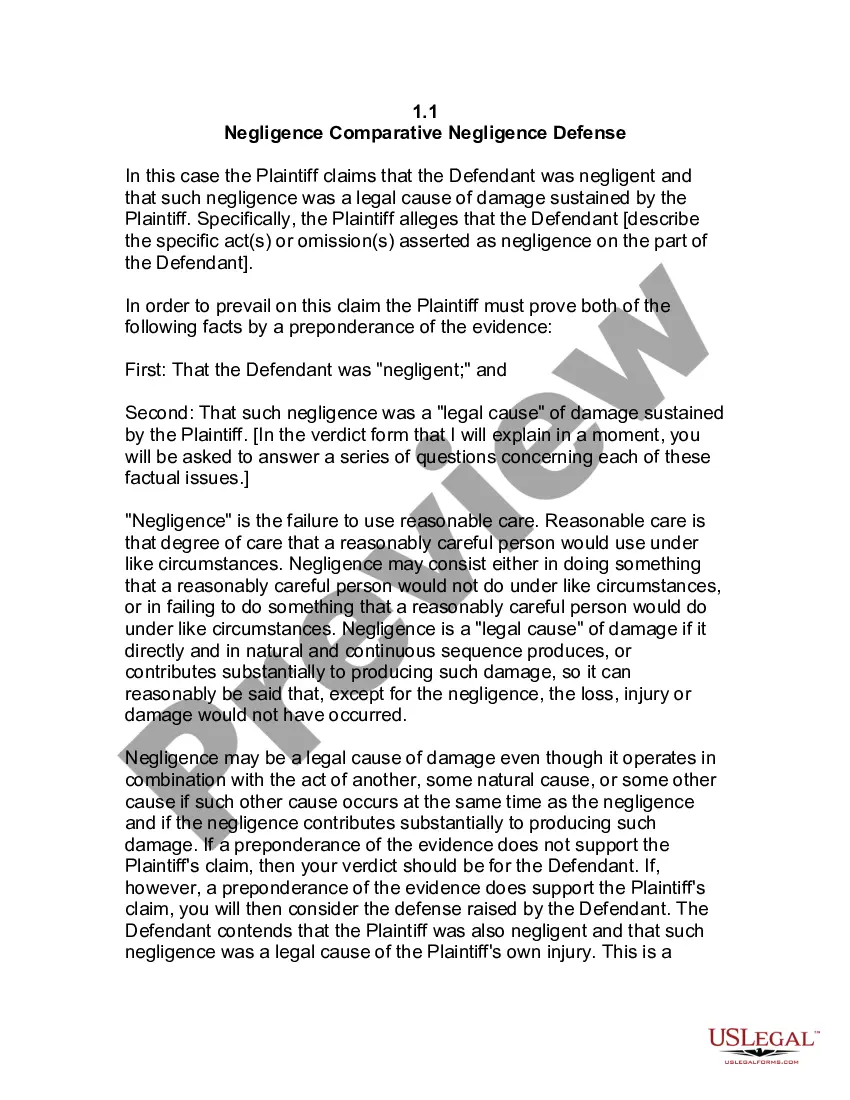
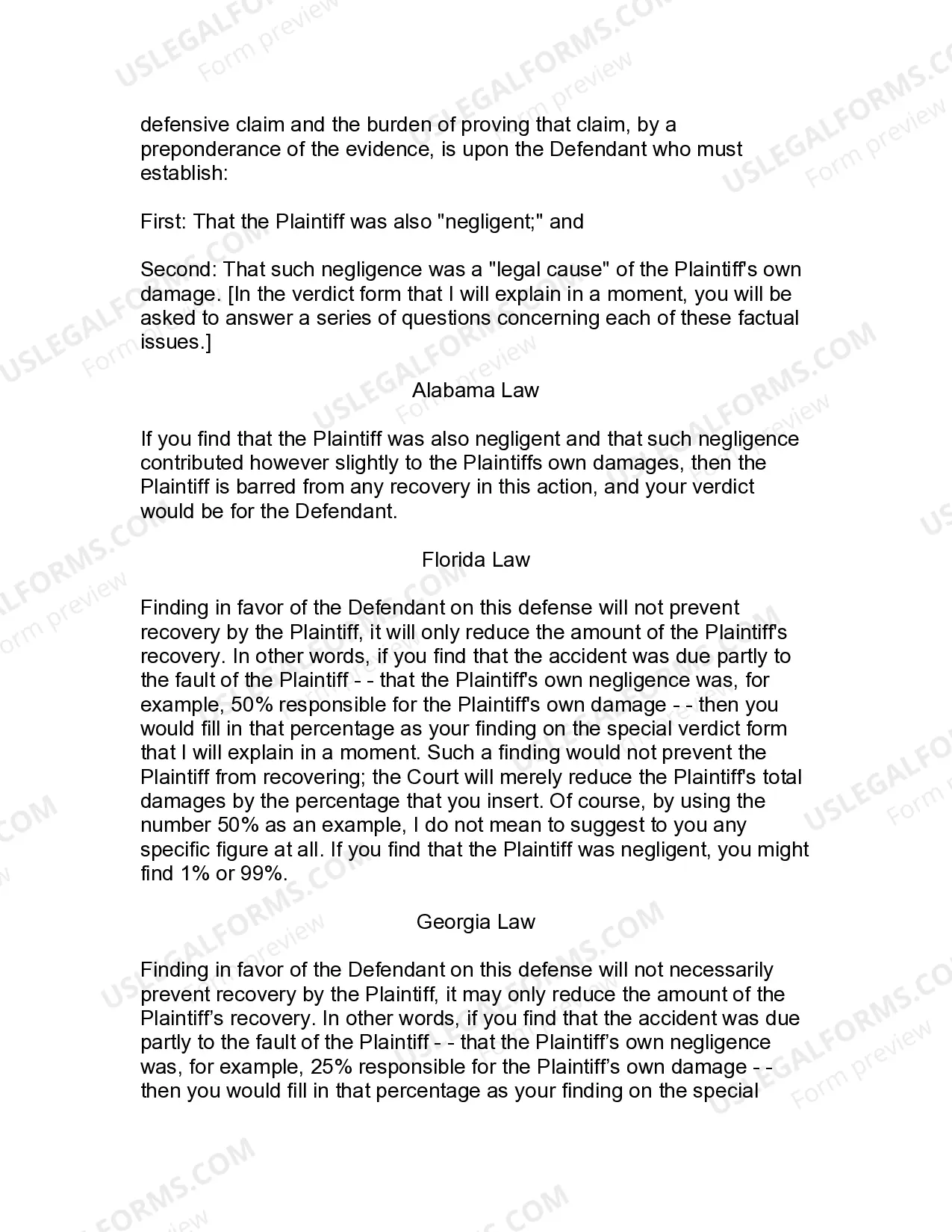
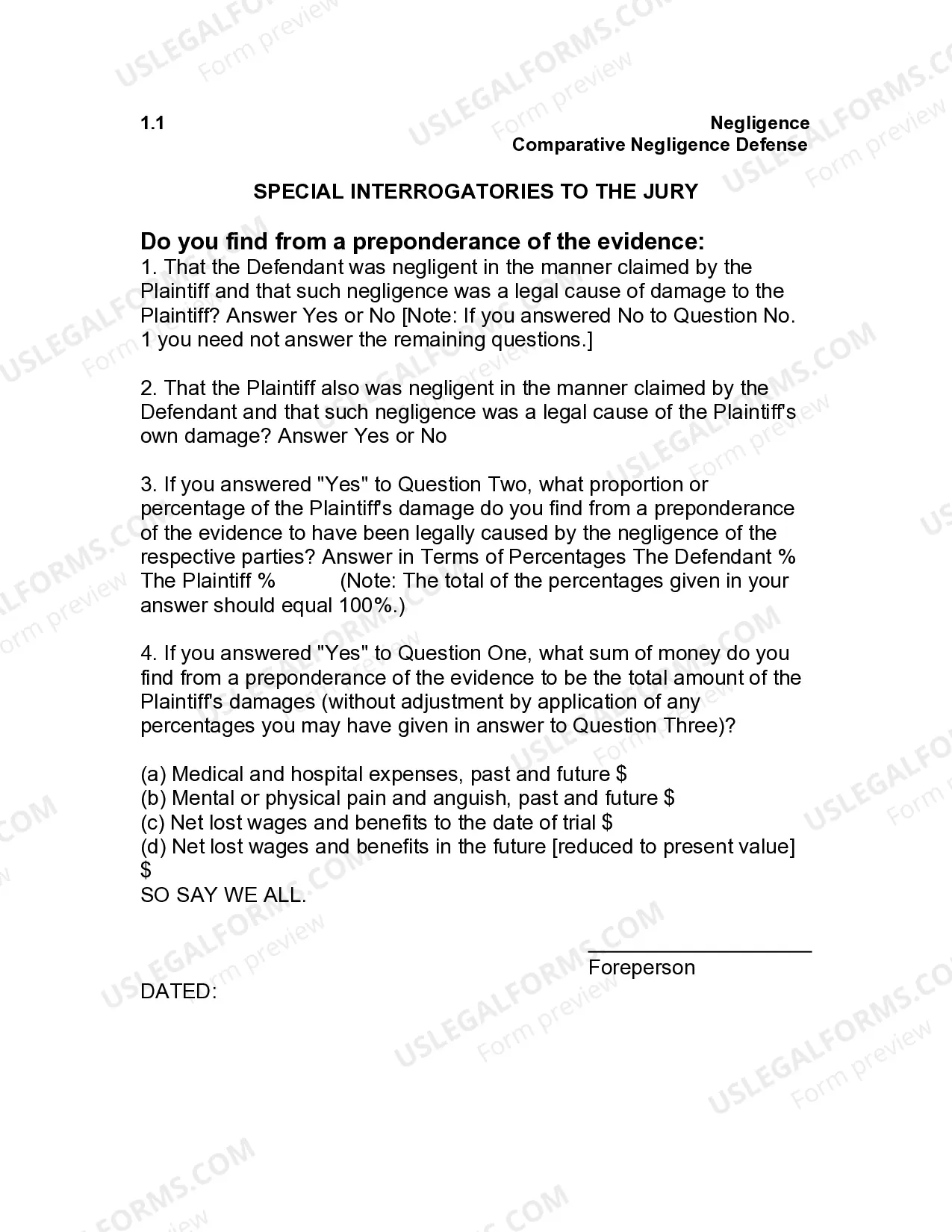
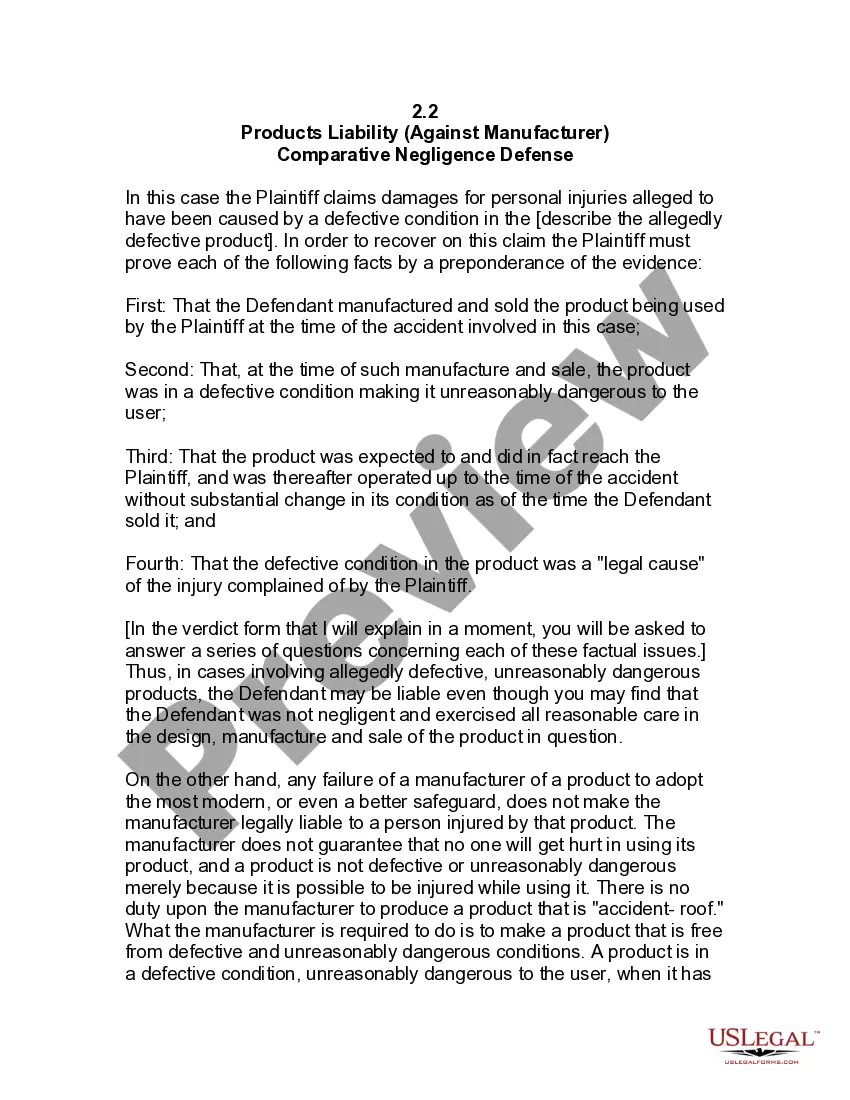
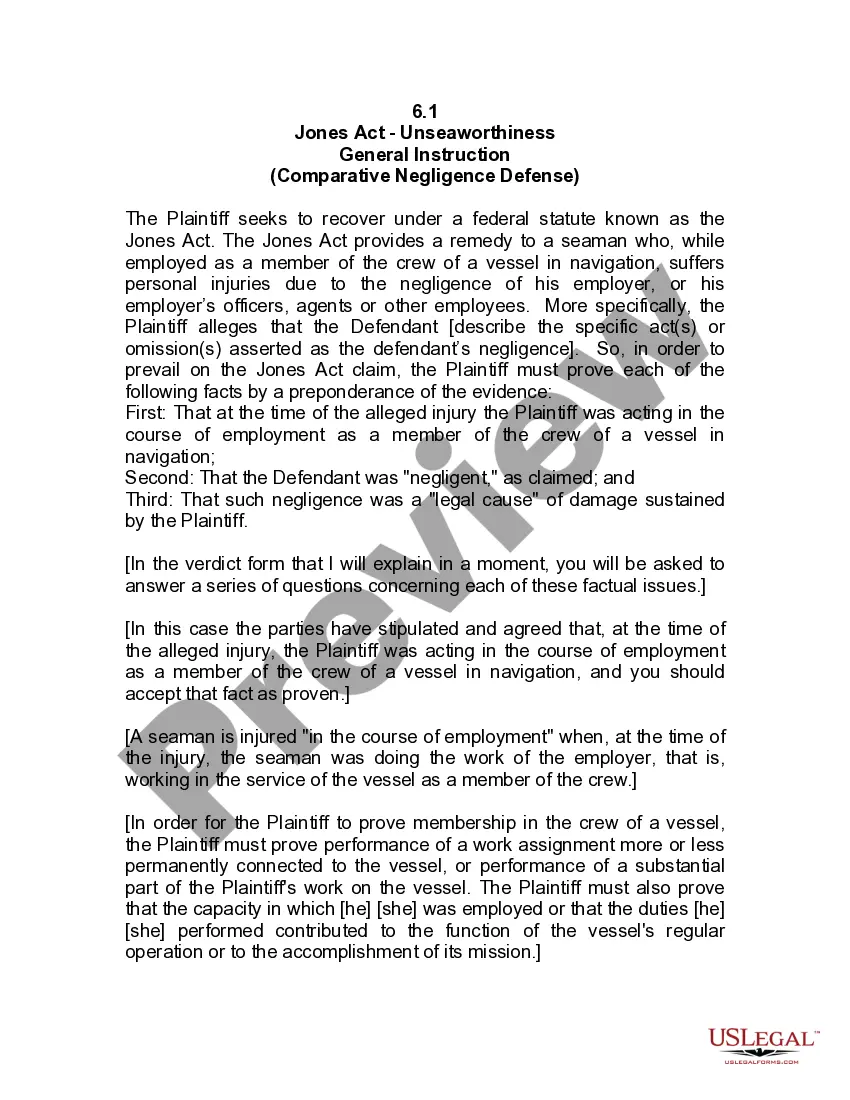
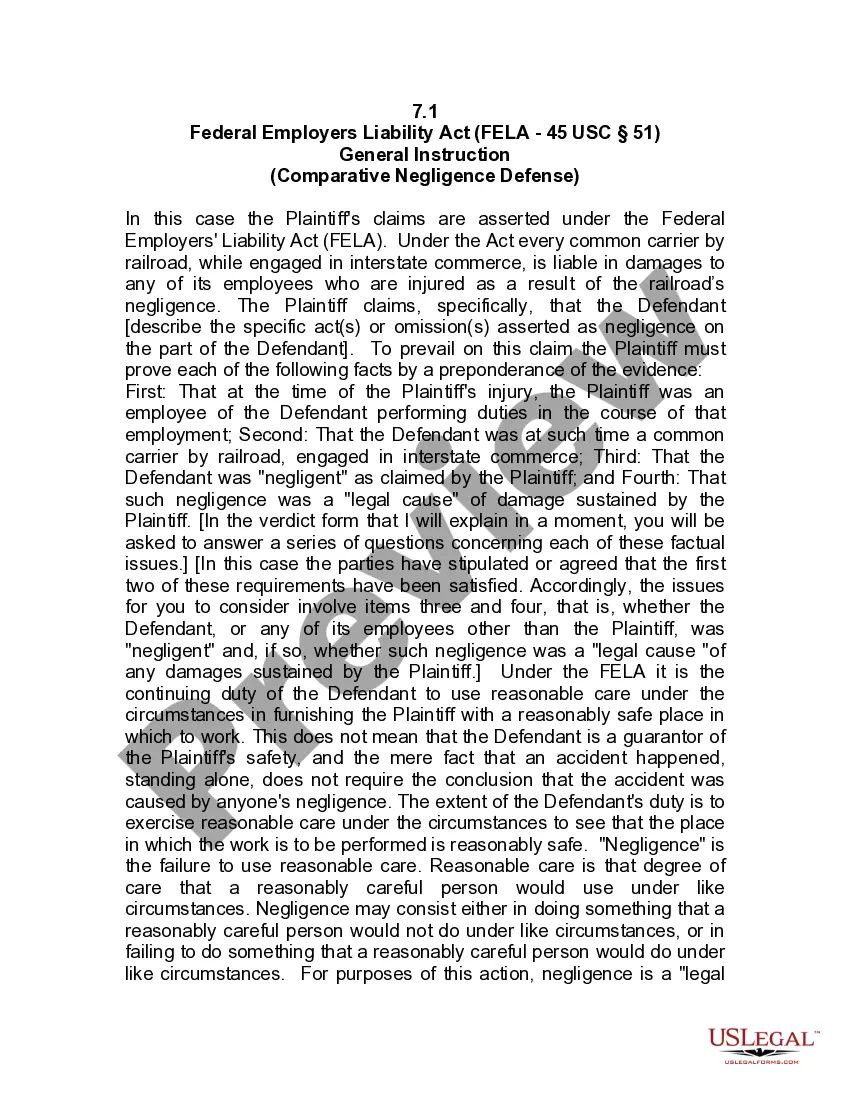
The Jury Instruction - 1.1 Comparative Negligence Defense form provides sample jury instructions relevant to negligence claims. It guides jurors on how to evaluate claims of negligence and the comparative negligence defense, ensuring they understand their role in determining fault and damages. This form is essential for cases involving allegations of negligence where both parties may share responsibility for the incident.
Main sections of this form
- Overview of negligence and legal standards for determining negligence.
- Instructions for jurors on evaluating both the plaintiff's and defendant's negligence.
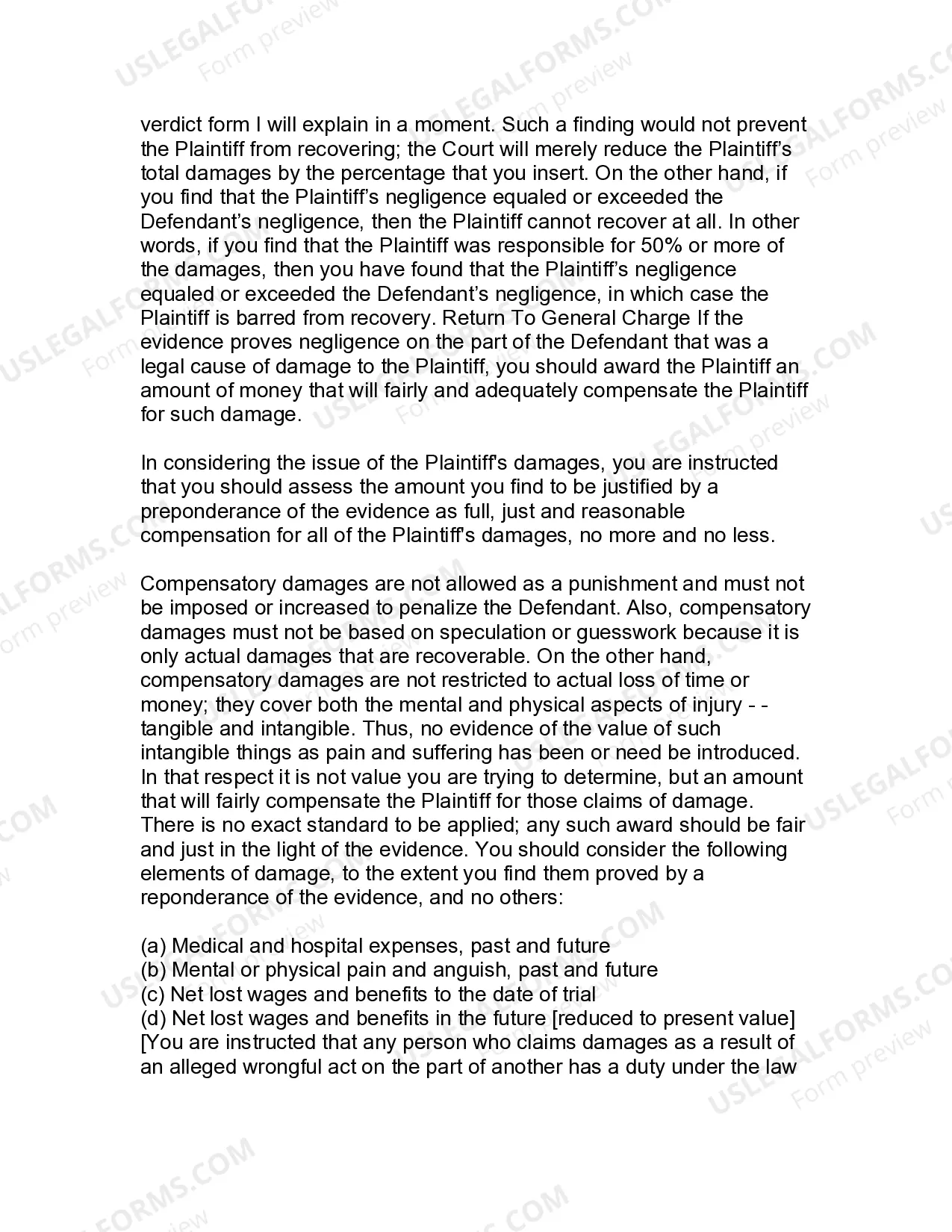
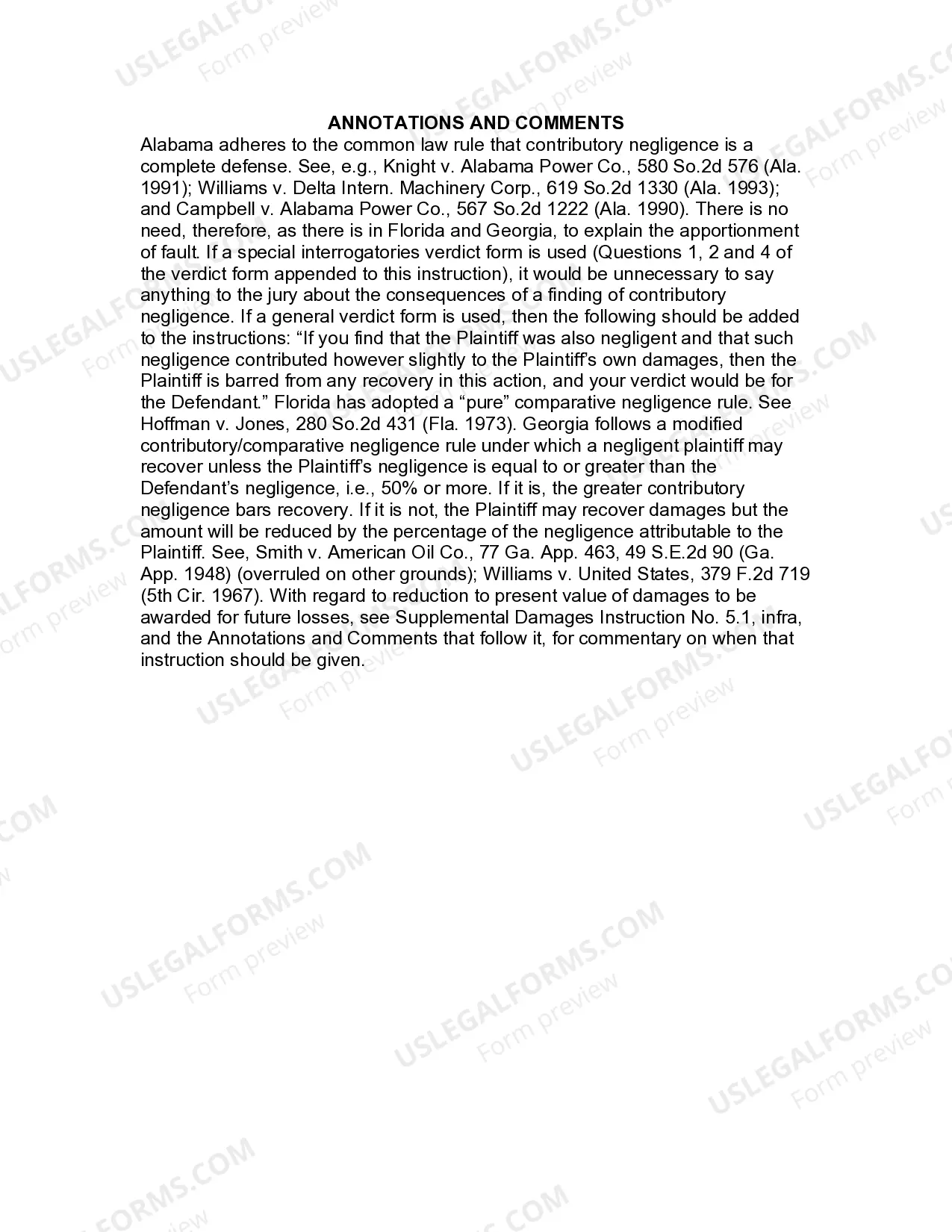
- State-specific guidelines for calculating damages and determining liability.
- Interrogatories for jurors to answer regarding the negligence claims of both parties.
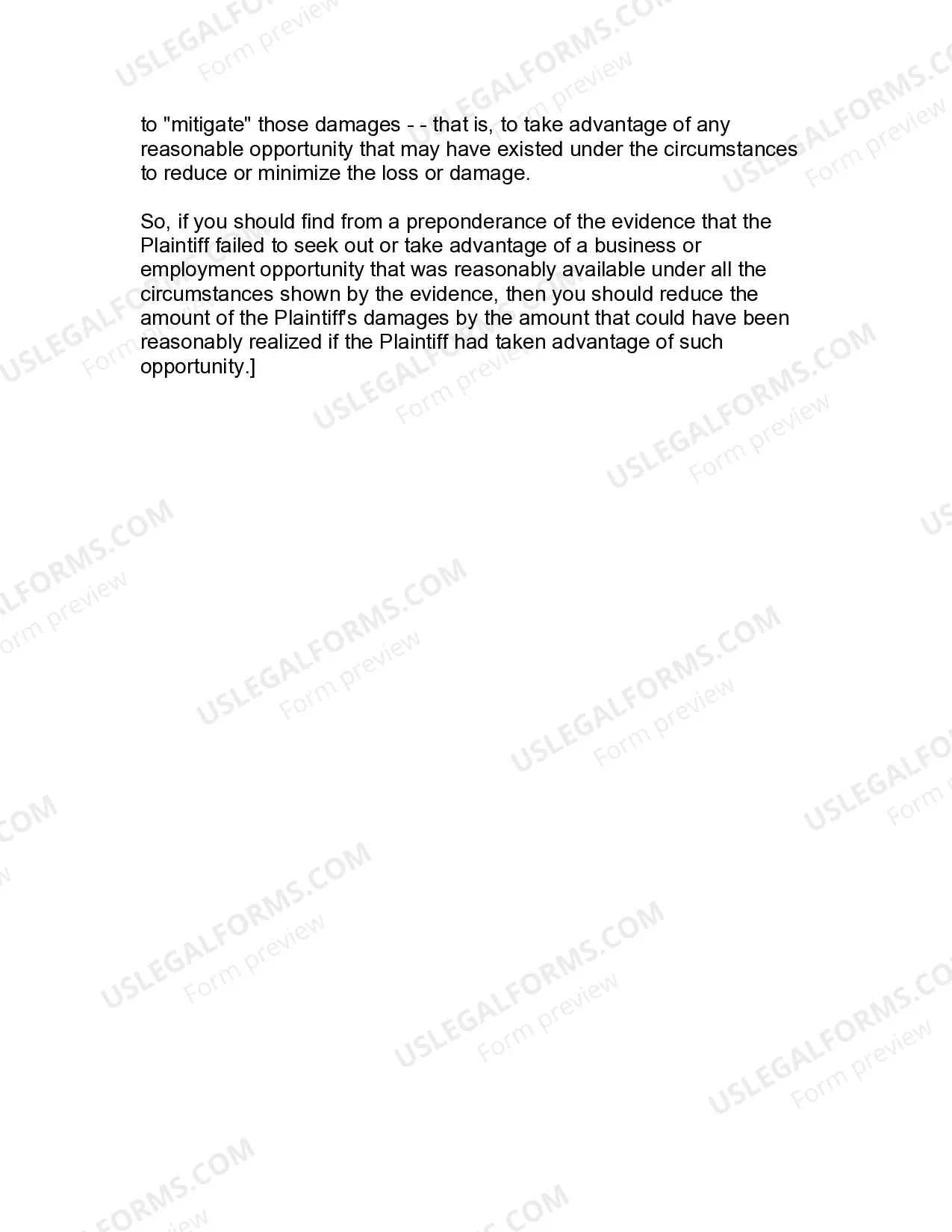
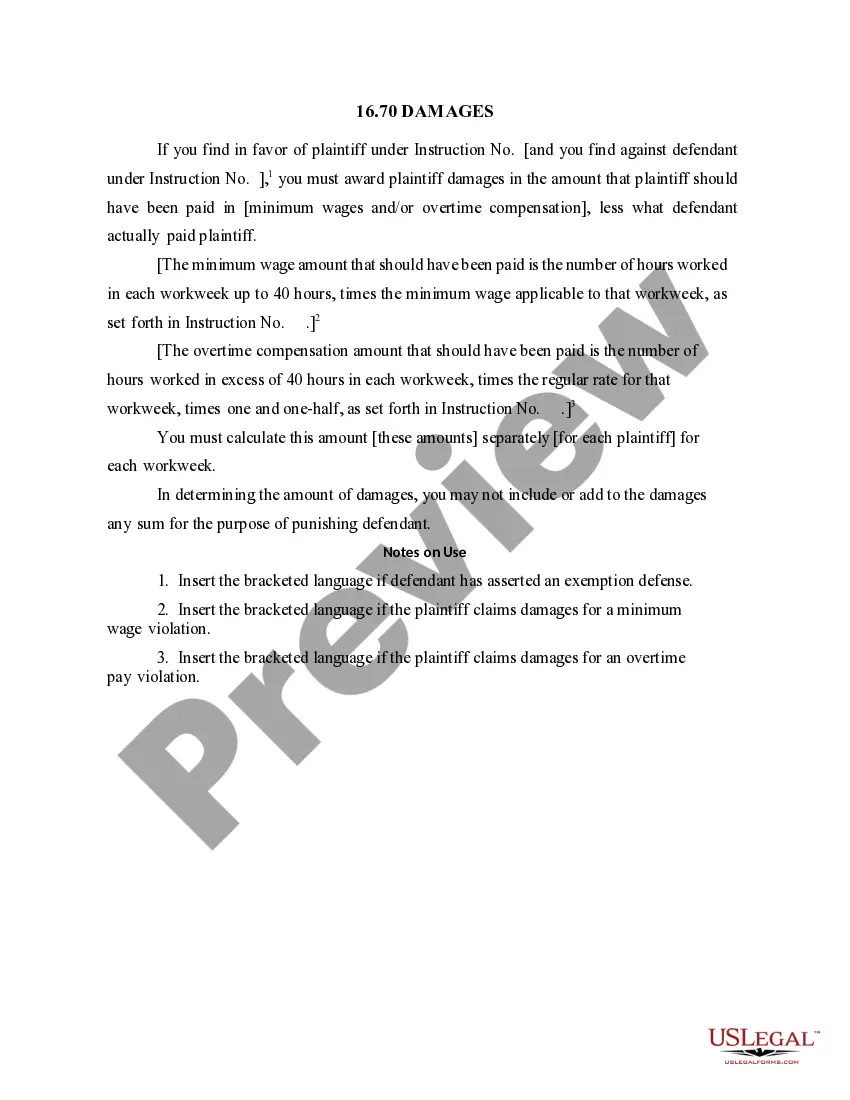
- Instructions on how to assess compensatory damages if negligence is established.
When to use this form
This form is used during trial proceedings where the jury must assess claims of negligence against a defendant and evaluate whether the plaintiff's own negligence contributed to their damages. It is essential in cases where both parties may have acted negligently, influencing the outcome of liability and damages awarded.
Intended users of this form
- Attorneys representing clients in negligence cases.
- Judges who need a framework for instructing jurors on negligence law.
- Jurors involved in cases where negligence claims are presented.
Steps to complete this form
- Read the instructions carefully to understand the definitions of negligence.
- Fill out the interrogatories based on the evidence presented during the trial.
- Assess the negligence of both the defendant and the plaintiff using the provided questions.
- Determine the percentage of negligence attributed to each party as necessary.
- Calculate any compensatory damages appropriately based on the jury's findings.
Does this document require notarization?
Notarization is generally not required for this form. However, certain states or situations might demand it. You can complete notarization online through US Legal Forms, powered by Notarize, using a verified video call available anytime.
Get your form ready online
Our built-in tools help you complete, sign, share, and store your documents in one place.
Make edits, fill in missing information, and update formatting in US Legal Forms—just like you would in MS Word.
Download a copy, print it, send it by email, or mail it via USPS—whatever works best for your next step.
Sign and collect signatures with our SignNow integration. Send to multiple recipients, set reminders, and more. Go Premium to unlock E-Sign.
If this form requires notarization, complete it online through a secure video call—no need to meet a notary in person or wait for an appointment.
We protect your documents and personal data by following strict security and privacy standards.

Make edits, fill in missing information, and update formatting in US Legal Forms—just like you would in MS Word.

Download a copy, print it, send it by email, or mail it via USPS—whatever works best for your next step.

Sign and collect signatures with our SignNow integration. Send to multiple recipients, set reminders, and more. Go Premium to unlock E-Sign.

If this form requires notarization, complete it online through a secure video call—no need to meet a notary in person or wait for an appointment.

We protect your documents and personal data by following strict security and privacy standards.
Common mistakes to avoid
- Failing to fully explain legal concepts of negligence to jurors.
- Not accurately applying state-specific laws regarding comparative negligence.
- Omitting details in the interrogatory responses that can affect the verdict.
Why complete this form online
- Convenient access to legally vetted jury instructions.
- Easily editable to fit specific legal cases and jurisdictional requirements.
- Reliable format that complies with legal standards across multiple states.
Legal use & context
- Provides a legally recognized framework for jurors to assess negligence.
- Ensures clarity in how the jury assesses both partiesâ fault.
- Facilitates a fair trial by helping jurors understand their duties in negligence cases.
Quick recap
- The Jury Instruction - 1.1 Comparative Negligence Defense is vital for guiding jury decisions in negligence cases.
- Understanding how to allocate fault is crucial for determining damages.
- This form can be adapted to meet the specific needs of different jurisdictions.
Looking for another form?



Form popularity
FAQ
Which of the following is a defense to a negligence claim? Self defense.
A defence available where it is proved that the claimant's own negligence contributed to its loss or damage. The Law Reform (Contributory Negligence) Act 1945 provides for apportionment of loss where the fault of both claimant and defendant have contributed to the damage.
Comparative negligence, called non-absolute contributory negligence outside the United States, is a partial legal defense that reduces the amount of damages that a plaintiff can recover in a negligence-based claim, based upon the degree to which the plaintiff's own negligence contributed to cause the injury.
Contributory Negligence: Contributory negligence is one of the most commonly used negligence defenses. The defendant attempts to deny the plaintiff the right to action by claiming that the plaintiff's own negligence played a large role in his injuries.
Voluntary assumption of risk. Contributory negligence (no longer a defence). Delay under the statute of limitations.
The most common negligence defenses are contributory negligence, comparative negligence, and assumption of risk.
Three of the most common doctrines are contributory negligence, comparative fault, and assumption of risk.
Contributory Negligence. The concept of contributory negligence revolves around a plaintiff's contribution to his or her own damages. Comparative Negligence. Vicarious Liability. Gross Negligence.