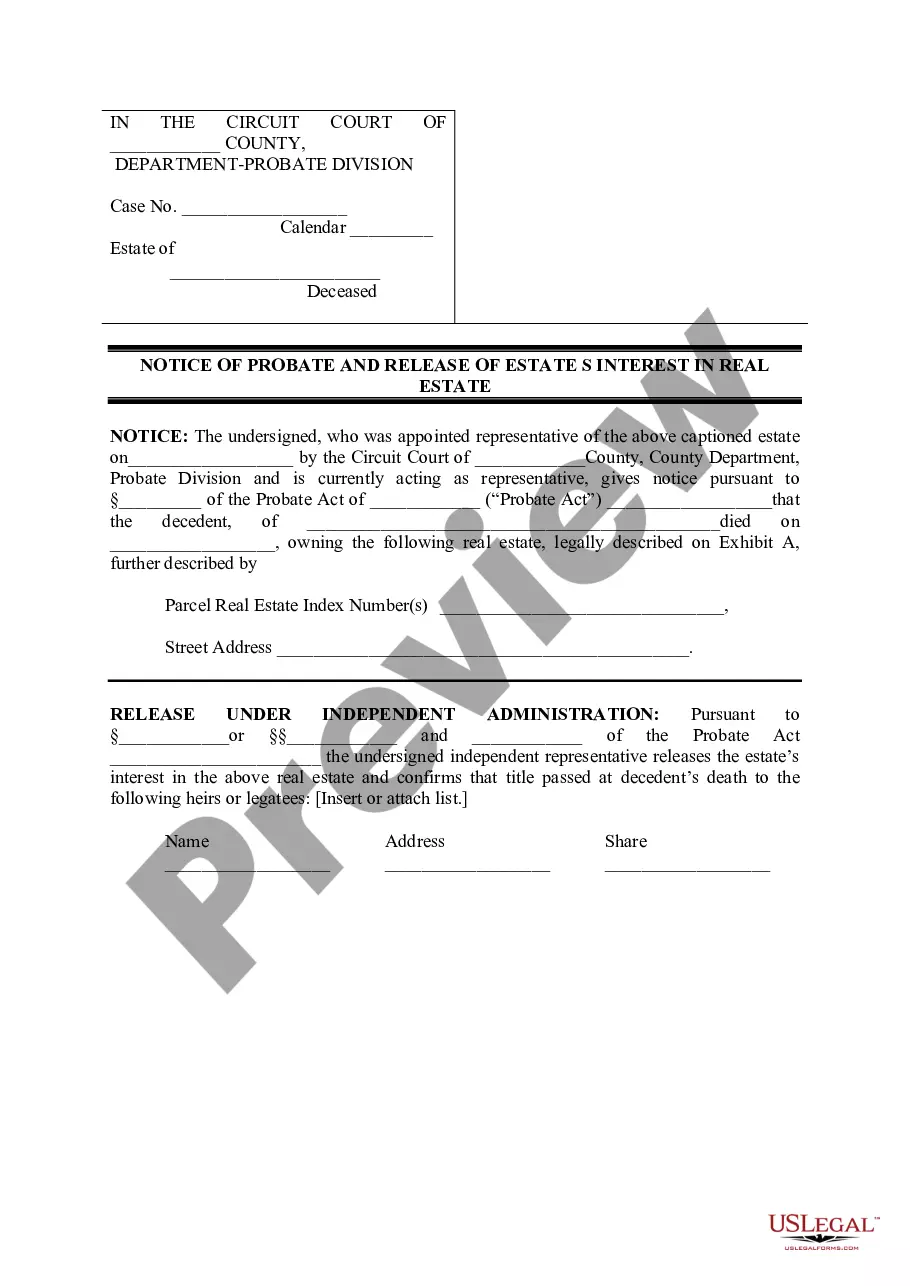
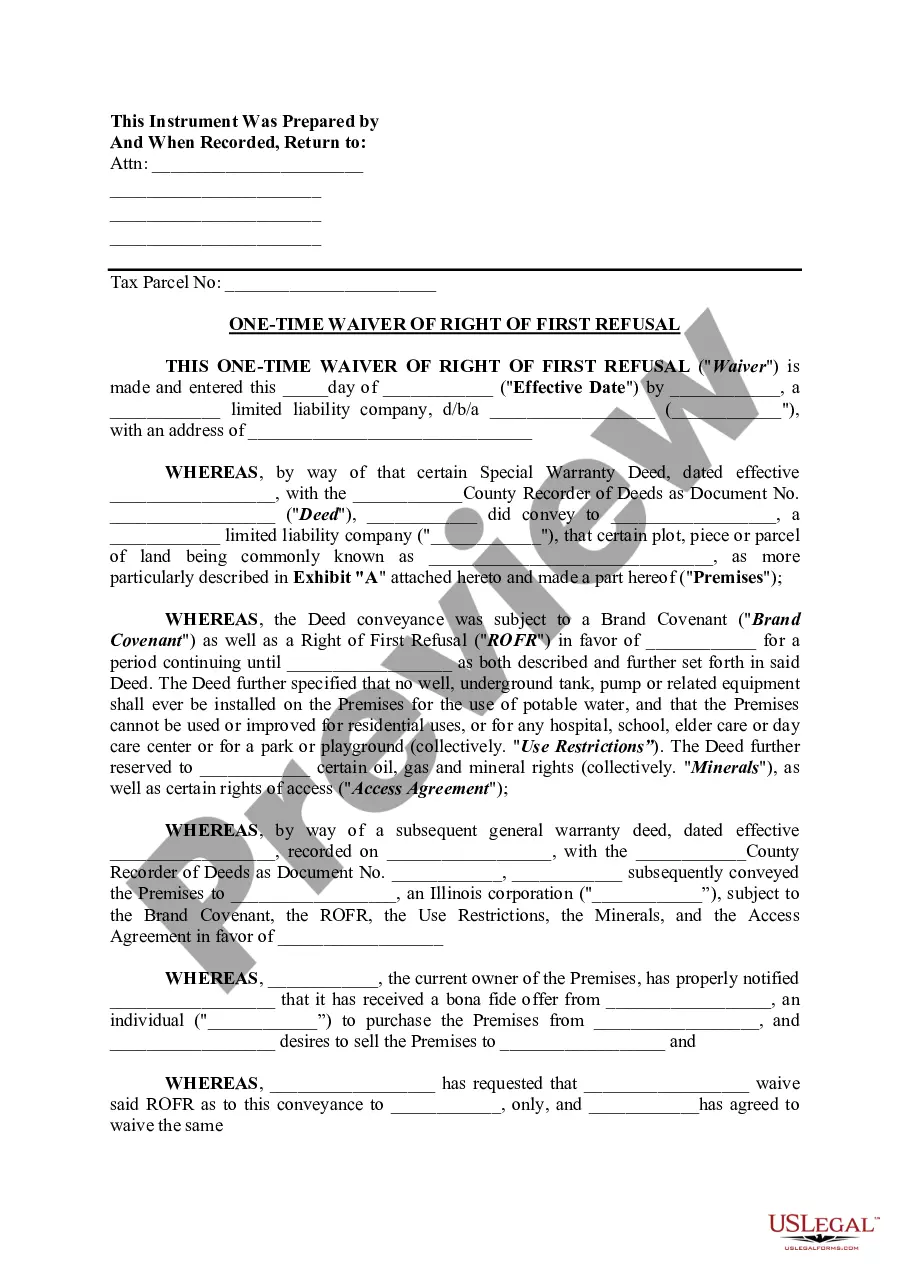
Complaint for Legal Malpractice - General Form
What is this form?
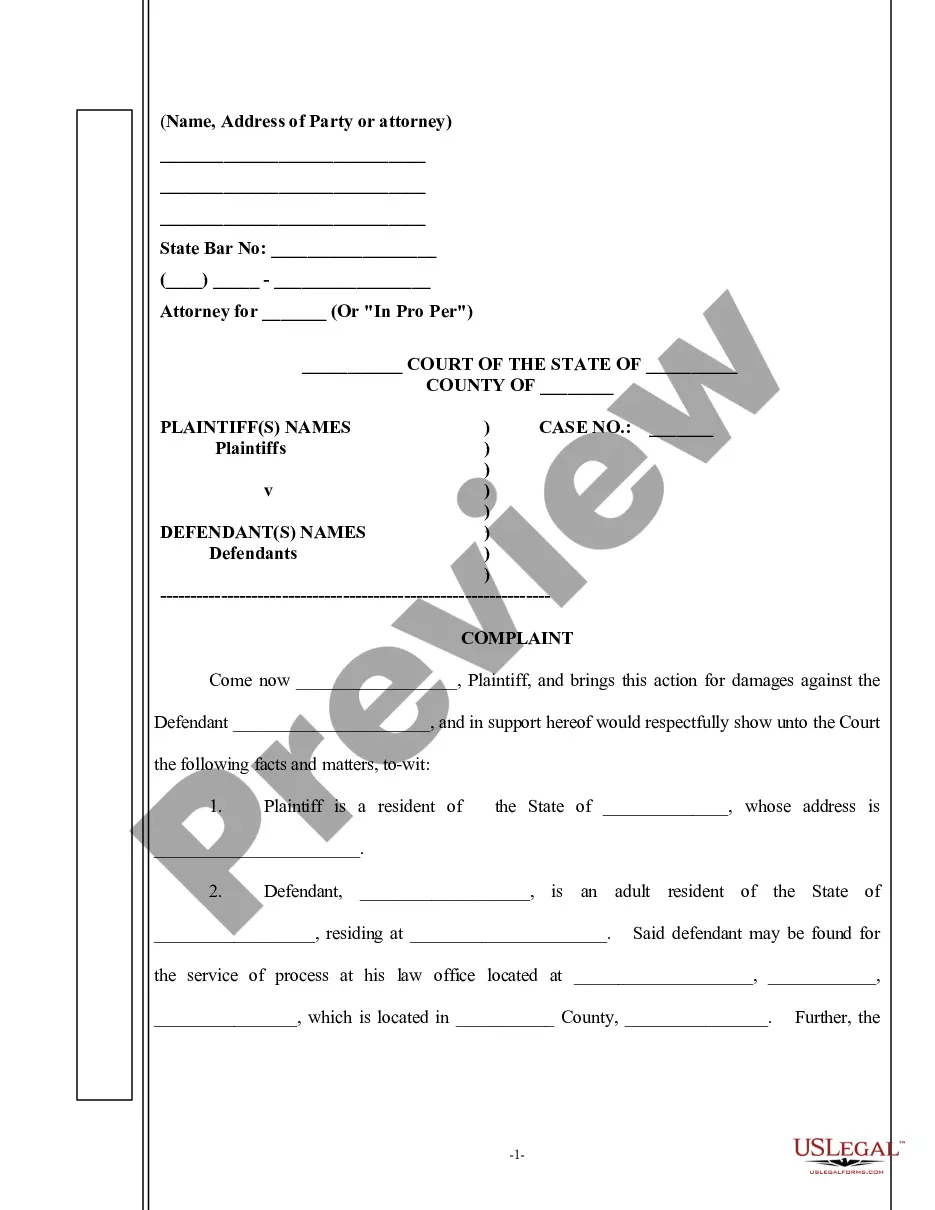
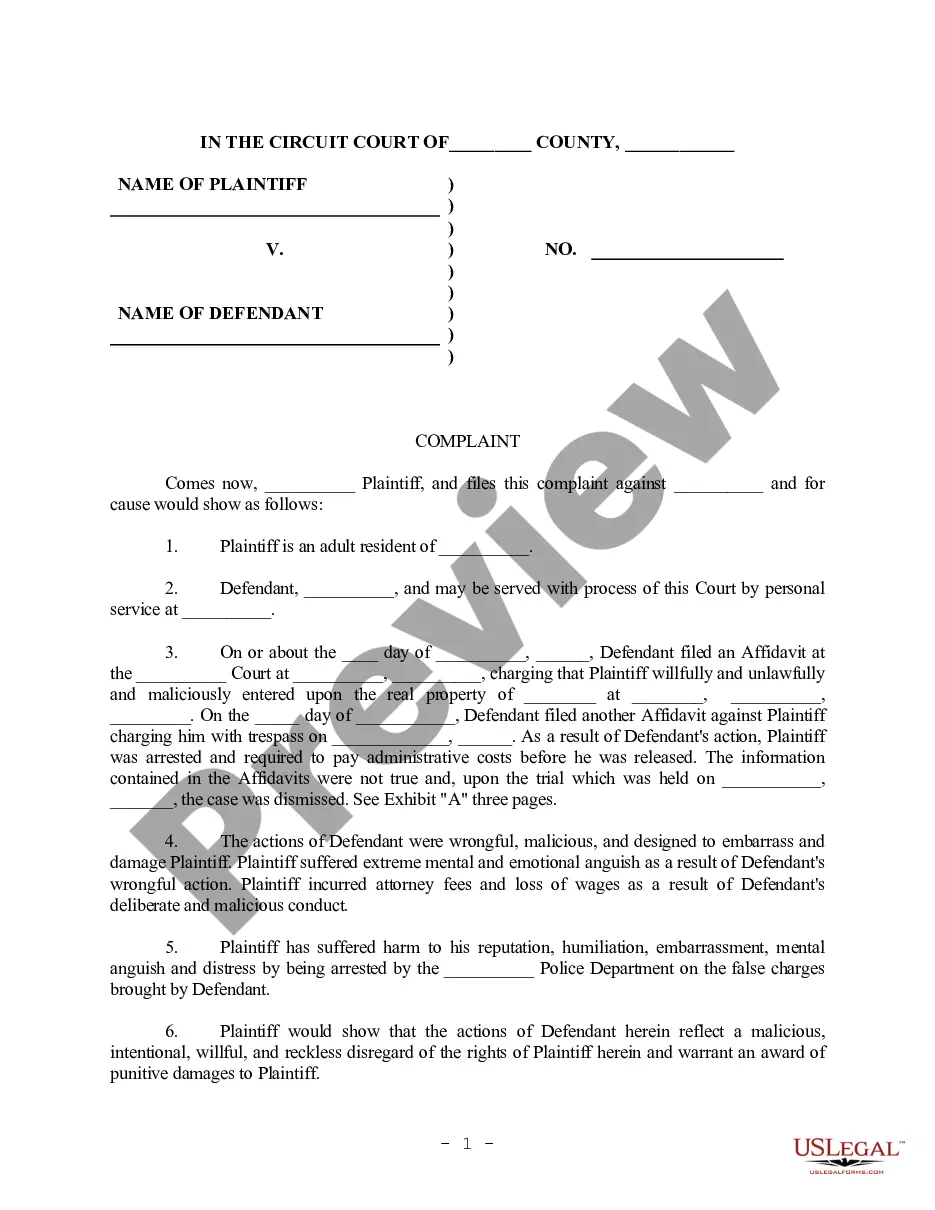
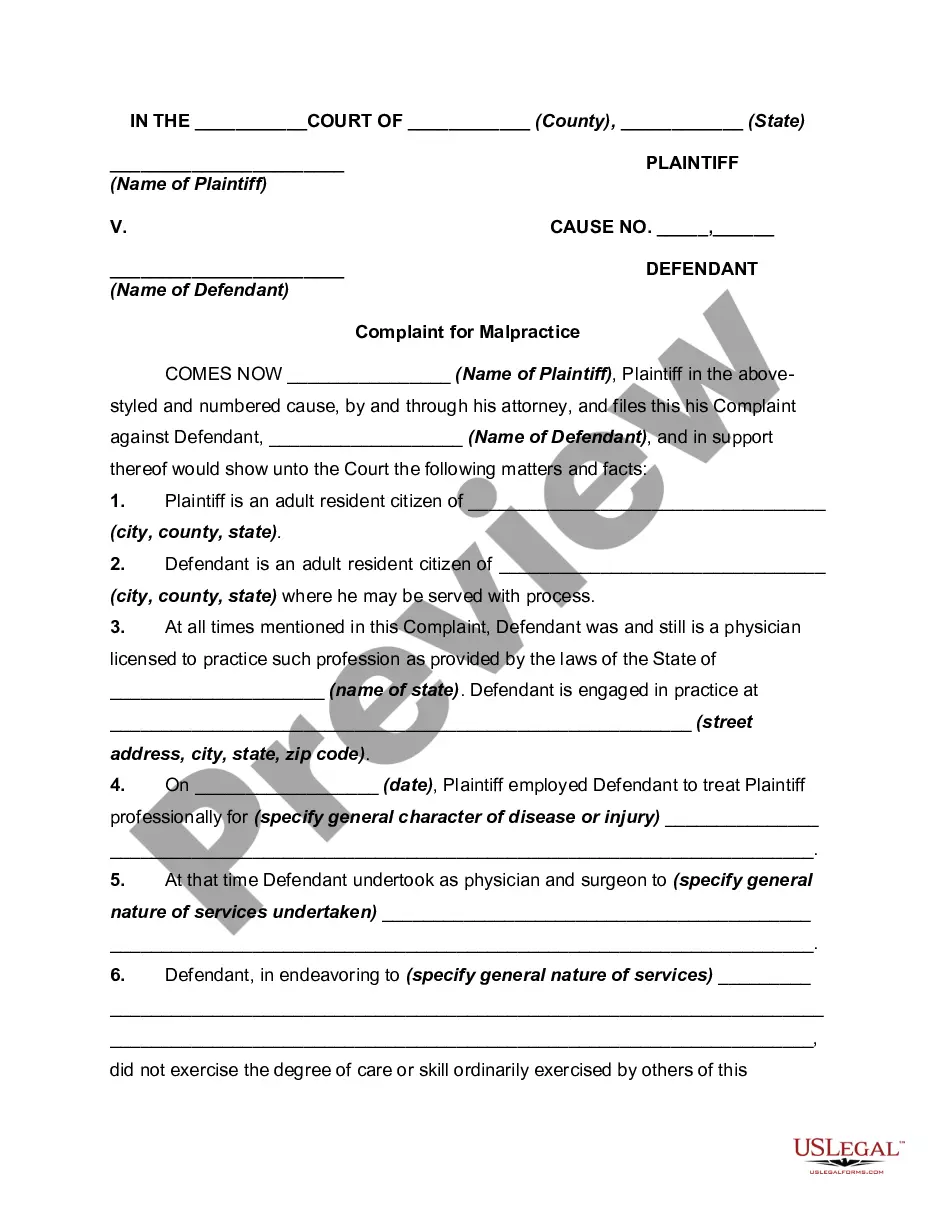
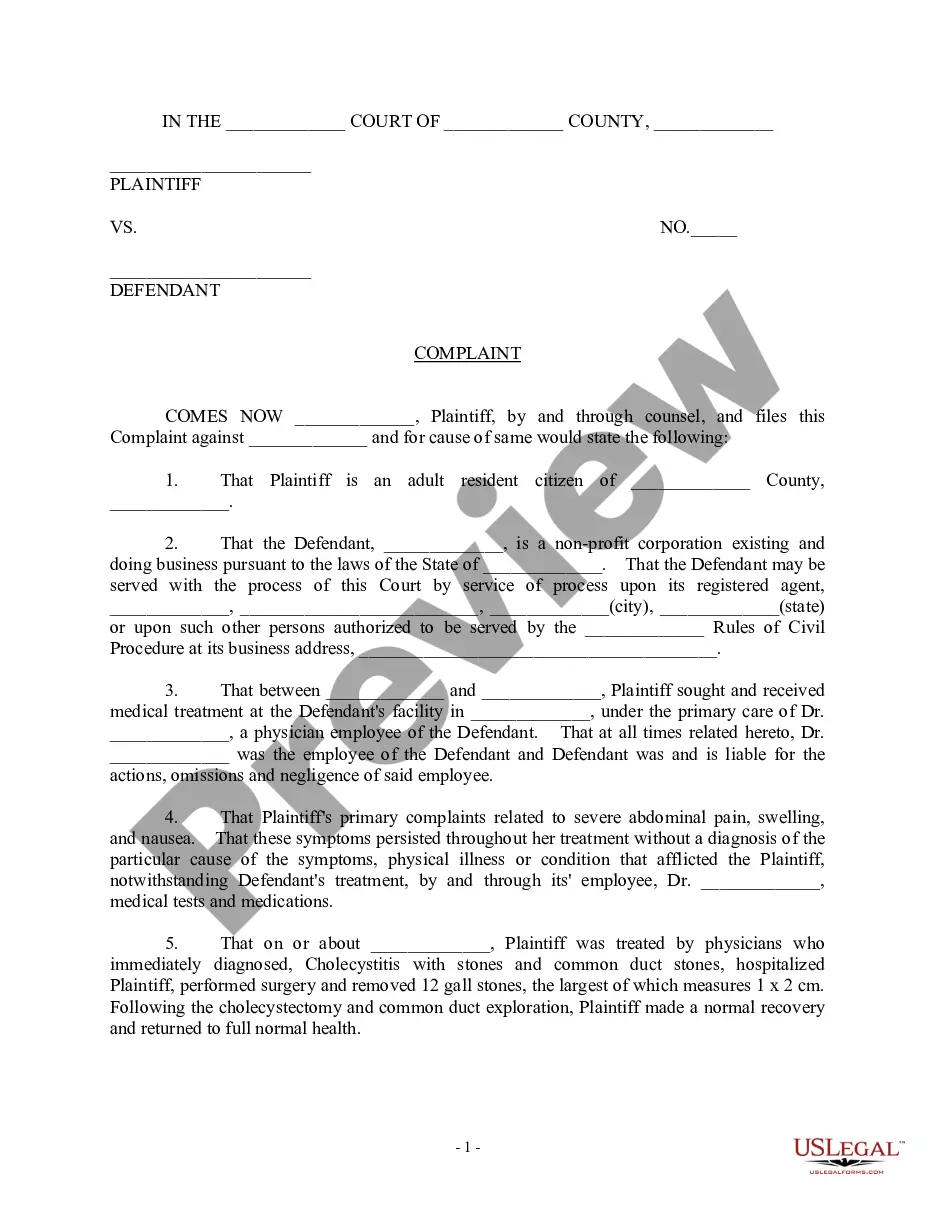
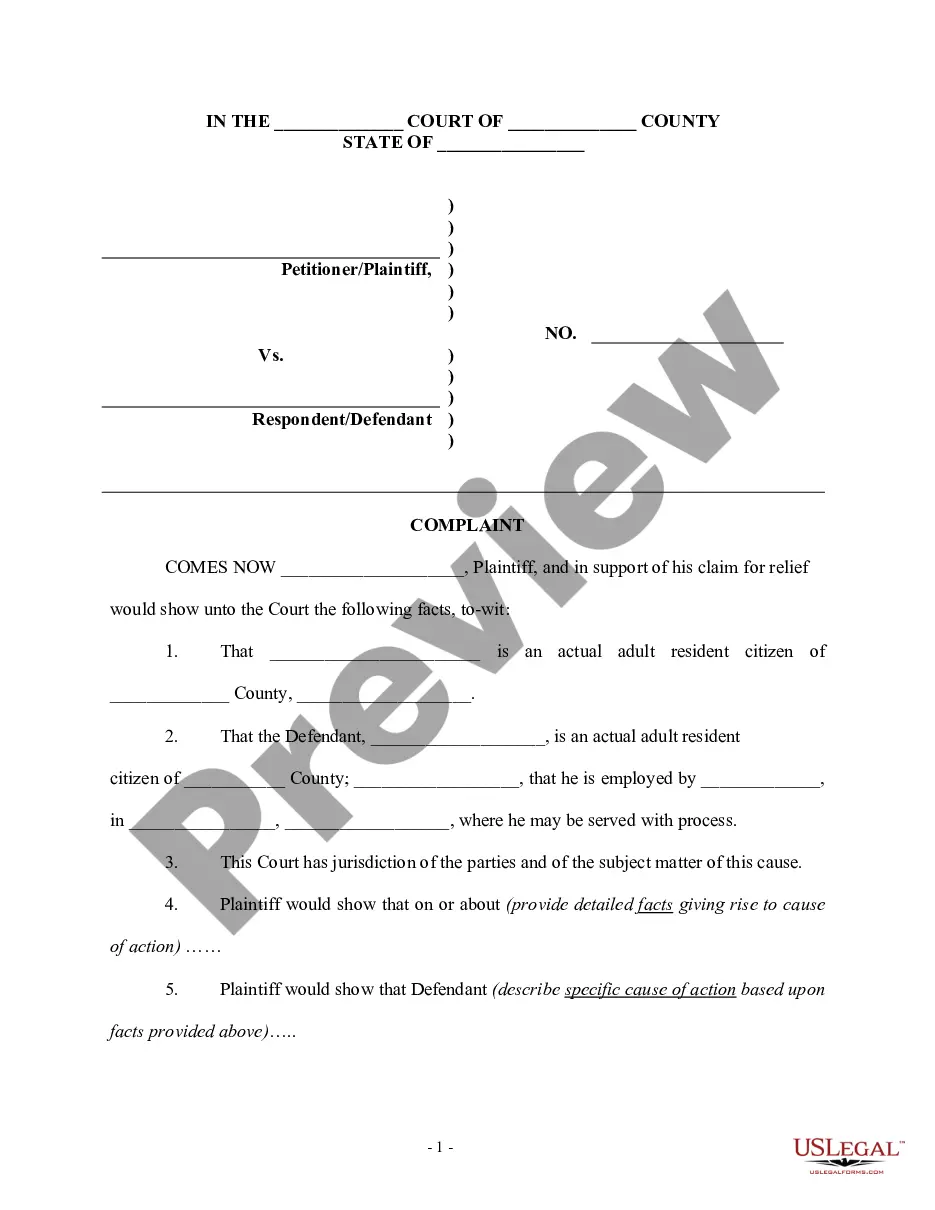
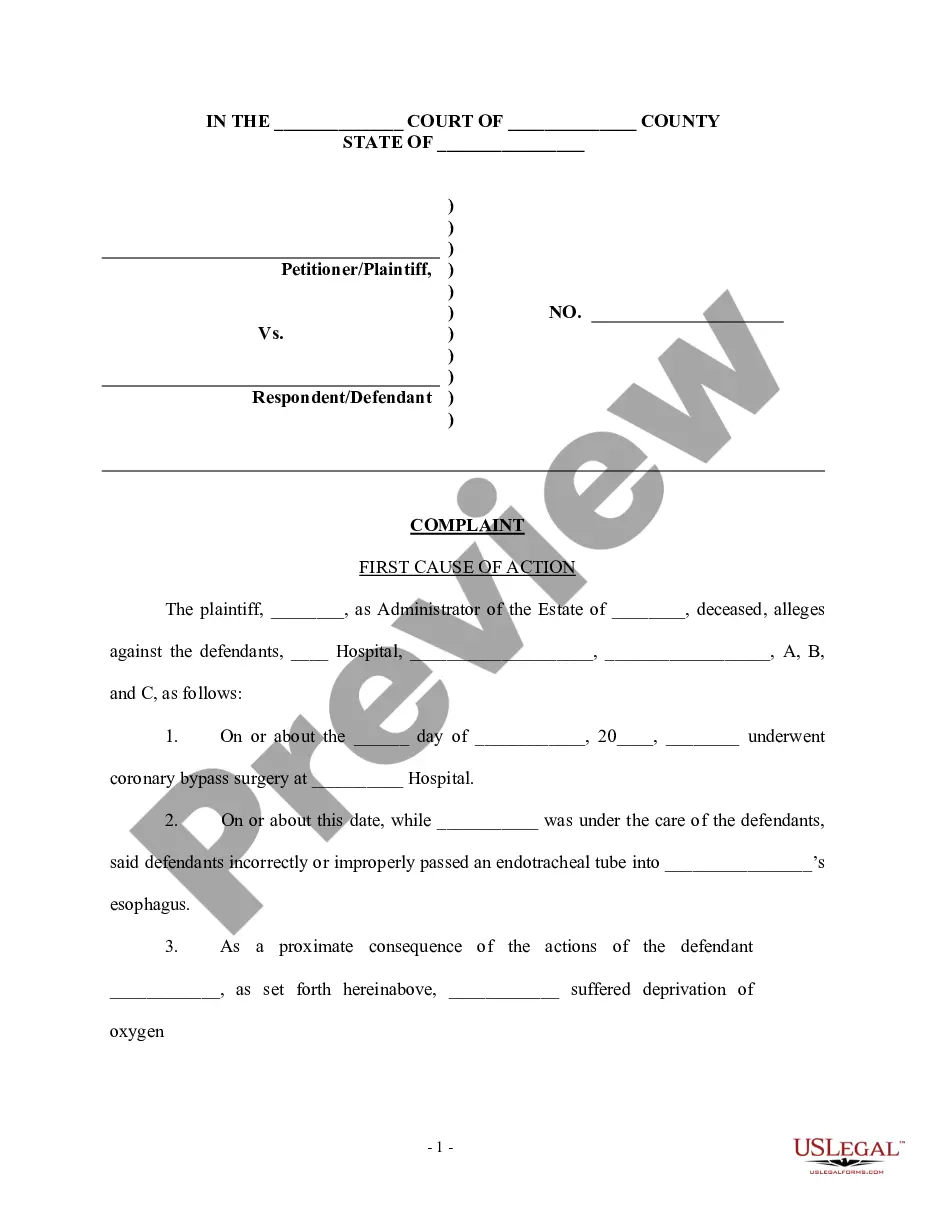
The Complaint for Legal Malpractice - General Form is a legal document used by a plaintiff to initiate a lawsuit against an attorney for alleged malpractice. This form allows the plaintiff to assert claims of negligence and breach of fiduciary duty, typically arising from the attorney's failure to provide adequate legal representation. This form is distinct in that it specifically addresses legal malpractice, differentiating it from other general complaint forms used in civil litigation.
Key components of this form
- Identifies the parties involved, including plaintiff and defendant.
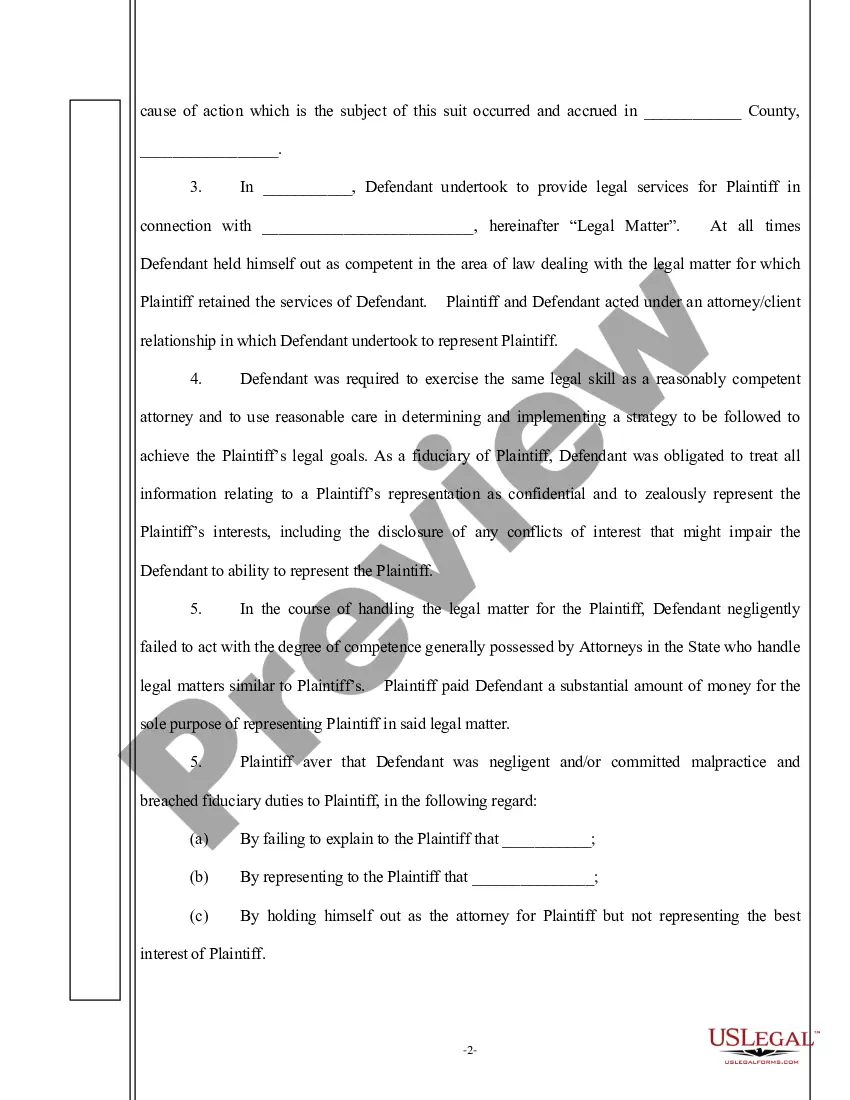
- Describes the nature of the attorney-client relationship.
- Details the circumstances and basis for the malpractice claim.
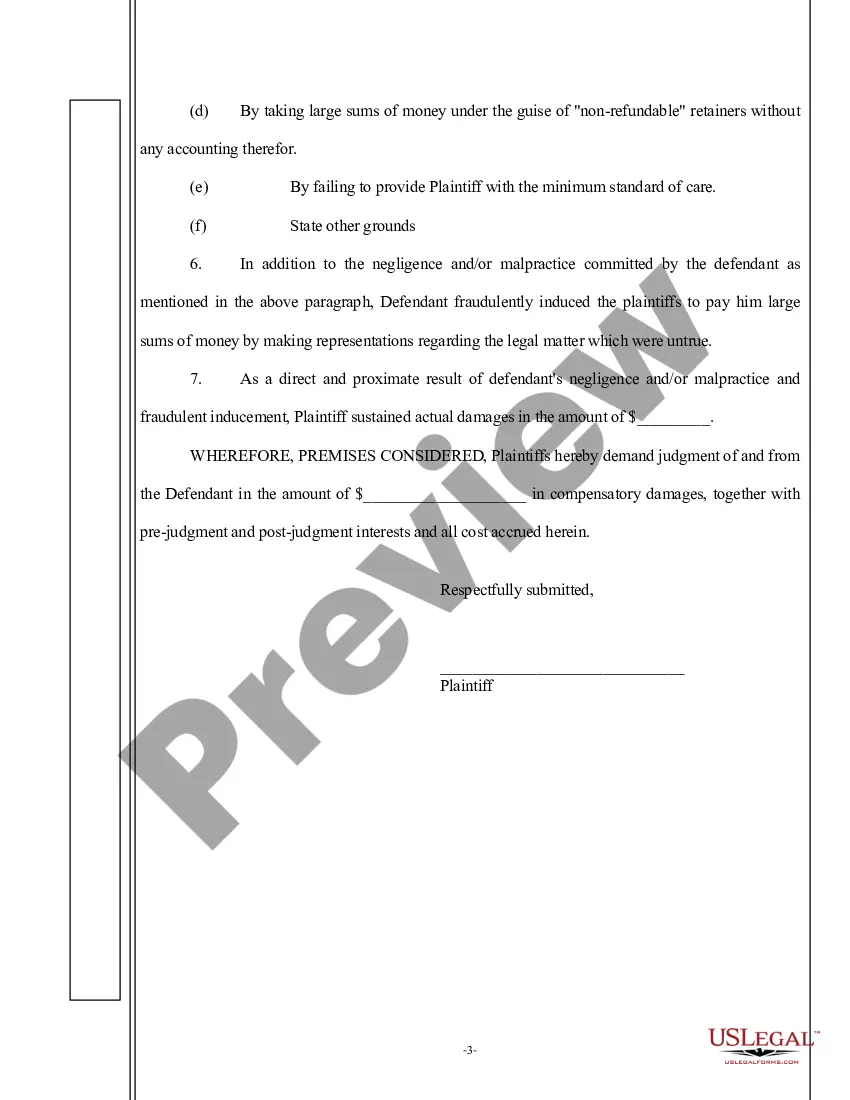
- Lists specific instances of negligence or malpractice by the defendant.
- Details the damages suffered by the plaintiff due to the alleged malpractice.
- Requests a judgment and specifies the amount sought in damages.
When to use this document
This form should be used when an individual believes that their attorney has committed legal malpractice, leading to financial or other damages. It is appropriate in situations where the attorney failed to represent the client adequately, provided false information, or acted negligently in a legal matter, resulting in poor outcomes for the plaintiff.
Who should use this form
This form is intended for:
- Individuals who have retained legal services and believe they have been harmed by their attorney's actions or inactions.
- Clients seeking to recover damages due to negligent or fraudulent conduct by an attorney.
- Individuals representing themselves (Pro Se) in a legal malpractice case.
Completing this form step by step
- Identify the parties by filling in the names and addresses of both the plaintiff and the defendant.
- Provide details about the legal matter and the attorney-client relationship.
- List specific allegations of negligence or malpractice in the designated sections.
- Document the damages incurred as a result of the attorney's actions.
- Sign and date the form at the end, ensuring to include all necessary contact information.
- If applicable, prepare to file the completed form with the appropriate court in your jurisdiction.
Notarization requirements for this form
In most cases, this form does not require notarization. However, some jurisdictions or signing circumstances might. US Legal Forms offers online notarization powered by Notarize, accessible 24/7 for a quick, remote process.
Get your form ready online
Our built-in tools help you complete, sign, share, and store your documents in one place.
Make edits, fill in missing information, and update formatting in US Legal Forms—just like you would in MS Word.
Download a copy, print it, send it by email, or mail it via USPS—whatever works best for your next step.
Sign and collect signatures with our SignNow integration. Send to multiple recipients, set reminders, and more. Go Premium to unlock E-Sign.
If this form requires notarization, complete it online through a secure video call—no need to meet a notary in person or wait for an appointment.
We protect your documents and personal data by following strict security and privacy standards.

Make edits, fill in missing information, and update formatting in US Legal Forms—just like you would in MS Word.

Download a copy, print it, send it by email, or mail it via USPS—whatever works best for your next step.

Sign and collect signatures with our SignNow integration. Send to multiple recipients, set reminders, and more. Go Premium to unlock E-Sign.

If this form requires notarization, complete it online through a secure video call—no need to meet a notary in person or wait for an appointment.

We protect your documents and personal data by following strict security and privacy standards.
Typical mistakes to avoid
- Failing to include sufficient detail about the alleged malpractice.
- Not accurately identifying the correct defendant or parties involved.
- Omitting essential information about the damages suffered.
- Not signing or dating the form before submission.
Benefits of completing this form online
- Convenience of downloading and completing the form at your own pace.
- Editable fields allow for quick adjustments as needed.
- Access to templates drafted by licensed attorneys, ensuring compliance with legal standards.
- Reduced chance of errors compared to handwritten submissions.
Legal use & context
- The form should be filled out with accurate and truthful information to ensure enforceability in court.
- Legal malpractice claims must be filed within the statute of limitations, which varies by state.
- Evidence supporting claims of negligence and financial loss is crucial for a successful case.
Quick recap
- This form is essential for clients seeking to pursue a legal malpractice claim against their attorney.
- Accurate completion and detailed allegations will strengthen the case.
- Understanding your state's regulations will help in successfully navigating the legal system.
Looking for another form?

Form popularity
FAQ
Design the caption. The caption is the top of the lawsuit that identifies the parties. Identify the Parties. Next, tell the story. Now explain how you were damaged or injured. Finish up with your Prayer for Damages. Sign and date your lawsuit and identify who you are.
A civil suit is commenced by filing a complaint with the court.The summons must state name of the court and parties, name and address of the plaintiff's attorney or plaintiff, the time within which the defendant must appear and defend. The summons must be signed by the clerk and bear the court's seal.
Comply With the Relevant Federal, State, and Local Rules. Research Before Writing. Allege Subject Matter Jurisdiction, Personal Jurisdiction, and Venue. Draft Concise and Plain Statement of the Facts. Draft Separate Counts for Each Legal Claim. Plead Facts With Particularity Where Necessary.
The cause of action is often stated in the form of a syllogism, a form of deductive reasoning that begins with a major premise (the applicable RULE OF LAW), proceeds to a minor premise (the facts that gave rise to the claim), and ends with a conclusion.
Current filing fees are: In district court, the fee for defendant's first filing is typically $223.00, but that might vary depending on the type of case. To verify your filing fee, click to visit Filing Fees and Waivers. In justice court, the fee for defendant's first filing is typically $71.
You can represent yourself in a medical malpractice lawsuit, but that doesn't make it a sound strategy for success.As far as the legal system is concerned, you can handle your own medical malpractice case without hiring an attorney, but whether that's a good idea is the more important consideration.
Legal malpractice is the term for negligence, breach of fiduciary duty, or breach of contract by a lawyer during the provision of legal services that causes harm to a client.
To prove legal malpractice you must establish the following four elements: (1) duty, (2) breach, (3) causation, and (4) harm. These are the basic elements for most torts in California.
Experts in Attorney Malpractice. Legal malpractice occurs when a lawyer commits an error, omission or breach of duty to the client or the justice system that results in a negative legal outcome or monetary loss for the client or a third party.