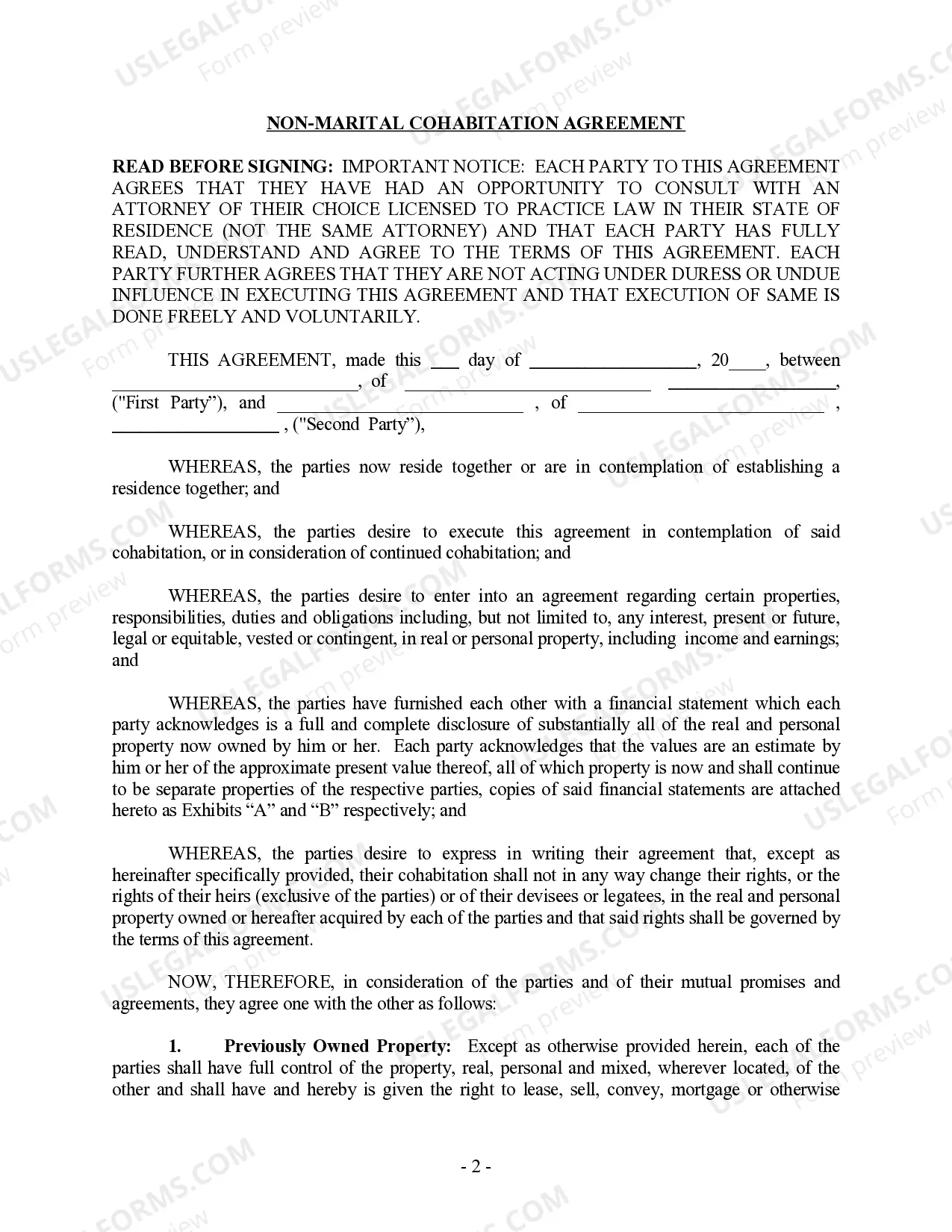
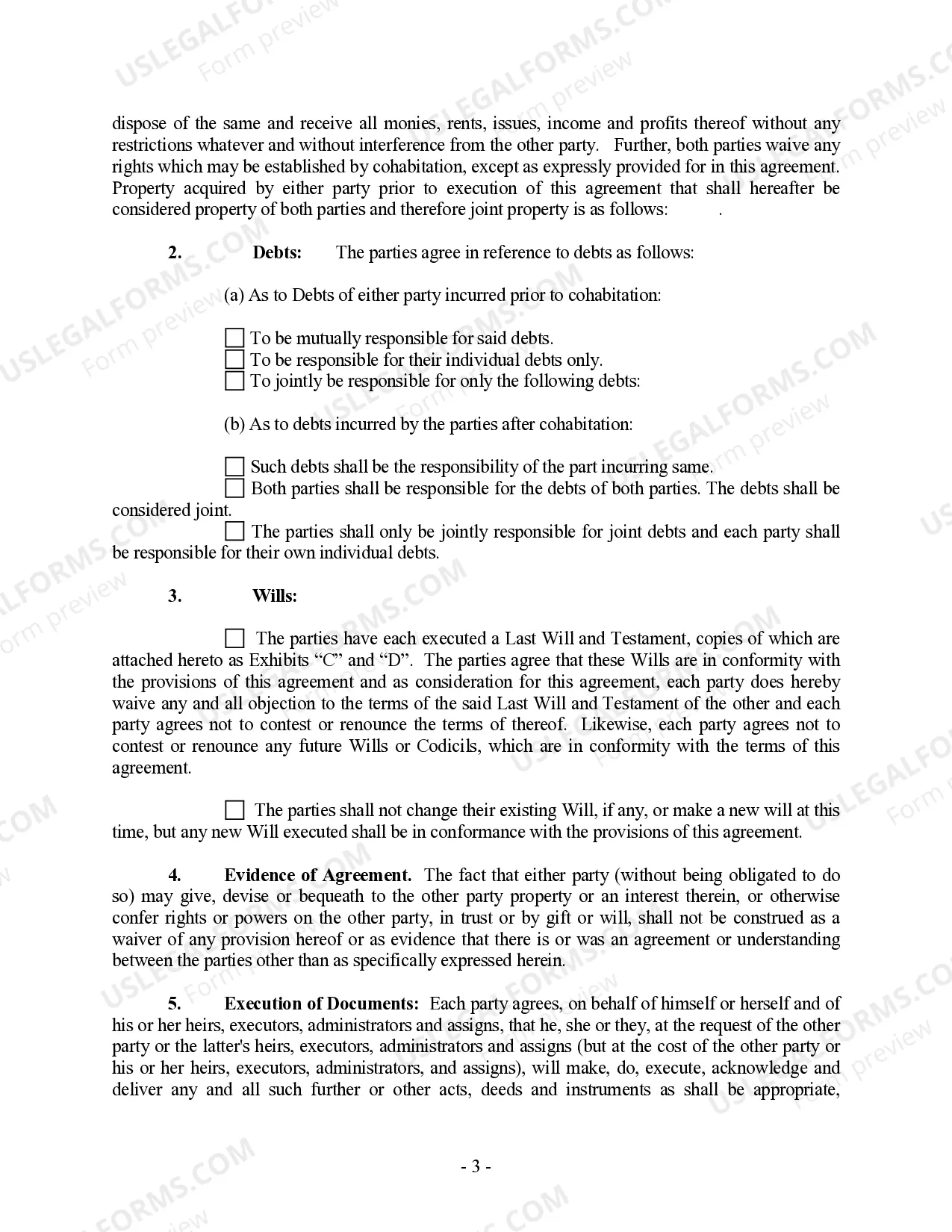
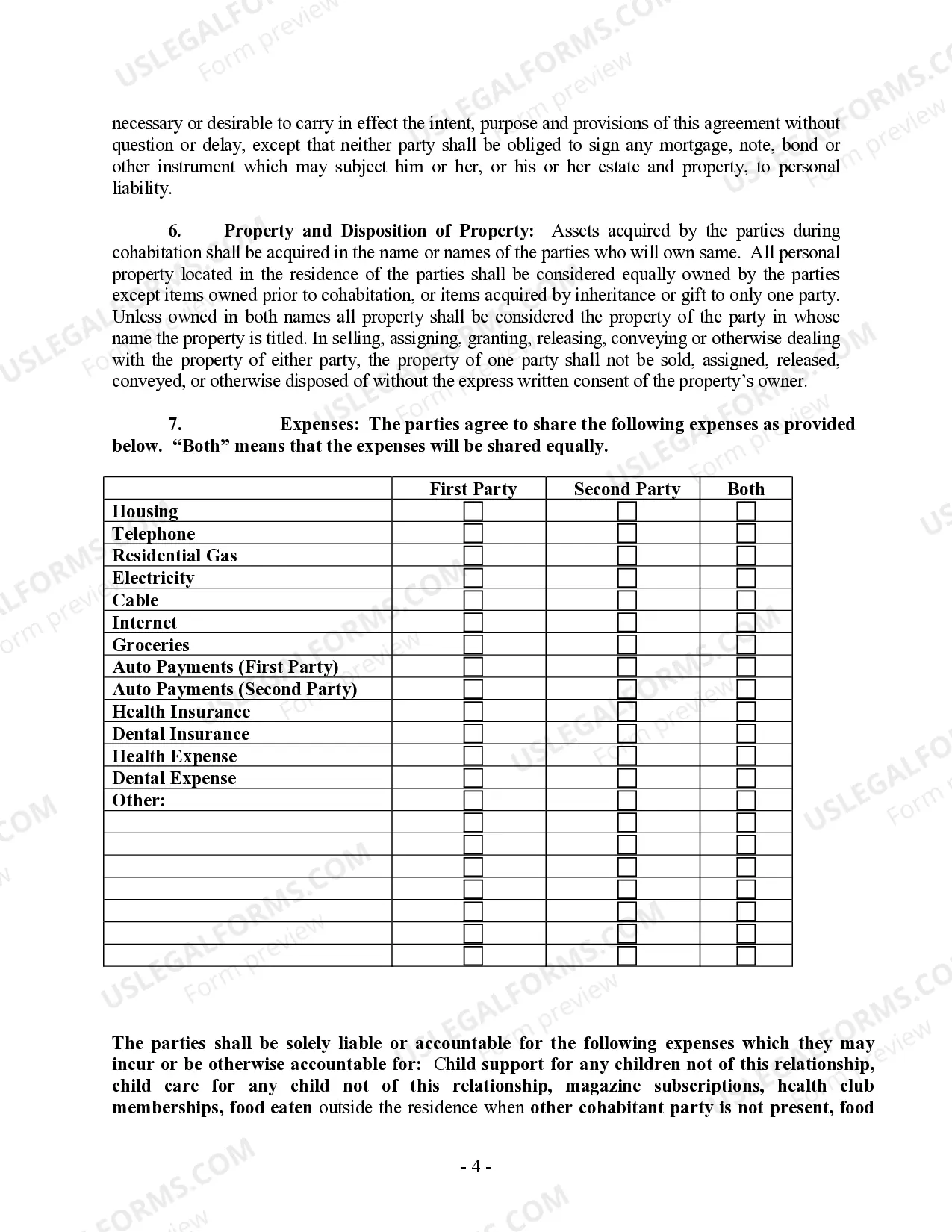
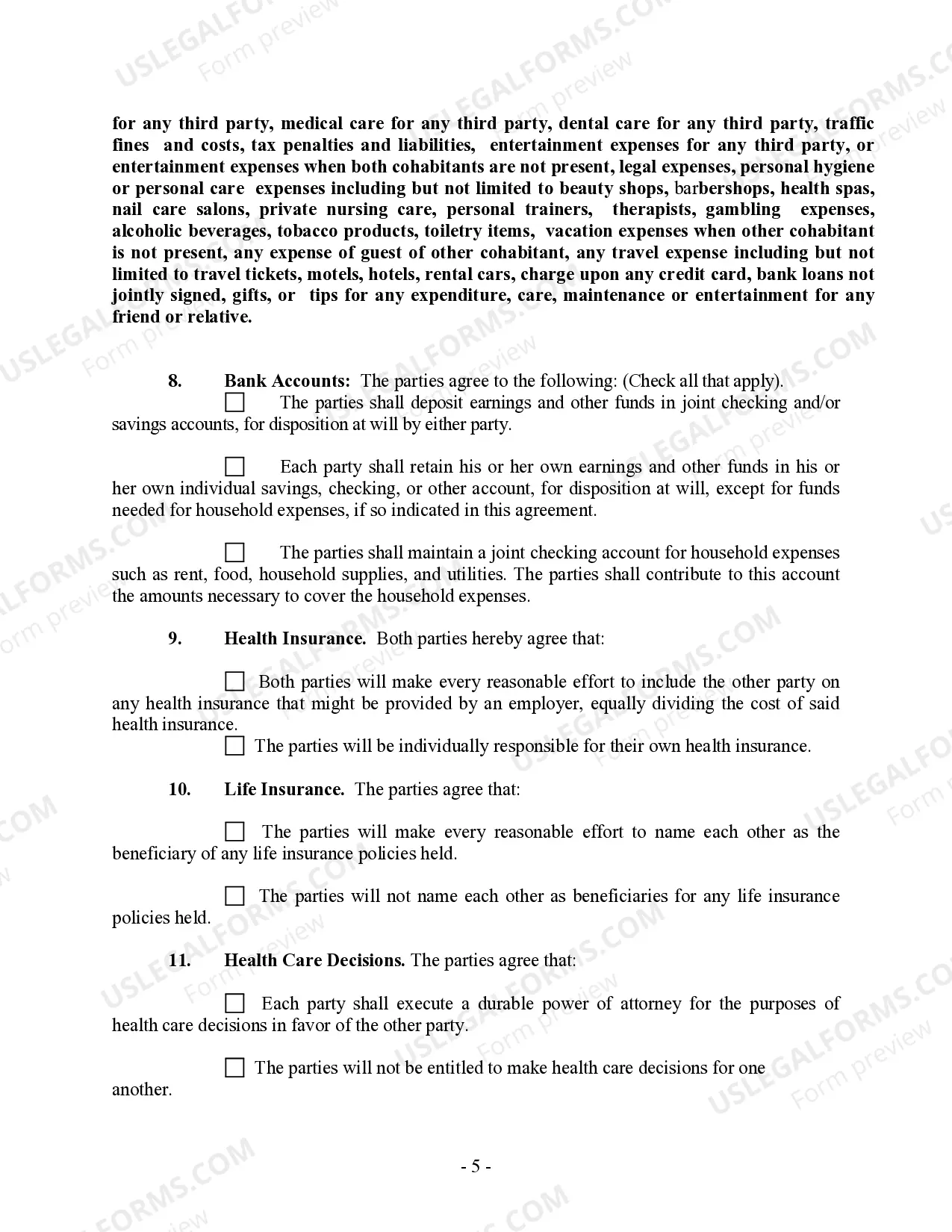
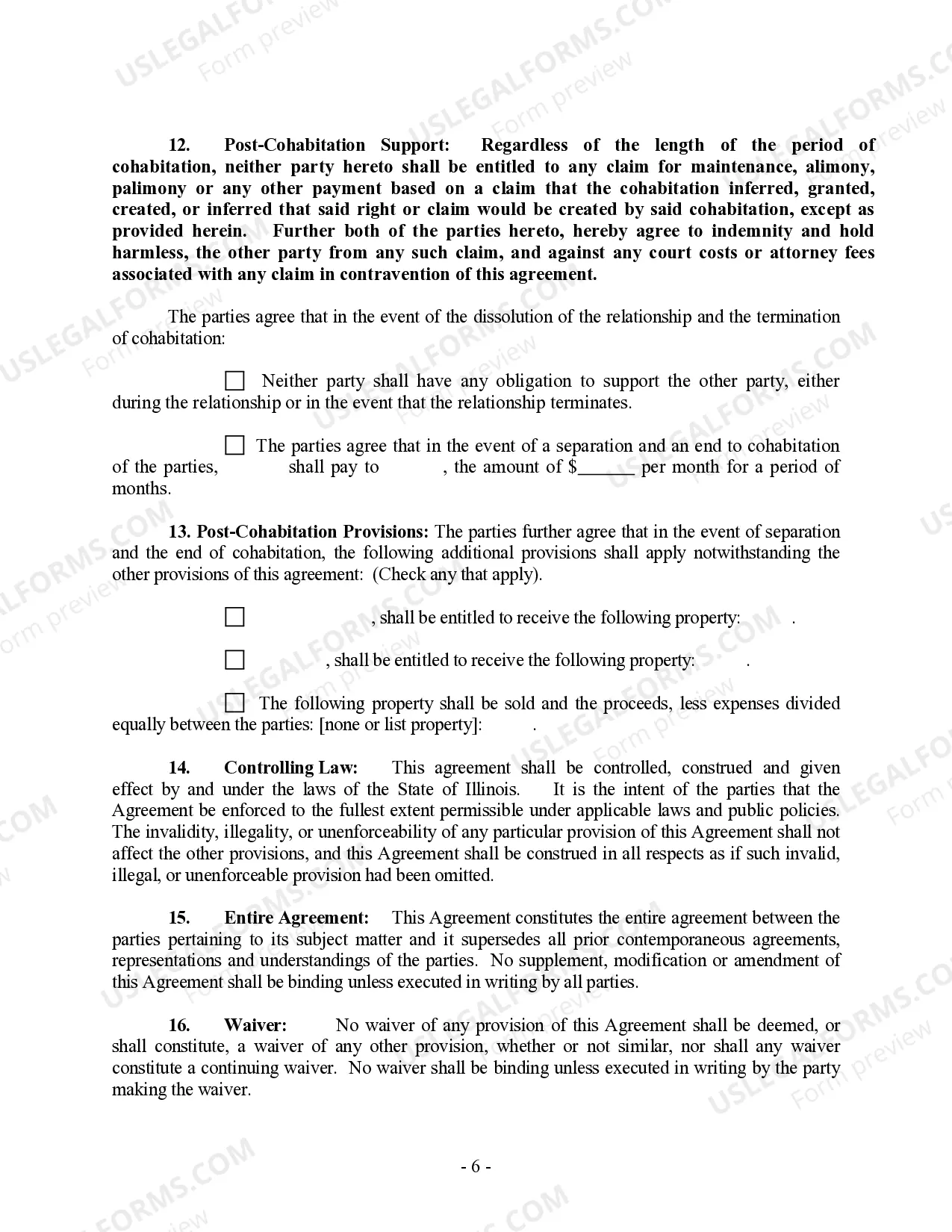
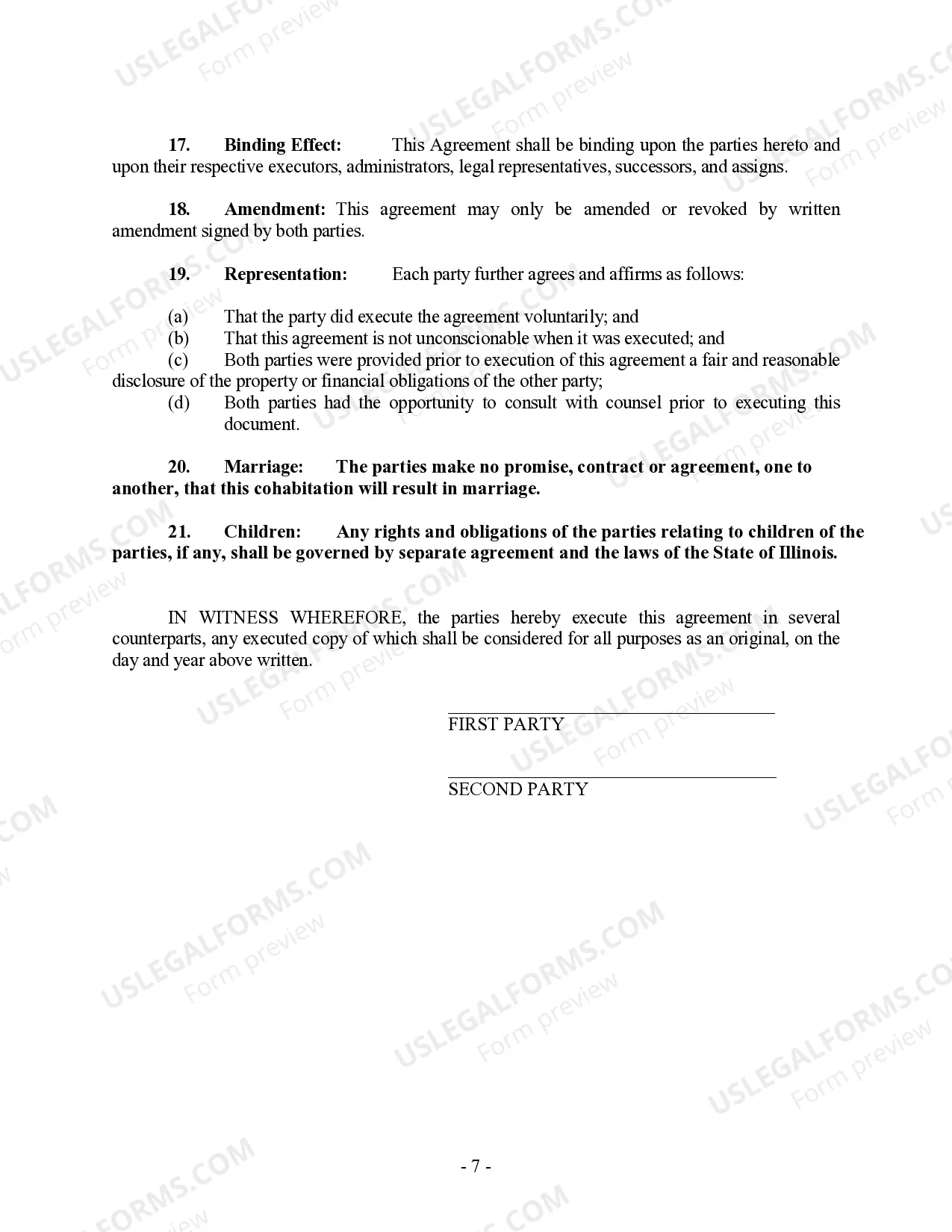
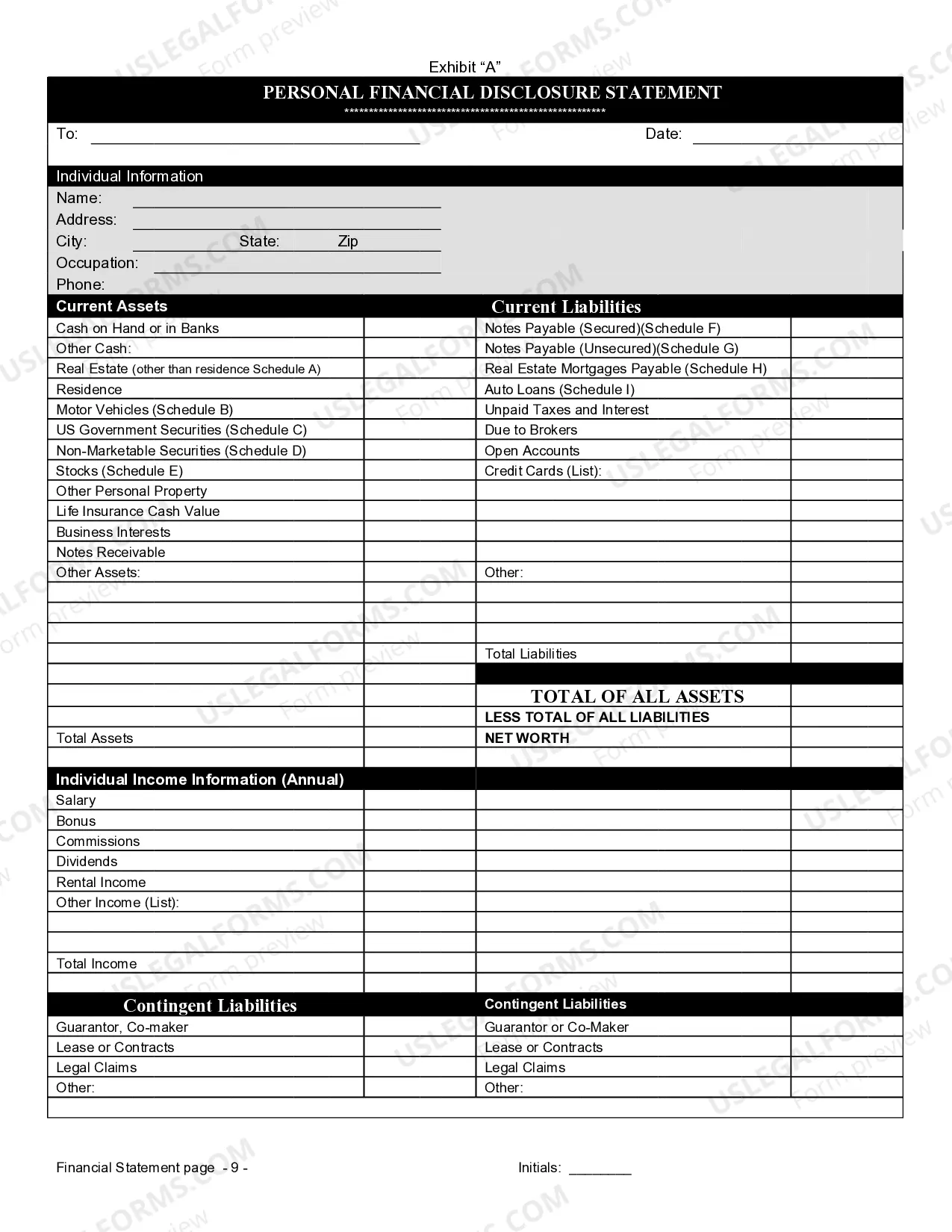
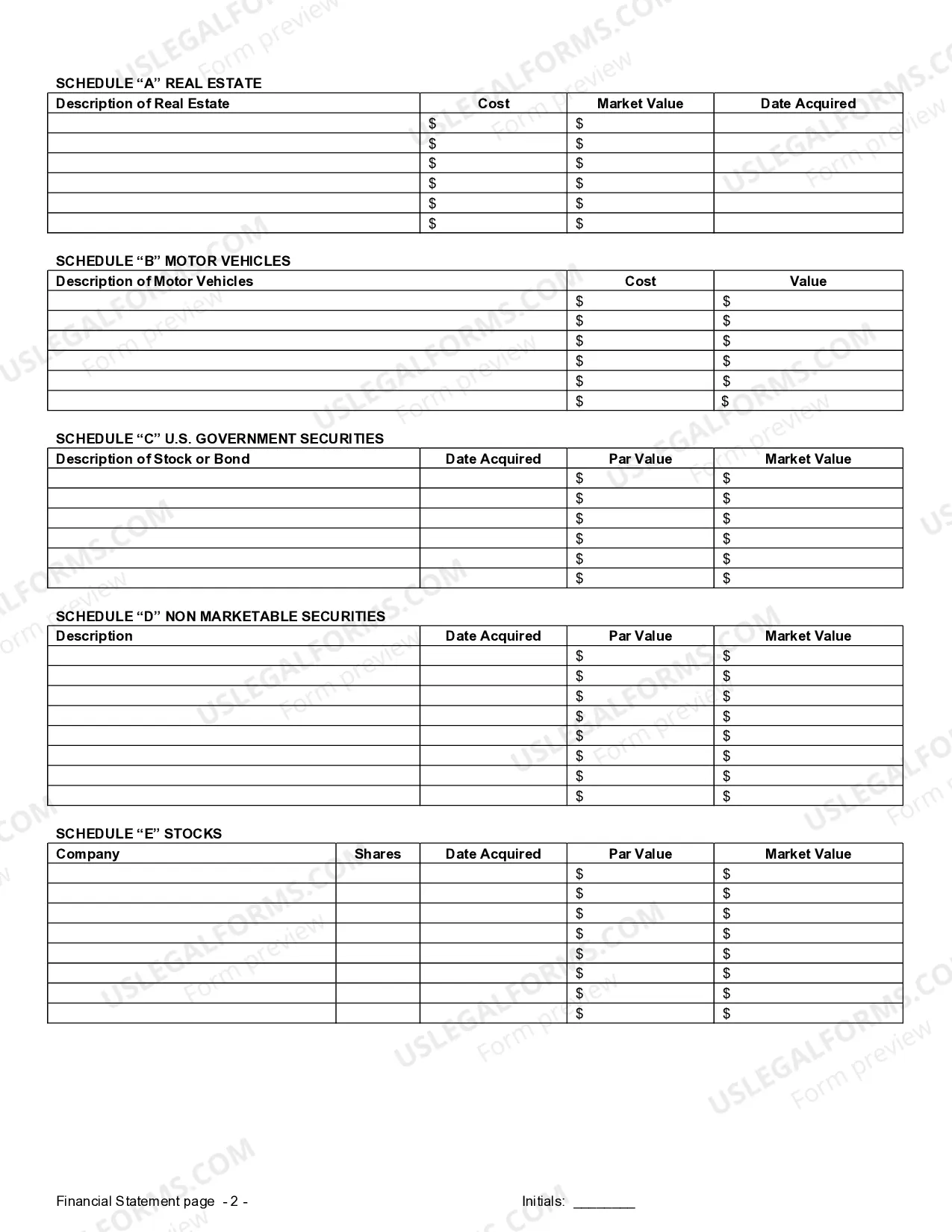
The Non-Marital Cohabitation Living Together Agreement is a legal document that outlines the rights and responsibilities of two individuals who choose to live together in a non-marital arrangement. Unlike marriage, this agreement helps clarify expectations related to shared expenses, property ownership, and other important terms that can help avoid misunderstandings. It is especially useful for couples who want to define their relationship legally without entering into a marriage, thereby protecting both parties' interests in case the arrangement ends.
This agreement is ideal for individuals who are entering a non-marital living arrangement and want to ensure clarity regarding their rights and responsibilities. Use this form if you intend to share living expenses, plan to acquire property together, or wish to outline how decisions will be made regarding health care and financial matters. This form can also be helpful in avoiding disputes about ownership and financial obligations if the relationship ends.
Notarization is required for this form to take effect. Our online notarization service, powered by Notarize, lets you verify and sign documents remotely through an encrypted video session, available 24/7.
Our built-in tools help you complete, sign, share, and store your documents in one place.
Make edits, fill in missing information, and update formatting in US Legal Forms—just like you would in MS Word.
Download a copy, print it, send it by email, or mail it via USPS—whatever works best for your next step.
Sign and collect signatures with our SignNow integration. Send to multiple recipients, set reminders, and more. Go Premium to unlock E-Sign.
If this form requires notarization, complete it online through a secure video call—no need to meet a notary in person or wait for an appointment.
We protect your documents and personal data by following strict security and privacy standards.

Make edits, fill in missing information, and update formatting in US Legal Forms—just like you would in MS Word.

Download a copy, print it, send it by email, or mail it via USPS—whatever works best for your next step.

Sign and collect signatures with our SignNow integration. Send to multiple recipients, set reminders, and more. Go Premium to unlock E-Sign.

If this form requires notarization, complete it online through a secure video call—no need to meet a notary in person or wait for an appointment.

We protect your documents and personal data by following strict security and privacy standards.
When an unmarried couple breaks up, the fate of their shared home often depends on ownership and any agreements they made. If both partners are on the title, they may need to sell the house or negotiate ownership. Without a clear Illinois Non-Marital Cohabitation Living Together Agreement, disputes can arise. It’s essential to have legal guidance to navigate potential conflicts.
In general, unmarried couples can't claim ownership of each other's property in the event of a breakup. This applies to big investments (such as a house) and smaller items (such as furniture). Gifts made during the relationship remain the property of the recipient.
Illinois Cohabitation Law and Property RightsLegally, the only way to get the rights of a married couple in Illinois is by actually getting a marriage license. As far as the Illinois courts are concerned, even couples who have lived together for many years have no automatic legal protections when they split up.
There is no financial co-mingling it is far more difficult to prove the de facto marriage like relationship. The corrolary is that where there is residency, far less is required to be shown to establish a de facto conjugal relationship. chance of being determined to be continuing. with a marriage-like relationship.
In Illinois, cohabitation means that two people live together in a marriage-like relationship. When the court is deciding whether two people are cohabiting or simply in a "dating" relationship, the judge will consider the following factors: the length of the relationship.(In re Marriage of Sunday, 354 Ill.
Some couples choose not to enter into a marriage or legally recognized domestic partnership but choose to enter into a cohabitation agreement instead. Oftentimes, these agreements are made orally and difficult to enforce after the relationship has ended.
A living arrangement in which an unmarried couple lives together in a long-term relationship that resembles a marriage. In most places, it is legal for unmarried people to live together, although some Zoning laws prohibit more than three unrelated people from inhabiting a house or apartment.
Whether you've been living together for 1 year, 10 years or even 50 years, if you're not married, you have no automatic legal right over your partner's assets.Often someone will move into a property that their partner already owns, or it may be that one person can't afford to contribute to the purchase of a new house.
The length of the relationship; The amount of time the parties spend with each other; The type of activities the parties engage in together; The interrelation of their personal affairs; Taking vacations together; and, Spending the holidays with each other.