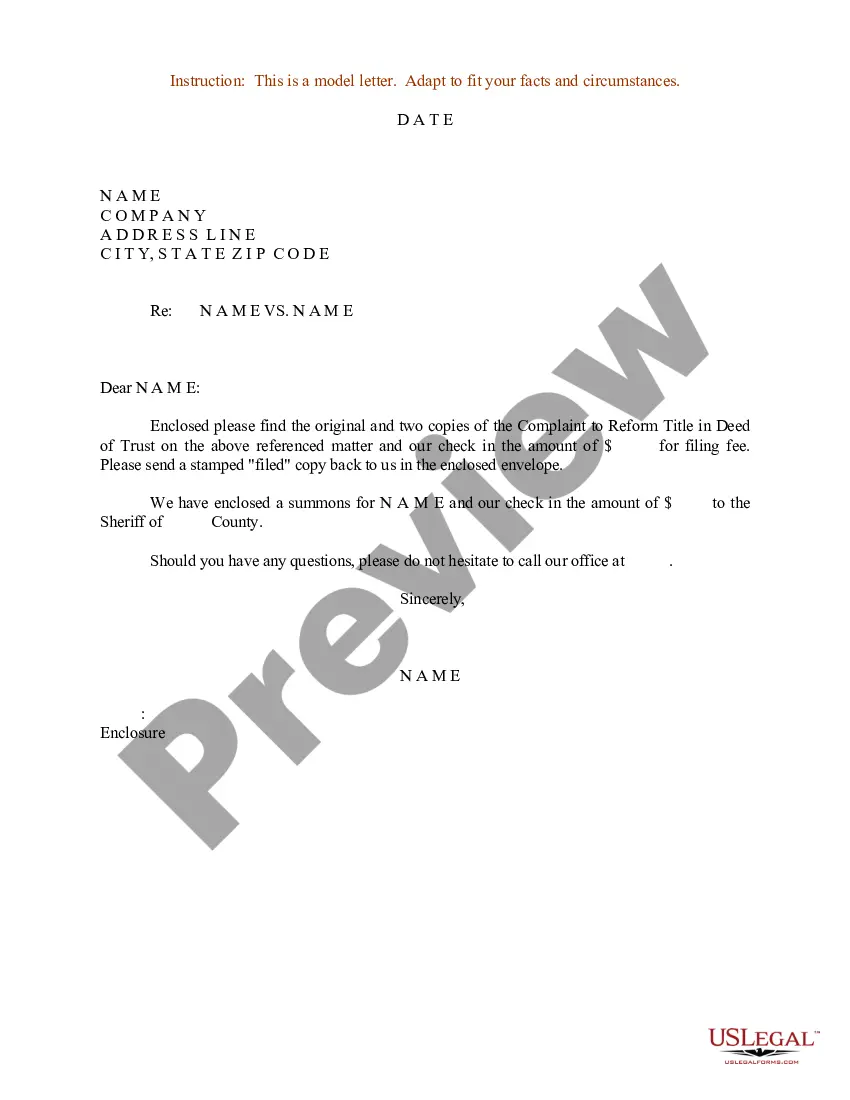
Sample Letter for Complaint to Reform Title in Deed of Trust
About this form
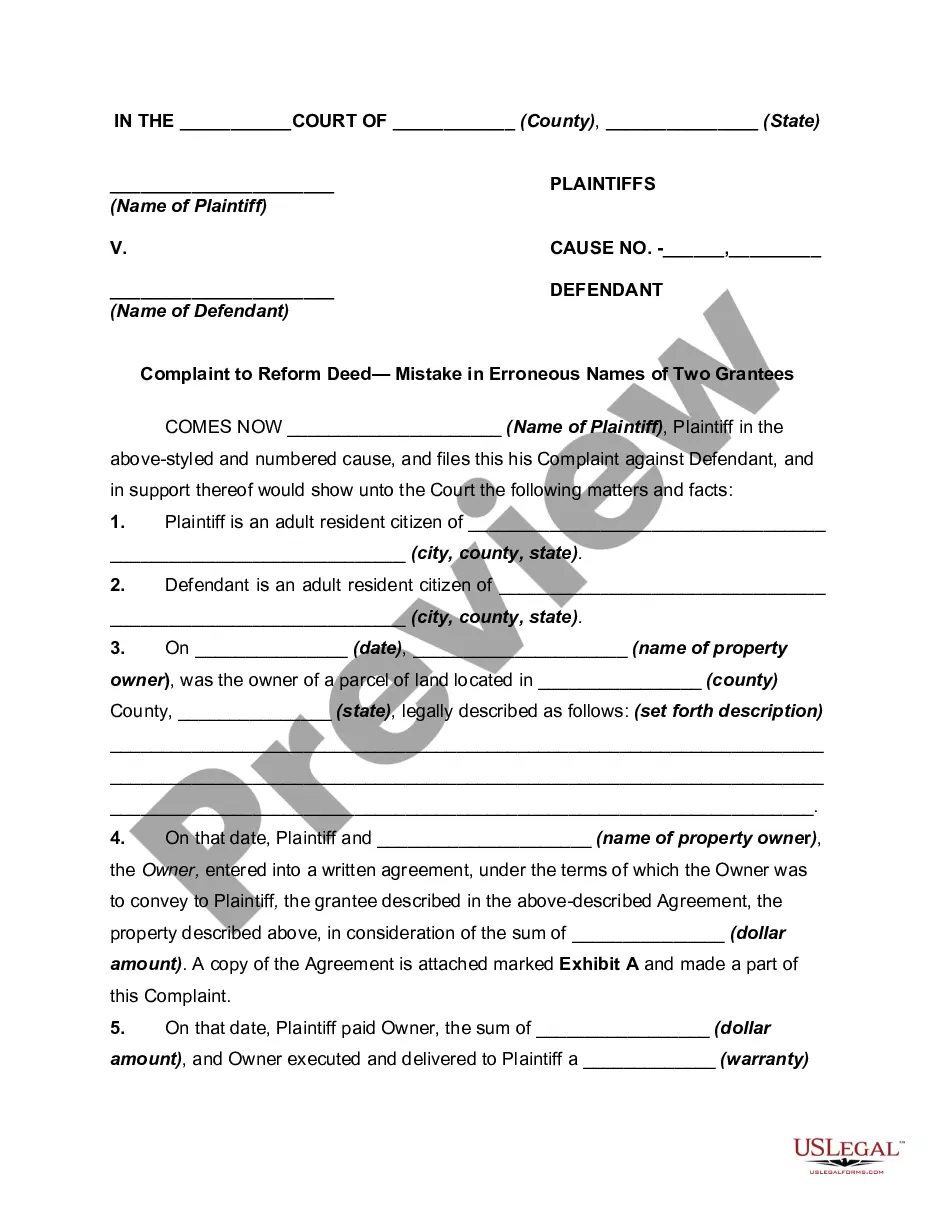
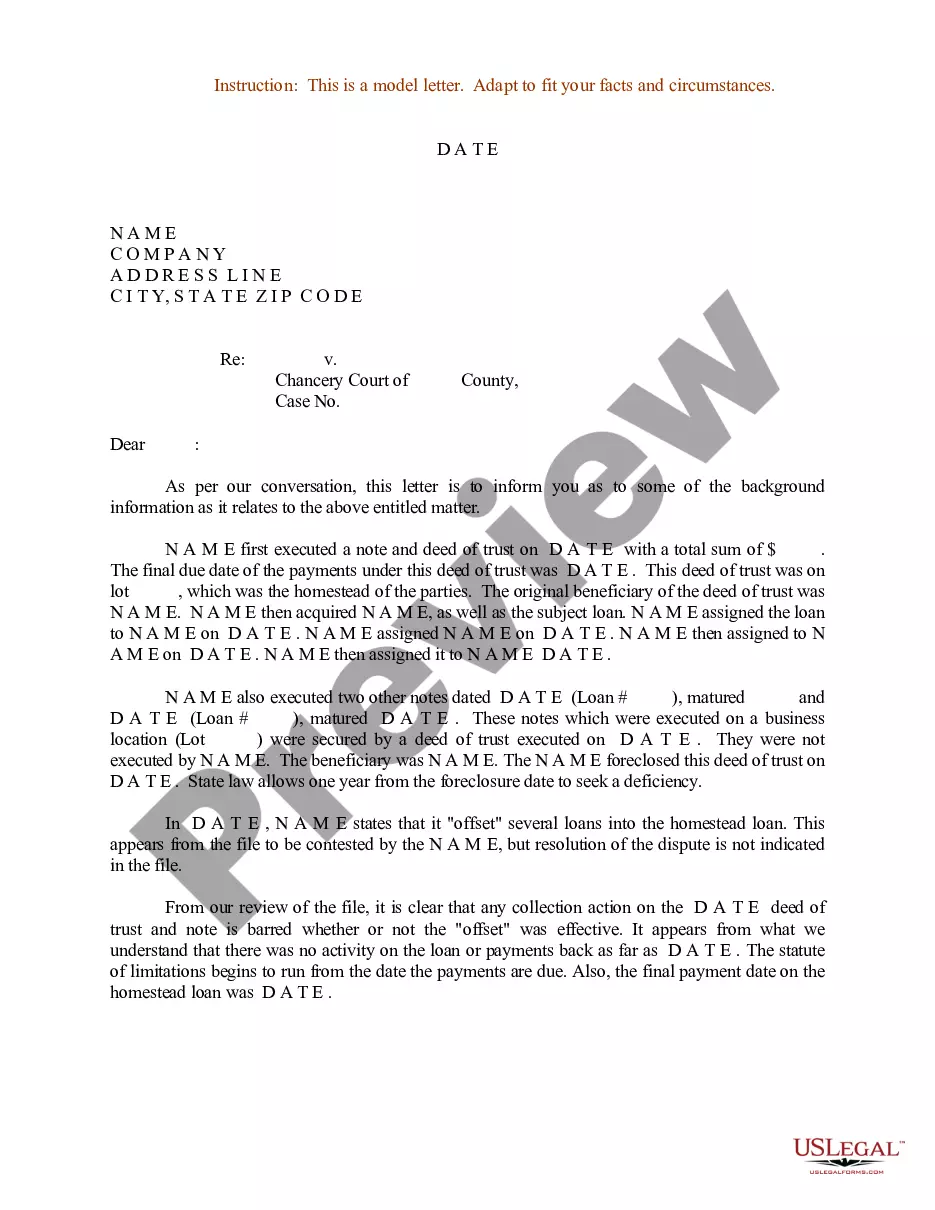
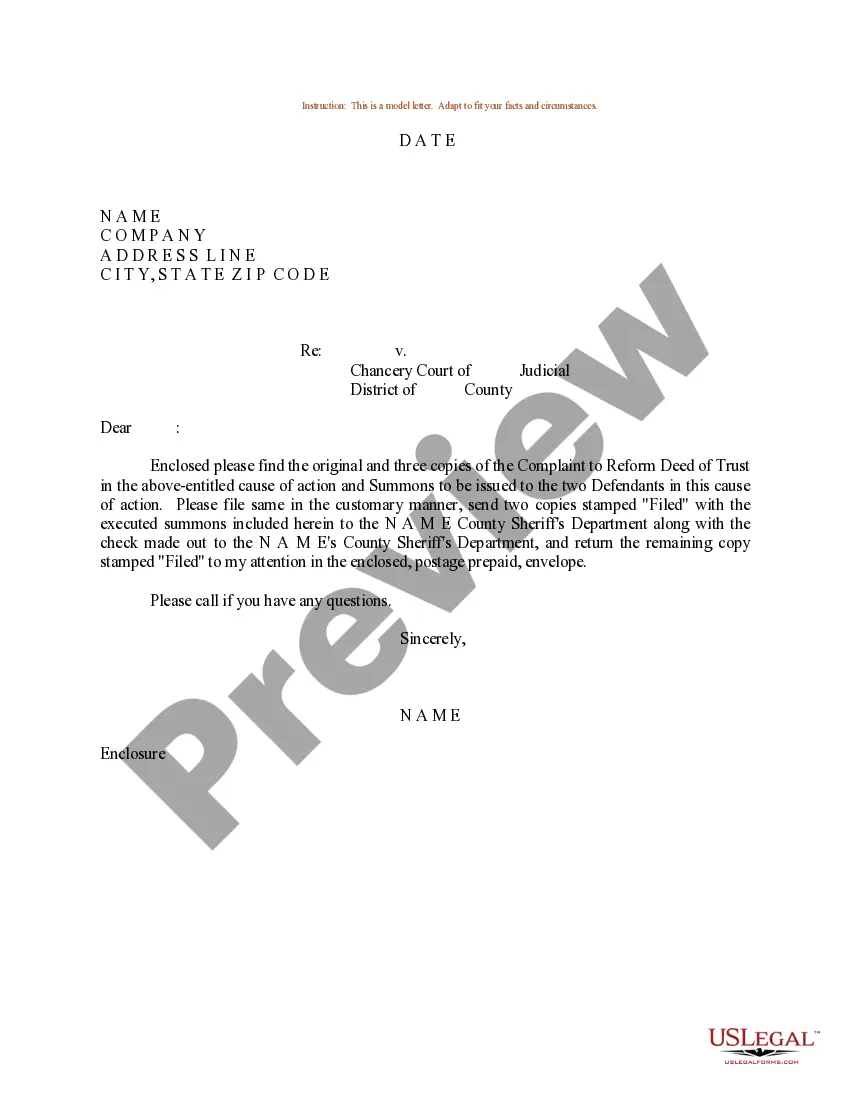
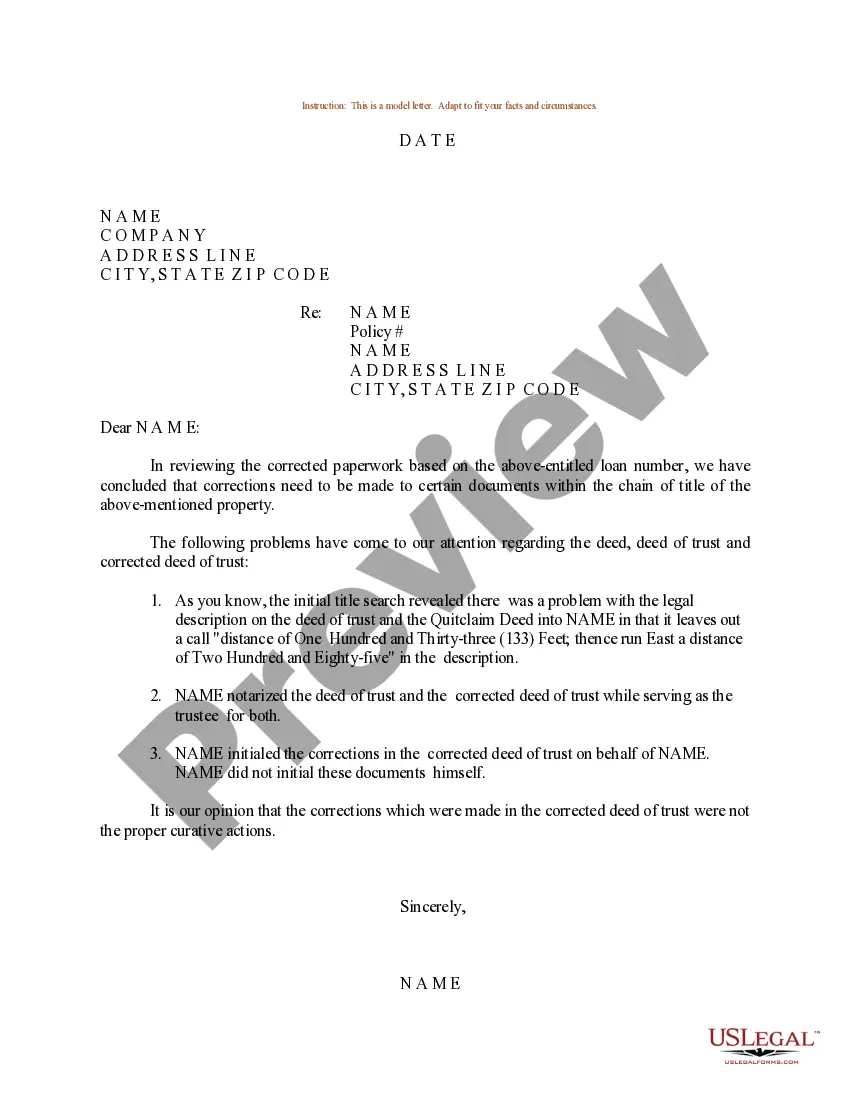
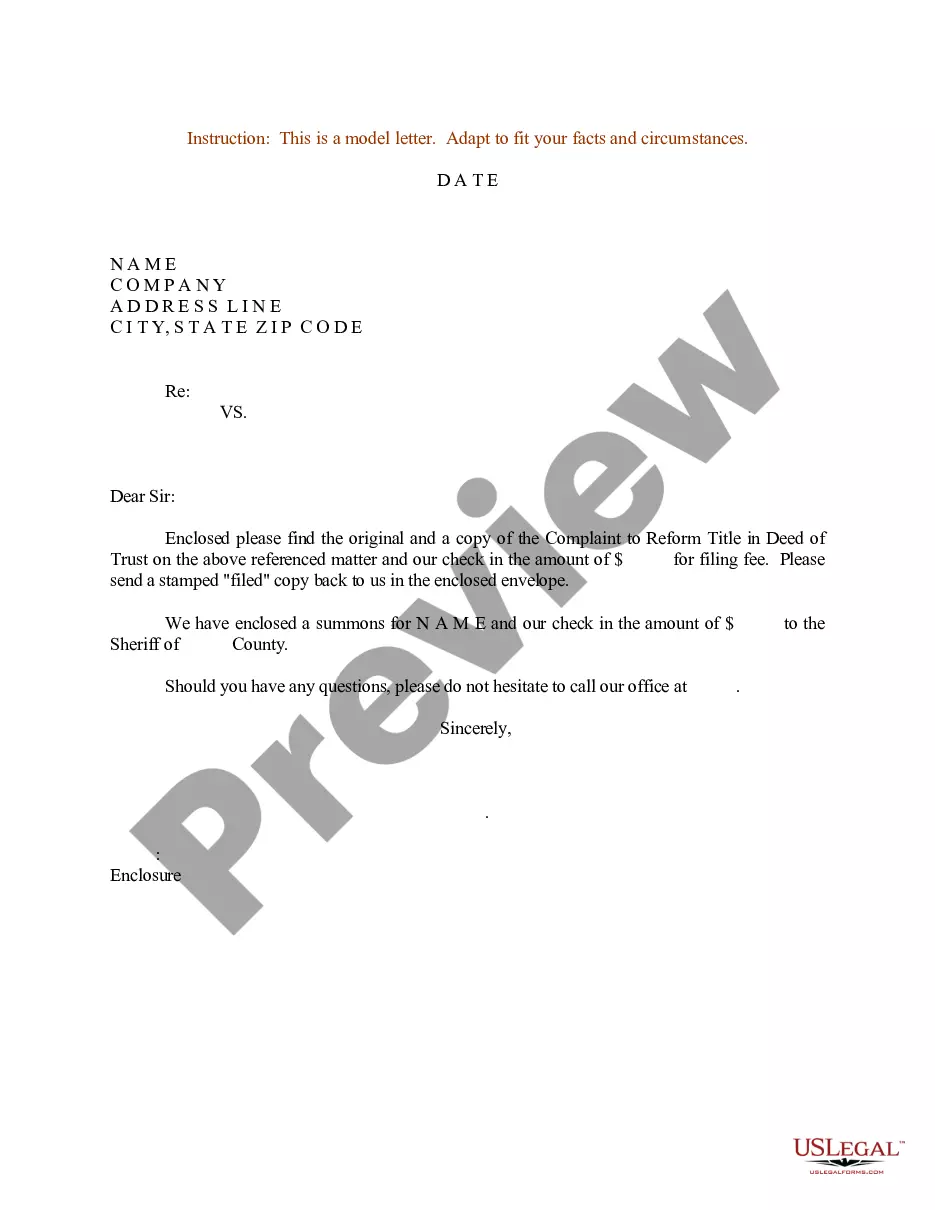
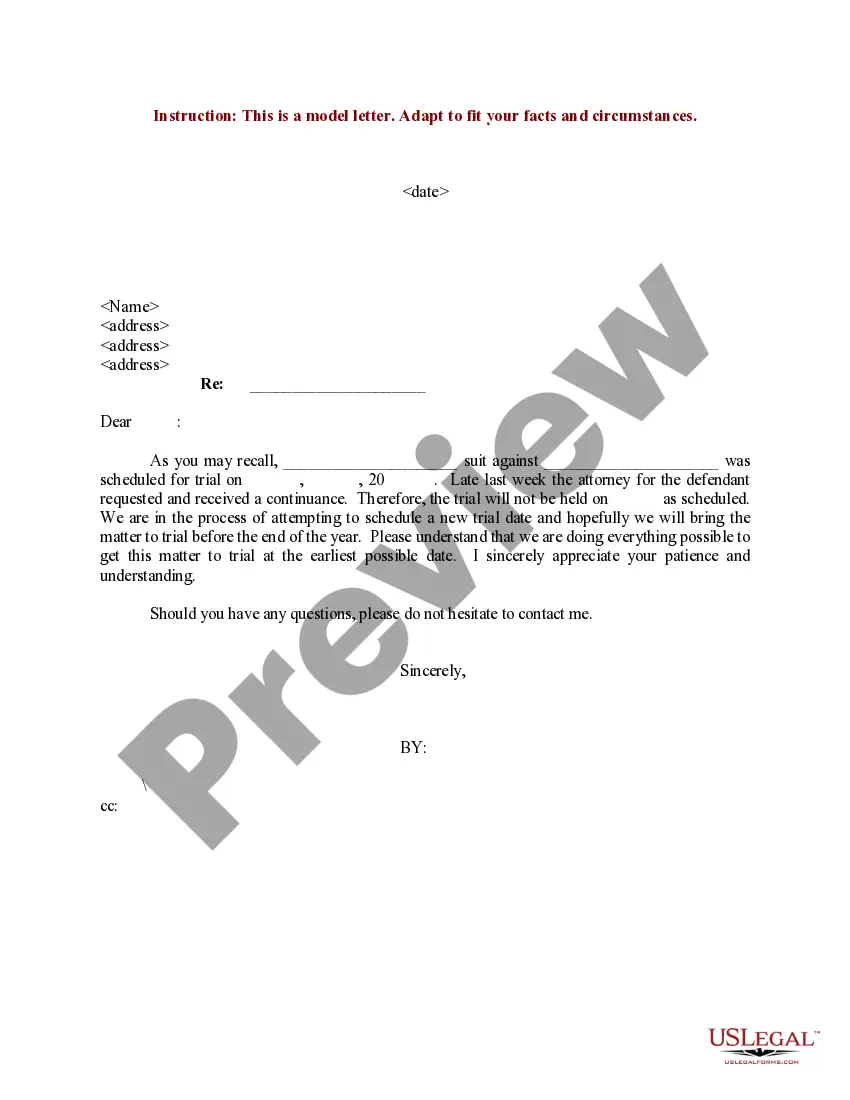
The Sample Letter for Complaint to Reform Title in Deed of Trust is a model letter designed to assist individuals in addressing issues related to the title of a property under a deed of trust. This form serves as a template to express a complaint for necessary corrections or reforms to the title, making it distinct from general complaint letters, as it is specifically tailored for property issues that arise under deed arrangements.
Key parts of this document
- Date of the letter
- Sender's name and company information
- Recipient's name and address
- Subject line referencing the parties involved
- Body of the letter outlining the complaint
When to use this document
This form is particularly useful when there is an error in the title of a property secured by a deed of trust. It can be used when you need to formally complain about discrepancies such as incorrect names, missing documents, or misinterpretations in the title's details. Utilizing this letter may help initiate the dialogue necessary for resolving such issues efficiently.
Who should use this form
- Property owners who recognize discrepancies in their deed of trust title
- Legal representatives acting on behalf of a client with title issues
- Individuals seeking to formally request corrections or modifications in property title documentation
Steps to complete this form
- Identify the date you are writing the letter.
- Fill in your name, company (if applicable), and address at the top.
- Enter the name and address of the recipient.
- Clearly state the subject, referencing the parties involved.
- Compose the body of the letter, detailing your complaint and the corrections needed.
Does this form need to be notarized?
This form must be notarized to be legally valid. US Legal Forms provides secure online notarization powered by Notarize, allowing you to complete the process through a verified video call.
Get your form ready online
Our built-in tools help you complete, sign, share, and store your documents in one place.
Make edits, fill in missing information, and update formatting in US Legal Forms—just like you would in MS Word.
Download a copy, print it, send it by email, or mail it via USPS—whatever works best for your next step.
Sign and collect signatures with our SignNow integration. Send to multiple recipients, set reminders, and more. Go Premium to unlock E-Sign.
If this form requires notarization, complete it online through a secure video call—no need to meet a notary in person or wait for an appointment.
We protect your documents and personal data by following strict security and privacy standards.

Make edits, fill in missing information, and update formatting in US Legal Forms—just like you would in MS Word.

Download a copy, print it, send it by email, or mail it via USPS—whatever works best for your next step.

Sign and collect signatures with our SignNow integration. Send to multiple recipients, set reminders, and more. Go Premium to unlock E-Sign.

If this form requires notarization, complete it online through a secure video call—no need to meet a notary in person or wait for an appointment.

We protect your documents and personal data by following strict security and privacy standards.
Common mistakes
- Failing to include all necessary party names.
- Not providing sufficient detail about the complaint.
- Neglecting to proofread for errors before sending.
Why use this form online
- Convenient access to a customizable legal template.
- Easy to edit for your specific situation.
- Reliable format that meets professional standards.
Looking for another form?





Form popularity
FAQ
The Title Holding Trust or Land Trust is a device for acquiring, holding, managing and selling real estate.Although the legal and equitable title to the real property is conveyed to the Trustee, the Trustee can act only upon the written authorization and direction of the beneficiary.
What Is Trust Property? Trust property refers to assets that have been placed into a fiduciary relationship between a trustor and trustee for a designated beneficiary. Trust property may include any type of asset, including cash, securities, real estate, or life insurance policies.
Revocable living trust: When you have a living trust, the title of your real estate can be held in the name of the trustee of your trust. Usually, you will be your own trustee, so you keep full control of the property. You can buy, sell and refinance real estate just as you can when the property is not in your trust.
A land trust offers many advantages. Privacy of ownership and the possible avoidance of a probate are its two main advantages. In addition, a land trust can help protect against judgments and liens, prevent land partition, facilitate estate planning, and ease real estate title transfer.
A trust is generally not an entity that can hold title in its own name. Instead title is often vested in the trust- ee of the trust.
Land trusts can provide asset protection benefits by providing you with privacy of ownership for real property. Each piece of real estate can be placed into a separate land trust. If a lawsuit is associated with one piece of real estate, other properties titled to different trusts are not automatically encumbered.
Based on these rules, upon creation of a trust, title to trust property is split between the trustee and the beneficiaries. The trustee holds legal title to the property and the beneficiaries hold equitable title. Because the trustee holds legal title to the property, that property must be held in the trustee's name.
A trust is a legal relationship in which the legal title to property is entrusted to a person or legal entity with a fiduciary duty to hold and use it for another's benefit.A testamentary trust is created by a will and arises after the death of the settlor.