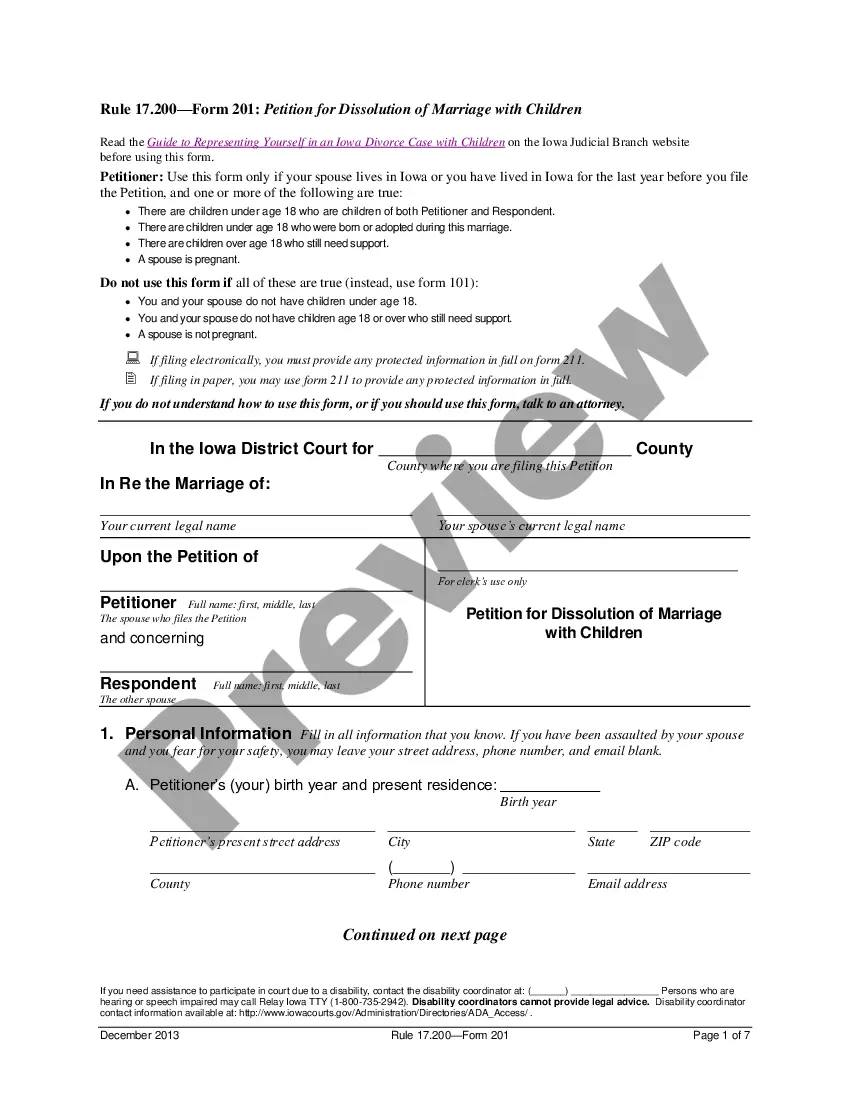
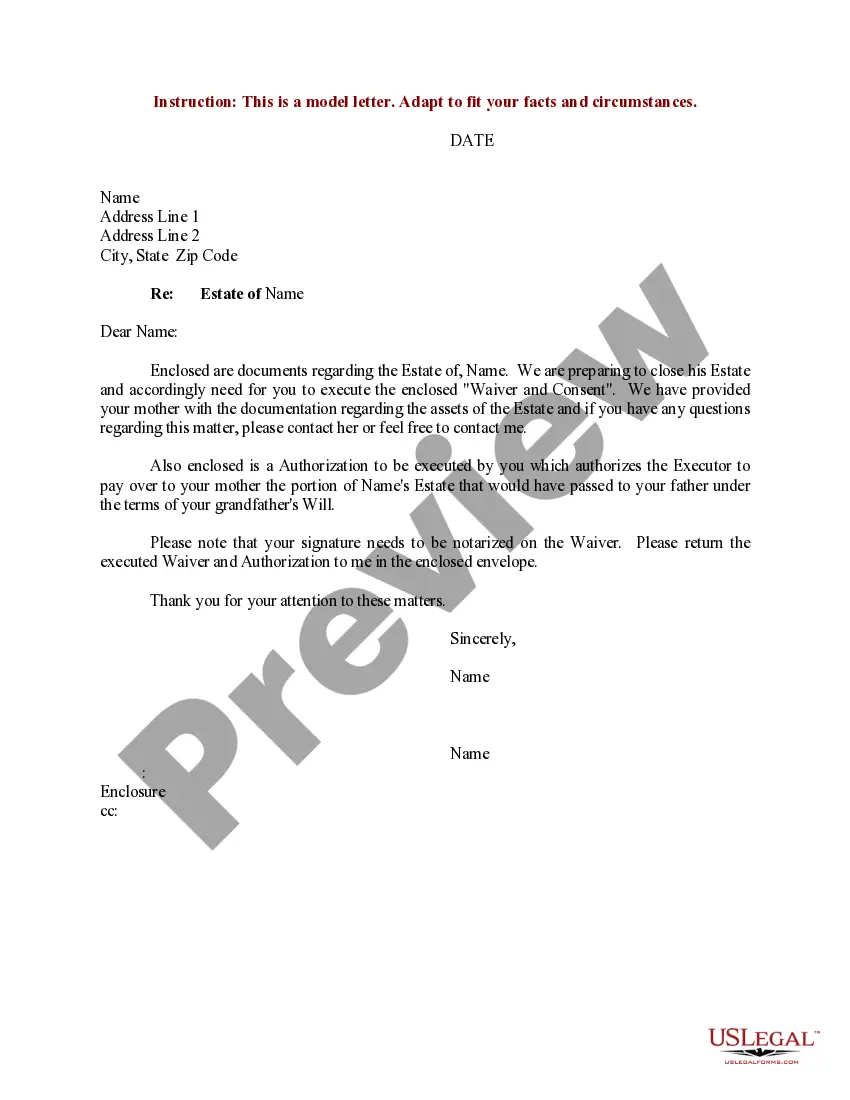
Sample Letter for Closure of Estate with Waiver and Consent
What is this form?
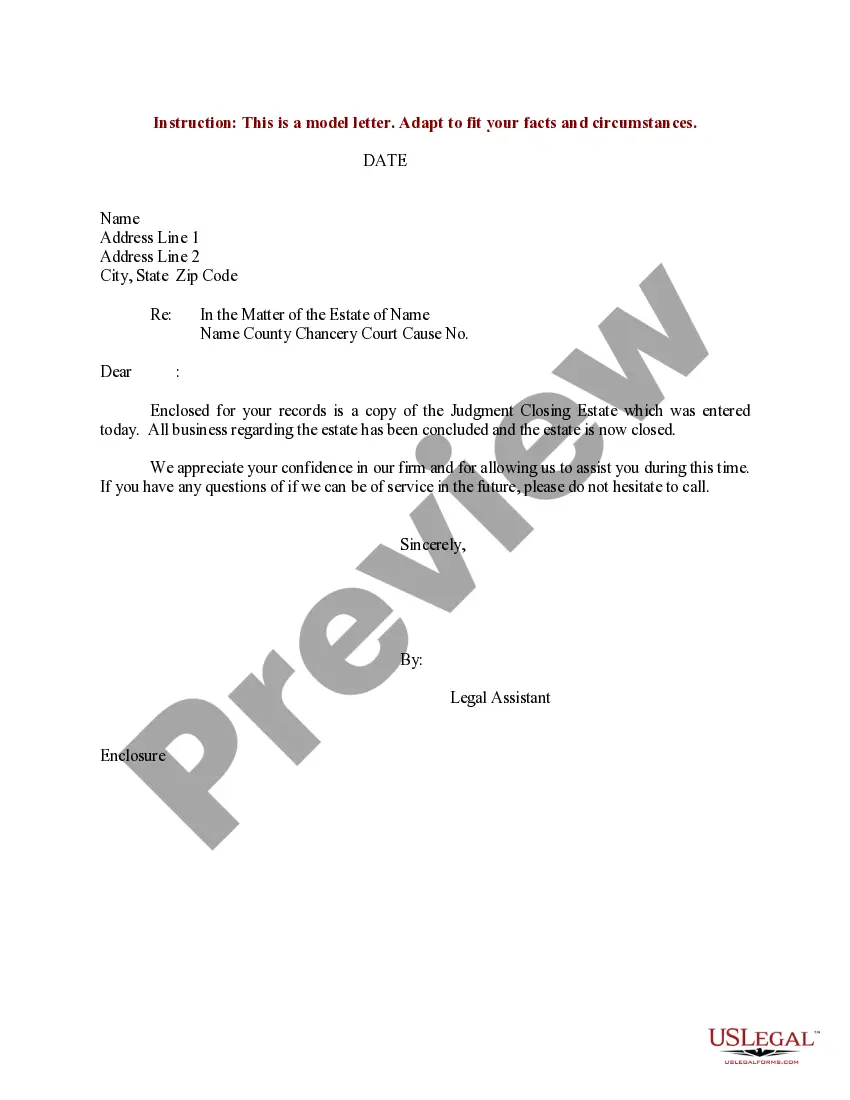
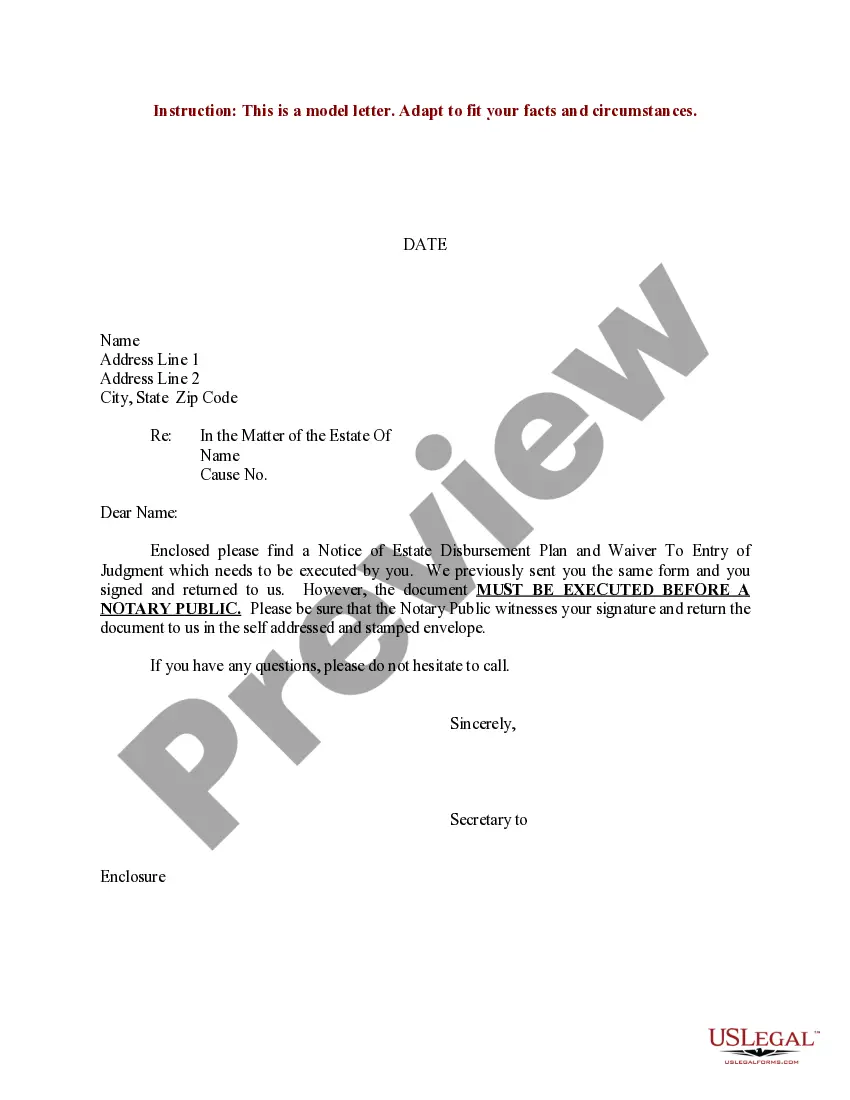
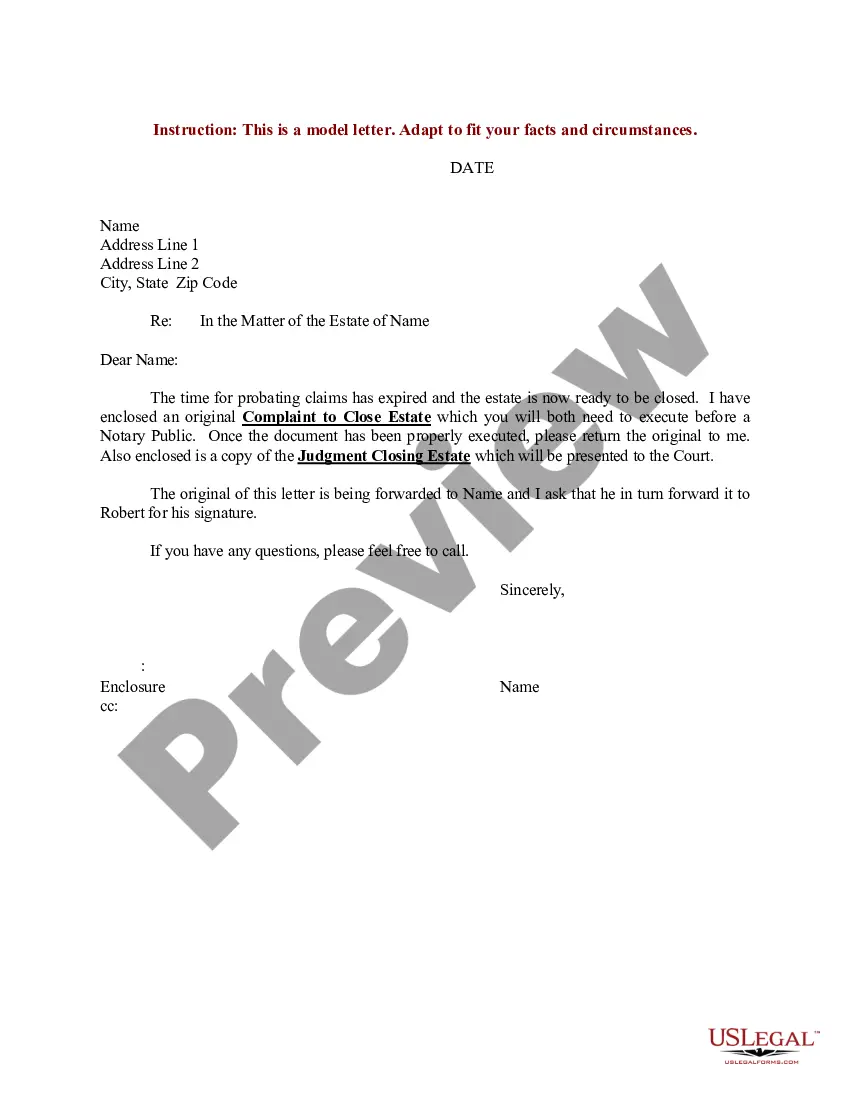
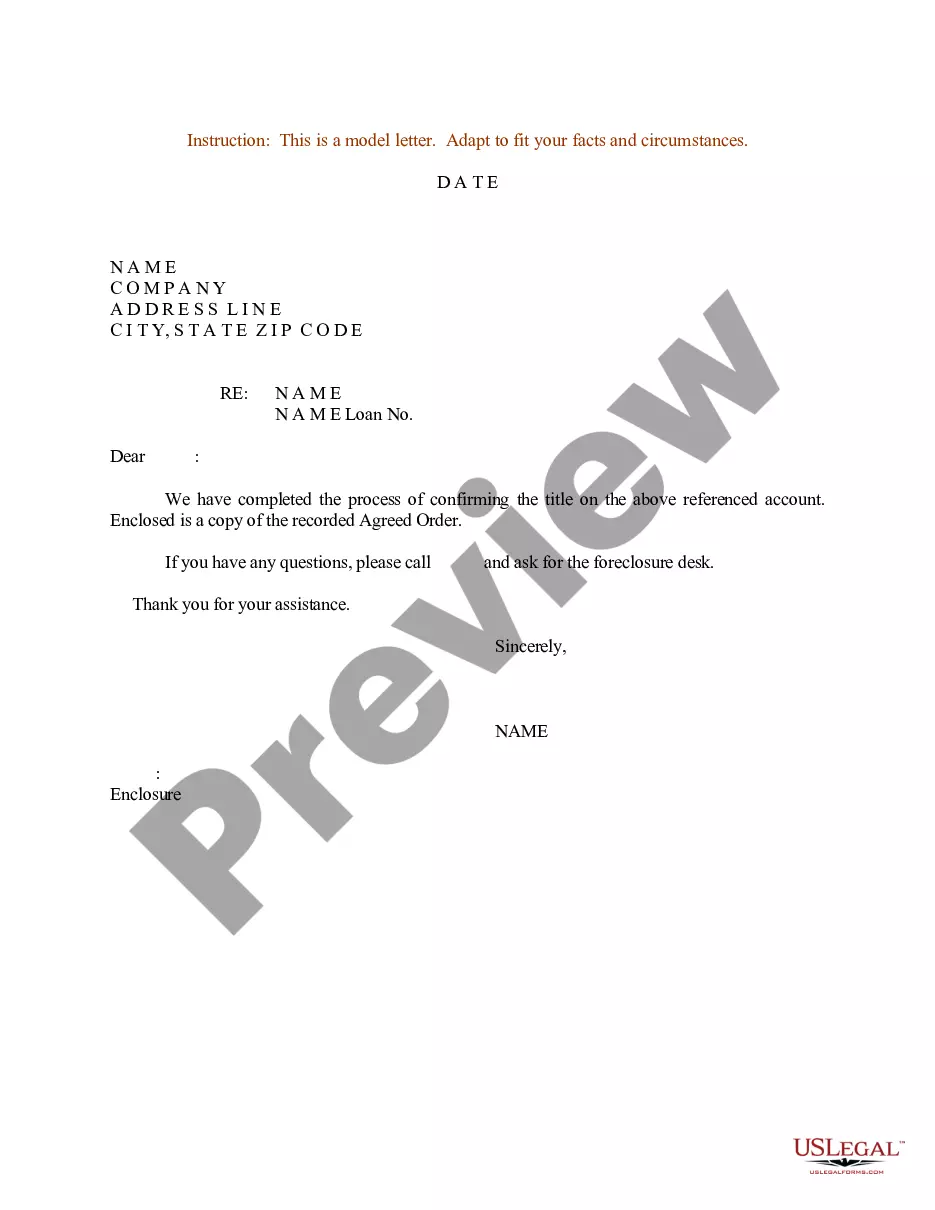
The Sample Letter for Closure of Estate with Waiver and Consent is a legal document used to formally request the closure of an estate. This letter facilitates communication with interested parties who need to consent to the estate closure process and execute the necessary waivers. Unlike general estate closure letters, this form includes specific instructions regarding the waiver and consent process, making it essential for executors and beneficiaries.
Key parts of this document
- Date: The date the letter is prepared.
- Sender Information: Name and address of the executor or individual sending the letter.
- Recipient Information: Name and address of the recipient involved in the estate.
- Subject Line: Reference to the estate in question.
- Content Body: Details regarding the closure of the estate and request for the recipient to execute the Waiver and Consent.
- Authorization: A section for granting the executor authority to act on behalf of the recipient.
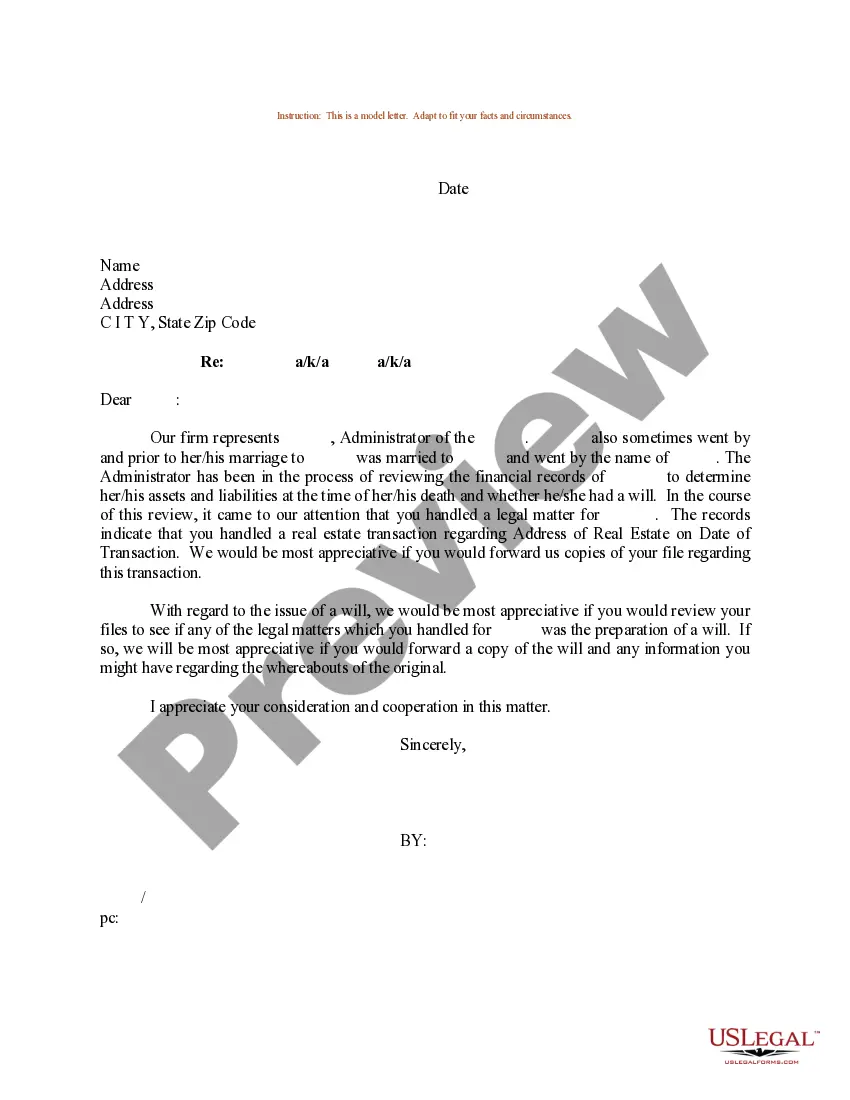
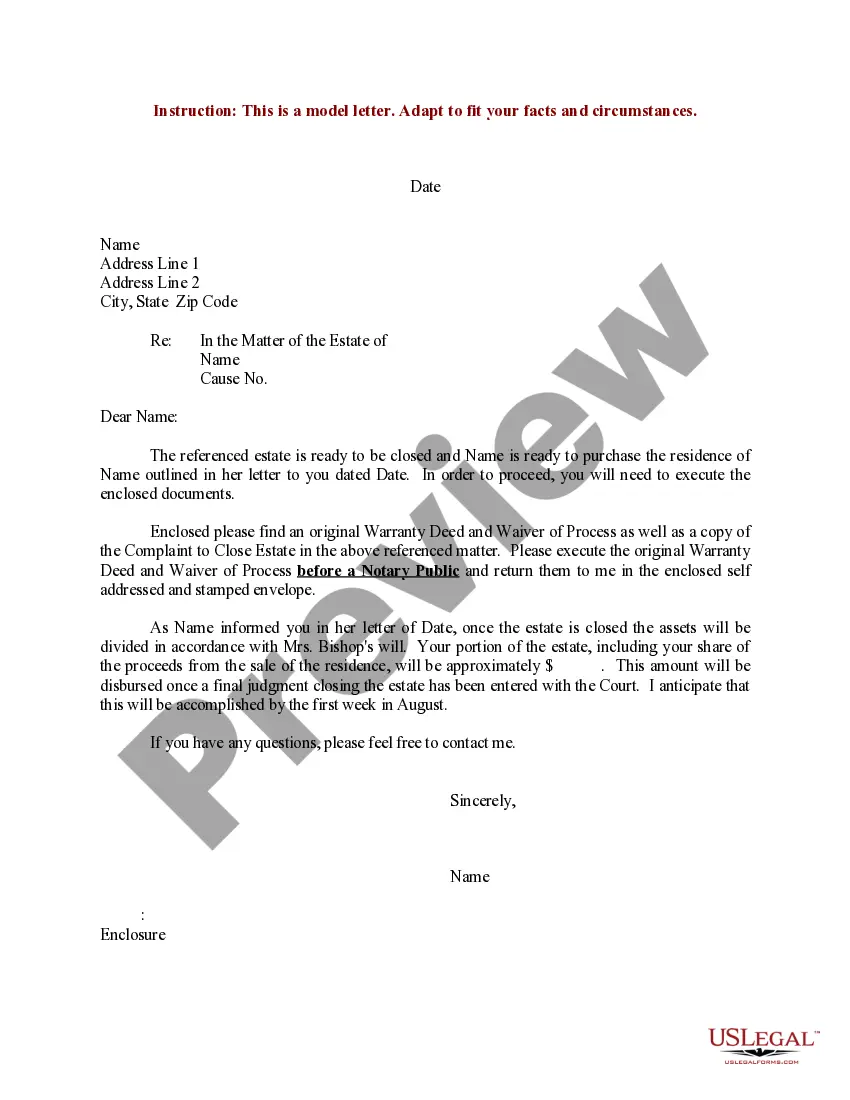
When to use this document
This letter should be used when an executor is ready to close an estate after fulfilling all legal obligations and wishes to secure the consent of any beneficiaries. It is appropriate in scenarios where the assets of the estate have been accounted for, and waivers are required to distribute these assets properly.
Intended users of this form
- Executors of estates who are responsible for managing the estate closure process.
- Beneficiaries of an estate who need to provide consent for the estate's closure.
- Individuals seeking to communicate formally regarding estate matters with involved parties.
How to complete this form
- Fill in the date at the top of the letter.
- Enter your name and address as the sender.
- Provide the recipient's name and address.
- In the subject line, specify the estate name clearly.
- Draft the content to cover the closure of the estate and request for consent.
- Include the authorization section, followed by your signature if required.
Notarization guidance
This form does not typically require notarization unless specified by local law. Always check your state's requirements to confirm if any additional formalities are necessary.
Get your form ready online
Our built-in tools help you complete, sign, share, and store your documents in one place.
Make edits, fill in missing information, and update formatting in US Legal Forms—just like you would in MS Word.
Download a copy, print it, send it by email, or mail it via USPS—whatever works best for your next step.
Sign and collect signatures with our SignNow integration. Send to multiple recipients, set reminders, and more. Go Premium to unlock E-Sign.
If this form requires notarization, complete it online through a secure video call—no need to meet a notary in person or wait for an appointment.
We protect your documents and personal data by following strict security and privacy standards.

Make edits, fill in missing information, and update formatting in US Legal Forms—just like you would in MS Word.

Download a copy, print it, send it by email, or mail it via USPS—whatever works best for your next step.

Sign and collect signatures with our SignNow integration. Send to multiple recipients, set reminders, and more. Go Premium to unlock E-Sign.

If this form requires notarization, complete it online through a secure video call—no need to meet a notary in person or wait for an appointment.

We protect your documents and personal data by following strict security and privacy standards.
Mistakes to watch out for
- Failing to include all necessary recipient information.
- Omitting the date from the letter.
- Not providing clarity on the documents being enclosed.
- Leaving out or incorrectly filling in the authorization section.
Why complete this form online
- Convenience: Easily download the form from anywhere at any time.
- Editability: Customize the letter to suit specific estate details digitally.
- Reliability: Use a professionally drafted template ensuring legal compliance.
Looking for another form?
Form popularity
FAQ
However, if the other beneficiary is someone you do not know well, someone who you suspect will spend all the money right away, or someone who will not readily help you pay for a future bill, then you should keep the account open, perhaps until two years have passed since the date of death.
Notify all creditors. File tax returns and pay final taxes. File the final accounting with the probate court. Distribute remaining assets to beneficiaries. File a closing statement with the court.
If you are named as an executor in the deceased's will, you must produce proof of your executor status and provide a certified copy of the death certificate before the bank will provide access to the account.Present either of these letters to the bank along with the death certificate to close the account.
The Waiver of Notice of Probate of Will is to limit the paperwork necessary in the administration of an estate. If you have absolute confidence in the Executor and the attorney representing him or her, you should sign it to save time, aggravation and...
A waiver of notice is a document an individual signs that allows probate courts to proceed with will hearings in their absence. Waiver of notice are helpful in expediting the process, while cutting down on the often costly administrative court fees.
If an estate is not properly probated and closed in a timely manner, there may be a number of consequences that can jeopardize the estate: The statute of limitations for creditors' claims is extended. Assets may lose value or be lost altogether. The state may claim the assets.
Introduction. Pay the debts of the estate first. Ask each beneficiary to acknowledge receipt of the gift. Transferring company shares. Transferring real property. Draw up the accounts of the estate. Other claims on the estate. Finishing up.
Waiver of notice and consent is the document that legally consents to waive one's right to receive a formal notice.
The Executor's Final Act, Closing an Estate The personal representative, now without any estate funds to pay his lawyer, must respond. Even if the charges are baseless, the executor is stuck paying the legal bill. Instead, before making any distribution, the administrator should insist on receiving a release.