Sample Letter for Distribution of Estate to Church
Overview of this form
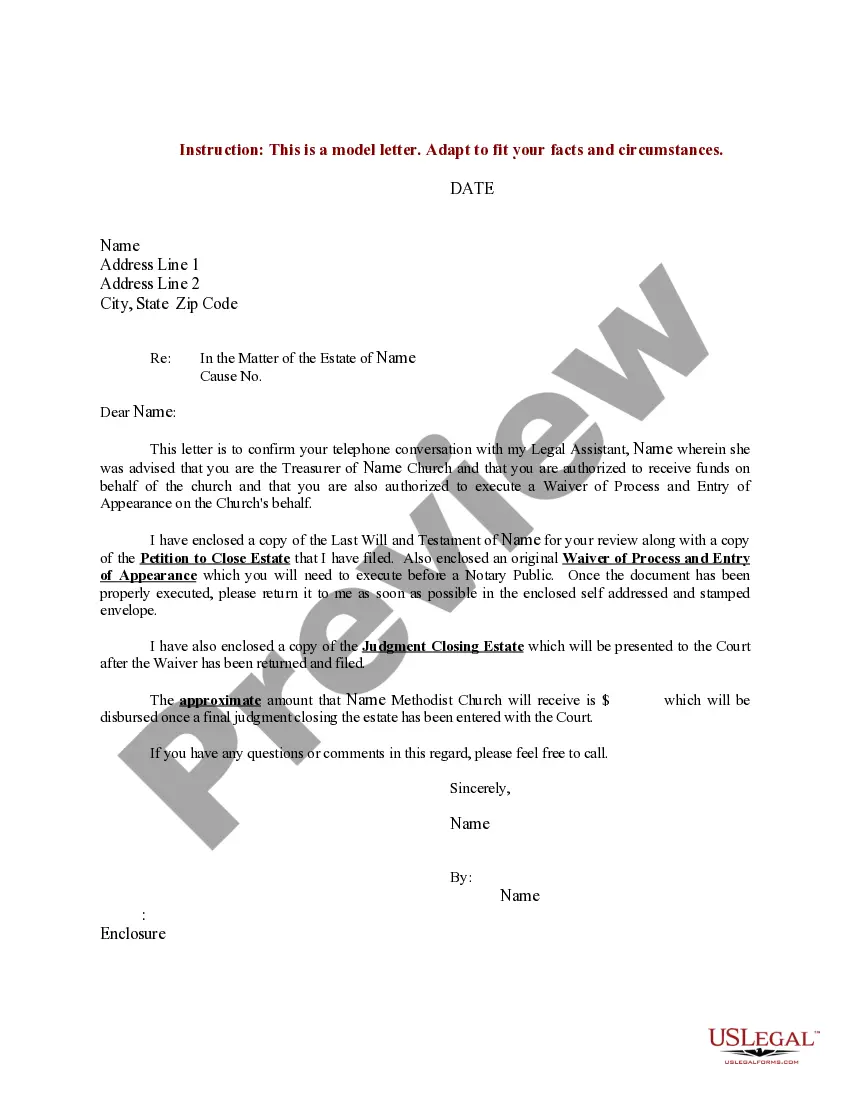
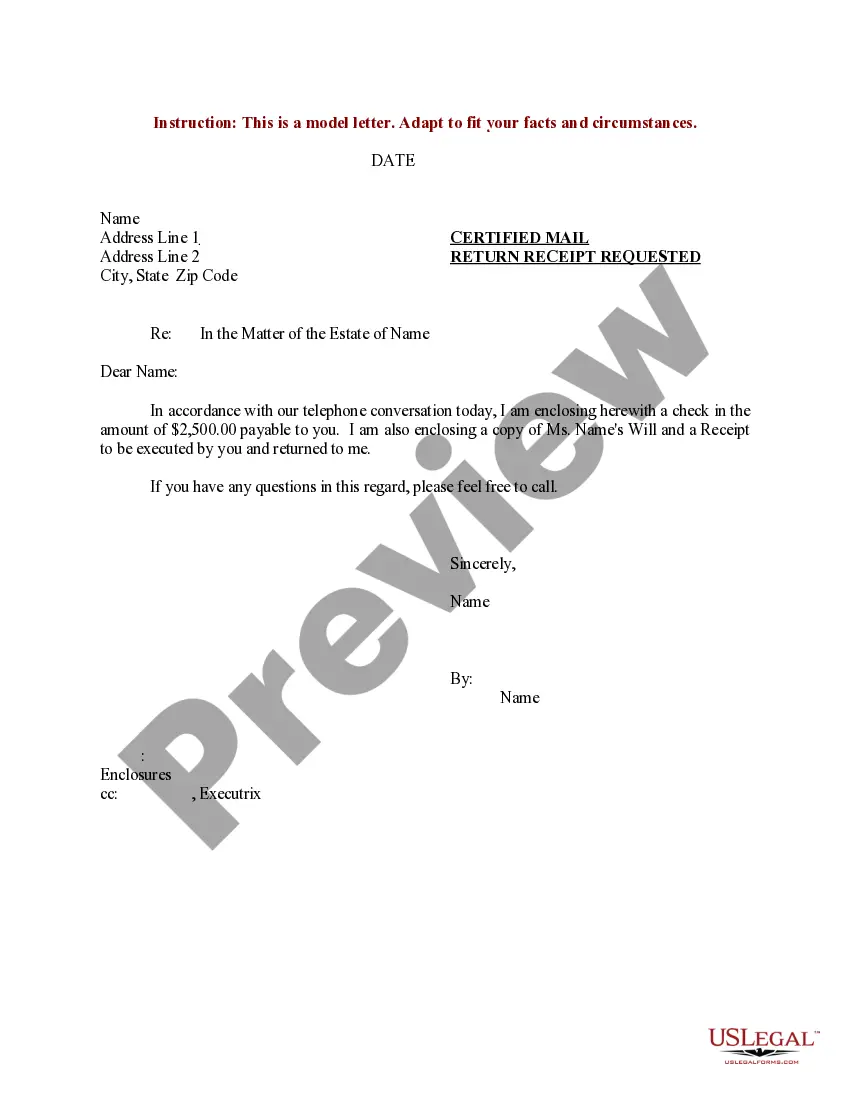
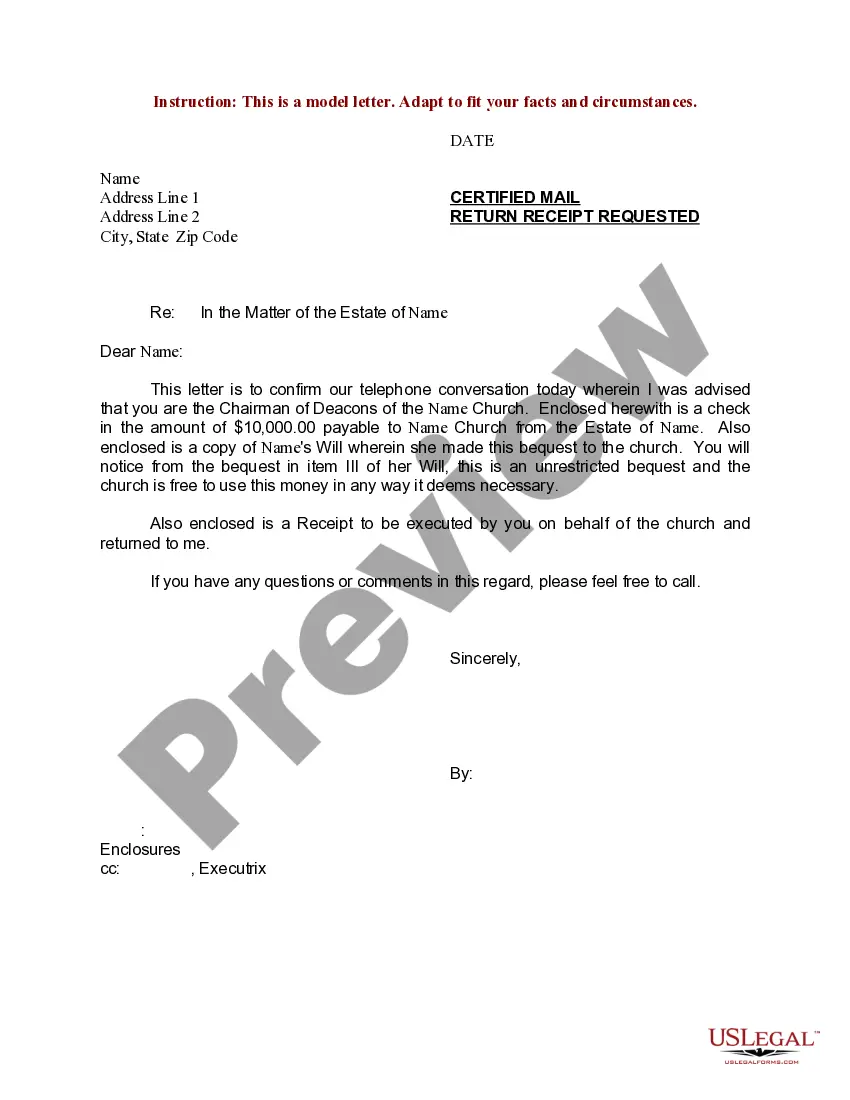
The Sample Letter for Distribution of Estate to Church is a formal communication used to distribute estate assets to a church as specified in a will. This letter allows for the proper notification and documentation of the distribution process, differentiating it from other estate distribution forms by specifically addressing the allocation of assets to a religious organization. It provides a clear framework for the required actions and serves to honor the decedent's wishes regarding their estate.
What’s included in this form
- Sender's information: Includes the name and address of the individual issuing the letter.
- Recipient's information: Provides details of the church receiving the assets.
- Subject line: Clearly states the matter of the estate being discussed.
- Enclosures: Lists accompanying documents such as the Last Will and Testament, Petition to Close Estate, and the Waiver of Process.
- Instructions for execution: Guidance on returning the signed documents.
When to use this form
This letter is utilized during the closing of an estate, particularly when the estate's assets include donations or distributions to a church. It ensures that the church is officially notified of its planned inheritance and provides all necessary documentation for review and execution. Use this form when you are ready to finalize the estate matters and comply with the last wishes of the deceased regarding charitable contributions.
Who needs this form
This form is intended for:
- Executors or personal representatives of an estate.
- Individuals responsible for managing the estate distribution process.
- Trustees handling charitable contributions outlined in a will.
Completing this form step by step
- Enter the date and your contact information at the top of the letter.
- Provide the church's name and address as the recipient details.
- Clearly state the subject regarding the estate matter.
- Include the necessary enclosures listed in the letter for the recipient's review.
- Sign the letter and prepare it for delivery using the self-addressed envelope provided.
Is notarization required?
Notarization is required for this form to take effect. Our online notarization service, powered by Notarize, lets you verify and sign documents remotely through an encrypted video session, available 24/7.
Get your form ready online
Our built-in tools help you complete, sign, share, and store your documents in one place.
Make edits, fill in missing information, and update formatting in US Legal Forms—just like you would in MS Word.
Download a copy, print it, send it by email, or mail it via USPS—whatever works best for your next step.
Sign and collect signatures with our SignNow integration. Send to multiple recipients, set reminders, and more. Go Premium to unlock E-Sign.
If this form requires notarization, complete it online through a secure video call—no need to meet a notary in person or wait for an appointment.
We protect your documents and personal data by following strict security and privacy standards.

Make edits, fill in missing information, and update formatting in US Legal Forms—just like you would in MS Word.

Download a copy, print it, send it by email, or mail it via USPS—whatever works best for your next step.

Sign and collect signatures with our SignNow integration. Send to multiple recipients, set reminders, and more. Go Premium to unlock E-Sign.

If this form requires notarization, complete it online through a secure video call—no need to meet a notary in person or wait for an appointment.

We protect your documents and personal data by following strict security and privacy standards.
Common mistakes to avoid
- Failing to include all necessary enclosures may delay the process.
- Not providing clear instructions for execution can lead to confusion for the recipient.
- Forgetting to sign the letter can render it invalid.
Benefits of using this form online
- Convenience of downloading the form at any time.
- Editability allows you to customize the document to suit your needs.
- Access to professionally drafted templates ensures legal compliance.
Looking for another form?









Form popularity
FAQ
Distribution Letter means that certain letter agreement, executed and delivered by the Company, the Controlling Stockholder and the Investor concurrently with the execution of this Agreement, as attached hereto as Exhibit E.
No, it can be mailed. Many times people (executor, beneficiary) like to trade the release/check at the same time, but in my experience if I have the release signed (as lawyer for the executor) I'll mail the check after and it is...
Since every estate is different, the time it takes to settle the estate may also differ. Most times, an executor would take 8 to 12 months. But depending on the size and complexity of the estate, it may take up to 2 years or more to settle the estate.
An estate bank account is opened up by the executor, who also obtains a tax ID number.The executor must pay creditors, file tax returns and pay any taxes due. Then, he must collect any money or benefits owed to the decedent. Finally, he or she distributes the remainder in accordance with the will.
That the estate assets are distributed at least 6 months after the deceased's date of death; That the executor has published a 30 day notice of his/her intent to distribute the estate; and. That the time specified in the notice has expired.
Identify persons the executor should notify of your death. Include family members, close friends and business associates, including your attorney. Provide contact information for each person, as well as any final message or instructions to be given. Describe your important estate documents and their exact location.
An executor letter authorizes a person or organization to act on behalf of a decedent's estate as an executor.It's also called "letters of testamentary" or "letters of administration" in some jurisdictions.
All taxes and liabilities paid from the estate, including medical expenses, attorney fees, burial or cremation expenses, estate sale costs, appraisal expenses, and more. The executor should keep all receipts for any services or transactions needed to liquidate the assets of the deceased.
A letter of instructions is an informal document that gives your survivors information concerning important financial and personal matters that must be attended to after your demise.