Sample Letter for Review of Play
Understanding this form
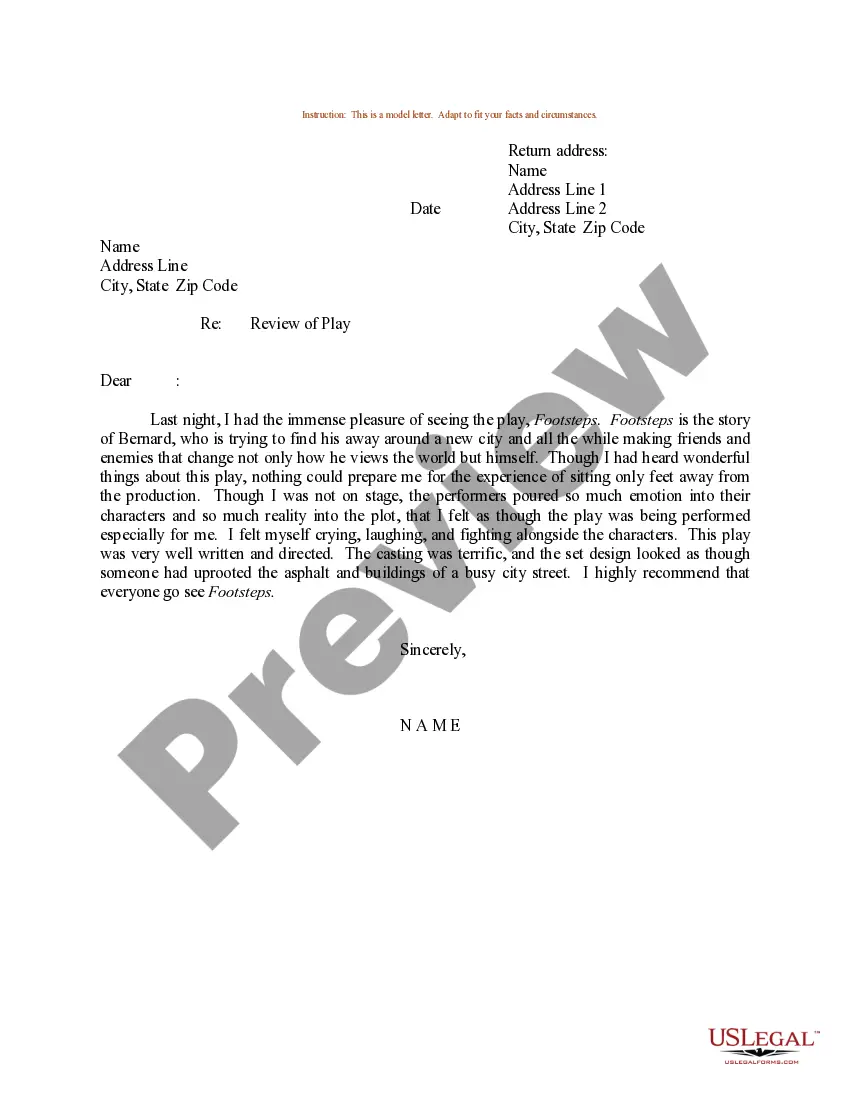
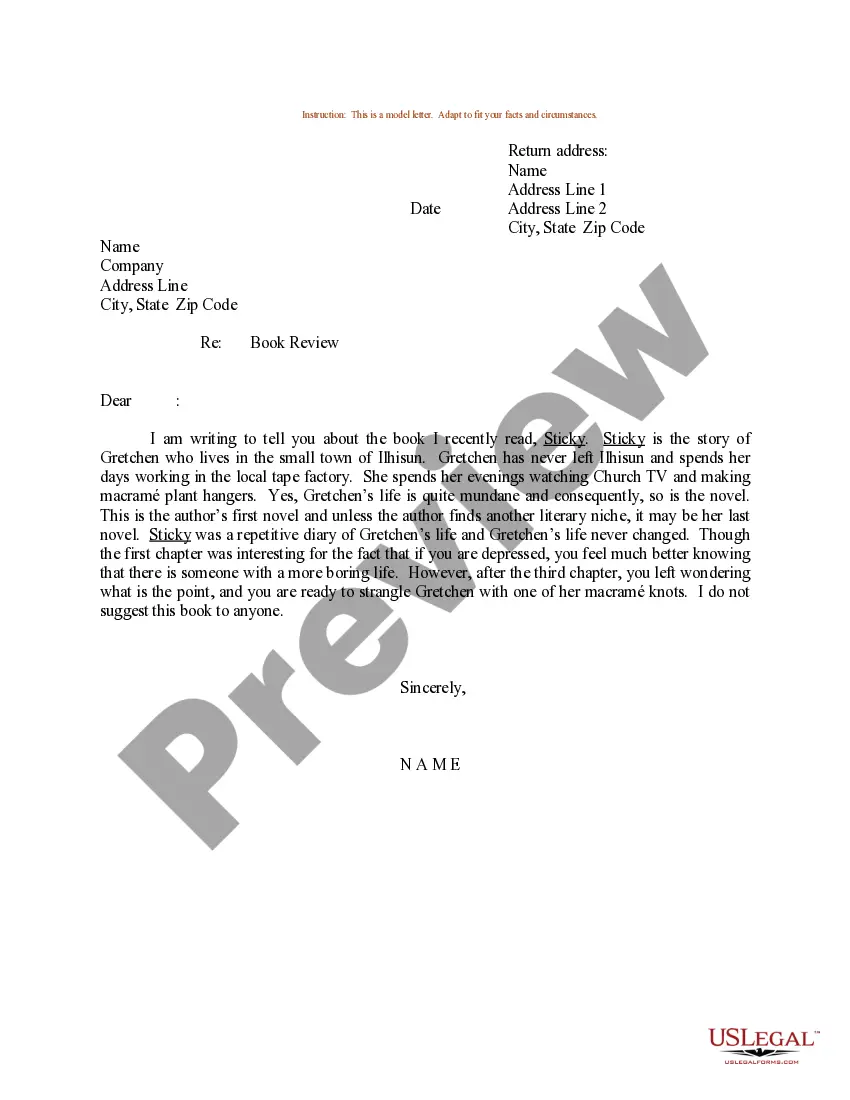
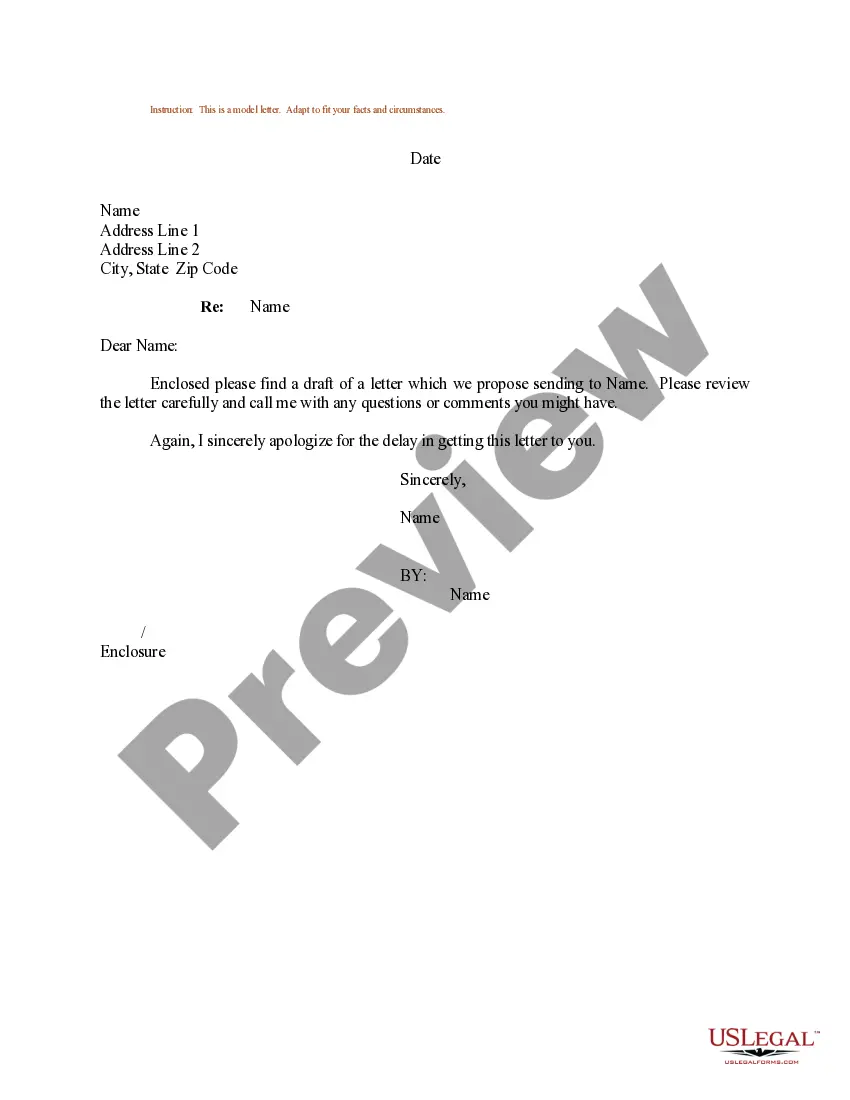
This Sample Letter for Review of Play serves as a template for individuals seeking to formally communicate their thoughts or concerns regarding a play performance. It simplifies the process of drafting a letter by providing essential structure and language that users can personalize, distinguishing it from standard complaint letters or feedback forms.
Key components of this form
- Return address fields for the sender and recipient, including name and address.
- Date field to indicate when the letter is sent.
- Subject line indicating the purpose of the letter: "Review of Play."
- Body section for personalized comments and concerns regarding the play.
- Closing signature area to confirm the sender's identity.
When this form is needed
This form is useful in various scenarios, such as when a theatergoer wishes to provide constructive feedback, share a review, or raise concerns about a specific production. It can also be utilized by critics or reviewers who want to formally communicate their opinions to the production team or theater management.
Who this form is for
Individuals who may find this form beneficial include:
- Theater patrons wanting to express feedback.
- Theater critics and reviewers.
- Anyone involved in play production who requires feedback from audience members.
How to prepare this document
- Identify the parties: fill in your name and address as well as the recipient's information.
- Enter the date on which you are creating the letter.
- Specify the subject of your letter as "Review of Play."
- Provide your personalized comments and insights about the play in the body of the letter.
- Sign the letter to authenticate your feedback.
Does this document require notarization?
This form usually doesn’t need to be notarized. However, local laws or specific transactions may require it. Our online notarization service, powered by Notarize, lets you complete it remotely through a secure video session, available 24/7.
Get your form ready online
Our built-in tools help you complete, sign, share, and store your documents in one place.
Make edits, fill in missing information, and update formatting in US Legal Forms—just like you would in MS Word.
Download a copy, print it, send it by email, or mail it via USPS—whatever works best for your next step.
Sign and collect signatures with our SignNow integration. Send to multiple recipients, set reminders, and more. Go Premium to unlock E-Sign.
If this form requires notarization, complete it online through a secure video call—no need to meet a notary in person or wait for an appointment.
We protect your documents and personal data by following strict security and privacy standards.

Make edits, fill in missing information, and update formatting in US Legal Forms—just like you would in MS Word.

Download a copy, print it, send it by email, or mail it via USPS—whatever works best for your next step.

Sign and collect signatures with our SignNow integration. Send to multiple recipients, set reminders, and more. Go Premium to unlock E-Sign.

If this form requires notarization, complete it online through a secure video call—no need to meet a notary in person or wait for an appointment.

We protect your documents and personal data by following strict security and privacy standards.
Avoid these common issues
- Failing to include complete addresses for both the sender and recipient.
- Not personalizing the body of the letter, leading to generic feedback.
- Forgetting to sign the letter before sending.
Benefits of using this form online
- Convenience of downloading a ready-to-use template.
- Easy to customize according to your specific feedback or concerns.
- Reliability of a legally compliant structure in drafting letters.
Legal use & context
- This letter is a formal request for feedback and does not imply any legal obligation.
- Ensure that all provided contact information is accurate to receive timely feedback.
- Although not a legal document, maintaining professionalism can enhance the review process.
Key takeaways
- This Sample Letter for Review of Play serves as a structured method to request performance evaluations.
- It is designed for use by directors, producers, and playwrights in the theatrical field.
- Completing the letter requires attention to detail, ensuring all required fields are filled out appropriately.
Looking for another form?
Form popularity
FAQ
Provide useful, constructive feedback. Talk about a range of elements, including customer service. Be detailed, specific, and honest. Leave out links and personal information. Keep it civil and friendly. Feel free to update your review if needed. Check you've got the right domain name or company.
1 Read, watch, or listen to the work more than once. 2 Provide essential information. 3 Understand your audience. 4 Take a stand. 5 Explain how you're judging the work. 6 Introduce evidence to support your criteria. 7 Know the conventions of the genre. 8 Compare and contrast.
Movie vs. Play. Gather some information about the author. Authors usually write in one and the same style, and very often they focus their efforts repeatedly on the same topic. Present the plot. Present the characters. Interpret the play. Describe your remarks. Write what you like in the play.
Introduce your topic. It may sound redundant to "introduce" your topic in the introduction, but often times writer's fail to do so. State your topic's relevance. Reveal your thesis to the reader.
A review should describe the situation of a play without giving too much information about the plot. It should address the production elements individually and how they work together as a whole. It should express an opinion supported by thoughtful analysis.
Movie vs. Play. Gather some information about the author. Authors usually write in one and the same style, and very often they focus their efforts repeatedly on the same topic. Present the plot. Present the characters. Interpret the play. Describe your remarks. Write what you like in the play.
Be objective, fair, and sincere. Evaluate the entire production. Be constructive. Indicate good points along with those you felt needed improvement.
Create product review summary box. Empathize with your readers. Identify who the product is for. Introduce the solution. Explain the relationship between product features and benefits through case studies. Offer social proof. List product alternatives. Use the right format for your reviews.
Describe what you saw in detail and make the reader see what you see. Be specific and thorough in your descriptions. Analyze what you think the director or designer was trying to achieve. Judge how effective the play was as a whole.