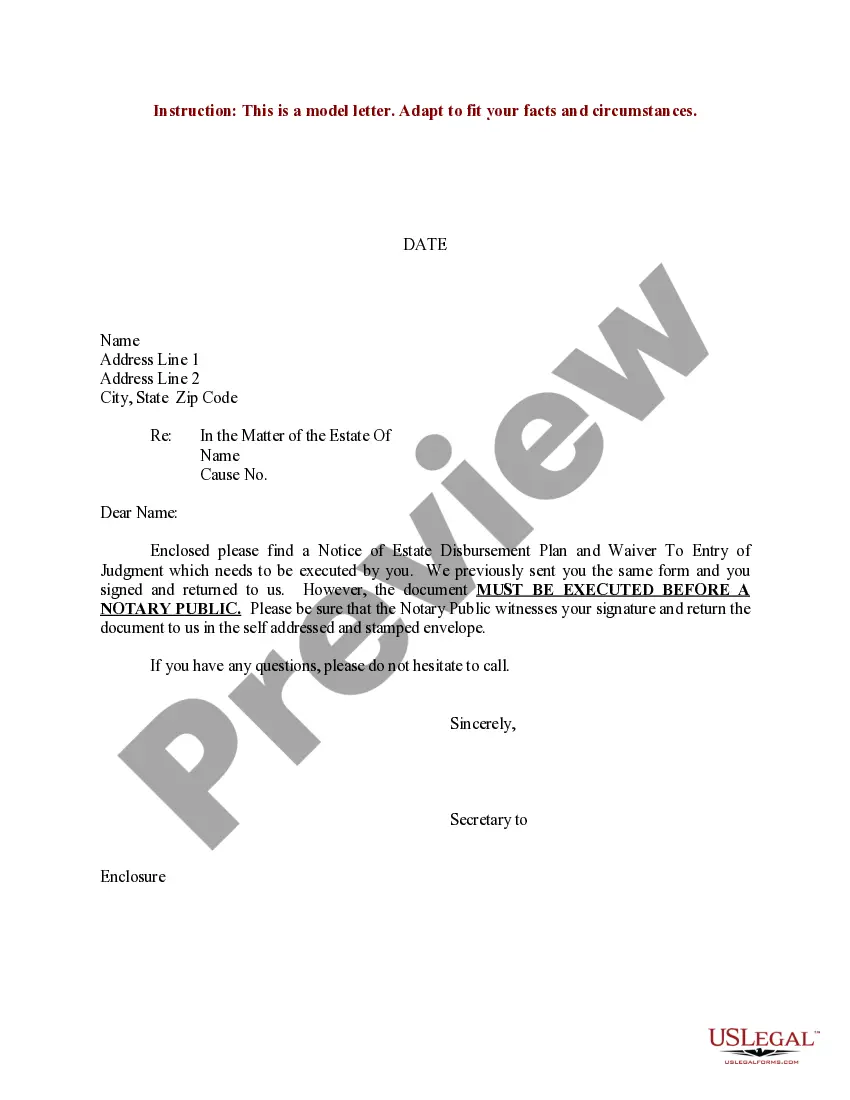
Sample Letter for Notice of Estate Disbursement Plan - Waiver to Entry of Judgment
What this document covers
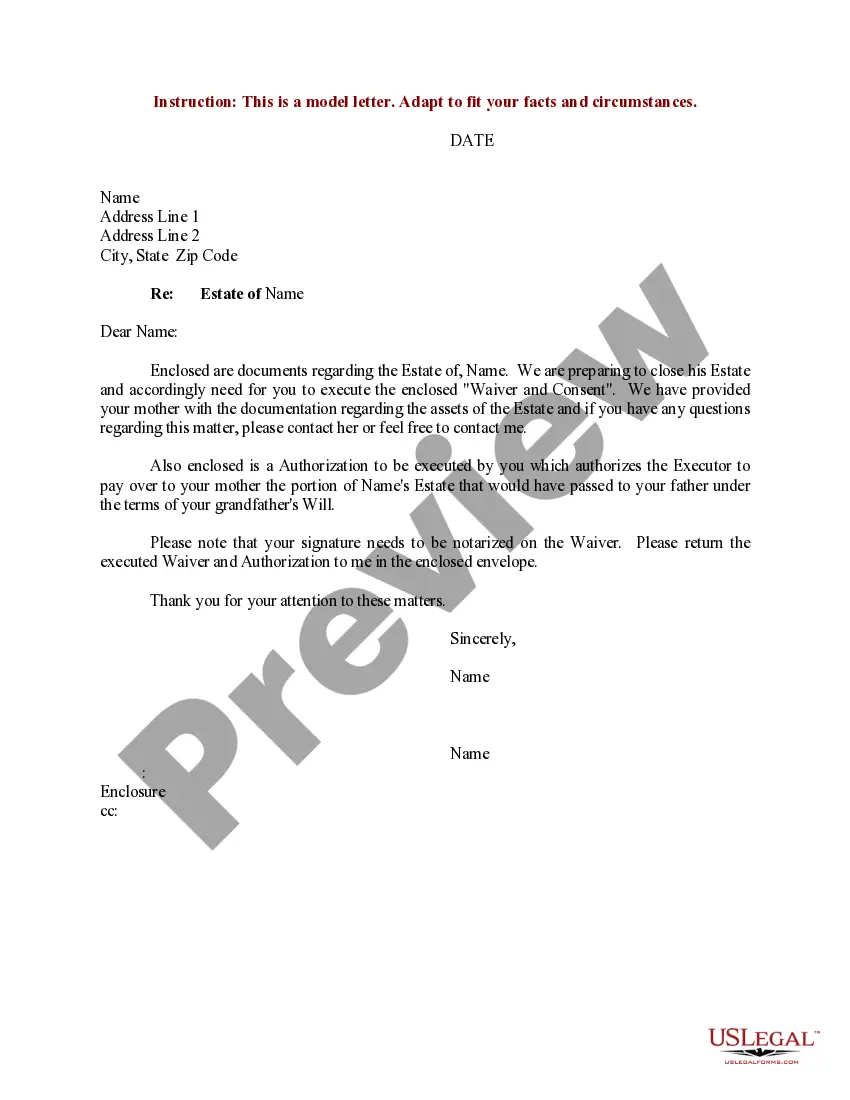
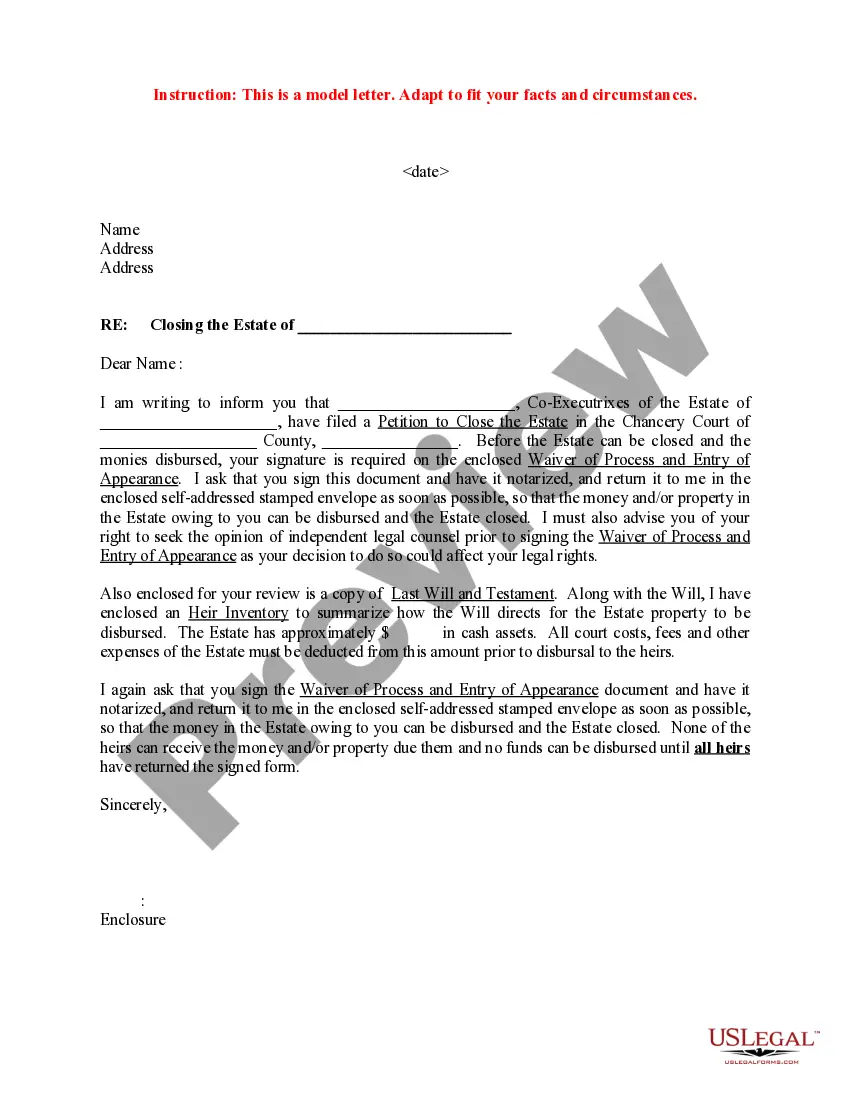
This Sample Letter for Notice of Estate Disbursement Plan - Waiver to Entry of Judgment is a formal document used to communicate a plan for distributing an estate's assets among beneficiaries. It serves to inform parties involved in the estate about the disbursement process and allows for a waiver of the right to enter a judgment, which can prevent lengthy court proceedings. This form differs from other estate-related documents by focusing specifically on the communication of the disbursement plan rather than the legal proceedings themselves.
What’s included in this form
- Header including the date and sender's address
- Subject line specifying the estate involved
- Body detailing the disbursement plan for estate assets
- Section for beneficiaries to acknowledge receipt and understanding
- Signature line for the executor or estate representative
Situations where this form applies
This form is used when the executor or administrator of an estate needs to notify beneficiaries about the disbursement of assets. It is helpful in cases where the executor wants to streamline the process by having beneficiaries agree to the disbursement plan without requiring formal court action. Situations may include the settlement of an estate without disputes or when all parties are in agreement and wish to avoid a lengthy legal process.
Intended users of this form
- Executors or administrators of an estate
- Beneficiaries expecting to receive assets from a deceased person's estate
- Legal representatives assisting in the estate disbursement process
How to prepare this document
- Identify the appropriate parties, including the beneficiaries and the estate representative.
- Fill in the date and the address of the sender at the top of the letter.
- Clearly state the name of the estate and the primary subject in the body of the letter.
- Detail the specific plan for asset disbursement, ensuring clarity on what each beneficiary will receive.
- Provide space for signatures and acknowledgments from the beneficiaries.
Does this form need to be notarized?
This form does not typically require notarization unless specified by local law. Be sure to check local regulations for any particular requirements regarding notarization for estate-related documents.
Get your form ready online
Our built-in tools help you complete, sign, share, and store your documents in one place.
Make edits, fill in missing information, and update formatting in US Legal Forms—just like you would in MS Word.
Download a copy, print it, send it by email, or mail it via USPS—whatever works best for your next step.
Sign and collect signatures with our SignNow integration. Send to multiple recipients, set reminders, and more. Go Premium to unlock E-Sign.
If this form requires notarization, complete it online through a secure video call—no need to meet a notary in person or wait for an appointment.
We protect your documents and personal data by following strict security and privacy standards.

Make edits, fill in missing information, and update formatting in US Legal Forms—just like you would in MS Word.

Download a copy, print it, send it by email, or mail it via USPS—whatever works best for your next step.

Sign and collect signatures with our SignNow integration. Send to multiple recipients, set reminders, and more. Go Premium to unlock E-Sign.

If this form requires notarization, complete it online through a secure video call—no need to meet a notary in person or wait for an appointment.

We protect your documents and personal data by following strict security and privacy standards.
Common mistakes to avoid
- Failing to include clear identification of the estate and beneficiaries.
- Not detailing the disbursement plan thoroughly, leading to confusion.
- Omitting signature lines, which can undermine the form's validity.
Why use this form online
- Convenience of downloadable format allowing for quick access and completion.
- Editability lets users customize the form to fit specific situations.
- Reliability of forms reviewed by licensed attorneys to ensure legal validity.
Legal use & context
- This letter is legally used to document the notice of an estateâs disbursement plan.
- It aids in maintaining transparency between estate administrators and beneficiaries.
- This form helps in avoiding potential disputes or misunderstandings among heirs.
Key takeaways
- The form is essential for notifying beneficiaries of an estate's disbursement plan.
- It must be completed with accurate details to avoid common mistakes.
- No notarization is generally required, but local laws should be verified.
Looking for another form?








Form popularity
FAQ
This form is a formal executor letter that communicates the proposed plan to distribute estate assets and includes a waiver of the right to enter judgment. It helps beneficiaries understand the plan and supports settlement without court action. The letter typically includes a header with the date and sender's address, a subject line, a body detailing the disbursement plan, a beneficiary acknowledgment section, and a signature line for the executor.
This form provides a letter from the executor notifying beneficiaries about how estate assets will be disbursed and the steps involved. It includes a body detailing the disbursement plan, a section for beneficiaries to acknowledge receipt and understanding, and a signature line for the executor. Using this template can help document consent and avoid unnecessary court action when all parties agree.
In the estate context of this form, a waiver means a party agrees not to require formal notice before actions or a final judgment. The Sample Letter for Notice of Estate Disbursement Plan - Waiver to Entry of Judgment uses this waiver to allow the disbursement plan to proceed without further court steps, provided beneficiaries acknowledge the plan and consent by signing.
Executors or administrators of an estate should use this letter to notify beneficiaries about asset disbursement and to document consent. Beneficiaries expecting to receive assets and legal representatives assisting in the process can also use or refer to this template to ensure everyone understands the plan.
This letter is used when the executor needs to inform beneficiaries about how estate assets will be distributed and to obtain their agreement to the plan. It is particularly helpful to streamline settlement and avoid lengthy court action when all parties are in accord.
It differs by including a disbursement plan description and a waiver of the right to enter judgment, plus a beneficiary acknowledgment section and executor signature. This combination is designed to secure consent and avoid court action, whereas a standard notice may only inform without a built‑in waiver or consent mechanism.