Sample Letter to Party Opposite regarding Notice of Representation
Understanding this form
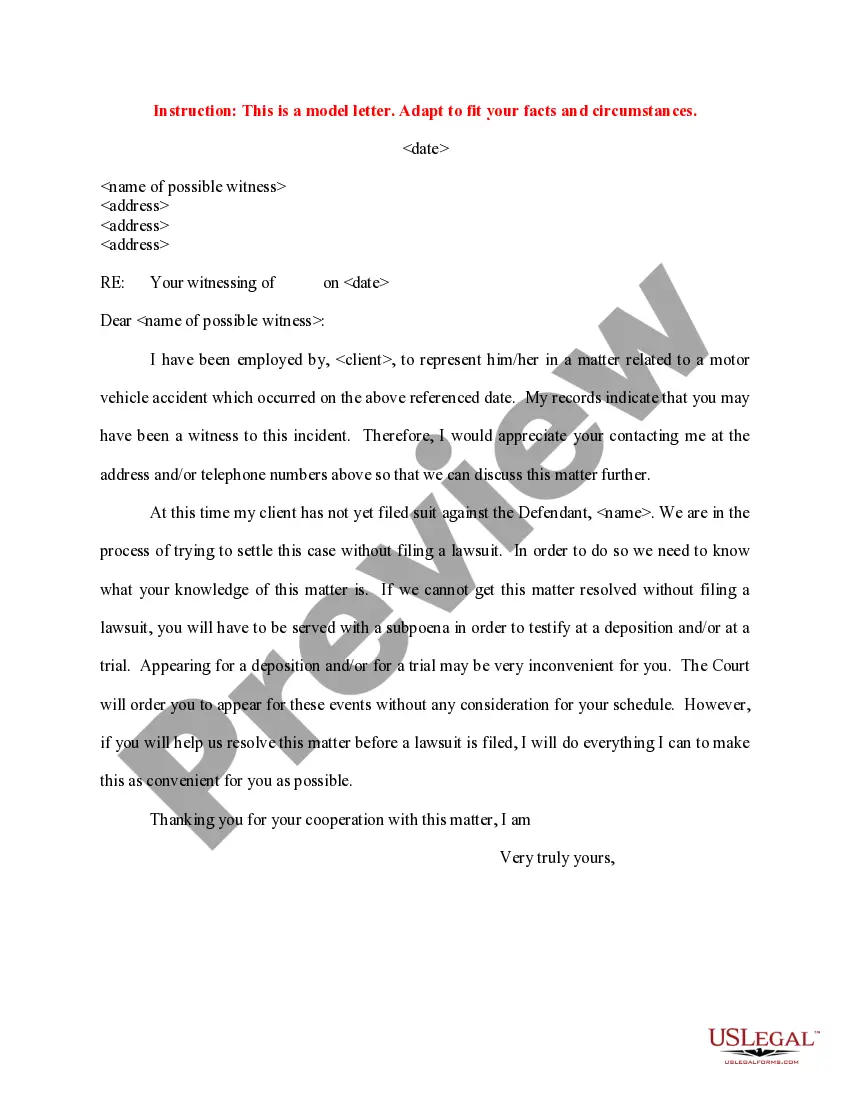
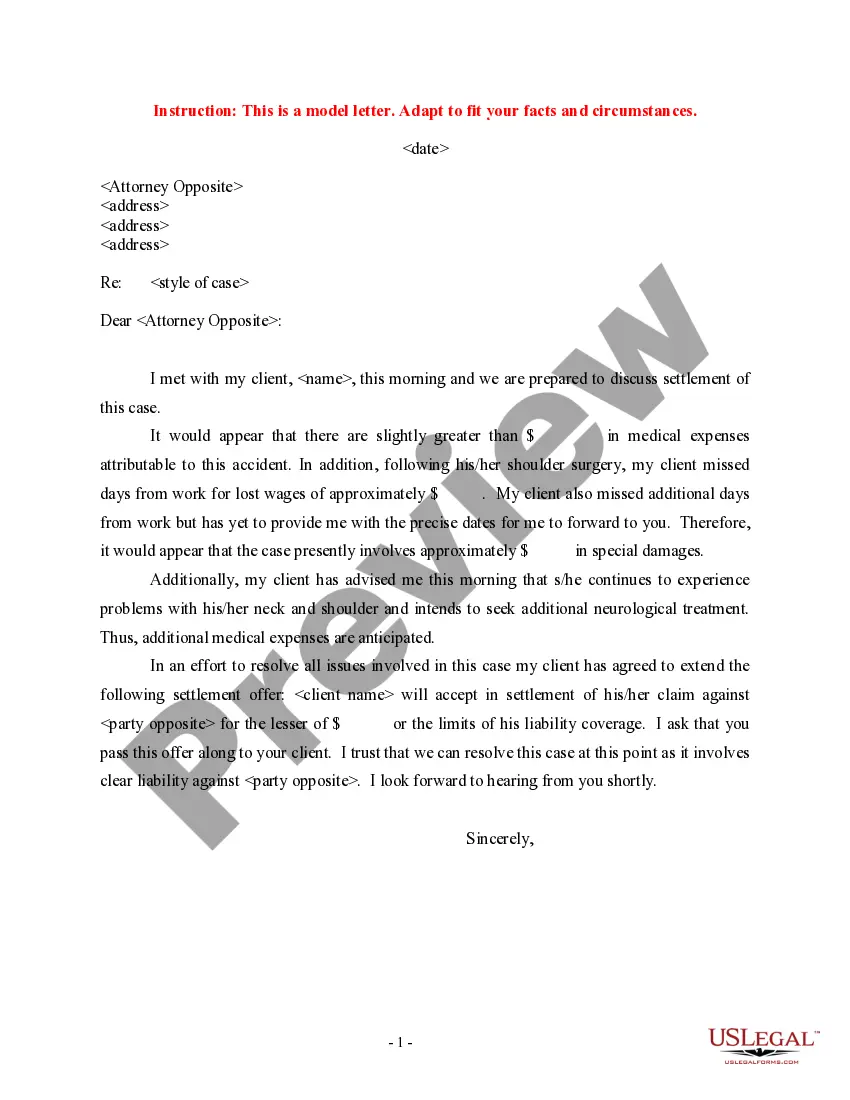
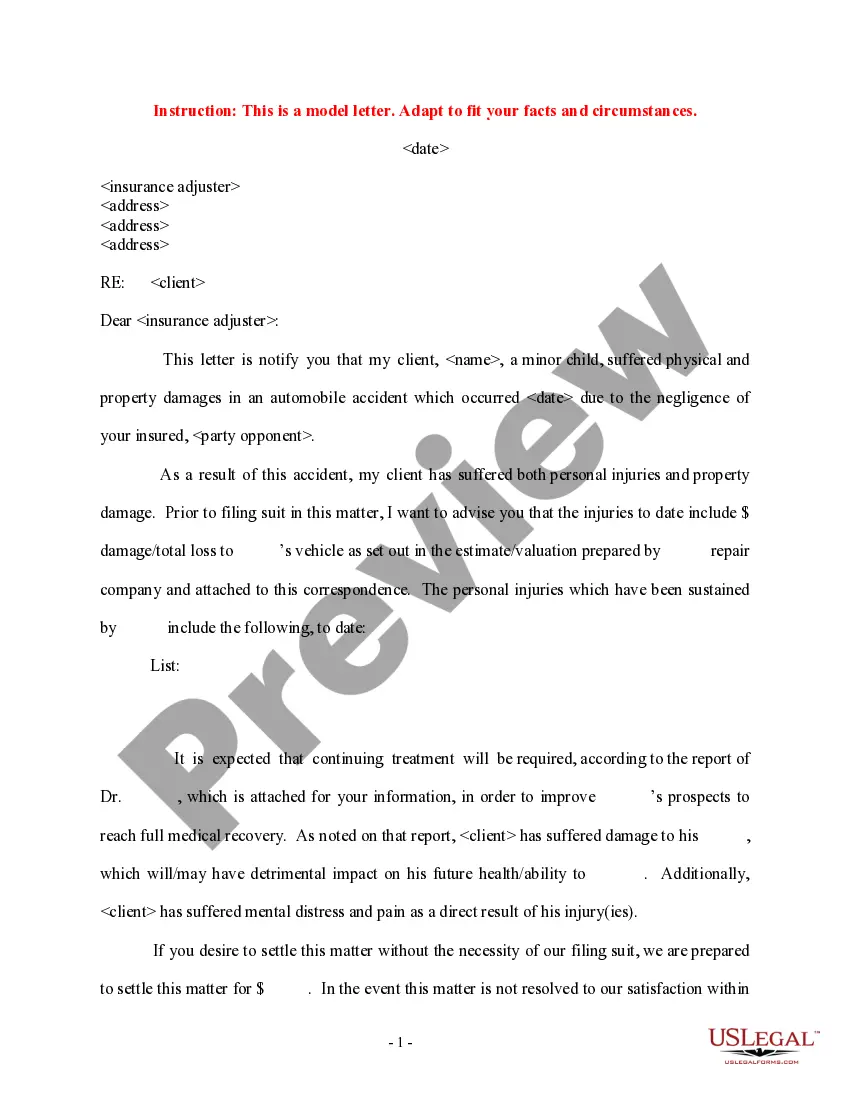
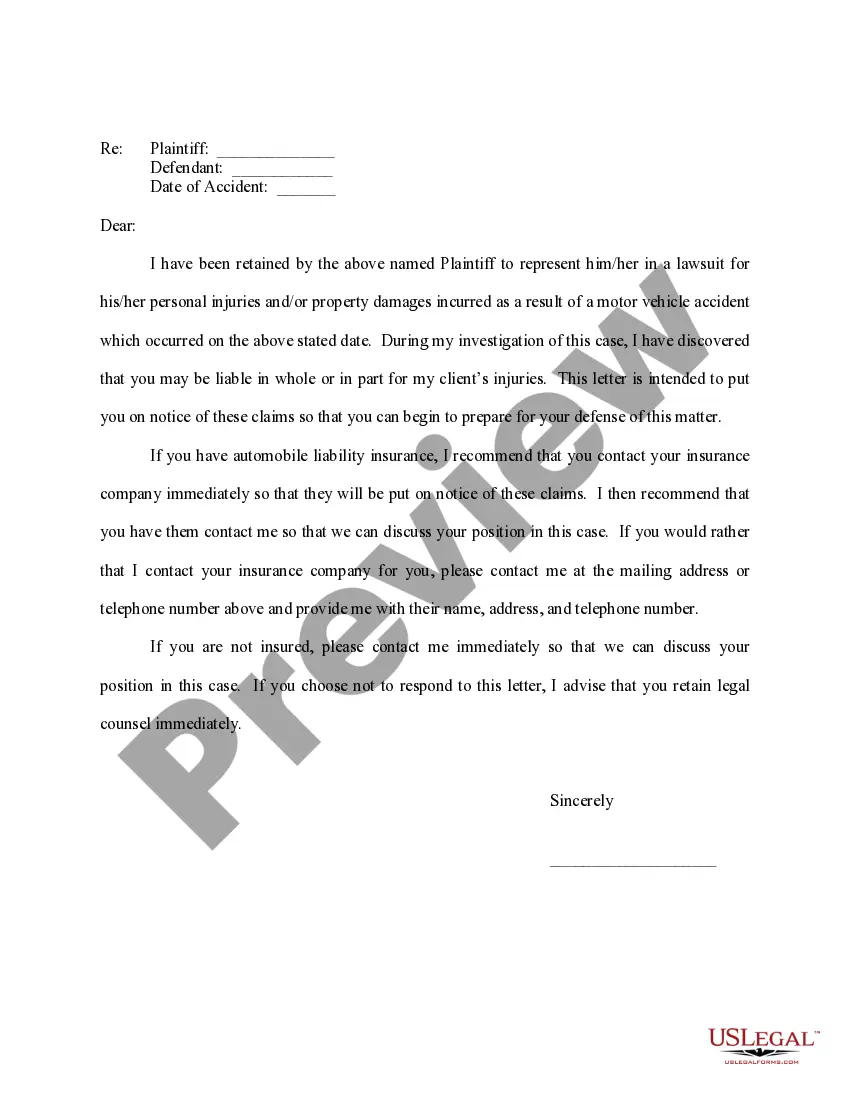
This Sample Letter to Party Opposite regarding Notice of Representation is a template designed for legal professionals seeking to communicate with the opposing party before filing a lawsuit. It serves as a crucial first step in legal negotiations, allowing parties to address issues and seek resolution without the need for litigation. This form is different from other legal correspondence in that it focuses specifically on informing the opposing party of your intention to represent a client while providing them with an opportunity for settlement.
Form components explained
- Introduction of the client and the case details.
- Statement regarding the current status of the case, emphasizing settlement efforts.
- Explanation of potential legal actions if a resolution is not reached.
- Invitation for cooperation from the opposing party.
- Closing remarks thanking the recipient for their cooperation.
When to use this form
You should use this form when you are in the early stages of a potential legal dispute and aim to resolve the matter through negotiation rather than litigation. It is particularly applicable when you have a client who might initiate a lawsuit but prefer to settle amicably. Sending this letter helps establish communication with the opposing party and may facilitate a quicker and less costly resolution.
Intended users of this form
- Attorneys representing clients in potential legal disputes.
- Legal professionals involved in pre-litigation negotiations.
- Clients seeking to inform the opposing party of their representation.
Steps to complete this form
- Identify the parties involved, including your client and the opposing party.
- Specify the current case status and intentions regarding settlement.
- Clearly outline the potential consequences if the matter cannot be resolved.
- Express your willingness to work with the opposing party to find a convenient solution.
- Sign the letter and include your contact information for further communication.
Does this document require notarization?
This form usually doesn’t need to be notarized. However, local laws or specific transactions may require it. Our online notarization service, powered by Notarize, lets you complete it remotely through a secure video session, available 24/7.
Get your form ready online
Our built-in tools help you complete, sign, share, and store your documents in one place.
Make edits, fill in missing information, and update formatting in US Legal Forms—just like you would in MS Word.
Download a copy, print it, send it by email, or mail it via USPS—whatever works best for your next step.
Sign and collect signatures with our SignNow integration. Send to multiple recipients, set reminders, and more. Go Premium to unlock E-Sign.
If this form requires notarization, complete it online through a secure video call—no need to meet a notary in person or wait for an appointment.
We protect your documents and personal data by following strict security and privacy standards.

Make edits, fill in missing information, and update formatting in US Legal Forms—just like you would in MS Word.

Download a copy, print it, send it by email, or mail it via USPS—whatever works best for your next step.

Sign and collect signatures with our SignNow integration. Send to multiple recipients, set reminders, and more. Go Premium to unlock E-Sign.

If this form requires notarization, complete it online through a secure video call—no need to meet a notary in person or wait for an appointment.

We protect your documents and personal data by following strict security and privacy standards.
Common mistakes to avoid
- Failing to specify a time frame for the opposing party to respond.
- Using unclear language that may confuse the recipient.
- Omitting essential details about the case.
- Not providing contact information for follow-up.
Benefits of using this form online
- Convenient access to a professionally drafted template.
- Easy to download and customize according to your needs.
- Reliable source of legal forms, ensuring compliance with applicable laws.
- Time-saving compared to drafting from scratch.
Legal use & context
- This form maintains professionalism and clarity in communication with the opposing party.
- It can help establish the intent to settle which may be favorable in court later.
- Utilizing this form can demonstrate good faith efforts to resolve disputes without litigation.
Looking for another form?
Form popularity
FAQ
Never Refer To Counsel In Argument Resist the impulse in Court to address opposing counsel directly always address through the Court. It will keep you more civil and calmer (and it's what the Court wants anyway).
It is legal for each party's attorney to talk to the other. This helps with the negotiations and often resolves in a quicker agreement.
Opposing counsel call each other 'friend' in increasingly popular SCOTUS lingo. The Supreme Court under the leadership of Chief Justice John G. Roberts Jr. is increasingly using the word friend to refer to opposing counsel in oral arguments, a term also picked up by the lawyers appearing before the court.
During Litigation, Can the Plaintiff Contact the Defendant Directly? The short answer is yes. The legal answer is, there is no rule against speaking with an opposing party, but your lawyer would rather you did not for the sake of litigation. Listed below are a few ground rules.
If you decide to decline representation after research or investigation, you should protect yourself and your client by (1) promptly advising the client in writing of your decision not to take the case or matter; (2) be certain to inform the client of his or her right to contact another lawyer for a second opinion;
There is no rule against your talking to the opposing party, or to the opposing party's attorney. There is a rule, however, that applies to attorneys only, that would prevent opposing counsel from responding to your communication, unless he had permission from your attorney.
California Rule of Professional Conduct 2-100(A) prohibits a lawyer from communicating about a matter with a party known to be represented by a lawyer without the prior consent of that lawyer.
California Rule of Professional Conduct 2-100(A) prohibits a lawyer from communicating about a matter with a party known to be represented by a lawyer without the prior consent of that lawyer.
I authorize you to represent my lawsuit in the court on the 12th of June and proceed with the case until it has been resolved. As discussed with you in our meeting, I am defending myself against Mr. XYZ who has filed a case of human rights violation against me. I have attached the necessary documents with the letter.