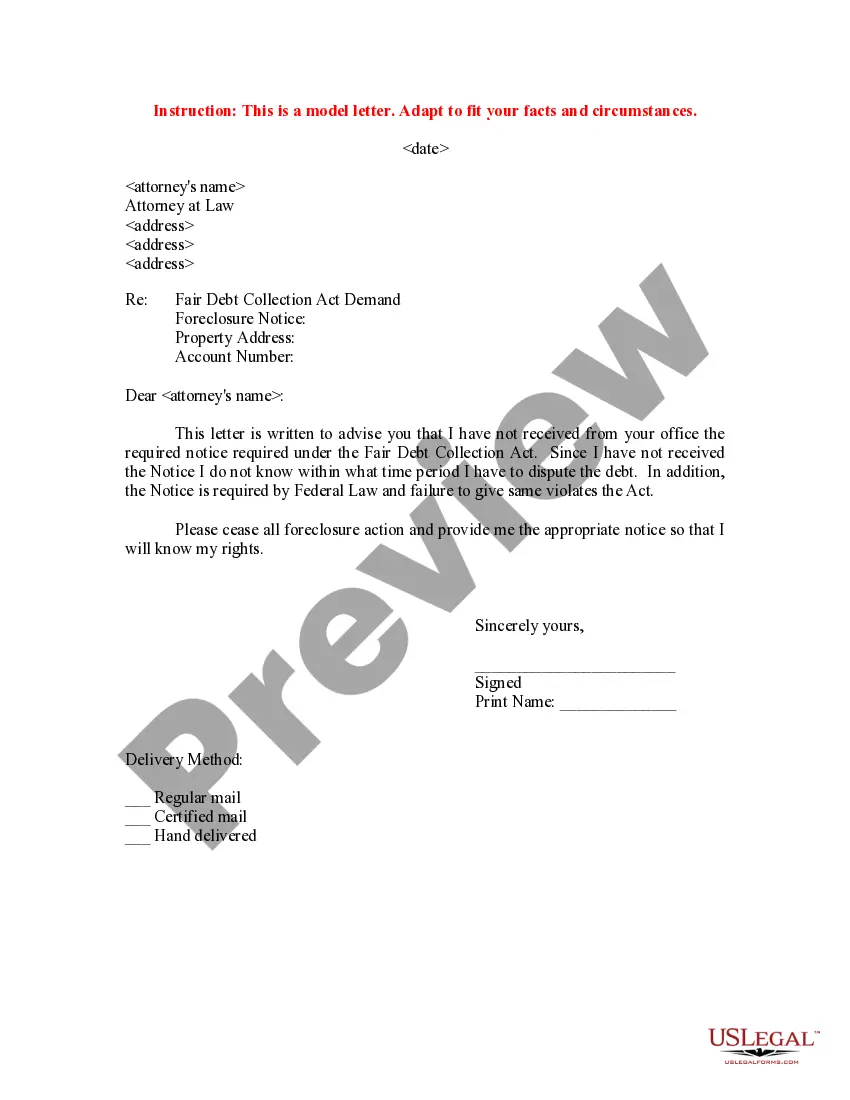
Sample Letter to Foreclosure Attorney - Fair Debt Collection - Failure to Provide Notice
Overview of this form
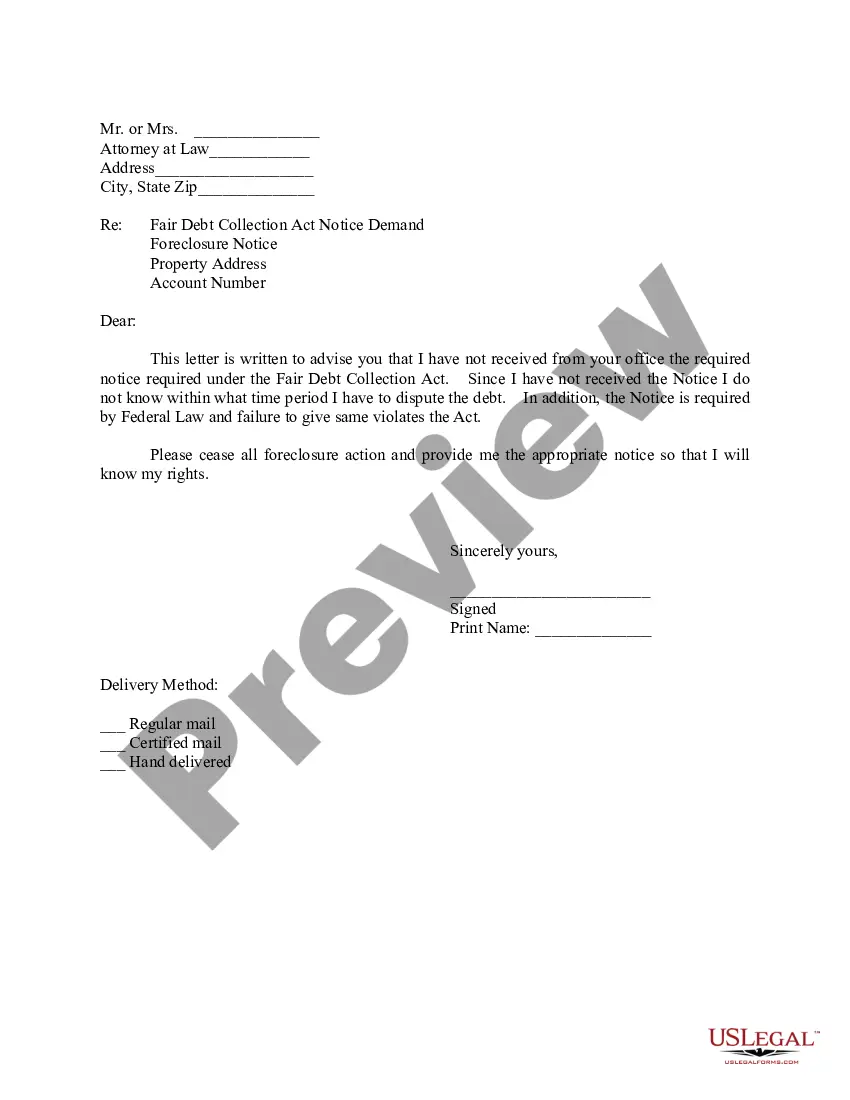
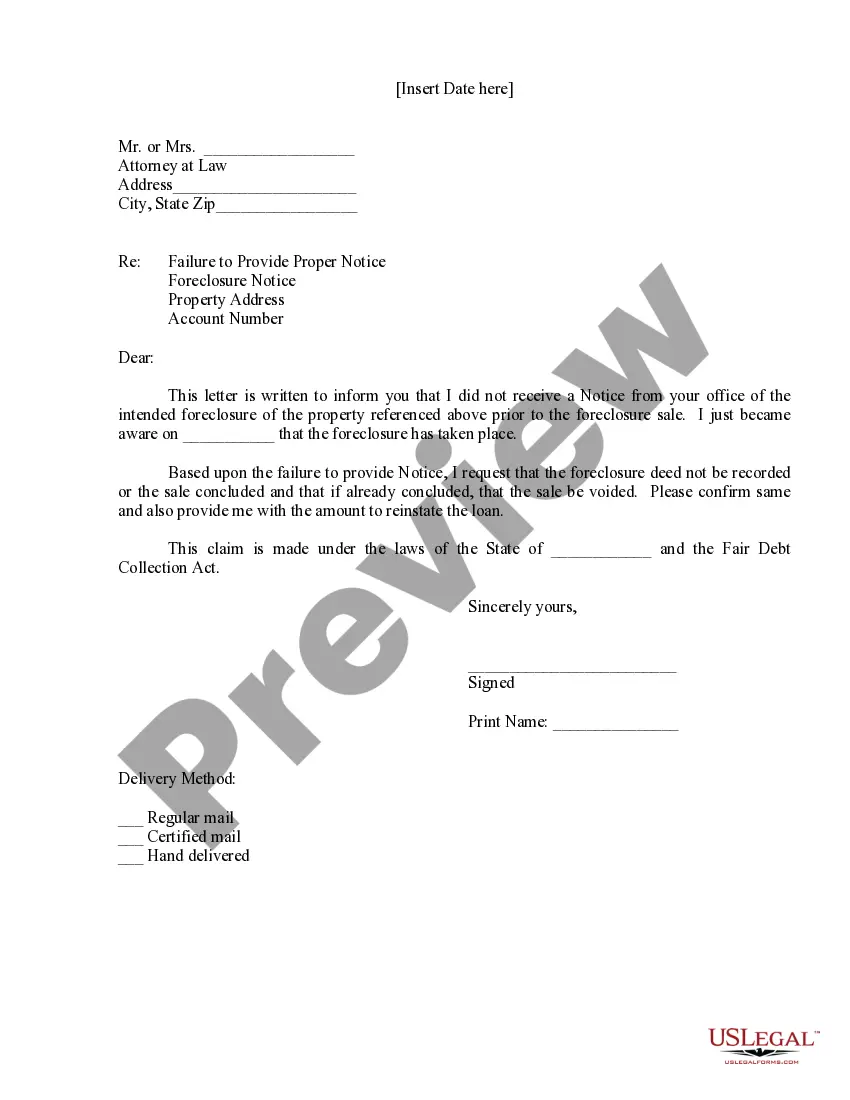
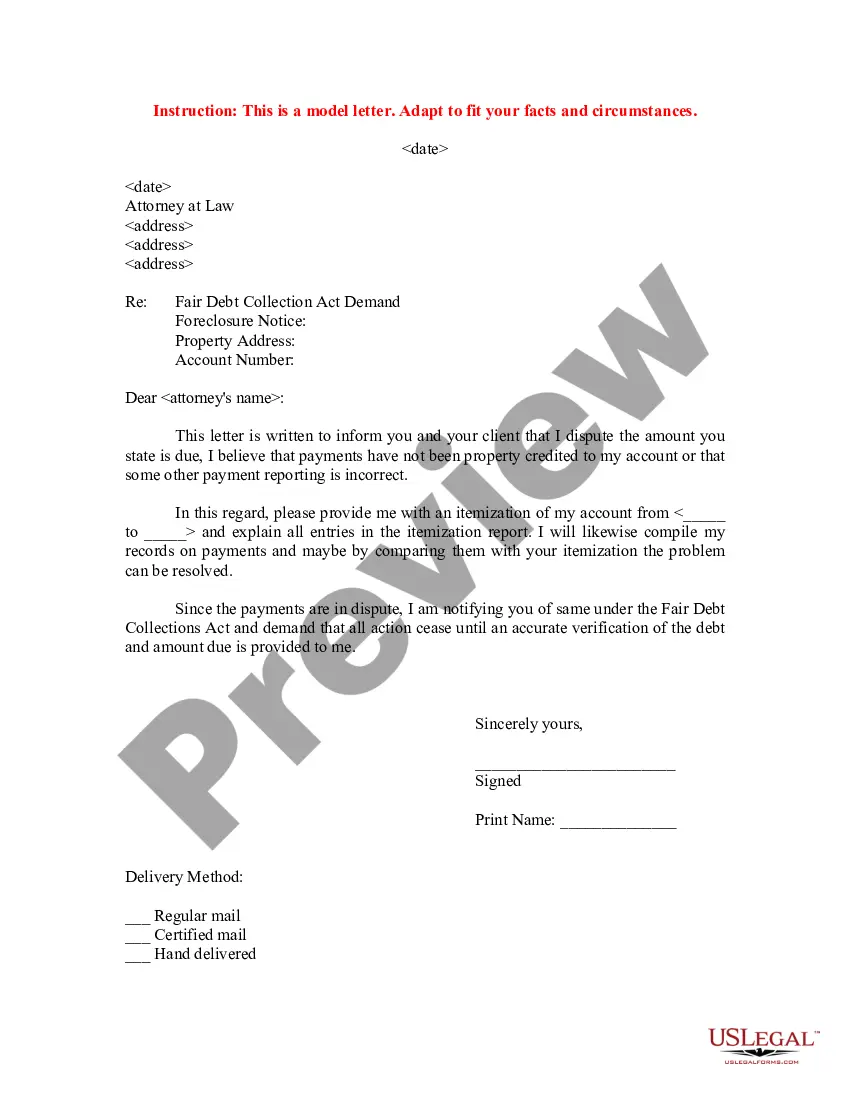
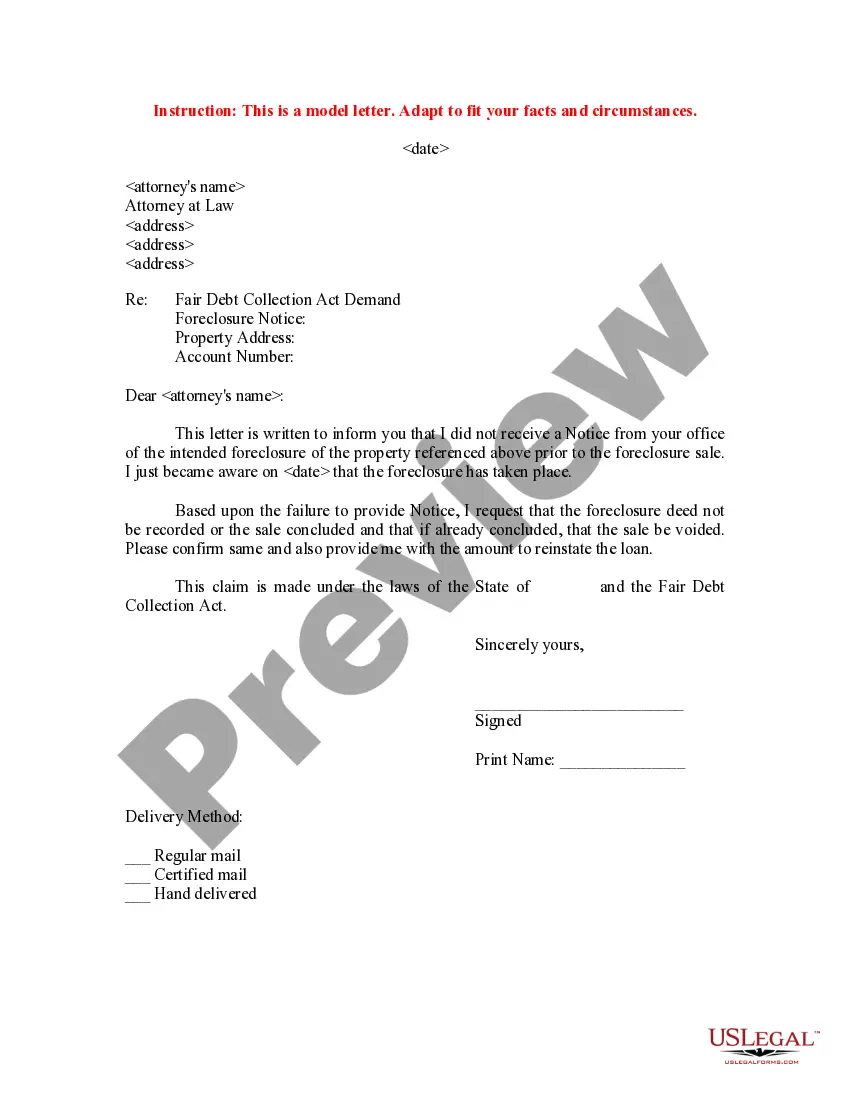
This Sample Letter to Foreclosure Attorney is a template designed to assist individuals facing foreclosure proceedings. It specifically addresses concerns under the Fair Debt Collection Act and requests the necessary notifications concerning rights. This form helps you communicate formally with your attorney regarding the cessation of foreclosure actions and ensures that your rights are clearly articulated.
Form components explained
- Date: The date the letter is drafted.
- Attorney's Name: The name of the attorney representing you.
- Address Sections: Full address details of the attorney.
- Subject Line: Clear indication of the letter's purpose regarding the Fair Debt Collection Act.
- Request Clause: Formal request to cease foreclosure action and provide necessary notice.
- Signature Area: Space for your signature and printed name.
- Delivery Method Options: Indicates how the letter will be sent (regular mail, certified mail, hand-delivered).
Common use cases
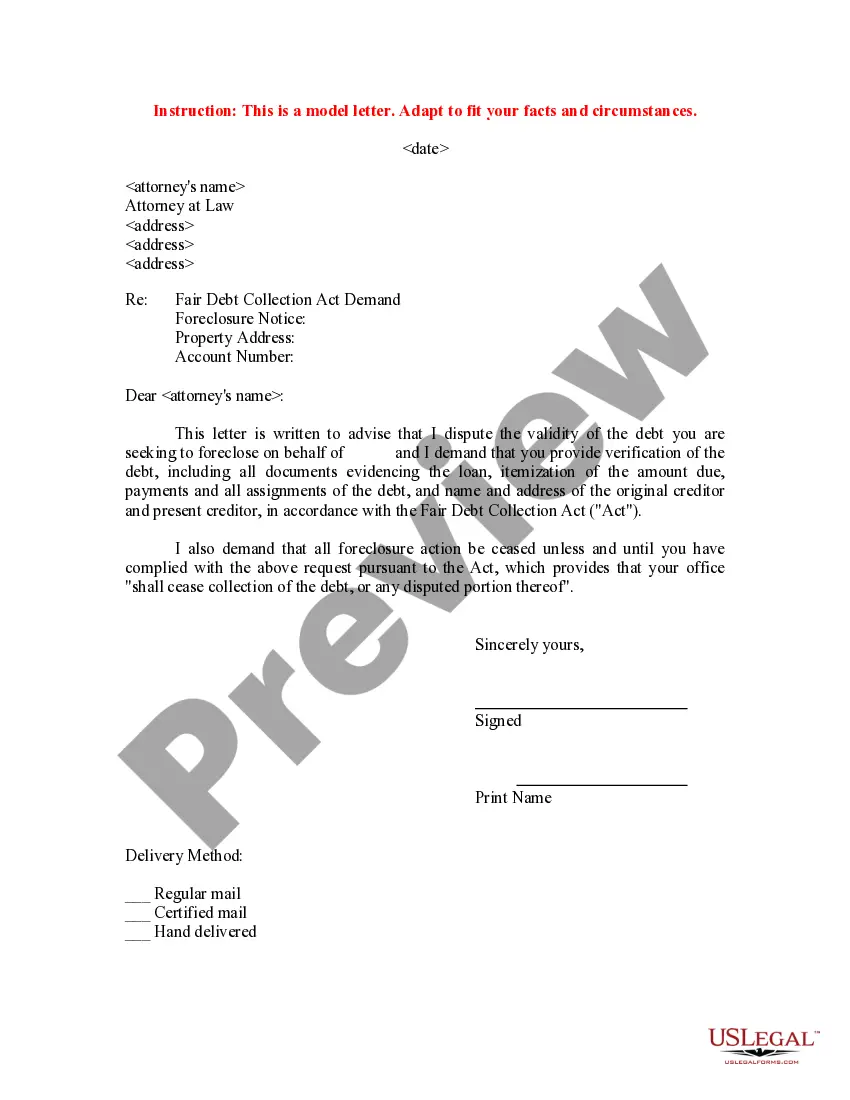
This letter is commonly used when an individual receives a foreclosure notice and wants to formally request that all foreclosure actions be halted due to lack of prior notification. It is also useful when you are unsure of your rights under the Fair Debt Collection Act and need to communicate these inquiries to your attorney.
Who should use this form
- Homeowners facing foreclosure proceedings.
- Individuals seeking to understand their rights concerning debt collection.
- Anyone needing formal communication with a foreclosure attorney regarding their case.
How to prepare this document
- Identify the date of writing the letter.
- Enter the attorney's name and complete address.
- Specify the subject line concerning the Fair Debt Collection Act.
- Clearly state your request to cease foreclosure actions and ask for notification of your rights.
- Sign the letter and print your name beneath your signature.
- Select how the letter will be delivered (regular mail, certified mail, or hand delivery).
Notarization guidance
Notarization is not commonly needed for this form. However, certain documents or local rules may make it necessary. Our notarization service, powered by Notarize, allows you to finalize it securely online anytime, day or night.
Get your form ready online
Our built-in tools help you complete, sign, share, and store your documents in one place.
Make edits, fill in missing information, and update formatting in US Legal Forms—just like you would in MS Word.
Download a copy, print it, send it by email, or mail it via USPS—whatever works best for your next step.
Sign and collect signatures with our SignNow integration. Send to multiple recipients, set reminders, and more. Go Premium to unlock E-Sign.
If this form requires notarization, complete it online through a secure video call—no need to meet a notary in person or wait for an appointment.
We protect your documents and personal data by following strict security and privacy standards.

Make edits, fill in missing information, and update formatting in US Legal Forms—just like you would in MS Word.

Download a copy, print it, send it by email, or mail it via USPS—whatever works best for your next step.

Sign and collect signatures with our SignNow integration. Send to multiple recipients, set reminders, and more. Go Premium to unlock E-Sign.

If this form requires notarization, complete it online through a secure video call—no need to meet a notary in person or wait for an appointment.

We protect your documents and personal data by following strict security and privacy standards.
Common mistakes to avoid
- Failing to include the date of the letter.
- Leaving out the attorney's complete address.
- Not clearly stating the request for cessation of foreclosure.
- Not signing the letter before sending.
Advantages of online completion
- Convenient access to a legally drafted letter template.
- Easy download and customization to fit your specific situation.
- Reliability of forms created by licensed attorneys.
Quick recap
- This letter serves to formally request a halt to foreclosure actions under the Fair Debt Collection Act.
- Utilizing this template can help ensure you articulate your rights clearly.
- It is applicable for homeowners dealing with foreclosure notices.
Looking for another form?




Form popularity
FAQ
This form is a template to help homeowners facing foreclosure communicate with their attorney about rights under the Fair Debt Collection Act and to request required notices. It guides you through documenting the date, attorney, address, subject, and a formal request to halt foreclosure until rights are clarified, with signature and delivery options.
To respond to a possible FDCPA violation using this letter, fill in the date and attorney’s name, state the purpose in the subject line, and include the Request Clause to halt foreclosure and obtain the required notices. Send via your chosen delivery method, and consult a licensed attorney if you need state-specific guidance.
FDCPA generally covers debt collectors, including certain actions by lawyers acting in collection capacity. This letter is designed to help you communicate with a foreclosure attorney about your FDCPA rights and to request notices, and it can be a step toward stopping foreclosure while you seek legal advice. Always consult a licensed attorney for guidance.
Include a subject line that clearly states the letter’s FDCPA purpose in relation to the foreclosure matter. The form specifies a subject line signaling the Fair Debt Collection Act concerns, helping your attorney identify the issue quickly and ensuring the request for notices is addressed.
The letter lists three delivery options: regular mail, certified mail, and hand-delivered. Choosing certified mail can provide proof of receipt, which may be important when asserting rights or requesting notices under FDCPA. Always ensure the address is correct and consider tracking or confirmation.
This form explicitly references the Fair Debt Collection Act and includes a dedicated Request Clause to stop foreclosure and obtain required notices, plus a clearly labeled subject line. It’s designed for use when confronting FDCPA issues in foreclosure cases, rather than a generic foreclosure notice.