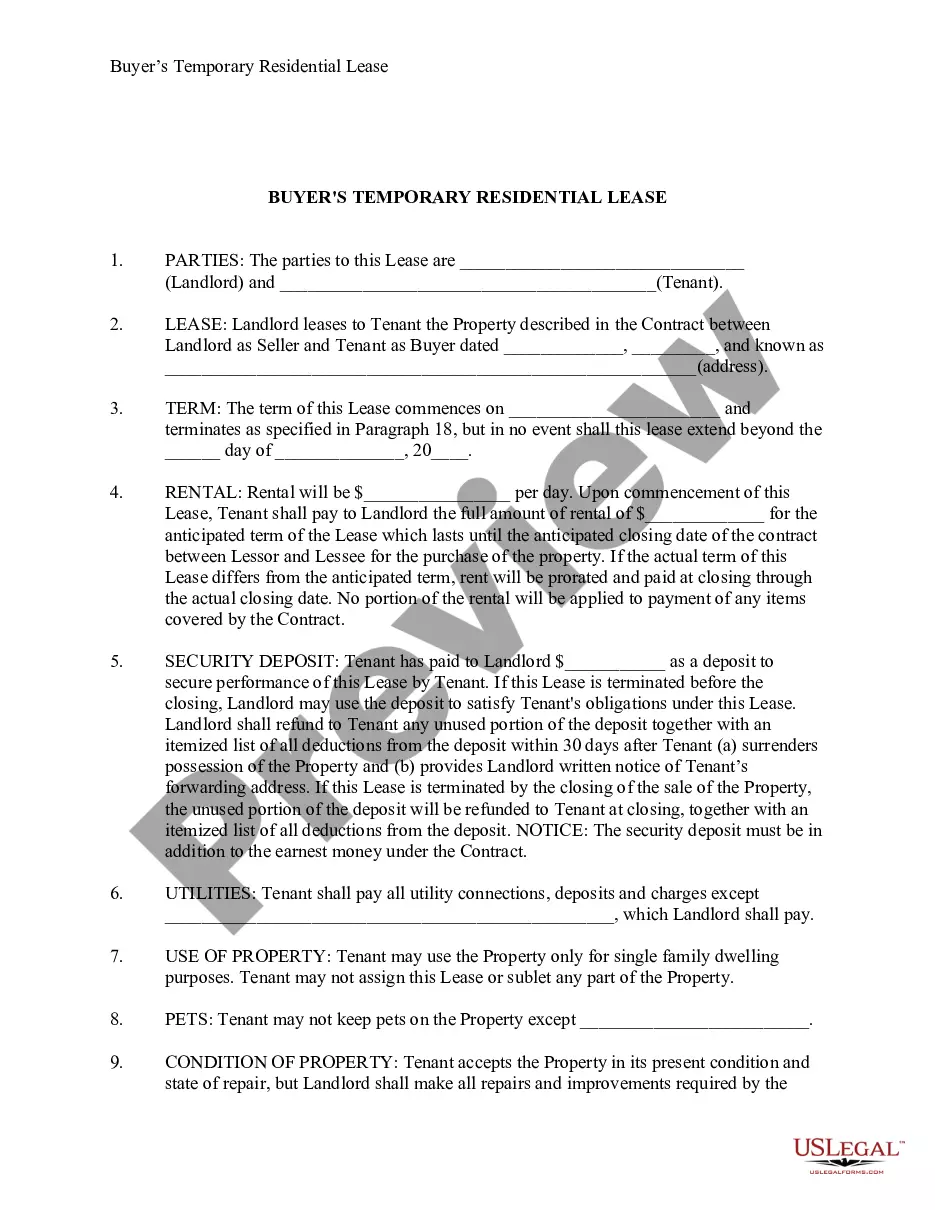
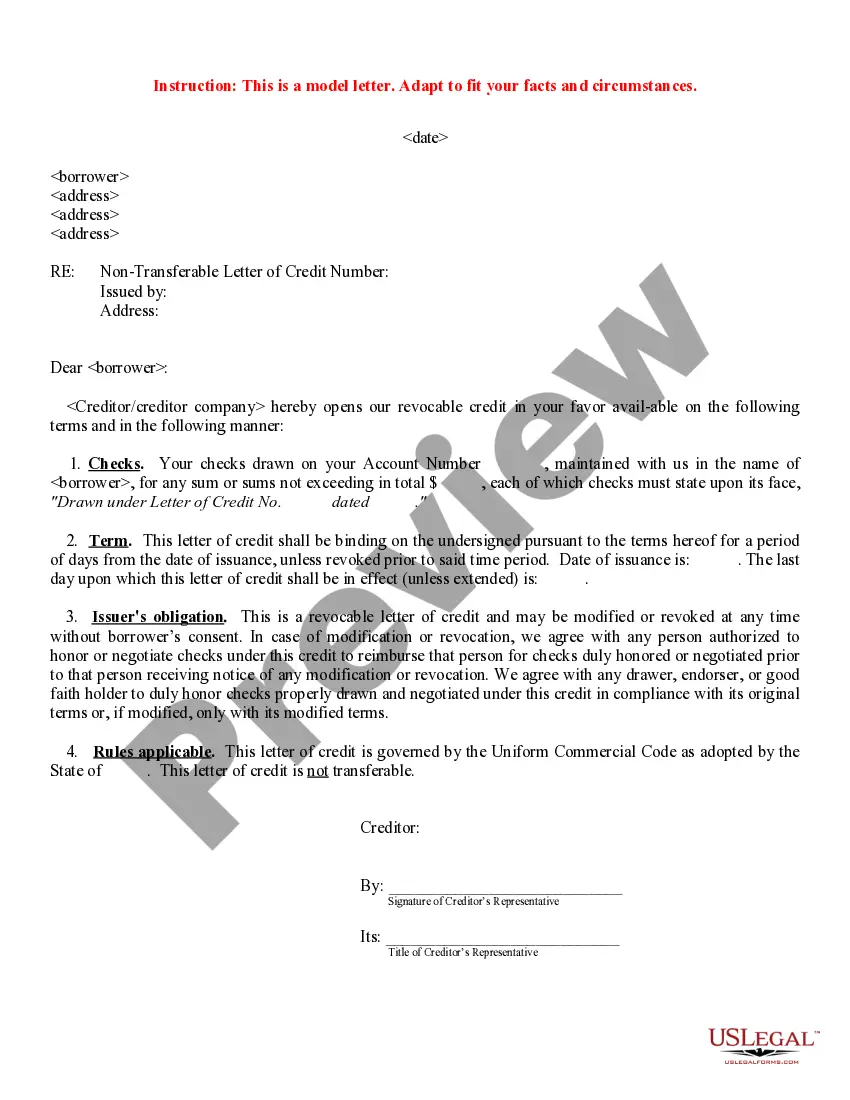
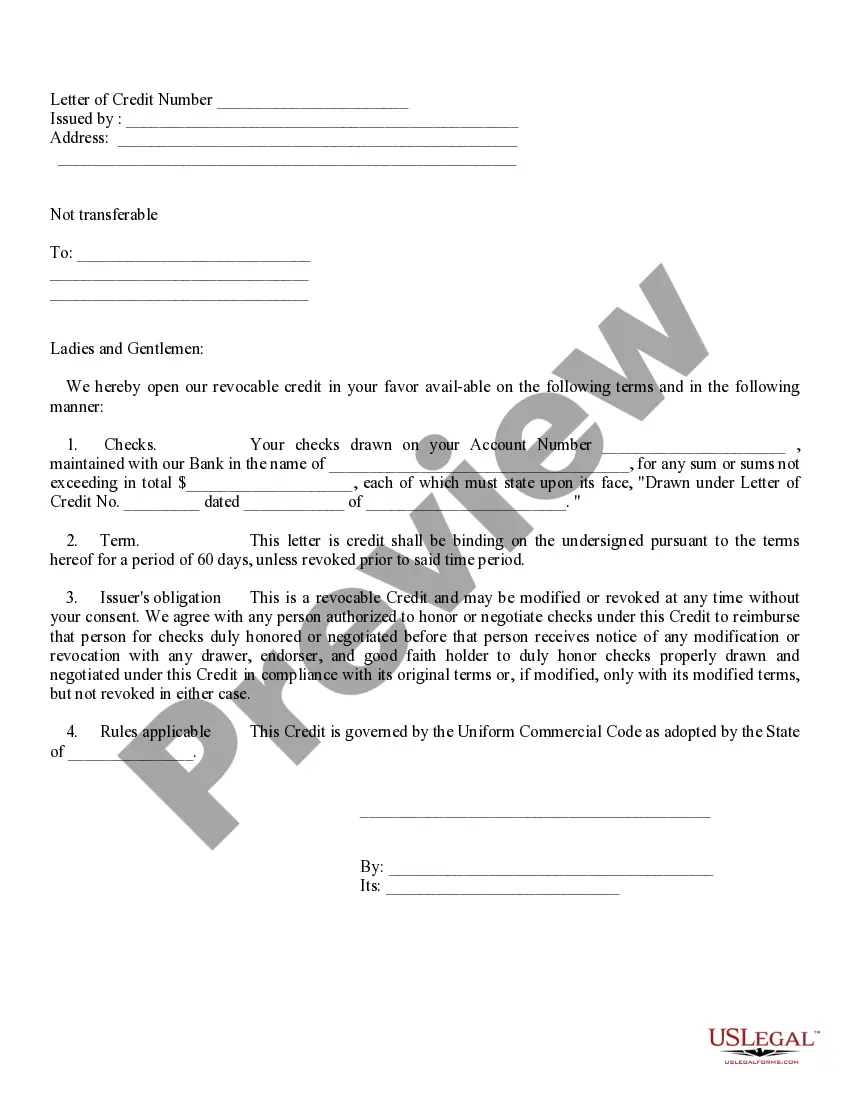
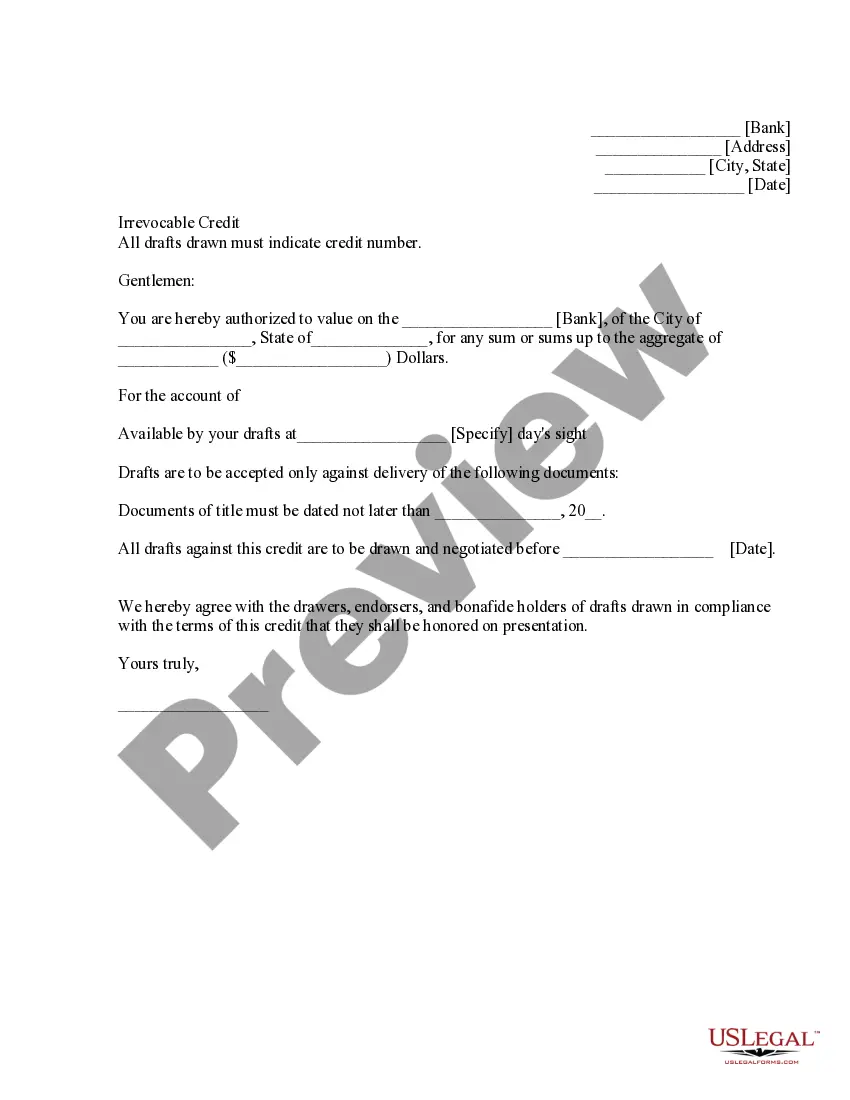
Sample Letter of Credit
About this form
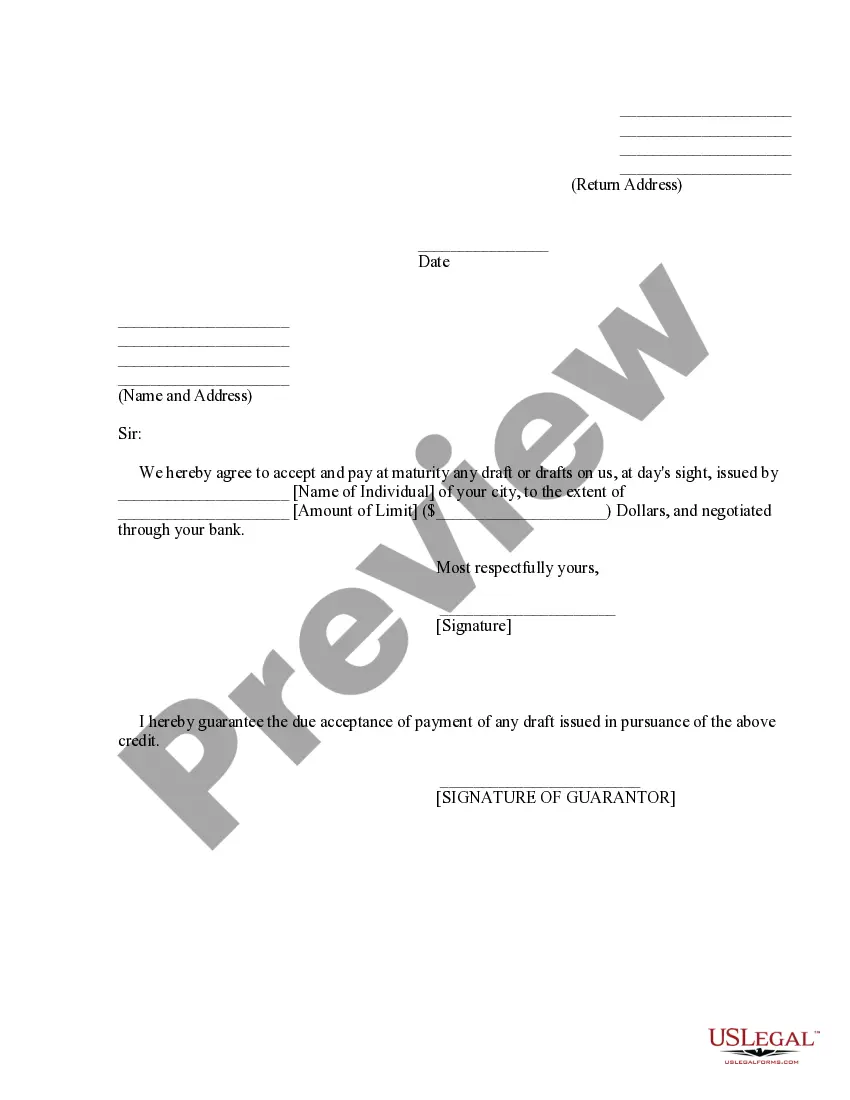
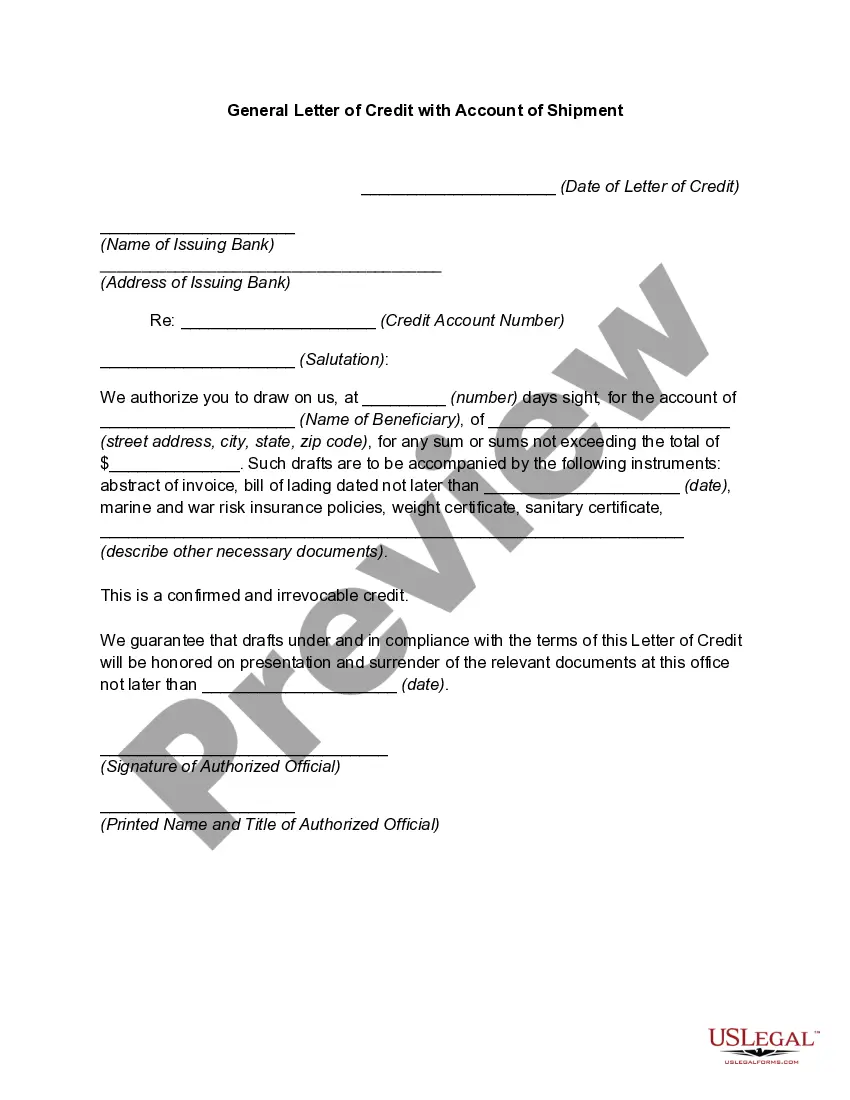
A sample letter of credit is a financial document that guarantees payment from a buyer's bank to a seller, ensuring secure transactions in trade. This form serves as a promise to pay, unlike invoices or contracts, which outline terms without guaranteeing payment. It is commonly used in international trade or significant transactions to minimize risk for sellers.
Key components of this form
- Date: The date when the letter of credit is issued.
- Borrower: The individual or business requesting the letter of credit.
- Addresses: Contact information for both the buyer and seller.
- Title of Creditors Representative: The authorized individual's title who oversees the letter of credit.
Situations where this form applies
This form is useful when a buyer needs to assure a seller that payment will be made for goods or services provided. It's often used in transactions involving high-value items, international imports, or when a seller wants to mitigate the risk of non-payment.
Who this form is for
- Buyers engaged in large transactions requiring financial assurance.
- Sellers seeking guaranteed payment for provided goods or services.
- Businesses involved in international trade.
- Trade facilitators or financial institutions that support secure transactions.
Steps to complete this form
- Identify the parties involved: Include the buyer (borrower) and seller details.
- Enter the date when the letter is being issued.
- Fill in the addresses for communication of both parties.
- Specify the title of the representative overseeing the letter of credit.
- Ensure all information is accurate and complete before finalizing the document.
Does this document require notarization?
This form does not typically require notarization unless specified by local law. However, obtaining notarization may enhance its credibility in financial transactions.
Get your form ready online
Our built-in tools help you complete, sign, share, and store your documents in one place.
Make edits, fill in missing information, and update formatting in US Legal Forms—just like you would in MS Word.
Download a copy, print it, send it by email, or mail it via USPS—whatever works best for your next step.
Sign and collect signatures with our SignNow integration. Send to multiple recipients, set reminders, and more. Go Premium to unlock E-Sign.
If this form requires notarization, complete it online through a secure video call—no need to meet a notary in person or wait for an appointment.
We protect your documents and personal data by following strict security and privacy standards.

Make edits, fill in missing information, and update formatting in US Legal Forms—just like you would in MS Word.

Download a copy, print it, send it by email, or mail it via USPS—whatever works best for your next step.

Sign and collect signatures with our SignNow integration. Send to multiple recipients, set reminders, and more. Go Premium to unlock E-Sign.

If this form requires notarization, complete it online through a secure video call—no need to meet a notary in person or wait for an appointment.

We protect your documents and personal data by following strict security and privacy standards.
Common mistakes
- Failing to include complete addresses for both parties.
- Not specifying the correct title of the creditor's representative.
- Missing the date of issuance, making the document ineffective.
- Providing inaccurate or outdated contact information.
Benefits of using this form online
- Convenient access to professionally drafted templates.
- Editability allows customization to suit specific transaction needs.
- Reliability of documents created with input from licensed attorneys.
- Quick downloads ensure instant availability during financial negotiations.
Looking for another form?
Form popularity
FAQ
They are Commercial, Export / Import, Transferable and Non-Transferable, Revocable and Irrevocable, Stand-by, Confirmed, and Unconfirmed, Revolving, Back to Back, Red Clause, Green Clause, Sight, Deferred Payment, and Direct Pay LC. A letter of credit is an important financial tool in trade transactions.
A letter of credit is a document issued by a third party that guarantees payment for goods or services when the seller provides acceptable documentation.This might be done, for example, if the advising bank financed the transaction for the beneficiary until payment was received.
You can approach your bank to open a Letter of credit. The concerned officer at bank helps you in filling up necessary application to open an LC. Since the LC is opened on the basis of your purchase contract, a copy purchase order / export contract has to be produced with along with other required documents.
Irrevocable LC. This LC cannot be cancelled or modified without consent of the beneficiary (Seller). Revocable LC. Stand-by LC. Confirmed LC. Unconfirmed LC. Transferable LC. Back-to-Back LC. Payment at Sight LC.
Step 1 - Issuance of LC. Step 2 - Shipping of goods. Step 3 - Providing Documents to the confirming bank. Step 4 - Settlement of payment from importer and possession of goods.
A letter of credit is essentially a financial contract between a bank, a bank's customer and a beneficiary. Generally issued by an importer's bank, the letter of credit guarantees the beneficiary will be paid once the conditions of the letter of credit have been met.
A letter of credit is a document that guarantees the buyer's payment to the sellers. It is Issued by a bank and ensures the timely and full payment to the seller. If the buyer is unable to make such a payment, the bank covers the full or the remaining amount on behalf of the buyer.
A letter of credit, or "credit letter" is a letter from a bank guaranteeing that a buyer's payment to a seller will be received on time and for the correct amount. In the event that the buyer is unable to make a payment on the purchase, the bank will be required to cover the full or remaining amount of the purchase.