Sample Letter for Letter to Congressman or Congresswoman in Support of Pending Legislation
What is this form?
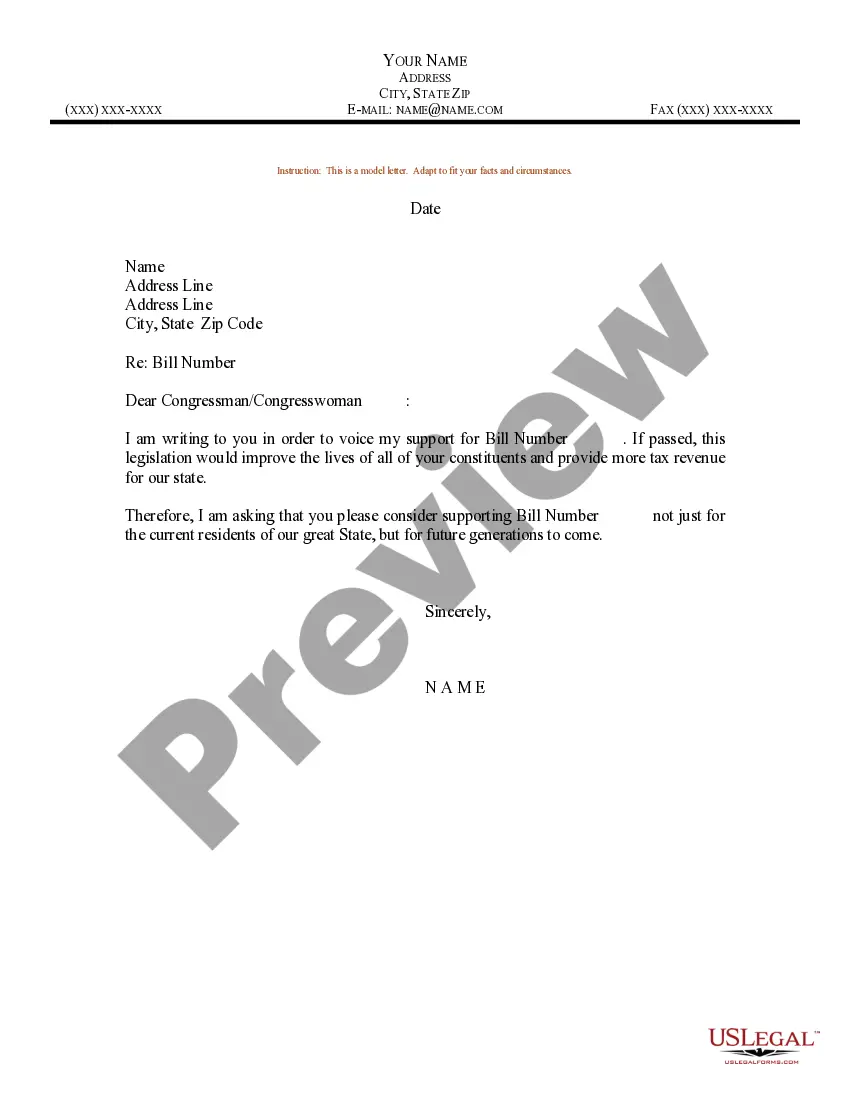
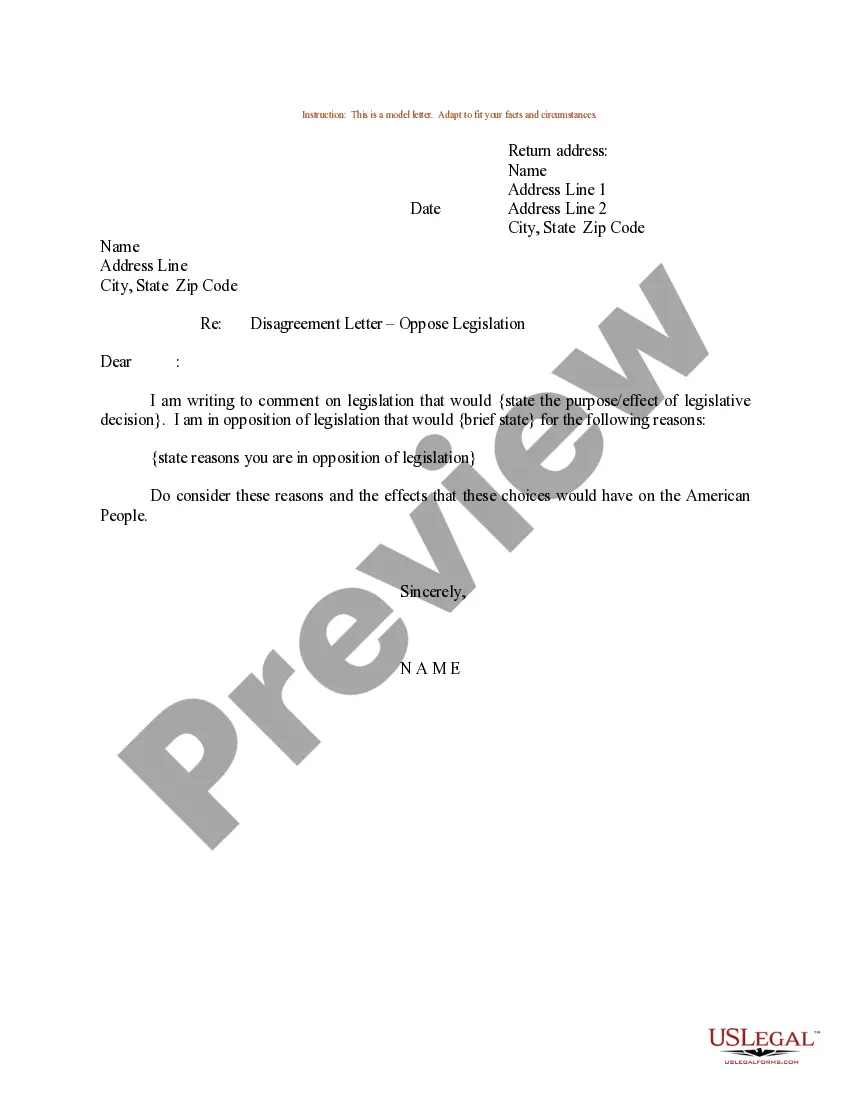
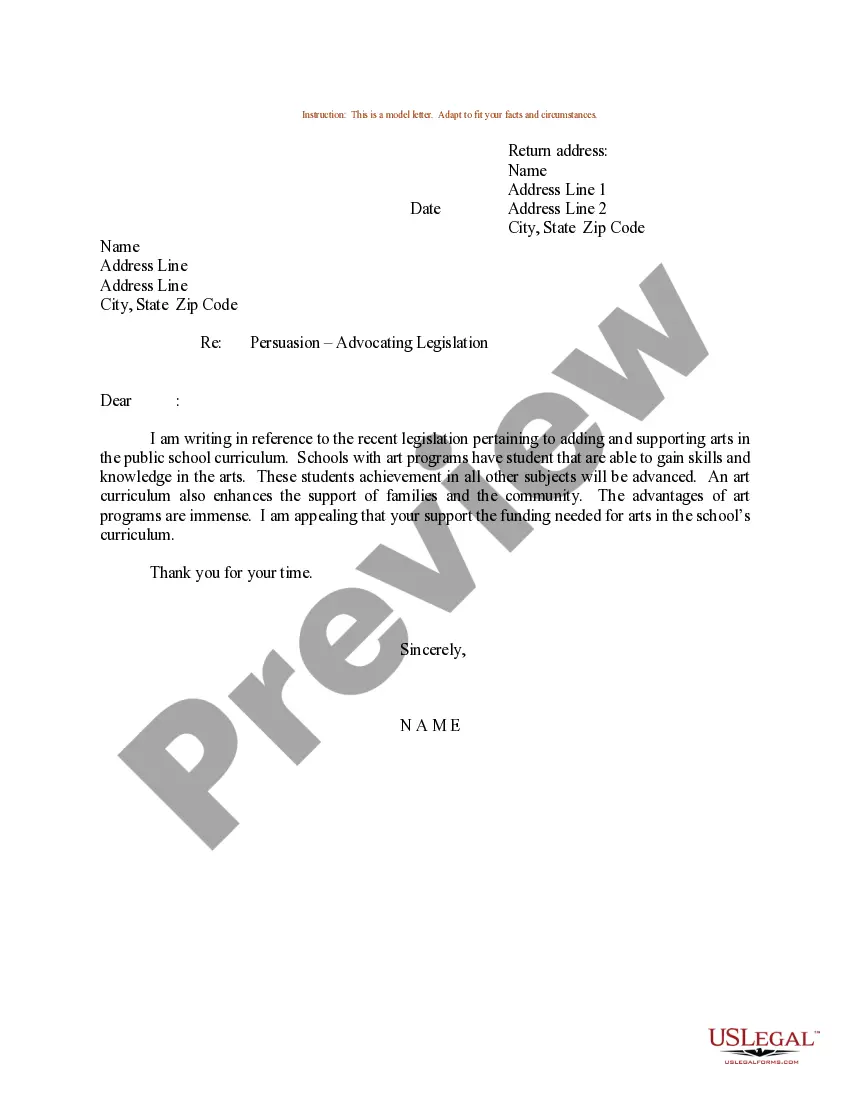
The Sample Letter for Letter to Congressman or Congresswoman in Support of Pending Legislation is a template designed to help individuals express their support for specific legislative proposals. This model letter can be tailored to fit personal experiences or viewpoints, making it a useful tool for civic engagement. Unlike general letters, this form focuses specifically on supporting legislation, providing a structured means to communicate with elected representatives effectively.
Main sections of this form
- Date: Specify the date of the letter.
- Name: Include your full name.
- Address Line: Provide your address details.
- City, State, and Zip Code: Indicate your city, state, and postal code.
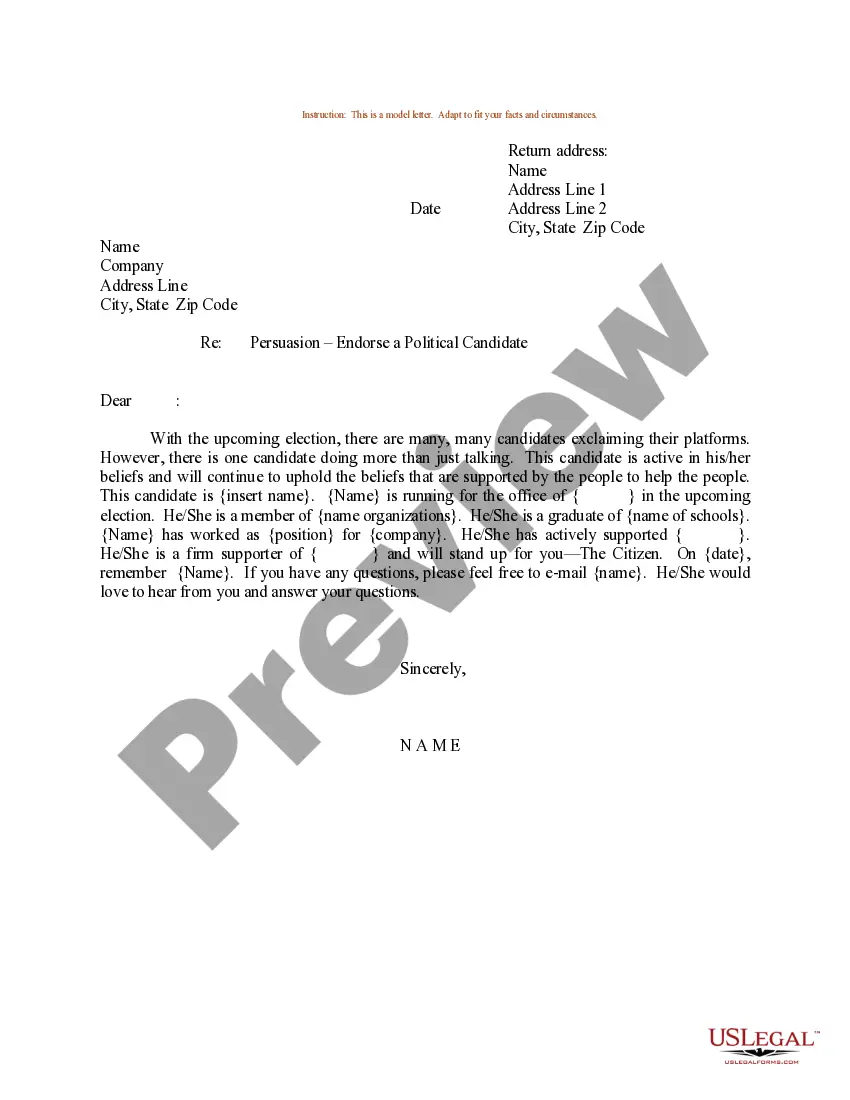
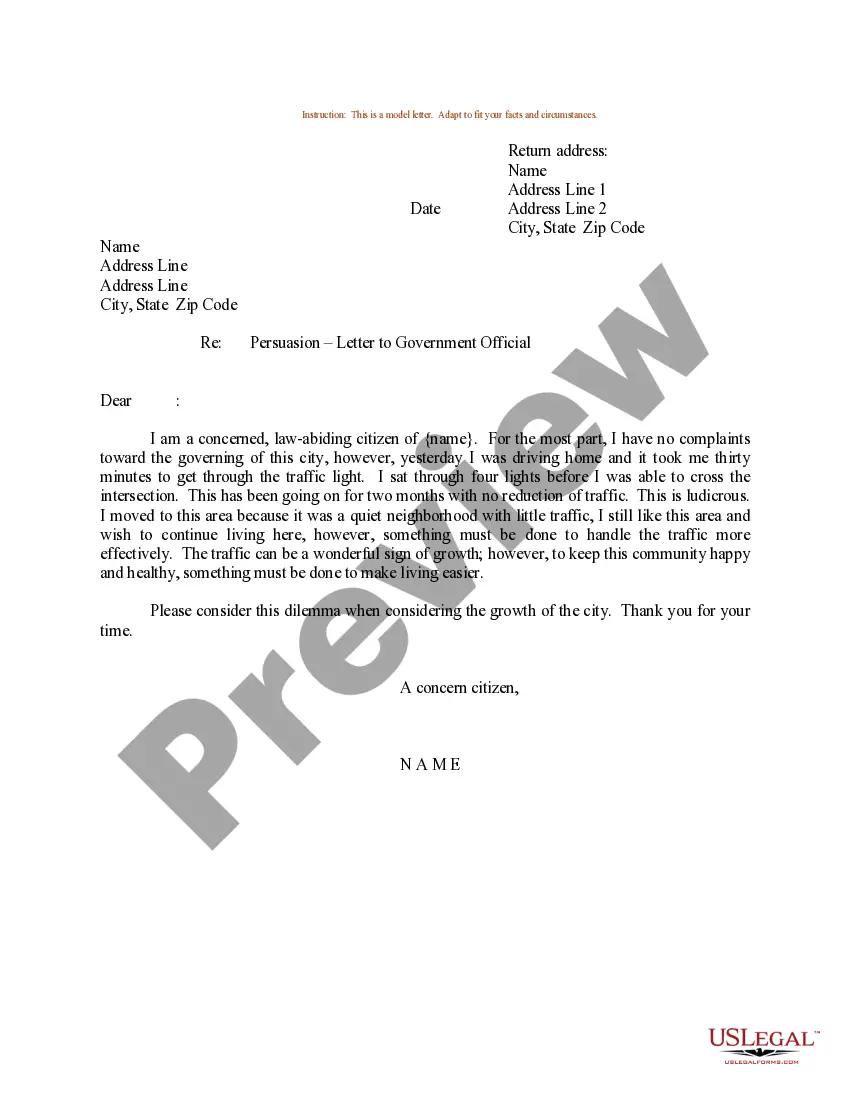
- Personalization: Space for the body of the letter where you can express your opinions and reasons for supporting the legislation.
When to use this document
This form is useful for individuals who wish to advocate for pending legislation. You may find it necessary when you want to communicate your support for a bill to your congressperson, participate in civic engagement, or influence policy decisions in your community. This letter serves to articulate your stance on important issues and encourages representatives to consider the public's perspective.
Who needs this form
- Civic-minded individuals looking to engage with their government.
- Citizens who want to express support for specific legislation.
- Advocacy groups needing a standard template for communication with lawmakers.
- Individuals with concerns about legislative impacts on their community.
How to prepare this document
- Start by entering the date at the top of the letter.
- Include your full name and address in the designated fields.
- Write a clear and concise message in the body of the letter, expressing your support for the pending legislation.
- Sign the letter at the end to validate your support.
- Consider adding additional contact information to facilitate a response.
Does this form need to be notarized?
This form usually doesn’t need to be notarized. However, local laws or specific transactions may require it. Our online notarization service, powered by Notarize, lets you complete it remotely through a secure video session, available 24/7.
Get your form ready online
Our built-in tools help you complete, sign, share, and store your documents in one place.
Make edits, fill in missing information, and update formatting in US Legal Forms—just like you would in MS Word.
Download a copy, print it, send it by email, or mail it via USPS—whatever works best for your next step.
Sign and collect signatures with our SignNow integration. Send to multiple recipients, set reminders, and more. Go Premium to unlock E-Sign.
If this form requires notarization, complete it online through a secure video call—no need to meet a notary in person or wait for an appointment.
We protect your documents and personal data by following strict security and privacy standards.

Make edits, fill in missing information, and update formatting in US Legal Forms—just like you would in MS Word.

Download a copy, print it, send it by email, or mail it via USPS—whatever works best for your next step.

Sign and collect signatures with our SignNow integration. Send to multiple recipients, set reminders, and more. Go Premium to unlock E-Sign.

If this form requires notarization, complete it online through a secure video call—no need to meet a notary in person or wait for an appointment.

We protect your documents and personal data by following strict security and privacy standards.
Avoid these common issues
- Failing to include personal opinions or reasons for support, which can make the letter less impactful.
- Not addressing the letter to the correct congressperson.
- Using overly formal language that may not reflect personal feelings.
- Forgetting to proofread for spelling and grammatical errors.
Why use this form online
- Convenience of downloading a ready-to-use template.
- Editable format allows for personalization and specific local issues.
- Access to professionally drafted content ensures quality communication.
- Quickly express your views on important legislation without legal complexity.
Legal use & context
- This letter is a formal communication to elected officials and can influence legislative decisions.
- It establishes your position and concerns about specific legislation as a constituent.
- Letters like these can serve as a public record of citizen feedback on legislative matters.
Key takeaways
- The sample letter is a crucial tool for expressing support to your Congressman or Congresswoman.
- Personalizing the letter enhances its effectiveness in communicating your views.
- This form is adaptable and relevant for constituents across various states.
Looking for another form?








Form popularity
FAQ
Dear (Representative/Senator/Congressman or Congresswoman) (Last name): My name is (your first and last name) and I am a regional center consumer (family member /service provider/advocate/community member) who resides in your district. (State why you support or oppose the bill or other issue here.
1. Open the letter with an appropriate salutation. For a Representative or Senator, To the Honorable John Doe, is a good way to go. Using a title here is also acceptable, Dear Supervisor Petrone, for example.
Style. background information on the letter writer's relationship to the research project and the applicant. relevance of the research project. potential impact of research findings. in-kind involvement and/or monetary support.
Start with Dear, followed by "Mr./Mrs./Ms." and their last name. If you are writing a letter to your congressional representative, use Dear for the proper salutation. Then, write "Mr./Mrs./Ms.," and their last name.
Always start with the date. State who you are recommending and what you are recommending them for. Describe how long you know the person and in what capacity. State their best qualities. Give details about the person's character, morals, and values.
SAMPLE LETTER THAT YOU CAN USE TO WRITE TO YOUR LEGISLATOR Choose up to three of the strongest points that support your position and state them clearly.) (Include a personal story. Tell your representative why the issue is important to you and how it affects you, your family member and your community.)
State your subject clearly in the email subject line or first sentence of the letter. Stick to just one issue in the letter. Identify yourself as a constituent. State your views, support them with your expert knowledge and, when appropriate, cite the bill number of relevant legislation (e.g., H.R.
In the first paragraph, you should write a short introduction as well as all the details regarding your proposal or your project. The next paragraph should give details and explanations about your proposal, your project or the reason for your cause.
Use letterhead. Verify the correct spelling of the legislator's name. Verify the correct title to use when addressing the legislator. Keep it short (one page maximum). Identify the issue. If the issue is a particular bill, verify the full name and bill number.