Discovery - Sample Letter to Opposing Counsel regarding Deposition and Subpoena Duces Tecum
Overview of this form
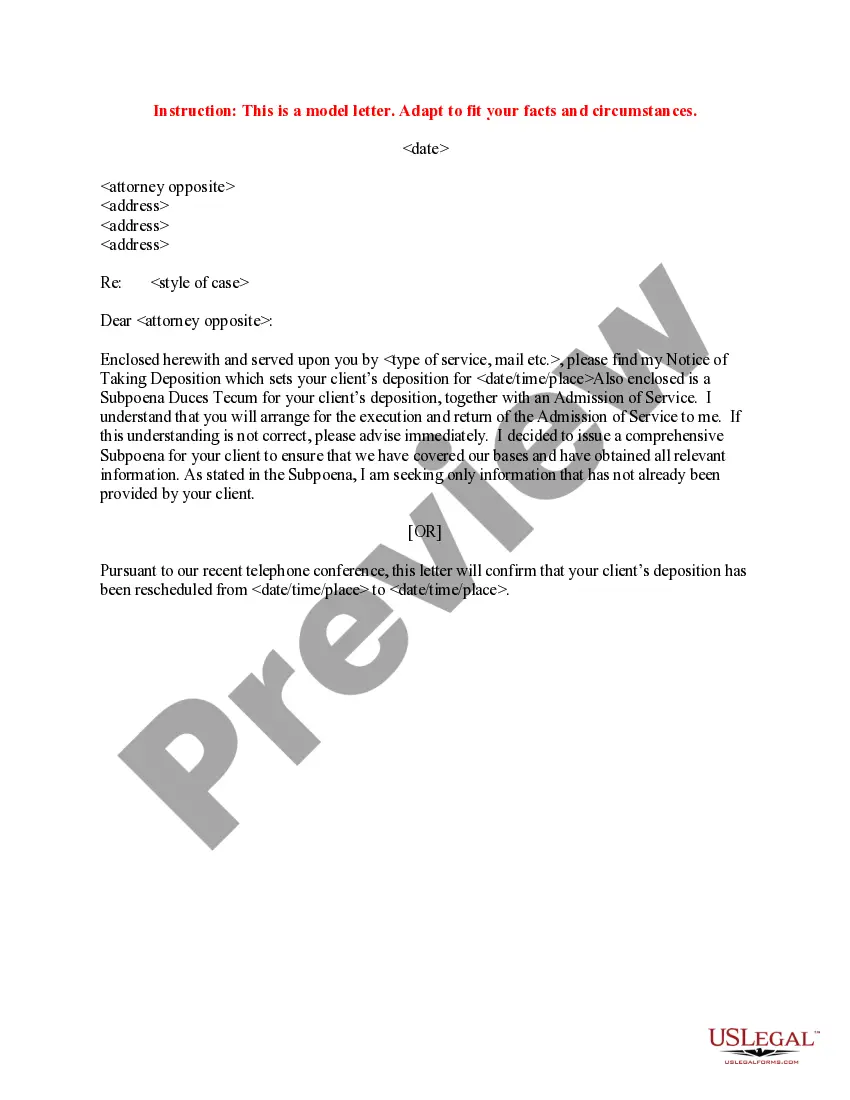
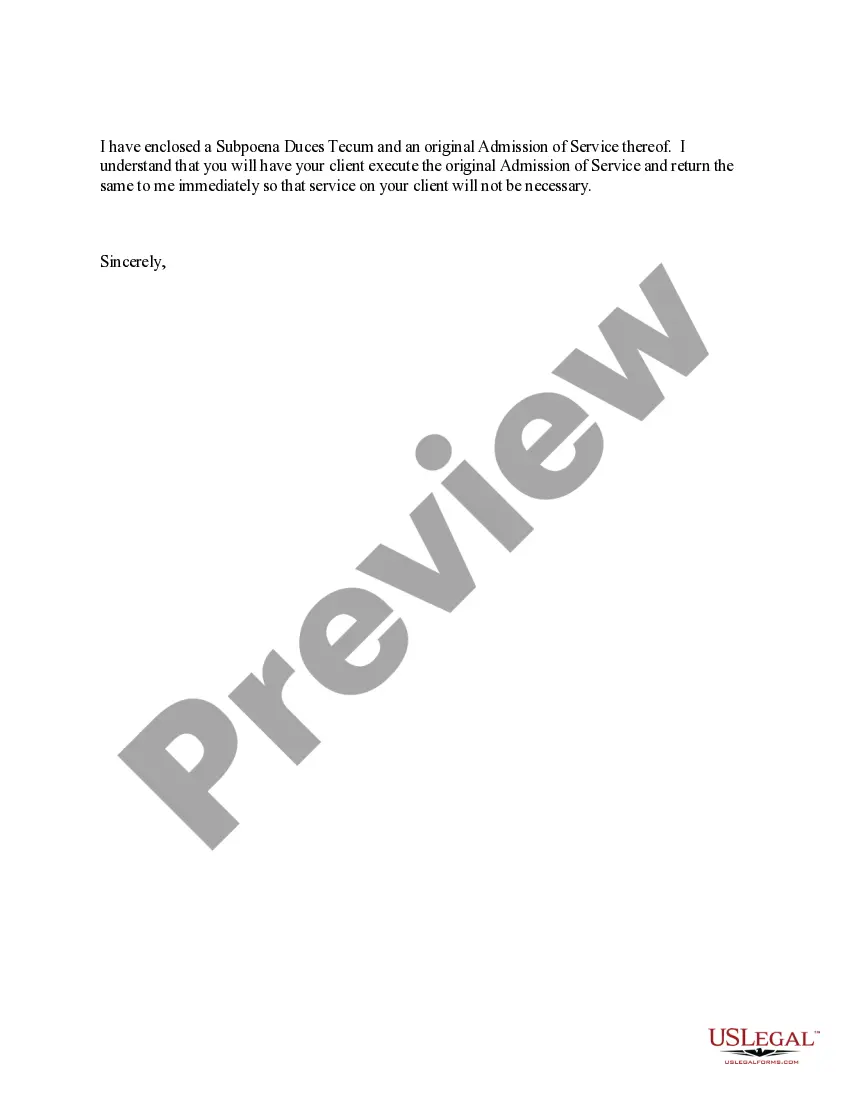
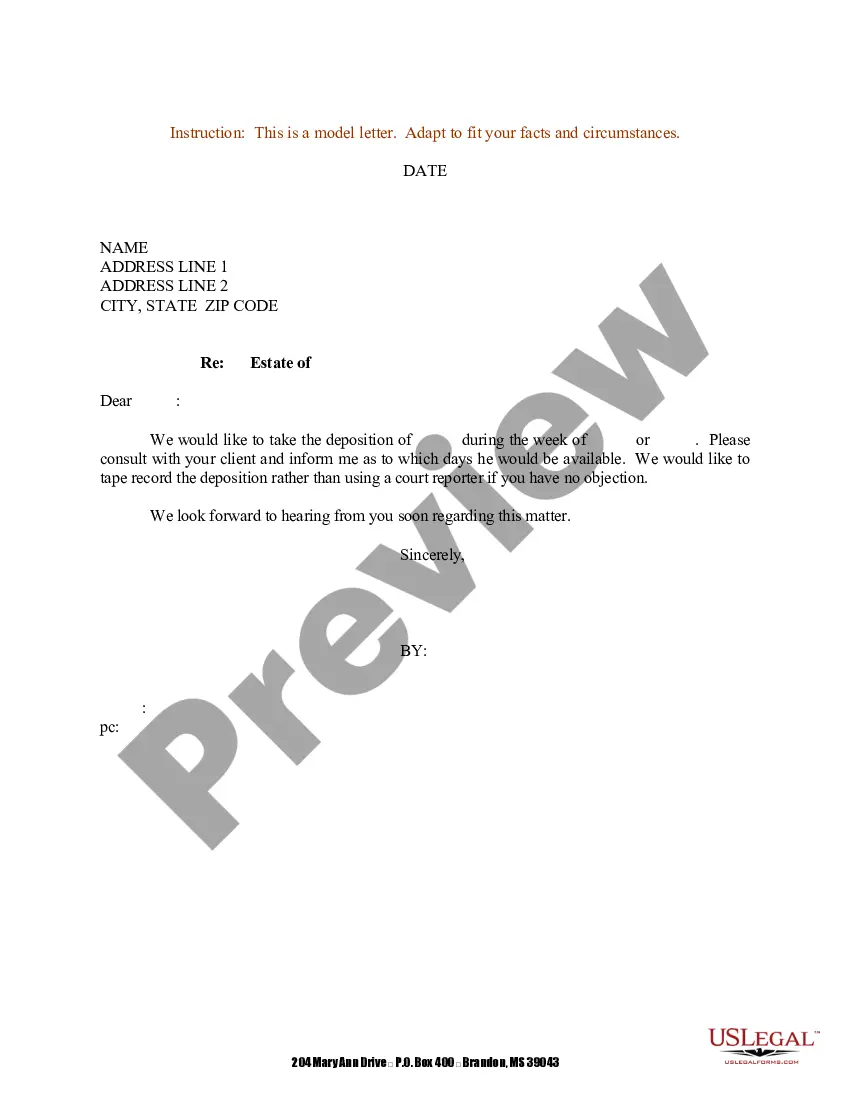
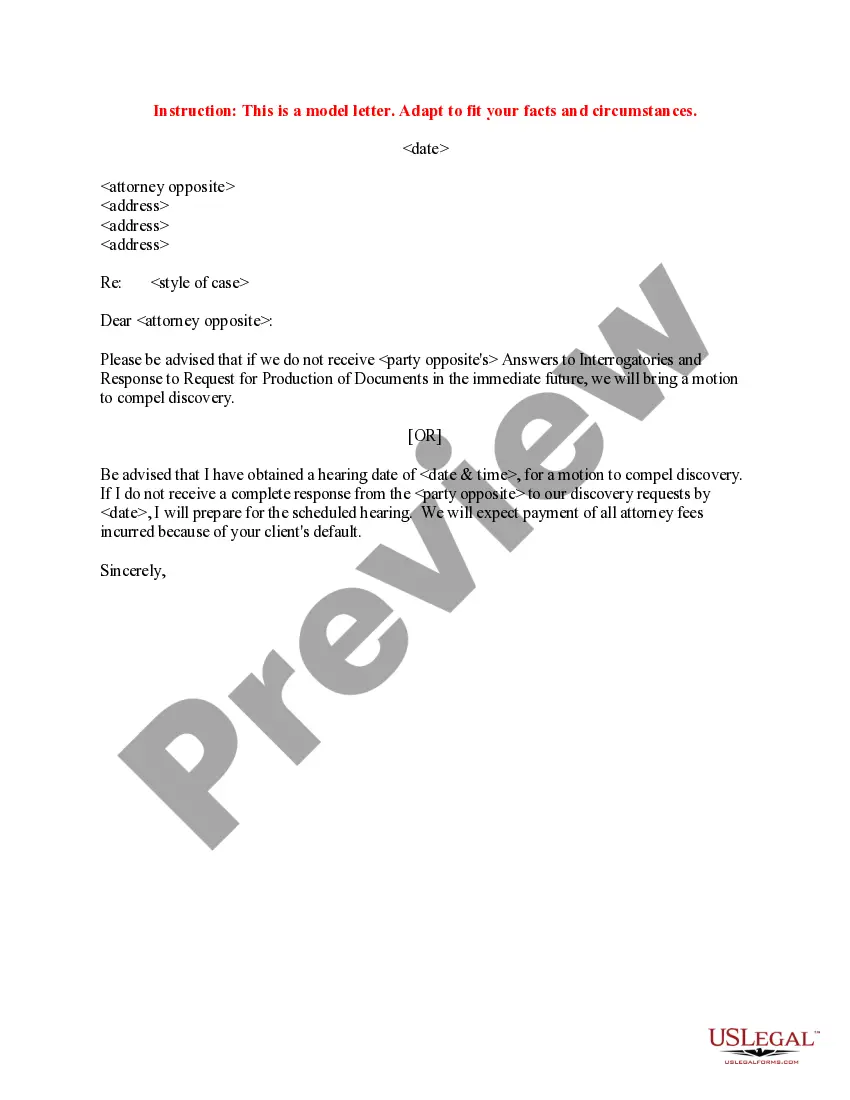
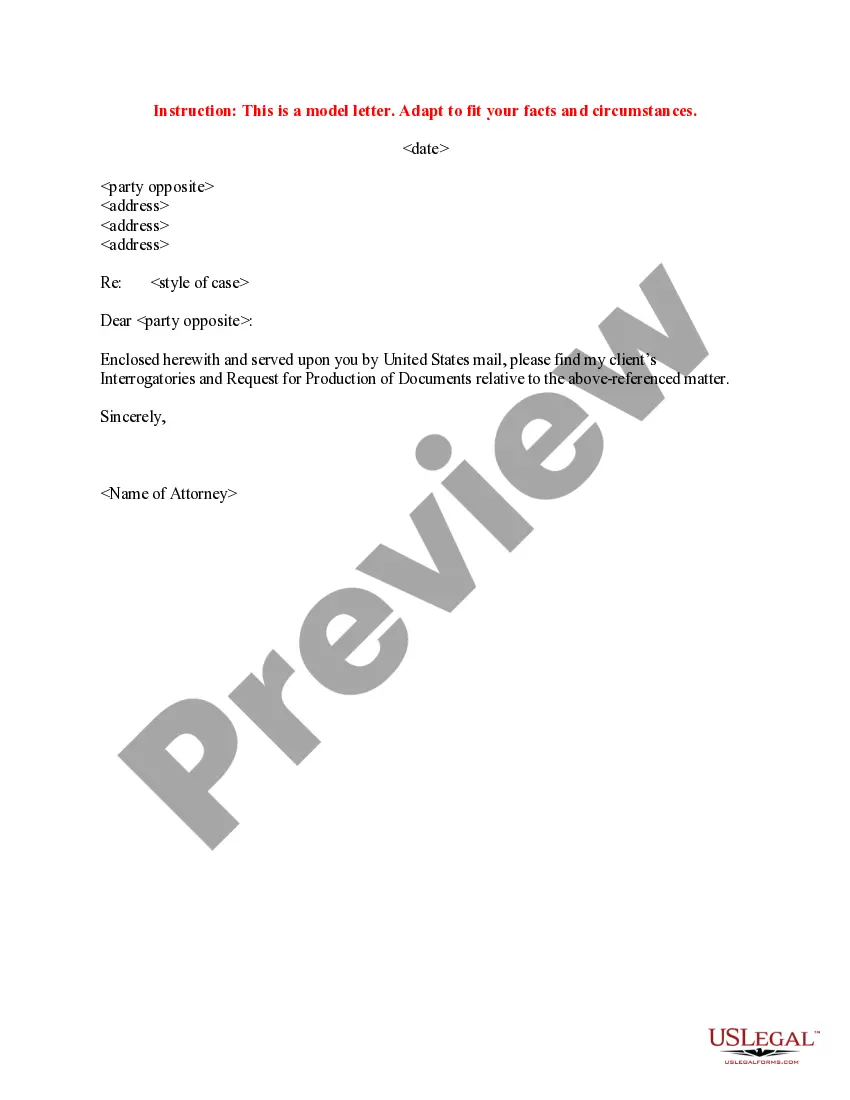
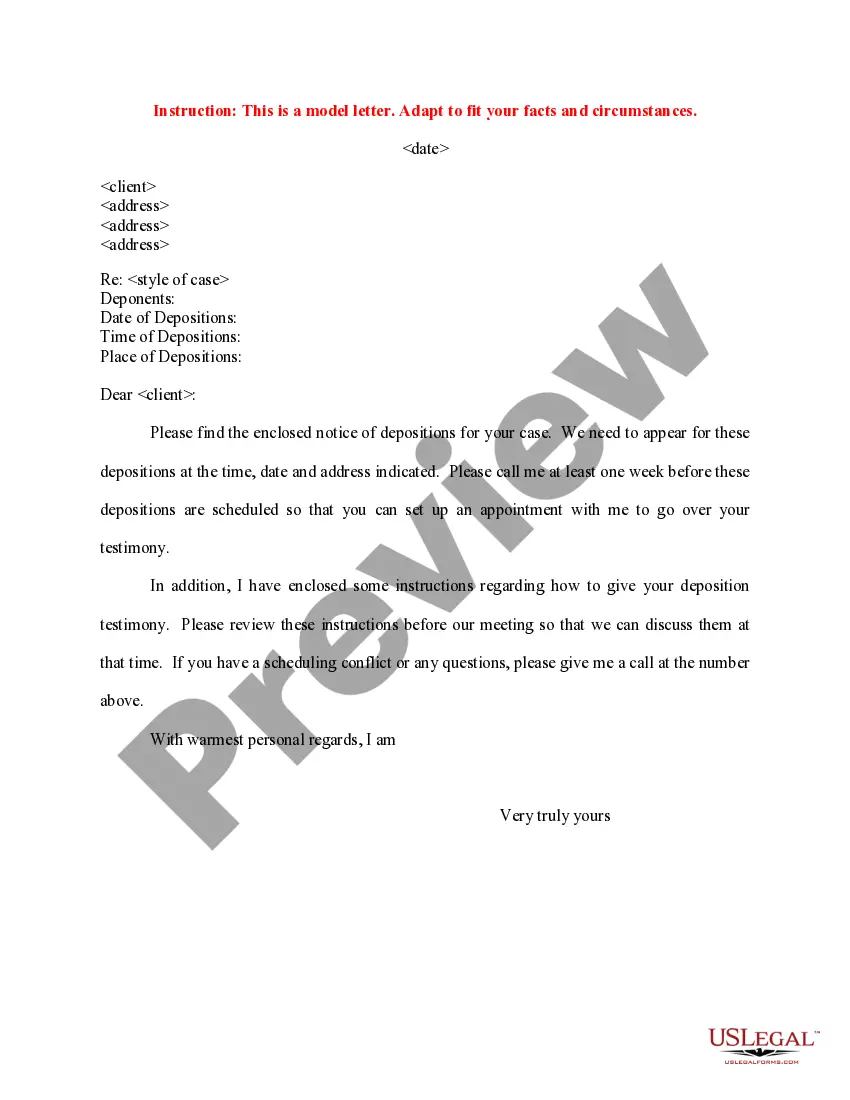
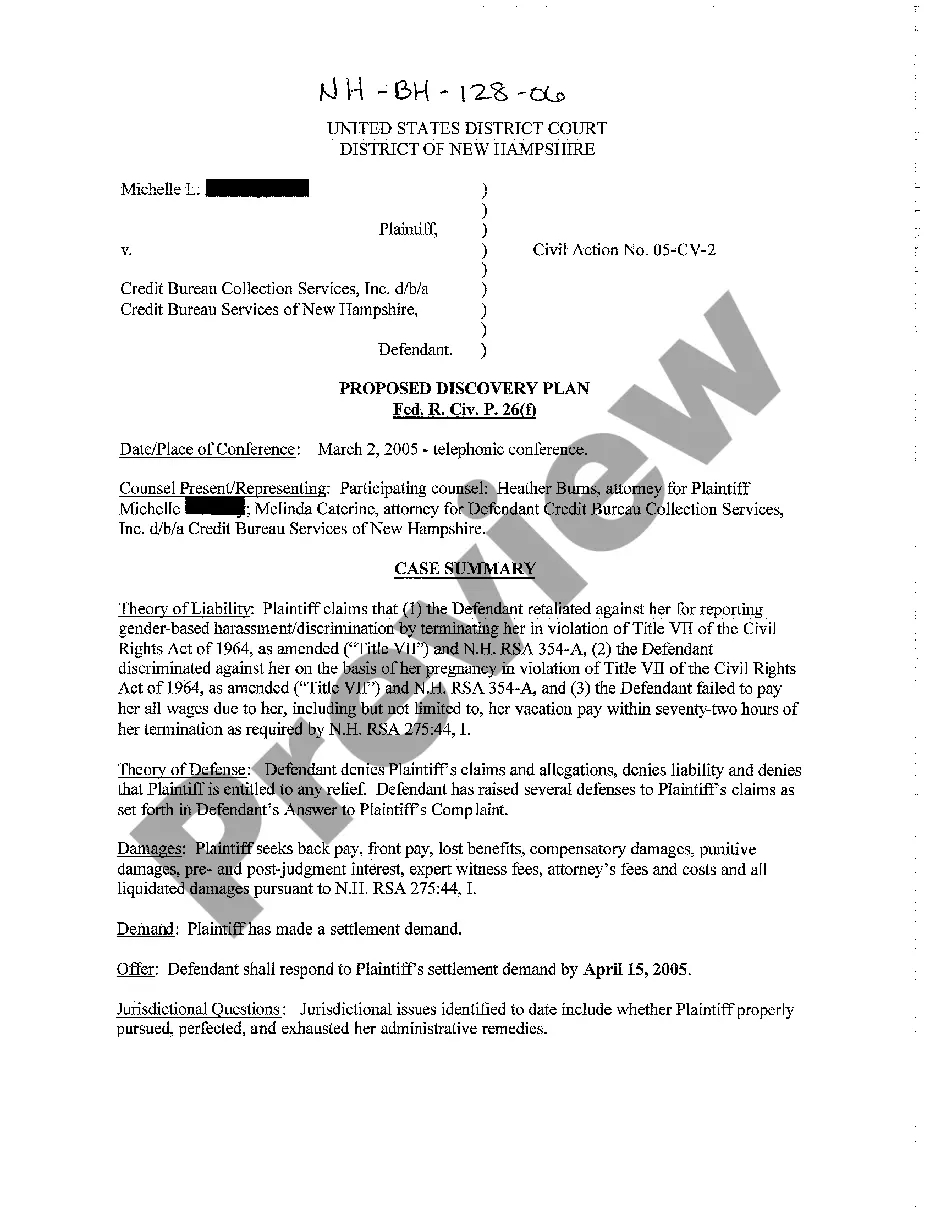
This form is a sample letter to opposing counsel regarding deposition and a Subpoena Duces Tecum. It serves to formally notify the other party of a scheduled deposition and the accompanying request for documents relevant to the case. This letter helps ensure clear communication between attorneys regarding deposition details and expectations, and distinguishes itself by including specifics about the submittal and confirmation of document requests.
Key components of this form
- Date of the letter
- Opposing attorney's contact information
- Case style reference
- Notice of taking deposition details (date, time, and place)
- Subpoena Duces Tecum and Admission of Service instructions
Situations where this form applies
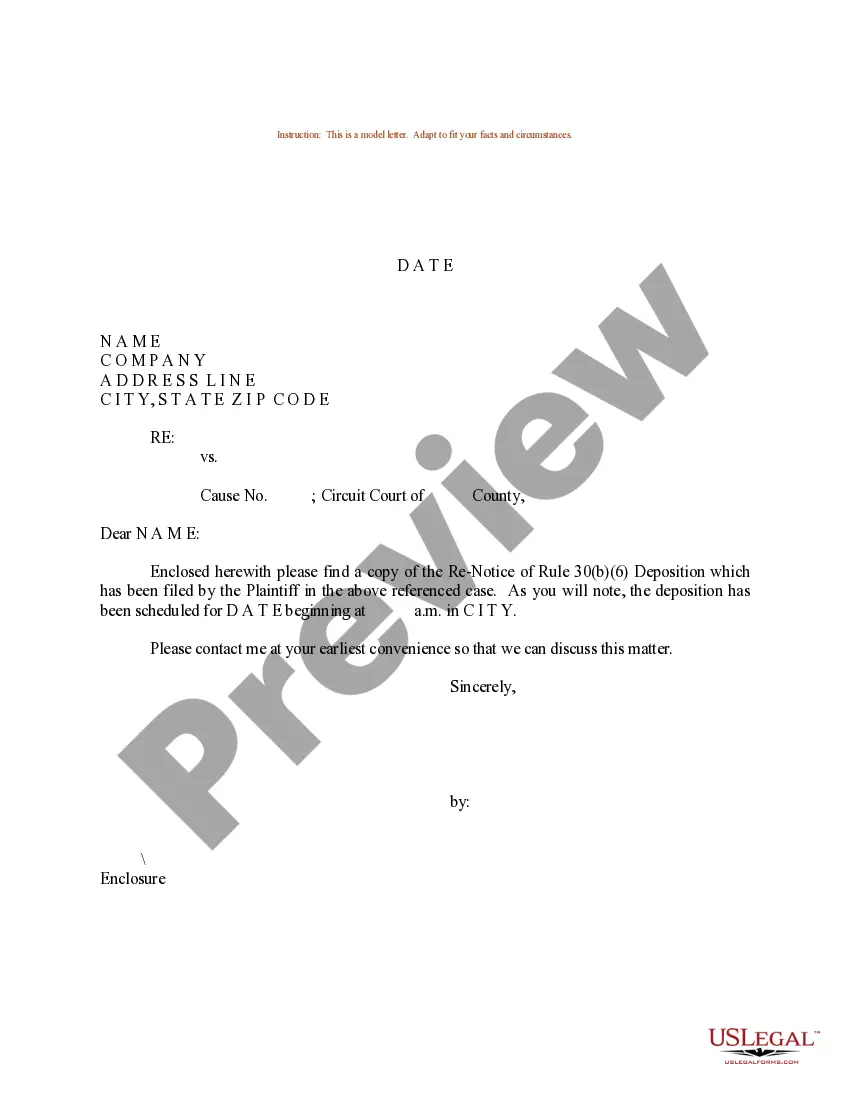
This form should be used when a party seeks to schedule a deposition of the opposing party and requires certain documents to be produced. It is essential in pre-trial litigation to gather evidence and ensure compliance with discovery requests. Additionally, this letter can be adapted if there are changes in the deposition schedule, allowing for clear communication of updates.
Who can use this document
- Attorneys representing clients in legal disputes
- Legal assistants or paralegals involved in case preparation
- Individuals preparing for civil litigation where depositions are required
How to prepare this document
- Enter the current date at the top of the letter.
- Fill in the names and addresses of the opposing counsel.
- Specify the style of the case accurately to provide context.
- Indicate the date, time, and location for the deposition.
- Discuss service method and confirm the delivery of the Admission of Service.
Notarization requirements for this form
This form does not typically require notarization unless specified by local law. It is advisable to check jurisdictional requirements for any additional legal formalities related to the deposition and subpoena process.
Get your form ready online
Our built-in tools help you complete, sign, share, and store your documents in one place.
Make edits, fill in missing information, and update formatting in US Legal Forms—just like you would in MS Word.
Download a copy, print it, send it by email, or mail it via USPS—whatever works best for your next step.
Sign and collect signatures with our SignNow integration. Send to multiple recipients, set reminders, and more. Go Premium to unlock E-Sign.
If this form requires notarization, complete it online through a secure video call—no need to meet a notary in person or wait for an appointment.
We protect your documents and personal data by following strict security and privacy standards.

Make edits, fill in missing information, and update formatting in US Legal Forms—just like you would in MS Word.

Download a copy, print it, send it by email, or mail it via USPS—whatever works best for your next step.

Sign and collect signatures with our SignNow integration. Send to multiple recipients, set reminders, and more. Go Premium to unlock E-Sign.

If this form requires notarization, complete it online through a secure video call—no need to meet a notary in person or wait for an appointment.

We protect your documents and personal data by following strict security and privacy standards.
Typical mistakes to avoid
- Failing to provide accurate details regarding the date and time of the deposition.
- Not including all relevant documents that form part of the subpoena.
- Neglecting to confirm the service method and deadline for the Admission of Service.
Why complete this form online
- Conveniently edit and customize the sample letter to fit specific case details.
- Access a reliable template drafted by licensed attorneys for legal accuracy.
- Quickly download and save the form for easy access during legal proceedings.
Legal use & context
- This form helps maintain a clear record of communication between parties.
- It establishes timelines for depositions and document production in litigation.
- Using this form can help avoid disputes over procedural errors during depositions.
Summary of main points
- The form is critical for formal communication regarding depositions.
- Provides a systematic way to request documents from opposing parties.
- Ensure to follow state rules and check for any specific formatting requirements.
Looking for another form?

Form popularity
FAQ
Take a blank Subpoena to the clerk to have it issued. Take a blank Civil Subpoena (Form SUBP-001 ) to the clerk. Fill out the Subpoena. Make copies of your issued Subpoena. Serve the Subpoena. Fill out Page 3 of the original Civil Subpoena. Return the Subpoena to the clerk before your hearing (or trial).
A subpoena is an Order that is issued to require the attendance of a witness to testify at a particular time and place. A subpoena duces tecum is an Order that requires a witness to bring documents, books or other items under his, her or their control, that he she or they is bound by law to produce into evidence.
A Subpoena Duces Tecum (meaning 'subpoena for production of evidence') is a court order requiring the person subpoenaed to produce books, documents or other records under his or her control at a specified time/place in a court hearing or a deposition.
The name of the court where your case is filed. The title of the action. The case number. A command that a specific person appear at a stated date, time, and place to testify (or testify and provide documents)
Step 1: Determine Whether the Documents Are Consumer or Employee Step 2: Set a Date and Location for Production. Step 3: Complete the Required Forms. Step 4: Have the Court Clerk Issue Subpoena. Step 5: Complete the Additional Form for. Step 6: Serve the Consumer/Employee with the Deposition Subpoena and Notice.
Technically yes, but subpoenas are sent to non parties to the action while discovery does directly to the plaintiff or defendant. If the accountant has a form the defendant claims not to have, simply send you a subpoena for that form to the accountant.
(a) Subpoenas and subpoenas duces tecum shall be issued by the agency or presiding officer at the request of a party, or by the attorney of record for a party, in accordance with Sections 1985 to 1985.4, inclusive, of the Code of Civil Procedure.
Providing objections suspends your obligation to comply with the subpoena until or unless a court orders compliance, or you reach an agreement with the party that served you with the subpoena. If you do not wish to comply with the subpoena, you may file a motion to quash it before the date set forth on the subpoena.
The name of the court where your case is filed. The title of the action. The case number. A command that a specific person appear at a stated date, time, and place to testify (or testify and provide documents)