Release by Employee of Damages Incurred as Result of Drinking Alcohol Supplied by Employer
Understanding this form
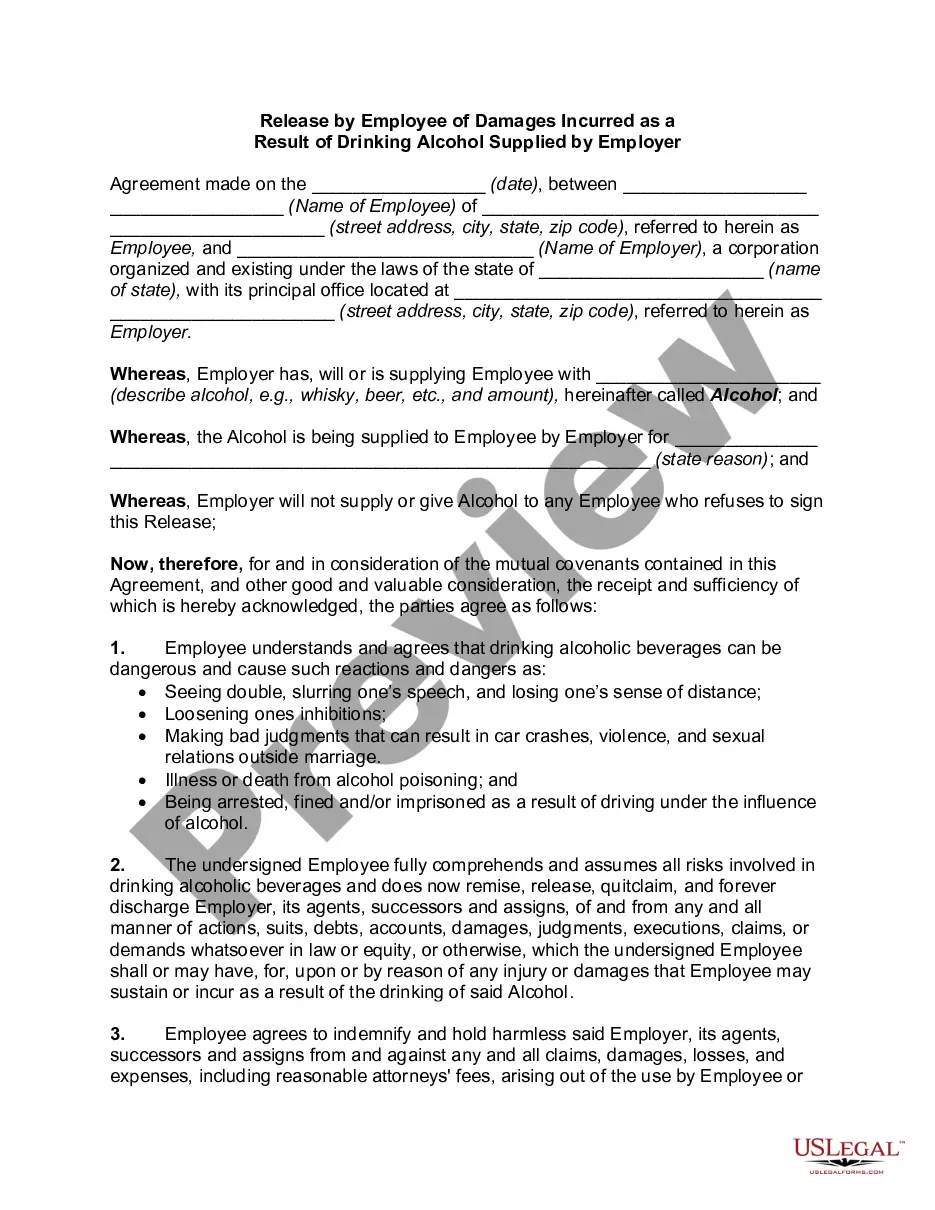
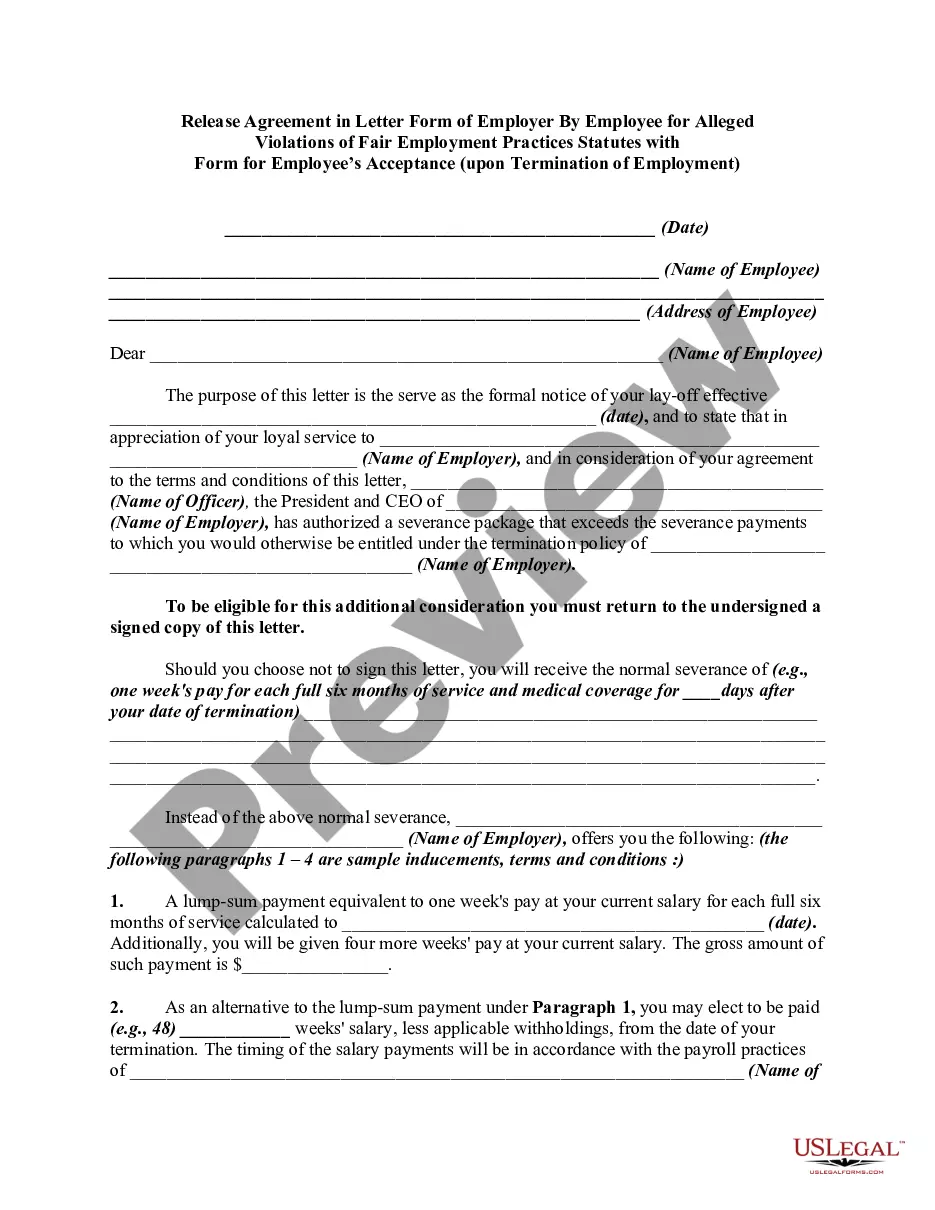
The Release by Employee of Damages Incurred as Result of Drinking Alcohol Supplied by Employer is a legal document that protects employers from liability associated with employees consuming alcohol provided by the employer. This form explicitly outlines the risks involved with alcohol consumption and requires employees to acknowledge understanding and acceptance of these risks. It differs from other liability waivers by specifically addressing alcohol-related risks in the workplace.
Main sections of this form
- Date of the agreement.
- Parties involved: Employee and Employer, including their addresses.
- Description of the alcohol being supplied.
- Purpose for supplying the alcohol.
- Acknowledgment of the risks associated with alcohol consumption.
- The waiver of claims against the employer.
- Indemnification clause protecting the employer from claims arising from alcohol use.
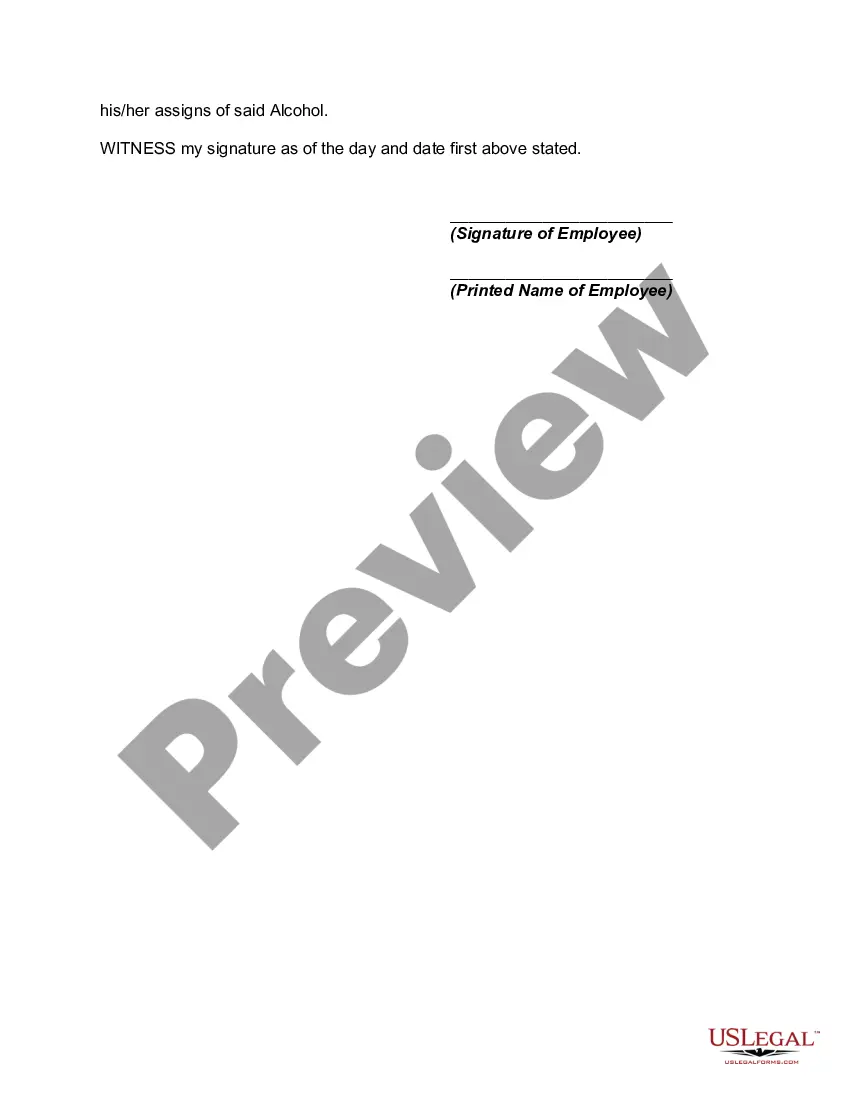
- Employee's signature and printed name.
When to use this document
This form is useful when an employer provides alcohol for events or occasions and wants to ensure that employees acknowledge the associated risks. It is typically used during workplace parties, celebrations, or other events where alcohol is served and where the employer seeks to minimize liability regarding alcohol consumption and its consequences.
Who this form is for
- Employers who provide alcohol to employees for work-related events.
- HR professionals seeking to protect their organization from potential liability.
- Employees who are required to acknowledge understanding of risks when consuming alcohol at work-related gatherings.
Steps to complete this form
- Identify the date of the agreement.
- Enter the names and addresses of both the employee and employer.
- Describe the type and amount of alcohol being supplied.
- State the purpose for which the alcohol is provided.
- Have the employee read and understand the risks associated with alcohol consumption.
- Ensure the employee signs and prints their name to acknowledge the release.
Is notarization required?
Notarization is not commonly needed for this form. However, certain documents or local rules may make it necessary. Our notarization service, powered by Notarize, allows you to finalize it securely online anytime, day or night.
Get your form ready online
Our built-in tools help you complete, sign, share, and store your documents in one place.
Make edits, fill in missing information, and update formatting in US Legal Forms—just like you would in MS Word.
Download a copy, print it, send it by email, or mail it via USPS—whatever works best for your next step.
Sign and collect signatures with our SignNow integration. Send to multiple recipients, set reminders, and more. Go Premium to unlock E-Sign.
If this form requires notarization, complete it online through a secure video call—no need to meet a notary in person or wait for an appointment.
We protect your documents and personal data by following strict security and privacy standards.

Make edits, fill in missing information, and update formatting in US Legal Forms—just like you would in MS Word.

Download a copy, print it, send it by email, or mail it via USPS—whatever works best for your next step.

Sign and collect signatures with our SignNow integration. Send to multiple recipients, set reminders, and more. Go Premium to unlock E-Sign.

If this form requires notarization, complete it online through a secure video call—no need to meet a notary in person or wait for an appointment.

We protect your documents and personal data by following strict security and privacy standards.
Avoid these common issues
- Failing to have the employee sign and date the form.
- Leaving out important details about the alcohol provided.
- Not clearly stating the purpose for supplying alcohol.
- Ignoring state-specific legal requirements that may apply.
Benefits of using this form online
- Easy access to customizable templates for specific needs.
- Ability to quickly download and print the form for immediate use.
- Designed to help ensure compliance with relevant legal guidelines.
- Convenient editing options to tailor the form to your specific situation.
Quick recap
- This form helps protect employers from liability related to alcohol provided at work events.
- Employees must acknowledge the risks of alcohol consumption.
- It's important to complete all sections accurately to ensure validity.
- State laws may impose additional requirements that should be considered.
Looking for another form?
Form popularity
FAQ
Research indicates that people employed within the hospitality and recreation industries have the highest rates of drug abuse and addiction among professionals. The construction and mining industries possess some of the highest rates of alcohol abuse.
A release is an agreement not to sue; it waives your right to sue and company and "releases" your employer from legal liability for claims you may have against it.Or, in a broad release, you might waive your right to sue over any and all claims arising out of your employment.
California: Four days in jail for first offense, 90 days for second offense, 120 days for third offense. Florida: No required minimum jail time for first offense, 10 days for second offense, 30 days for third offense.
' " The only way to be certain that a worker is drunk is to have the worker take a blood alcohol test, a breathalyzer or some similar test, Shea said. An employer should not request or require an alcohol test unless there is "reasonable cause," Shea said.
An alcoholic may be person with a disability and protected by the ADA if s/he is qualified to perform the essential functions of the job.However, an employer can discipline, discharge or deny employment to an alcoholic whose use of alcohol adversely affects job performance or conduct.
Technically, alcoholism or an alcohol use disorder can be classified as such. So as an employer that means you can't fire someone just because they have a drinking problem. However, you can fire an employee who is unable to do his or her job properly because of extreme and/or chronic drinking.
While employers are free to terminate and can refuse to hire anyone whose alcohol or drug use impairs their ability to perform the duties of their job, employers cannot fire or take other negative employment actions against an employee because of their status as an alcoholic or drug addict. California and federal laws
If your employer can prove that drugs or alcohol have had a detrimental impact on your ability to do your job, you may be dismissed. They must have a good reason to justify dismissal, related to your conduct or capability.
Many employers now have a policy which makes it clear that drinking alcohol at work, or being under the influence at work is an act of gross misconduct.