Sample Letter for Explanation of Bankruptcy
About this form
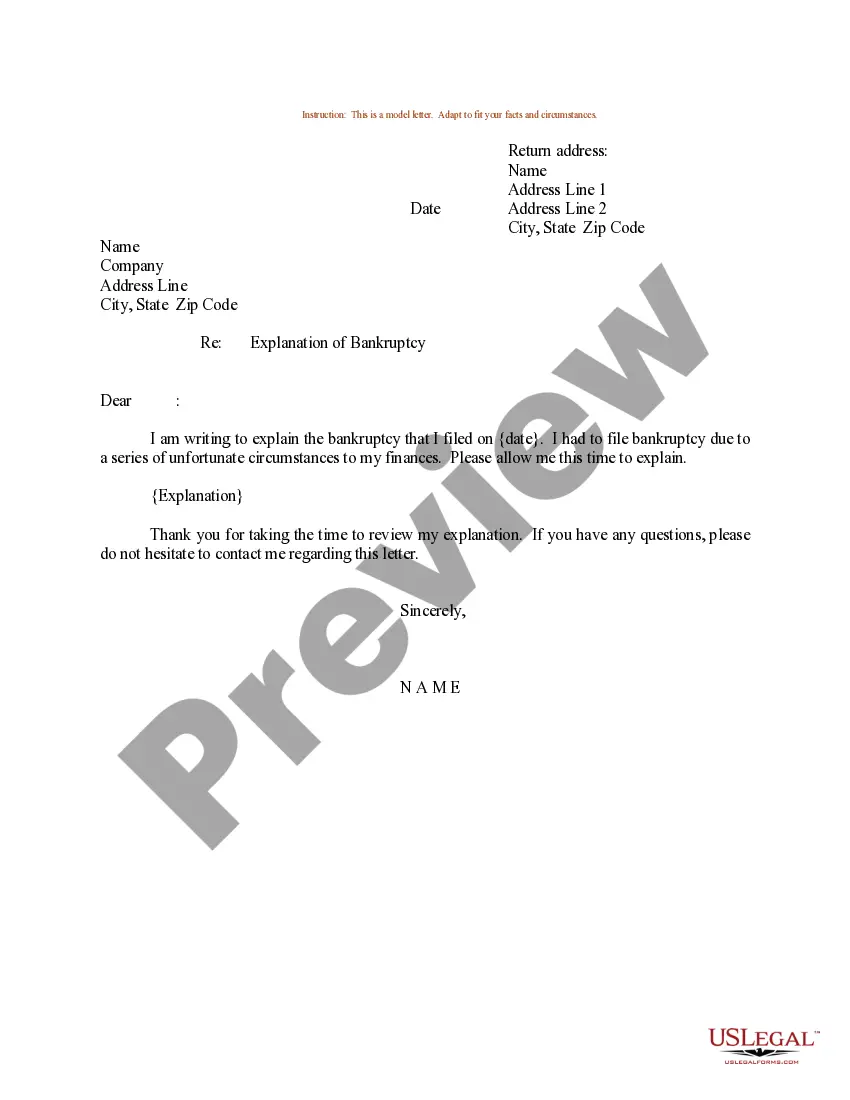
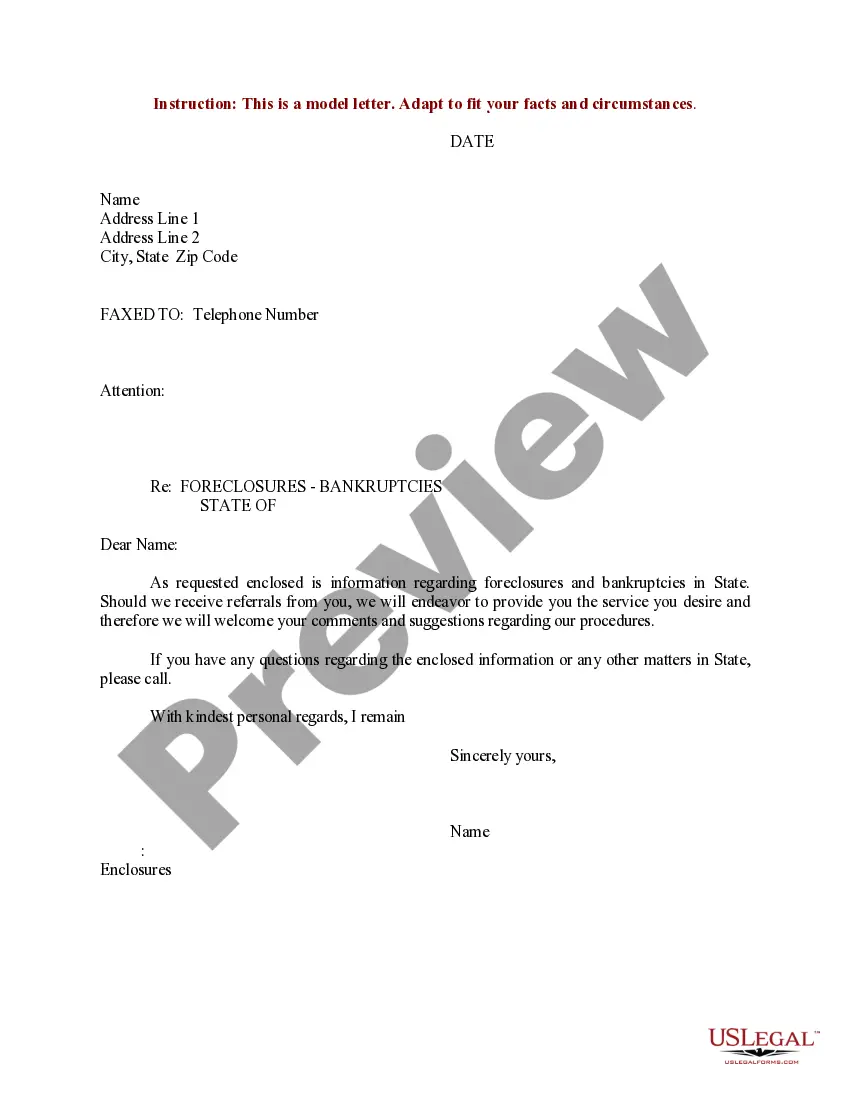
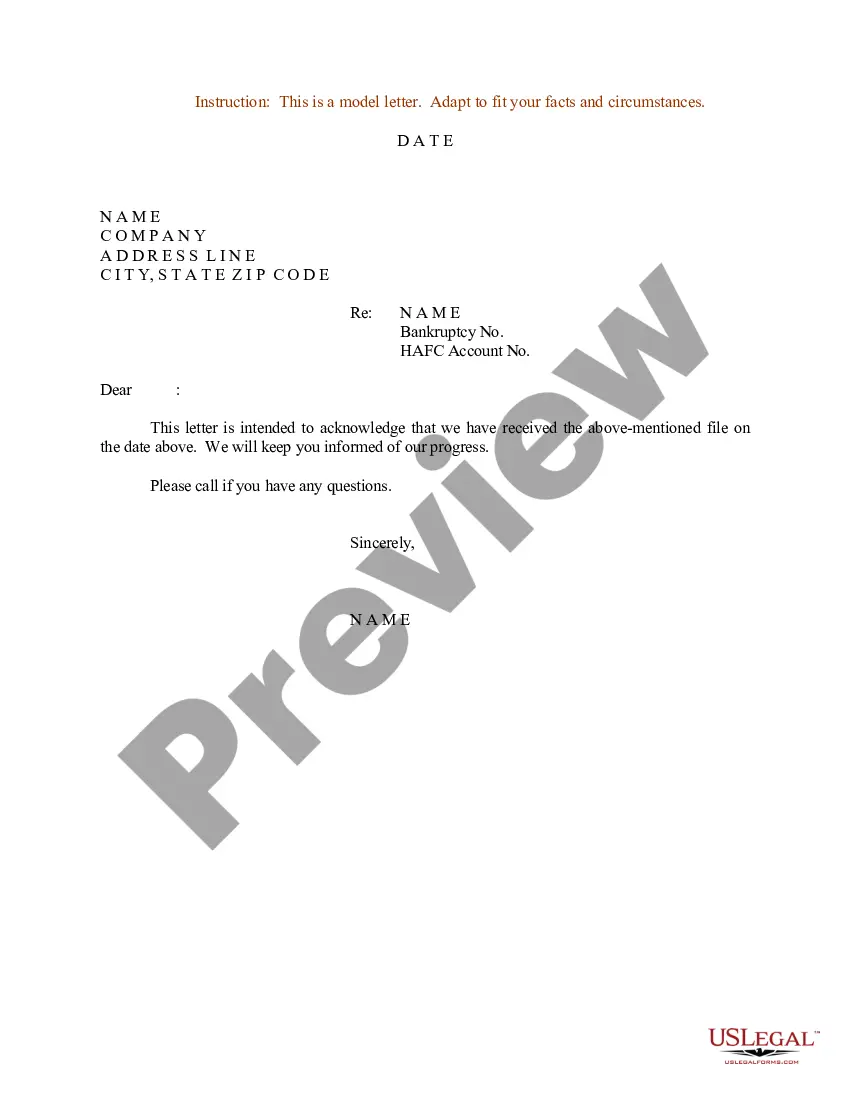
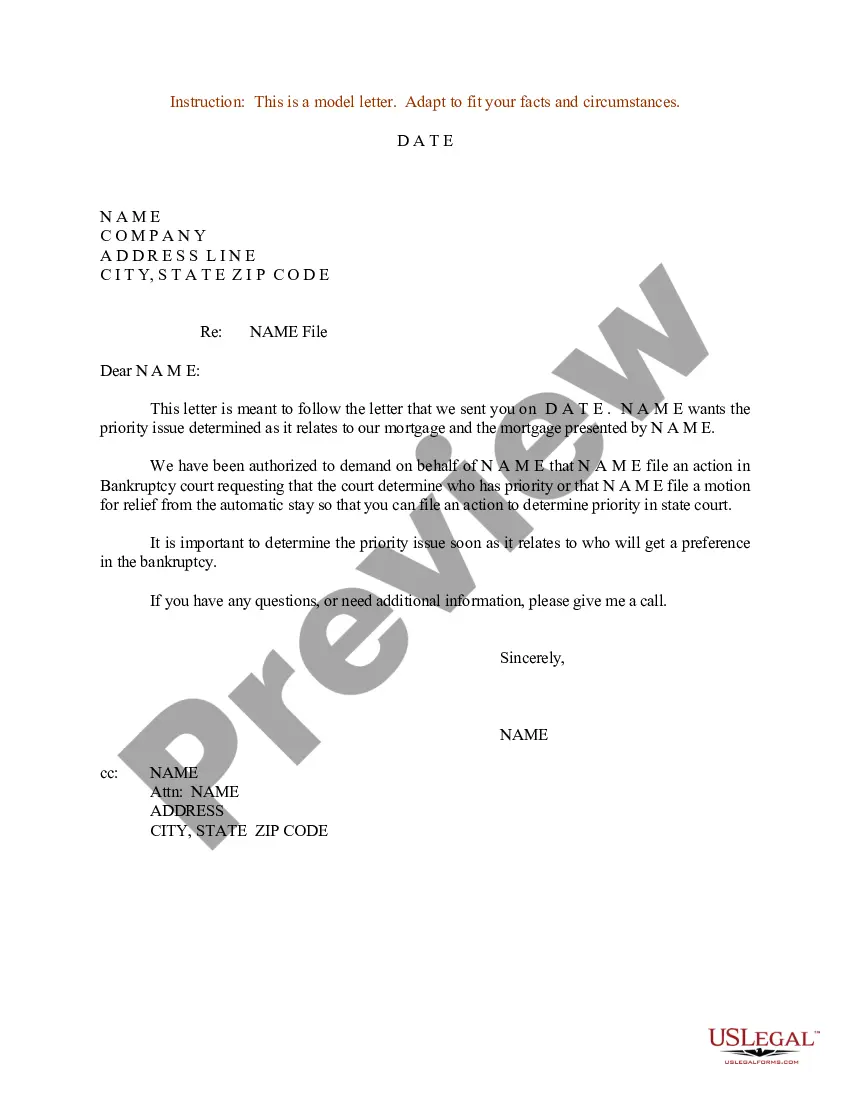
The Sample Letter for Explanation of Bankruptcy is a written document intended to communicate your bankruptcy status to creditors, potential landlords, or other interested parties. It helps clarify your financial situation after declaring bankruptcy, distinguishing it from other forms of financial disclosure. This letter provides essential context regarding your bankruptcy, aiming to mitigate any negative assumptions or concerns.
What’s included in this form
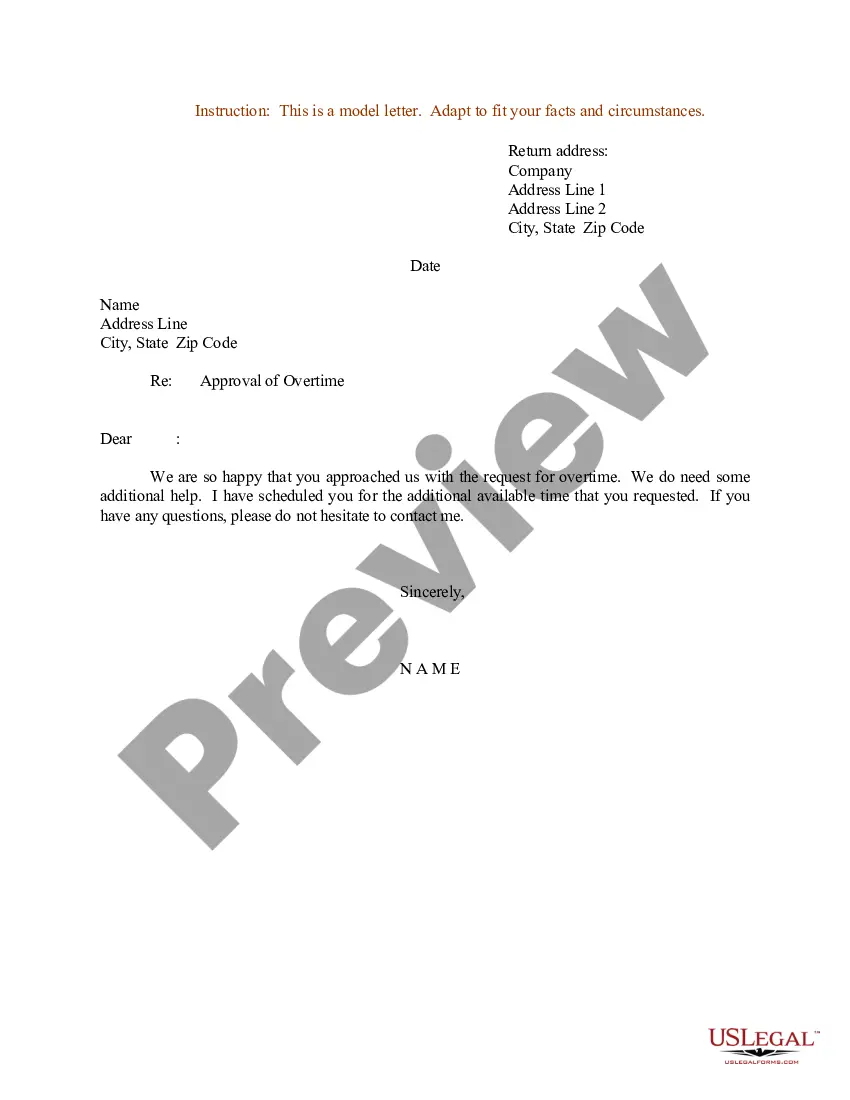
- Return address: Your name and address for clarity and identification.
- Date: The date on which the letter is written.
- Addressee's information: The name and address of the recipient, ensuring proper delivery.
- Subject line: Indicates the purpose of the letter, clearly stating that it is an explanation of bankruptcy.
- Content of the letter: A concise explanation of your bankruptcy circumstances and any relevant details.
- Closing: A professional sign-off with your name for formal communication.
Situations where this form applies
This form is typically used when you need to notify creditors, landlords, or business associates about your bankruptcy status. It is useful when seeking new credit, applying for housing, or clarifying your financial history during negotiations. This letter can help alleviate concerns and provide transparency about your financial situation.
Who needs this form
- Individuals who have filed for bankruptcy.
- People looking to explain their financial situation to creditors or landlords.
- Anyone needing a formal way to communicate bankruptcy status for financial discussions.
How to prepare this document
- Identify and fill in your return address at the top of the letter.
- Insert the date you are writing the letter.
- Add the name and address of the person or company you are sending the letter to.
- Write a clear subject line stating "Explanation of Bankruptcy."
- Compose the body of the letter with a concise explanation of your bankruptcy circumstances.
- Conclude with a polite closing statement followed by your name.
Does this form need to be notarized?
This form usually doesn’t need to be notarized. However, local laws or specific transactions may require it. Our online notarization service, powered by Notarize, lets you complete it remotely through a secure video session, available 24/7.
Get your form ready online
Our built-in tools help you complete, sign, share, and store your documents in one place.
Make edits, fill in missing information, and update formatting in US Legal Forms—just like you would in MS Word.
Download a copy, print it, send it by email, or mail it via USPS—whatever works best for your next step.
Sign and collect signatures with our SignNow integration. Send to multiple recipients, set reminders, and more. Go Premium to unlock E-Sign.
If this form requires notarization, complete it online through a secure video call—no need to meet a notary in person or wait for an appointment.
We protect your documents and personal data by following strict security and privacy standards.

Make edits, fill in missing information, and update formatting in US Legal Forms—just like you would in MS Word.

Download a copy, print it, send it by email, or mail it via USPS—whatever works best for your next step.

Sign and collect signatures with our SignNow integration. Send to multiple recipients, set reminders, and more. Go Premium to unlock E-Sign.

If this form requires notarization, complete it online through a secure video call—no need to meet a notary in person or wait for an appointment.

We protect your documents and personal data by following strict security and privacy standards.
Avoid these common issues
- Failing to include the necessary contact details.
- Not providing a clear and concise explanation of the bankruptcy details.
- Neglecting to proofread for spelling or grammatical errors.
- Using emotional language rather than a professional tone.
Benefits of completing this form online
- Convenient download allows for immediate access to the template.
- Editable format ensures that you can personalize the letter for your specific situation.
- Provides peace of mind knowing the form is compliant and drafted with legal standards.
- Available anytime, offering flexibility to complete it at your own pace.
Legal use & context
- This letter is meant to provide clarity and context about your bankruptcy situation.
- While not legally binding, it serves to protect your interests and maintain good relationships with creditors.
- The content of the letter is crucial in typical negotiations or inquiries related to your bankruptcy filing.
Key takeaways
- The Sample Letter for Explanation of Bankruptcy helps explain your financial situation to creditors.
- Clear and accurate communication is vital in handling bankruptcy matters.
- This form is easy to access, edit, and personalize for your needs.
Looking for another form?








Form popularity
FAQ
Address Discrepancy Letter is a letter of explanation where the borrower clarifies the current residential address and responds to any discrepancy in the address stated in credit report or other documents.
Begin the letter with the date, a salutation, and an introduction of the incident or issue. Provide a short but detailed description without having to add unnecessary terms and phrases. Provide an explanation of the steps you've taken to rectify the error or to complete the missing information.
Facts. Include all the details with correct dates and dollar amounts. Resolution. Explain how and when the situation was resolved. Acknowledge. It's important that the letter outline why the problem won't arise again. Recognize if and how you could have avoided this mistake.
Give precise details of the situation or circumstances. Describe the facts that resulted in the current situation. Be truthful so that you may not find yourself in a difficult position. Provide supporting documents if they are available. Describe what you will do to make the correction.
The key to writing a great letter of explanation is to keep it short, simple and informative. Be clear and write with as much detail as you can since someone else will need to understand your situation. Avoid including irrelevant information or answers to questions the underwriter didn't ask.
Take responsibility for your actions. Be clear about what you did or didn't do that caused the mistake. Avoid focusing on anyone else's role in the mistake. Provide a little backstory. Outline a plan. Clearly apologize.
An acknowledgement of what happened. This demonstrates honesty and understanding of the necessity to repay the debt. A reason why it happened. Don't leave this to the underwriter's assumption. A statement of what is different now. Finally, if supporting documentation is available, include it.
An acknowledgement of what happened. This demonstrates honesty and understanding of the necessity to repay the debt. A reason why it happened. Don't leave this to the underwriter's assumption. A statement of what is different now. Finally, if supporting documentation is available, include it.