General Form of Employment Agreement
Understanding this form
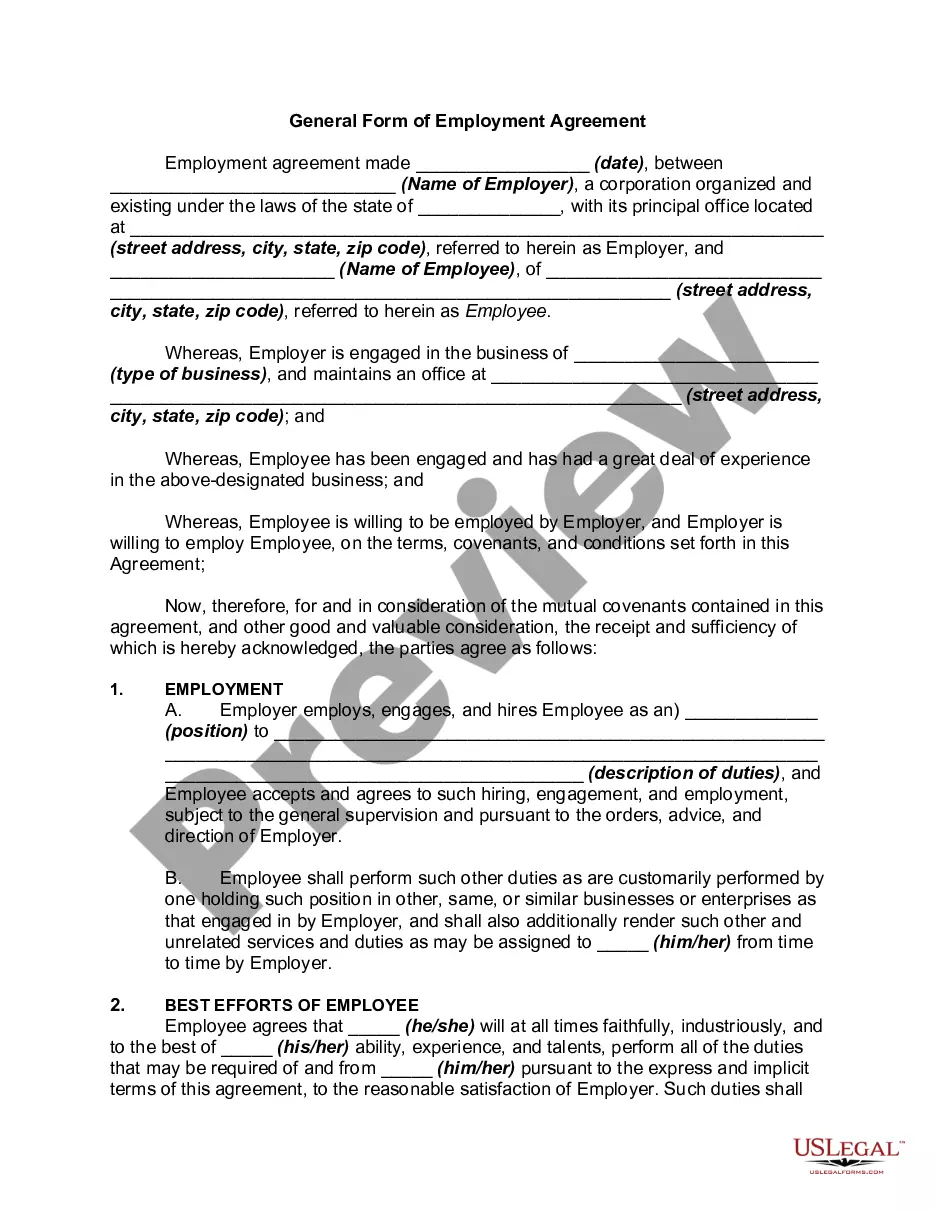
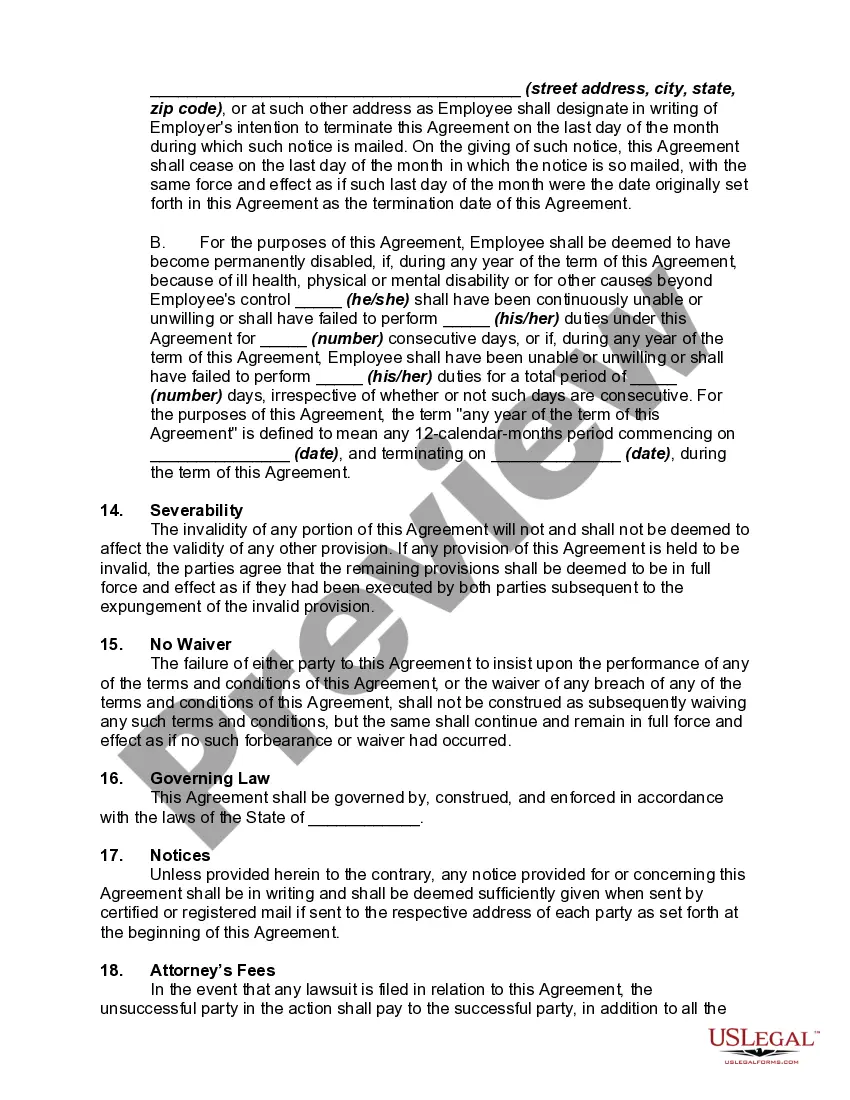
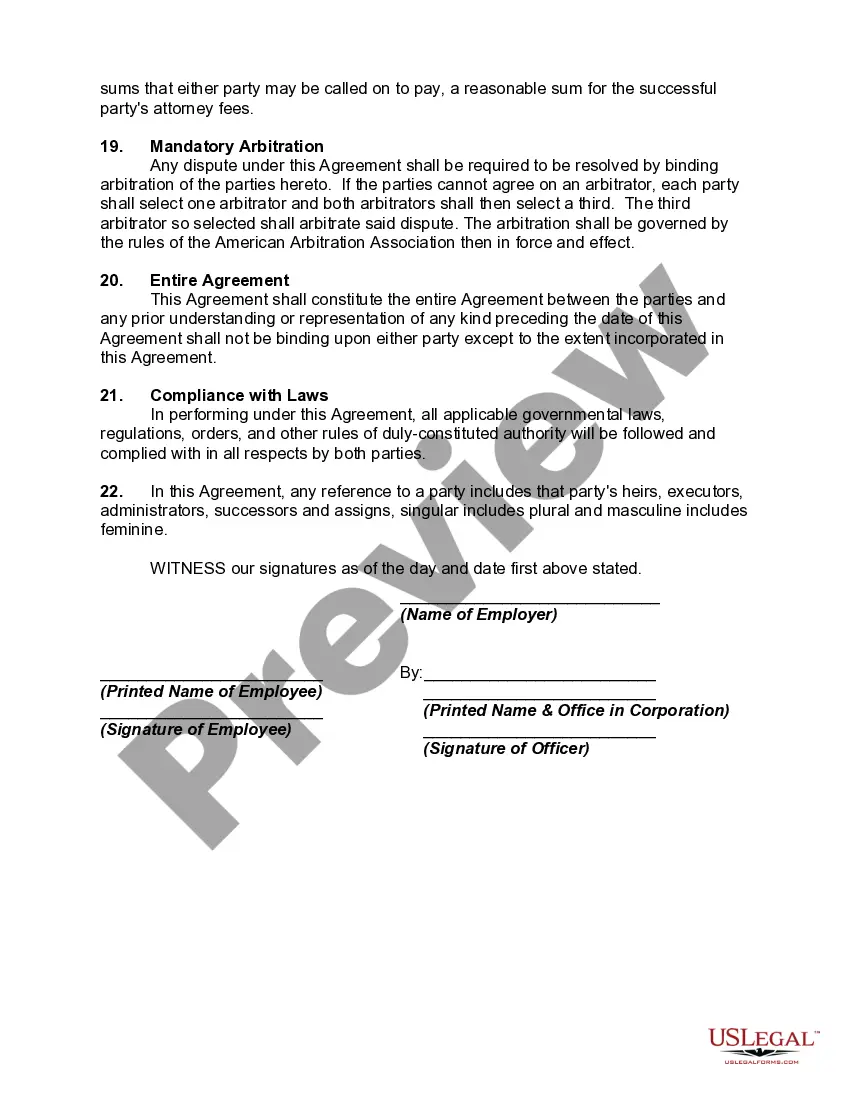
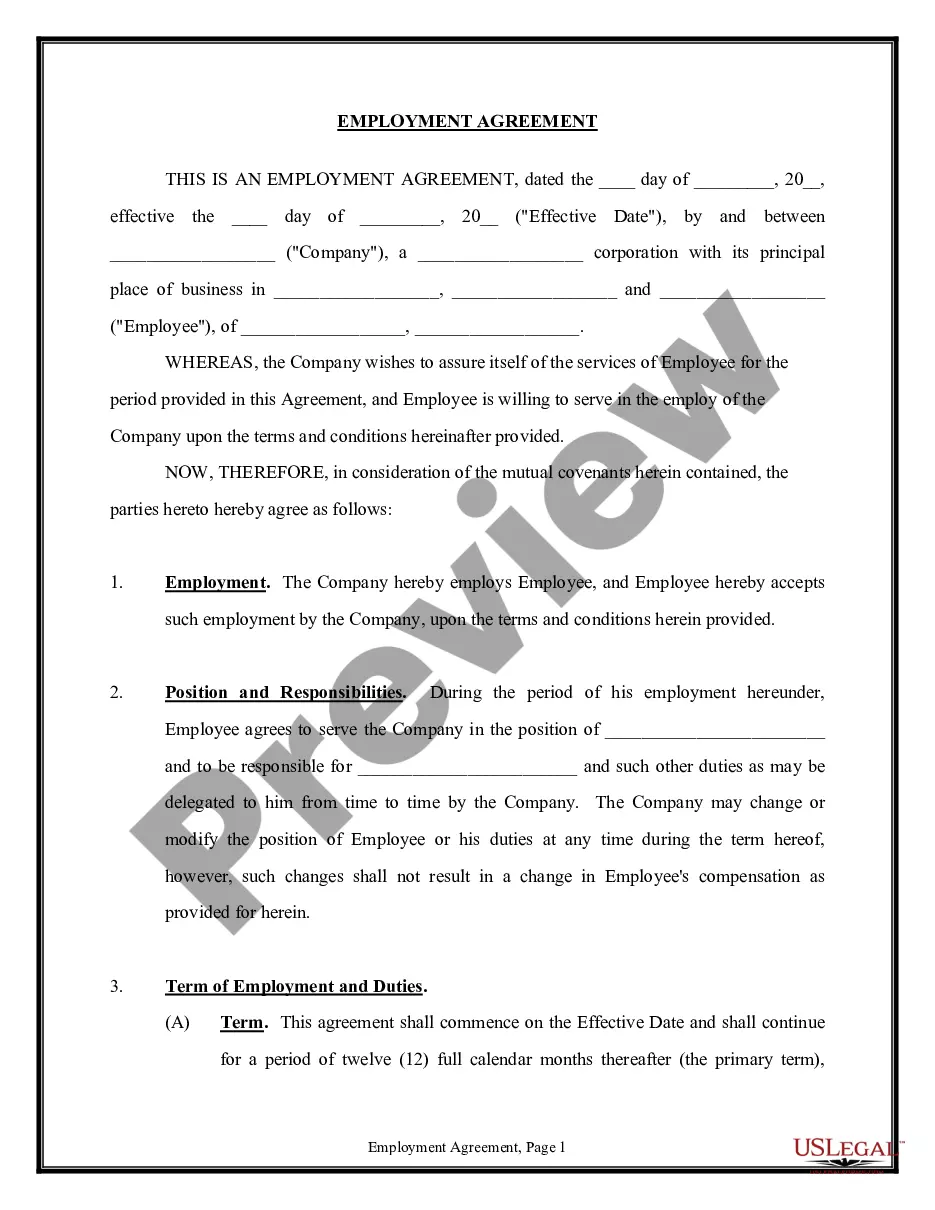
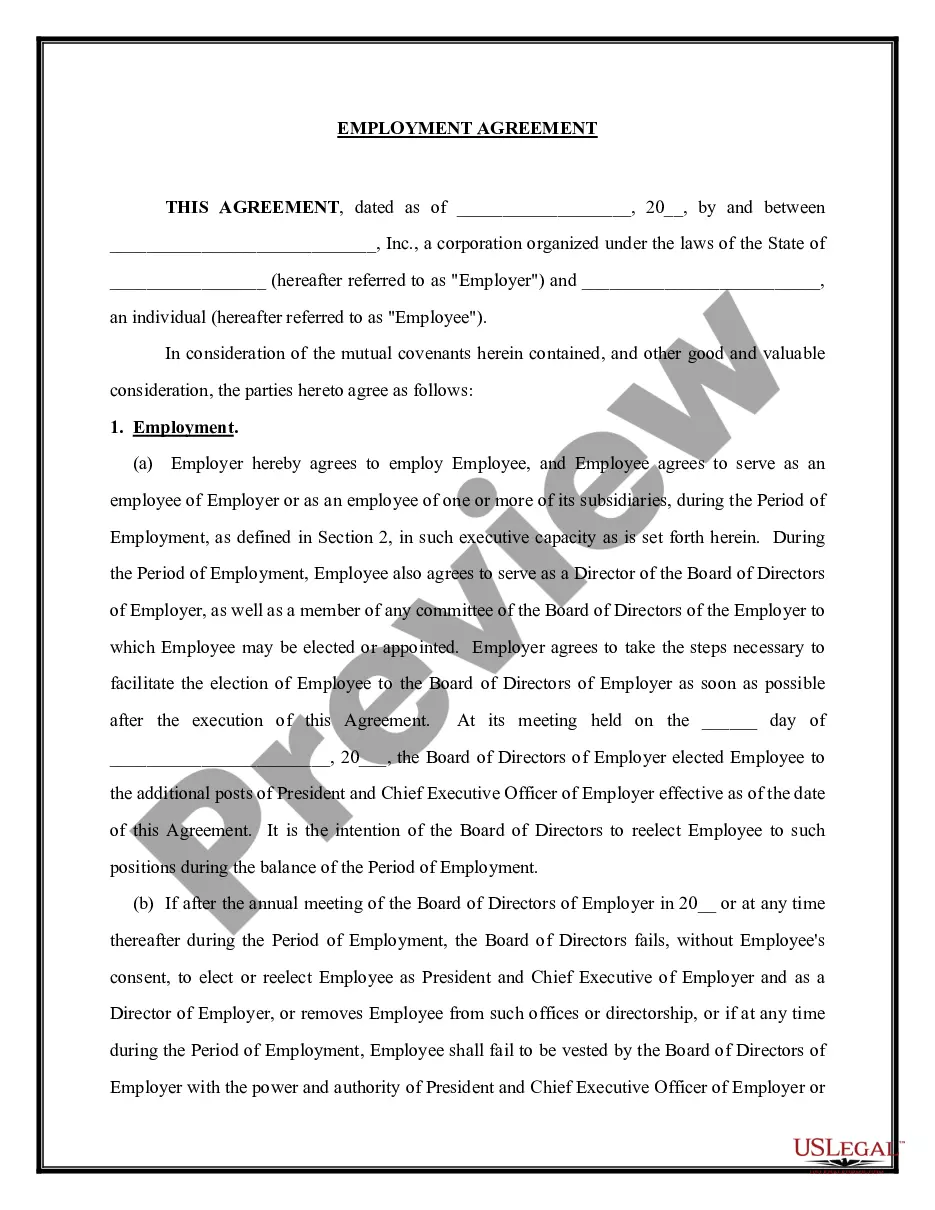
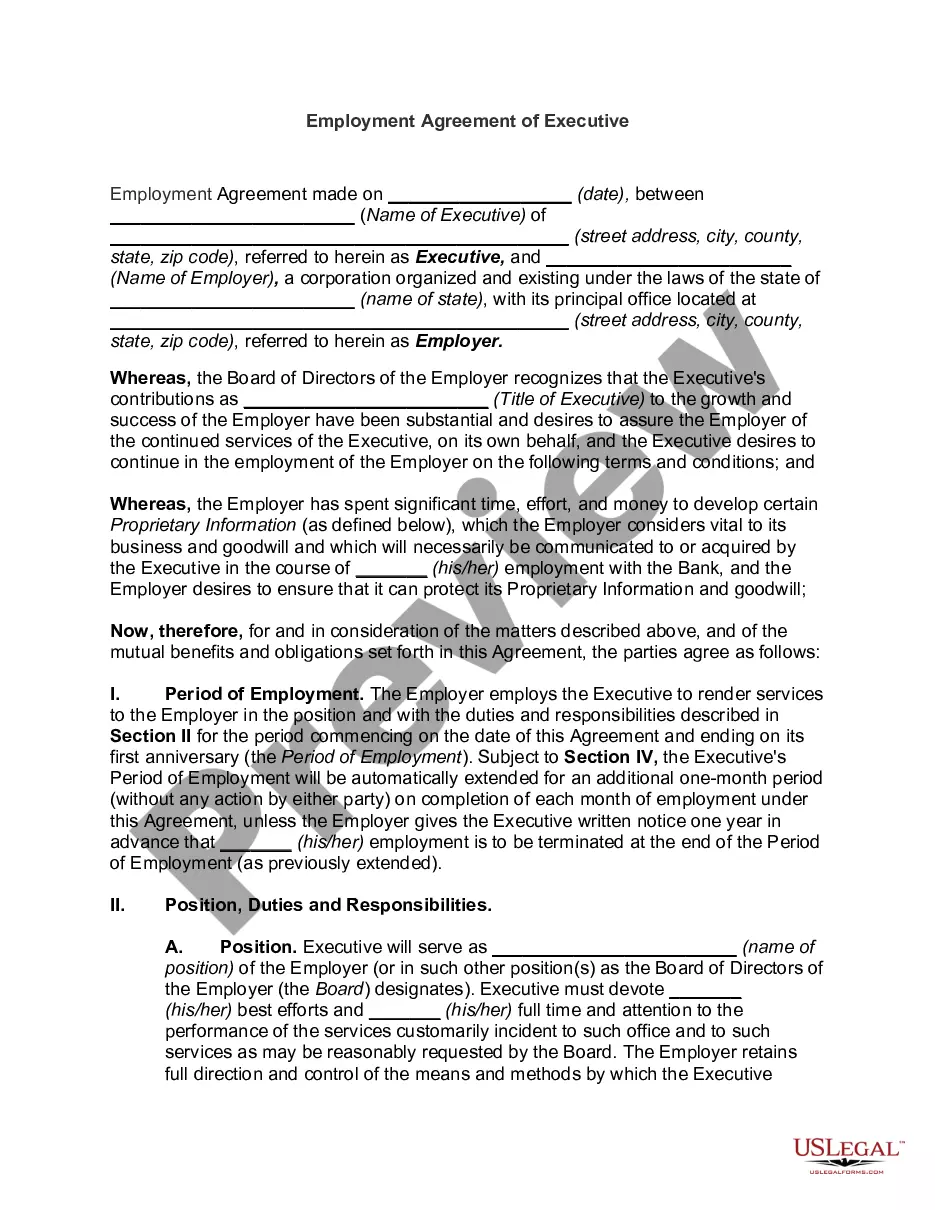
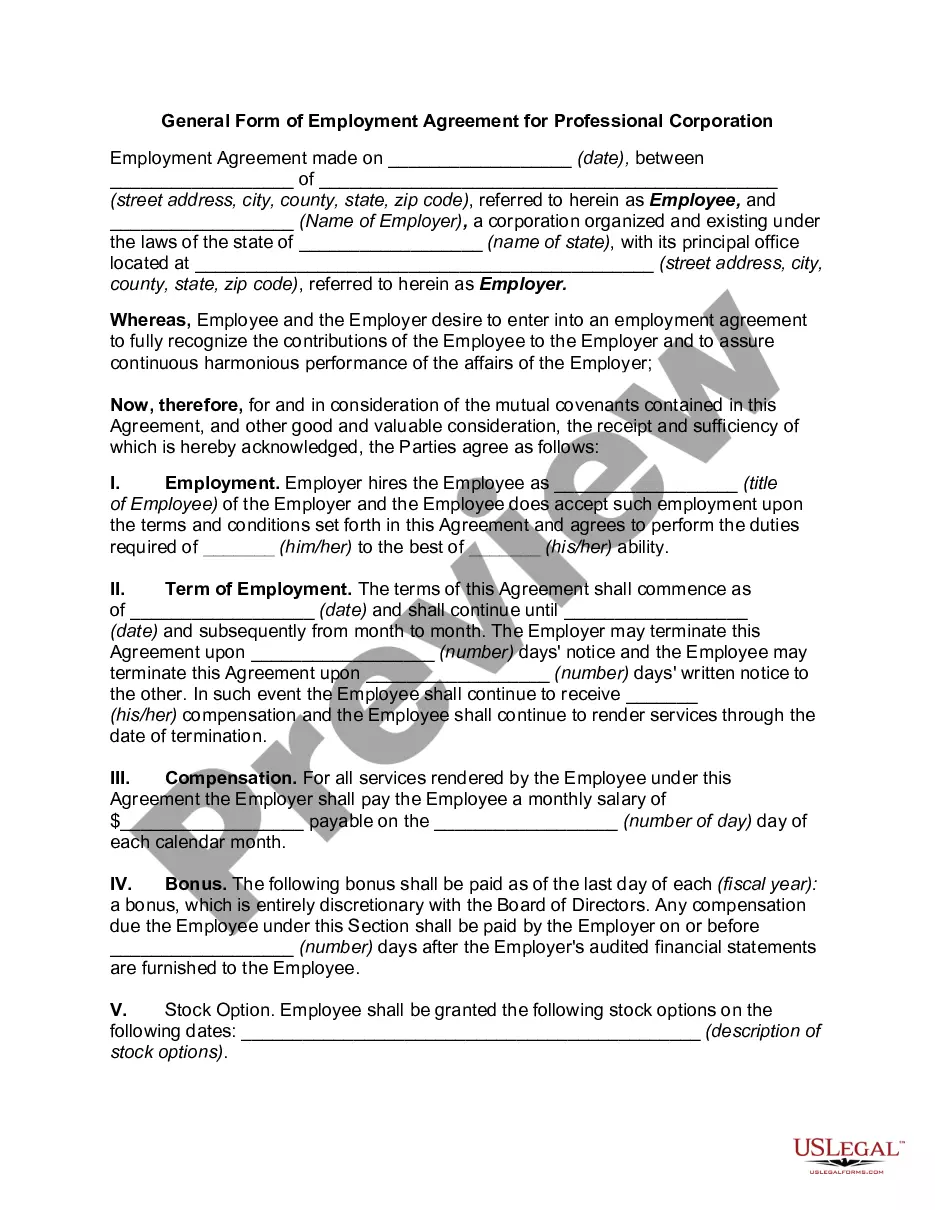
The General Form of Employment Agreement is a crucial legal document that outlines the terms and conditions of employment between an employer and an employee. This agreement serves to set clear expectations regarding job duties, compensation, and other key employment details. Unlike other employment agreements that may be tailored for specific roles or industries, this is a generic version suitable for various employment situations.
Key parts of this document
- Identification of the parties involved, including the employer and employee details.
- Detailed job description outlining the employee's role and responsibilities.
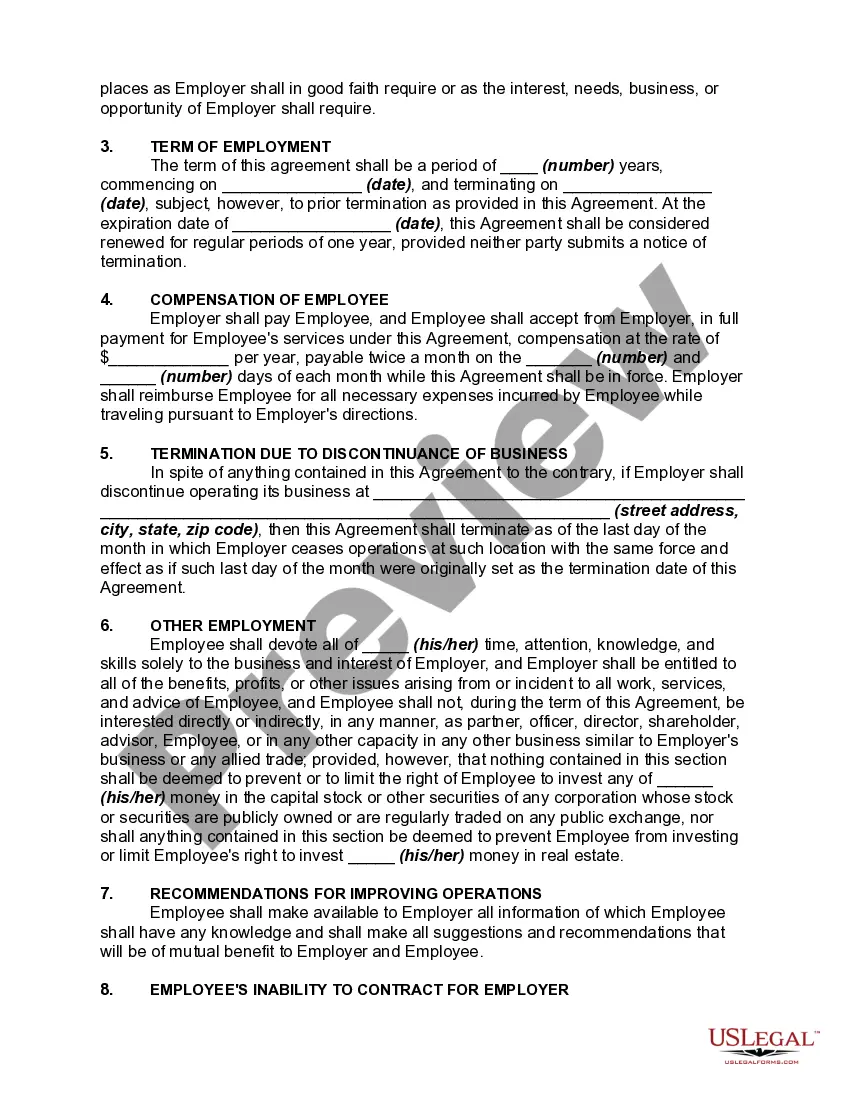
- Terms of employment, including duration and termination clauses.
- Compensation structure specifying salary and payment terms.
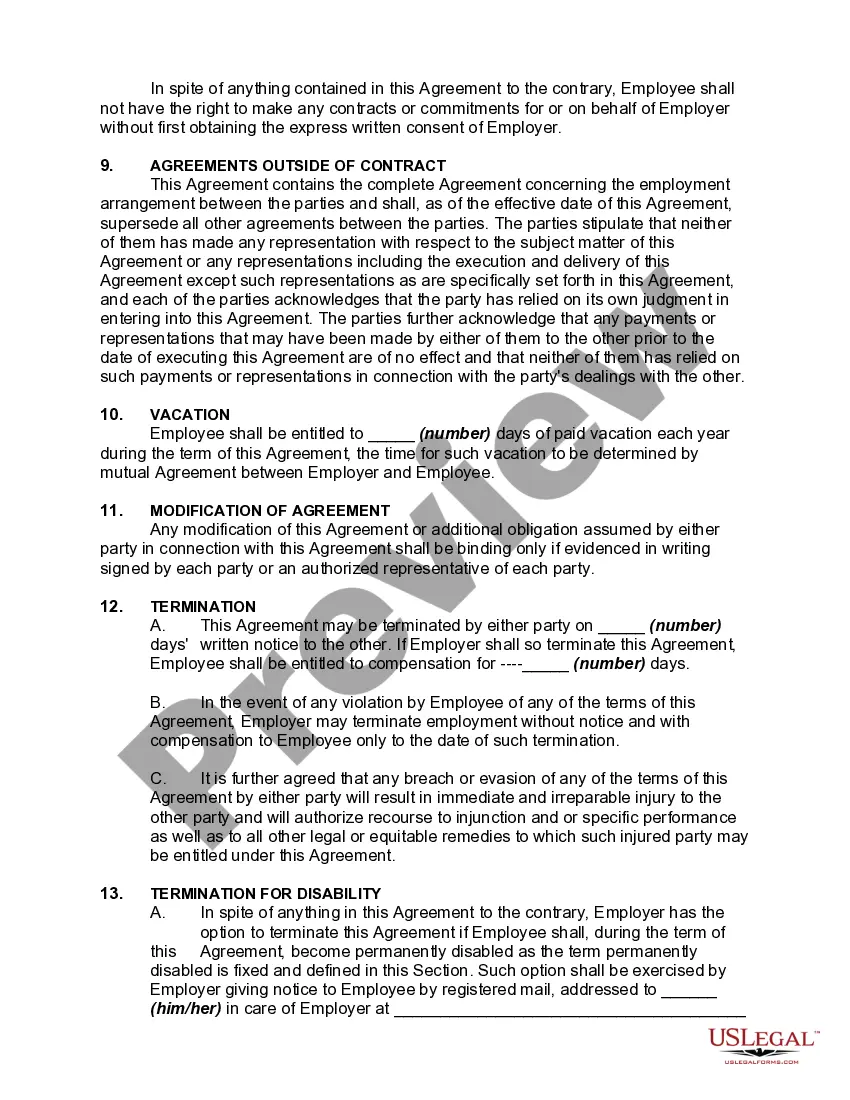
- Conditions for terminating the agreement, including provisions for disability and breach of contract.
- Legal governance of the agreement stipulating applicable laws.
Situations where this form applies
This form is essential when hiring a new employee and formalizing the employment arrangement. It is particularly useful for businesses looking to clarify employment terms to avoid misunderstandings later. This agreement can also be vital when establishing clear expectations regarding job responsibilities and performance standards.
Who needs this form
- Small business owners seeking to hire employees and define employment terms.
- HR professionals drafting employment agreements for new hires.
- Employers in need of a framework to discuss job specifics and conditions with candidates.
- Independent contractors who wish to formalize their engagement with clients in an employment-like structure.
Instructions for completing this form
- Identify the parties by entering the employer's and employee's names and addresses.
- Provide specifics about the employment position and describe the associated duties.
- Specify the compensation details, including payment frequency and any reimbursement policies.
- Set the effective dates for the term of employment, including termination provisions.
- Have both parties review the agreement and sign to indicate their acceptance of the terms.
Does this document require notarization?
This form does not typically require notarization unless specified by local law. However, having the agreement notarized may add an extra layer of legal validity and protection for both parties.
Get your form ready online
Our built-in tools help you complete, sign, share, and store your documents in one place.
Make edits, fill in missing information, and update formatting in US Legal Forms—just like you would in MS Word.
Download a copy, print it, send it by email, or mail it via USPS—whatever works best for your next step.
Sign and collect signatures with our SignNow integration. Send to multiple recipients, set reminders, and more. Go Premium to unlock E-Sign.
If this form requires notarization, complete it online through a secure video call—no need to meet a notary in person or wait for an appointment.
We protect your documents and personal data by following strict security and privacy standards.

Make edits, fill in missing information, and update formatting in US Legal Forms—just like you would in MS Word.

Download a copy, print it, send it by email, or mail it via USPS—whatever works best for your next step.

Sign and collect signatures with our SignNow integration. Send to multiple recipients, set reminders, and more. Go Premium to unlock E-Sign.

If this form requires notarization, complete it online through a secure video call—no need to meet a notary in person or wait for an appointment.

We protect your documents and personal data by following strict security and privacy standards.
Common mistakes
- Failing to specify job duties clearly, leading to misunderstandings.
- Not addressing termination conditions adequately, which can cause disputes.
- Overlooking state-specific legal requirements that could affect enforceability.
- Neglecting to sign the agreement, which can render it void.
Why complete this form online
- Convenience of downloading and filling the form at your own pace.
- Editability allows you to customize the agreement to fit specific needs.
- Access to a legally compliant template drafted by licensed attorneys.
- Reliability ensures all essential components are included for enforceability.
Quick recap
- The General Form of Employment Agreement is essential for formalizing employment terms.
- It is designed to be flexible for use in multiple jurisdictions.
- Completing the form thoroughly helps prevent legal disputes related to employment.
Looking for another form?


Form popularity
FAQ
An employment contract is an agreement that covers the working relationship of a company and an employee. 1feff It allows both parties to clearly understand their obligations and the terms of employment.Salary or wages: Contracts will itemize the salary, wage, or commission that has been agreed upon.
Right to a safe workplace free of dangerous conditions, toxic substances, and other potential safety hazards; Right to be free from retaliation for filing a claim or complaint against an employer (these are sometimes called "whistleblower" rights); and. Right to fair wages for work performed.
An employment agreement is a binding contract between an employer and that employer's employee. The contract covers specific aspects of employment. These include wages, health insurance benefits, pension benefits, and bonuses.Specific provisions in an employment agreement include: Length of Employment.
When you write a contract letter, you should include the following: the position title, company name, starting date, employee's status as full-time or part-time, their status as exempt or non-exempt (relating to overtime pay), salary amount, timing of payment, a summary of company benefits, details about paid time off,
There are three types of employment status: employee, worker and self-employed. The three are often not in practice used correctly and the difference is not always known.
If you didn't use a job description, take an hour to sit down and write out the duties you want your employee to perform. Be as specific as possible. The job description also should have included the target wage. You should consider whether or not you are paying a fair rate.
Types of Employment Contracts: Permanent employment, temporary employment and independent contractors.
Contract Types Overview. Express and Implied Contracts. Unilateral and Bilateral Contracts. Unconscionable Contracts. Adhesion Contracts. Aleatory Contracts. Option Contracts. Fixed Price Contracts.
Fixed price contracts. With a fixed price contract the buyer (that's you) doesn't take on much risk. Cost-reimbursable contracts. With a cost-reimbursable contract you pay the vendor for the actual cost of the work. Time and materials contracts.