Worksheet - Industry and Competitive Forces Analysis
What this document covers
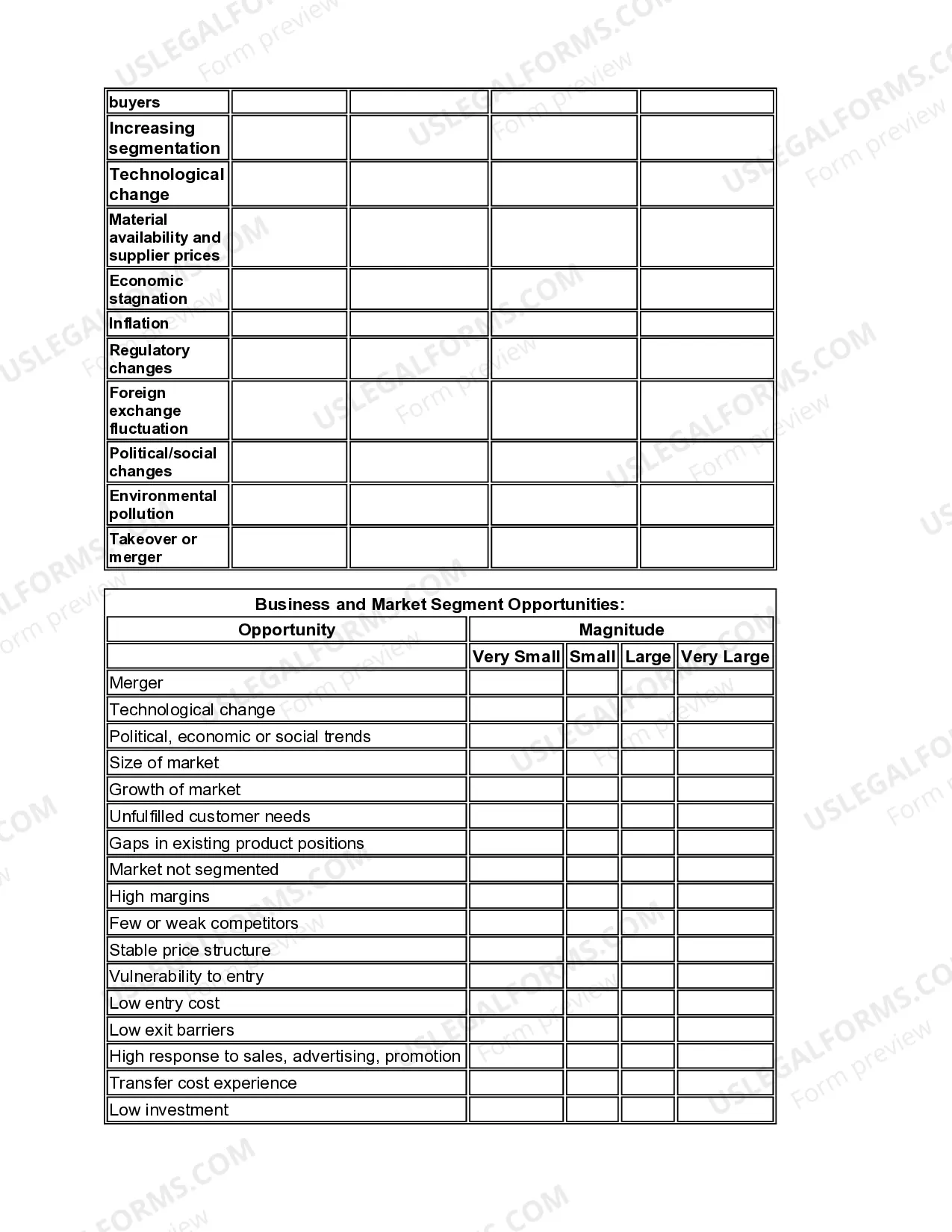
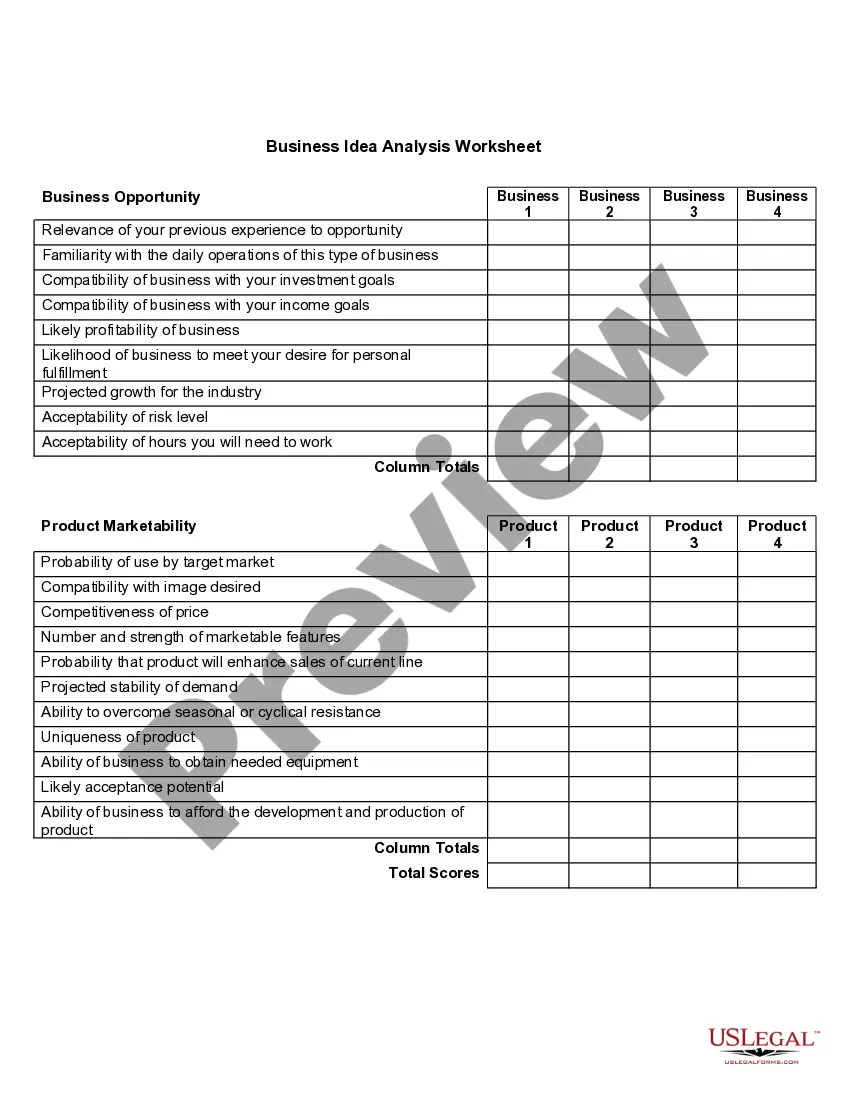
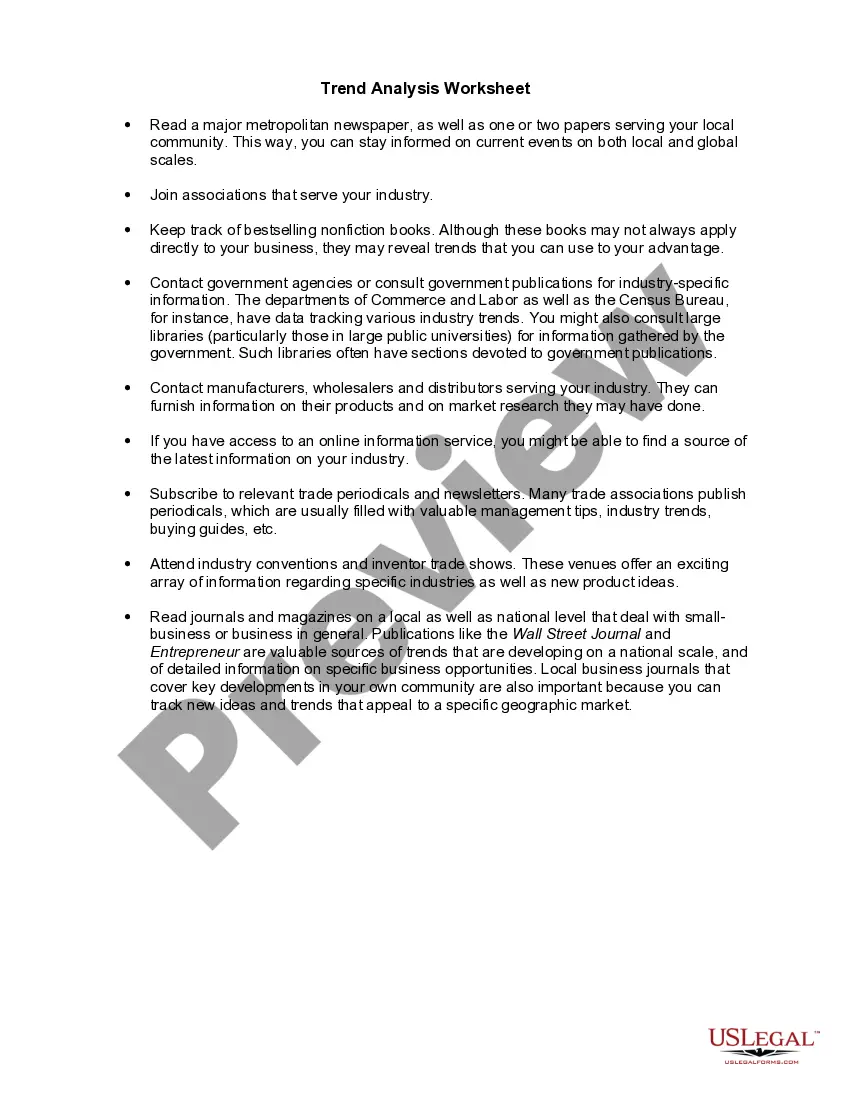
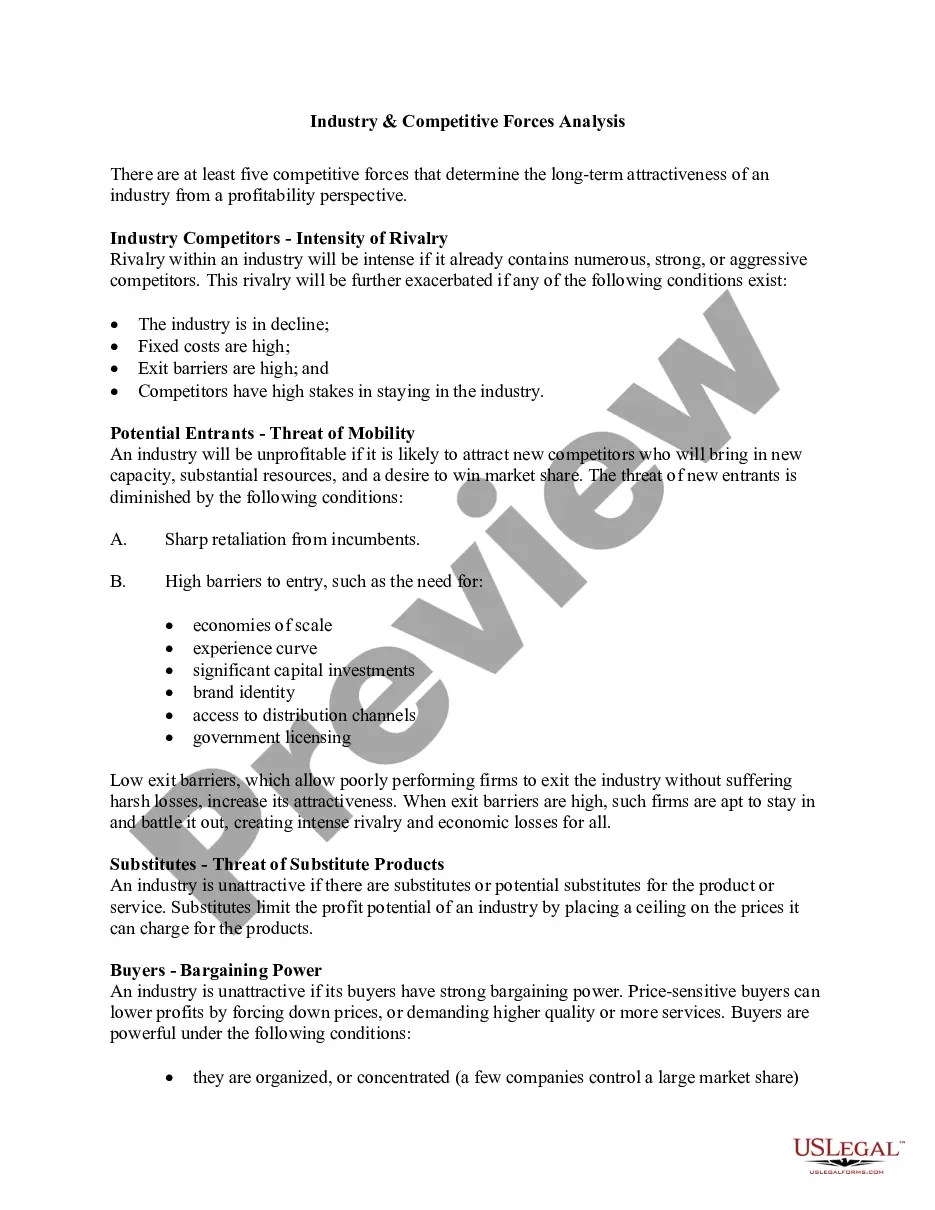
The Industry and Competitive Forces Analysis Worksheet is a strategic tool designed to help businesses assess the competitive landscape of their industry. This form allows users to identify key competitive forces affecting profitability, which aids in making informed marketing decisions. Unlike general business forms, this worksheet focuses specifically on industry dynamics and competitive analysis.
What’s included in this form
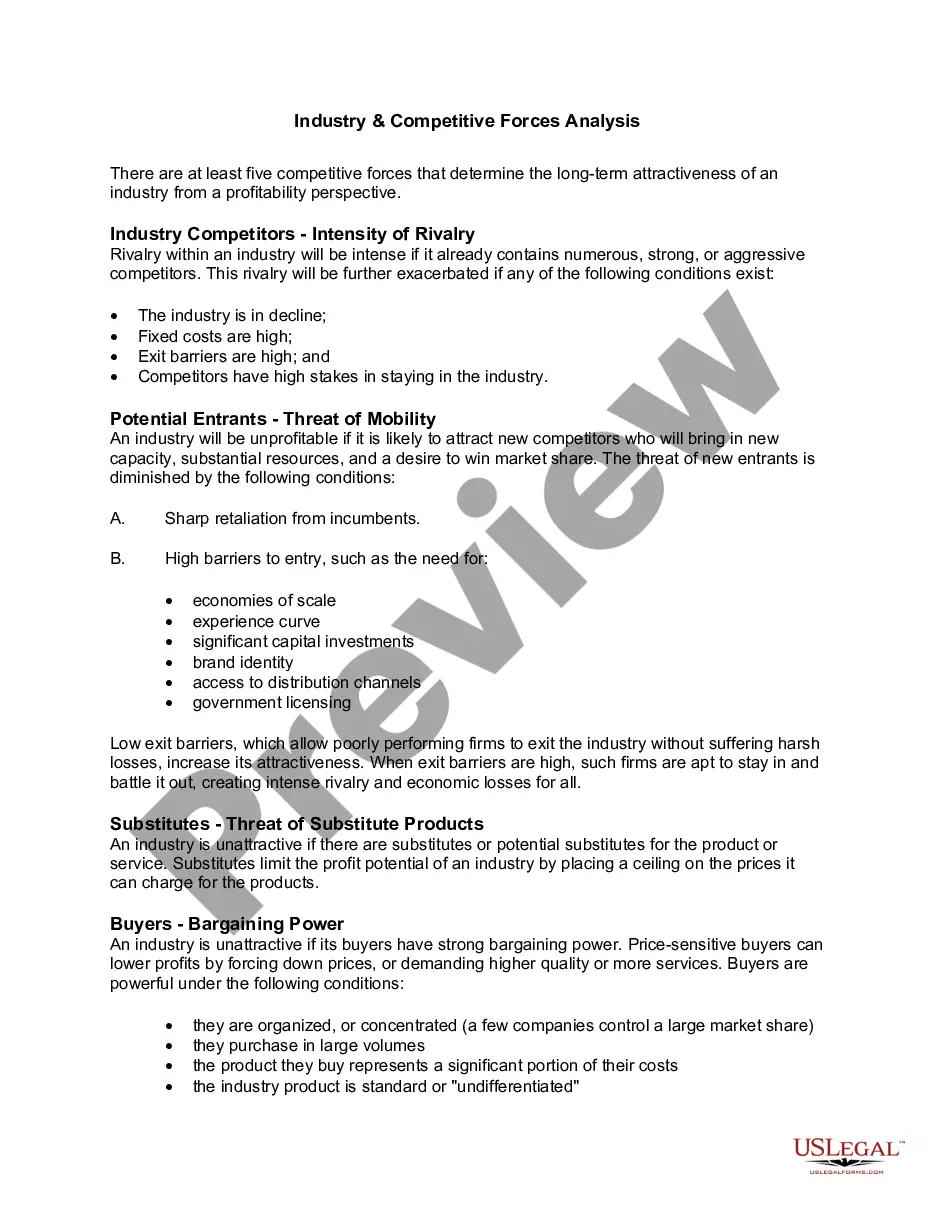
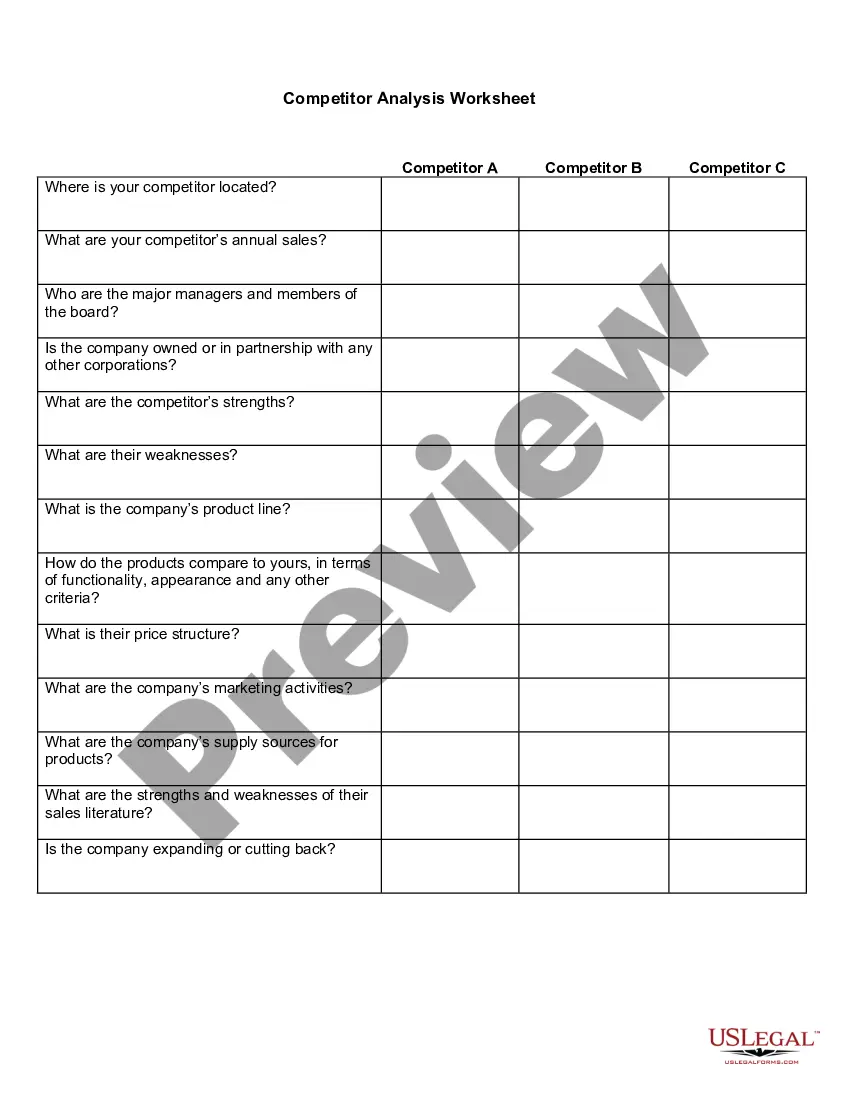
- Analysis of industry competitors and intensity of rivalry.
- Assessment of the threat posed by potential market entrants.
- Evaluation of substitutes and their impact on pricing and profitability.
- Examination of buyers' bargaining power and its effect on market dynamics.
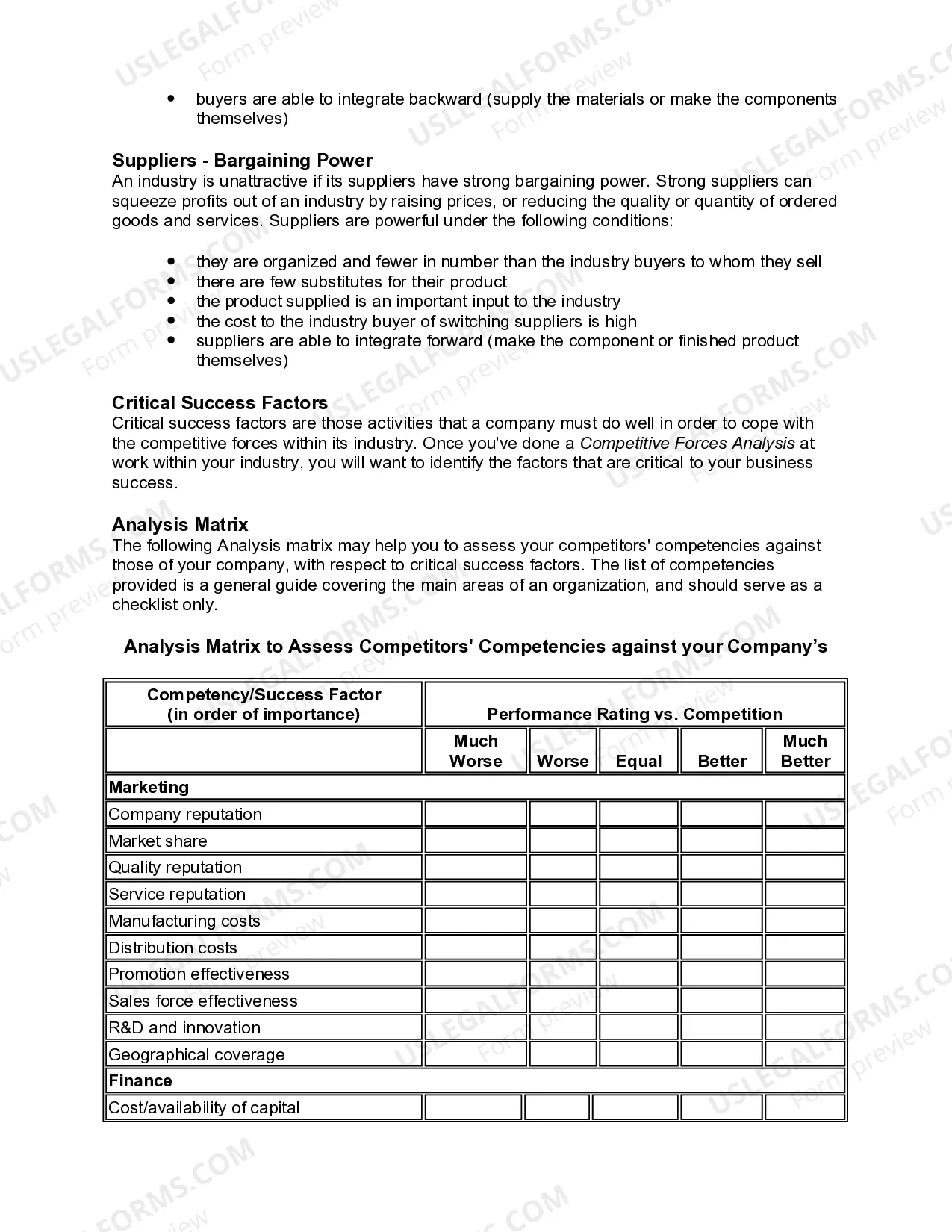
- Review of suppliers' bargaining power and the implications for costs.
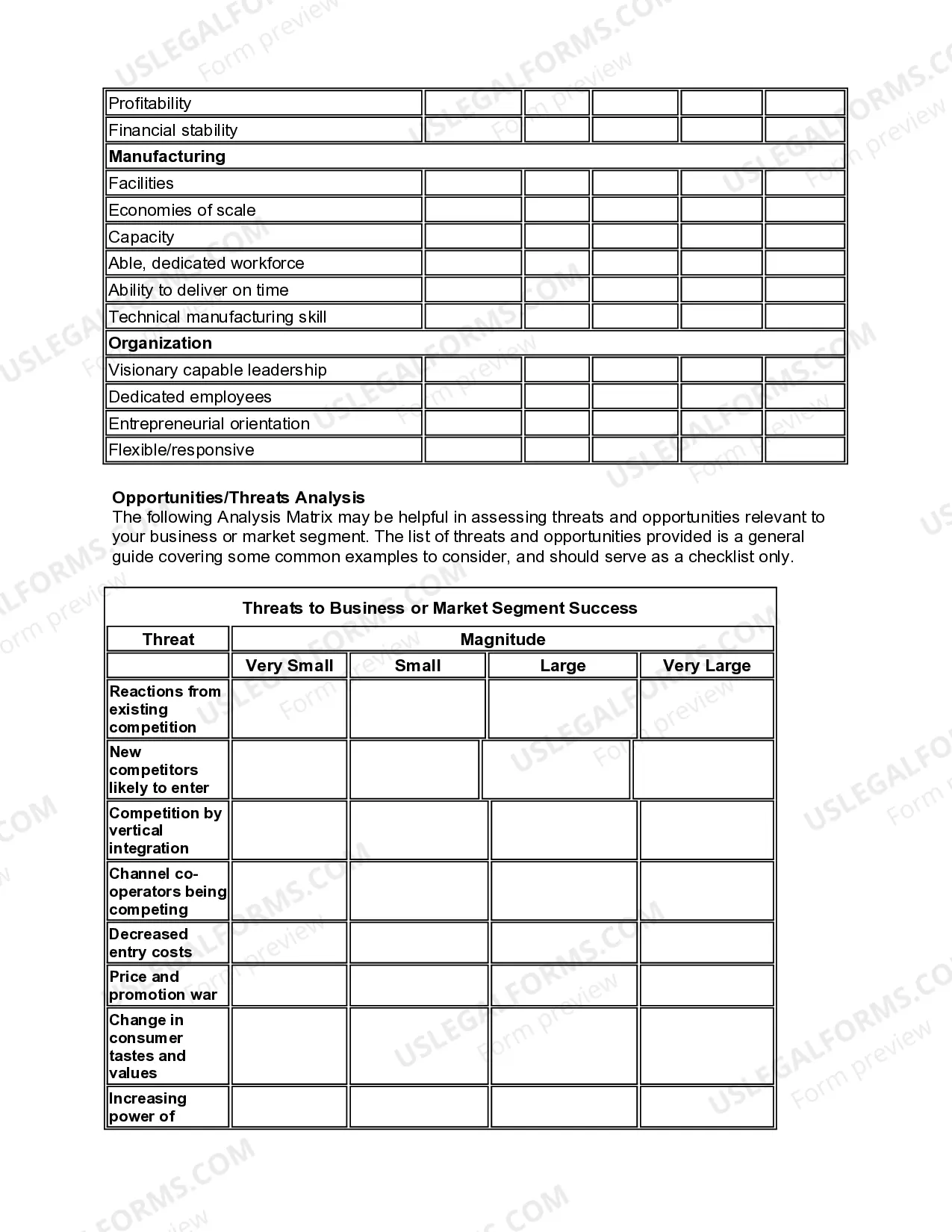
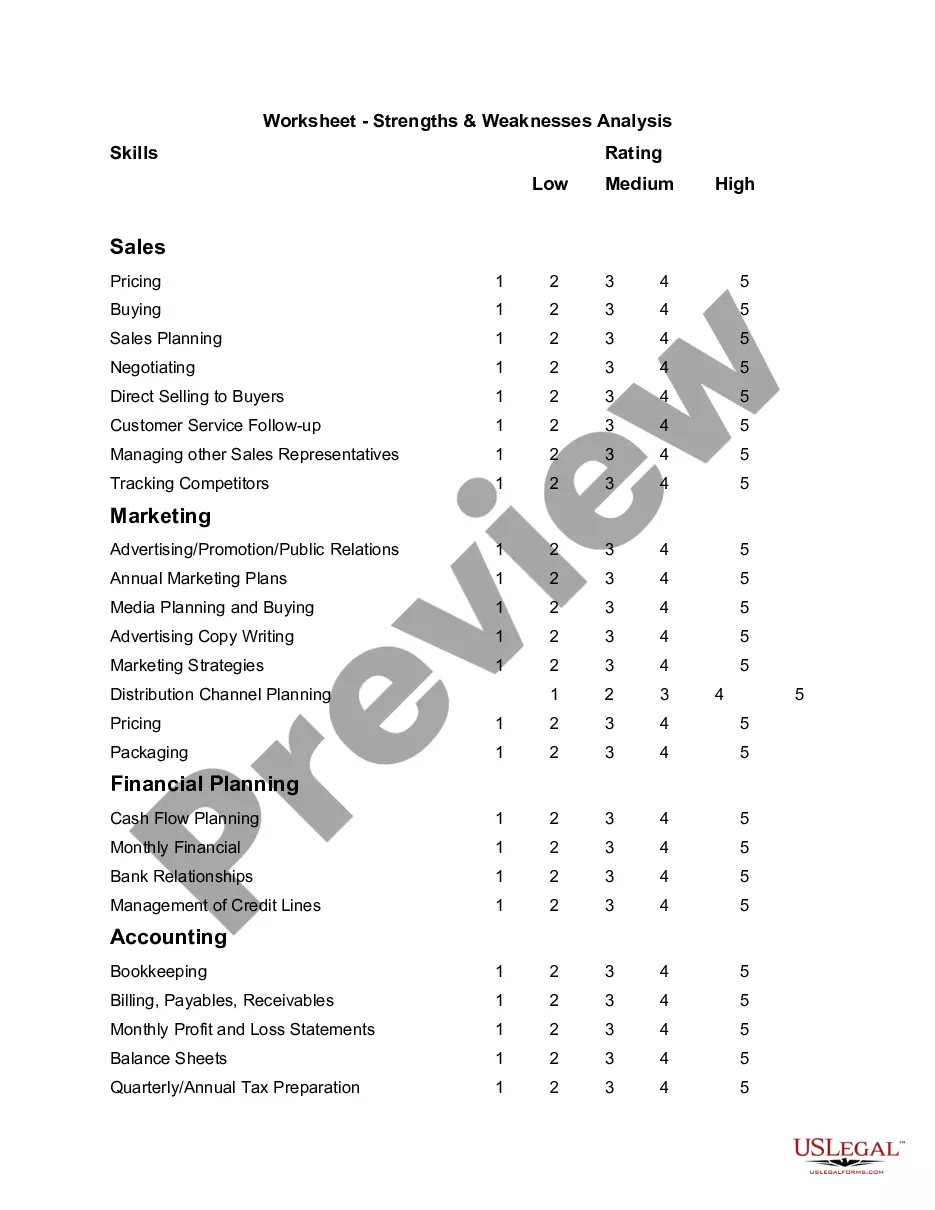
- Identification of critical success factors necessary for business survival.

When to use this form
This worksheet is useful when planning to enter a new industry, launching a new product, or reassessing your existing market strategy. It helps businesses recognize the competitive forces that can affect their profitability and market share, ensuring that marketing plans are well-informed and strategically sound.
Who this form is for
- Entrepreneurs seeking to enter a new market.
- Business owners aiming to enhance their understanding of competitive dynamics.
- Marketing professionals responsible for strategic planning.
- Consultants assisting businesses in analyzing their industry environment.
- Students studying business strategy and market analysis.
How to complete this form
- Identify the industry you are analyzing and clearly define its boundaries.
- List key competitors and assess the intensity of their rivalry.
- Evaluate the likelihood of new entrants to the market and the barriers they face.
- Identify potential substitutes for your product or service and assess their impact.
- Analyze the bargaining power of buyers and suppliers within your industry.
- Determine the critical success factors that your business must prioritize for success.
Does this document require notarization?
Notarization is generally not required for this form. However, certain states or situations might demand it. You can complete notarization online through US Legal Forms, powered by Notarize, using a verified video call available anytime.
Get your form ready online
Our built-in tools help you complete, sign, share, and store your documents in one place.
Make edits, fill in missing information, and update formatting in US Legal Forms—just like you would in MS Word.
Download a copy, print it, send it by email, or mail it via USPS—whatever works best for your next step.
Sign and collect signatures with our SignNow integration. Send to multiple recipients, set reminders, and more. Go Premium to unlock E-Sign.
If this form requires notarization, complete it online through a secure video call—no need to meet a notary in person or wait for an appointment.
We protect your documents and personal data by following strict security and privacy standards.

Make edits, fill in missing information, and update formatting in US Legal Forms—just like you would in MS Word.

Download a copy, print it, send it by email, or mail it via USPS—whatever works best for your next step.

Sign and collect signatures with our SignNow integration. Send to multiple recipients, set reminders, and more. Go Premium to unlock E-Sign.

If this form requires notarization, complete it online through a secure video call—no need to meet a notary in person or wait for an appointment.

We protect your documents and personal data by following strict security and privacy standards.
Common mistakes to avoid
- Failing to consider all competitive forces leading to an incomplete analysis.
- Overlooking the impact of substitutes on product pricing.
- Not updating the analysis regularly to reflect changes in the market.
- Misjudging buyer or supplier power, leading to poor strategic decisions.
Advantages of online completion
- Convenience of accessing the worksheet from anywhere at any time.
- Editability allows for easy updates as market conditions change.
- Reliability of using professionally drafted content by licensed attorneys.
Legal use & context
- This form serves as a practical guide for businesses to analyze competition.
- It provides a framework for understanding industry dynamics that can affect profitability.
- The worksheet can be used as part of a broader strategic planning process.
Main things to remember
Key takeaways regarding the Worksheet - Industry and Competitive Forces Analysis include:
- This worksheet helps understand competitive dynamics in a given industry.
- Identifying critical success factors is essential for strategic business success.
- Regularly revisiting the analysis can help adapt to market changes.
- Assessment of both buyers and suppliers is crucial for comprehensive insight.
- Aim to maintain flexibility in strategies based on competitive analyses.
Looking for another form?








Form popularity
FAQ
Step 1 Preparation is Key. Step 2 Threat of New Entry. Step 3 Threat of Substitution. Step 4 Supplier Power. Step 5 Buyer Power.
Get ready. Detailed research is the first step in an industry analysis. Examine your competitors. Analyzing competitive data. Evaluating your position. SWOT analysis. Competitive forces model.
The number and power of a company's competitive rivals, potential new market entrants, suppliers, customers, and substitute products influence a company's profitability. Five Forces analysis can be used to guide business strategy to increase competitive advantage.
Customers, suppliers, substitutes and potential entrantscollectively referred to as an extended rivalryare competitors to companies within an industry. The five competitive forces jointly determine the strength of industry competition and profitability.
Five forces analysis helps organisations to understand the factors affecting profitability in a specific industry, and can help to inform decisions relating to: whether to enter a specific industry; whether to increase capacity in a specific industry; and developing competitive strategies.
Five Forces Analysis Live Example The Five Forces are the Threat of new market players, the threat of substitute products, power of customers, power of suppliers, industry rivalry which determines the competitive intensity and attractiveness of a market.
Threats of new entry. Consider how easily others could enter your market and threaten your company's position. Threat of substitution. Bargaining power of suppliers. Bargaining power of buyers. Competitive rivalries.
Rather, the state of competition in an industry depends on five basic forces: threat of new entrants, bargaining power of suppliers, bargaining power of buyers, threat of substitute products or services, and existing industry rivalry.