Sample Letter for Complaint for Claim and Delivery Hearing
Understanding this form
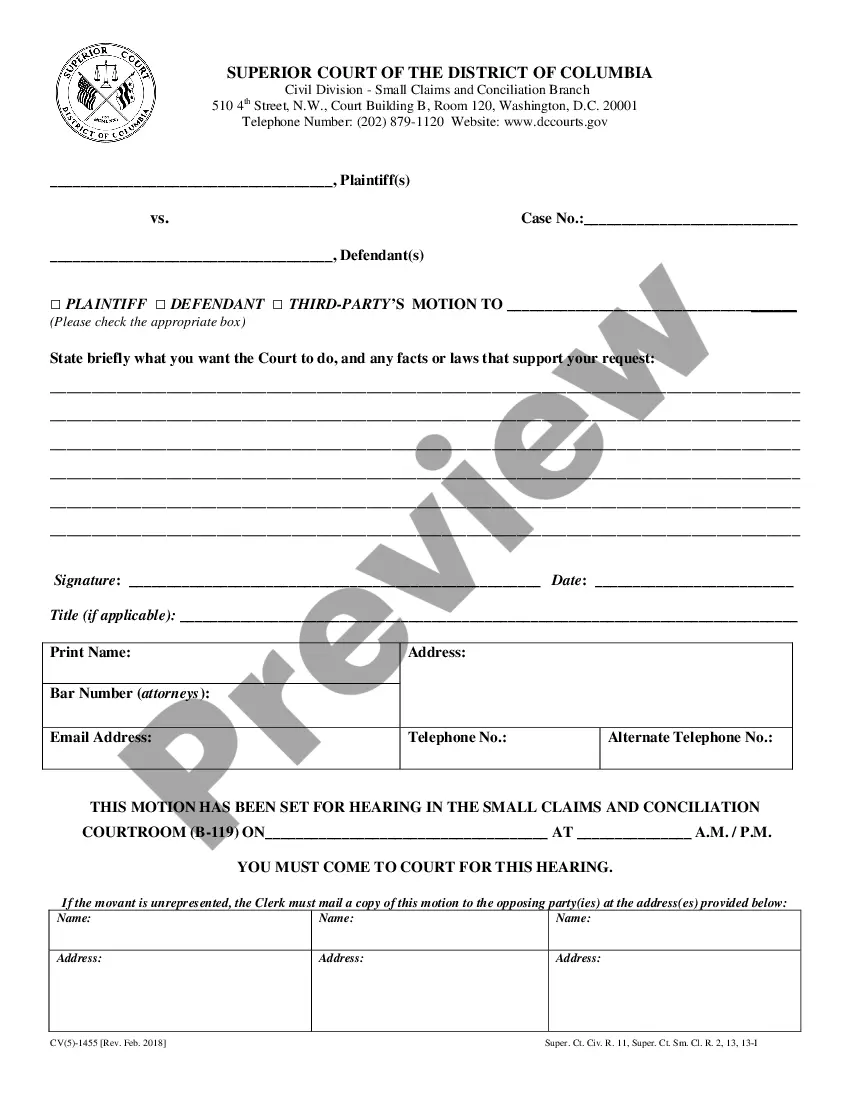
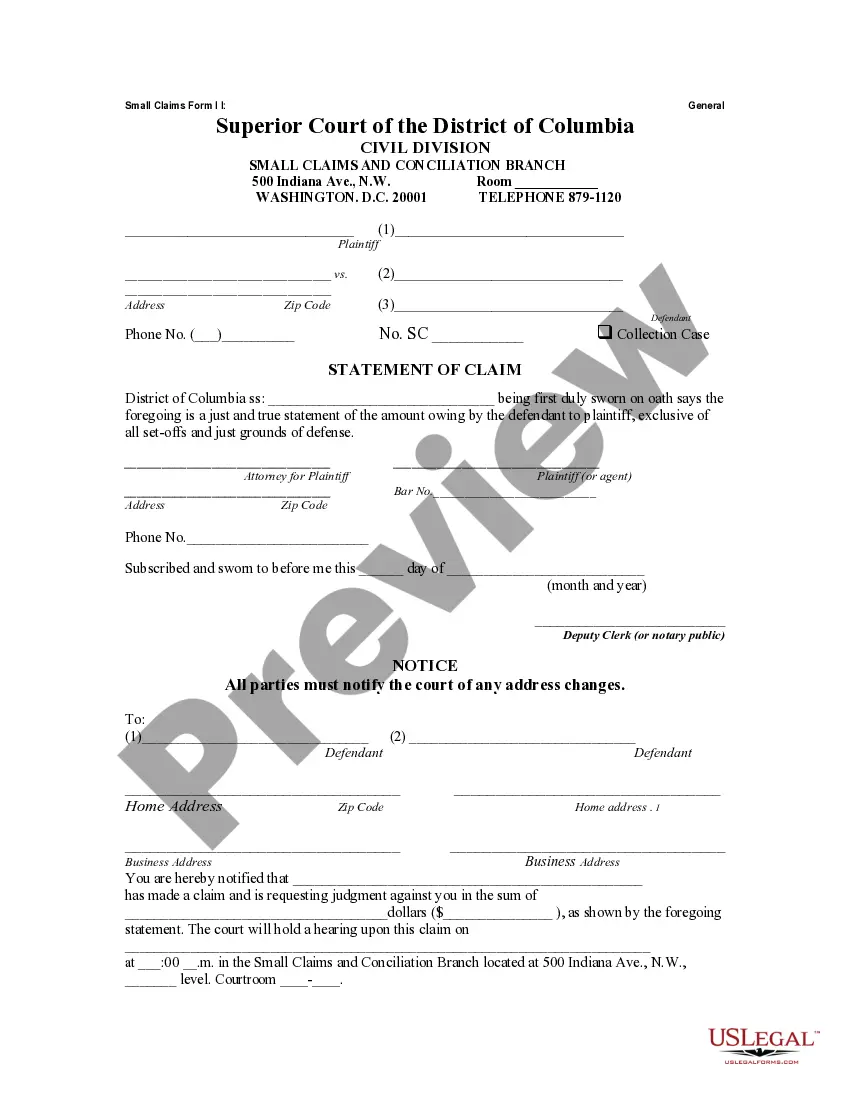
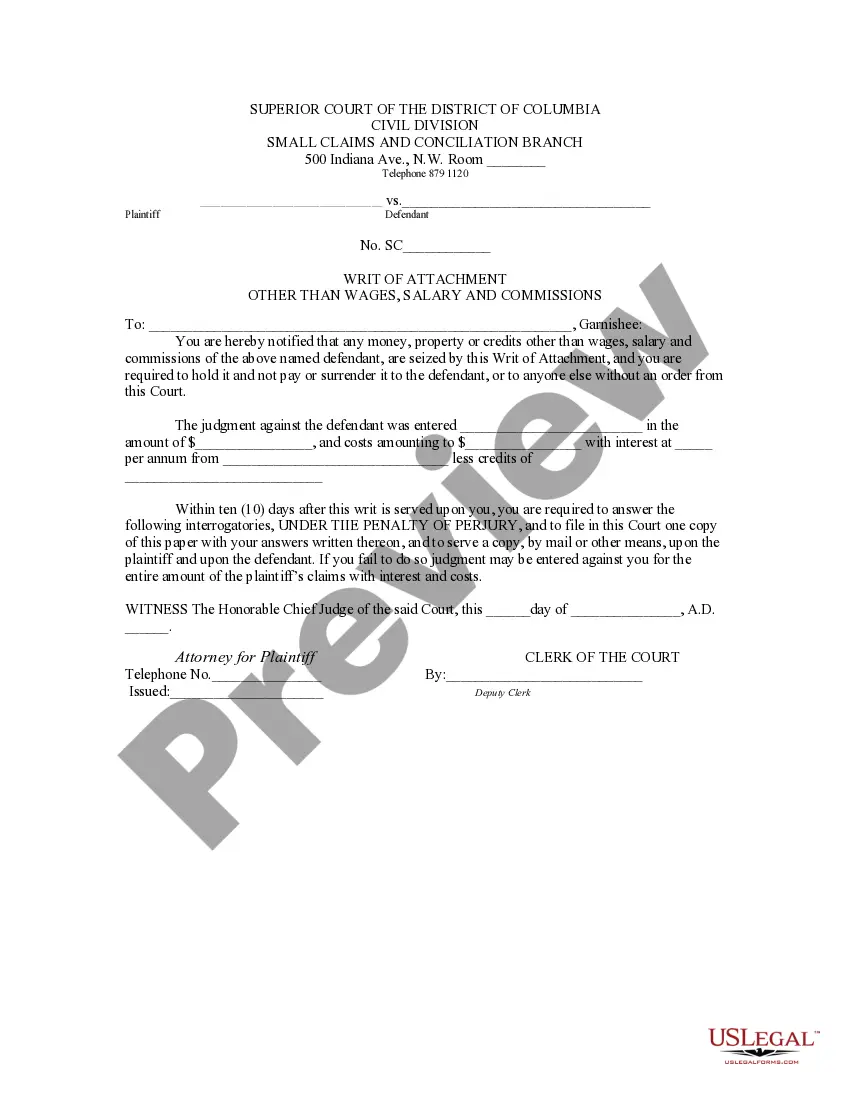
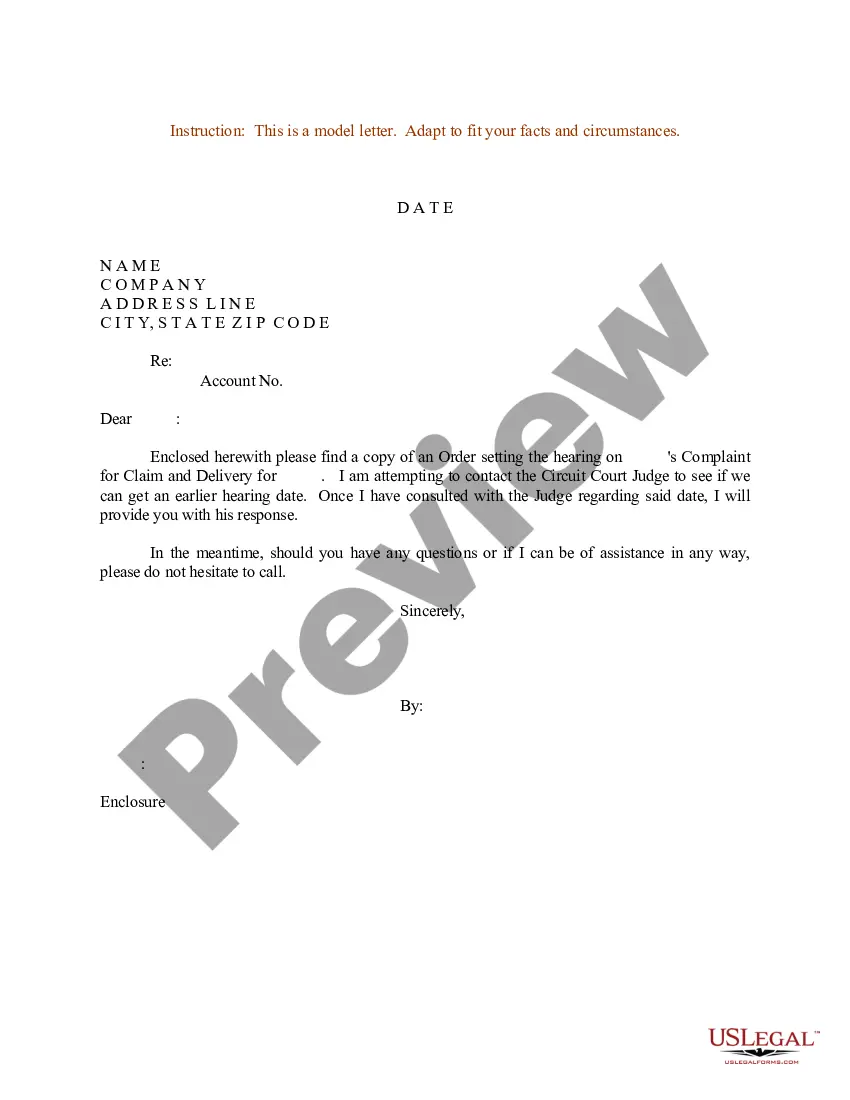
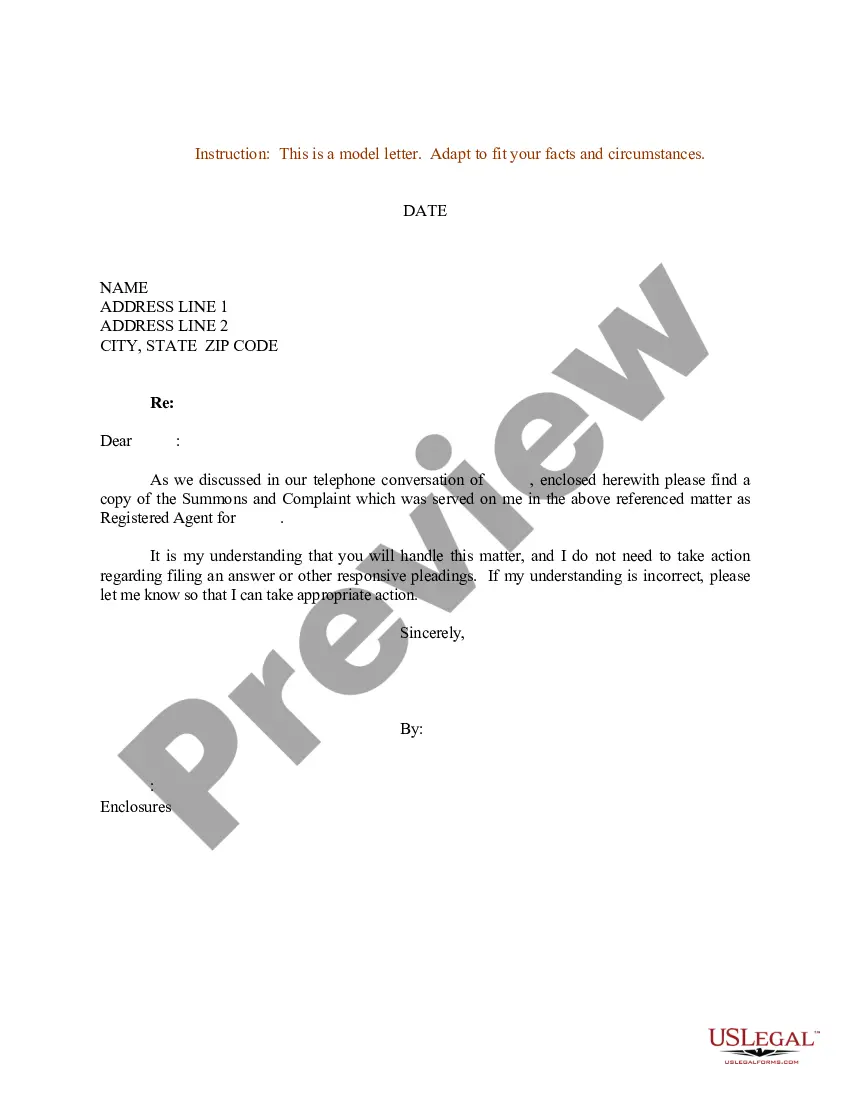
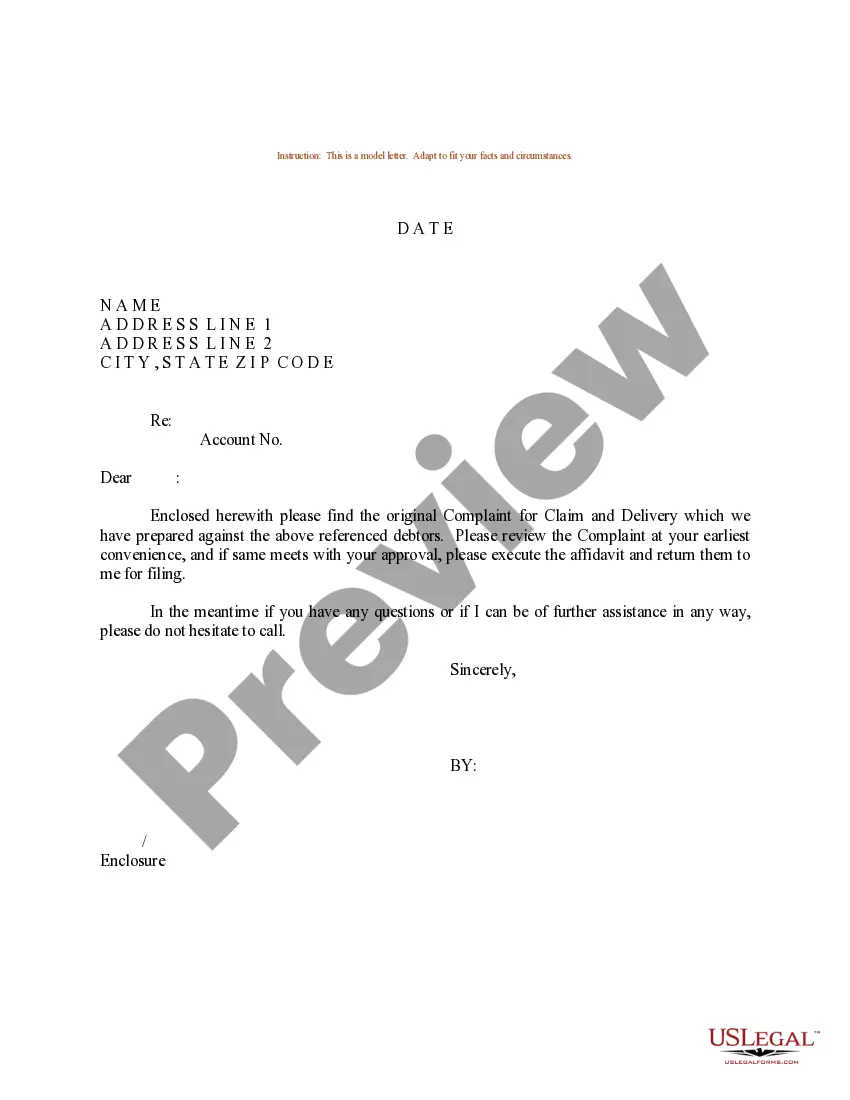
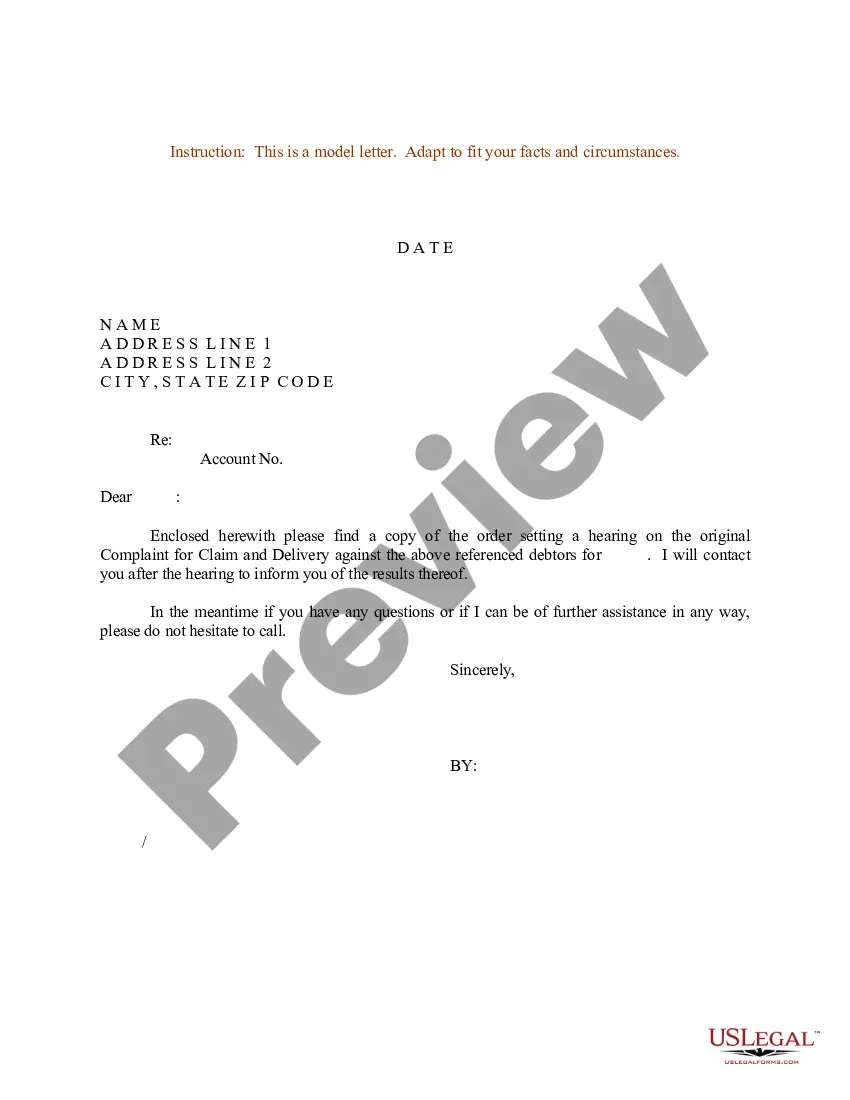
The Sample Letter for Complaint for Claim and Delivery Hearing is a template that outlines a formal request for a court hearing regarding the delivery of specific property. This letter serves as a model to communicate the need for legal intervention in retrieving property, differentiating it from various general complaint forms by focusing specifically on possession issues. It is designed to streamline the complaint process for users by providing a structured format that can be tailored to individual circumstances.
What’s included in this form
- Date of the letter
- Name and address of the recipient
- Introduction stating the purpose of the letter
- Details of the claimed property
- Request for a hearing date
- Signature line for the sender
When to use this form
This form should be used when an individual or entity seeks the return of specific property that may be unlawfully held by another party. Typical situations that may lead to the need for this letter include disputes over rental items, repossession of goods, or any context where personal property is in the possession of someone not entitled to it. It formally initiates legal proceedings to reclaim the property and requests a court issuance of a hearing on the matter.
Who needs this form
This form is intended for:
- Individuals or businesses pursuing claims for the return of personal property
- Attorneys drafting complaint letters for clients
- Anyone needing a structured format for communication with the court
- Parties involved in property disputes where legal action is necessary
Steps to complete this form
- Identify the date the letter is being written.
- Fill in the private individual or company's name and address at the top of the letter.
- Clearly state the purpose of the letter and the property in question.
- Request a specific date for a hearing to be scheduled.
- Sign the letter at the bottom to validate it.
Is notarization required?
In most cases, this form does not require notarization. However, some jurisdictions or signing circumstances might. US Legal Forms offers online notarization powered by Notarize, accessible 24/7 for a quick, remote process.
Get your form ready online
Our built-in tools help you complete, sign, share, and store your documents in one place.
Make edits, fill in missing information, and update formatting in US Legal Forms—just like you would in MS Word.
Download a copy, print it, send it by email, or mail it via USPS—whatever works best for your next step.
Sign and collect signatures with our SignNow integration. Send to multiple recipients, set reminders, and more. Go Premium to unlock E-Sign.
If this form requires notarization, complete it online through a secure video call—no need to meet a notary in person or wait for an appointment.
We protect your documents and personal data by following strict security and privacy standards.

Make edits, fill in missing information, and update formatting in US Legal Forms—just like you would in MS Word.

Download a copy, print it, send it by email, or mail it via USPS—whatever works best for your next step.

Sign and collect signatures with our SignNow integration. Send to multiple recipients, set reminders, and more. Go Premium to unlock E-Sign.

If this form requires notarization, complete it online through a secure video call—no need to meet a notary in person or wait for an appointment.

We protect your documents and personal data by following strict security and privacy standards.
Common mistakes to avoid
- Not including complete and accurate contact information for both parties.
- Failing to specify the exact property being claimed.
- Omitting the date of the hearing request.
- Using overly complex legal language rather than clear, direct communication.
Benefits of using this form online
- Convenience of downloading and modifying the template as needed.
- Access to a standardized format, reducing the risk of missing critical information.
- Time-saving compared to drafting a letter from scratch.
Main things to remember
- The Sample Letter for Complaint for Claim and Delivery Hearing is a formal document used to reclaim personal property.
- Ensure all parties are accurately identified and the letter is specific to your claim.
- Review local requirements for potential notarization or additional documentation needed.
Looking for another form?
Form popularity
FAQ
Limited Jurisdiction Civil cases in the Circuit Court are tried by a judge sitting without a jury. The Circuit Court is restricted to hearing cases where the damages or compensation sought do not exceed a certain amount.
Type your letter. Concisely review the main facts. Be polite. Write with your goal in mind. Ask for exactly what you want. Set a deadline. End the letter by stating you will promptly pursue legal remedies if the other party does not meet your demand. Make and keep copies.
When drafting an answer, one must: (1) follow the local, state, and federal court rules; (2) research the legal claims in the adversary's complaint; (3) respond to the adversary's factual allegations; and (4) assert affirmative defenses, counterclaims, cross-claims, or third-party claims, if applicable.
Read the summons and make sure you know the date you must answer by. Read the complaint carefully. Write your answer. Sign and date the answer. Make copies for the plaintiff and yourself. Mail a copy to the plaintiff. File your answer with the court by the date on the summons.
Complete the summons form for the court in which you are filing your case (district court or justice court). Submit it to the court clerk at the same time you submit your complaint. The summons is not valid unless it has been signed by the court clerk.
Contact the clerk's office of the court where the lawsuit was filed. You'll find a phone number and address for the clerk's office on your summons. The clerk will be able to tell you exactly what documents you should file with your answer and whether any filing fee is required.
Cases involving felony criminal offenses (which are punishable by fines and/or prison of at least 1 year and 1 day), matters involving the property of a person who has died (probate), guardianships, juvenile matters for those under age 18, civil cases where the amount claimed is more than $30,000, divorces, and most
Comply With the Relevant Federal, State, and Local Rules. Research Before Writing. Allege Subject Matter Jurisdiction, Personal Jurisdiction, and Venue. Draft Concise and Plain Statement of the Facts. Draft Separate Counts for Each Legal Claim. Plead Facts With Particularity Where Necessary.
Provide the name of the court at the top of the Answer. You can find the information on the summons. List the name of the plaintiff on the left side. Write the case number on the right side of the Answer. Address the Judge and discuss your side of the case. Ask the judge to dismiss the case.