Seller's Disclosure Statement for Vacant Land
What is this form?
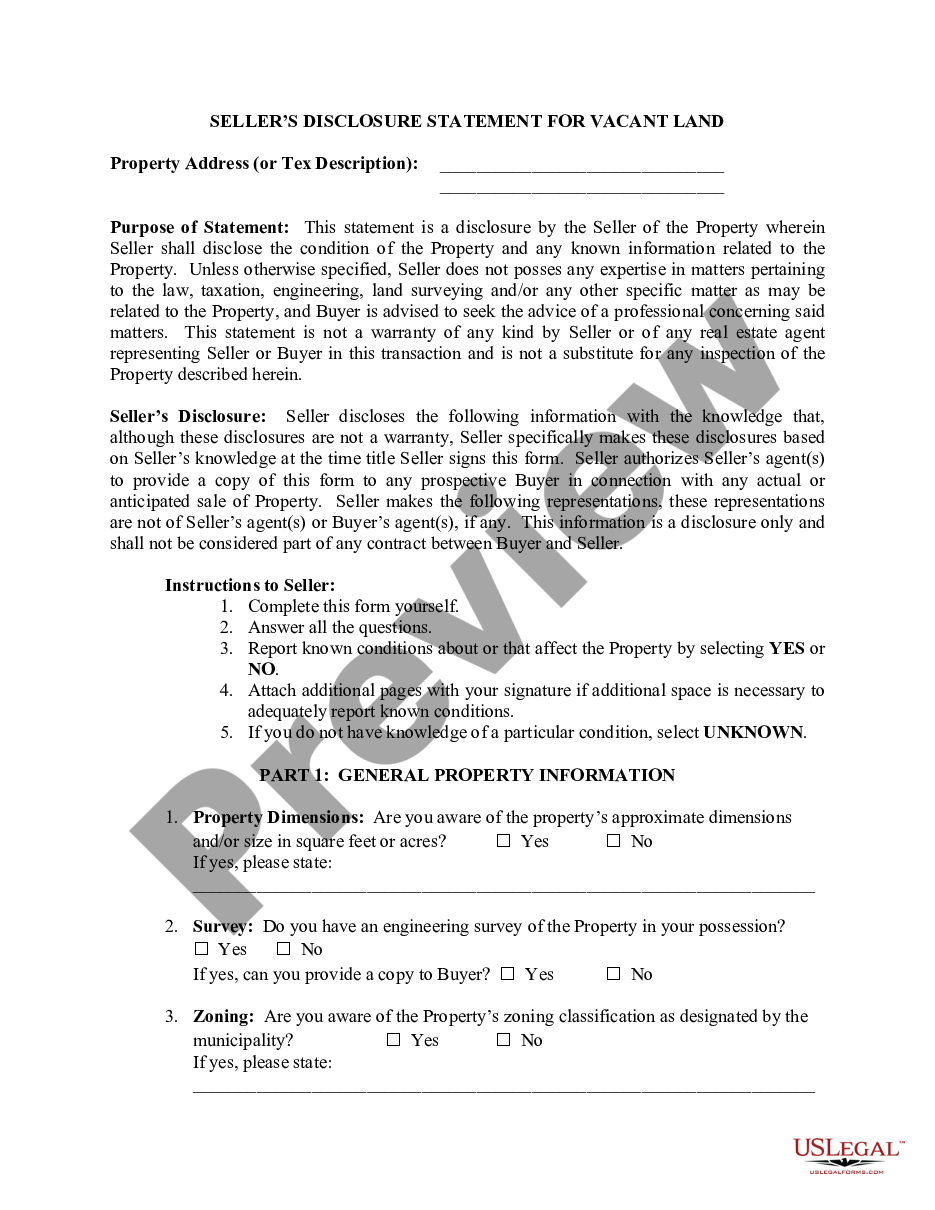
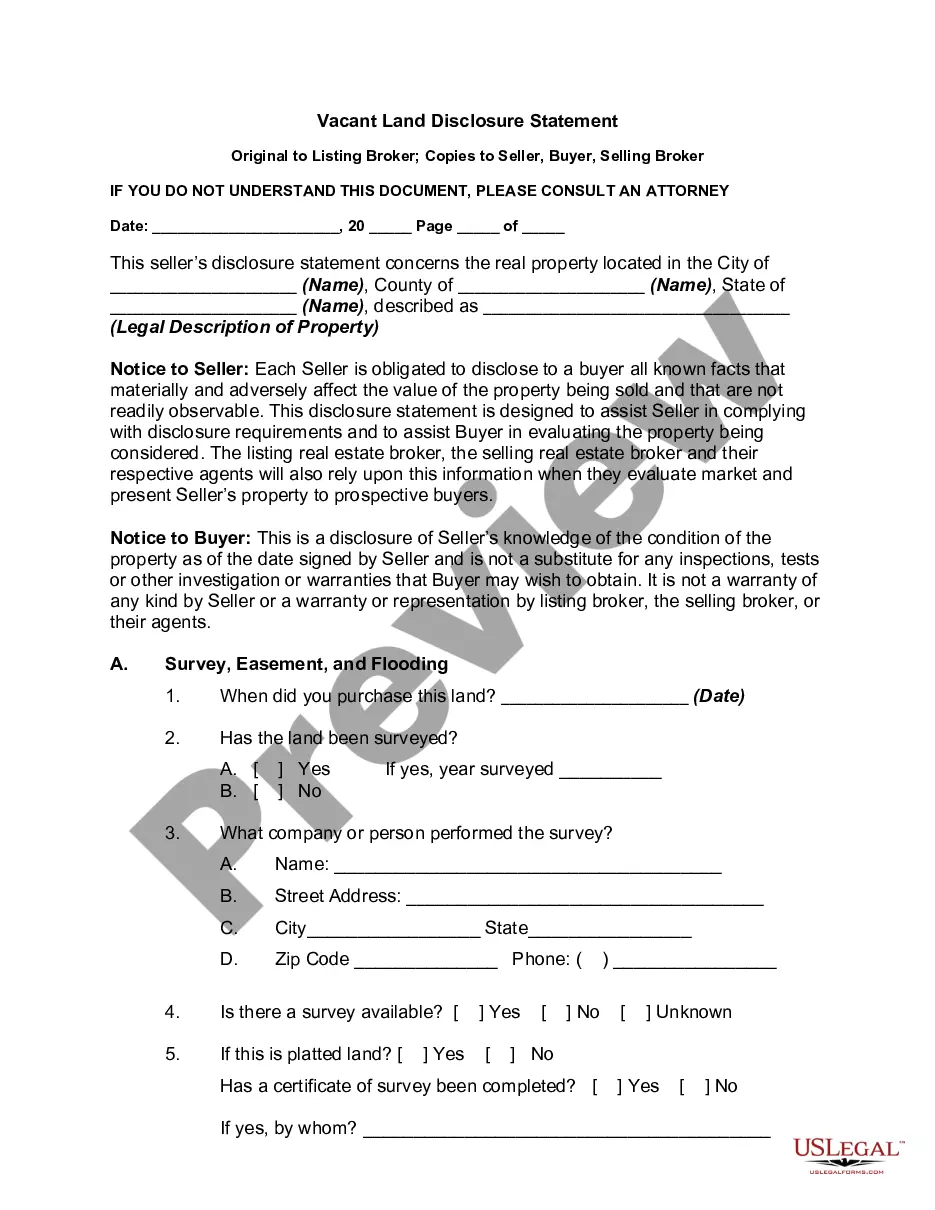
The Seller's Disclosure Statement for Vacant Land is a legal document that requires sellers to disclose known facts affecting the property's value that are not immediately observable. This form specifically pertains to transactions involving vacant land and is designed to protect buyers by ensuring they are informed of potential issues before purchase.
Key components of this form
- Properly address or tax description of the vacant land.
- Disclosure statements regarding known property conditions.
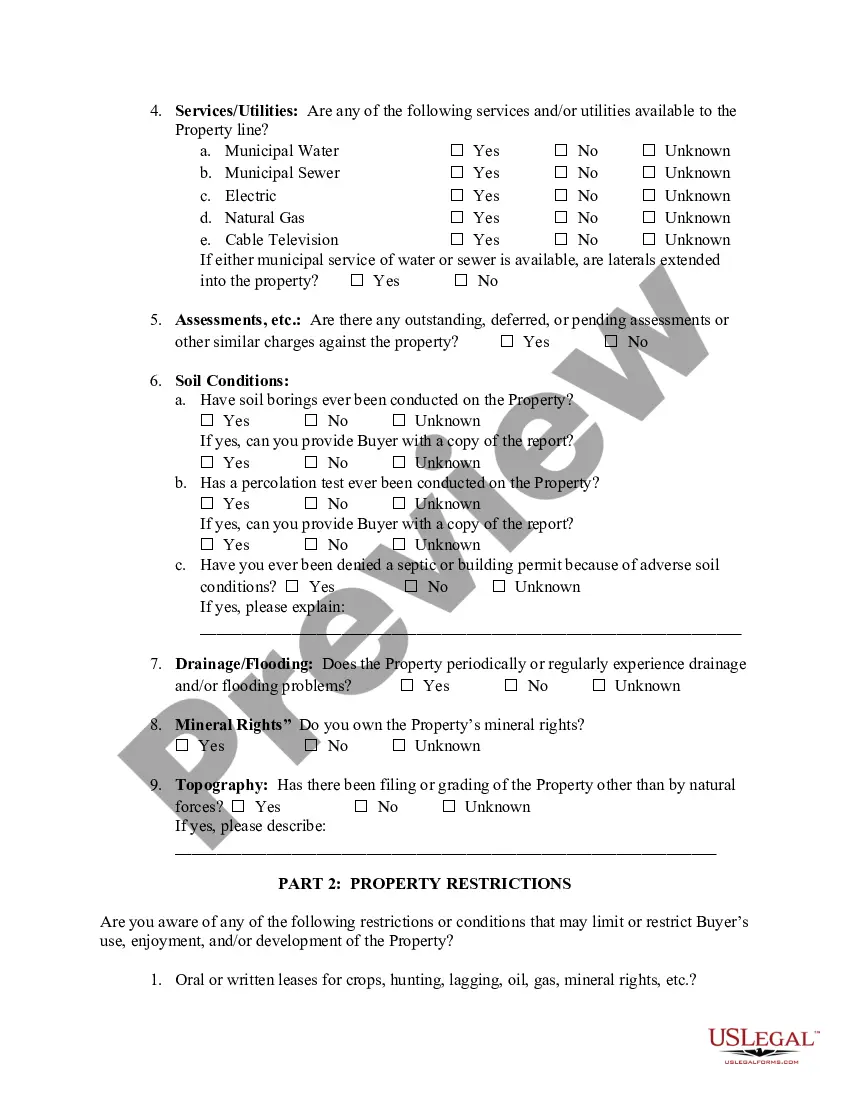
- Sections for general property information, environmental conditions, and property restrictions.
- Notices to the buyer about existing conditions and recommendations for inspections.
- Signatures of both the seller and buyer to acknowledge receipt and agreement.


When this form is needed
This form should be used when selling vacant land in jurisdictions that require sellers to disclose specific known facts that may affect the property's value. It is particularly relevant when there may be issues such as zoning restrictions, environmental conditions, or utilities availability that the buyer needs to be made aware of prior to finalizing the purchase.
Intended users of this form
- Sellers of vacant land who are required by law to disclose specific information to potential buyers.
- Real estate agents involved in the sale of vacant land to ensure compliance with state requirements.
- Buyers seeking to understand any potential issues related to vacant land they are considering for purchase.
How to complete this form
- Identify and enter the property's address or tax description at the top of the form.
- Answer all questions regarding the property's condition, marking "Yes," "No," or "Unknown" as applicable.
- Provide additional descriptions or explanations where required, especially for any disclosures marked "Yes."
- Complete the seller and buyer signature sections to acknowledge receipt of the disclosure statement.
- Ensure to date the form appropriately and attach any additional pages necessary.
Does this document require notarization?
Notarization is not commonly needed for this form. However, certain documents or local rules may make it necessary. Our notarization service, powered by Notarize, allows you to finalize it securely online anytime, day or night.
Get your form ready online
Our built-in tools help you complete, sign, share, and store your documents in one place.
Make edits, fill in missing information, and update formatting in US Legal Forms—just like you would in MS Word.
Download a copy, print it, send it by email, or mail it via USPS—whatever works best for your next step.
Sign and collect signatures with our SignNow integration. Send to multiple recipients, set reminders, and more. Go Premium to unlock E-Sign.
If this form requires notarization, complete it online through a secure video call—no need to meet a notary in person or wait for an appointment.
We protect your documents and personal data by following strict security and privacy standards.

Make edits, fill in missing information, and update formatting in US Legal Forms—just like you would in MS Word.

Download a copy, print it, send it by email, or mail it via USPS—whatever works best for your next step.

Sign and collect signatures with our SignNow integration. Send to multiple recipients, set reminders, and more. Go Premium to unlock E-Sign.

If this form requires notarization, complete it online through a secure video call—no need to meet a notary in person or wait for an appointment.

We protect your documents and personal data by following strict security and privacy standards.
Mistakes to watch out for
- Failing to disclose known issues, which can lead to legal repercussions later.
- Not completing the form thoroughly or leaving sections blank without indicating "Unknown."
- Assuming the buyer will conduct their own inspections without advising them of potential issues upfront.
Advantages of online completion
- Convenient access to downloadable templates that can be completed at your own pace.
- Editability allows sellers to easily update information based on the property's condition.
- Reliability of legally reviewed forms, ensuring compliance with necessary regulations.
Looking for another form?








Form popularity
FAQ
The typical seller disclosure form is several pages long, and it asks the seller to report known defects in the home. This will include the appliances, as well as information about electrical, heating, sewer, water or other mechanical systems.
(2) The disclosure or disclaimer statement shall be delivered to each purchaser before the execution of the contract of sale by the purchaser in the case of a land installment contract, as defined in § 10-101 of this title.
If a seller fails to disclose, or actively conceals, problems that affect the value of the property; they are violating the law, and may be subject to a lawsuit for recovery of damages based on claims of fraud and deceit, misrepresentation and/or breach of contract.
Should delivery of any of these disclosures or an amended disclosure occur after execution of an offer or of a purchase agreement, the buyer has three days after delivery of the disclosure in person or five days after delivery by deposit in the United States mail to terminate the offer or the agreement by delivering a
Buyers must sign off on all disclosures and reports. So it's important to review them carefully and ask questions if you need to. Full disclosure upfront is the way to go. Providing full disclosure can help a seller.
Generally, sellers complete real estate disclosure paperwork after the buyers sign the purchase offer agreement or may even have it filled out prior to listing their home. There's no official deadline for delivering the form but it's expected to be provided to the buyers in a timely fashion.
Once you and the buyer have signed a written agreement for the sale of your property, you must deliver a copy of your completed disclosures to the buyer within five business days.
If a seller fails to disclose, or actively conceals, problems that affect the value of the property; they are violating the law, and may be subject to a lawsuit for recovery of damages based on claims of fraud and deceit, misrepresentation and/or breach of contract.
In general, if the defect existed before you bought the home and the seller failed to disclose the defect, and you incurred monetary damages as a result, you can sue the seller or another party for breach of contract. A successful lawsuit could result in payment for the cost of repairs.