Motion to Dismiss Appeal - Not Within Jurisdiction of Court
What is this form?
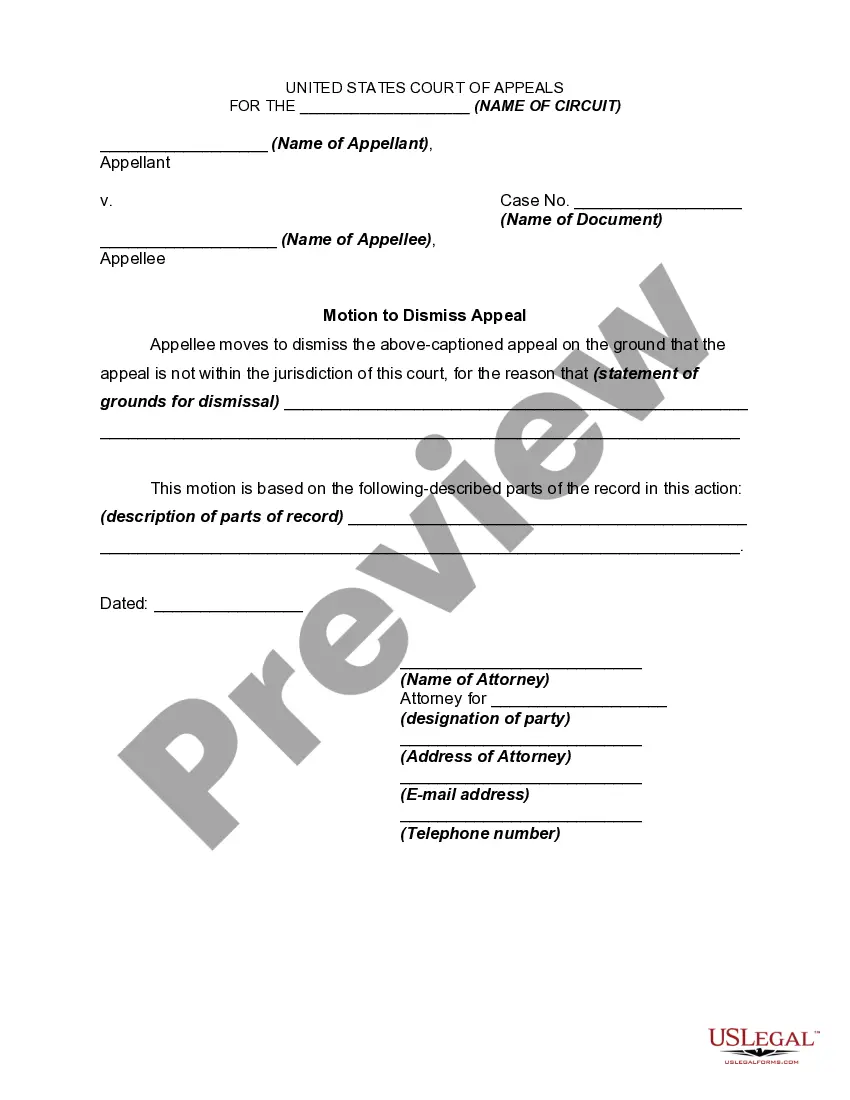
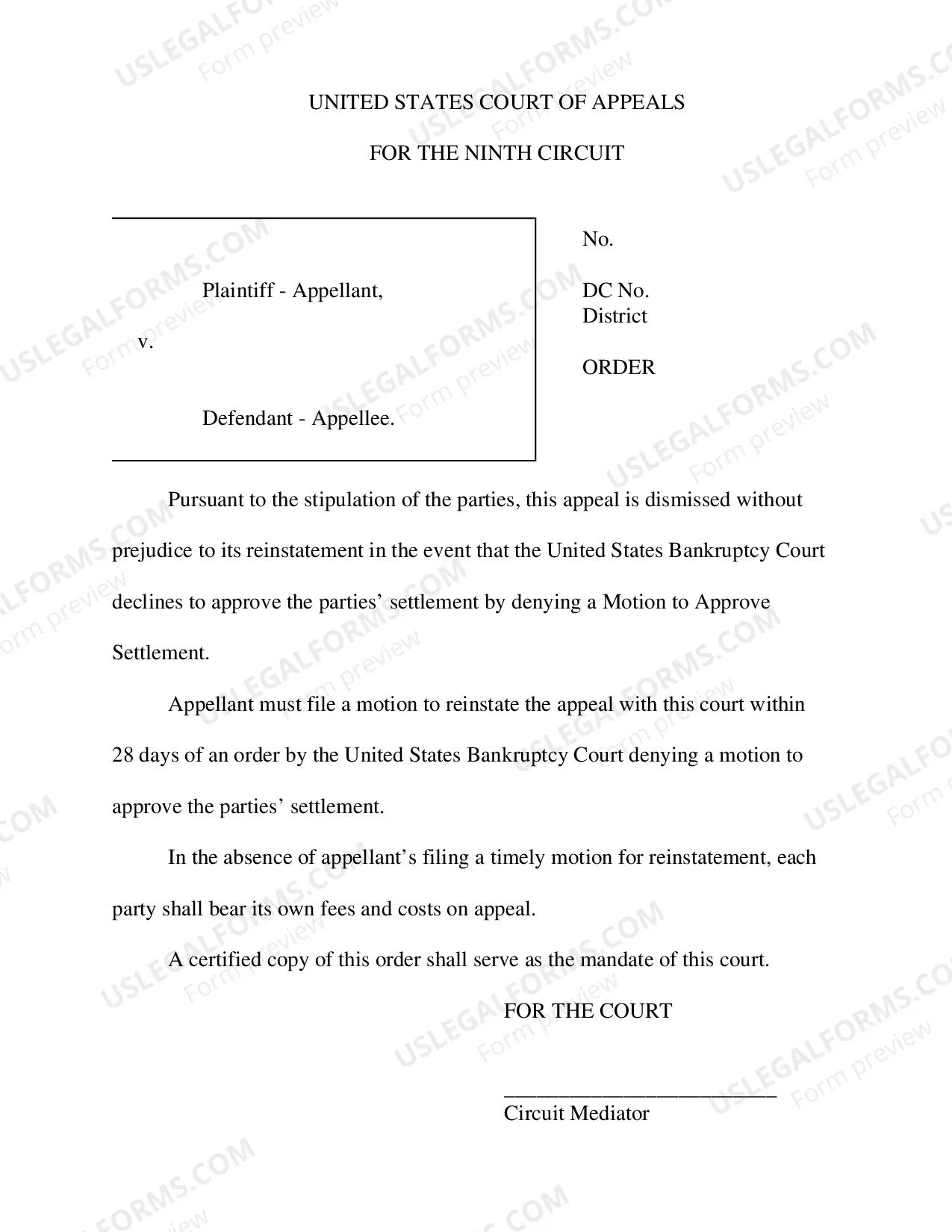
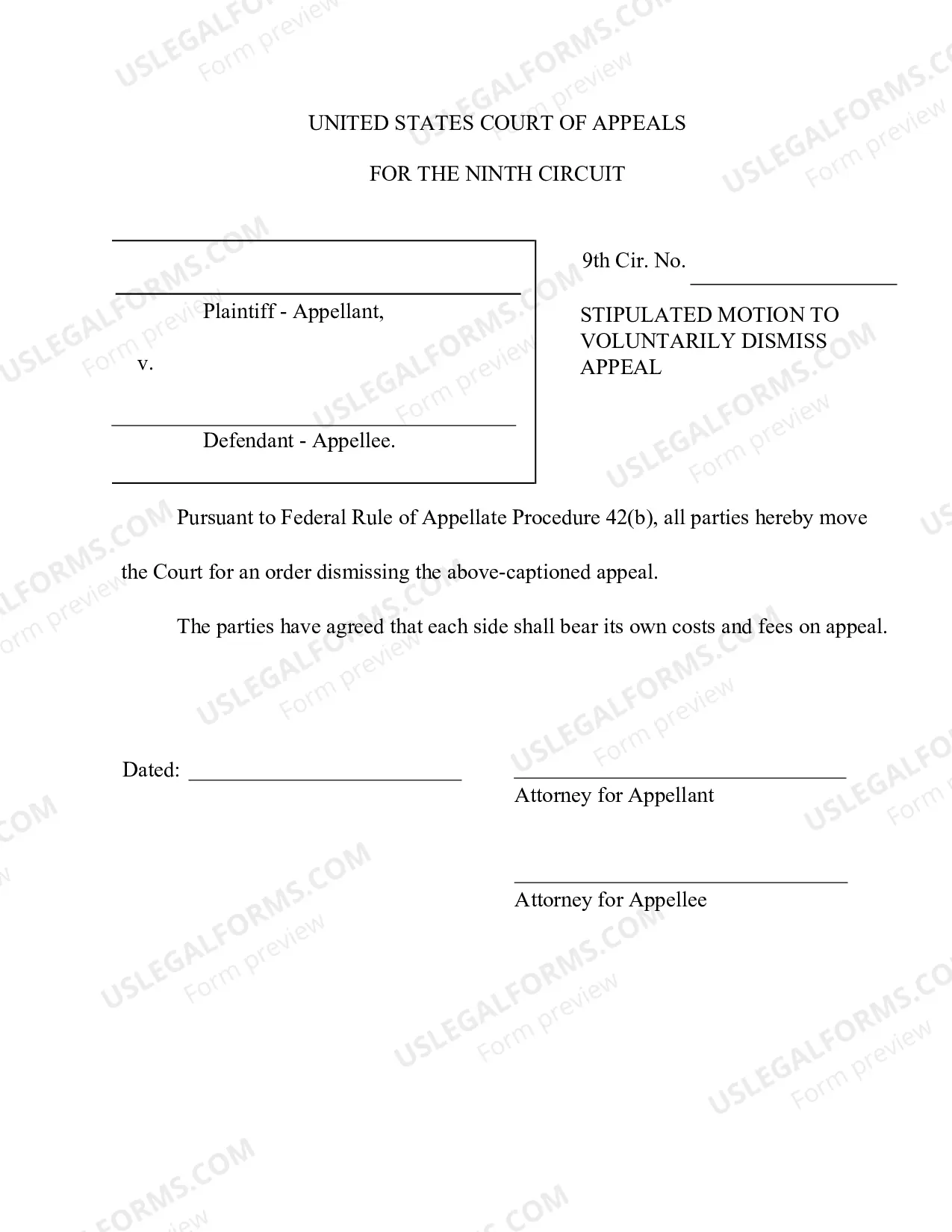
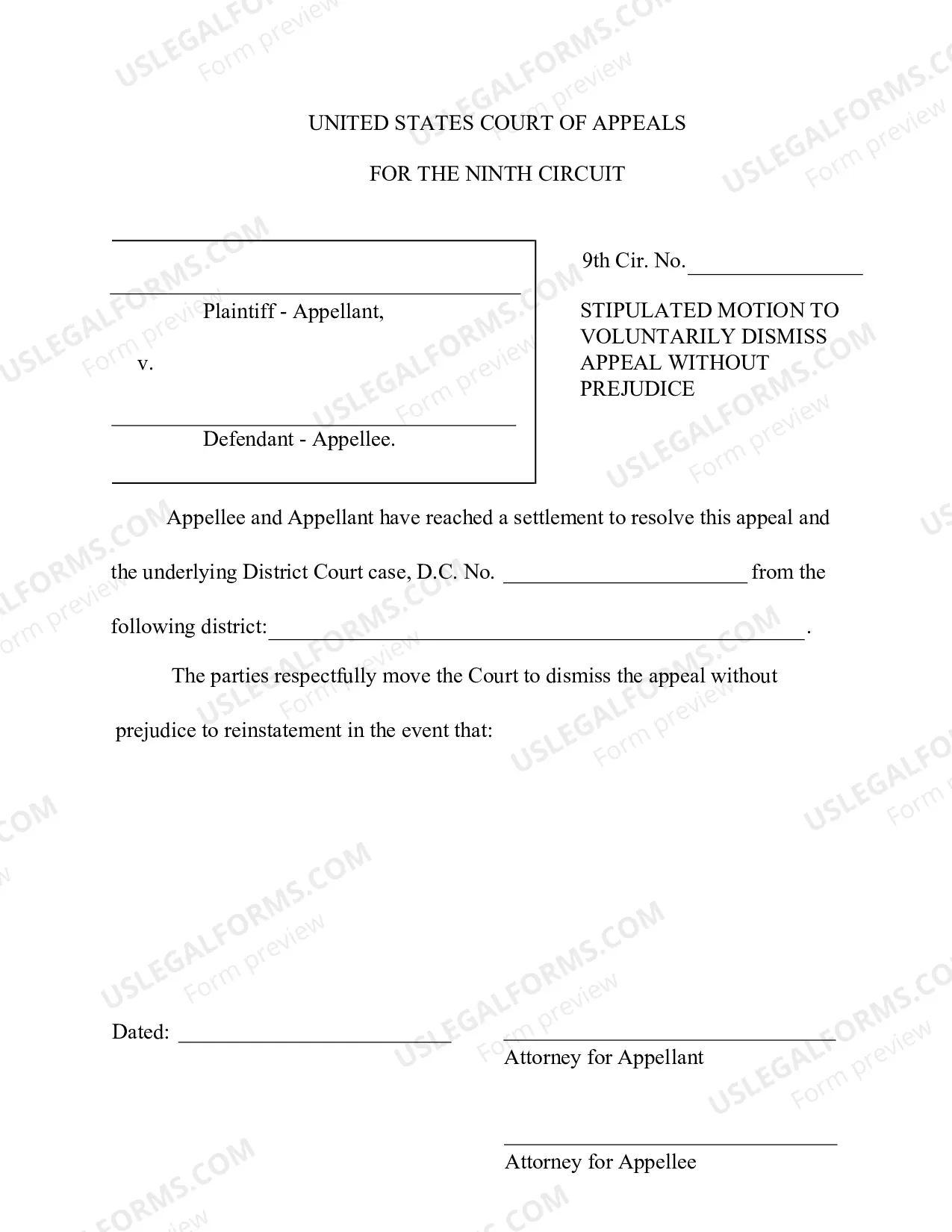
The Motion to Dismiss Appeal - Not Within Jurisdiction of Court is a legal document used in federal appellate courts. This form allows an appellee to formally request that the court dismiss an appeal on the grounds that it does not fall within the court's jurisdiction. Unlike other motions, this specific motion focuses exclusively on jurisdictional issues and requires the appellant to outline reasons why the appeal should be dismissed.
Key parts of this document
- Heading: Includes the name of the circuit, names of the parties, and case number.
- Grounds for dismissal: Section to state the specific reasons the appeal is not within jurisdiction.
- Record description: Details about the parts of the record being referenced.
- Signature: Must be signed by the attorney representing the appellee.
- Contact information: Includes the attorney's address, email, and phone number.
Common use cases
This form should be used when an appellee believes that an appeal filed in a federal appellate court is outside the court's jurisdiction. Situations may include appeals filed after statutory deadlines, appeals concerning issues not covered by the court's jurisdiction, or instances where the appellant lacks standing. It provides a legal pathway to halt proceedings based on the jurisdictional claims presented.
Who should use this form
This form is intended for:
- Appellees who have received notice of an appeal filed by an appellant.
- Attorneys representing parties involved in appellate litigation.
- Individuals concerned about jurisdiction issues in federal appeals.
Completing this form step by step
- Identify the appropriate circuit and enter its name at the top of the document.
- Fill in the names of the appellant and appellee, along with the case number.
- Clearly state the grounds for dismissal, explaining why the appeal is not within jurisdiction.
- Describe the sections of the record that support your motion.
- Sign the document and provide your contact information, including address and phone number.
Does this form need to be notarized?
In most cases, this form does not require notarization. However, some jurisdictions or signing circumstances might. US Legal Forms offers online notarization powered by Notarize, accessible 24/7 for a quick, remote process.
Get your form ready online
Our built-in tools help you complete, sign, share, and store your documents in one place.
Make edits, fill in missing information, and update formatting in US Legal Forms—just like you would in MS Word.
Download a copy, print it, send it by email, or mail it via USPS—whatever works best for your next step.
Sign and collect signatures with our SignNow integration. Send to multiple recipients, set reminders, and more. Go Premium to unlock E-Sign.
If this form requires notarization, complete it online through a secure video call—no need to meet a notary in person or wait for an appointment.
We protect your documents and personal data by following strict security and privacy standards.

Make edits, fill in missing information, and update formatting in US Legal Forms—just like you would in MS Word.

Download a copy, print it, send it by email, or mail it via USPS—whatever works best for your next step.

Sign and collect signatures with our SignNow integration. Send to multiple recipients, set reminders, and more. Go Premium to unlock E-Sign.

If this form requires notarization, complete it online through a secure video call—no need to meet a notary in person or wait for an appointment.

We protect your documents and personal data by following strict security and privacy standards.
Avoid these common issues
- Failing to clearly state the grounds for dismissal.
- Omitting required contact information for the attorney.
- Not following specific formatting requirements for the document.
- Submitting more than the allowed page count without court permission.
Benefits of completing this form online
- Convenient access to legally vetted templates drafted by licensed attorneys.
- Time-saving: Download and complete the form instantly from anywhere.
- Editability: Customize the form easily to suit your specific case details.
- Reliable formatting that complies with federal court requirements.
Legal use & context
- This motion is an essential procedural tool in federal appellate practice.
- It helps maintain judicial efficiency by ensuring that only cases with valid jurisdiction are heard.
- Filing this motion properly can safeguard parties from unnecessary legal processes in the wrong court.
Key takeaways
- The Motion to Dismiss Appeal is crucial for challenging the jurisdiction of a court in federal appellate cases.
- Completing the form accurately is essential to avoid filing delays.
- Understanding local and federal rules will ensure compliance and enhance the chances of a successful outcome.
Looking for another form?

Form popularity
FAQ
What does dismissed for lack of jurisdiction mean? The court lacks legal authority to hear and resolve the matter. Example: Occasionally, I watch Judge Judy, which is a small claims court. A matter was presented dealing with the assets of a dead person, ie, a Decedent's estate.
THE ESTABLISHMENT AND JURISDICTION OF THE COURT OF APPEAL It is an appellate court having very limited original jurisdiction-exclusive power to hear and determine any question relating to the election, terms of office or vacancy of the office of the president and vice-president.
If the losing party agrees it lacked sufficient evidence to prove a claim, it is required to preserve the matter by filing a motion to present the proof. If the motion was denied, it could pursue an appeal. In essence, the proof submitted at the summary judgment becomes irrelevant to the case.
An appeal means that a higher court must review a decision that was made by a lower court or tribunal.Appeal dismissed means that the court will decide in favour of the respondent or the party against whom the appeal is brought. This decision is made against the appellant who brought the appeal forward.
Sometimes, a stay is automatic on the filing of a notice of appeal. In California, final judgments for orders that adjudicate rights that don't require payment of money or property, like declaratory judgments, are often automatically stayed.In federal court, automatic stays are infrequent.
The court of appeals refusal to hear and try a case already decided in a lower court.
Rate of about 40 percent in defendants' appeals of trials. Plaintiffs achieve reversal in about 4 percent of all filed cases ending in trial judgments and suffer affirmance in about 16 percent of such cases. This yields a reversal rate of about 18 percent in plaintiffs' appeals of trials.
The voluntary dismissal of an appeal has no preclusive effect whatsoever on a subsequent appeal involving the same issues. Every appellant has the right to voluntarily dismiss his or her appeal before a decision on the merits by the reviewing court.
When a judge denies a defendant's motion to dismiss, the case will continue because defendant did not convince the judge to terminate the case. The plaintiff has not won (yet).In a civil litigation, when a judge denies a defendant's motion to dismiss, the case continues instead of ending early.