License Agreement for Reproduction and Sale of Musical Compositions in Designated Area
Overview of this form
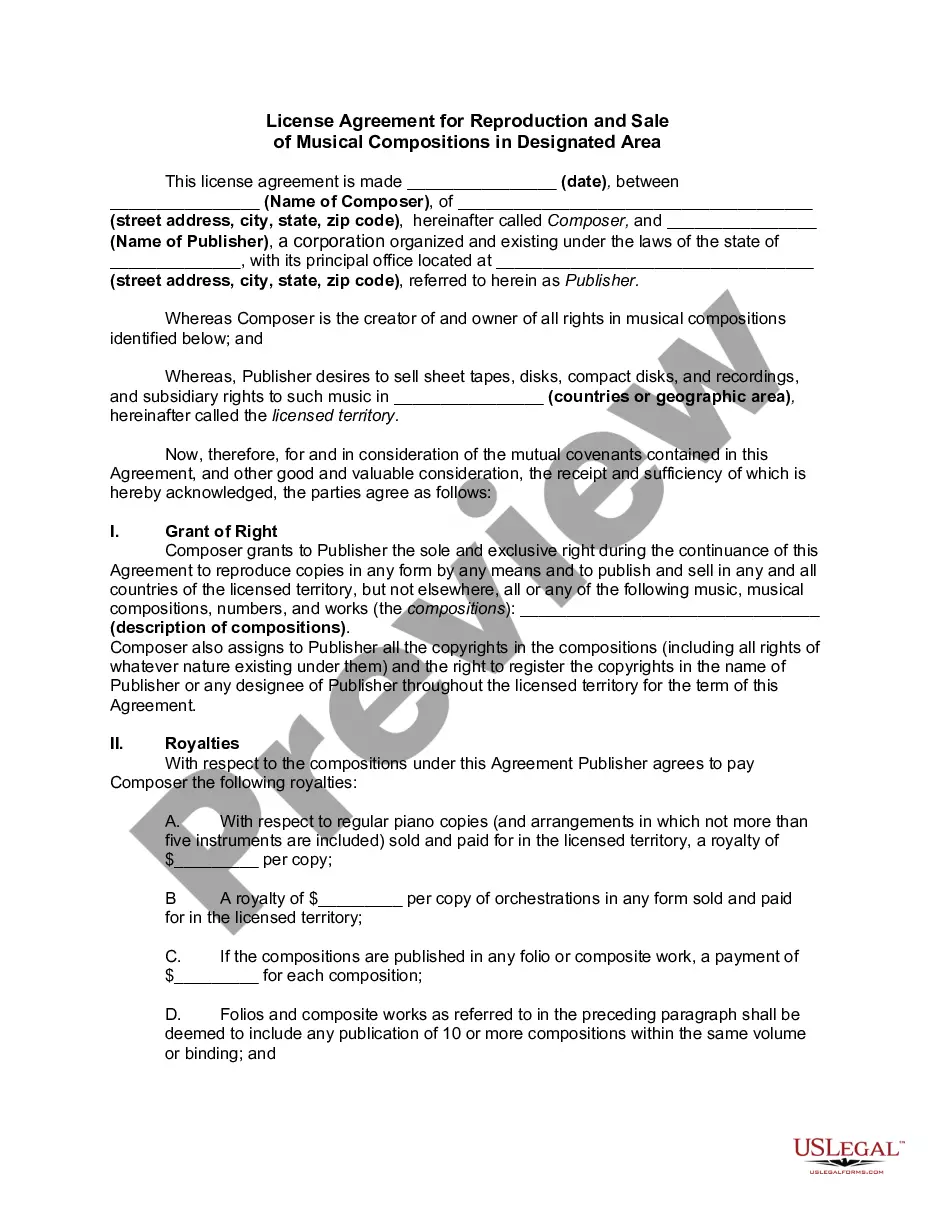
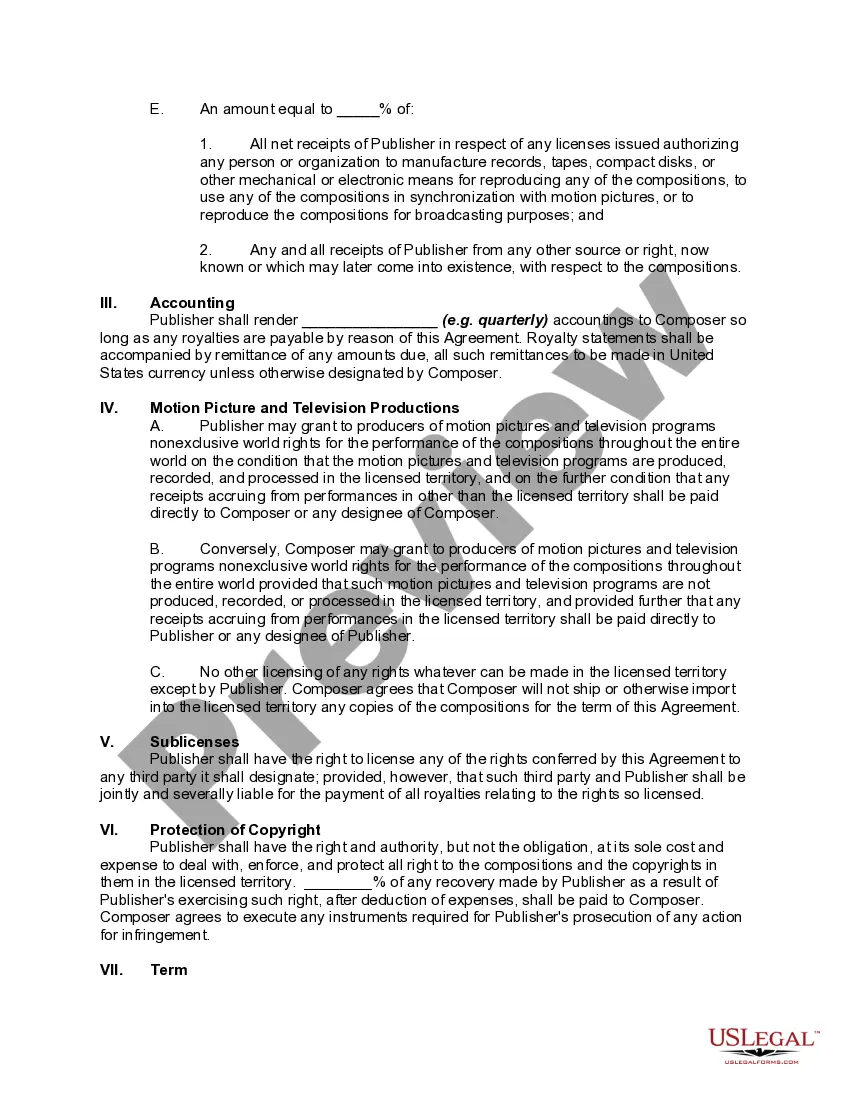
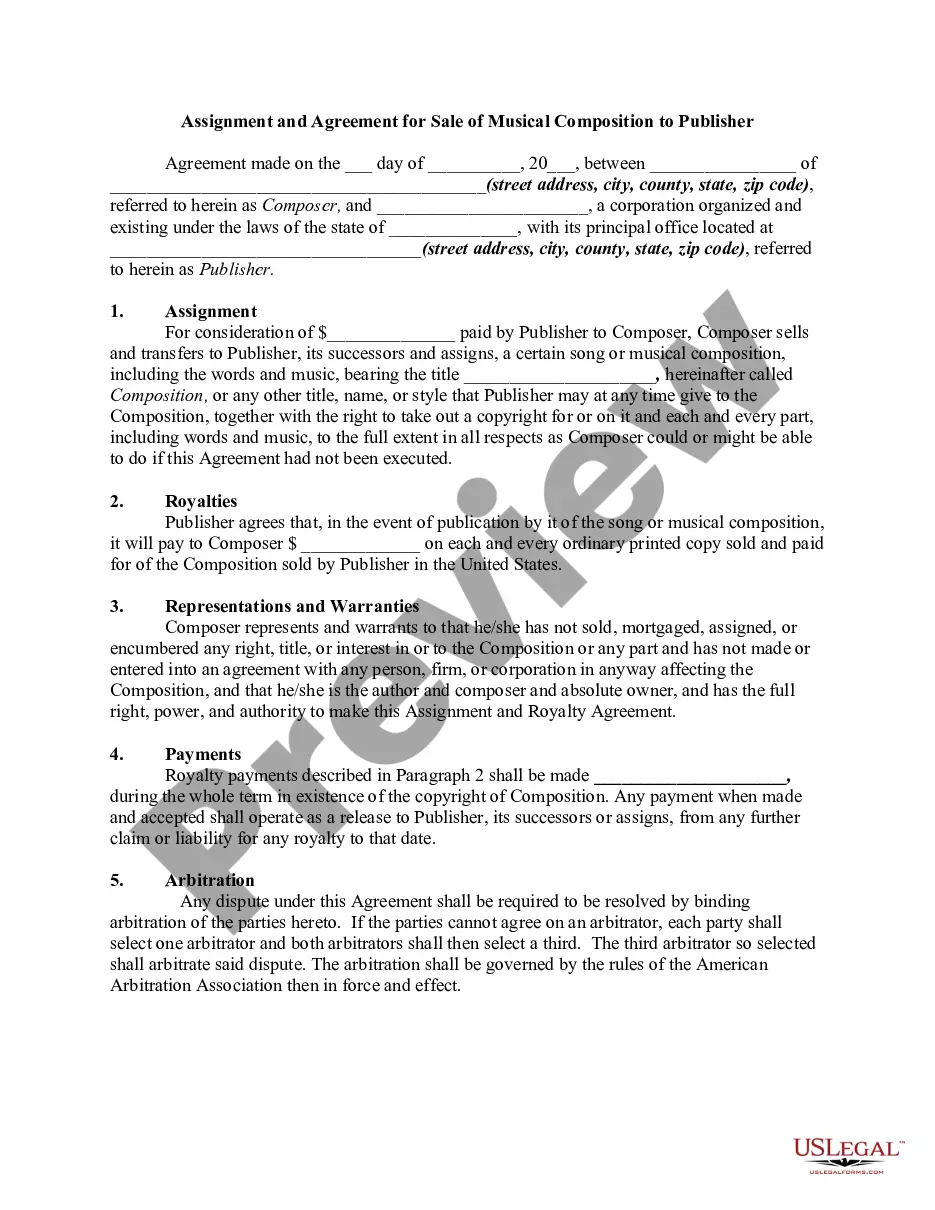
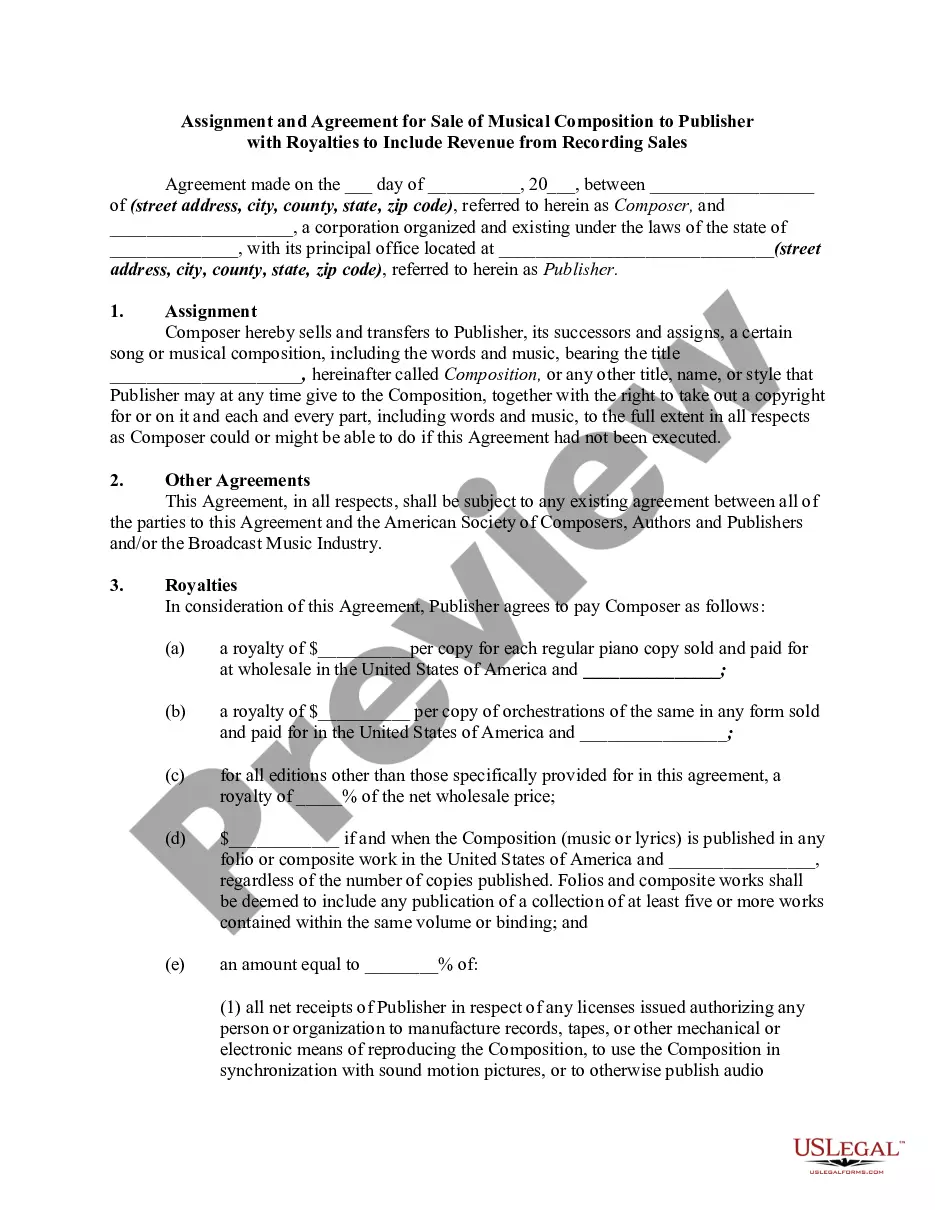
This License Agreement for Reproduction and Sale of Musical Compositions in Designated Area is a legal document that outlines the terms under which a composer (the "licensor") allows a publisher (the "licensee") to reproduce and sell their musical works within a specified geographic area. This agreement details the rights granted, including copyright transfers and royalty payments, making it distinct from other licensing agreements by focusing on music compositions specifically. It ensures both parties are protected and have clear understandings of their respective rights and obligations.
Form components explained
- Date of agreement
- Contact information for Composer and Publisher
- Description of musical compositions covered by the agreement
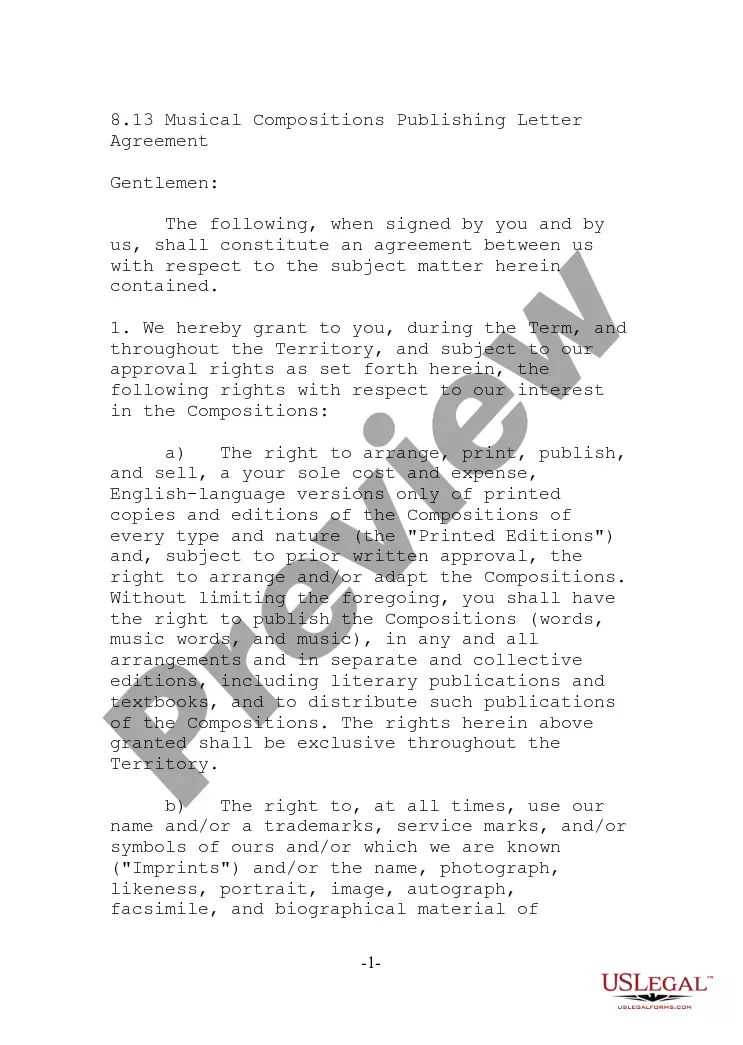
- Grant of rights to reproduce and sell compositions
- Royalty payment structure
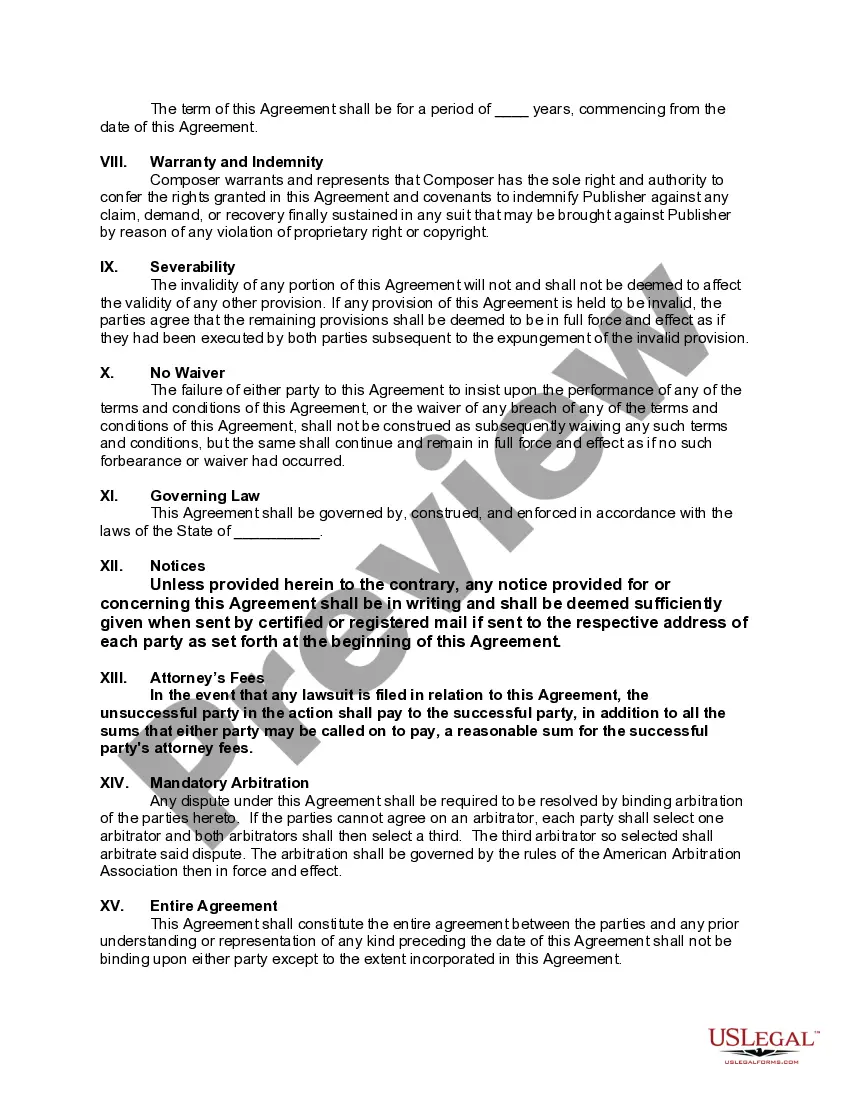
- Term of the agreement
- Clause addressing copyright protection and enforcement
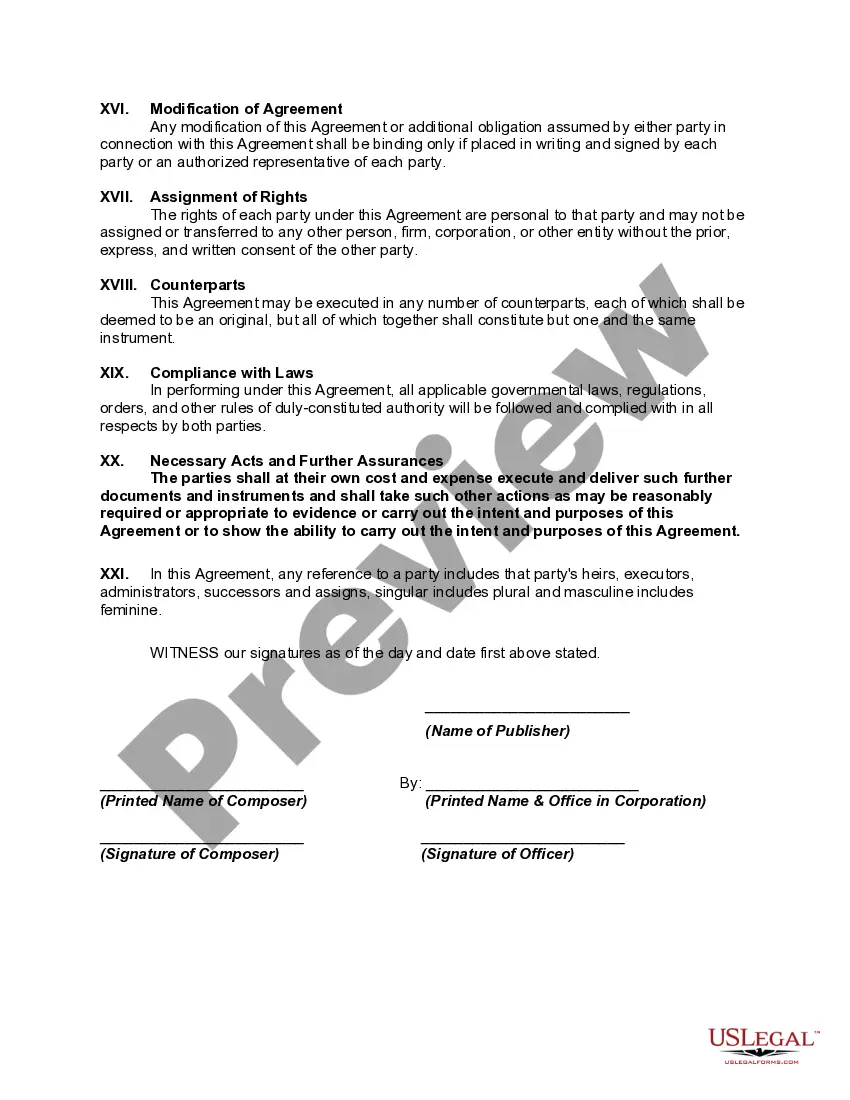
- Severability and governing law provisions
When to use this form
This form is essential when a composer wishes to allow a publisher to reproduce and distribute their musical works. Use this agreement if you are a composer who wants to monetize your compositions through a publisher, or if you are a publisher looking to obtain exclusive rights to sell musical compositions in a specific area. It acts as a safeguard for both parties, defining key aspects of the agreement, such as royalties and copyright management.
Intended users of this form
- Composers who own the rights to musical compositions
- Music publishers seeking to distribute musical works
- Individuals or groups looking to enter a business arrangement concerning music reproduction and sales
- Lawyers or legal representatives involved in music licensing agreements
Instructions for completing this form
- Fill in the date of the agreement.
- Provide the names and addresses of both the Composer and the Publisher.
- Describe the musical compositions being licensed.
- Specify the territory where the agreement applies.
- Outline the payment structure for royalties.
- Ensure both parties sign the agreement and retain copies for their records.
Notarization requirements for this form
This form does not typically require notarization unless specified by local law. It's advisable for parties to consult legal counsel to confirm if notarization is strictly necessary for their specific circumstances.
Get your form ready online
Our built-in tools help you complete, sign, share, and store your documents in one place.
Make edits, fill in missing information, and update formatting in US Legal Forms—just like you would in MS Word.
Download a copy, print it, send it by email, or mail it via USPS—whatever works best for your next step.
Sign and collect signatures with our SignNow integration. Send to multiple recipients, set reminders, and more. Go Premium to unlock E-Sign.
If this form requires notarization, complete it online through a secure video call—no need to meet a notary in person or wait for an appointment.
We protect your documents and personal data by following strict security and privacy standards.

Make edits, fill in missing information, and update formatting in US Legal Forms—just like you would in MS Word.

Download a copy, print it, send it by email, or mail it via USPS—whatever works best for your next step.

Sign and collect signatures with our SignNow integration. Send to multiple recipients, set reminders, and more. Go Premium to unlock E-Sign.

If this form requires notarization, complete it online through a secure video call—no need to meet a notary in person or wait for an appointment.

We protect your documents and personal data by following strict security and privacy standards.
Typical mistakes to avoid
- Failing to clearly describe the musical compositions.
- Not specifying the exact territory for licensing.
- Leaving out the royalty payment details, leading to disputes later.
- Ignoring the need for signatures from both parties.
- Not reviewing state-specific regulations that may affect the agreement.
Benefits of completing this form online
- Convenience of accessing and downloading the form anytime.
- Editable fields allow for easy customization to fit specific needs.
- Reliability, knowing that the form is drafted by licensed attorneys.
- Quick retrieval in case amendments or renewals are needed.
- Secure storage of forms in a digital format.
Legal use & context
- This agreement is enforceable under copyright law as it pertains to the licensing of musical compositions.
- Proper execution ensures that both parties have legal backing in case of disputes over rights or payments.
- Failure to adhere to the terms can lead to legal repercussions, including claims of infringement.
Key takeaways
- The License Agreement is essential for defining the rights and obligations of composers and publishers.
- Clearly outline terms to avoid misunderstandings regarding royalties and territory.
- This form can be utilized across multiple states but should be verified for local requirements.
- Utilizing an online form offers convenience and access to professional legal language.
Looking for another form?
Form popularity
FAQ
A product (or merchandise) license allows licensees to leverage popular IP to create branded products, usually for a specific period of time. Once the rights have been secured, the licensee manufactures product using the licensed IP, and in return pays the licensor a royalty for its use.
A licensing agreement is a legal contract between two parties, known as the licensor and the licensee. In a typical licensing agreement, the licensor grants the licensee the right to produce and sell goods, apply a brand name or trademark, or use patented technology owned by the licensor.
An example of a licensing agreement is a contract between the copyright holders of software and another company, allowing the latter to use the computer software for their daily business operations.
A Music License Agreement protects both parties when you settle in advance on whether to pay royalties as a percentage of revenue, for a set amount for each use, or under some other arrangement.
A license agreement is a business contract between two parties. The licensor (the seller of the license) owns the asset being licensed and the licensee (the buyer) pays for the right to use the license. The licensee pays royalties to the owner in exchange for the right to sell the product or use the technology.
What is a Licensing Agreement? A licensing agreement is a contract between two parties (the licensor and licensee) in which the licensor grants the licensee the right to use the brand name, trademark, patented technology, or ability to produce and sell goods owned by the licensor.
Exclusive or non-exclusive. In an exclusive license, the intellectual property holder is licensing the work only to one person, for that particular use/territory. Territory. Use. Attribution. Derivative works. Confidentiality. Time frame. Termination.
Download a template for a licensing agreement. Choose your role as the licensor or licensee. Define the license(s) in the agreement. Decide whether the license is exclusive or not. Settle the matter of fees and payment schedule. Add a renewal date and rules.