Financial Support Agreement - Guaranty of Obligation
About this form
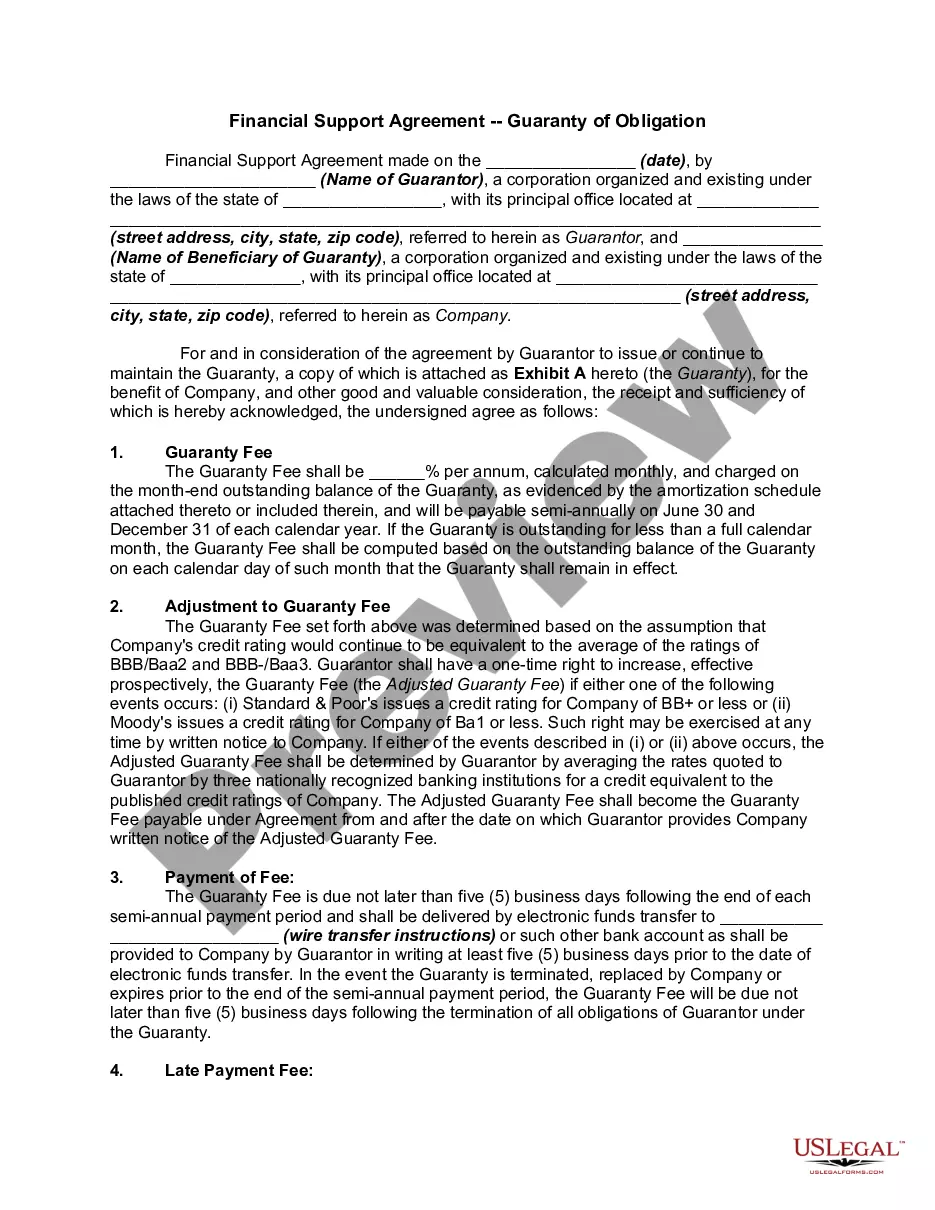
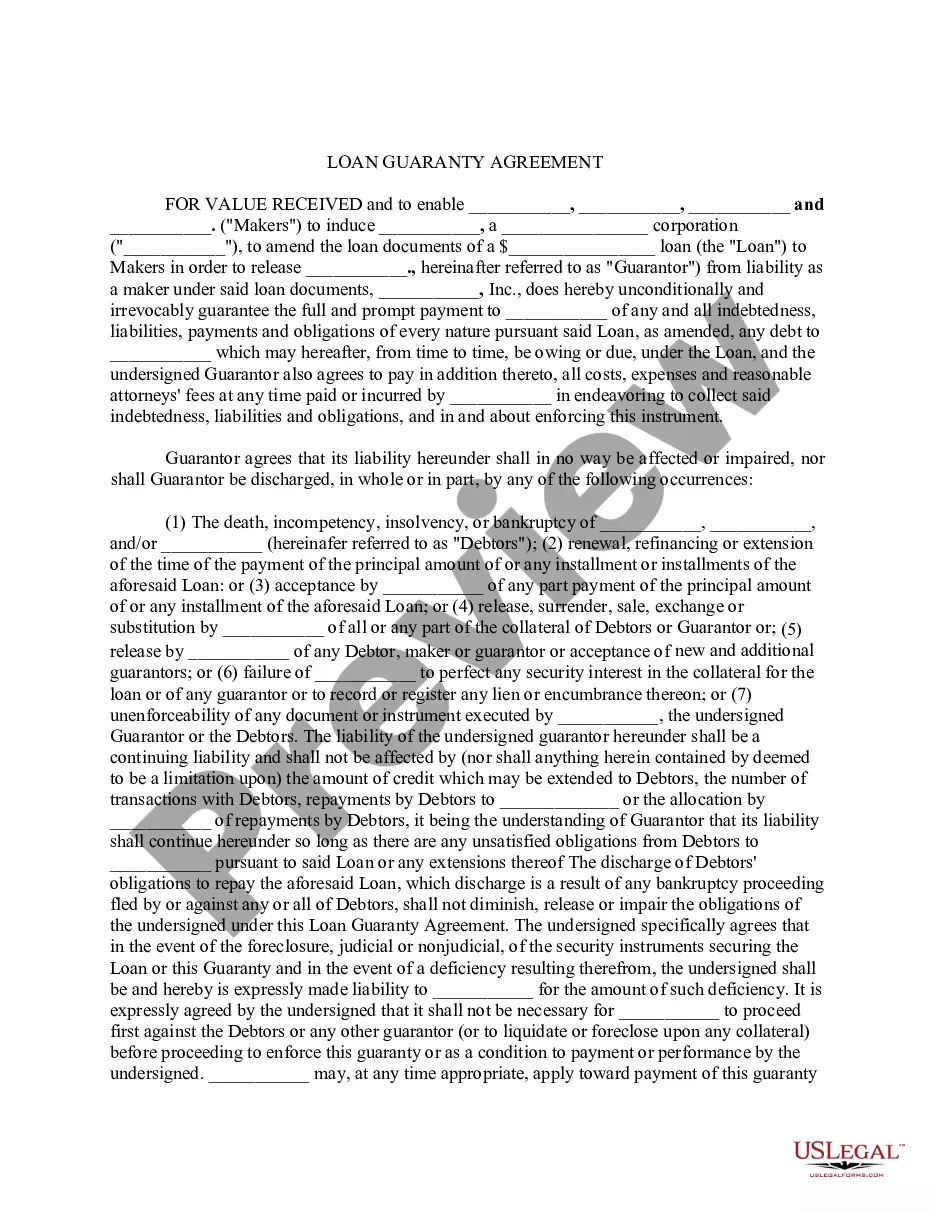
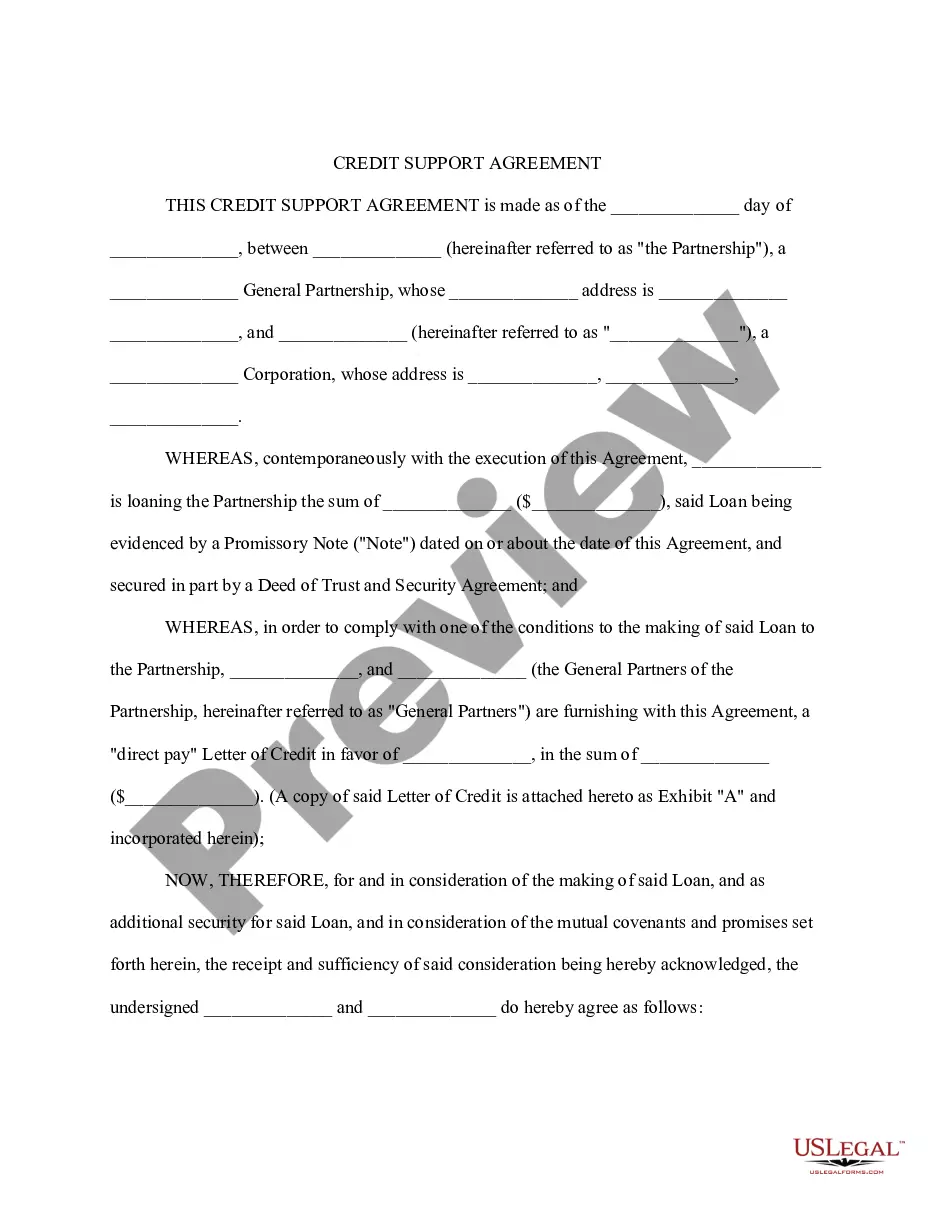
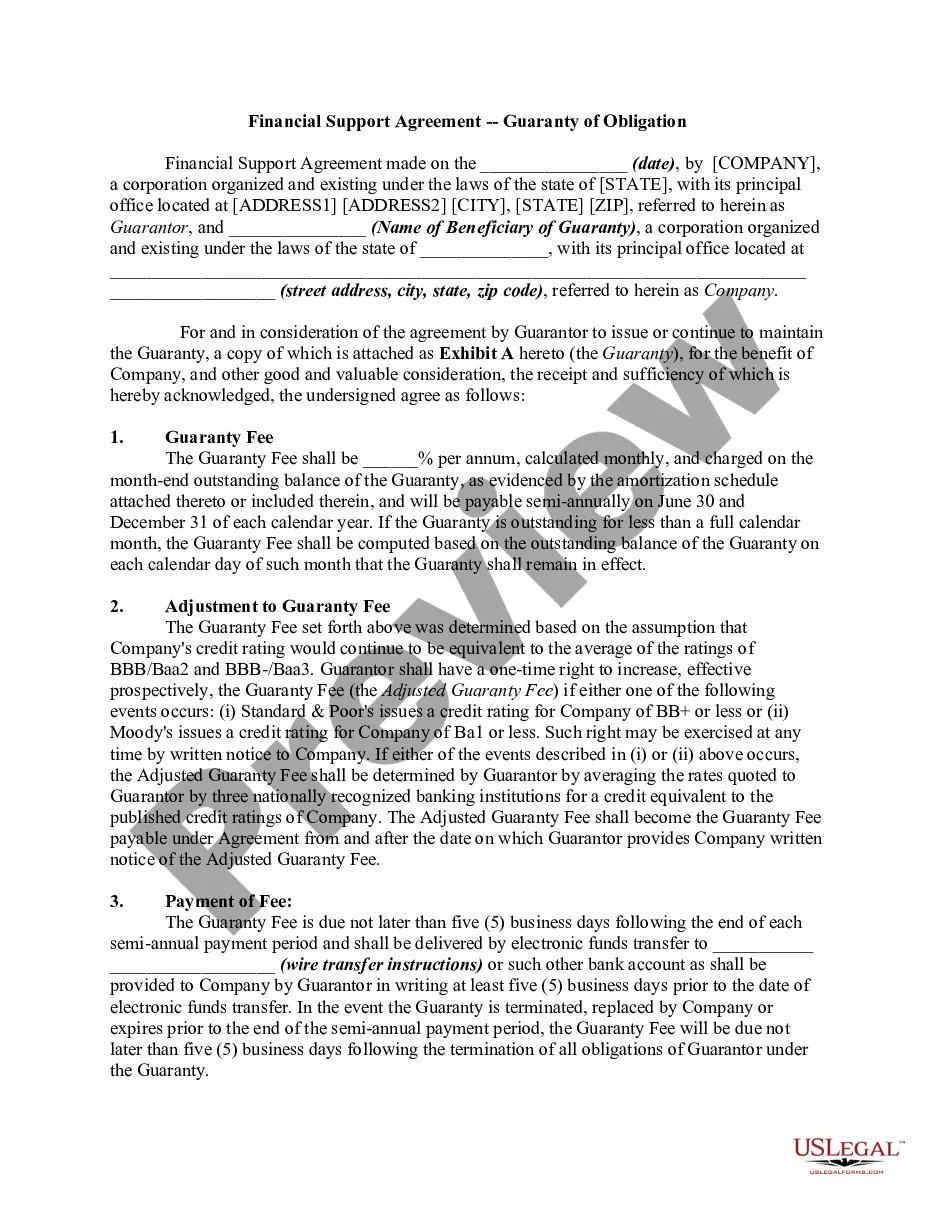
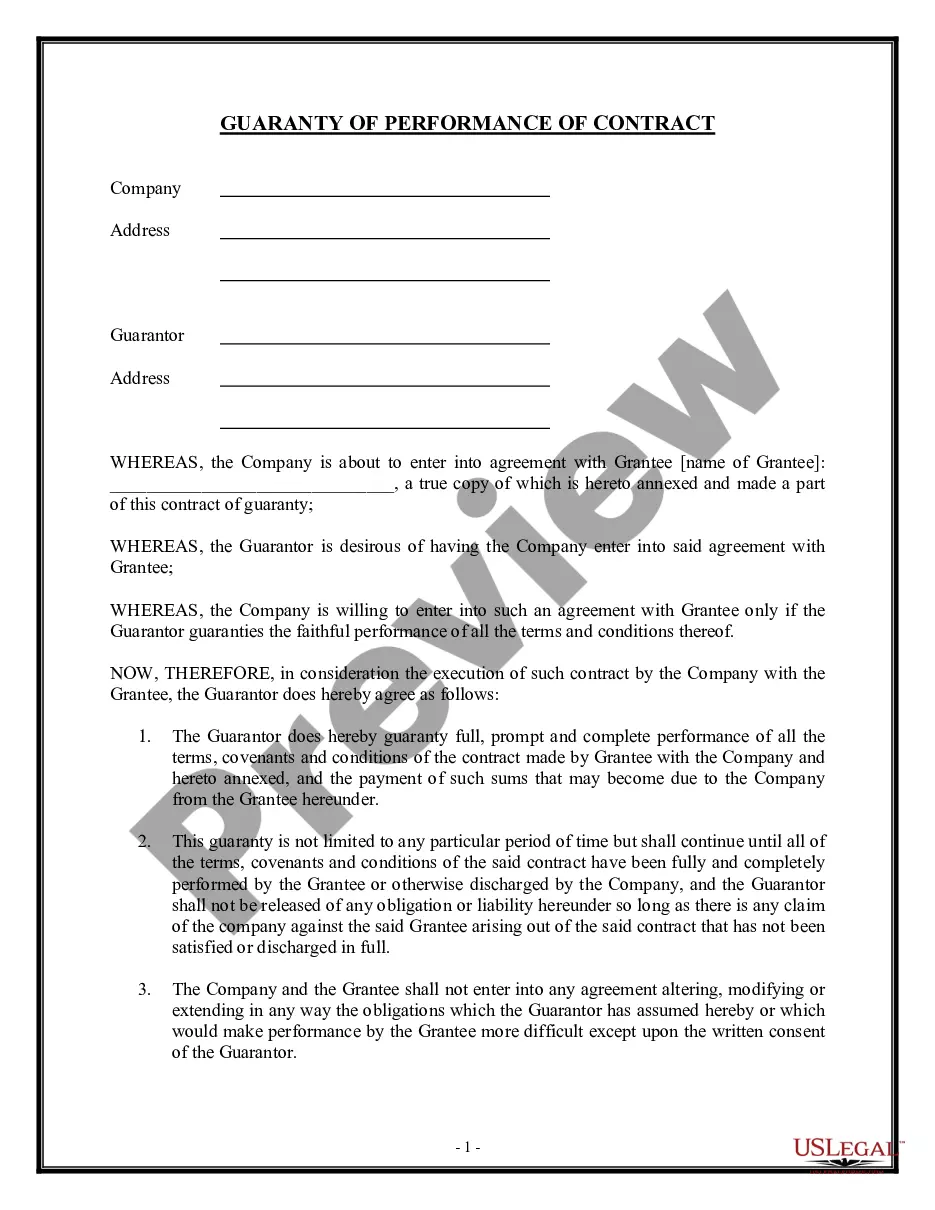
The Financial Support Agreement - Guaranty of Obligation is a legal document where one corporation (the Guarantor) guarantees financial support to another corporation (the Company) for specific indebtedness in exchange for a fee. This form is essential for businesses seeking to establish financial security through a formal agreement and ensures the Guarantor's obligations are legally binding, distinguishing it from standard loan agreements or promissory notes.
Main sections of this form
- Identification of the Guarantor and the Company, including their legal addresses.
- Details regarding the Guaranty Fee and its payment schedule.
- Provisions for adjustment of the Guaranty Fee based on credit ratings.
- Late payment fees as stipulated and how they are calculated.
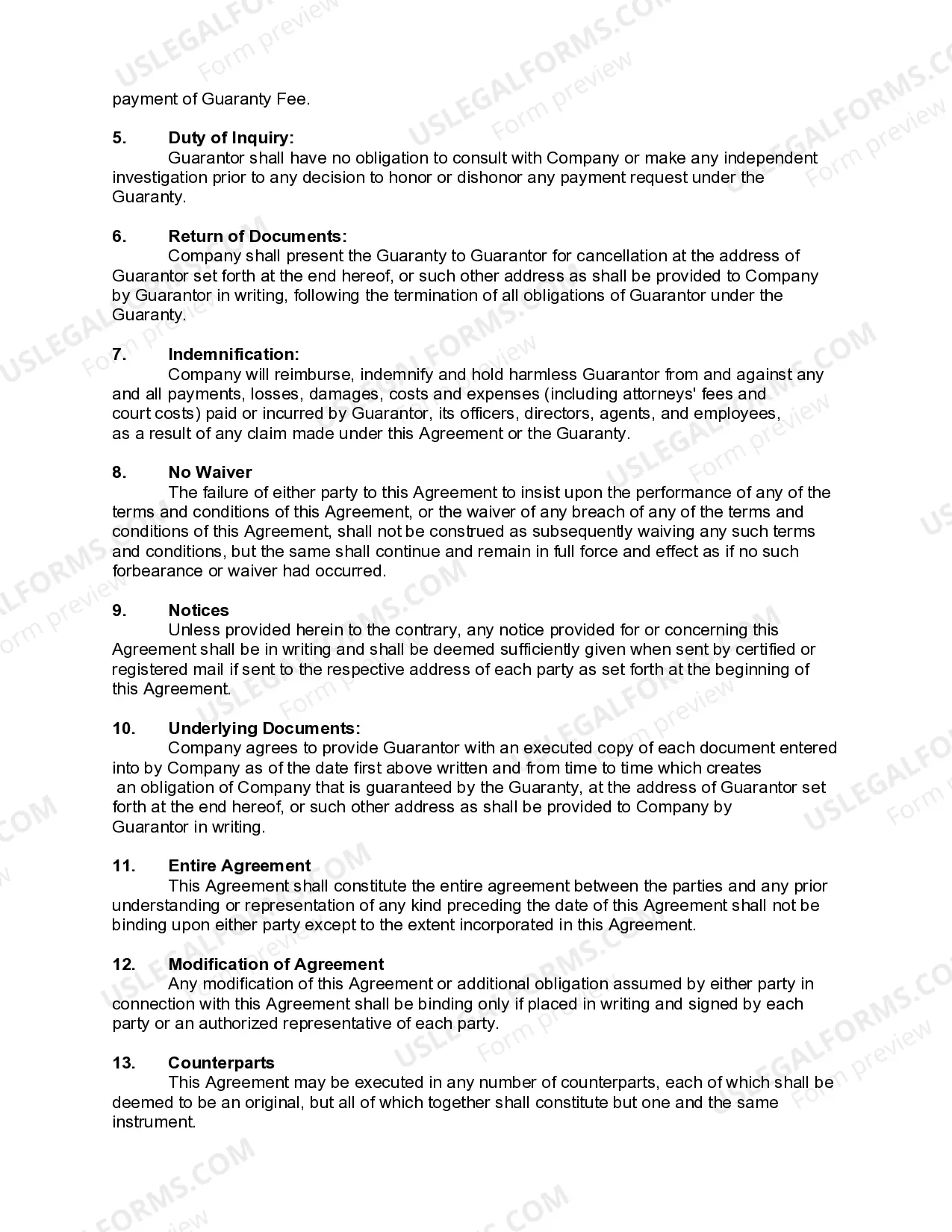
- Conditions for termination of the Guaranty and return of documents.
- Indemnification clauses protecting the Guarantor from claims or losses.
Situations where this form applies
This Financial Support Agreement is suitable when a corporation needs to secure financing for debts and seeks to minimize risk by having another corporation guarantee that debt. This form is commonly utilized in business transactions where financial reliability is critical, such as when a company wants to improve its credit standing or expand its operations with the backing of a financially sound partner.
Who needs this form
The following entities should consider using this form:
- Corporations looking to secure funding through third-party guarantees.
- Businesses desiring to formalize financial agreements with another company.
- Financial institutions requiring a guaranty from another corporation for loan considerations.
- Legal professionals drafting financial agreements between corporations.
How to complete this form
- Identify and enter the names and addresses of both the Guarantor and the Company at the beginning of the document.
- Specify the Guaranty Fee, detailing the calculation method and payment schedule.
- Include any adjustments to the Guaranty Fee based on credit ratings as described in the agreement.
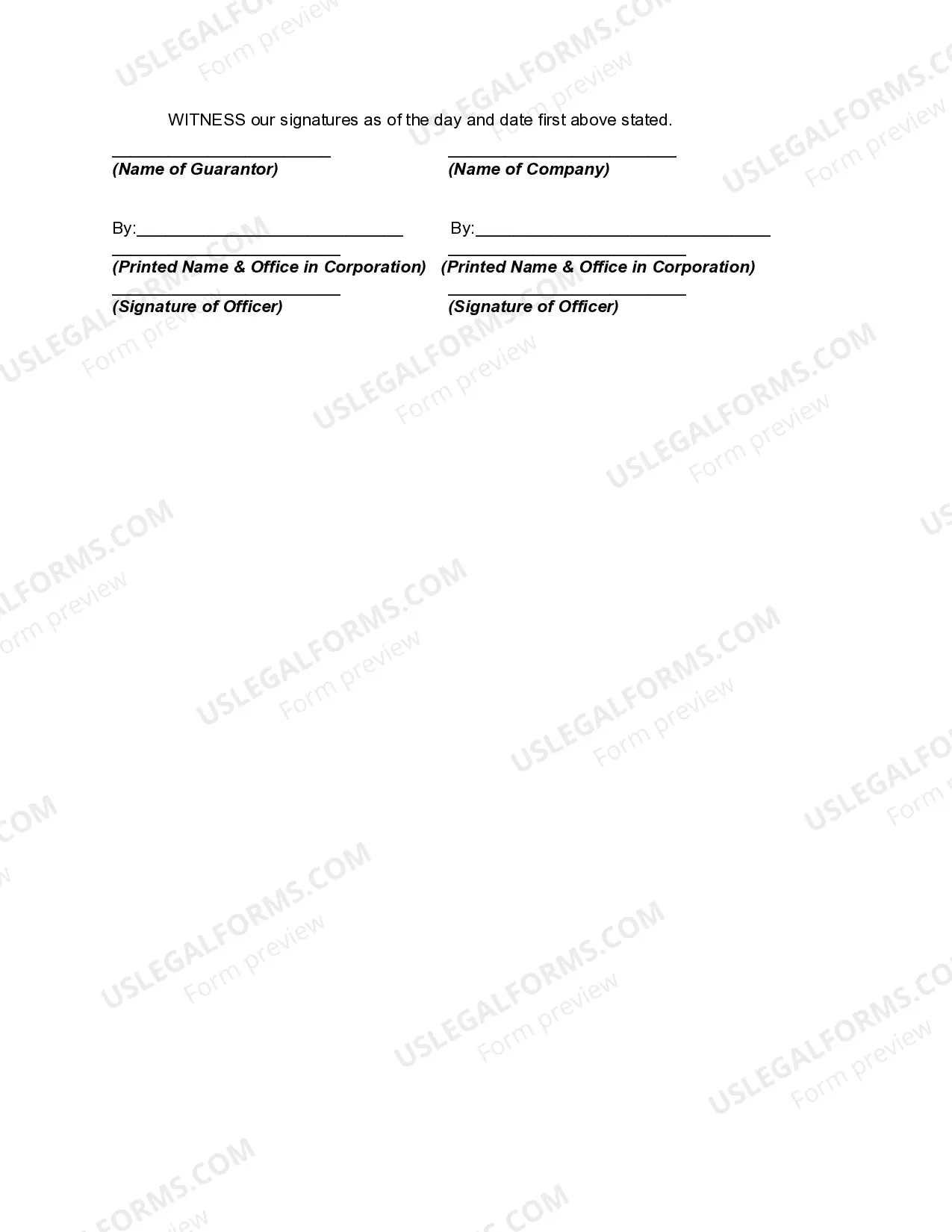
- Ensure both parties sign the document in the designated areas, incorporating printed names and titles.
- Keep a copy of the finalized agreement for each party's record.
Is notarization required?
This form does not typically require notarization to be legally valid. However, some jurisdictions or document types may still require it. US Legal Forms provides secure online notarization powered by Notarize, available 24/7 for added convenience.
Get your form ready online
Our built-in tools help you complete, sign, share, and store your documents in one place.
Make edits, fill in missing information, and update formatting in US Legal Forms—just like you would in MS Word.
Download a copy, print it, send it by email, or mail it via USPS—whatever works best for your next step.
Sign and collect signatures with our SignNow integration. Send to multiple recipients, set reminders, and more. Go Premium to unlock E-Sign.
If this form requires notarization, complete it online through a secure video call—no need to meet a notary in person or wait for an appointment.
We protect your documents and personal data by following strict security and privacy standards.

Make edits, fill in missing information, and update formatting in US Legal Forms—just like you would in MS Word.

Download a copy, print it, send it by email, or mail it via USPS—whatever works best for your next step.

Sign and collect signatures with our SignNow integration. Send to multiple recipients, set reminders, and more. Go Premium to unlock E-Sign.

If this form requires notarization, complete it online through a secure video call—no need to meet a notary in person or wait for an appointment.

We protect your documents and personal data by following strict security and privacy standards.
Mistakes to watch out for
- Failing to accurately identify the Guarantor and the Company.
- Not specifying the Guaranty Fee details clearly, which can lead to misunderstandings.
- Overlooking the adjustment clause for the Guaranty Fee based on credit ratings.
- Missing signatures or incorrect titles, which may affect the legal validity of the agreement.
Advantages of online completion
- Quick access to legally vetted templates drafted by licensed attorneys.
- Customizable fields for your specific business details and needs.
- Immediate downloads allow for quick implementation in business transactions.
- Streamlined process to ensure that you meet all necessary legal requirements.
Looking for another form?

Form popularity
FAQ
A Guarantor's obligations A guarantor may be bound to maintain repayments on a borrower's loan in circumstances where the borrower defaults on repayments. Alternatively they may be called upon to repay the loan in full.
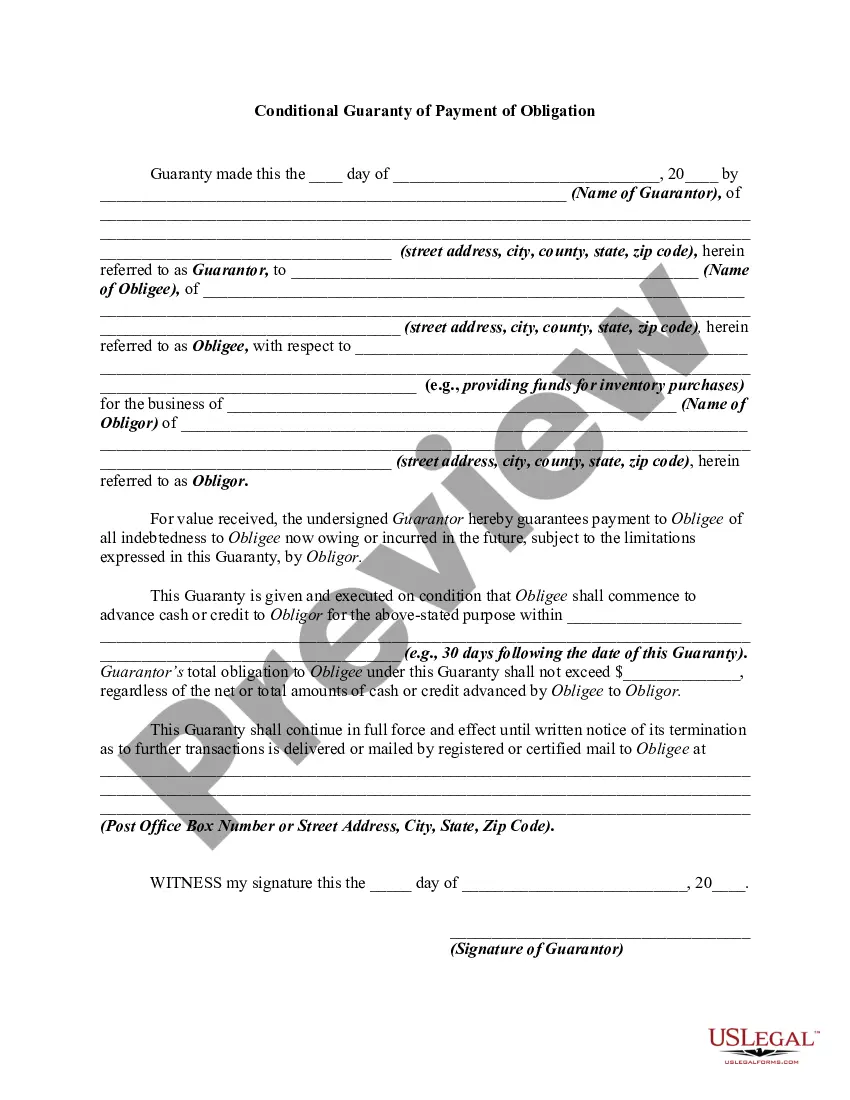
There are two types of Guarantee i.e. Specific Guarantee which is for a specific transaction and Continuing Guarantee which is for a series of transactions. Specific Guarantee: A guarantee which is given for only one transaction or debt, the guarantee is known as a Specific Guarantee.
Guarantors are asked to sign a guarantee agreement this is a legally binding document and once you sign it you become responsible for the loan repayments if the person you are acting as guarantor for cannot pay.
A guarantor is a third party who 'guarantees' a loan, mortgage or rental agreement. This means they agree to repay the total amount owed if the borrower or renter can't pay what they owe. By guaranteeing the agreement, you become responsible for any arrears that occur.
By Practical Law Commercial. A deed guaranteeing the performance of a party's payment obligations under a commercial agreement and indemnifying the payee against loss arising out of a failure of the payer to pay the guaranteed amounts.
Bid/Tender Guarantee. Issued in support of an exporter's bid to supply goods or services and, if successful, ensures compensation in the event that the contract is not signed. Performance Guarantee. Advance Payment Guarantee. Warranty Guarantee. Retention Guarantee.
No, if you have signed an agreement and are acting as the guarantor for a guarantor loan, you cannot stop being this until the loan term has ended.
Most landlords and letting agents require tenants to have a Guarantor in order to qualify as a suitable tenant. Some tenants for one reason or another can't arrange a Guarantor.The reality is, a guarantor is a prerequisite for every sensible landlord, and rightly so.
A surety is an insurer of the debt, whereas a guarantor is an insurer of the solvency of the debtor. A suretyship is an undertaking that the debt shall be paid; a guaranty, an undertaking that the debtor shall pay.A surety binds himself to perform if the principal does not, without regard to his ability to do so.