Annual Self Evaluation
About this form
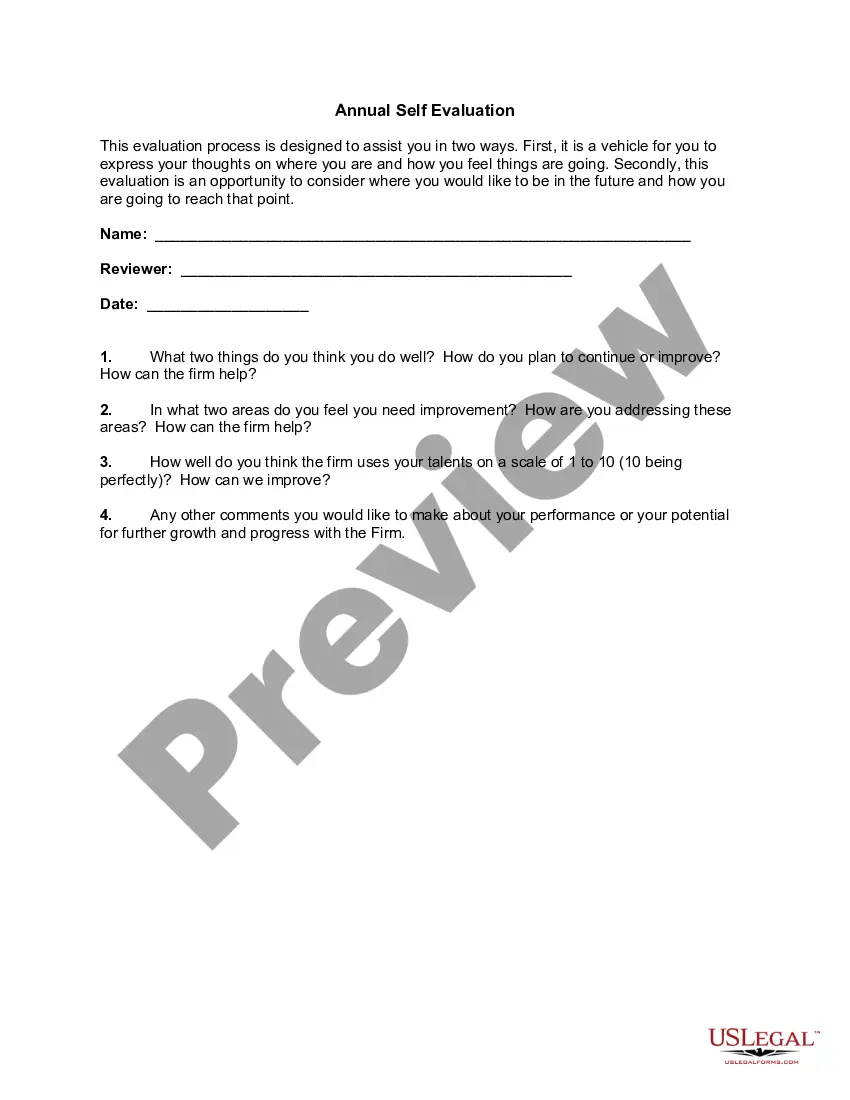
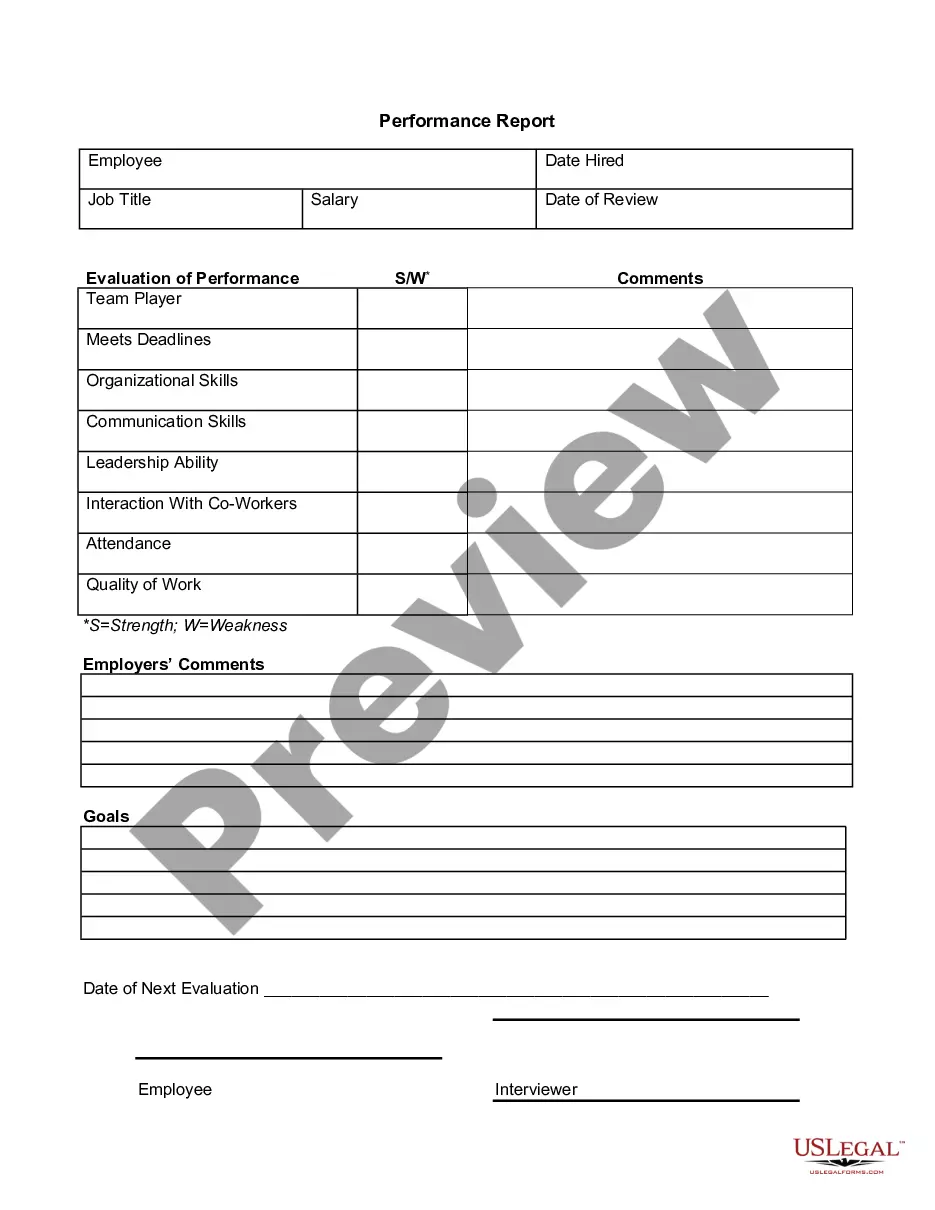
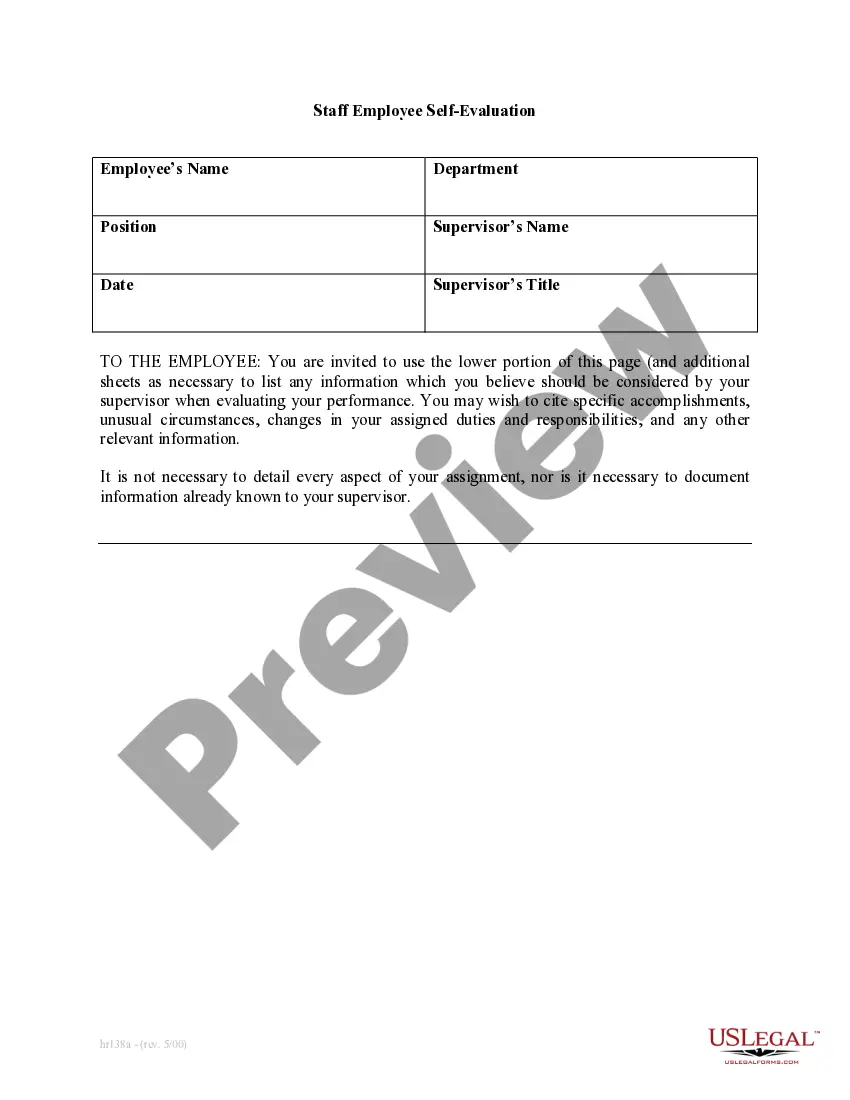
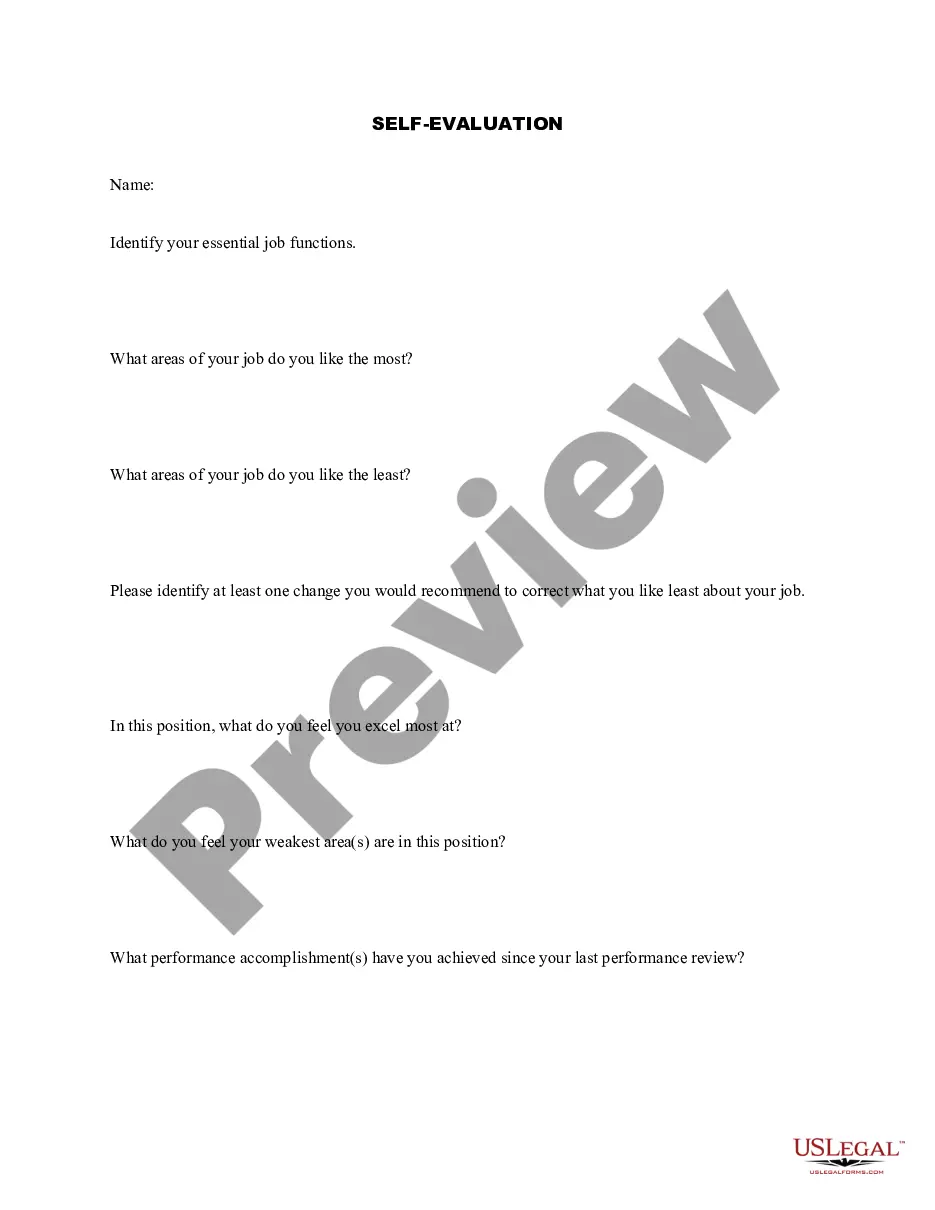
The Annual Self Evaluation form is designed for employees to assess their own performance as part of a performance review process. This form allows employees to reflect on their strengths and areas for improvement, helping to enhance communication with management and fostering professional growth. Unlike other evaluation forms, this one emphasizes self-assessment and personal development planning.
Key components of this form
- Employee name and date fields for identification
- Two questions focused on personal strengths and improvement plans
- Self-rating on how well the firm utilizes employee talents
- Section for additional comments regarding performance and growth opportunities
When to use this document
Use the Annual Self Evaluation form during your performance review preparation, typically conducted annually or biannually. It is ideal for reflecting on your work habits, identifying achievements, and setting future career objectives. This form can also be used after completing a significant project or at the end of a review period to track personal development over time.
Intended users of this form
This form is intended for:
- Employees seeking a structured way to conduct self-evaluations
- Managers looking to enhance feedback during performance reviews
- Human resources personnel who facilitate review processes
How to complete this form
- Enter your name and the date at the top of the form.
- Reflect on and write down two strengths you possess in your current role.
- Identify two areas where you think improvement is needed, and note actions you plan to take.
- Rate how well you believe the firm utilizes your talents on a scale from one to ten, explaining your rating.
- Use the final comments section to provide any additional thoughts about your performance or growth potential.
Notarization requirements for this form
Notarization is not commonly needed for this form. However, certain documents or local rules may make it necessary. Our notarization service, powered by Notarize, allows you to finalize it securely online anytime, day or night.
Get your form ready online
Our built-in tools help you complete, sign, share, and store your documents in one place.
Make edits, fill in missing information, and update formatting in US Legal Forms—just like you would in MS Word.
Download a copy, print it, send it by email, or mail it via USPS—whatever works best for your next step.
Sign and collect signatures with our SignNow integration. Send to multiple recipients, set reminders, and more. Go Premium to unlock E-Sign.
If this form requires notarization, complete it online through a secure video call—no need to meet a notary in person or wait for an appointment.
We protect your documents and personal data by following strict security and privacy standards.

Make edits, fill in missing information, and update formatting in US Legal Forms—just like you would in MS Word.

Download a copy, print it, send it by email, or mail it via USPS—whatever works best for your next step.

Sign and collect signatures with our SignNow integration. Send to multiple recipients, set reminders, and more. Go Premium to unlock E-Sign.

If this form requires notarization, complete it online through a secure video call—no need to meet a notary in person or wait for an appointment.

We protect your documents and personal data by following strict security and privacy standards.
Avoid these common issues
- Not providing specific examples to support claims of strengths or areas for improvement.
- Failing to set clear and actionable goals for future development.
- Overlooking the opportunity to request support from the firm.
Why complete this form online
- Easy access to a template that ensures a structured self-evaluation process.
- Editable format allows you to personalize your responses and goals.
- Convenient download option saves time and provides a secure way to maintain records.
Summary of main points
- The Annual Self Evaluation form helps employees assess their performance and plan for future growth.
- It encourages constructive dialogue between employees and management during performance reviews.
- This form can be customized to fit various organizational contexts across multiple states.
Looking for another form?


Form popularity
FAQ
Be proud. One major goal of the self-evaluation is to highlight your accomplishments and recollect milestones in your professional development. Be honest and critical. Continuously strive for growth. Track your accomplishments. Be professional.
Talk about your achievements. Talk about a raise. Ask about the development of the business. Set clear goals. Give feedback to your manager. Ask how you can help. Suggest tools you need to do your job. Ask for clarification.
Check Your Attitude. "Attitude is very important," says employment consultant Rick Waters. Be Reflective. Assess Your Performance Against the Job Specifications. Keep a File. Find out the Supervisor's Expectations. Get Feedback From Others. Be a Team Player. Plan Ahead.
Use numbers to your advantage. Include figures that add value to your work, if possible. Mention results. Take the company's objectives into account. Record your achievements in real-time. Take your time.
Review the employee's job description. Get a current copy of each person's job description and review the requirements. Highlight areas of improvement. Compare strengths and weaknesses. Recommend actionable goals. Provide constructive feedback. Welcome employee input.
1) Attendance. 2) Innovation and Creativity. 3) Leadership. 4) Communication Skills. 5) Collaboration and Teamwork. 6) Time Management. 7) Customer Experience. 8) Problem Solving.
Reflect on feedback. Make a list of your top accomplishments and identify areas for improvements. Gather analytics to show impact. Make a commitment to improve. Set a SMART goal for yourself. Create a plan of action. Communication. Job Performance.
Collaboration and teamwork. Positive option: "I believe that my skills and my ability to work in a team have been valuable during this period. Motivation. Leadership. Problem-solving. Decision-making skills. Working under pressure. Communication. Adaptability.
Communication. Collaboration and teamwork. Problem-solving. Quality and accuracy of work. Attendance, punctuality and reliability. The ability to accomplish goals and meet deadlines.