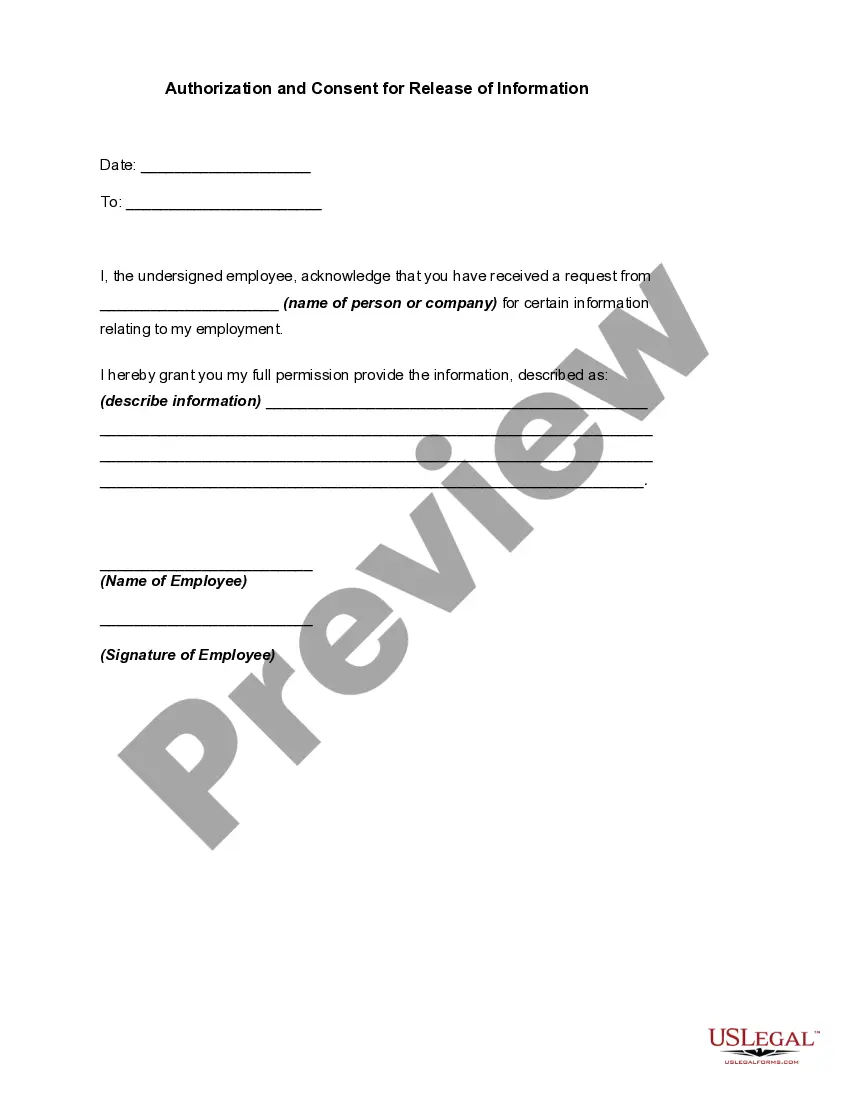
Authorization and Consent for Release of Information
What this document covers
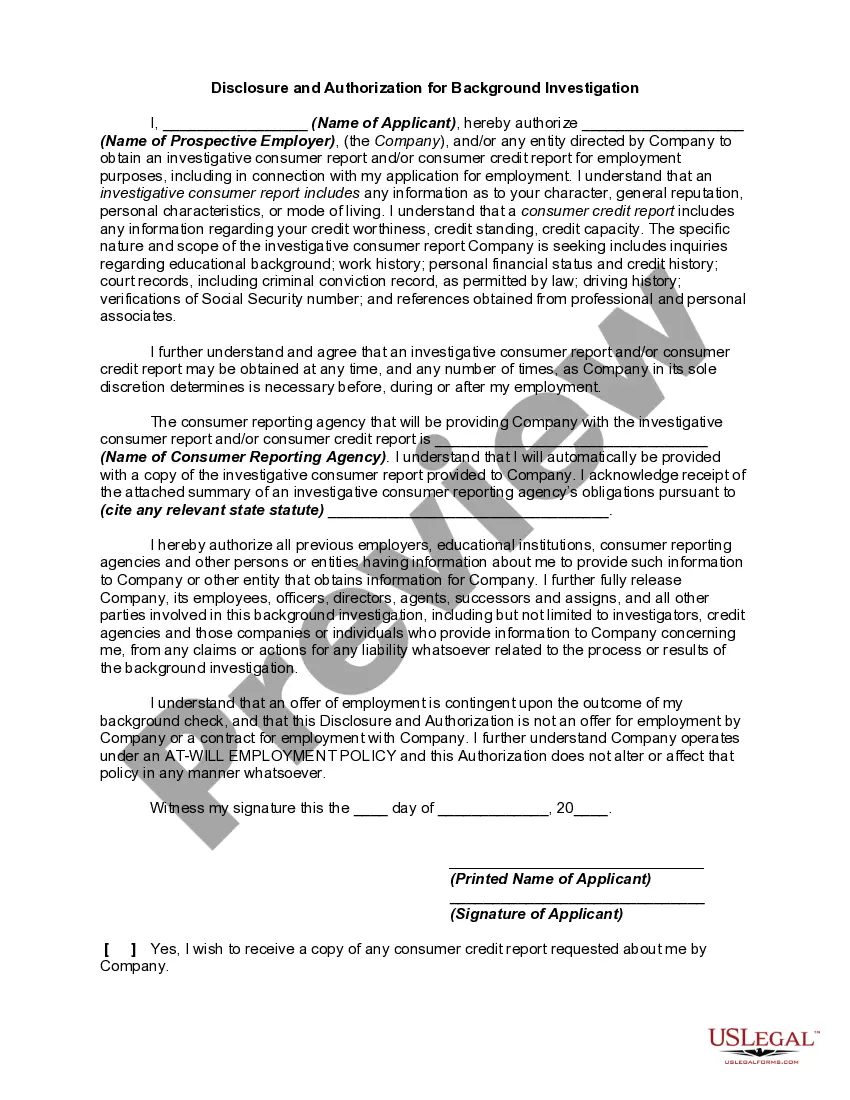
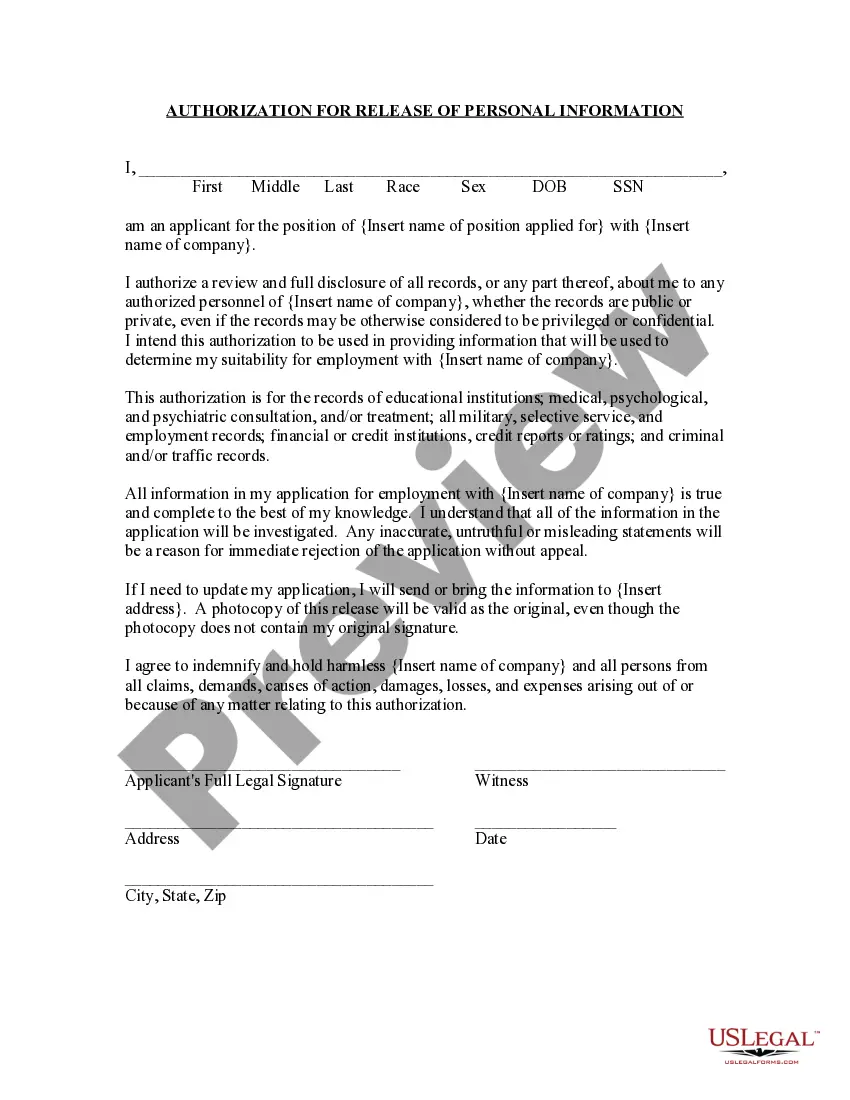
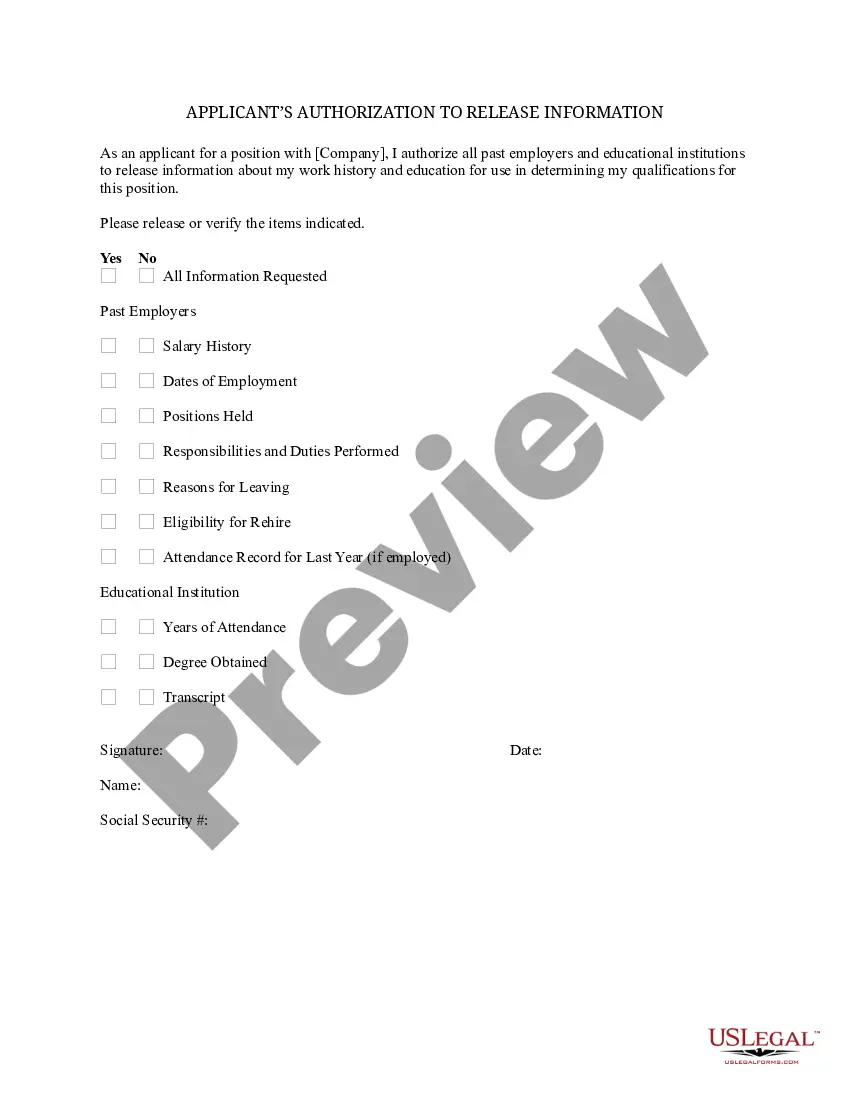
The Authorization and Consent for Release of Information is a legal document used by employees to allow their employers to disclose specific information about their employment. This form serves a vital purpose, enabling employers to share necessary information with third parties, such as prospective employers or licensing bodies, protecting both the employee's rights and the employer's interests.
What’s included in this form
- Date of the authorization
- Name of the requesting individual or company
- Description of the information to be released
- Employee's printed name
- Employee's signature
When this form is needed
This form is necessary when an employee needs to provide consent for their employer to disclose their employment information. Situations may include job applications, background checks, references, or compliance with legal requests. It ensures that the employee's personal information is shared legally and ethically.
Who should use this form
This form is intended for:
- Employees seeking to allow their employer to release personal employment information
- Employers who require authorization to share employee information with third parties
- Job applicants needing to provide a reference or background check authorization
How to complete this form
- Enter the date on which you are completing the form.
- Provide the name of the person or company requesting the information.
- Clearly describe the specific information you consent to be released.
- Sign and print your name in the designated fields.
- Ensure the signed form is submitted to your employer for processing.
Does this document require notarization?
In most cases, this form does not require notarization. However, some jurisdictions or signing circumstances might. US Legal Forms offers online notarization powered by Notarize, accessible 24/7 for a quick, remote process.
Get your form ready online
Our built-in tools help you complete, sign, share, and store your documents in one place.
Make edits, fill in missing information, and update formatting in US Legal Forms—just like you would in MS Word.
Download a copy, print it, send it by email, or mail it via USPS—whatever works best for your next step.
Sign and collect signatures with our SignNow integration. Send to multiple recipients, set reminders, and more. Go Premium to unlock E-Sign.
If this form requires notarization, complete it online through a secure video call—no need to meet a notary in person or wait for an appointment.
We protect your documents and personal data by following strict security and privacy standards.

Make edits, fill in missing information, and update formatting in US Legal Forms—just like you would in MS Word.

Download a copy, print it, send it by email, or mail it via USPS—whatever works best for your next step.

Sign and collect signatures with our SignNow integration. Send to multiple recipients, set reminders, and more. Go Premium to unlock E-Sign.

If this form requires notarization, complete it online through a secure video call—no need to meet a notary in person or wait for an appointment.

We protect your documents and personal data by following strict security and privacy standards.
Avoid these common issues
- Failing to specify the information to be released.
- Not signing the form.
- Leaving out the date, which may render the form invalid.
Why complete this form online
- Convenient downloading and printing, allowing for quick access when needed.
- Editability enables you to customize the form to fit your unique situation.
- Reliability with legally vetted templates drafted by licensed attorneys.
Summary of main points
- The Authorization and Consent for Release of Information allows employees to control the disclosure of their employment information.
- It is crucial to accurately complete the form to ensure proper compliance.
- This form is widely applicable across various scenarios, including job applications and financial transactions.
Looking for another form?
Form popularity
FAQ
The core elements of a valid authorization include: A meaningful description of the information to be disclosed. The name of the individual or the name of the person authorized to make the requested disclosure. The name or other identification of the recipient of the information.
A: Consent is a general term under the Privacy Rule, but authorization has much more specific requirements. The Privacy Rule permits, but does not require, a CE to obtain patient consent for uses and disclosures of PHI for treatment, payment, and healthcare operations.An expiration date for the authorization.
No, you should not sign the HIPAA authorization for the release of your medical records. Often, the insurance company will act as though they cannot begin to decide how much money to offer you until they have all of your medical records.
Medical release forms are essential for helping to protect both you and your patients. The form helps protect the patient's privacy and right to release personal information as willing 2026 and it protects your right to release information as consented.
HIPAA authorization is consent obtained from a patient or health plan member that permits a covered entity or business associate to use or disclose PHI to an individual/entity for a purpose that would otherwise not be permitted by the HIPAA Privacy Rule.
Your authorization allows the Health Plan (your health insurance carrier or HMO) to release your protected health information to a person or organization that you choose.Revoking this authorization will not affect any action taken prior to receipt of your written request.
You should only sign a release of all claims form if you have hired an experienced California car accident attorney to represent you in your claim.However, you need your attorney's expertise and legal advice to confirm that the settlement you are receiving is fair and covers all of your damages.